Mounting Putty for Walls: Is It Safe for Apartment Renters?
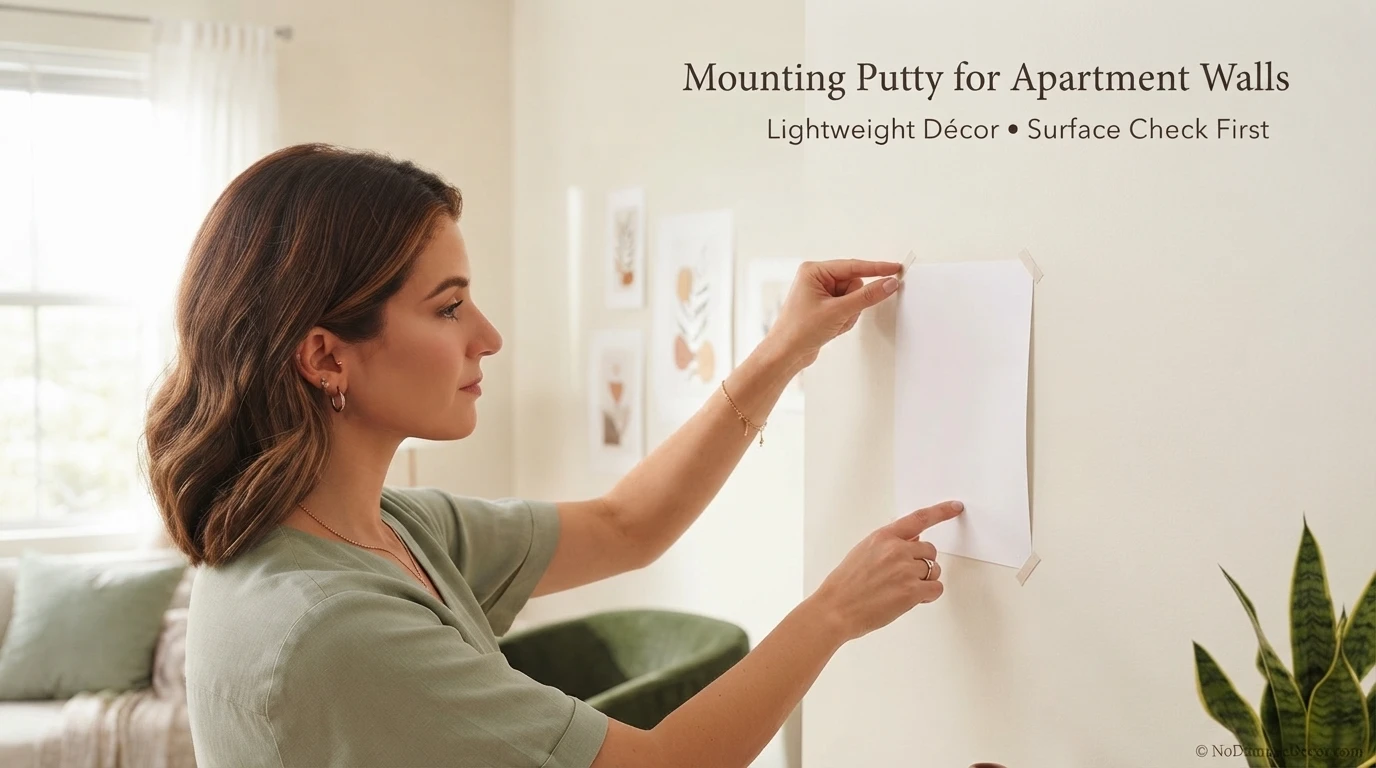
Mounting putty can be a useful no-hole option for very lightweight décor, but “removable” does not mean every wall finish is low-risk. Paint sheen, age, texture, porosity, and the exact product all matter.
At a Glance
Mounting Putty Is Lower-Commitment—Not Damage-Proof
Mounting putty sits in a useful middle ground for renters. It can hold paper décor without a nail hole, it is usually repositionable, and many formulas can be dabbed away after removal. That makes it appealing for temporary apartments, dorm-style setups, party decorations, postcards, study notes, and lightweight posters.
The problem is that walls are not interchangeable. The same putty that releases cleanly from a durable painted surface can behave differently on flat paint, old paint, porous plaster, wallpaper, or a wall that was recently repainted. Putty can also absorb into a porous coating and leave a darker-looking spot.
Use putty when…
- The décor is genuinely lightweight.
- The wall finish is product-approved.
- The wall is clean and dry.
- You can test a hidden spot first.
- A tiny mark would be easier to manage than a nail hole.
Avoid putty when…
- The object is heavy, fragile, valuable, or glass-fronted.
- The wall has wallpaper or a delicate decorative coating.
- The paint is flat/matte and the product warns against it.
- The wall was recently painted.
- The object is above a bed, crib, desk, or another injury-risk area.
Which Apartment Wall Finishes Are Lower Risk?
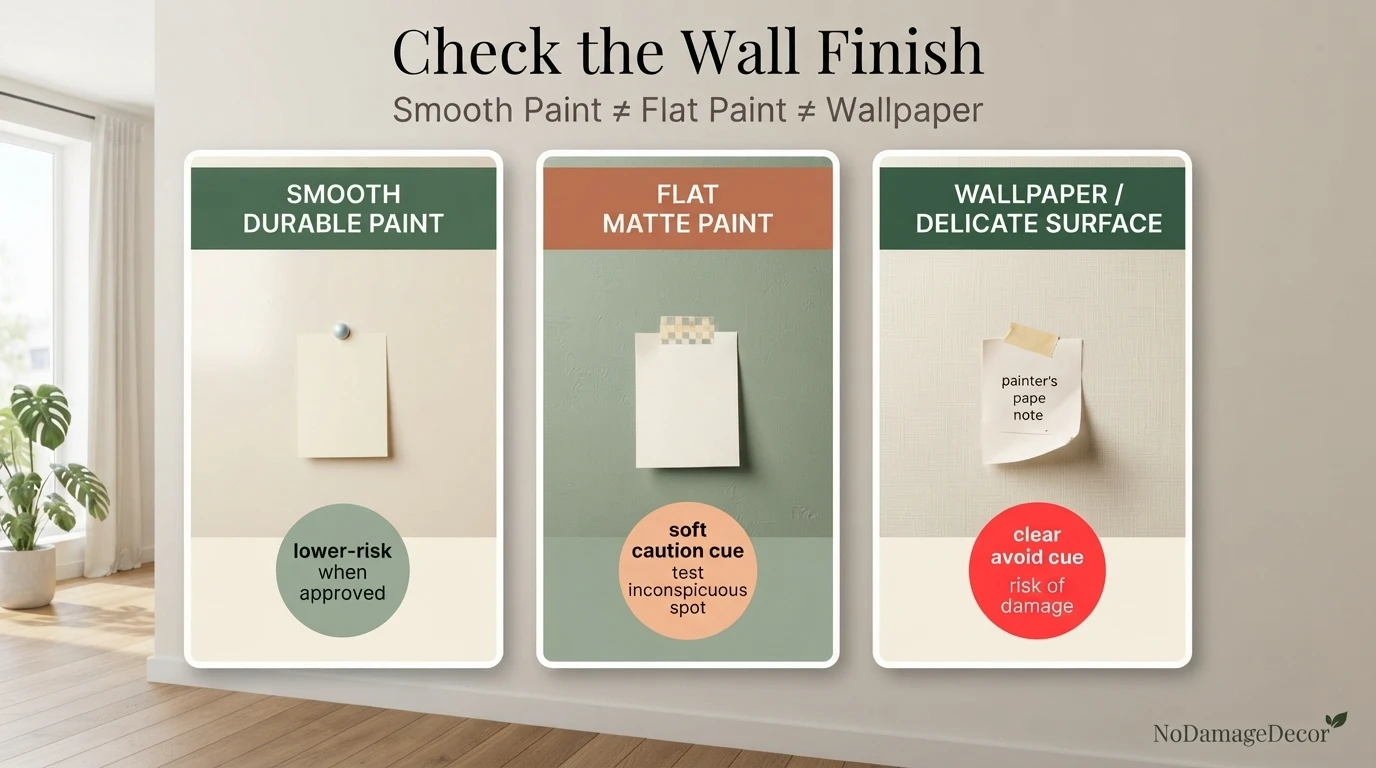
Often the most reasonable painted-wall candidate when the product permits it and the coating is sound.
Higher caution. Some mounting putties specifically exclude flat paint because marks or finish changes can be more visible.
Avoid unless the exact product and paint guidance clearly allow it. Gorilla specifically advises against freshly painted walls.
High risk. Scotch specifically says its removable putty is not recommended on wallpaper or delicate surfaces.
Putty can enter pores and texture, making cleanup harder and increasing the chance of a visible mark.
Many mounting putties list these as compatible surfaces, but verify the exact product before use.
| Surface | Renter Risk | Practical Decision |
|---|---|---|
| Smooth sound painted wall | Lower, not zero | Test first and use the smallest amount needed. |
| Flat paint | Higher | Avoid when the product excludes flat paint. |
| Freshly painted wall | Higher | Wait for product/paint guidance rather than guessing a cure time. |
| Wallpaper | High | Use another method unless the exact product explicitly approves it. |
| Porous plaster / textured wall | Medium to high | Expect cleanup to be less predictable. |
| Glass / tile / metal | Often lower for staining | Still follow product instructions and weight limits. |
What Should You Hang With Mounting Putty?
Think paper-first. Mounting putty is most sensible for items that would not hurt anyone if they fell and would not be expensive to replace. Posters, postcards, paper art, index cards, lightweight foam decorations, calendars, and small party décor fit the category better than framed art.
Do not use mounting putty as a substitute for rated hanging hardware. Even products with published holding limits should not be used where a falling item could injure someone. Gorilla’s current guidance explicitly says its mounting putty is not for applications where injury could result if the mounted item fell.
Good candidates
- Posters and paper prints
- Postcards and greeting cards
- Study notes and lightweight paper charts
- Small paper party decorations
- Very lightweight foam décor
Use another method
- Framed glass artwork
- Mirrors
- Clocks
- Wood shelves
- Anything above a bed or crib
- Anything valuable or breakable
For more structured décor, compare the methods in our hang art without nails guide and check our Command strips weight limit guide.
How to Use Mounting Putty With Lower Wall Risk
Read the exact product label
Look for approved surfaces, excluded finishes, published weight guidance, temperature limits, and removal instructions. Do not assume all putties work the same way.
Check your lease if the wall finish is unusual
If your apartment has specialty wallpaper, decorative plaster, murals, or other expensive finishes, written property guidance is safer than experimenting.
Clean and dry the surface
Dust and skin oils can reduce adhesion. Both Gorilla and 3M instruct users to work on clean, dry surfaces.
Test a hidden spot
Use a tiny amount in an inconspicuous location before putting putty in the middle of a visible wall. Give the test enough time to reveal obvious staining or finish change.
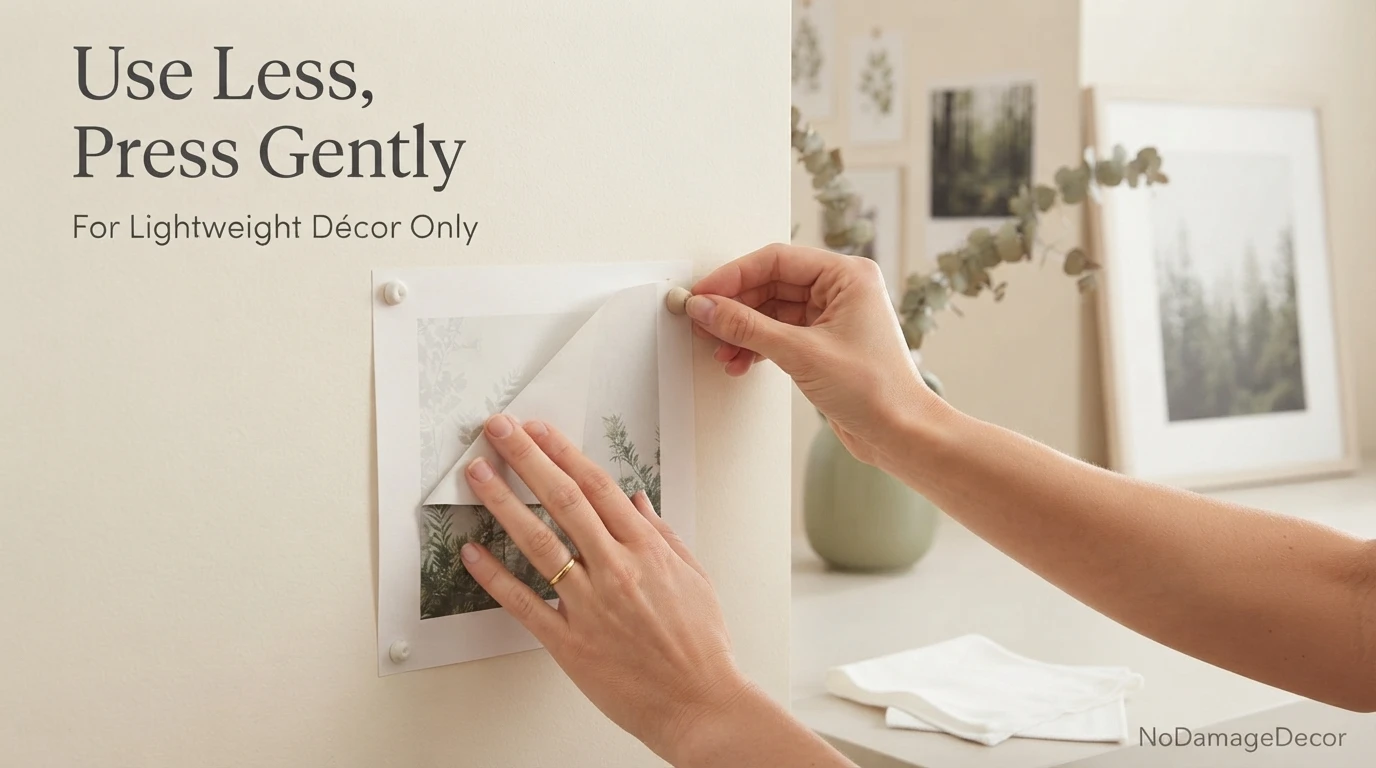
Use less, not more
A small amount spreads pressure and is easier to remove. For paper décor, several tiny points are usually a better renter strategy than one large blob.
Press gently and evenly
Firm contact is useful, but crushing putty deep into wall texture can make cleanup harder.
Check it periodically
If the poster starts sliding, the putty becomes oily, or the wall shows a growing mark, remove the item rather than adding more putty on top.
How to Remove Mounting Putty Without Making the Wall Worse
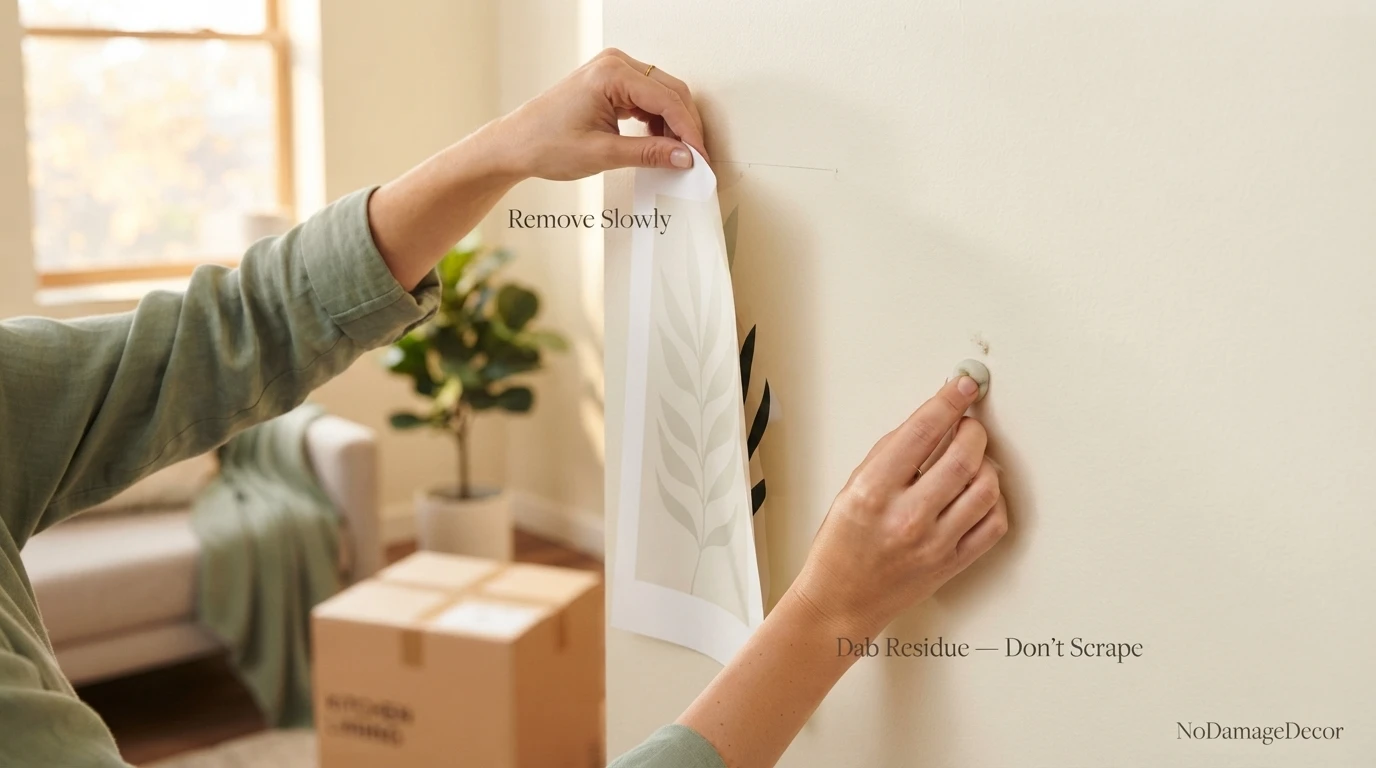
Removal should be slow and mechanical before it becomes chemical. Peel the mounted paper away carefully rather than yanking it. Then lift the remaining putty by rolling or dabbing it with a clean piece of the same putty if the manufacturer recommends that method.
Both Scotch and Gorilla tell users to remove remaining material by carefully lifting or dabbing rather than scraping. Loctite likewise recommends gently peeling the item away and rolling more Fun-Tak over leftover putty to pick it up.
If you are comparing removal systems, see our guide to remove Command strips without damage.
Why Mounting Putty Can Leave Oily or Dark Marks
Some putties contain materials that can migrate into porous coatings. On a very matte wall, a mark can look darker simply because the surface sheen changed. On porous paint, plaster, or paper, a faint oily mark can also remain after the putty itself is gone.
Gorilla states that its mounting putty may stain some surfaces and says faint marks can appear on porous surfaces. 3M similarly warns that Scotch Removable Mounting Putty may stain certain surfaces. Those warnings are why a hidden test is more useful than assuming the word “removable” covers every finish.
Mounting Putty vs. Removable Hanging Strips
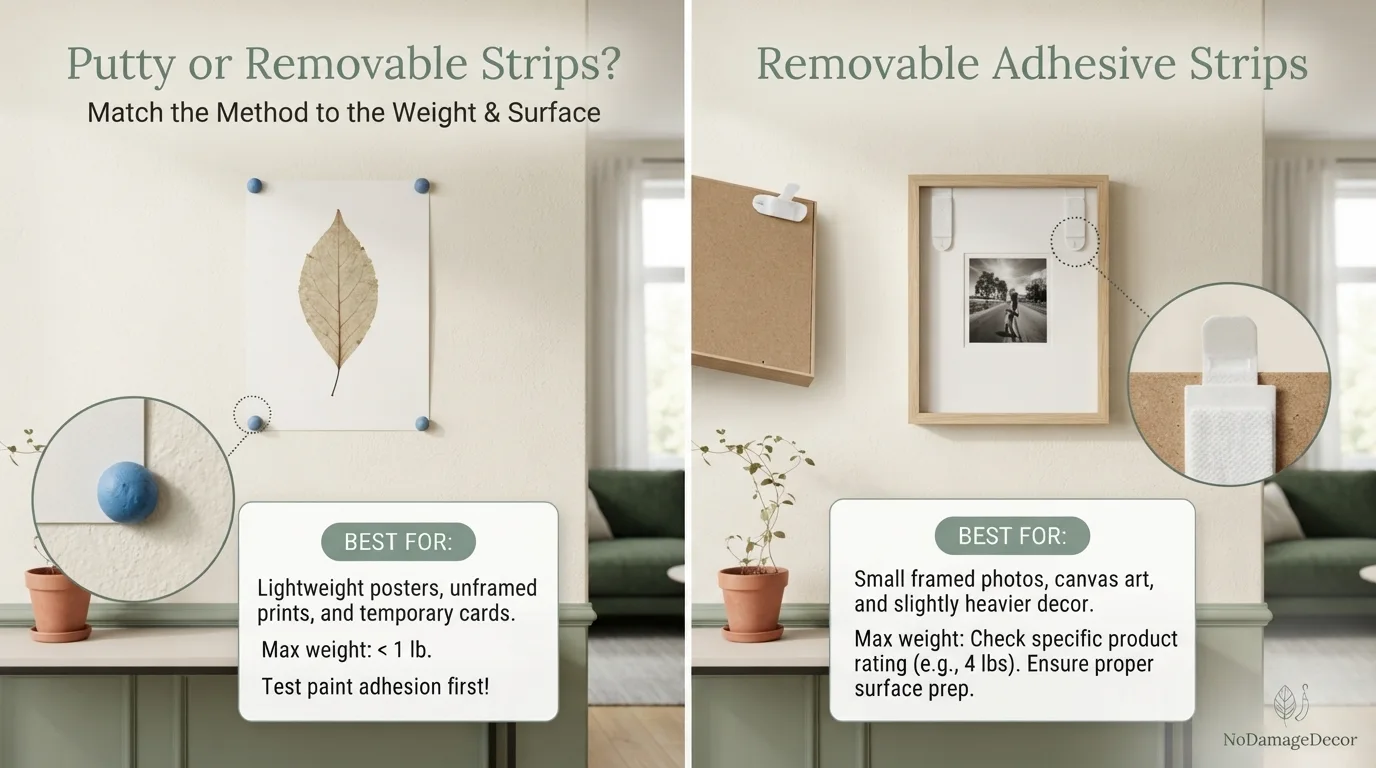
| Method | Best Use | Main Renter Advantage | Main Caution |
|---|---|---|---|
| Mounting putty | Posters, paper, cards, tiny lightweight décor | No hole and easy repositioning | Can stain porous or delicate surfaces |
| Removable hanging strips | Lightweight framed décor within rated limits | More structured support with a defined removal system | Requires correct surface, weight rating, and removal technique |
| Picture hook / nail | Where lease permits and the object needs mechanical support | Predictable physical support | Leaves a hole and may require patching |
Neither putty nor removable strips are universally “damage-free.” The lower-risk choice depends on the object, the wall finish, and the exact product instructions. For broader options, see our no-damage wall decor ideas.
Verified Mounting Putty Picks
These are real mounting-putty products with current manufacturer guidance. Use them only for the surfaces and loads their manufacturers support.
As an Amazon Associate I earn from qualifying purchases.
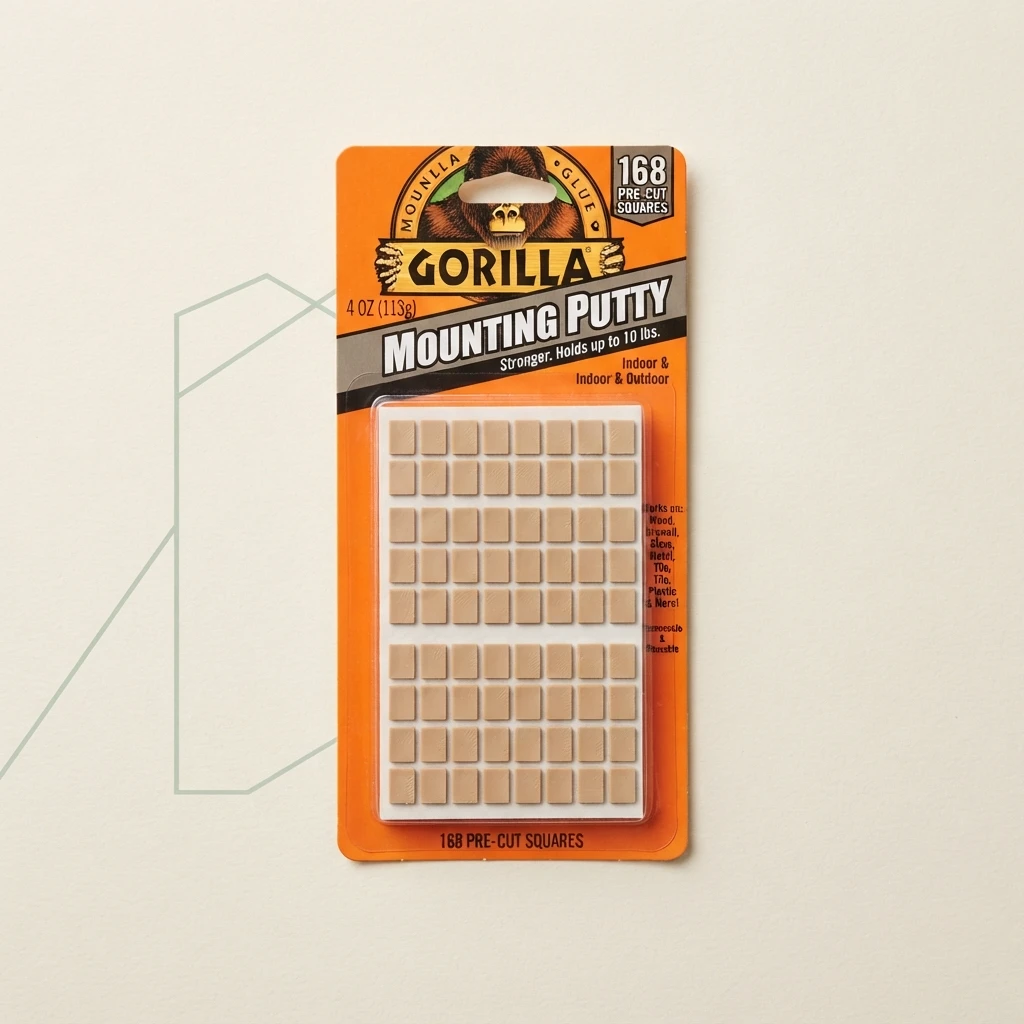
Gorilla Mounting Putty, Natural Tan, 168 Pre-Cut Squares, 4 oz
Best for: lightweight paper décor where a repositionable putty is preferred and the surface is compatible.
Gorilla describes its mounting putty as removable, repositionable, low-residue, and suitable for lightweight items. The manufacturer says it can hold up to 2 lb, but also says not to use it where a falling item could cause injury, not to use it on freshly painted walls or flocked wallpaper, and that it may stain some surfaces.
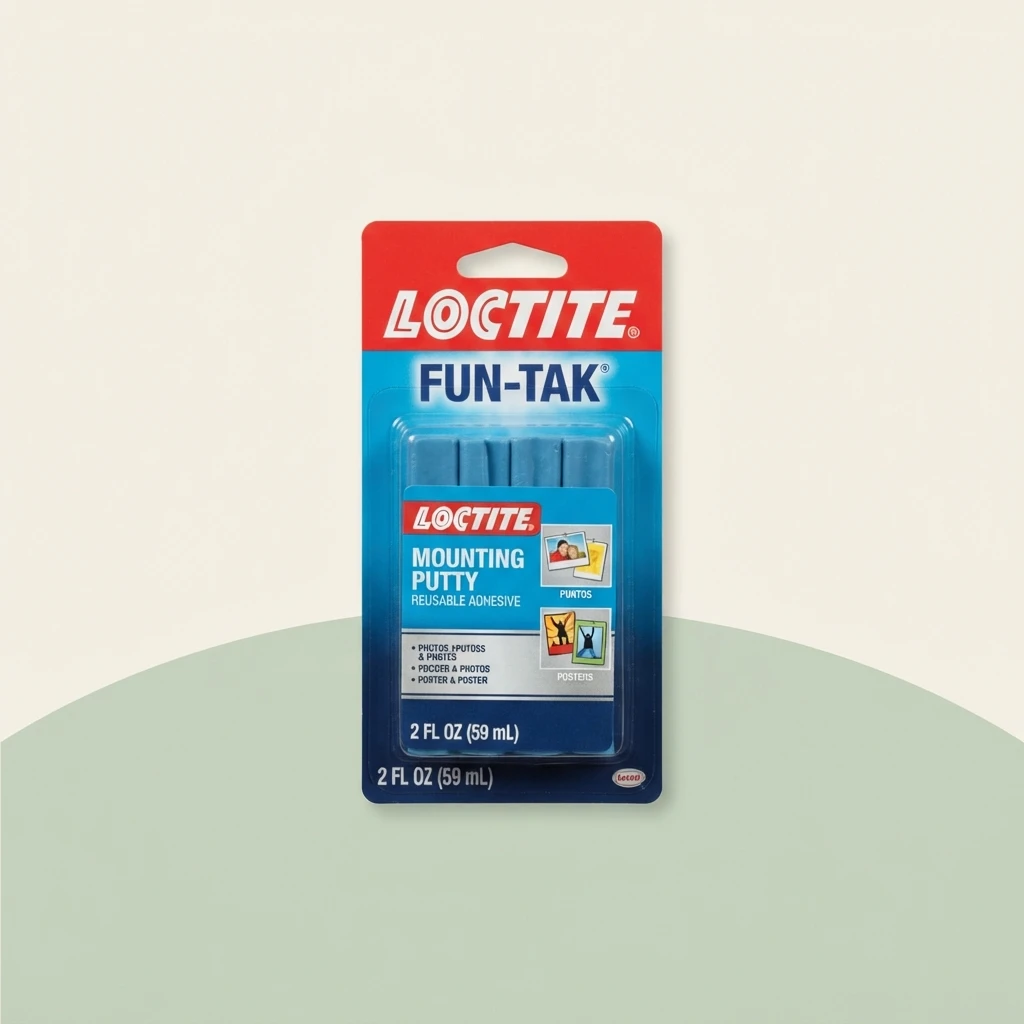
Loctite Fun-Tak Mounting Putty, Blue, 2 oz
Best for: temporary indoor mounting of lightweight posters, paper décor, and craft items.
Loctite describes Fun-Tak as a reusable, removable, repositionable putty for lightweight items. The current manufacturer page lists use on paper, wood, tile, linoleum, cinderblock, brick, metal, plastic, mirrors, and glass, and instructs users to start with a clean, dry surface.
Common Renter Mistakes With Mounting Putty
Using it on flat paint because it says “removable”
Some putties specifically exclude flat paint. Always read the current surface guidance.
Hanging a frame instead of paper décor
Putty is a lightweight solution, not a replacement for rated picture-hanging hardware.
Adding more when the first piece slides
Sliding can signal a surface or load mismatch. More putty may increase staining without solving the real problem.
Leaving it on a delicate wall for a long time
Long contact can make surface changes more noticeable, especially on porous finishes.
Scraping residue
A sharp scraper can damage paint faster than the putty itself. Use the product’s recommended lifting or dabbing method.
Skipping a move-in photo
If the wall already has scuffs, patch marks, or uneven paint, document those conditions before decorating.
For more deposit-conscious planning, see deposit-costing decor mistakes.
Sources & Renter-Safety Note
Product-specific guidance was checked against current manufacturer information from 3M/Scotch, Gorilla Glue, and Loctite. Scotch states that its removable mounting putty is intended for lightweight items, works on several hard surfaces, is not recommended for wallpaper, delicate surfaces, or flat-painted walls, and may stain some surfaces. Gorilla says its mounting putty is for lightweight items, warns against freshly painted walls and flocked wallpaper, says it may stain some surfaces, and advises against applications where a falling item could cause injury. Loctite describes Fun-Tak as a reusable, repositionable mounting putty for lightweight indoor décor and provides clean-and-dry surface preparation guidance.
3M Scotch Removable Mounting Putty · Gorilla Mounting Putty · Loctite Fun-Tak Mounting Putty
Frequently Asked Questions
Does mounting putty damage apartment walls?
It can. The most common renter concerns are staining, oily marks, residue, or paint lift rather than a hole. Risk depends on the putty, paint finish, wall porosity, age of the coating, and removal method.
Is mounting putty safe on painted walls?
Only when the exact product approves that painted surface. Some manufacturers allow painted walls but exclude flat paint or freshly painted walls. Test an inconspicuous spot first.
Can mounting putty stain walls?
Yes. Both 3M and Gorilla warn that their mounting putties may stain some surfaces, and Gorilla notes that porous surfaces can show faint marks.
Can I use mounting putty for framed pictures?
Mounting putty is better suited to lightweight paper décor. For framed, breakable, or valuable objects, use a properly rated hanging method that is appropriate for the wall and permitted by the lease.
How do I remove mounting putty from a wall?
Remove the mounted item gently, then lift or dab away remaining putty according to the product instructions. Avoid metal scrapers and unapproved solvents.
Is mounting putty safe on wallpaper?
Do not assume so. Scotch specifically says its removable mounting putty is not recommended on wallpaper or delicate surfaces. Use another method unless your exact product explicitly approves that wall covering.
Is mounting putty better than Command strips?
For paper posters and cards, putty can be simpler. For more structured lightweight décor, removable strips may provide a more defined rated system. The correct choice still depends on wall finish, object weight, and the exact product instructions.
Renter-Safety Verdict
Best use: lightweight paper décor on a clean, dry, product-approved wall where you have tested a hidden area first.
Higher-risk walls: flat paint, fresh paint, wallpaper, delicate coatings, porous plaster, and any finish that already looks weak or chalky.
Do not use it for: mirrors, framed glass, shelves, clocks, valuables, or anything that could injure someone if it falls.
Move-out approach: remove slowly, dab away residue rather than scraping, inspect the wall in bright light, and photograph the final condition.
Mounting putty can be renter-conscious, but only when you match the product to the wall and keep the load genuinely lightweight.
Compare Renter-Friendly Wall Decor Methods
Choose the hanging method based on wall finish, object weight, and removal risk—not just convenience.
Explore No-Damage Wall Decor Ideas