Renters’ Guide to Indoor Plants & Planters (No-Damage Decor Ideas 2026)
Everything apartment renters need to bring gorgeous greenery indoors — without drilling, water damage, or lease violations.
You found the apartment. You signed the lease. You’ve even managed to hang a few pictures using damage-free methods — and now you’re staring at a bare corner wondering how to make it feel alive. Indoor plants are the answer, but as any renter knows, a wilting pothos or a leaky planter pot can spiral into a whole conversation with your landlord pretty fast.
The good news? You absolutely can fill your rental with lush greenery, trailing vines, and architectural statement plants — without ruining a single floor tile, staining a baseboard, or violating your lease agreement. This guide covers everything from choosing the right plant for your light conditions to picking planters that protect your floors and pack up easily when it’s time to move.
The best indoor plants for renters are low-maintenance, adaptable varieties like snake plants, pothos, ZZ plants, and peace lilies — all of which thrive in typical apartment light conditions and rarely cause issues. Pair them with lightweight planters, self-watering pots, rolling plant caddies, and protective floor pads to keep floors and surfaces completely safe. Avoid heavy terracotta on hardwood floors and skip any mounting or drilling for hanging plants — instead, use freestanding plant stands or tension rod systems that leave zero marks.
🌿 Key Takeaways
- Choose plants suited to your actual light conditions — most apartments work best with low-to-medium light varieties.
- Lightweight planters, self-watering pots, and woven baskets with inner liners are the most renter-safe planter options.
- Always use waterproof saucers, protective felt pads, or plant caddies to prevent any water damage or floor scratching.
- Hanging plants are achievable without drilling — tension rods, freestanding hooks, and curtain rod plant hangers all work well.
- Small apartments benefit most from vertical plant styling, tiered plant stands, and windowsill planters.
- Pet owners should stick to non-toxic plant varieties like spider plants, Boston ferns, and money plants.
- The right plants and planters can completely transform a rental’s atmosphere without a single nail, paint brush, or permanent change.
How to Choose the Right Indoor Plants for Your Rental Apartment
Not all indoor plants are created equal, and what works beautifully in a house with south-facing bay windows may struggle in a fifth-floor apartment with one east-facing window. Before buying anything, think through these key factors. Getting them right from the start means fewer dead plants, less mess, and zero regrets.
Assess Your Apartment’s Light First
Sunlight is the single most important variable for indoor plant success. Stand in each room at midday and honestly evaluate what you have:
- Bright indirect light (near a large window, no direct sun hitting leaves) — ideal for most popular indoor plants, including pothos, rubber plants, and spider plants.
- Low light (away from windows, north-facing rooms, hallways) — choose ZZ plants, snake plants, peace lilies, or cast iron plants. These are practically indestructible in dim conditions.
- Direct sun (south-facing windows, sun streams directly on the sill) — succulents, cacti, and herbs like basil and rosemary love this.
Renter tip: North-facing apartments with little natural light aren’t a death sentence for plants. Snake plants and ZZ plants genuinely prefer low light and are nearly impossible to kill through neglect — perfect for busy renters.
Match the Plant to Your Maintenance Lifestyle
Be honest with yourself. If you travel for work, tend to forget things, or simply want fuss-free greenery, stick to truly low-maintenance options:
- Snake plant (Sansevieria) — water every 2–4 weeks, tolerates low light, filters air. A nearly foolproof starter plant.
- ZZ plant (Zamioculcas zamiifolia) — thrives on neglect, drought-tolerant, glossy leaves. Excellent for dark corners.
- Pothos — fast-growing, trails beautifully, forgiving with watering. One of the most popular apartment plants ever.
- Spider plant — produces charming offshoots, tolerates low humidity, non-toxic to pets.
- Peace lily — flowers indoors, prefers low light, very vocal about when it needs water (leaves droop dramatically).
- Rubber plant — bold architectural leaves, slow-growing, prefers bright indirect light.
- Succulents and cacti — minimal watering, do best on sunny windowsills, incredibly compact.
Factor In Pet Safety and Household Sensitivities
If you have cats, dogs, or young children, plant toxicity matters. Some popular houseplants — including peace lilies, pothos, and rubber plants — are mildly toxic to pets if ingested. Spider plants, Boston ferns, money plants, and most succulents are generally considered pet-safe. Always verify with the ASPCA’s toxic plant database before bringing a new plant home.
Think About Portability From Day One
As a renter, you will almost certainly move again. A 40-pound terracotta pot with a 6-foot fiddle-leaf fig is a moving nightmare. Opt for lightweight planters and plants that can be repotted, divided, or passed along easily. Your future self will thank you.
Best Renter-Friendly Planters for Apartments
The planter you choose is just as important as the plant inside it. For renters, the priorities are simple: lightweight, leak-proof, floor-safe, and easy to move. Here’s a breakdown of the best planter styles for apartment living.
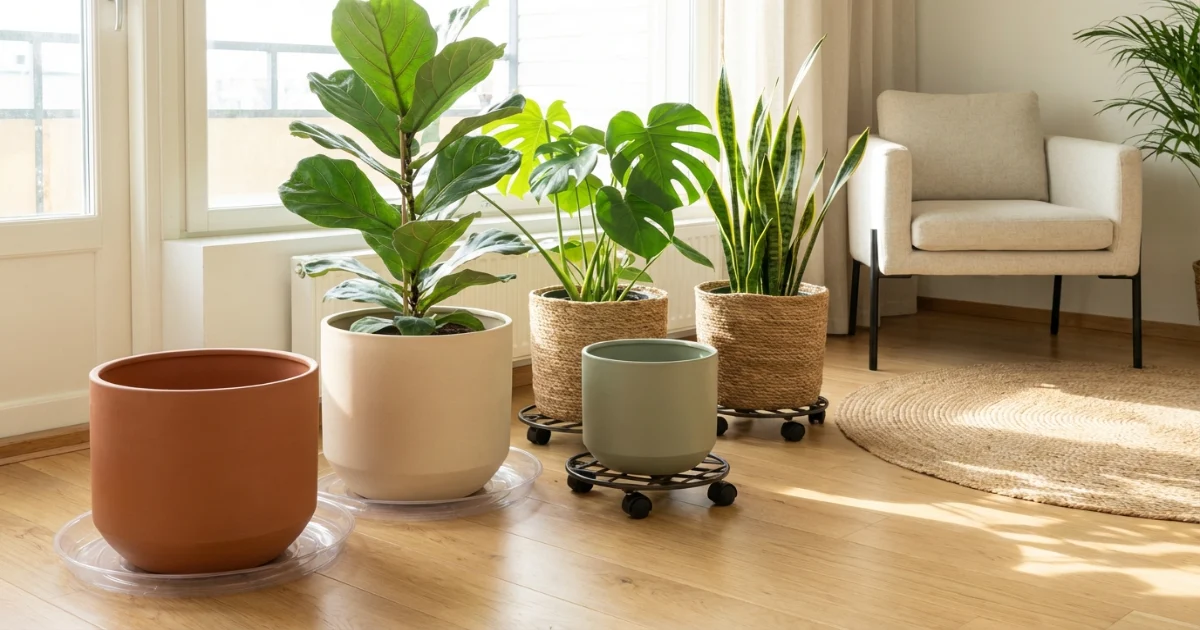
Lightweight Planters: Fiberglass, Plastic, and Resin
Heavy terracotta and ceramic planters look beautiful but they’re risky for renters — they scratch hardwood floors, crack on tile, and become impossible to lift once soil is added. Lightweight fiberglass, resin, or high-quality plastic planters mimic the look of stone or terracotta at a fraction of the weight. They’re also far less likely to chip or crack during moves.
Self-Watering Planters
Self-watering planters have a built-in reservoir at the base that the plant draws moisture from as needed. For renters, this is a double win: less frequent watering means fewer overflow accidents, and a sealed reservoir eliminates the risk of saucer leaks on floors. Many modern designs look genuinely chic — minimal, matte-finish, and clean-lined.
Woven Baskets with Inner Liners
Rattan, seagrass, and jute baskets add incredible warmth to an apartment aesthetic and are extremely lightweight. The key for renters is to always use a waterproof inner liner or keep the plant in its original nursery pot inside the basket. Never plant directly into a wicker basket without protection — water will rot the basket and potentially damage your floor underneath.
Rolling Plant Caddies
A plant caddy is one of the smartest renter investments you can make. These are small wheeled platforms that sit underneath your planter, protecting floors from scratches and making it effortless to roll plants toward or away from windows as seasons and light angles change. Look for caddies with locking wheels for stability.
Elevated Plant Stands with Protective Pads
Freestanding plant stands raise plants off the floor, improve air circulation, and create visual height in a room — all without drilling anything into walls or ceilings. Always attach felt pads or rubber feet to stand legs before placing them on hardwood or vinyl floors to prevent scratching. You can find these ideas alongside other clever touches in a broader renter-friendly furniture guide worth exploring.
Windowsill Planters
Slim windowsill planters are perfect for herbs and small trailing plants. Look for designs with waterproof trays and non-slip rubber bases. These maximize light exposure for sun-loving plants and keep greenery off the floor entirely — no floor protection needed at all.
Hanging Plants Without Drilling
Want that gorgeous hanging plant look without putting a hook through your ceiling? You have several good options:
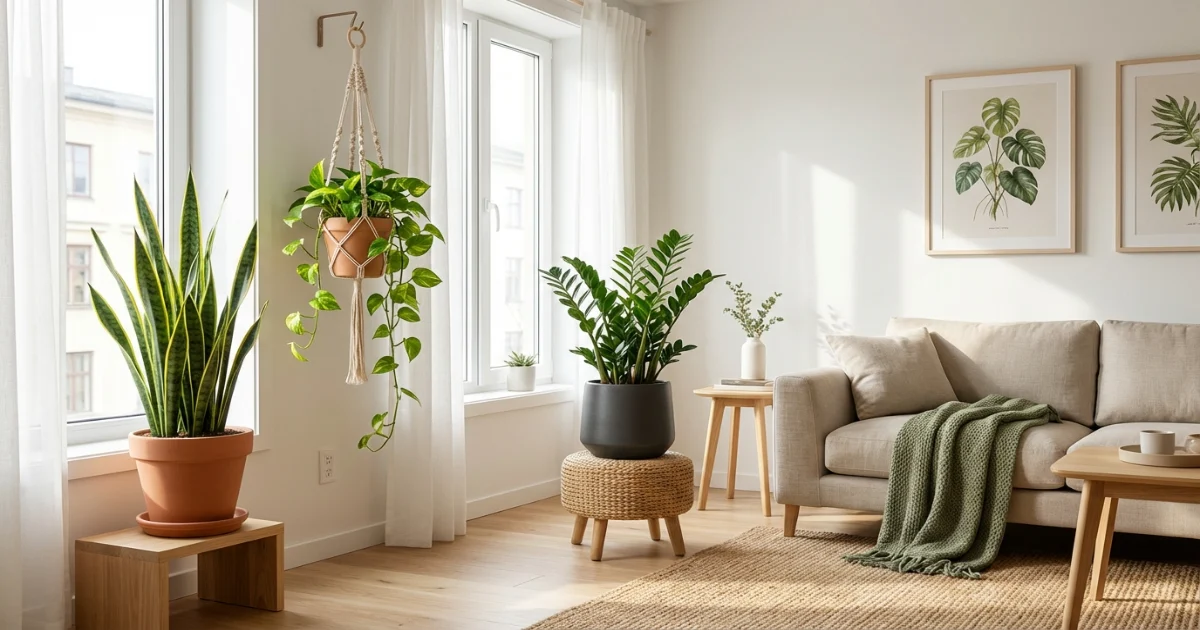
- Tension rod plant hangers — stretch between two walls in a window alcove, hold lightweight hanging planters beautifully.
- Freestanding plant stands with hanging arms — floor-standing structures that hold hanging planters at height without touching the ceiling.
- Curtain rod extensions — mounted to existing curtain rod brackets (already installed), these can hold lightweight macramé planters.
- Adhesive ceiling hooks — removable adhesive hooks rated for ceiling use can hold very lightweight plants (under 1–2 lbs) if your ceiling is smooth and painted.
For more renter-approved vertical ideas, the removable shelves guide for apartment renters on NoDamageDecor has some great options that also work beautifully as plant ledges for small pots.
No-Damage Plant Styling Ideas for Rental Apartments
Plants can do the heavy lifting of interior decorating in a way that artwork and furniture alone simply cannot. They bring color, movement, texture, and life to any corner. The trick for renters is knowing how to place and style them without creating problems.
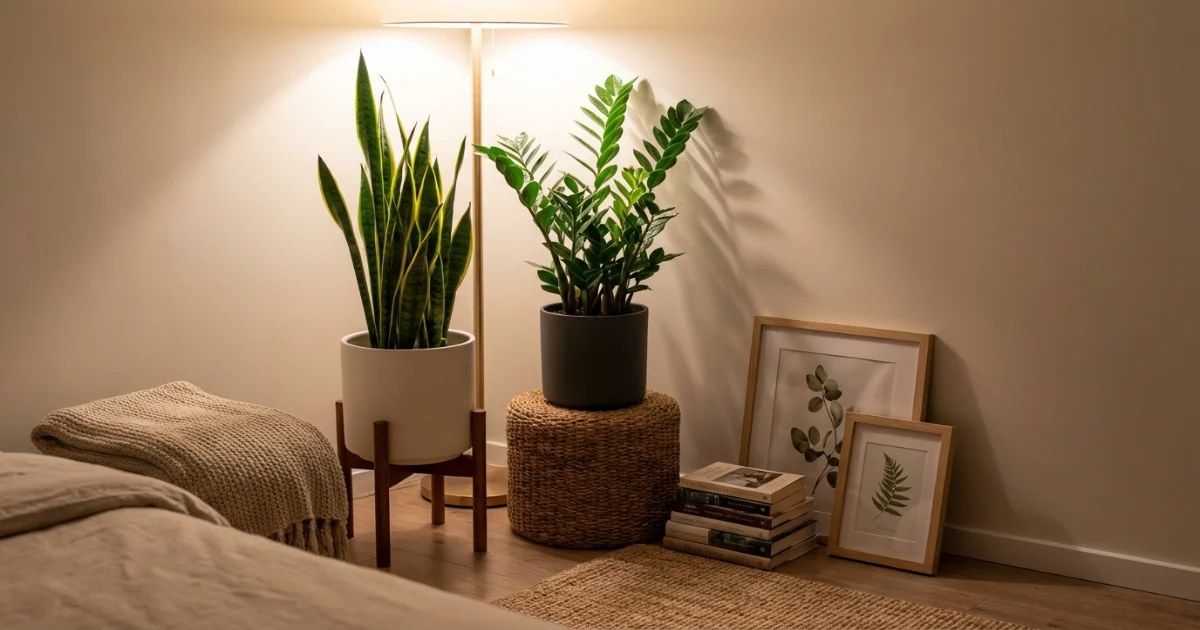
The Corner Statement: Layered Heights
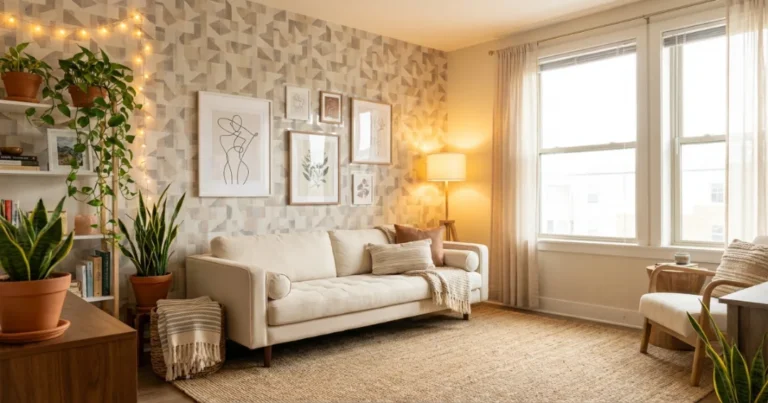
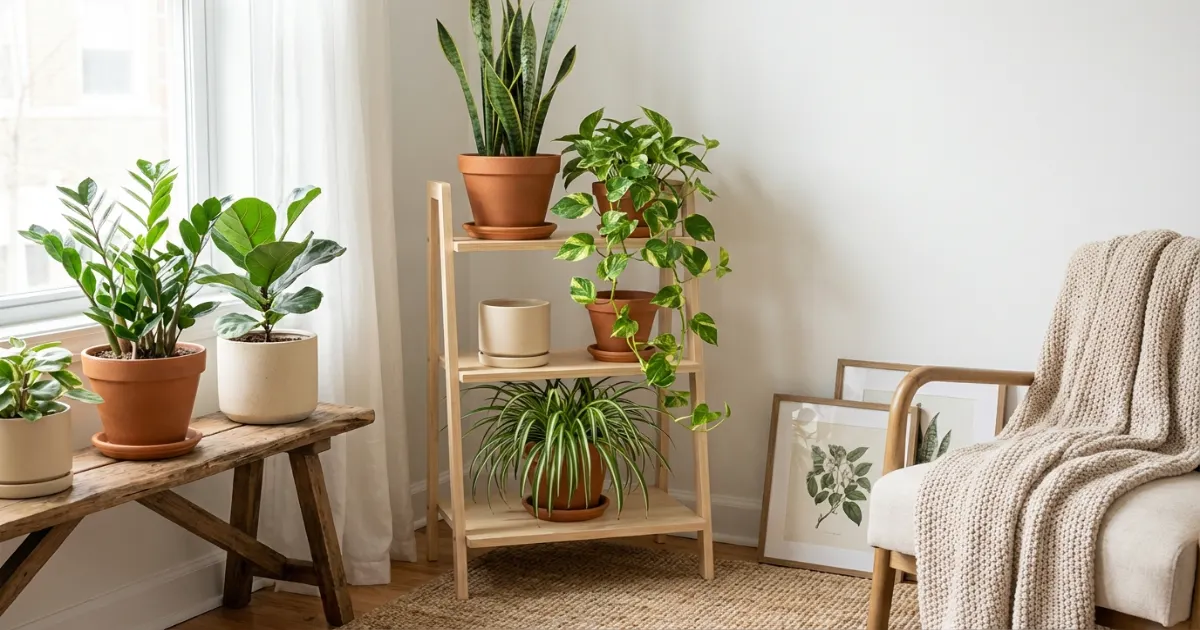
One of the easiest and most impactful plant styling ideas for renters is to group several plants in a corner using varying heights. A tall snake plant or rubber plant on the floor, a medium pothos on a plant stand mid-height, and a small trailing plant on a floating shelf or window ledge creates depth and visual flow. This layered approach works in any room and transforms an otherwise boring corner into an architectural green feature.
Shelf Styling with Small Plants
If you already have removable shelving in your rental, it’s prime real estate for smaller houseplants. Small pothos pots, succulents, air plants, and tiny snake plant pups all work beautifully on shelves. Use waterproof saucers beneath every pot and check them weekly.
Entryway Green Moments
A single dramatic plant in the entryway — a tall snake plant, an areca palm, or a compact fiddle leaf — sets the tone for the entire apartment from the moment anyone walks in. This works especially well in narrow entryways where wall decor is limited. Pair it with a no-damage wall decor idea above it and the effect is genuinely stunning.
Biophilic Bathroom Styling
Bathrooms with even a small window can support humidity-loving plants beautifully. Peace lilies, pothos, and spider plants love the moisture from showers and require very little direct light. A small woven basket with a pothos on the bathroom windowsill or countertop adds a spa-like quality that guests always notice.
Color Coordination With Your Plant Pots
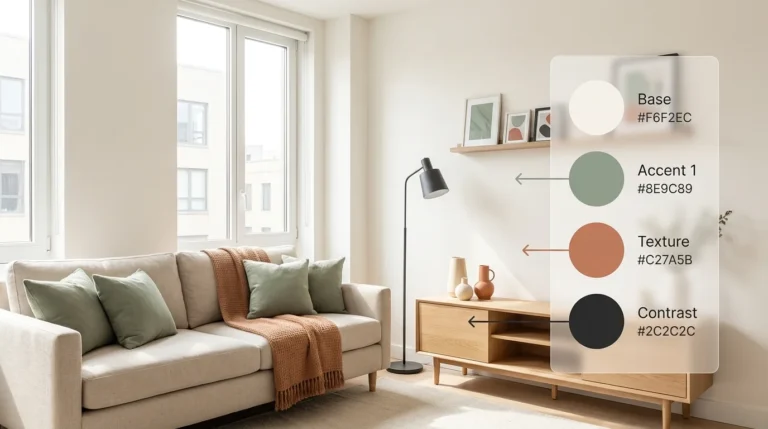
Your planter colors can either blend into your rental’s existing palette or serve as a deliberate accent. Before committing to a collection of pots, consider running your room’s colors through a renter color palette generator to find shades that work together intentionally. Neutral tones like cream, terracotta, sage, and slate grey tend to make plants look their best without clashing with rental-issued wall colors.
Floor-Safe and Wall-Safe Plant Placement for Renters
This is where many renters run into trouble — not from the plants themselves but from the way pots sit on floors, drip onto surfaces, or get pushed against walls where moisture can cause staining. A few simple habits prevent nearly all plant-related rental damage.
Protecting Hardwood, Vinyl, and Tile Floors
- Always use a waterproof saucer underneath every single pot — no exceptions.
- Empty saucers regularly after watering. Standing water in a saucer left on a wood floor for days will cause damage.
- Use felt pads, cork pads, or rubber mats underneath pots and saucers to prevent scratching.
- Rolling caddies are ideal for larger pots — they distribute weight, protect floors, and allow easy movement.
- Avoid placing very heavy pots directly on old or delicate flooring. Use a flat-base plant stand to spread the weight.
Keeping Walls and Baseboards Safe
- Keep plants at least 3–4 inches away from painted walls. Large leafy plants touching walls can cause moisture staining or paint transfer over time.
- Never mist plants directly near a wall — water droplets on paint or wallpaper create long-term moisture problems.
- If you’re using a wall adjacent to a plant for artwork, choose damage-free wall decor methods that won’t be compromised by humidity.
Renter watch-out: Overwatering is the number one cause of plant-related rental damage. It leads to root rot, leaking saucers, moldy soil, and floor staining. When in doubt, underwater slightly — most houseplants recover from too little water far more easily than too much.
Indoor Plant Ideas for Small Apartments and Studios
In a studio or one-bedroom apartment, every square foot counts. The good news is that plants actually thrive in smaller spaces because you naturally pay more attention to them. The challenge is styling them thoughtfully so they enhance the space rather than clutter it.
Go Vertical, Not Horizontal
Floor space is premium in a studio. Instead of spreading plants across the floor, build upward with tiered plant stands, wall-leaning ladder shelves, or tall statement plants that draw the eye upward. A tiered three-shelf plant stand in a corner can hold six to eight plants in the footprint of a single large pot.
Use Windows as Your Primary Plant Zone
Windows are your best natural light source and also keep plants off precious floor and shelf space. Windowsill planters, suction-cup ledges for glass, or a tension rod with hanging planters across a window frame can create a stunning green curtain effect with zero floor footprint.
Compact Plants That Punch Above Their Weight
For small apartments, compact plants with big visual impact are the goal:
Snake Plant
Tall and architectural. Grows upward, not outward. Perfect for narrow corners.
Pothos
Trail it downward from a shelf. Grows fast, looks lush, takes up zero floor space.
ZZ Plant
Stays compact, tolerates neglect. A dark corner’s best friend in any studio.
Peace Lily
Blooms indoors. Medium size. Great under windows in rooms with filtered light.
Spider Plant
Great in hanging positions. Non-toxic, fast-growing, very forgiving.
Succulents
A dozen can fit on one windowsill. Minimal care. Endlessly varied shapes.
Kitchen Herb Planters for Small Rental Kitchens
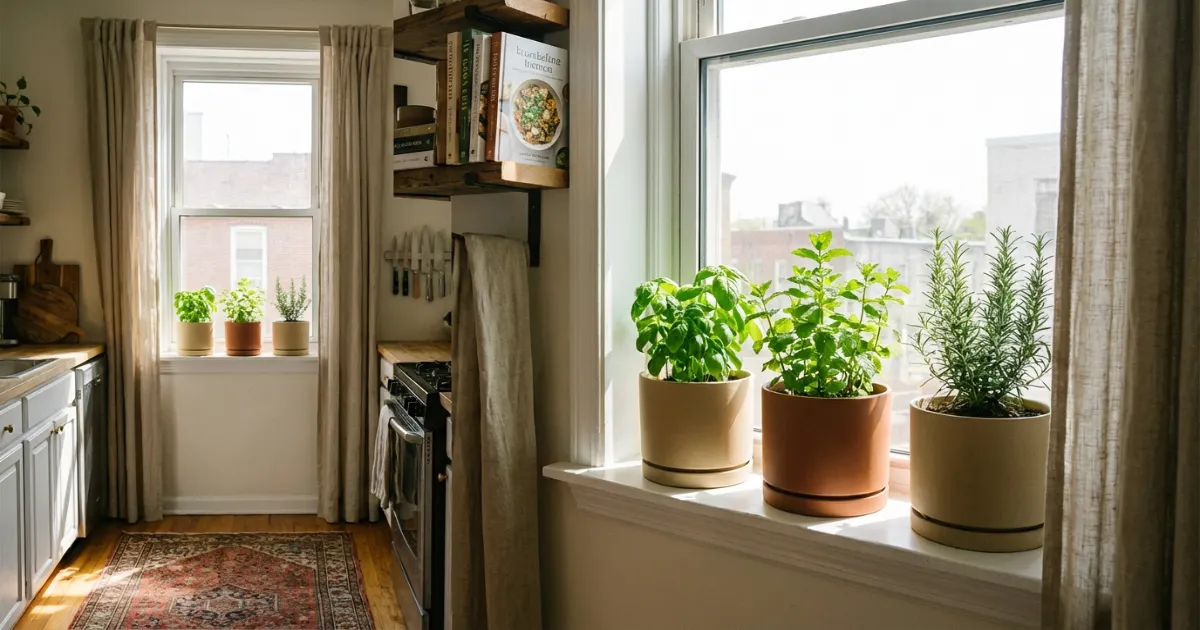
A bright kitchen windowsill is the perfect spot for a small herb garden. Basil, mint, rosemary, and chives all grow happily in compact planters and provide real cooking utility. Use a long, narrow windowsill planter with drainage holes and a built-in tray — it’s both functional and visually lovely. For more ideas specifically built around small rental kitchens, the tiny kitchen hacks section of NoDamageDecor has practical suggestions that pair beautifully with a windowsill herb setup.
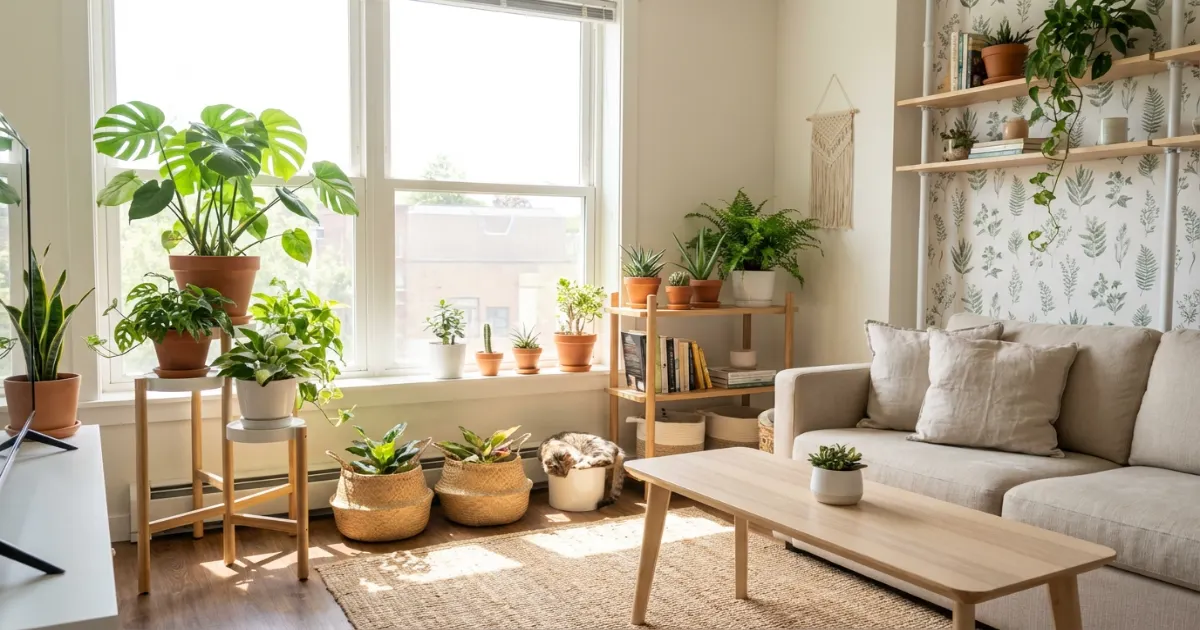
Small apartment decorating is a skill in itself, and plants are one of the highest-impact tools you have. For a broader look at making the most of compact spaces, explore more small apartment decor ideas that work alongside a plant-forward aesthetic.
Common Mistakes Renters Make With Indoor Plants (And How to Avoid Them)
Even well-intentioned plant setups can cause real problems in a rental. Here are the most common mistakes to watch for:
- Skipping the waterproof saucer. This is the most common — and most damaging — oversight. Every single pot needs a saucer, every single time.
- Using heavy terracotta pots on hardwood floors. Terracotta is porous, scratches floors easily, and absorbs moisture that can transfer to whatever it’s sitting on. Choose lighter alternatives or always use protective pads underneath.
- Overwatering and allowing standing water. Pooled water in saucers left for days causes floor staining, warping, and mold. Empty saucers within 30 minutes of watering.
- Placing plants directly against walls. Moisture from leaves and soil can cause paint staining or peeling over time. Always allow some clearance.
- Drilling into walls or ceilings for hanging plants. There are excellent no-drill alternatives for hanging planters. Always explore those first to avoid lease issues or deposit deductions.
- Buying plants that don’t suit your actual light conditions. A fiddle-leaf fig in a dark hallway is a slow disaster. Know your light before you shop.
- Ignoring pet toxicity. A pothos looks harmless, but it can cause serious distress for cats or dogs who chew on leaves. Check toxicity before every purchase.
Building a Renter-Friendly Home With Plants as the Foundation
Indoor plants are just one piece of the renter decor puzzle. When combined thoughtfully with the rest of your apartment’s visual story — your furniture, textiles, artwork, and lighting — they create something genuinely cohesive and personal. And the best part is that none of it requires permanent changes.
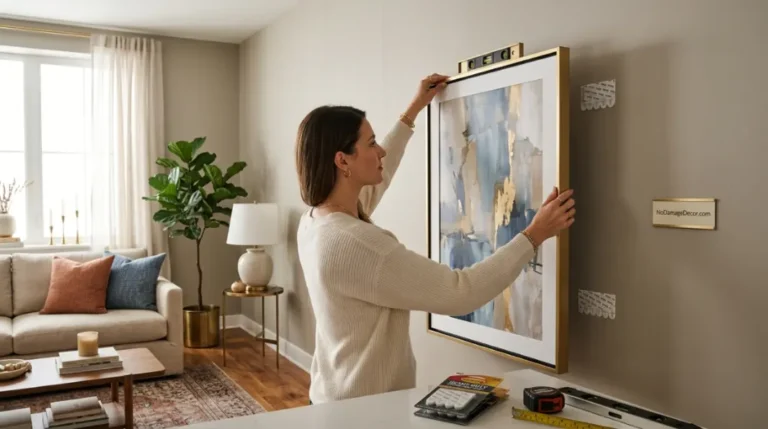
Think about how your plants can work with other damage-free decor choices. A trailing pothos on a removable floating shelf beside a piece of framed art hung with adhesive strips creates a complete, layered vignette. A snake plant anchoring a corner next to a well-chosen accent chair ties the room together in a way that feels designed, not assembled by accident.
If you’re planning out a full rental refresh, the wall damage-free decor planner is a genuinely useful tool for thinking through what goes where before you commit. And if budget is a priority, budget-friendly wall decor ideas can help you fill a room with personality without overspending on either plants or their surroundings.
Plants also work beautifully in the bedroom, where a small ZZ plant on the nightstand or a snake plant in the corner can improve the room’s ambiance without requiring a single change to the space itself. If your bedroom feels crowded already, revisiting your layout with the small bedroom organization guide can help you find the right spots for both furniture and greenery.
Frequently Asked Questions
What are the best indoor plants for renters?
The best indoor plants for apartment renters are ones that adapt well to variable light, require minimal maintenance, and stay compact enough for small spaces. Top choices include snake plants, pothos, ZZ plants, peace lilies, spider plants, and succulents. These varieties are forgiving with watering, thrive in typical apartment lighting, and are widely available at most garden centers or online.
Which planters are best for apartments?
Lightweight fiberglass, resin, and self-watering planters are ideal for apartments because they’re easy to move, won’t scratch floors, and minimize the risk of water overflow. Woven baskets with waterproof inner liners add warmth and texture without the weight of traditional ceramic pots. Rolling plant caddies under any planter add an extra layer of floor protection and make rearranging easy.
How do renters protect floors from plant pots?
Always use a waterproof saucer underneath every planter, and place felt pads, cork rounds, or rubber mats between the saucer and the floor. Rolling plant caddies are excellent for heavier pots as they distribute weight evenly. The single most important habit is emptying saucers promptly after watering — water left sitting in a saucer on hardwood or vinyl will cause damage within days.
Can I hang plants in a rental without drilling?
Yes — there are several effective no-drill hanging options for renters. Tension rods placed in window alcoves hold lightweight hanging planters without touching the wall. Freestanding plant stands with overhanging arms recreate the suspended look with zero ceiling contact. Adhesive ceiling hooks (rated for ceiling use) can support very lightweight plants on smooth painted ceilings, though always check the weight limit carefully.
What are the best low-light plants for apartments?
Snake plants, ZZ plants, peace lilies, pothos, cast iron plants, and Chinese evergreens are among the best low-light indoor plants for renters. These varieties genuinely prefer indirect or low light conditions and will struggle if placed in direct sun, making them perfectly suited to north-facing apartments, interior rooms, or spaces where natural light is limited.
Are self-watering planters good for renters?
Self-watering planters are one of the best investments for apartment renters. The built-in water reservoir feeds the plant gradually, reducing how often you need to water and significantly lowering the risk of overflow accidents that could stain floors. They’re also ideal for renters who travel or have irregular schedules, since plants can go longer between watering without stress.
How do I style indoor plants in a small apartment?
In a small apartment, the key is thinking vertically. Use tiered plant stands in corners, let trailing plants cascade from removable shelves, and line windowsills with compact succulents or herbs. Grouping three plants of varying heights creates a designer look without spreading across the floor. Stick to a cohesive planter color palette to prevent the space from feeling visually cluttered.
What indoor plants are easiest to maintain in rentals?
The easiest-care indoor plants for renters include the ZZ plant (water every 3–4 weeks), snake plant (water every 2–4 weeks), pothos (water when the top inch of soil feels dry), and succulents (water sparingly, every 2–3 weeks). These plants tolerate inconsistent watering schedules, typical apartment light conditions, and average indoor humidity without complaint.
How do I prevent water damage from indoor plants in a rental?
Prevent water damage by using waterproof saucers under all pots, emptying them within 30 minutes of watering, never overwatering, and keeping plants a few inches from walls. Use cork, felt, or rubber protective layers between saucers and floors. Self-watering planters with sealed reservoirs are the most reliable option for renters who want to eliminate overflow risk entirely.
Where should renters place indoor plants for the best look and health?
Place plants where they’ll get adequate light for their specific species first, then consider aesthetics second. Window ledges, corners near bright windows, and open shelving units near natural light are typically the best spots in a rental. Use plant stands to create height variation and bring plants to eye level. In rooms with limited light, cluster low-light species like snake plants and ZZ plants in corners for a lush green effect without sacrificing plant health.
Final Thoughts: Greenery on Your Own Terms
Indoor plants are one of the most rewarding things you can add to a rental apartment. They improve air quality, reduce stress, and bring a warmth and personality to spaces that no piece of furniture or artwork can fully replicate. And in 2026, there is genuinely no reason why renting should get in the way of having the lush, green home you want.
The key is starting smart: know your light, choose plants suited to your lifestyle, protect every floor surface, and pick planters that can move as easily as your life does. With the right setup, your plants become an asset — not a liability — when lease renewal season comes around.
If you’re ready to take your entire rental’s look to the next level, NoDamageDecor.com has a full library of renter-friendly ideas, tools, and guides designed specifically for people who want beautiful homes without the burden of permanent changes. Start exploring, start styling, and let your space breathe.
Ready to Decorate Your Rental — Without the Damage?
Explore our full collection of renter-safe decor ideas, tools, and guides. From damage-free wall styling to small-space furniture tips, NoDamageDecor has everything you need to make any rental feel like home.
Explore All Renter-Friendly Decor Ideas →