Command Strip Pull Tab Broke? How to Remove It Without Damaging Paint
A careful, renter-conscious removal process that protects your apartment walls and helps you avoid security deposit damage.
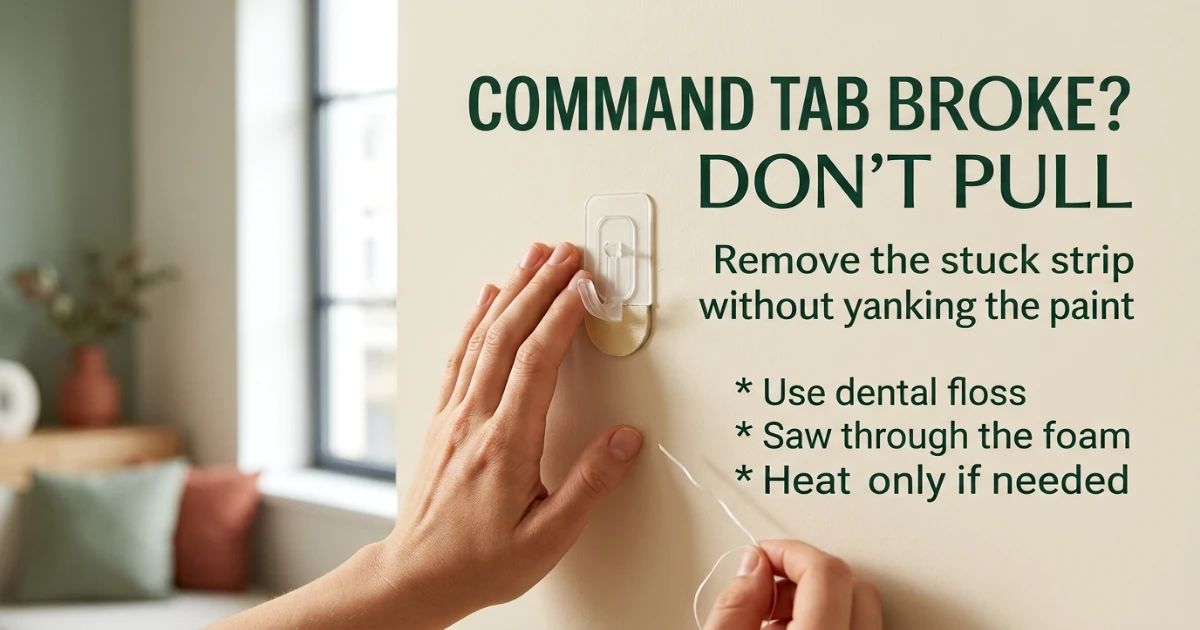
Quick Answer
Do not pry or yank. Command’s current FAQ recommends warming the base plate with a hair dryer if needed, then using dental floss to gently cut through the foam when a strip breaks. Work slowly and keep the floss close to the wall so you are separating the foam instead of pulling outward on the paint. Stop if the paint begins to lift or the surface feels fragile.
At a Glance
Most Common Fix
Dental floss gently sawing through the foam behind the base plate.
Biggest Mistake
Prying with a metal scraper or pulling the plastic base sideways.
Wall Risk
Torn drywall paper or peeled paint on older or poorly primed surfaces.
Best First Step
Stop pulling, assess the wall surface, and prepare dental floss; use gentle heat only if needed.
On This Page
Why Command Strip Pull Tabs Break
The pull tab on a Command strip is designed to stretch the adhesive pad downward, releasing it from the wall without leaving residue. When that tab snaps off, the adhesive pad remains fully attached, and the usual removal method is no longer available.
A pull tab can break if it is pulled outward instead of being stretched straight down along the wall, if it is pulled too aggressively, or if the tab is damaged or inaccessible. Command’s normal removal instructions specifically say never to pull the strip away from the wall; the strip should be stretched slowly downward against the surface.
Whatever the cause, the situation is recoverable. The adhesive pad can be removed without damaging the wall if you work slowly and use a method that does not pull on the paint or drywall paper.
Assess the Wall and Adhesive Situation
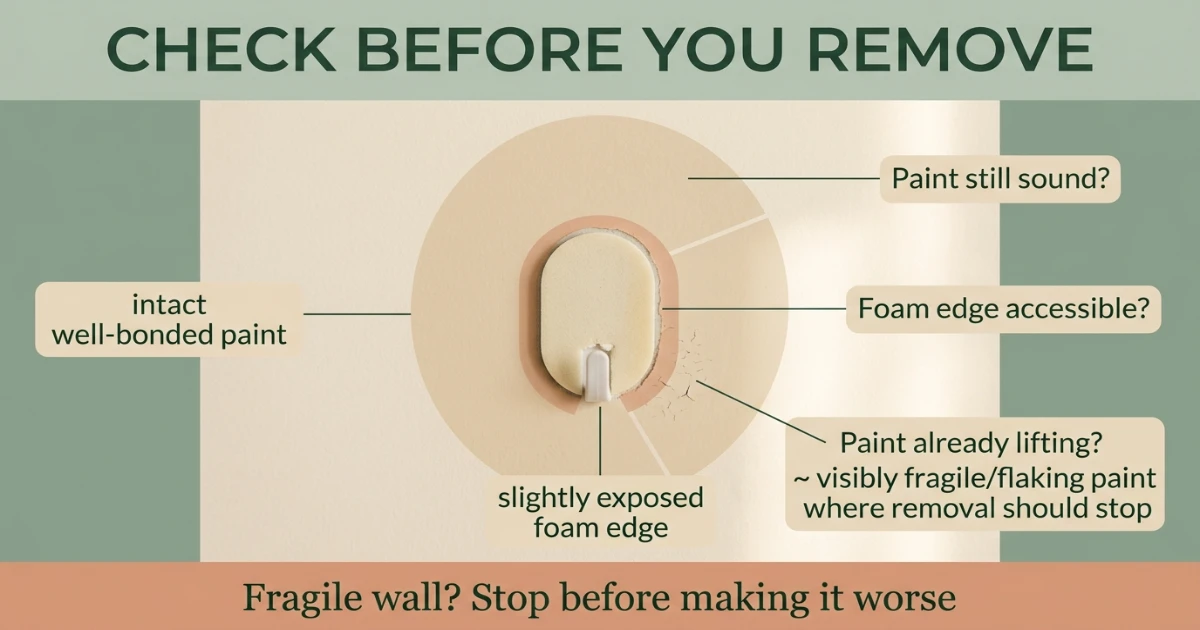
Before touching the broken strip, look at the wall surface and the adhesive pad. This step determines which removal method is safest and whether you should consider asking for professional help.
Check the Paint Condition
If the paint is intact, smooth, and well-adhered, the floss method is usually the lowest-risk option. If the paint is already flaking, peeling, or has been repainted many times, the adhesive may be holding onto loose paint that will lift regardless of how carefully you work. In that case, stop and document the condition before proceeding.
Check the Wall Texture
Current Command guidance for standard indoor products is intended for compatible smooth surfaces and excludes textured or rough walls. If a strip was already installed on a textured surface, treat removal as a higher-risk situation and stop if the floss catches on raised texture or the finish begins to lift.
Check the Adhesive Pad
Look at the edge of the adhesive pad. If the foam is already separating from the wall at one corner, you may be able to work from that edge. If the pad is completely flat and tightly bonded, warming the adhesive slightly can help loosen it.
Lowest-Risk Removal: Dental Floss Sawing
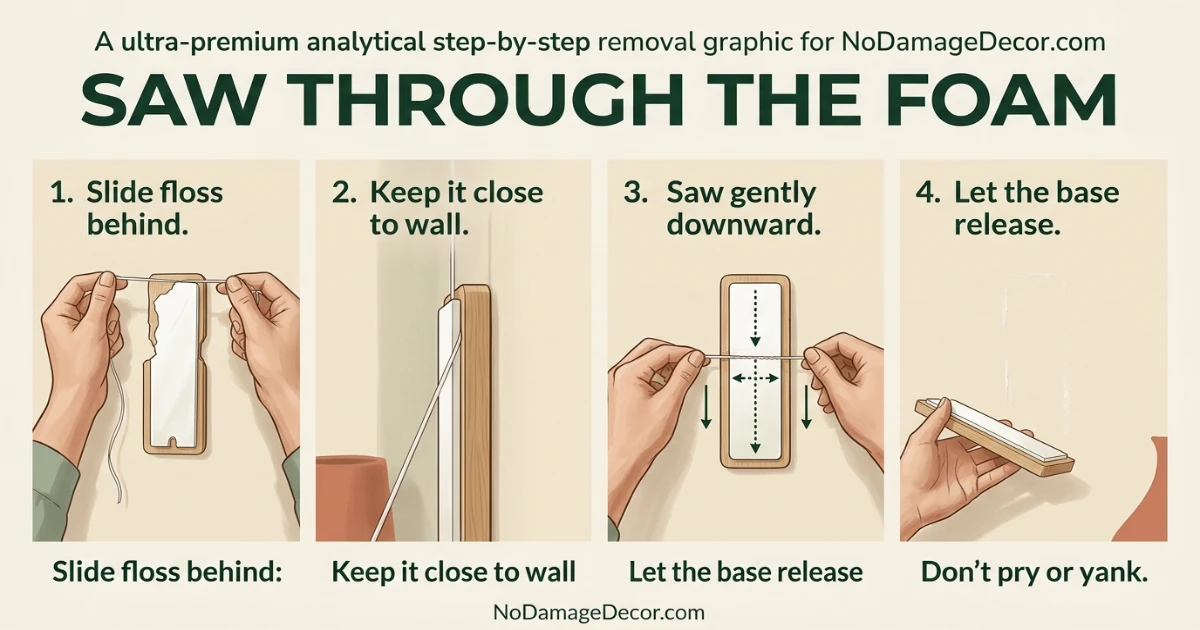
Command’s FAQ specifically recommends dental floss when a strip breaks. The goal is to gently cut through the foam behind the base plate so the attachment can be separated without prying the hanger outward from the wall.
What You Need
- Dental floss
- A soft microfiber cloth
- Patience and good lighting
Step-by-Step Sawing Process
- Cut a comfortable working length of dental floss and hold it securely with both hands.
- Work the floss behind the base plate or foam edge, keeping it as close and parallel to the wall as practical.
- Use a gentle back-and-forth sawing motion through the foam. Do not lever the base outward or force the floss into the painted surface.
- Work slowly. If the floss snags, the paint starts to lift, or the wall finish changes, stop and reassess instead of increasing force.
- As the foam separates, support the base and let the cut foam release gradually. Do not yank the remaining attachment from the wall.
- Once the base is free, inspect the wall before touching any remaining adhesive.
- If small adhesive bits remain, start with gentle dry rolling using a clean fingertip or soft microfiber cloth. Stop if the paint dulls, transfers, or softens.
This is the manufacturer-backed recovery method for a broken Command strip, but it still cannot guarantee zero damage on weak paint, excluded surfaces, or previously damaged walls.
Alternative: Low-Heat Softening
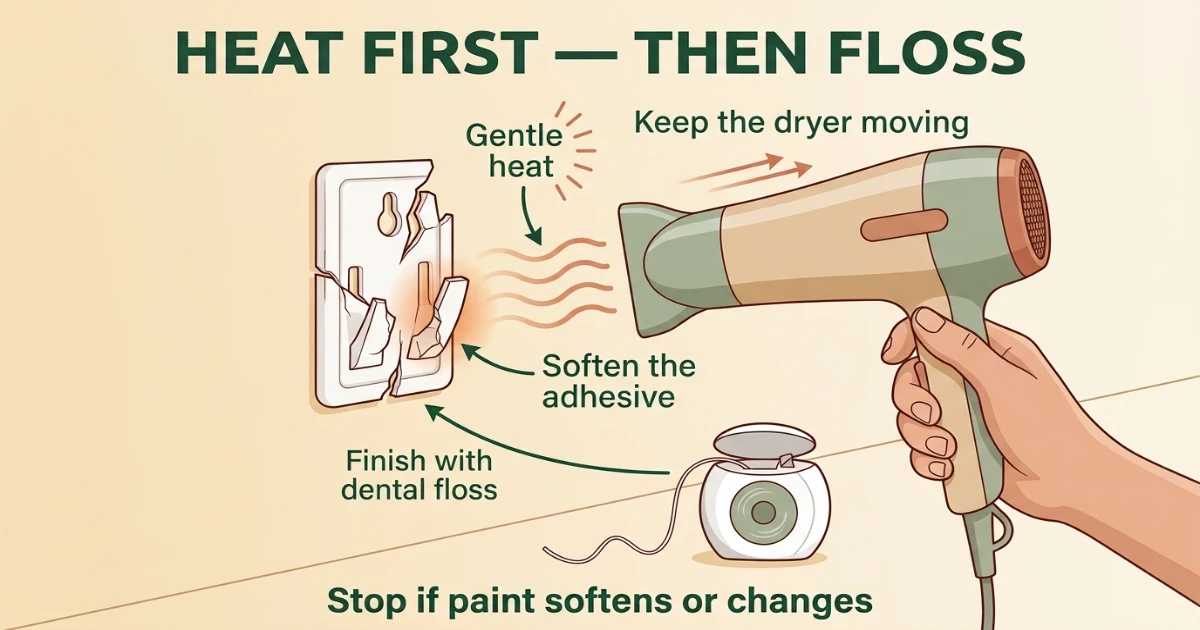
If the foam is difficult to cut, Command’s FAQ says to warm the base plate with a hair dryer to soften the adhesive, then use dental floss. Treat heat as a brief softening aid rather than the primary removal method.
How to Use Gentle Heat Safely
- Use a low, gentle heat setting rather than concentrated high heat.
- Keep the dryer moving and warm the base plate gradually instead of focusing intense heat on one paint spot.
- After the adhesive softens, return to the dental-floss method and gently cut through the foam.
- Stop if the paint becomes soft, tacky, glossy, discolored, or begins to lift.
What Not to Do When the Pull Tab Broke
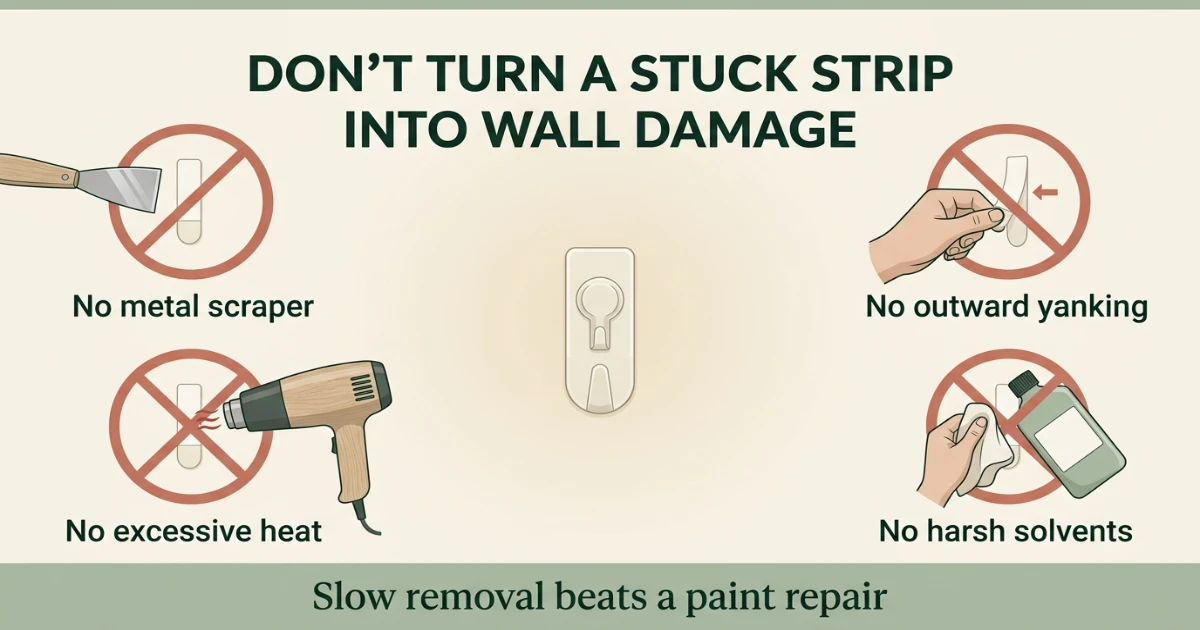
When a Command strip tab breaks, the natural instinct is to grab the plastic base and pull. That is the fastest way to damage the wall. Avoid these common mistakes.
| Avoid This | Why It Is Risky | Safer Alternative |
|---|---|---|
| Pulling the plastic base sideways | Can peel paint or tear drywall paper | Dental floss; gentle heat only as a softening aid if needed |
| Using a metal scraper or razor blade | Scratches or gouges the wall surface | Dental floss through the foam instead of prying |
| Applying high heat for a long time | Can blister paint or damage drywall | Low heat in short, sweeping passes |
| Using acetone or harsh solvents | Can dissolve paint and leave stains | Use the least-aggressive residue method compatible with the wall; avoid unverified solvents |
| Yanking the pad outward from the wall | Puts direct pulling force on the paint | Work the adhesive away slowly with floss |
If you catch yourself pulling hard or reaching for a sharp tool, stop. Slow, controlled removal is safer than adding force or a sharp tool when the wall finish is uncertain.
After Removal: Check for Residue and Touch Up
Once the adhesive pad is off, inspect the wall closely. Even with careful removal, a small amount of adhesive residue or a faint mark may remain. Address those issues before considering the job done.
Adhesive Residue
If a thin adhesive film remains, start with the least-aggressive option: gently roll it with a clean, dry fingertip or soft microfiber cloth. Do not scrub. If residue remains, use our dedicated residue guide before introducing moisture, heat, or a solvent because painted-wall finishes respond differently.
See how to remove Command strip residue for the surface-safe escalation sequence.
Paint Marks or Lifted Finish
If paint lifted, dulled, or changed sheen, photograph the area first. If your lease allows tenant touch-up work, ask the landlord or property manager for the exact paint product and sheen. Do not cover the area with an unverified paint match.
When to Leave It Alone
If the wall has a textured finish, a custom paint color, or visible damage from the removal process, stop and document the area. Contact your landlord in writing, explain the situation, and ask how they prefer to handle the repair. In many cases, a small, honest repair request is less costly than an attempted DIY patch that goes wrong.
Security Deposit Considerations
A damaged wall from adhesive removal can affect your security deposit. Whether a landlord can charge for the repair depends on several factors, including your lease terms, state law, and whether the damage goes beyond normal wear and tear.
There is no universal rule that classifies a particular adhesive mark or amount of paint lift as normal wear. Lease language, local law, the wall’s move-in condition, the extent of damage, and the housing program can all affect whether a deduction is permitted.
Deposit-Safe Documentation Habits
- Take clear before-removal photos and preserve the original files
- Take after-removal photos from multiple angles and preserve the original files
- Note any pre-existing wall damage in writing to management
- Keep a copy of all communication about the wall condition
- If the wall was already damaged, refer to move-in photos
For a broader move-out perspective, see our security deposit wall damage guide. If adhesive residue remains, use our Command strip residue removal guide.
Renter-Safety Verdict
When a Command strip pull tab breaks, the manufacturer-backed recovery method is to use dental floss to gently cut through the foam; if needed, warm the base plate first with a hair dryer to soften the adhesive. Do not pry with metal tools or yank the base outward. Stop if paint lifts or the wall finish changes, preserve before-and-after documentation, and ask the landlord when the surface already looks fragile or damaged.
Understand Command Strip Weight Limits Before You Hang
Prevent future removal problems by matching your adhesive strips to the actual weight of your decor. Learn how to read the rated limits and choose the right product.
Read the Weight Limit GuideFrequently Asked Questions
Can I use dental floss to remove a broken Command strip?
Yes. Command specifically recommends dental floss when a strip breaks. Work the floss behind the base plate and gently saw through the foam instead of prying the hanger outward from the wall.
What if the floss method does not work?
Command says to warm the base plate with a hair dryer to soften the adhesive, then use dental floss to cut through the foam. If the surface begins to change or the base still will not release without force, stop rather than escalating heat or leverage.
Will a hair dryer damage my apartment wall?
A hair dryer can affect some paint and coatings, so use only gentle moving heat as a softening aid and watch the surface closely. Stop if the paint softens, becomes tacky, changes sheen, or begins to lift. Wallpaper is not a compatible Command surface.
What should I do if the paint peels during removal?
Stop immediately, preserve clear original photos of the condition, and contact the landlord in writing if the repair is uncertain or the lease requires approval. Do not hide the area with an unverified paint match.
Can I use Goo Gone or another adhesive remover on the wall?
Do not assume an adhesive remover is safe for painted rental drywall. Start with gentle dry rolling or a soft microfiber cloth, then use only a residue-removal product whose instructions explicitly support the exact wall finish and substrate. Avoid harsh solvents such as acetone.
Why did my Command strip pull tab break in the first place?
A tab can break if it is pulled outward instead of stretched straight down, pulled too aggressively, damaged, folded, or otherwise made difficult to access. Command’s standard removal method is a slow straight-down stretch against the wall.
Is a broken Command strip pull tab considered tenant damage?
A broken tab by itself is not a wall-condition classification. Any deposit consequence depends on the resulting wall condition, lease terms, applicable law, and move-in documentation. Preserve before-and-after records rather than assuming a universal normal-wear rule.
Sources & Renter-Safety Note
This guide provides renter-focused removal guidance, not a guarantee of zero wall damage or legal advice. Paint adhesion, wall texture, prior surface preparation, lease rules, and local deposit law vary.
- Command Brand — FAQs
- Command Brand — How to Use Picture Hanging Strips
- USA.gov — Landlord-Tenant Issues
If the exact Command product has different instructions from this general guide, follow the current instructions for the product in your hand.