Introduction
Curved furniture refers to sofas, chairs, and tables designed with rounded or flowing shapes instead of straight lines. These pieces create softer interiors, improve room flow, and are a key part of the organic interior design movement.
Something is quietly reshaping the modern living room — and it’s not a new paint color or a trendy accent wall. It’s the sofa itself.
Curved furniture has officially arrived in the mainstream. After years of straight lines, boxy sectionals, and rigid minimalist layouts, homeowners and interior designers are turning toward something softer, rounder, and far more inviting. The curved furniture trend is one of the defining design movements of 2026 — and it shows no sign of slowing down.
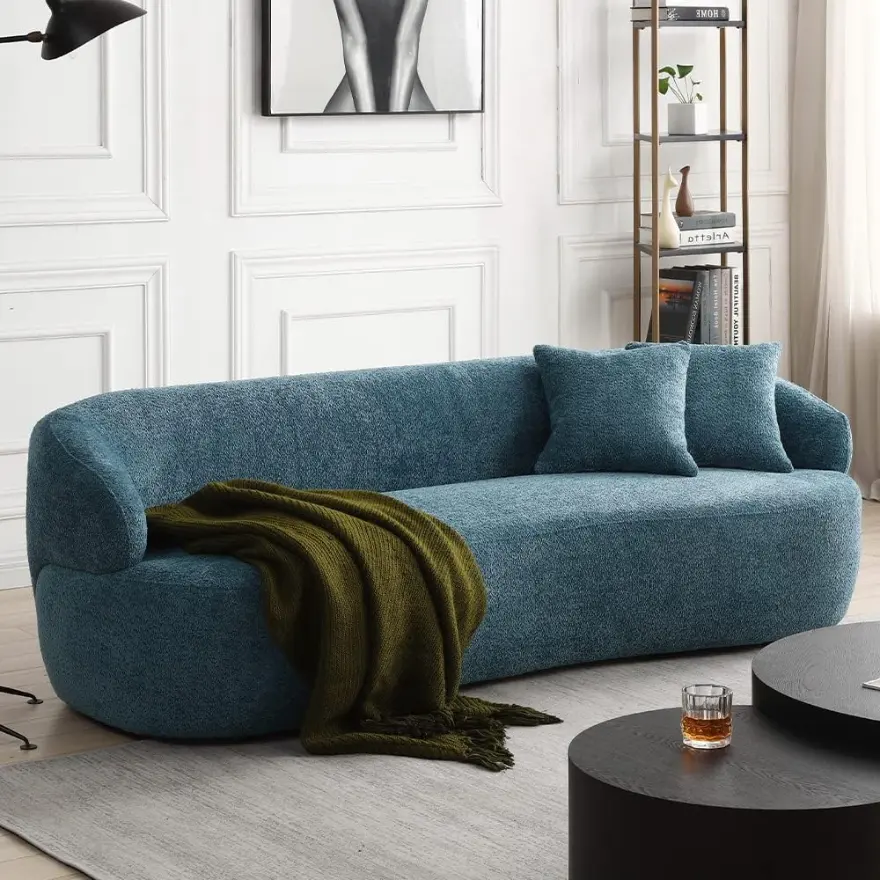
- 86-inch curved silhouette
- Soft bouclé upholstery
- Modern sculptural design
- Great for living rooms and apartments
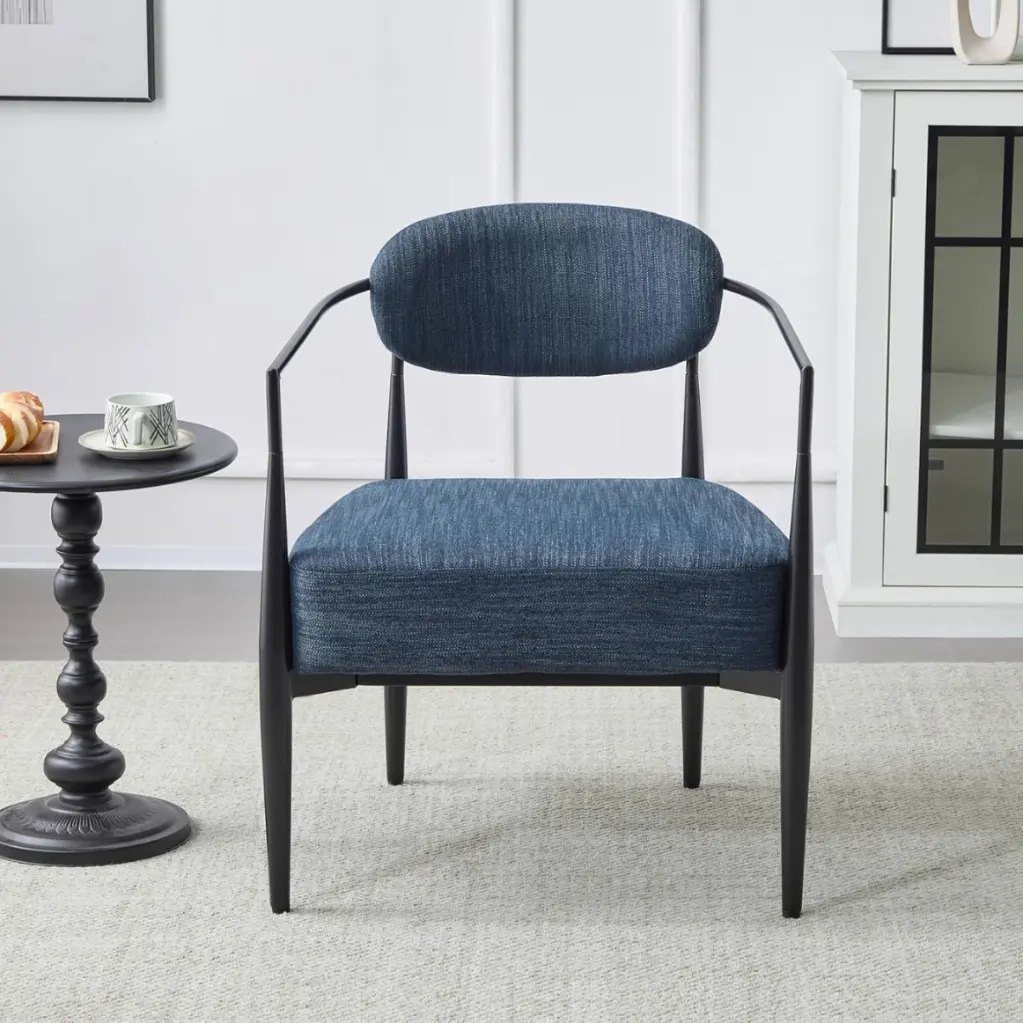
- Elegant curved backrest
- Comfortable upholstered seat
- Perfect companion to curved sofas
- Great for reading corners or lounge areas
The shift makes sense. Modern life is stressful enough. When you come home, you want a space that feels warm and human — not cold and corporate. Organic shapes naturally create that feeling. A sinuous sofa, with its gently flowing silhouette, doesn’t just look beautiful. It changes how a room feels.
Interior designers have been championing curved forms for a few years now, but 2026 is the year the trend truly went mainstream. From boutique apartments in city centers to sprawling suburban living rooms, the modern curved couch is becoming the centerpiece people design entire rooms around.
In this article, we’ll cover everything you need to know about the curved sofa trend — what it is, why it’s happening, how to style it, what materials to choose, and how to make it work even in a small space. Whether you’re redecorating from scratch or just considering a statement piece, this guide has you covered.If you’re planning a full living room refresh, these renter-friendly furniture ideas can help you pair a curved sofa with flexible pieces that still work in apartments and temporary spaces.
Key Takeaways
- The curved furniture trend is one of 2026’s biggest interior design movements, driven by a desire for warmer, more human-centered spaces.
- Sinuous sofas differ from traditional rectangular sofas through their flowing, continuous curves and organic silhouettes.
- Curved sofas can work beautifully in small living rooms by improving traffic flow and creating visual openness.
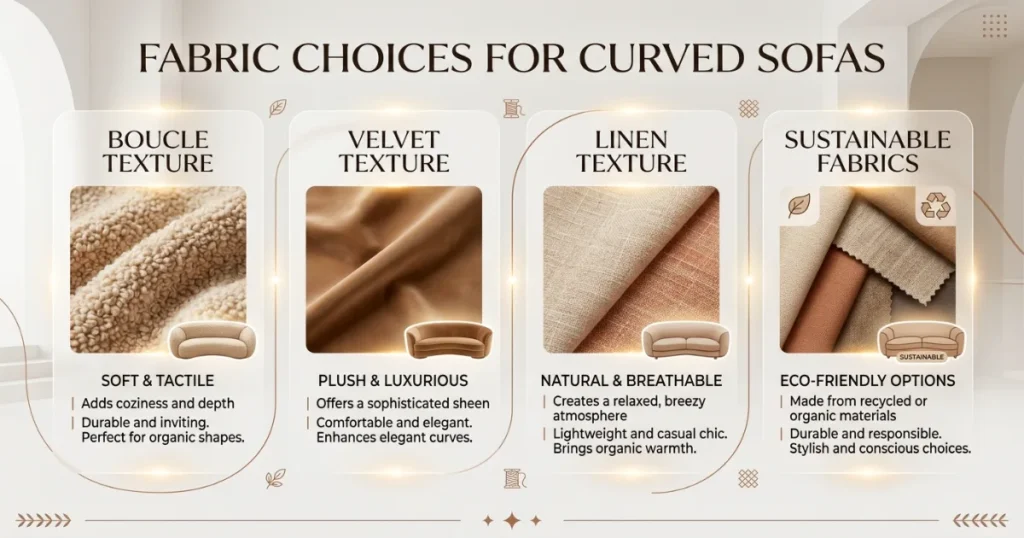
- The best materials for curved sofas in 2026 include bouclé, velvet, linen, and sustainable upholstery fabrics.
- Interior designers recommend pairing curved sofas with round coffee tables, organic rugs, and layered textures for a cohesive look.
- The trend is rooted in the broader organic interior design movement — a reaction against sharp-edged minimalism.
- Curved furniture is expected to remain a dominant design direction well beyond 2026, fueled by wellness-inspired and human-centric design values.
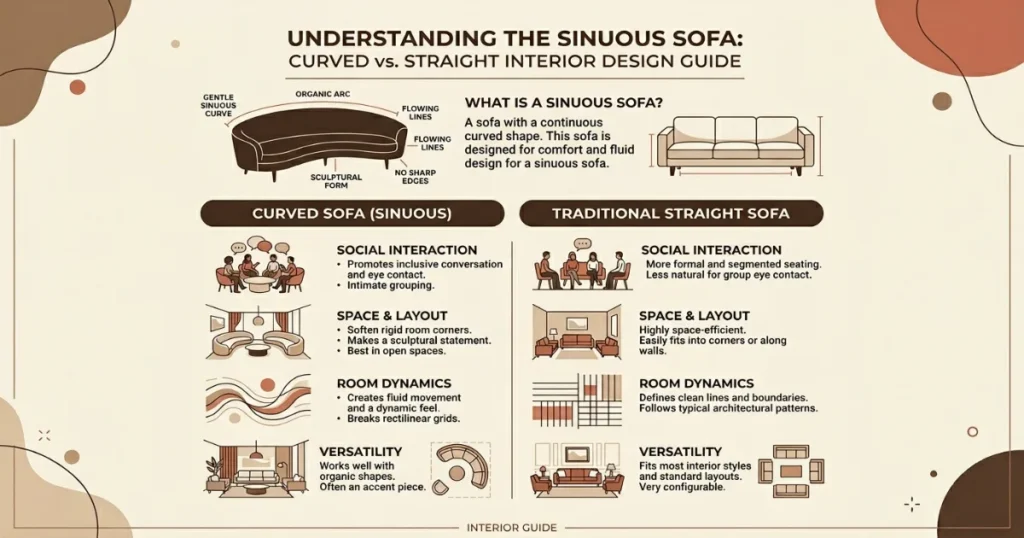
What Is a Sinuous Sofa?
The term “sinuous” comes from the Latin sinuosus, meaning full of curves or bends. In furniture design, it describes a sofa with a continuously flowing, wave-like silhouette — one that curves and moves rather than sitting in a rigid, rectangular form.
A sinuous sofa doesn’t have harsh corners or straight armrests. Instead, the back, seat, and arms flow into each other in one organic, sculpted shape. The result is something that looks almost architectural — like a piece of modern art you can sit on.
This is very different from the traditional three-seater or L-shaped sectional most of us grew up with. Those sofas prioritize function and fit easily into rectangular rooms. A sinuous sofa, by contrast, is designed to be seen — it occupies space with intention.
Curved furniture design actually has deep historical roots. Think of the French chaise longue, the Art Nouveau movement of the early 1900s, or the iconic tulip chairs designed by Eero Saarinen in the 1950s. Organic shapes have always had a place in great design — they’re just having a particularly strong cultural moment right now.
Why Curved Furniture Is Trending in 2026
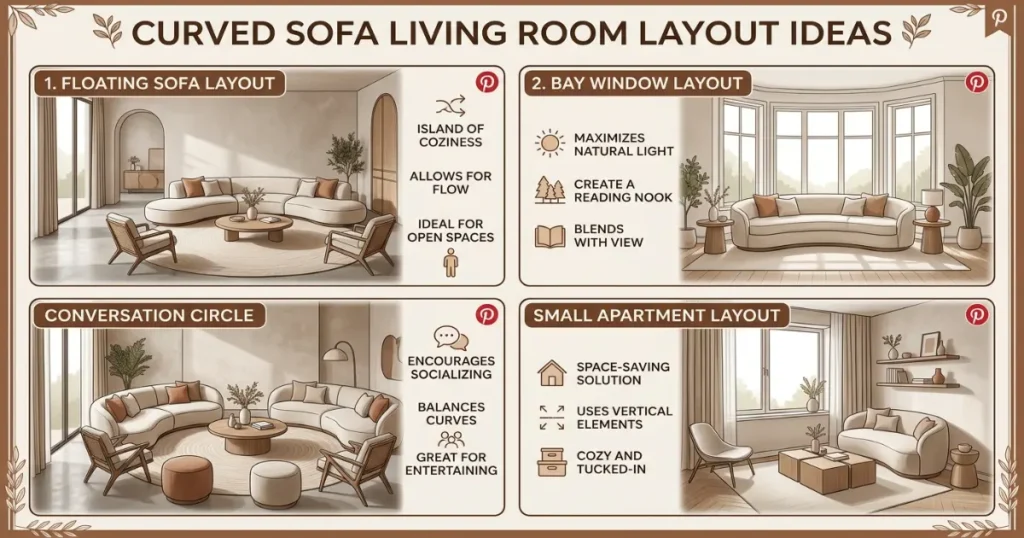
The Rise of Organic Interior Design
The past decade of interior design was defined largely by sharp minimalism — white walls, clean lines, and furniture that looked more like geometry than comfort. It was sleek, sure. But it was also cold.
The organic interior design movement is a direct response to that. People want homes that feel grounded and natural. Curved shapes, natural materials, and flowing forms all communicate safety, warmth, and ease — instinctively, almost biologically.According to Trend Reports, searches for “curved sofa living room” and “rounded couch design” have increased dramatically in the last two years.
Moving Away From Sharp Minimalism
Hard-edged furniture works beautifully in commercial spaces or in magazine photoshoots. In real life, it can feel sterile. Curved furniture softens a room without sacrificing sophistication. You can have a space that’s still clean and modern — but also genuinely inviting.
That balance is exactly what the curved sofa trend delivers. It’s modern without being cold. Sculptural without being impractical. That’s a difficult combination to achieve, and it’s a big reason so many designers have fallen in love with the format.
Social Media and Pinterest Influence
It would be naive to ignore the role of platforms like Pinterest, Instagram, and TikTok in shaping design trends. Curved furniture photographs beautifully. The flowing lines create natural depth, interesting shadows, and a sense of luxury that flat-edged sofas simply don’t produce.
Search “curved sofa living room” on Pinterest and you’ll find millions of saves. These images get shared, recreated, and turned into mood boards that eventually become real rooms in real homes. The visual appeal of curved furniture has accelerated its mainstream adoption enormously.
Designer Preference for Sculptural Furniture
High-end designers have been incorporating modern sculptural furniture into their work for years. Now, as more affordable versions of curved designs reach the mainstream market, everyday consumers can finally access the aesthetic.
Brands across all price points — from fast-furniture retailers to independent design studios — are now producing curved sofas. The trend is no longer reserved for luxury interiors. That accessibility is one of the most significant reasons the curved furniture trend has exploded in 2026.For tighter layouts, our small apartment decor ideas show how curved furniture can soften a room without making it feel crowded.
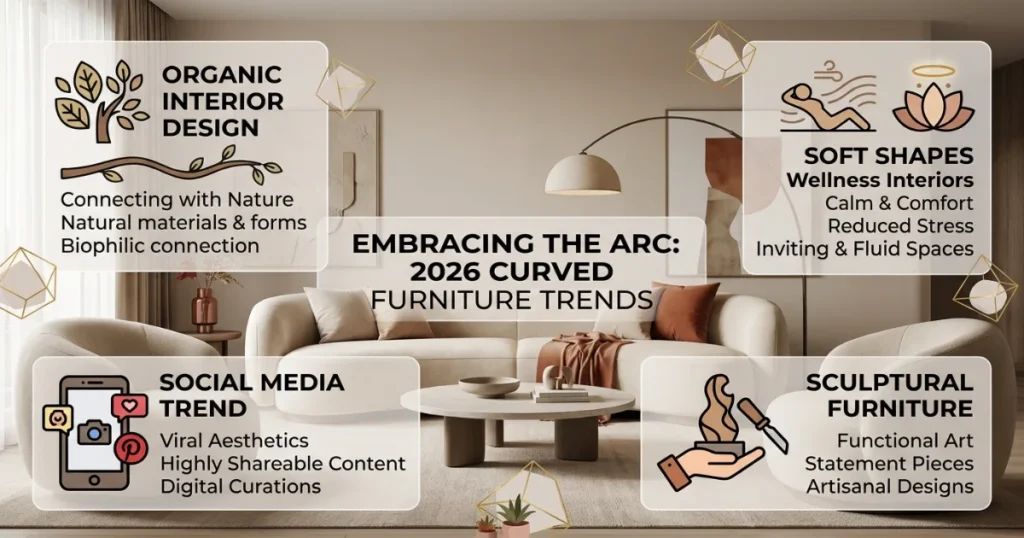
Curved Sofa Living Room Layout Ideas
Curved sofas work best when the entire layout supports their flowing shape. Here are several layout ideas designers commonly use.
Floating Curved Sofa Layout
Place the sofa slightly away from the wall and anchor it with a round rug and a circular coffee table. This allows the curved silhouette to become the centerpiece of the room.
Bay Window Curved Sofa Layout
Curved sofas work beautifully in bay windows or rounded architectural spaces. The sofa mirrors the shape of the room, creating a naturally balanced layout.
Conversation Circle Layout
Pair a curved sofa with two accent chairs across from it and a round coffee table in the middle. This arrangement encourages conversation rather than focusing only on a television.
Small Apartment Layout
Use a compact crescent sofa with slim legs and place it diagonally in the room to improve traffic flow and make the space feel larger.
Benefits of Sinuous Sofas in Modern Living Rooms
Better Room Flow
One of the most underrated benefits of a curved sofa is how it directs movement through a room. The rounded edges naturally guide foot traffic around the perimeter rather than forcing people to navigate corners. In open-plan living spaces especially, this creates a more intuitive, comfortable layout.
Softer Visual Appearance
Straight furniture creates a rigid, boxy visual environment. Curved furniture breaks that up. Even one sinuous sofa in a room full of right angles has a softening, balancing effect — it introduces a sense of ease that’s hard to achieve with traditional pieces.
Creates Focal Points
A well-chosen curved sofa becomes the instant focal point of a room. It draws the eye and gives the space a sense of intentional design. You don’t need an elaborate gallery wall or an oversized light fixture when the sofa is doing the visual work on its own.Once the sofa becomes the focal point, you can finish the room with budget-friendly wall decor that adds character without competing with the silhouette.
More Conversational Seating
Many curved sofa designs — particularly crescent or half-moon shapes — naturally orient seats toward each other. This creates a more intimate, conversational arrangement than a standard sofa facing a television. If you entertain regularly, that social quality is genuinely valuable.
Improved Comfort
It’s not just visual. Many sinuous sofas are designed with ergonomic curves that support the natural shape of the human body. The curve of the backrest, in particular, often follows the spine more naturally than a flat back cushion does.
Curved Sofas: Pros and Cons
Curved sofas offer several design and comfort advantages, but they also come with a few practical considerations. Here’s a quick comparison to help you decide if a sinuous sofa is the right choice for your living room.
|
Pros |
Cons |
|---|---|
|
Creates a softer, more inviting living room |
Often requires more layout planning |
|
Improves traffic flow in open spaces |
Can cost more than standard sofas |
|
Acts as a natural design focal point |
Some models take more floor space |
|
Works well with organic interior design styles |
Limited placement against walls |
|
Encourages conversational seating layouts |
Fewer budget options compared to standard couches |
Curved Sofas in Small Living Rooms
There’s a common misconception that curved sofas are only for large, open-plan spaces. In reality, a small living room curved sofa can be one of the smartest design choices you make for a compact apartment.
Traffic Flow
In a small room with a rectangular sofa, traffic flow often gets awkward — people walk behind the sofa, bump into the corners, and the room can feel choppy. A curved sofa eliminates those sharp corners, allowing traffic to move more naturally around the furniture.
Visual Openness
Rounded shapes tend to look less bulky than their straight-edged equivalents, even when the actual footprint is similar. A curved sofa lifts the visual weight of the room rather than compressing it. Choosing a design with slim legs enhances this effect significantly.
Space Optimization
In a corner layout or bay window configuration, a curved or crescent-shaped sofa can actually fill space more efficiently than a straight sectional. It wraps around the natural contours of the room rather than fighting against them.
Renter-Friendly Ideas
If you’re renting, you may not be able to make structural changes to your space. But furniture choices are entirely your own. A curved sofa paired with a round rug and a circular coffee table can completely transform the aesthetic of a neutral, bland apartment without touching a single wall.
Designer Insight: Why Curved Sofas Feel More Comfortable
Interior designers often explain the appeal of curved furniture through psychology.
Humans instinctively respond better to rounded shapes than sharp corners. Research in environmental psychology suggests curved forms feel safer and more welcoming to the brain.
That’s why rooms designed with organic furniture — including sinuous sofas — often feel more relaxing than spaces filled entirely with rigid geometric furniture.
Curved furniture doesn’t just change how a room looks. It subtly changes how the room feels.
Pair With Round Coffee Tables
One of the most consistent pieces of advice from interior designers styling curved sofas: match the curves. A round or oval coffee table echoes the sofa’s silhouette and creates visual harmony. Rectangular coffee tables can work too, but they require more careful balancing.
Use Organic Shaped Rugs
Rugs with irregular, organic edges — or classic round rugs — complement curved furniture beautifully. They reinforce the idea of flow and movement rather than cutting the space into rigid sections.
Neutral Color Palettes
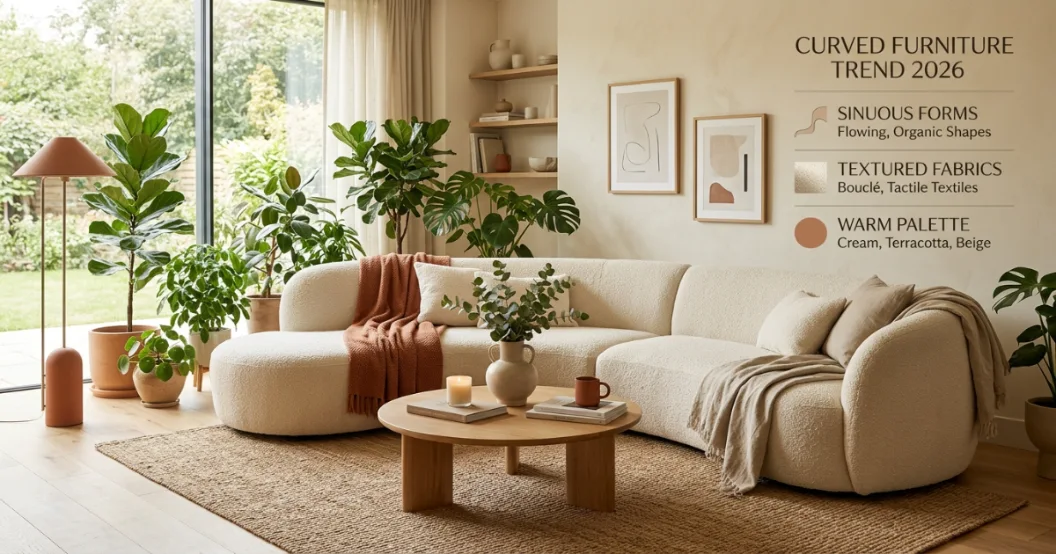
Curved sofas tend to be statement pieces. Keeping the surrounding palette neutral — warm whites, soft taupes, terracotta, sage green — lets the sofa’s shape do the talking without the room feeling overly busy.
Mix Curves With Straight Lines
Don’t be afraid of contrast. Pairing a sinuous sofa with a structured bookshelf or a straight-edged console table creates interesting tension. The key is balance — if the sofa is the soft, curved element, let the supporting pieces be more structured.
Layer Textures
Bouclé, velvet, linen, chunky knit throws — layering textures makes a curved sofa feel rich and considered rather than sterile. A bouclé sofa with a velvet cushion and a linen throw is one of the most popular combinations in high-end interior design right now, and for good reason. It works.
Best Materials for Curved Sofas
Bouclé Fabric
Bouclé is arguably the defining upholstery of the curved furniture trend. Its looped, textured surface adds depth and warmth to organic shapes — it’s soft, slightly rustic, and incredibly photogenic. Bouclé curved sofas have become a signature look of 2026 interior design.
The slight caveat: bouclé can be harder to clean and may attract pet hair. It works best in lower-traffic rooms or homes without pets.
Velvet Upholstery
Velvet adds luxury and richness to a curved sofa. Its smooth, reflective surface shows off the silhouette beautifully — every curve catches the light differently throughout the day. Velvet is also surprisingly practical; performance velvet versions are stain-resistant and durable enough for everyday use.
Linen Textures
For a more relaxed, Scandinavian-inspired aesthetic, linen-upholstered curved sofas are an excellent choice. Linen is breathable, ages gracefully, and gives curved furniture a lived-in, natural quality that feels effortless rather than staged.
Sustainable Fabrics
As sustainability becomes a genuine priority rather than a marketing footnote, more manufacturers are producing curved sofas in recycled, low-impact, or certified organic fabrics. If your design values align with your environmental ones, these options are increasingly available at all price points.
Curved Furniture Design Ideas for Living Rooms
Minimalist Curved Sofa Layout
For a clean, calm aesthetic, choose a single curved sofa in a neutral tone — ivory, stone, or warm white. Keep the rest of the room spare: one round coffee table, a simple floor lamp, and a large-format art print.If you want to style the wall behind your curved sofa, here’s how to hang art without nails and keep the setup renter-safe. Let the shape be the whole story.
Luxury Curved Sectional Ideas
A curved sectional — particularly a crescent or U-shape configuration — creates a sense of enveloping luxury. In a larger living room, this works beautifully with a dramatic pendant light at the center and layered rugs beneath. It’s the kind of setup that makes a room feel like a destination.A curved sofa also pairs beautifully with renter-safe art prints, especially if you want a polished focal wall without drilling or heavy framing.
Scandinavian Curved Furniture Styles
Nordic design has embraced curved furniture wholeheartedly. Think light wood legs, pale upholstery, clean lines that still allow for soft forms, and a general sense of understated warmth. A Scandinavian curved sofa often looks deceptively simple while being extremely well-made.
Modern Organic Living Room Designs
The modern organic aesthetic combines natural materials — stone, wood, clay — with curved, flowing furniture to create spaces that feel both contemporary and deeply human. A curved sofa in earthy tones, surrounded by indoor plants, ceramic accessories, and warm lighting, is the essence of this style.
Things to Consider Before Buying a Curved Sofa
Room Size and Layout
Before falling in love with a particular piece, measure your space carefully. Curved sofas often have a larger effective footprint than they appear in showrooms or online. Make sure there’s enough clearance on all sides — at least 18 inches between the sofa and a coffee table, and enough space to walk comfortably around the room.
Layout Planning
Consider how the sofa will sit in the room. Curved sofas look best when they’re not pushed flat against a wall — they’re designed to float in a space. If your room only works with wall-hugging furniture, a curved sofa may feel awkward rather than elegant.
Fabric Durability
Think honestly about your lifestyle. Bouclé is beautiful but delicate. Velvet is luxurious but needs regular brushing. If you have young children or pets, performance fabrics — which look similar to premium materials but clean much more easily — are worth every penny.
Maintenance Tips
Regular vacuuming with a soft brush attachment will extend the life of most upholstered curved sofas. Rotate and fluff cushions weekly to maintain their shape. For bouclé and velvet, avoid direct sunlight which can fade and degrade the fabric over time.
Budget Considerations
Curved sofas span an enormous price range — from a few hundred dollars at mass-market retailers to tens of thousands for designer pieces. Quality is generally reflected in price: frame construction, seat cushion density, and upholstery durability all improve significantly at higher price points. If budget is a concern, prioritize frame quality above everything else; cushions can be replaced, but a poorly constructed frame cannot.
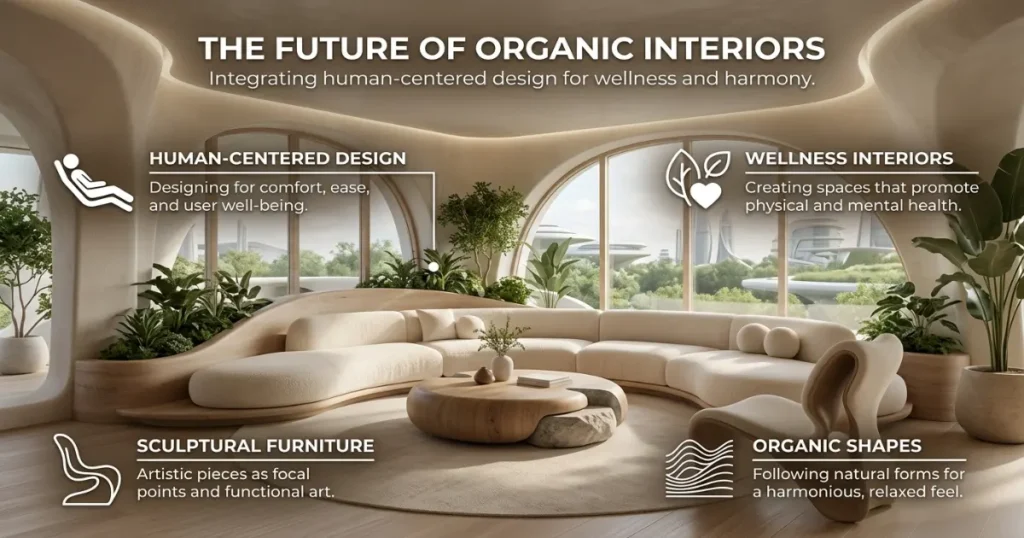
The Future of Curved Furniture Design
Trends come and go — but the deeper forces driving the curved furniture movement suggest this one has real staying power.
Human-Centric Design
The design world is increasingly focused on how spaces make people feel, not just how they look. Research consistently shows that rounded shapes feel safer and more welcoming to humans on a neurological level. As long as designers prioritize human wellbeing, organic shapes will remain relevant.
Wellness-Inspired Interiors
The intersection of interior design and wellness is one of the most powerful trends in contemporary living. Spaces are being designed to reduce anxiety, improve sleep, and support mental health. Soft, curved furniture aligns perfectly with this ethos — it contributes to an environment that feels restorative rather than stimulating.
Sculptural Furniture Trends
The line between furniture and art continues to blur. Modern sculptural furniture is being collected, commissioned, and celebrated in ways that feel entirely new. Curved forms are central to this movement — they allow designers to create pieces that are genuinely expressive rather than purely functional.
Evolution of Modern Home Aesthetics
As more people spend time at home — working, creating, socializing — the home itself has become a more personal, expressive space. That personal investment drives demand for furniture that feels meaningful rather than generic. Curved sofas, with their distinctive character and visual presence, fit that need perfectly.
FAQs
What is a sinuous sofa?
A sinuous sofa is an upholstered sofa with a continuously flowing, curved silhouette — as opposed to the traditional rectangular or boxy shape. The term “sinuous” refers to the wave-like, organic form of the design. Sinuous sofas are the centerpiece of the current curved furniture trend and are known for combining sculptural aesthetics with genuine comfort.
Are curved sofas comfortable?
Yes — in many cases, more so than traditional straight sofas. Many curved designs follow the natural contours of the human body, particularly in the backrest. The rounded shape also encourages a more relaxed sitting posture. Comfort ultimately depends on cushion quality and construction, so it’s worth testing a sofa before purchasing when possible.
Do curved sofas work in small living rooms?
Absolutely. A small living room curved sofa can actually improve the flow and visual openness of a compact space. Rounded edges eliminate awkward corners, guide traffic more naturally, and often look less visually bulky than equivalent straight-edged furniture. Choosing a sofa with slim legs further enhances the sense of space.
Why is curved furniture trending in 2026?
The curved furniture trend is driven by a broader cultural shift toward organic, human-centered interiors. After years of sharp minimalism, people are seeking spaces that feel warm, inviting, and natural. Social media has accelerated the trend by showcasing the visual appeal of curved forms, and more accessible price points have brought the look to a mainstream audience.
Are curved sofas practical for everyday use?
Yes, with the right material choice. Performance velvet, durable linen, and treated bouclé all hold up well under daily use. The key is matching your fabric choice to your lifestyle. Curved sofas are not inherently less durable than traditional ones — frame quality and upholstery care matter far more than the shape itself.
What decor style works best with curved furniture?
Curved furniture is most at home in organic, modern, Scandinavian, and contemporary interiors. It pairs particularly well with natural materials like wood and stone, neutral color palettes, round or organic-shaped accessories, and layered textures. That said, curved sofas can also create interesting contrast in more structured or traditional spaces — design rules are made to be broken thoughtfully.
Conclusion
The curved furniture trend isn’t a passing fad dressed up in Instagram aesthetics. It’s a genuine design shift — one rooted in how people want to feel in their homes in 2026 and beyond.
Sinuous sofas are gaining popularity because they solve a real problem: how to create a living space that looks modern and considered, but also feels genuinely warm and human. They bring organic beauty into homes without sacrificing function, and they work across a surprisingly wide range of spaces and styles.
Whether you have a large open-plan space or a compact city apartment, there is a curved sofa that will transform your living room. The key is taking your time — measuring carefully, choosing the right material for your lifestyle, and treating the sofa as the statement piece it was designed to be.
Design should make you feel something. And right now, the curved sofa is one of the most powerful tools available for making a home feel like exactly that — home.
If you’ve been considering making the switch, 2026 might be the perfect year to finally go for it.In a world filled with sharp screens, rigid schedules, and busy routines, it’s no surprise that our homes are moving toward softer shapes. Curved furniture reflects that shift — creating spaces that feel calmer, more welcoming, and more human.