A mudroom is one of the hardest-working spaces in your home. It’s the first stop for wet shoes, muddy boots, backpacks, umbrellas, and everything that follows you in from the outside world. Yet despite all that daily wear and tear, it still sets the tone for how your home feels the moment you walk through the door. That’s why choosing the right wall color in a mudroom isn’t just a design decision — it’s a functional one.
Check out our top mudroom wall color ideas, a thoughtful mix of soothing neutrals, earthy tones, and confident statement shades that are designed to handle real life, wet shoes and all. The right color can make a cramped entry feel brighter, help hide scuffs and fingerprints, and instantly create a sense of calm and order, even on the busiest days.
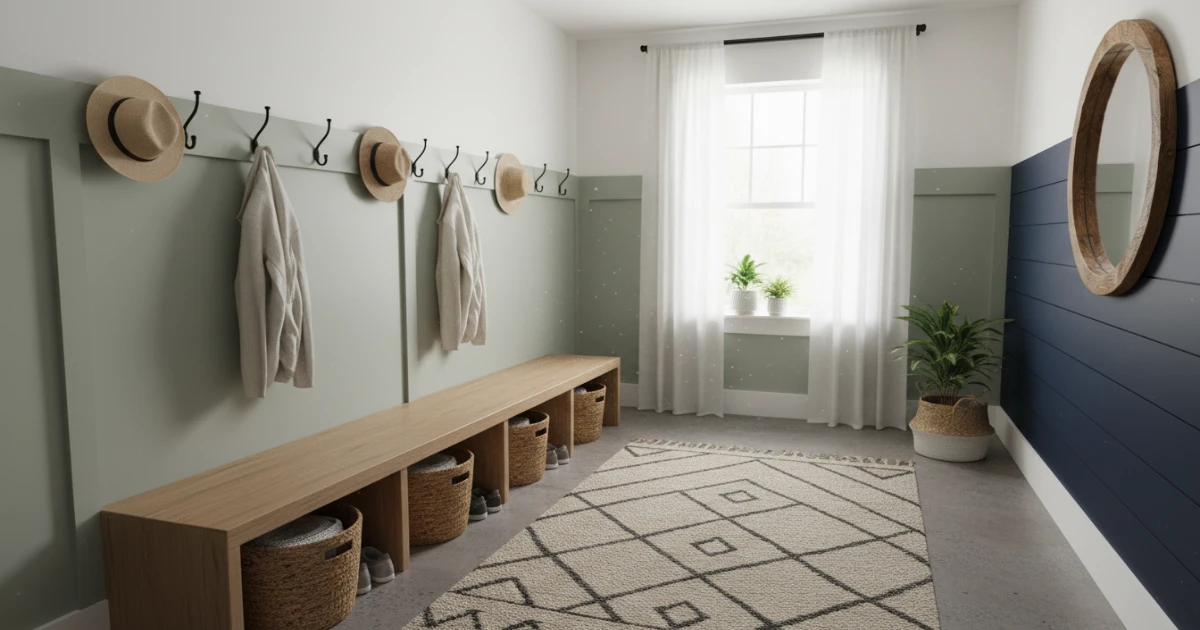
Soft whites and warm grays remain popular for good reason. They reflect light, visually open up small or windowless mudrooms, and create a clean, timeless backdrop that works with nearly any style of storage, flooring, or decor. On the other end of the spectrum, deeper hues like rich green or classic navy add depth and polish, grounding the space while making built-ins, hooks, and benches feel intentional rather than purely utilitarian.
Whether your mudroom is a narrow hallway, a full drop zone with lockers, or a simple corner by the back door for small apartment decor ideas, the right wall color can completely change how it functions and how it feels. In this guide, we’ll walk through the best mudroom wall colors — from light and airy neutrals to bold, character-rich options — along with practical tips to help you choose a shade that stands up to everyday use while still looking pulled together and welcoming.
Key Takeaways
- Opt for crisp white walls when you crave a bright, classic mudroom that illuminates, expands tight quarters and accentuates shiplap, trim and cabinetry. Have fun adding contrast with natural wood, woven baskets and black accents so the space doesn’t fall flat.
- Go with soft gray or warm beige if you want a soothing, low-maintenance background that camouflages daily scuffs and grime. These neutrals play nicely with wood tones, farmhouse vibes, and layered textures and make it easy to change up your accessories as time goes on.
- Think sage green or light blue, which are fresh, nature-inspired colors that are well-suited to family entryways and heavy mudrooms. Combine these tones with organic materials, minimalist storage, and cozy fabrics to craft an inviting in-between moment between outside and inside.
- Choose bold navy or deep charcoal if you’re after a dramatic, modern atmosphere that grounds the space and offers sophistication. Try these darker colors on a single feature wall or cabinetry and balance them with white trim, good lighting and metallic hardware.
- Think terracotta for an earthy, warm mudroom that pairs beautifully with rustic, vintage, or farmhouse decor. Pair terracotta walls with woven baskets, brass hooks, and patterned rugs for a warm, character-filled entry by using renter-friendly wall decor ideas.
- Consider natural light, mudroom size, and its connection to adjacent spaces before selecting a paint colour. Try outsome paint samples on the wall. Then add in storage, textiles, and lighting that enhance your chosen shade and facilitate everyday use.
1. Crisp White for Timeless Elegance
Crisp white lends a mudroom a clean, simple aesthetic that’s calm and timeless. Short names such as Cloud White OC-130 or Cotton Balls OC-122 make great bases. Both read as soft white rather than harsh ‘paper’ white, so the room looks bright and fresh without being hard. In a high-traffic space that deals with shoes, bags, and coats, that feeling of clean counts. White bounces more light than mid or dark tones, making the entire entry feel more spacious and accessible, especially when considering the best laundry room paint colors.
For a versatile background that accommodates lots of decor, white walls are like a blank slate. Cloud White OC-130 leans a tad warm, so it works well with traditional, farmhouse, or coastal style. Cotton Balls OC-122 possesses a mild warmth that complements slick, contemporary black accessories and more rustic items. In a rental or family home where decor comes and goes, crisp white keeps up. It pairs beautifully with green mudroom accents and sits beside antique benches, geometric rugs, or statement art.
To prevent a white mudroom from coming off as cold, layer in warm, touchable materials. Natural wood finishes on a bench or open shelves add a soft grounded tone. Woven baskets beneath a bench or atop upper cubbies inject texture and provide fast storage for hats or dog leashes. Black mudcloth pillows on a built-in seat provide punchy contrast and pattern, which grounds the white to feel intentional and styled, creating a sophisticated blue and white palette.
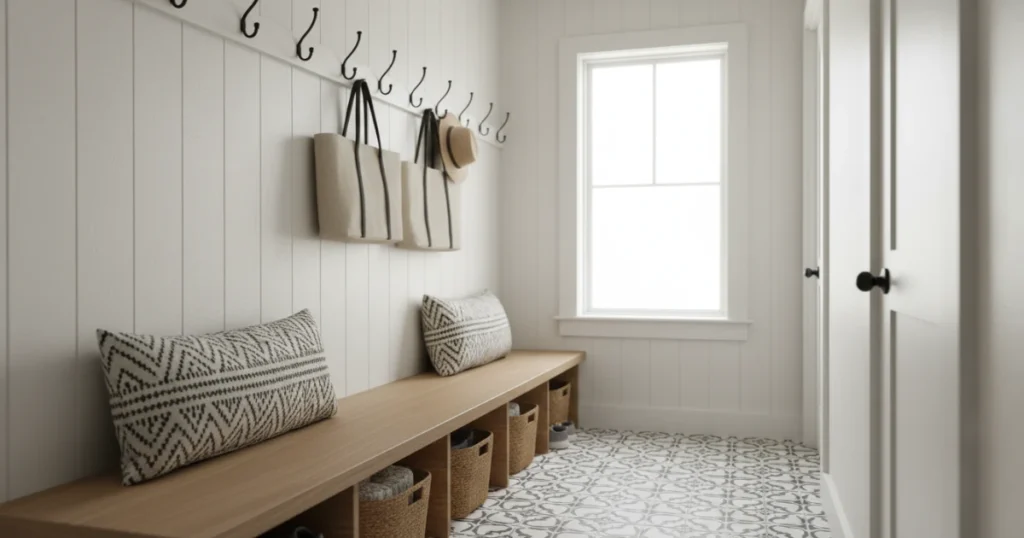
White shiplap, a light oak bench, and two black-and-white mud cloth cushions can transform a narrow hall into a compact yet cutting entry zone, for instance. White is particularly effective in small mudrooms or windowless nooks. By bouncing natural and artificial light, white walls prevent a 1 to 2 meter wide space from feeling tight. Little things matter there, especially in inspiring mud room spaces.
A timeless white on shiplap, cabinets, and trim keeps lines crisp so the eye sees the room as one large surface instead of lots of fragmented pieces. UPDATE: Most opt for a hardy eggshell or matte on walls to camouflage scuff marks. Then, a semi-gloss on trim and built-ins allows for easier wipe-downs. White shows the dirt, so a quick weekly swipe of high-touch areas, like cabinet pulls and lower walls near shoes, keeps the space fresh and open, ensuring that your mudroom makeover remains inviting.
Lighting shifts how crisp white looks. In rooms with diffused daylight, whites appear warmer and creamier. Warm LED bulbs tend to make the same color lean creamy. Test Cloud White OC-130 or Cotton Balls OC-122 on a small bit of wall near the door, then check it morning and evening. You’ll know when you’ve picked the right one for your light, ensuring the perfect color for your mudroom paint color choices.
2. Soft Gray for a Calm Atmosphere
Soft gray adds a calm, low-key vibe to a hectic mudroom. This mudroom entryway feels neutral and soft, so it doesn’t combat coats, bags, and shoes that often lay in view. Many people find soft gray walls less jarring than bright white and less loud than brash colors, which helps the room feel more grounded and soothing by using peel and stick accent walls.
Soft gray, such as Boothbay Gray or Gray Cloud, serves as an excellent neutral canvas. Both sit in that zone where the color reads as neutral but still has enough depth to keep the room from feeling flat. Boothbay Gray tends a bit warmer and pairs nicely with mudrooms glowing with warm light or wood trim, enhancing the overall interiors.
Gray Cloud is on the cooler side of the scale, which can lend a crisper feel to a space that has a ton of natural light. Trying swatches at different times of day on the same wall helps reveal how each hue shifts in morning sun, afternoon light, and evening shadows. That detail counts because even a slight variation in gray can shift the mood from cozy to cool, making it an ideal choice for mudroom paint color.
To create a comfortable and clean aesthetic, soft gray walls go perfectly with warm wood and soft texture. A soft gray wall combined adjacent to oak benches, beech hooks, or a walnut shelf provides a wonderful warm-cool equilibrium. Throw in a line of neutral seat cushions, perhaps in beige or clay, along with some velvety pillows in subdued shades of green or denim.
The color contrast remains muted to keep visual clutter to a minimum, while the soft fabrics and wood grain introduce coziness and layers. It comes across as welcoming without becoming a color clash, making it a great option for those seeking amazing mudroom inspiration.
For a more refined flow through the home, gray can repeat in cabinetry or flooring. Mudroom cabinets in a tad deeper gray than the walls or floor tiles with gray veining can connect the space to an adjacent kitchen or hallway that employs some of the same hues. That echo of color makes the move from one room to the next seem more seamless and intentional.
In most homes, this makes your mudroom seem like an actual extension of your main living space rather than just a haphazard afterthought or addition, enhancing the overall decor style.
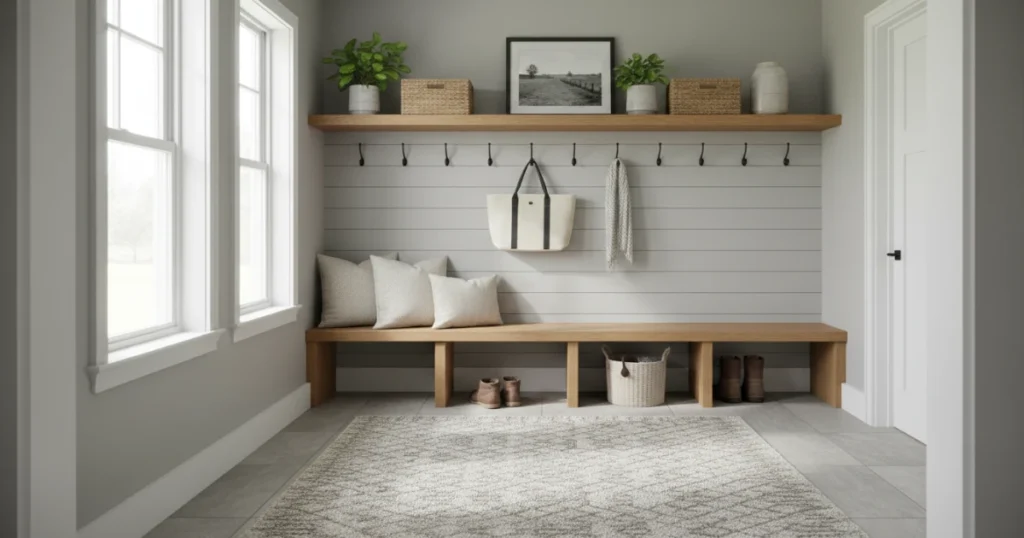
Soft gray finish wears well in real life. Mid-tone and light grays have the added benefit of hiding dust, scuff, and little shoe marks better than bright white, which displays them in flashing neon. In a busy mudroom where backpacks, sports equipment, and dogs are coming and going on a daily basis, that can reduce touching up.
Gray is too bland, say some, until they discover just how flexible a color it is to combine with others and how calm and open the room can feel. Some go warmer grays to achieve a cozy, rustic feeling, while others gravitate to cooler grays for a crisp, breezy atmosphere.
Either can make the room feel more open and clean, and it ultimately comes down to what feels right in that house, ensuring that the mudroom makeovers reflect personal style and comfort.
3. Warm Beige for Cozy Vibes
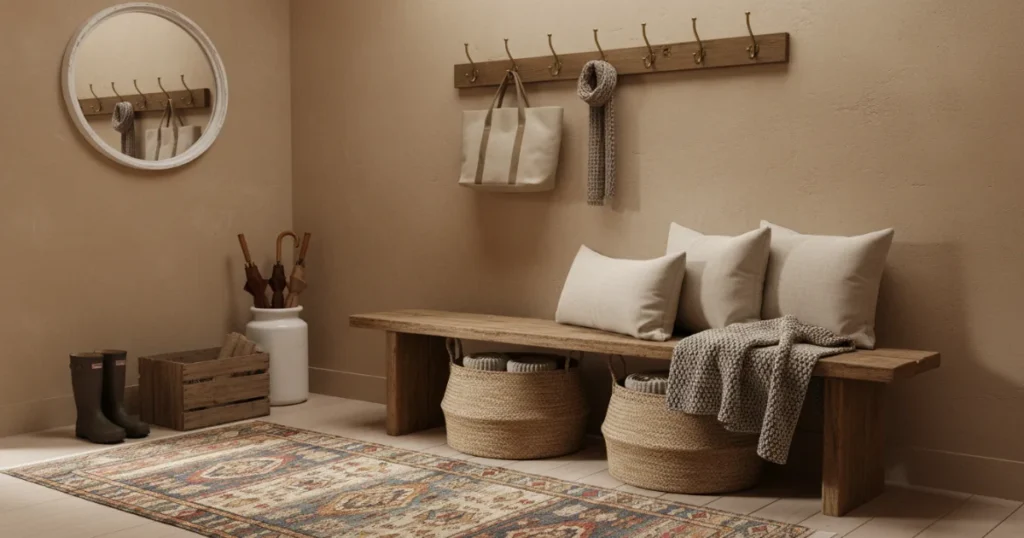
Warm beige establishes a calm, welcoming foundation that remains both fresh and inviting. The color is a perfect warm beige that acts as the sweet spot between white and brown, bringing warmth to the space without making it look dark. Warm beige is a favorite in bustling rooms as it adds a touch of softness and earthiness that pairs perfectly day to day.
To invite in that cozy grounded tone, warm beige paint complements rustic accents and antique rugs. A runner of somewhat faded reds, blues or terracotta on a beige wall backdrop appears rich but not noisy. In a tiny mudroom, warm beige, like a soft sand or oatmeal, can offset black metal boot trays, woven mats, or an old bench. The color just reads warm and cozy to me, which for some makes drop zones feel more part of the home and less like a storage corner.
For a chill farmhouse aesthetic, beige walls pair well with uncomplicated natural elements. Wood wall pegs in oak or pine, open shelves, and seagrass or wicker baskets all pop against warm beige without clash. The color keeps everything looking tied together, so hooks, hats, canvas bags, and dog leashes appear chic, not chaotic, in any mudroom entryway.
Because beige doesn’t show dust and scuffs as easily as crisp white, it’s a more practical choice if you have a hard-working entry area with shoes, bags, and sports equipment flowing in and out all day long. As a foundation, warm beige provides a great neutral canvas for additional color.
Patterned bench cushions or a line of colorful rain boots or a statement tile floor can all stand out against hushed beige walls. Others prefer a strip of floral removable wallpaper over a beige wainscot to introduce green or floral colors without the entire room being patterned. Statement colors on a storage cabinet, such as deep green, navy, or a muted mustard, tend to feel less ‘risky’ when the walls remain warm and neutral.
For a classic vibe, beige walls pair beautifully with traditional wood trim, shaker-style built-ins, and unadorned brass hooks. Brass and warm beige have the same gentle golden undertone, so they nestle beautifully and weather beautifully. The result is a serene, warm vibe that is versatile enough to pair with contemporary, farmhouse, or classic styles as trends evolve.
4. Sage Green for a Natural Feel
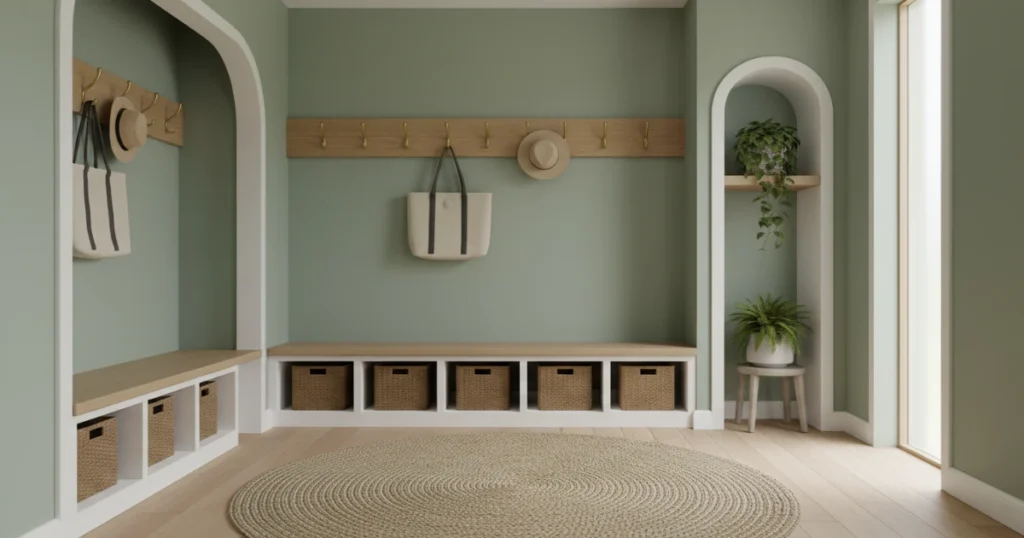
There’s something calm, natural, yet still smart and put-together about sage green. The hue connects you to nature, so the space feels grounded and calm, not lifeless or boring. I think many of us have started to regard sage as the new neutral because it acts like a nice soft backdrop color and brings this subtle pop of color. This makes it an excellent choice for a mudroom makeover.
The softer versions remain fresh for years and don’t date as fast as strong trend colors. To hang onto that tranquil vibe, paint with soft, velvety sage tones like “Velvet Sage,” “Mizzle” or any dulled-down shade of green tinged with grey. These shades usually feature little blue undertones that provide a crisp, calm touch, which is perfect in a bustling drop zone, especially when considering mudroom paint color options.
In a snug mudroom, a light sage on all four walls can open the space instead of closing it in and still camouflages small scuffs better than bare white. For a larger room, a deeper sage on the bottom half of the wall with white above can anchor the space and keep it light. This technique can be particularly effective when combined with a blue paint color accent.
Sage green pairs beautifully with natural wood and minimal storage. I’m imagining light oak cabinets, a walnut bench or pine cubbies with woven baskets and cotton totes. The combination of sage walls, woven baskets, and earthy green cushions or throw pillows creates a relaxed, natural vibe that enhances the overall decor style.
White trim around doors and windows provides a neat frame for the color, and brass hooks or knobs offer a warm accent that pops without being gaudy. A row of black metal hooks would do the trick if the rest of the room remains airy and minimalist.
As a backdrop, sage green lets other details shine. Artisanal wall hooks in brushed brass or hand-turned wood show up clearly against the soft green. A rustic bench with a worn finish placed along a sage wall looks intentional instead of random.
Vintage-style lighting, like a schoolhouse ceiling light or a metal wall sconce with a frosted globe, feels at home against this color and adds a bit of character. The whole space can lean modern, farmhouse, or traditional since sage green is flexible enough to span styles.
For quick paint planning, these greens often work well in mudrooms:
- Velvety sage green
- Mizzle
- Card Room Green
- Caldwell Green
5. Light Blue for Airy Freshness
Light blue adds airy freshness to a mudroom and maintains its sense of calm and openness. A paint color such as Windy Blue or Blue Porcelain on the walls provides a gentle, airy foundation that immediately sets a laid-back tone from the moment you enter. These shades typically evoke summer skies or a calm coastal morning, transforming the space into a soft place to land rather than just a thoroughfare.
These soft, dreamy blues tend to de-stress your eyes, so the room feels calm even when shoes, bags and jackets are migrating in and out all day. To create a grounded aesthetic, combine light blue walls with fresh white trim and understated soft grey floors. White trims doors, windows, and built-ins in a crisp manner, so the blue remains light and fresh rather than heavy.
A light grey tile or laminate floor, approximately 2 to 3 millimeters thick with a matte finish, masks dust and dirt while still appearing clean. Incorporating blue base cabinets, only a shade or two deeper than the walls, helps ground the room. Pairing pale sky walls with slightly darker blue cabinets and white hooks or rustic wood shelves creates a tidy, pulled-together look that doesn’t feel stiff.
Light blue is a nice choice for mudrooms with ample natural light, as it bounces that light around and makes the space feel larger. On a south facing entry that gets warm sun, cool blues keep the light crisp and bright and cut some of the heat out of the color of the light. That equilibrium keeps the space from feeling stifling or too cool.
In rooms that receive very little daylight, however, light blue can come off flat or dull and not impart that airy quality individuals desire. In that instance, incorporating more warm white in the decor or using a slightly creamier blue maintains the room from feeling chilly.
To add some personality, introduce simple, airy accents. A vintage rug with faded blue and rust tones introduces pattern and camouflages daily use at the door. Pastel pink linen pillows on the bench warm up all the cool tones, making the space feel cozier, while a black mudcloth pillow adds a touch of sophistication.
Floral art featuring white, green, and light blue ties the wall color into the decor, keeping the mood airy. Muted blue walls pair perfectly with cream baskets, a brass wall sconce, or brushed brass finish hooks, bringing warmth and a more polished, yet still casual, vibe to the interior decor style.
6. Bold Navy for a Dramatic Touch
Bold navy adds strong drama and depth to a mudroom and still feels timeless and clean. A deep hue provides a brooding canvas that turns hooks, benches, and cubbies from purely functional to totally covetable.
To achieve that “moody paint moment,” countless designers default to the likes of Hague Blue or Van Courtland Blue. Hague Blue has a deep, inky feel that works in modern or classic spaces. Van Courtland Blue comes across lighter and a bit grayer, making it great for a lighter feel.
In a mudroom with big windows or a higher ceiling, full navy walls can look dramatic and not too weighty. With less daylight, the same color envelopes the room and makes it feel intimate and tight, more like a tiny haven than a skeleton transit area. A few of us are crazy for that cocooning sensation; others suffocate. It’s really going to be a decision on how cocoon-ish you want the area to be.
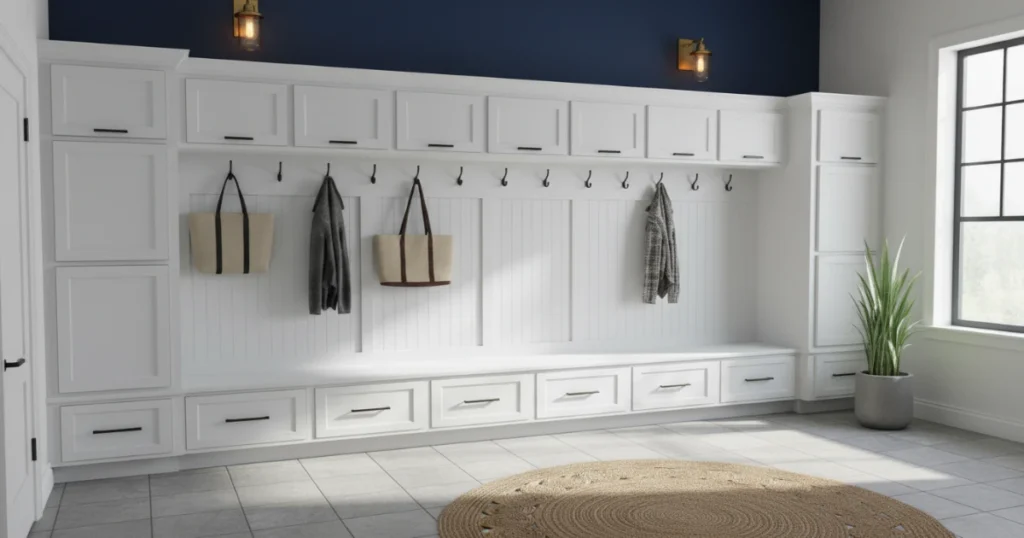
To play into a modern farmhouse vibe, navy plays well with warm metal and hard contrasts. Gold wall hooks, brass sconces, or a brushed gold frame on a mirror pop against dark blue and provide a soft glow. Matte black hardware on cabinets and doors keeps things grounded and simple, so the room feels pulled together, not crazy busy.
Glossy white or soft cream cabinets in front of navy walls provide a crisp counterpoint and reflect light back into the room. Navy beadboard behind a white bench with matte black hooks and a slim gold sconce above, for instance, can look both modern and incredibly useful.
Navy shouldn’t have to cover every wall to feel bold. Some mudrooms go navy on one feature wall behind built-in storage or only on the lower half of the walls, with a lighter neutral above. While some maintain light walls, others go ahead and paint the cabinetry or built-in lockers a deep navy to ground the space.
A navy bench base with a pale oak top and light tile floor still provides good contrast without being dark overall. Even one navy ceiling can bring drama with walls remaining fresh and bright.
Light and shine made all the difference in how navy reads. Wall sconces with clear glass shades, a pendant with a reflective metal finish, or a mirror with a slim frame all help break up the dark color and add depth.
Cabinets and trim with gloss or satin finishes reflect light and prevent the space from appearing one-dimensional. After all, bold navy works in so many spaces at home, from mudrooms to bedrooms or home offices, so long as you strike the right balance between dark and light for the mood you’re trying to achieve.
7. Deep Charcoal for Modern Sophistication
Deep charcoal lends a mudroom a crisp, modern twist in a flash. Short names to note are Amherst Gray HC-167 and International Gray. Both land in that deep, rich spectrum that comes across as sleek and modern, not dull or lifeless. When considering a mudroom makeover, these shades can be excellent choices.
Amherst Gray reads a bit warmer and softer, so it tends to feel more forgiving in homes with warm wood tones. International Gray feels cooler and crisper, which works beautifully in homes with concrete, stone, or cool tile. In real rooms, deep charcoal brings immediate drama and a sense of order, perfect for a hectic drop zone such as a mudroom.
To construct a sleek, metropolitan vibe, combine charcoal walls with genuine wood and metal. For instance, deep charcoal on the walls, a light oak bench and hooks rail, matte black hooks, and door hardware. That combination seems fresh and urban-sophisticated, yet never sterile, making it ideal for a green mudroom aesthetic.
Black accents in light fixtures, cabinet pulls, or door frames tie the palette together. Minimal metal accents in brushed nickel or blackened brass provide a subtle pop against the dark background. Even a simple wire shoe rack or metal umbrella stand can read more high-end against a charcoal background.
From a utilitarian perspective, charcoal mudroom paint assists in camouflaging what appears on a daily basis. Backpack scuffs, shoe dirt, and light switch fingerprints all seem to blend into a deep gray wall more than on white or pale hues. It can still get cluttered, but the walls maintain a neat and sophisticated aesthetic in between cleanings, making it one of the best mudroom paint color options.
In frantic households, that little visual victory counts. Charcoal brings depth on trim or built-ins, not just walls. A charcoal built-in locker unit with lighter walls still looks sharp and tailored.
To prevent it all from feeling too weighty, contrast deep charcoal with white on the trim or ceiling. A white ceiling lifts the room and keeps the dark walls from closing in. White or off-white baseboards, door frames, and window trim cut a crisp, modern line.
To keep things balanced, a lot of folks think that dark walls make a room smaller, which is dangerous in a tiny mudroom. If your space is really tight, charcoal on one accent wall with white on the others works well.
Charcoal pairs beautifully with gentle pastels like pale blue, blush, or sage on baskets, cushions, or artwork, which lifts the spirit without damaging the contemporary vibe. Because charcoal changes dramatically in different light, paint several test patches and observe them morning and night before deciding on a final color.
8. Terracotta for Earthy Warmth
Terracotta brings to a mudroom a rich, earthy warmth and an easy, laid-back vibe. The color is sourced from natural clay, making it feel grounded and calm instead of aggressive or flashy. For centuries, terracotta has adorned pots, sculptures, and architectural accents, so it naturally seems homey even in a more modern house. This rich color can be a perfect choice for mudroom makeovers, creating an inviting space.
The color is somewhere between brown, orange, and soft brick, and it reminds many of us of those old stucco walls from summer vacations to Italy or other Mediterranean locales. That connection to clay and the antiquity of it all keeps a room grounded and lived-in, not frosty or clinical.
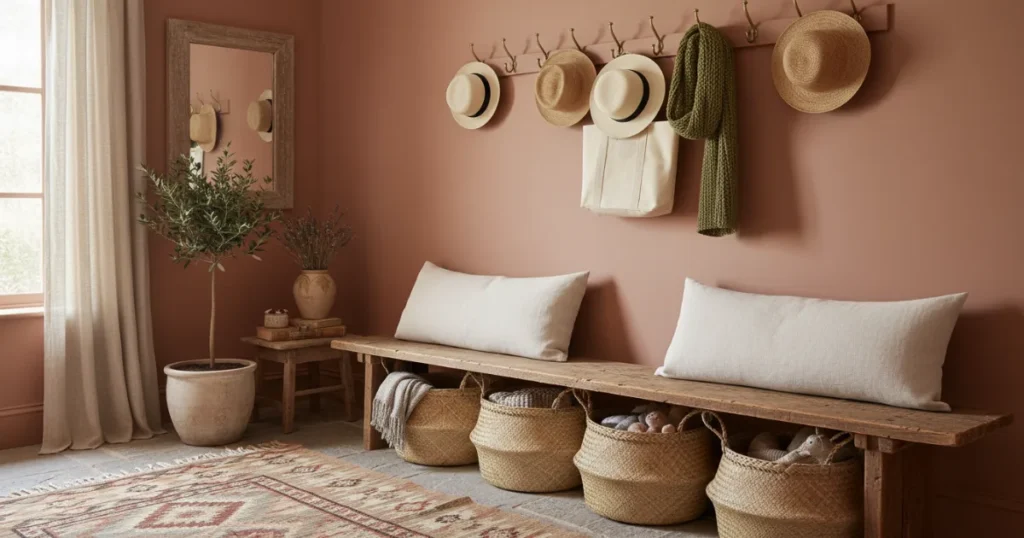
To really lean into that look, pair terracotta walls with warm wood tones and clean, rustic pieces. A bench in oak or pine, a reclaimed wood shelf, or tongue-and-groove paneling in a honey stain all play nicely alongside clay-inspired paint. Farmhouse details, like a wooden peg row or a minimalist shaker peg rail, can enhance the earthy feel of a mudroom.
Brown and terracotta blend beautifully, so brown leather boots by the door, a dark wicker umbrella stand, or a walnut picture frame complement the wall color without competing. The whole space reads soft and warm, not busy, making it an ideal setting for a mudroom entryway.
For additional dimension, build up texture with accents. Woven baskets on a high shelf or under a bench complement the natural vibe of the terracotta and corral shoes, scarves, or pet gear. Antique brass hooks provide a warm metal counterpoint that complements the redder hues, as opposed to chrome which can feel too chilling.
An ornate rug with terracotta, cream, and deep blue or olive patterns can ground the floor and conceal dirt from regular wear. A flat-weave rug with a faded geometric print and clay-toned base can make this petite mudroom feel polished but not too stuffy, adding to the overall decor style.
Terracotta makes for a great statement color. Rather than painting all the walls, a single accent wall behind the coat hooks or built-in bench can pop while maintaining the room’s balance. Another way is terracotta cabinets with off-white or light beige walls, which bring in warmth and personality but keep it bright.
Even tender touches count. A terracotta bench cushion, a shelf of clay pots, or a large vase in a similar shade can warm up a neutral mudroom. Our paint selections span an array of terracotta hues, which can be an amazing inspiration for your next mudroom makeover.
Others favor pink or rose, ideal for a gentler, more subdued aesthetic with cream trim and linen cushions. Deeper brownish terracotta plays beautifully with dark wood and black accents for a more grounded, classic style. To build a cohesive scheme, match each tone with simple décor plans, for example:
- Soft pink terracotta walls are the warm backdrop for a light oak bench, jute baskets, and cream cotton runner.
- Spicy orange terracotta accent wall with black metal hooks, striped rug, and dark brown storage boxes.
- Brown-terracotta cabinetry with off-white walls, brass hardware, and a patterned runner that blends clay, navy, and beige.
Regardless of the specific shade, the warm undertones have a way of making the room feel cozier, more relaxed, and inviting. This is perfect for a hard-working entry space that still greets you warmly at day’s end, making it an essential part of your home’s interiors.
9. Bright Yellow for Cheerful Energy
Bright yellow injects upbeat energy into a mudroom makeover and transforms a pass-through zone into a dynamic, inviting destination for family and visitors alike. Most associate yellow with grins and uplifted spirits, which is fitting for an area that frequently sets the emotional weather for arrivals and departures. In a cramped and dark mudroom, a bright yellow wall can feel like a sunny reprieve in the midst of the day when the light is shining on it.
Under daylight, intense yellows come across fresh and joyful and tend to transform the entire space into a mini oasis instead of a dump zone. So to keep bright yellow from feeling too overpowering, the pairing is key. White trim provides a crisp edge and allows the yellow to read fresh instead of harsh. Light wood floors, oak or birch, add warmth and keep the space grounded so it doesn’t look too ‘sharp’ or cold.
Colorful hooks, baskets, or seat cushions in blue paint color, green, or coral offer a playful splash of color without dominating. Think soft yellow walls with white trim, a pale oak bench, and blue and white striped cushions. It’s a cheerful but still calm look that works its magic in many homes.
Yellow can become a fantastic accent on doors, built-in cubbies or upper walls. A bright yellow back door against white walls is an obvious focal point and super easy for kids and guests to find the way out. Yellow cabinets in a mudroom with beige walls and a brown tile floor can accentuate storage and make the room clean, bright and friendly.
A band of yellow on the upper third of the wall, with a more neutral shade below, adds interest without plastering every surface. This type of contrast works beautifully here because yellow does tend to feel a bit heavy if it is not contrasted with colors such as soft pink, warm brown, or gray.
To rock an eclectic vibe, yellow clicks with pattern and punchy color. Botanical wallpaper with green leaves and yellow blooms on one wall, paired with pale yellow paint on the others, maintains the ambiance playful without being hectic. A luminous yellow ceiling pops against white shiplap walls and a hunter green bench for a narrow entry that leaves a bold initial impact.
Yellow plays nice with color drenching too when the hue is selected carefully. Warm pale yellow all over walls, trim, and even doors adds a gentle, tonal wrap that illuminates without screaming, while a bolder yellow on an accent wall or cabinet delivers a crisp statement pop instead.
10. Pastel Pink for Subtle Charm
Pastel pink lends a subtle charm to a mudroom makeover and blends seamlessly with both traditional and contemporary aesthetics. Light, desaturated pink is almost like a neutral, so it can work in a lot of homes without feeling loud or “on trend.” A near cotton candy pink tends to read as the softest dreamer of all the pinks, creating a serene atmosphere rather than a saccharine one.
In an old school hall with wood paneling and brass hooks, a gentle blush accentuates the dark wood benches in a hush-hush manner. In a fresh modern mudroom with flat-front cabinets and basic hardware, that very same hue brings warmth and prevents the room from feeling chilly. Using a blue paint color could also enhance the coziness of the space, providing a rich contrast to the pastel tones.
To construct a snug atmosphere, pastel pink complements well with muted gray tints in floors, fabrics, or built-ins. A gray-washed bench, light gray floor tiles, and a faded rose-hued vintage rug all add a lived-in but still neat vibe to the space. Plush furnishings, whether it’s a tufted cushion on the bench or a padded seat in an alcove, provide comfort when lacing up your shoes at the end of a long day.
As color and mood research notes, gentle pink hues are associated with lower stress levels, so a soft pink background encourages a slower pace as you enter the door. The color exudes a warm, playful vibe that remains soothing on the eyes, making it an excellent choice for mudroom paint color.
As a background, pastel pink is great for showing off, not just stowing. Floral art in understated frames, woven baskets hanging from wall hooks, and a skinny velvet settee can pop against a pale blush wall without seeming kitschy. Open shelving with pale stone countertops and natural wood accents feels fresh and clean in front of a pearl pink wall, almost like a morning light effect even on a gray day.
In bright daylight, a very pale pearl pink can feel slightly refined and then alter its mood in the evening when combined with dark wood furniture and soft lamps. White trim and cabinetry complete the look and prevent the color from feeling heavy.
White paint on door frames, cubbies, and locker-style cabinets provides a fresh, balancing contrast that emphasizes rather than competes with the pink. That combination of pink, white, and soft neutrals brings with it quiet sophistication that would work in a living room, home office, or bedroom, so the mudroom can visually sync with the rest of the home.
Pastel pink remains a classic that flirts perfectly with stone, wood, metal, and woven textures, making it a versatile choice for any mud room design.
Final Words on Mudroom Wall Color Ideas
Mudroom walls pull double duty. Coats, bags, wet shoes, kids, guests. Color makes that space feel clean, calm, or fun, not just hectic.
White keeps it crisp. Gray or beige feels soft and steady. Sage or blue provide a light fresh touch. Navy or charcoal provides powerful style in a tiny area. Terracotta, yellow, or pastel pink add real warmth and an uplift on hard days.
Consider what greets you first upon entering. Craving calm after a crazy commute? Soft gray or sage fits. Want a dose of bliss with backpacks and gym shoes? Yellow or terracotta would work well.
Have a color in mind now. Give a small test patch a whirl, then tell us your selection or your own paint saga in the comments.
Frequently Asked Questions
What is the best wall color for a small mudroom?
Light colors, such as a soft gray or light blue paint color, are best for a small mudroom. These shades reflect more light, making the space feel bigger while complementing various floors and storage options.
Which mudroom wall color hides dirt and scuffs the best?
Darker tones like deep charcoal and a sophisticated blue paint color, such as bold navy, camouflage scuffs and fingerprints more effectively than light hues. Warm beige and a rich green mudroom option also hide small marks while feeling inviting and chic.
How do I choose a mudroom wall color that matches the rest of my home?
Begin with your house’s primary color scheme. If your spaces are neutral, consider using a warm beige or a crisp white paint color. For houses with additional color, replicate highlight shades like a sophisticated blue or muted sage green to craft a cohesive flow.
Are bright colors like yellow or pink good for a mudroom?
Yes, not too much. A bright yellow paint color injects energy and makes those dark corners feel all sunny, while pastel pink adds softness without overpowering. Use them on an accent wall or combine them with neutral trim and rustic design elements for contrast.
What mudroom wall color works best with white cabinets?
Almost all colors pair beautifully with white cabinets, but when considering a mudroom makeover, soft gray, sage green, and navy are among the best laundry room paint colors. These shades provide contrast, accentuate the cabinetry, and ensure the mud room appears pristine and purposeful.
Which mudroom colors feel the most relaxing after coming home?
Soft muted shades like sage green, soft gray, and light blue paint color create a serene, inviting entry. These colors minimize visual clutter, enhancing the calming atmosphere of your mudroom makeover.
What’s a good modern color choice for a stylish mudroom?
Deep charcoal and bold navy are edgy modern picks for interiors. These colors add dimension and appear polished when paired with rustic wood tones, complementing natural wood benches and hooks for a modern mudroom vibe.