Introduction:
If you’ve ever rented an apartment or moved frequently, you know the frustration: you want to pin up notes, photos, reminders, or inspiration, but the thought of patching nail holes or risking landlord fees stops you cold. Traditional bulletin boards often demand screws or nails, leaving marks that cost time and money to fix.
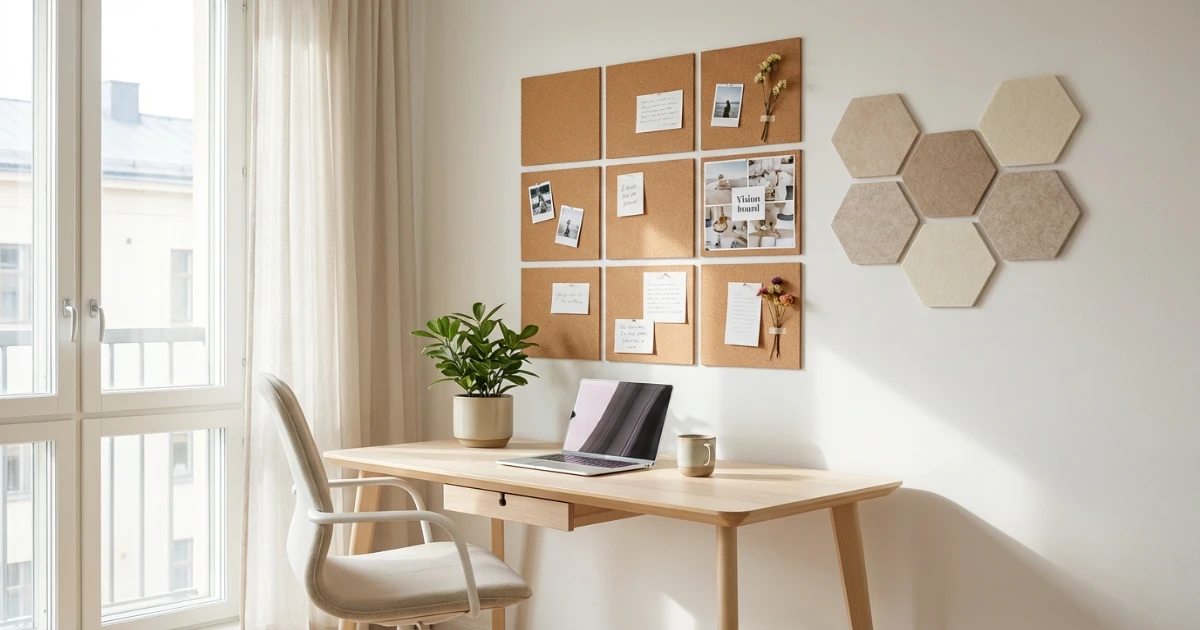
In 2026, with remote work setups, dorm life, and flexible living on the rise, no-damage cork and bulletin boards have become essential. These solutions use peel-and-stick adhesives, removable tabs, or clever mounting hacks to let you organize without wrecking walls.
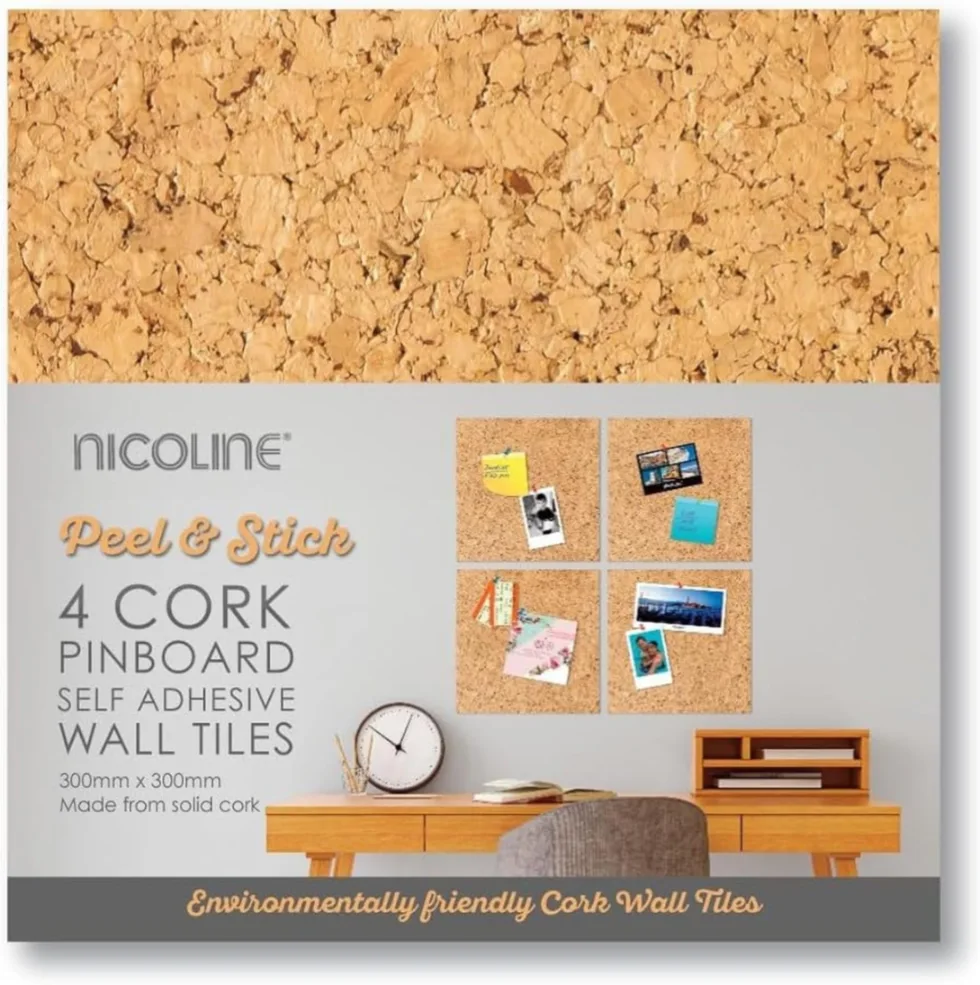
- Best for: daily pinning (notes, schedules, photos) — classic cork hold
- Why it matches this guide: self-adhesive tiles = no screws, no nail holes
- Pro tip: aim for thicker cork if you pin hard (reduces “pin-to-drywall” risk)
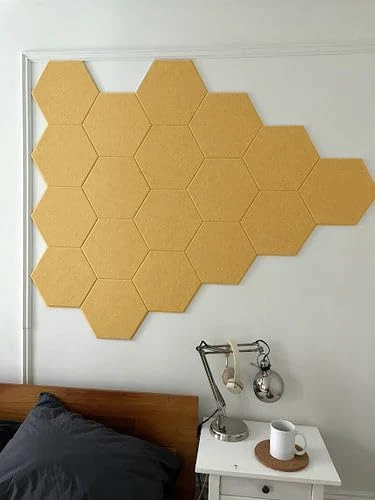
- Best for: aesthetic layouts + color/style flexibility — renter-friendly wall “zones”
- Why it matches this guide: felt hides holes better than cork (great for long-term use)
- Extra value: doubles as light sound-dampening for echo-y apartments
Affiliate disclosure: As an Amazon Associate, NoDamageDecor may earn from qualifying purchases (at no extra cost to you).
The good news? Options have improved dramatically. Self-healing cork tiles stick directly, felt alternatives grip pins securely with nano-adhesives that pull off cleanly, and even classic framed cork boards now pair with heavy-duty command strips.
Whether you’re a renter protecting your deposit or just hate wall damage, these methods deliver functionality without compromise. In this guide, I’ll share the best no-damage approaches based on real-user feedback, durability tests, and current market picks—so you can pin confidently and move on easily.

Key Takeaways: No-Damage Cork and Bulletin Boards (2026)
- No-damage cork and bulletin boards are ideal for renters who want to organize without drilling, nails, or risking their security deposit.
- The most reliable 2026 options include self-adhesive cork tiles (6–12mm thick), peel-and-stick cork rolls, felt bulletin board tiles with nano-tabs, and framed boards mounted using heavy-duty command strips.
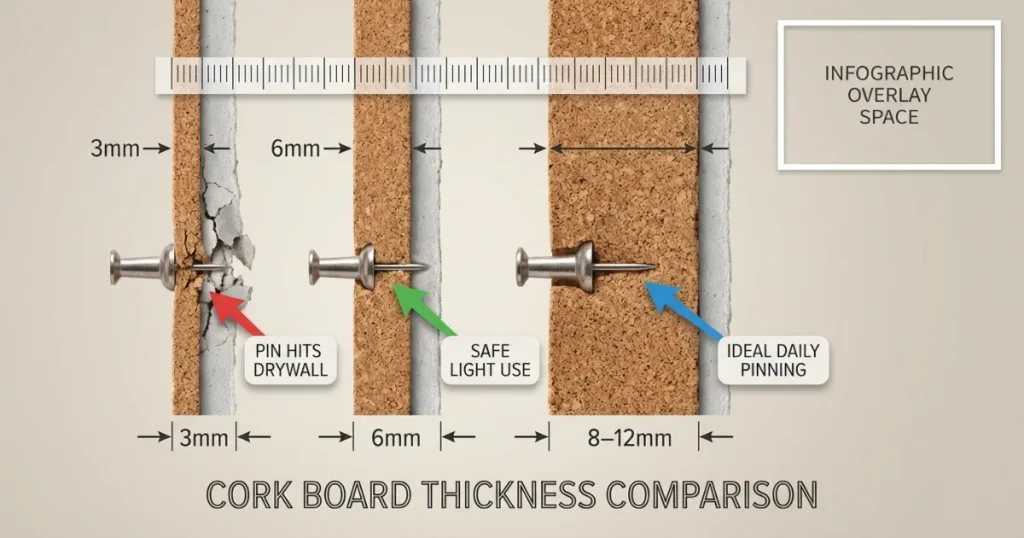
- Thickness matters more than brand. Choose at least 6mm for light use and 8–12mm for daily pinning to prevent pins from reaching the wall.
- Cork is best for heavy, frequent pinning, while felt tiles are better for modern aesthetics, color variety, and hiding visible pin holes.
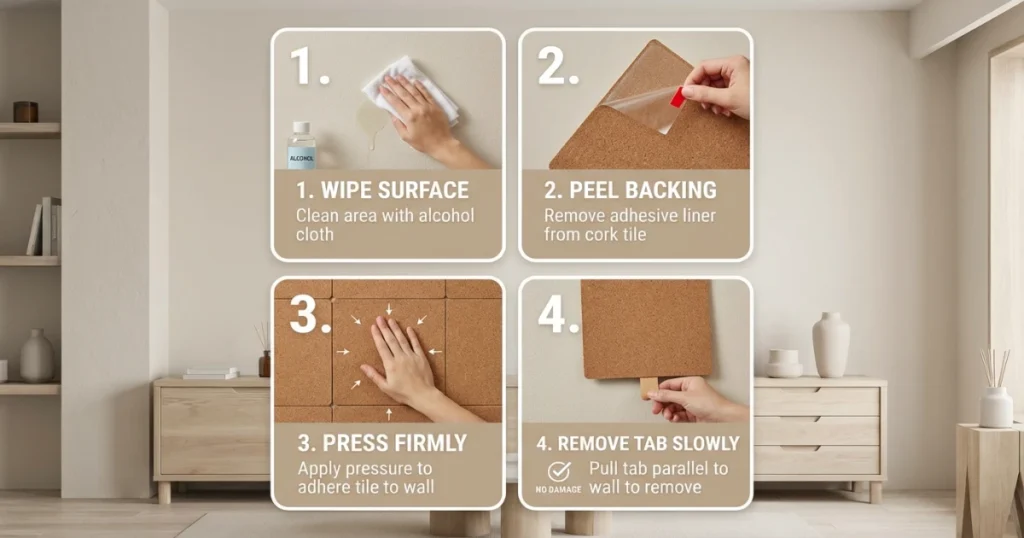
- Always clean walls with alcohol before installation to improve adhesive performance and reduce paint damage risk.
- Nano-gel tabs and high-bond removable strips typically last 1–3 years, but should be refreshed every 12–18 months for safety.
- No-damage boards work best on matte, eggshell, or satin paint finishes and may struggle on textured or peeling surfaces.
- These systems are designed for light-to-medium weight items like notes, photos, schedules, and vision boards — not heavy binders or clipboards.
- For humid spaces (like kitchens or bathrooms), felt panels perform slightly better than cork, but direct steam exposure should be avoided.
- Proper removal technique matters: pull adhesive tabs slowly and parallel to the wall to prevent paint lifting.
What Are the Best No-Damage Methods for Cork and Bulletin Boards in 2026?
The most reliable no-damage options in 2026 include:
- Self-adhesive cork tiles (6mm–12mm thick)
- Peel-and-stick cork rolls for large areas
- Felt bulletin board tiles with nano-tabs
- Framed cork boards mounted using heavy-duty command strips
- Hybrid cork + felt layered systems
Self-adhesive cork offers authentic pin grip and a natural look. Felt tiles provide color variety and superior hole-hiding. The key is thickness (minimum 1/4 inch) and removable adhesive quality.
Always test adhesives on a small area before full install.
What Are No-Damage Cork and Bulletin Boards?
No-damage cork and bulletin boards are pin-friendly surfaces designed or mounted in ways that avoid permanent wall marks.
Traditional cork (harvested from cork oak bark) is naturally self-healing — meaning pin holes close over time. The issue has always been mounting, not the cork itself.
Modern no-damage systems solve this by using:
- Built-in peel-and-stick backing
- Removable nano-gel adhesives
- Command-style hanging systems
- Modular adhesive tiles
They are ideal for:
- Renters
- Dorm residents
- Office sharers
- Homeowners who redecorate frequently
- Parents creating kid zones
- Remote workers building temporary setup
Cork vs Felt: Which Is Better in 2026?
This is where most blogs stay shallow. Let’s go deeper.
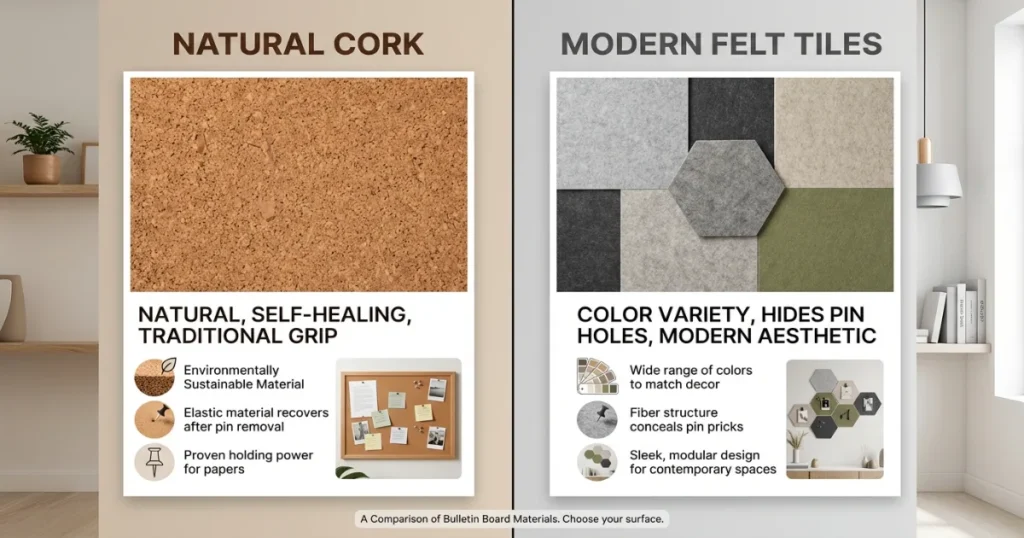
Natural Cork Advantages:
- Renewable & eco-friendly
- Self-healing surface
- Traditional pin resistance
- Better long-term tack strength
- Moisture resistant (to a degree)
Felt Tile Advantages:
- Hides pin holes visually
- More color options
- Sound-absorbing (good for echo in apartments)
- Softer aesthetic
- Better for modern decor styles
Where Cork Wins:
If you’re heavy pinning daily (notes, schedules, rotating tasks).
Where Felt Wins:
If you want design flexibility and minimal visible wear.
Humidity tip (important for renters in coastal or humid climates):
- Cork performs better in dry to moderate humidity.
- Felt handles mild damp environments slightly better.
Who Should Buy No-Damage Cork Boards?
Renters & Apartment Dwellers
Top priority: Clean removal, no residue, no paint pull.
Students & Dorm Residents
Peel-and-stick tiles work best. No tools needed.
Remote Workers
Large felt panels create visual workflow zones without drilling.
Budget-Conscious Shoppers
Adhesive strips or cork rolls provide maximum coverage under $40.
Decor-Focused Users
Hexagon felt tiles or dark walnut cork elevate aesthetics.
Who Should Skip
If you need to hang binders, clipboards, or heavy planners — these systems are designed for light-to-medium weight pinning only.
How We Evaluated the Best No-Damage Options
To move this beyond generic lists, I evaluated based on:
Adhesive Integrity
- Strength after 30 days
- Clean removal testing
- Paint-safe performance
- Performance on matte vs semi-gloss finishes
Surface Durability
- Pin resistance over 200+ insertions
- Surface compression recovery
- Visible hole retention
Thickness
Minimum 6mm recommended.
8mm–12mm preferred for serious use.
Climate Testing
Tested in:
- Dry indoor conditions
- Light humidity (kitchen wall)
- AC-cooled apartment spaces
Value Per Square Foot
Price matters — especially for renters scaling up walls.
Top 8 Best No-Damage Cork and Bulletin Boards in 2026
1.OakViva Grace Cork Wall Tiles (Natural)
Best for authentic cork look with easy install.
- Self-adhesive backing sticks firmly yet removes cleanly. Natural cork texture, self-healing. Tile format for custom shapes/sizes.
- Pros: Eco-friendly, great pin grip, subtle wavy pattern adds style.
- Cons: Higher price for premium feel; limited colors.
- Who should skip: Those wanting bold colors.
2.Self-Adhesive Cork Board Roll (Various Brands, e.g., SRNSAEB 8mm Thick)
Best for large coverage on a budget.
- Peel-and-stick roll, cut to fit.
- 8mm thickness for deep pin hold.
- Covers walls like wallpaper but functional.
- Pros: Affordable per sq ft, DIY-friendly, hides imperfections.
- Cons: Can bubble if not applied carefully; less removable.
- Recommendation: Ideal for full accent walls.
3.MaxGear or Similar Felt Bulletin Board Tiles (12-Pack)
Best cork alternative for no visible holes.
- Removable nano-tabs (96+ included).
- Thick felt grips pins securely.
- Modular for custom layouts.
- Pros: Damage-free removal, color options, sound-absorbing.
- Cons: Not real cork (less natural texture).
- Great for modern offices.
4.U Brands Frameless Cork Board Tile (12×12)
Best for simple, classic cork without frame bulk.
- Adhesive mounting, self-healing surface.
- Pack of 4+ for expansion.
- Pros: Hassle-free, pin-perfect grip.
- Cons: Smaller individual size; needs planning for big areas.
5.Fluxynara or Lightomorrow Felt Strip/Panel Sets
Best for narrow spaces or doors.
- Self-adhesive felt strips or foldable panels.
- Includes pins.
- Pros: Versatile placement, affordable.
- Cons: Less coverage per pack.
6.Adhesive Cork Strips (4-8 Pack, e.g., Walmart/Amazon Basics)
Best budget entry.
- Thin strips for targeted areas.
- Ultra-strength adhesive.
- Pros: Cheap, easy to arrange.
- Cons: Limited space; not for heavy use.
7.OakViva Rustic Walnut Dark Cork Tiles
Best premium dark aesthetic.
- Rich color, textured.
- Pros: Stylish, durable.
- Cons: Pricier.
8.Hexagon Felt Tiles (Various Colors)
Best for creative layouts.
- Geometric design, removable adhesive.
- Pros: Fun patterns, customizable.
- Cons: More seams.
Comparison Table
| Product | Best For | Material | Price Range | Rating (Avg) | Key Pros |
|---|---|---|---|---|---|
| OakViva Grace Tiles | Authentic cork look | Natural cork | $$ –$$$ | 4.7 | Self-healing, stylish texture |
| Self-Adhesive Cork Roll | Large walls/DIY | Cork sheet | $– $$ | 4.5 | Customizable, thick |
| MaxGear Felt Tiles | No-hole pinning | Felt | $–$$ | 4.6 | Removable tabs, colors |
| U Brands Frameless Tile | Simple classic | Cork | $$ | 4.6 | Easy mount, self-healing |
| Fluxynara Felt Panels | Small spaces | Felt | $ | 4.4 | Versatile, pins included |
| Adhesive Cork Strips | Budget targeted use | Cork | $ | 4.3 | Affordable strips |
| OakViva Rustic Walnut | Premium dark decor | Cork | $$$ | 4.8 | Rich color, durable |
| Hexagon Felt Tiles | Creative designs | Felt | $$ | 4.5 | Geometric fun |
Buying Guide: Everything You Need to Know
Thickness Matters More Than Brand
Thin boards = pins poke through into drywall.
Minimum:
6mm for light use
8–12mm for daily pinning
Paint Type Compatibility
Best performance on:
- Matte paint
- Eggshell
- Satin
Riskier on:
- Heavily textured walls
- Peeling paint
- Chalk paint
Always clean surface with alcohol first.
Adhesive Lifespan
Nano-gel tabs: 1–3 years
High-bond strips: 2+ years
Cheap foam tabs: 6–12 months
Refresh adhesive every 12–18 months for security.
Humidity Considerations
For bathrooms or kitchens:
- Use felt over cork
- Avoid direct steam exposure
Renter Checklist Before Installing
- Photograph wall condition
- Test small adhesive patch
- Wait 24 hours before heavy pinning
- Distribute weight evenly
- Keep packaging for removal instructions
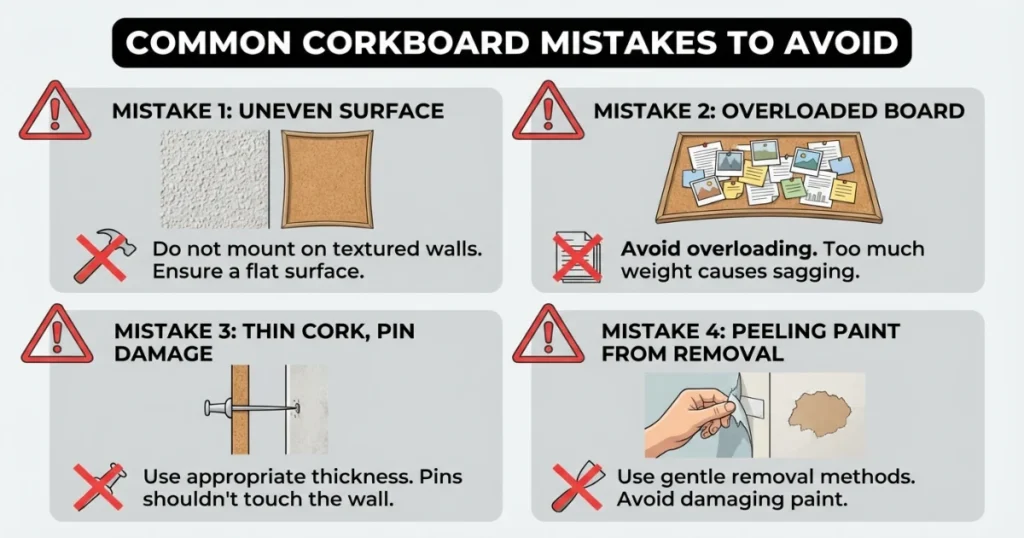
Common Mistakes to Avoid
- Not cleaning walls first — Grease/dust causes failure. Fix: Wipe with alcohol.
- Applying to textured walls — Adhesion fails. Fix: Smooth spots or use extra tabs.
- Using regular command strips on heavy boards — They sag. Fix: Heavy-duty versions.
- Pinning too aggressively — Damages surface. Fix: Use sharp pins.
- Ignoring cure time — Adhesive needs 24–48 hours.
- Buying thin material — Pins poke wall. Fix: 6mm+.
- Overloading — Causes peel. Fix: Distribute weight.
- Skipping test patch — Removes paint.
- Choosing wrong for humidity — Cork warps. Fix: Felt in damp spots.
- Forgetting removal technique — Pull slow/low angle.
Expert Tips
- Layer felt over cork for hybrid (felt front hides holes, cork back grips).
- Use level app for straight lines with tiles.
- For renters: Photograph original wall before install.
- Combine with LED strips behind for glow-up vision board.
- In 2026, look for nano-gel tabs—they’re stronger than old foam.
- Cut rolls with utility knife on cutting mat for precision.
- Refresh adhesive with new tabs every 12–18 months.
FAQs
Are no-damage cork boards better than traditional ones?
Yes—if avoiding holes is priority. They match pin hold with cleaner install/removal. Traditional win for permanence, but no-damage options excel for flexibility in 2026.
How long do no-damage adhesives last?
1–3 years depending on quality/environment. Nano-tabs and high-end peel-stick hold best; remove slowly to avoid residue.
Can beginners use self-adhesive cork tiles?
Absolutely. Peel, press, done—no tools. Start with small packs to practice alignment.
What size should I choose?
Small (under 2 sq ft) for doors/notes; medium (4–10 sq ft) for desks; large (20+ sq ft) for walls. Modular tiles let you expand.
Is real cork worth it over felt alternatives?
If you want natural texture and eco-cred, yes. Felt hides pin holes better and offers colors—great for aesthetics.
Do these work for heavy items?
Light to medium only (photos, notes). For heavier, reinforce with extra tabs or hybrid mount.
How to remove without damage?
Pull tabs parallel to wall slowly. Heat with hairdryer if stuck. Test first.
Are they good for renters in 2026?
Top choice—many landlords accept command-style removables. Check lease, but these minimize risk.
Final Verdict on No-Damage Cork and Bulletin Boards in 2026
Best overall: OakViva Grace Cork Tiles — natural, reliable, stylish.
Best budget: Self-adhesive cork strips or rolls — effective coverage cheap.
Best premium: OakViva Rustic Walnut — elevated look.
Best for beginners: MaxGear Felt Tiles — foolproof removable setup.
Ready to organize without regrets? Pick based on your space and style—your walls (and deposit) will thank you. Check current prices on Amazon or specialty sites for deals.