Introduction
You finally feel at home in your apartment.
The couch is in the right place. Your art is hanging perfectly (with removable hooks, of course). Your space feels like yours.
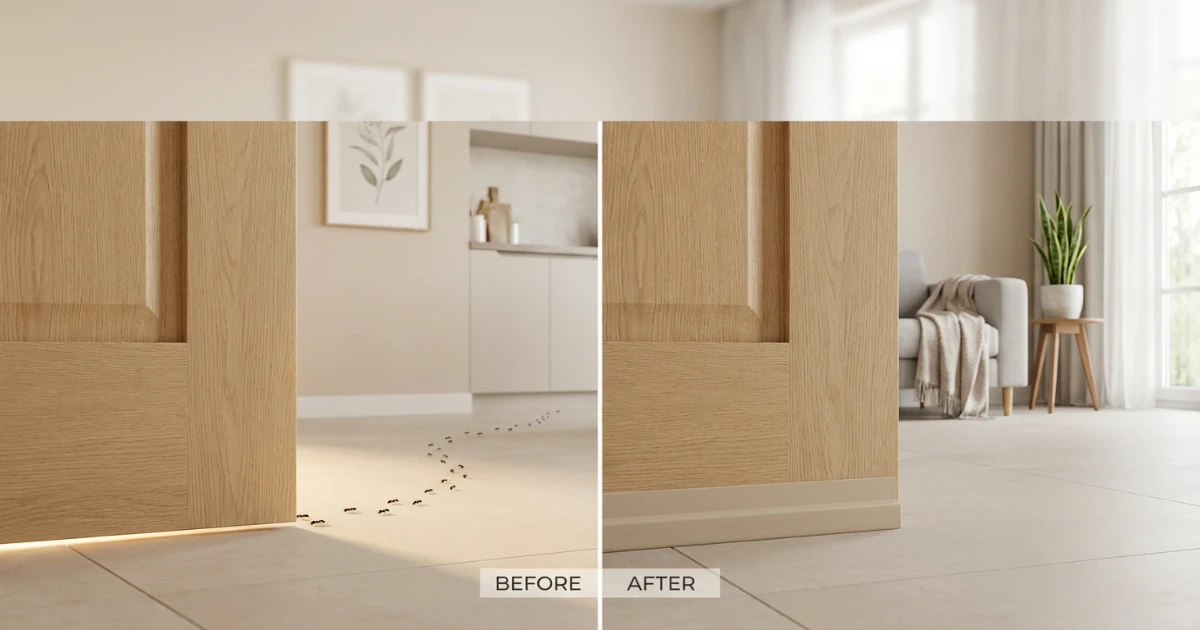
Then you notice ants trailing across the counter.
Or a cold draft sliding under your door.
Or worse — a cockroach slipping behind the baseboard.
That sinking feeling? Completely valid.
But here’s the part most renters don’t realize:
You don’t need to drill.
You don’t need permanent caulk.
You don’t need to risk your security deposit.
Renter-safe gap sealing is one of the most effective, landlord-approved ways to reduce pest entry and drafts — without leaving damage behind.
This 2026 guide walks you through:
- Why apartment gaps attract pests
- The best renter-safe gap sealing products
- How to seal gaps without drilling
- What actually works (and what doesn’t)
- When to call your landlord
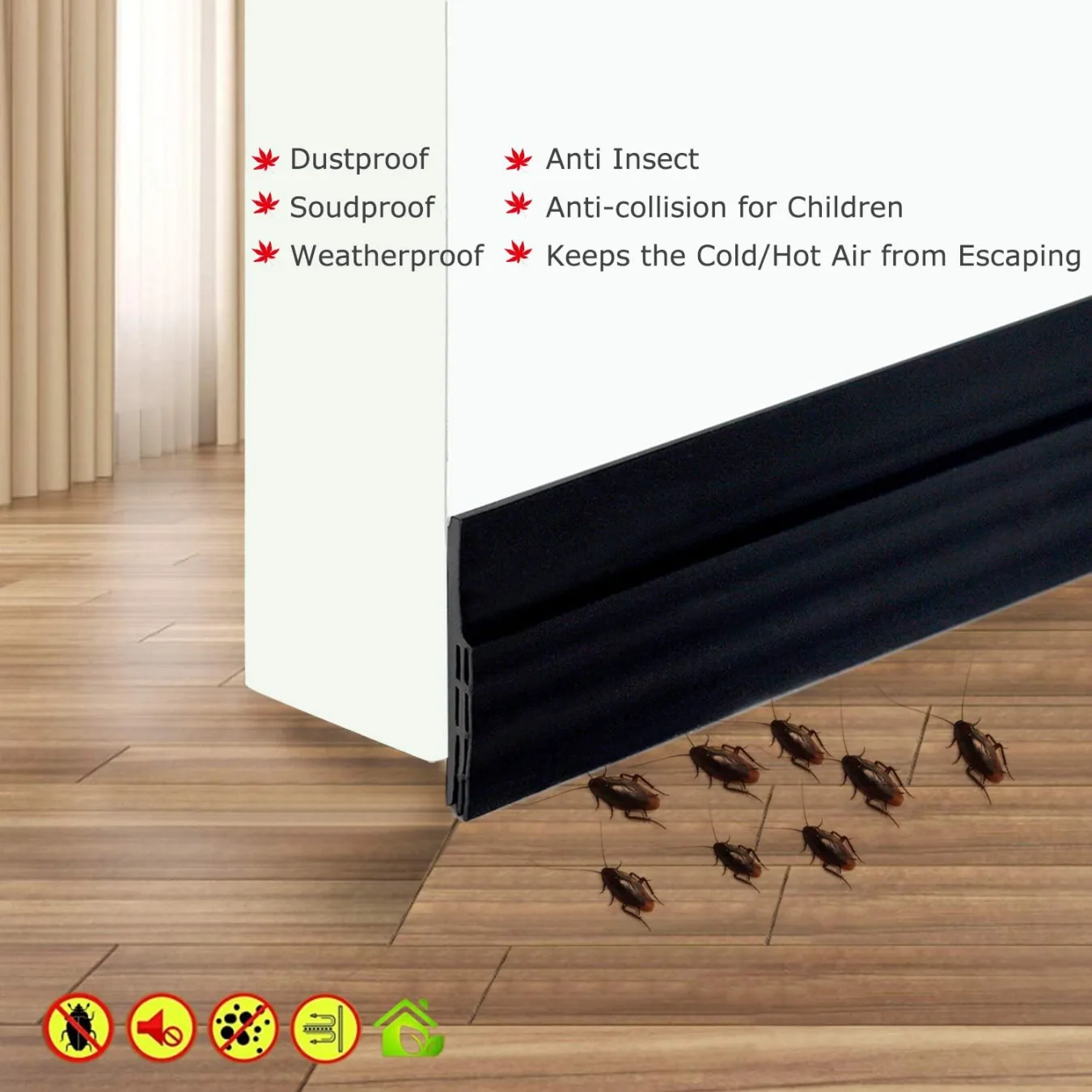
Seals under-door gaps where roaches and ants enter. Peel-and-stick installation — completely renter-safe. Also blocks dust, odors, and drafts.

Powerful crack & crevice pest control for baseboards, under sinks, and behind appliances. Long-lasting, chemical-free solution for apartment pest prevention.
As an Amazon Associate, I earn from qualifying purchases.
Key Takeaways
- Gaps in doors, windows, baseboards, and pipe entries are the main ways pests enter apartments
- Renter-safe gap sealing products are removable, leave no damage, and require no drilling
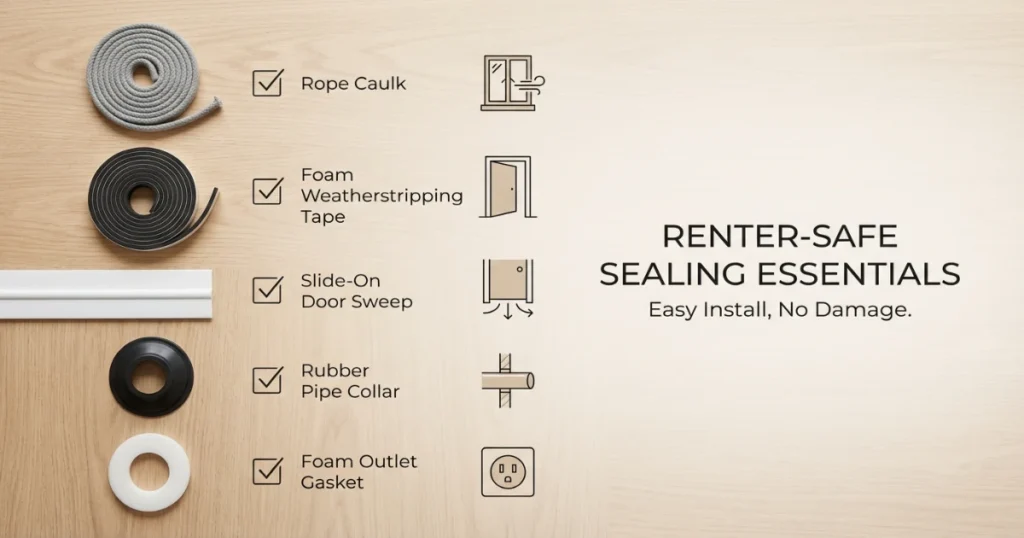
- Rope caulk, foam weatherstripping, no-drill door sweeps, and pipe collars are the core tools
- Focus first on your front door, under-sink area, and window frames
- Gap sealing works best as part of a broader approach that includes cleanliness and food storage
- For structural cracks, severe infestations, or broken fixtures, contact your landlord
Why Gaps in Apartments Cause Pest Problems
Pests don’t magically appear inside your apartment. They find a way in — and that way is almost always a gap. Even a crack the width of a credit card is wide enough for a cockroach. A gap the size of a pencil eraser is an open door for a mouse. The reason apartments are so vulnerable is that they’re full of construction seams, pipe entries, and aging weatherstripping that no one has thought about in years.
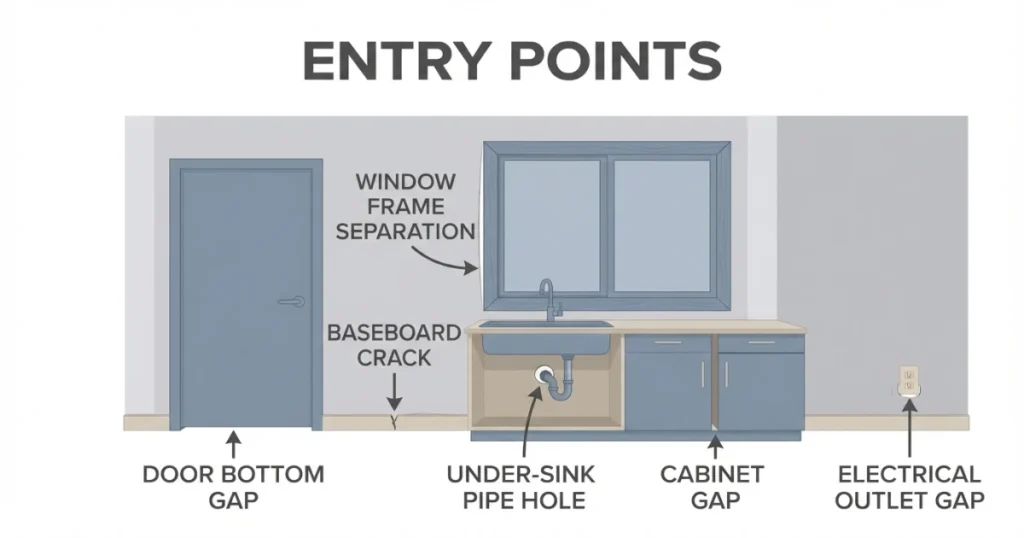
Common problem areas include:
- Baseboard cracks: Where the baseboard meets the floor, small gaps often develop over time, especially in older buildings.
- Door gaps: The space under an exterior or hallway door is one of the most frequent pest entry points.
- Window frame separation: As buildings settle, window frames can pull away slightly from the surrounding wall.
- Pipe entry holes: Under your kitchen or bathroom sink, pipes pass through the wall or floor — and the holes around them are rarely sealed perfectly.
- Cabinet gaps: The space between cabinet bases and walls or floors is a hidden highway for roaches and ants.
- Electrical outlet gaps: Outlets on exterior-facing walls can have surprising airflow — and small insects love to travel through wall cavities.
What Is Renter-Safe Gap Sealing?
Renter-safe gap sealing refers to using removable, non-damaging products — such as rope caulk, foam tape, adhesive door sweeps, and outlet gaskets — to block gaps that allow pests and drafts into an apartment. These products require no drilling, leave no permanent residue, and can be removed cleanly when moving out.
What Makes a Gap Sealing Product Truly Renter-Safe?
Not all sealing products are created equal.
To be renter-safe, a product must:
- Be removable without pulling paint
- Avoid permanent adhesives
- Require no screws or drilling
- Leave no residue
- Be reversible at move-out
⚠ The Biggest Renter Mistake
Grabbing standard silicone caulk.
Once cured, permanent caulk requires scraping and solvents to remove. That can:
- Pull paint
- Damage trim
- Cost you part of your deposit
Instead, use temporary alternatives designed for seasonal or removable use.
Best Renter-Safe Gap Sealing Products in 2026
Here’s what actually works.
Removable Weatherstripping (For Doors & Windows)
Best for: Ants, drafts, minor roach entry
Foam or rubber weatherstripping compresses when a door or window closes, creating a seal.
Look for:
- Closed-cell foam
- Labeled “removable” or “damage-free”
- Medium compression rating
Pro Tip:
Choose thickness carefully. If you can see daylight, use at least 3/8″ thickness.
Pros
- Affordable
- Easy install
- Great draft reduction
Cons
- Needs replacing over time
- Not for large structural gaps
No-Drill Door Sweeps (High Priority Area)
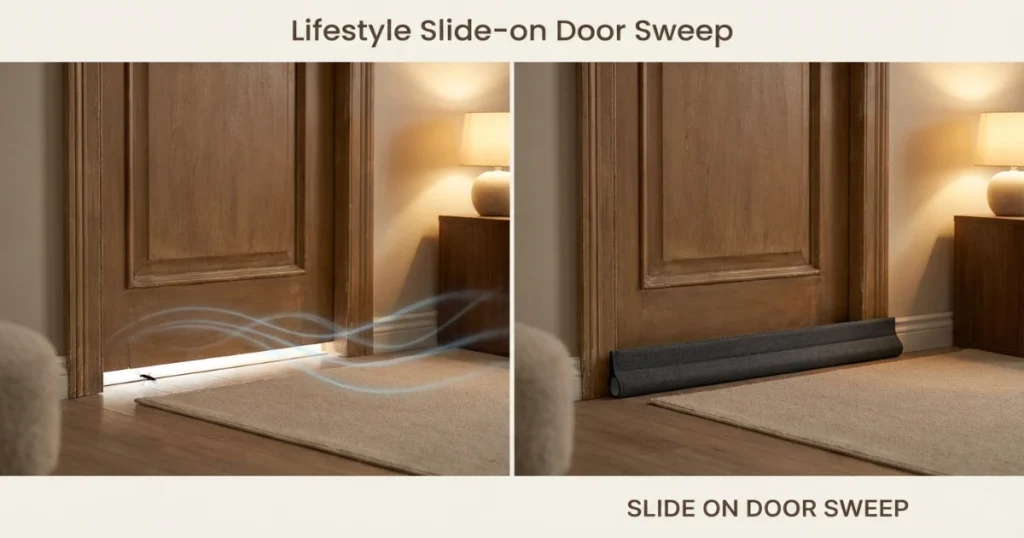
If you can see light under your door, start here.
Modern renter-safe options include:
- Slide-on door sweeps (no adhesive)
- Removable adhesive-backed versions
Why this matters:
Under-door gaps are one of the top pest entry points in apartments.
Best choice: Slide-on models (zero residue).
Rope Caulk & Temporary Caulk Alternatives
Best for: Baseboards, window trim, uneven gaps
Rope caulk is a putty-like cord you press into cracks.
- Stays flexible
- Peels out cleanly
- No tools required
It’s one of the most versatile renter-safe gap sealing tools available.
Foam Outlet Gaskets (Hidden Energy Leak)
Surprisingly effective.
Electrical outlets on exterior walls can allow:
- Cold airflow
- Tiny insects traveling through wall cavities
Foam gaskets slide behind the outlet cover plate and seal airflow.
Cost: Usually under $10 for a pack.
Foam Backer Rods (For Larger Gaps)
If a gap is too wide for tape or rope caulk, use:
- Foam backer rods
- Low-expansion removable foam
These fill volume without permanent spray foam damage.
Under-Sink Pipe Gap Covers (High-Risk Zone)
The area around plumbing under sinks is one of the most common roach entry points.
Use:
- Flexible rubber collars
- Snap-on pipe escutcheons
They:
- Look clean
- Block gaps
- Remove easily
If you seal only one place — seal here.
The 5 Gaps to Seal First (Priority Order)
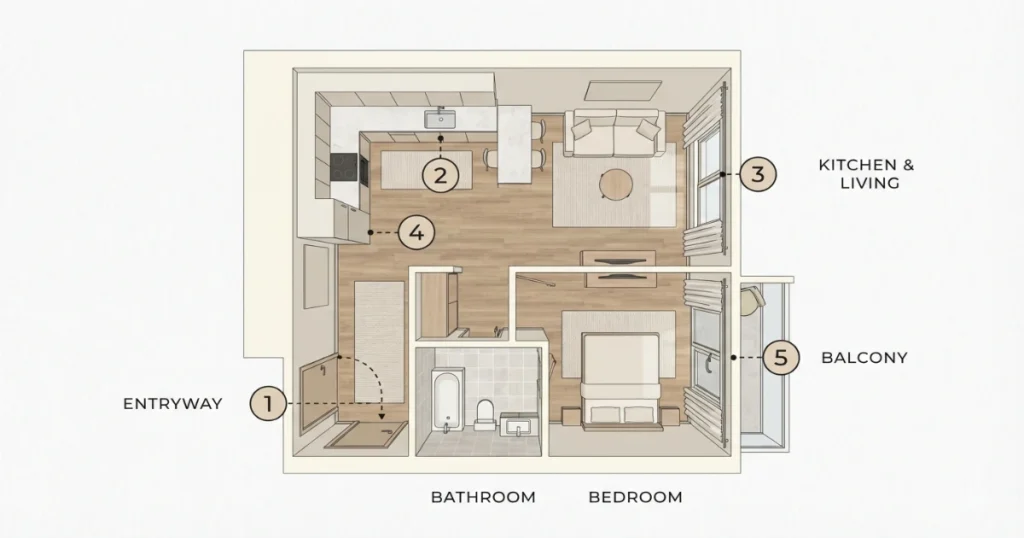
If you’re short on time, start here:
- Front door bottom
- Under-sink pipe gaps
- Window frame edges
- Baseboard seams in kitchen
- Sliding balcony doors
These five areas account for most renter pest entry.
Step-by-Step: How to Seal Apartment Gaps Without Losing Your Deposit
You don’t need to be handy. Follow this process:
Step 1: Do a Night Inspection
Turn off lights. Use a flashlight along baseboards and doors. Gaps are easier to see in the dark.
Step 2: Check Door Clearance
Slide paper under doors. If it moves freely, seal it.
Step 3: Use the Painter’s Tape Test
Apply blue painter’s tape to surface for 24 hours.
If it peels cleanly → safe for adhesive product.
Step 4: Seal Highest-Risk Zones First
Front door → Under sink → Windows → Baseboards.
Step 5: Monitor for 7 Days
Look for reduced pest sightings and fewer drafts.
Do Gap Sealing Products Actually Prevent Pests?
Short answer: Yes — when combined with basic cleanliness.
Gap sealing:
- Reduces entry points
- Limits movement between units
- Lowers draft-driven pest attraction
- Improves comfort
It does NOT:
- Eliminate pests already inside
- Replace landlord pest control for infestations
- Fix structural cracks
Think of it as reducing your apartment’s “pest vulnerability score.”
Energy Savings & Comfort Benefits
Many renters don’t realize:
Air leakage through gaps can significantly impact indoor comfort.
Sealing door and window gaps may:
- Reduce cold drafts
- Improve AC efficiency
- Lower heating strain
- Reduce noise infiltration
In older buildings especially, renters often notice measurable comfort improvements after sealing major gaps.
Budget-Friendly Renter-Safe Pest Prevention Kits
Basic Kit (Under $20)
- Rope caulk
- Foam outlet inserts
- Weatherstripping tape
Good for proactive renters.
Draft + Pest Combo (Under $40)
- Slide-on door sweep
- Weatherstripping
- Pipe collars
- Foam backer rods
Ideal for older buildings.
Full Apartment Defense (Under $65)
Everything above plus:
- Window AC foam panels
- Dishwasher seam tape
- Sliding door brush seal
Best for known pest-prone buildings.
When to Call the Landlord Instead
Gap sealing works for normal wear and tear.
But contact your landlord if you notice:
- Widening structural cracks
- Severe roach or mouse activity
- Mold or soft drywall
- Broken exterior seals
- Damaged door thresholds
Most jurisdictions require landlords to maintain habitable conditions.
Document with photos and email communication.
Recommended Renter-Safe Gap Sealing Products (2026 Picks)
Rope Caulk
This seasonal-use product from most hardware stores (often under $5 per roll) is the single most versatile tool a renter can have. Press it into gaps, peel it out when you move. It’s best for baseboards, window edges, and anywhere you need a custom-shaped seal. Best for: First-time renters, budget shoppers, light pest prevention.
Adhesive Foam Weatherstripping Tape
Available in various thicknesses and widths, foam compression tape works anywhere two surfaces meet. Look for a closed-cell foam version, which is more durable and water-resistant. A 17-foot roll typically runs $6–$10. Best for: Window frames, door frames, and cabinet edges.
Slide-On Door Sweep
The clamp-on style (no adhesive, no screws) is the gold standard for renters. It slides onto the bottom of your door and stays in place through the door’s own weight. Most are adjustable and fit standard door thicknesses. Best for: Anyone with a visible gap under their door or a drafty entrance.
Pipe Cover Escutcheons (Rubber Snap-On Style)
These flexible collars snap around pipes where they pass through walls or floors. They’re inexpensive, look finished, and cover gaps of various sizes depending on the pipe diameter. Best for: Under-sink gaps, where roaches and mice are most likely to enter.
Frequently Asked Questions
Can renters use caulk in apartments?
Only removable caulk products like rope caulk. Standard silicone caulk is permanent and may damage surfaces during removal.
What is the best renter-safe way to seal gaps?
Use a combination of slide-on door sweeps, foam weatherstripping, rope caulk, and pipe collars. These cover most apartment gaps without drilling.
Does weatherstripping stop roaches?
Yes — if properly compressed. It blocks the small gap size roaches require to enter.
How small of a gap can a mouse fit through?
Mice can squeeze through openings roughly the size of a pencil eraser. Seal any gap larger than 1/4 inch.
Will sealing gaps reduce energy bills?
It can improve comfort and reduce HVAC strain, especially in older apartments with visible drafts.
Is gap sealing allowed in dorms?
Yes. Removable products like rope caulk and slide-on sweeps are typically dorm-safe and easy to remove at semester end.
Final Thoughts on Renter-Safe Gap Sealing
Living in a rental doesn’t mean you have to live with drafts, ants, or that uneasy feeling when you see something scurry across the floor.
The truth is, most apartment pest problems don’t start with “dirty” spaces — they start with small, overlooked gaps. And the good news? Those gaps are often easy to seal without drilling, damaging walls, or risking your security deposit.
Renter-safe gap sealing isn’t about turning your apartment into a construction project. It’s about making smart, reversible upgrades:
- A slide-on door sweep to block hallway pests
- Rope caulk along baseboards that have separated over time
- Foam weatherstripping around drafty windows
- Simple pipe covers under the sink
None of these require landlord approval in most cases. None of them leave permanent marks. And together, they dramatically reduce how accessible your apartment is to insects, drafts, and even small rodents.
Just remember: gap sealing works best as part of a balanced approach. Clean surfaces, sealed food containers, and good communication with your landlord for larger issues all play a role. You’re not trying to fight the building — you’re simply closing the obvious doors pests use to get inside.
In 2026, renters have better options than ever. Damage-free sealing products are affordable, widely available, and specifically designed for temporary living situations. That means you can protect your comfort, your peace of mind, and your deposit — all at the same time.
Because feeling secure in your home shouldn’t depend on whether you own it.
And sometimes, the smallest fixes make the biggest difference.
If you’re building a renter-friendly home, also explore:
- Renter-safe TV stands
- No-damage wall decor
- Removable hooks and storage solutions
- Apartment draft-proofing ideas
Because feeling comfortable in your rental shouldn’t cost your deposit.