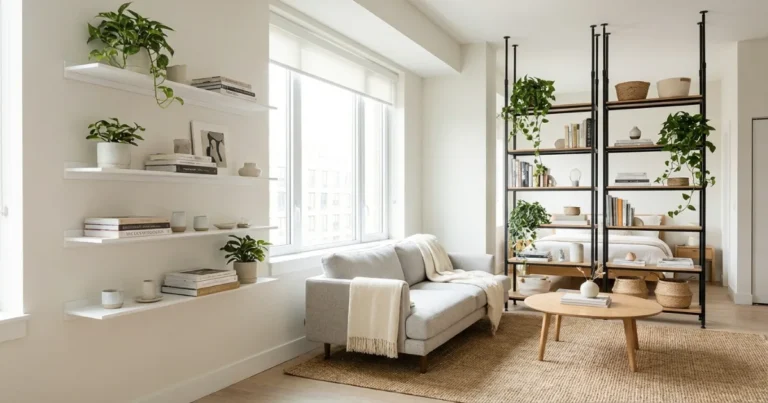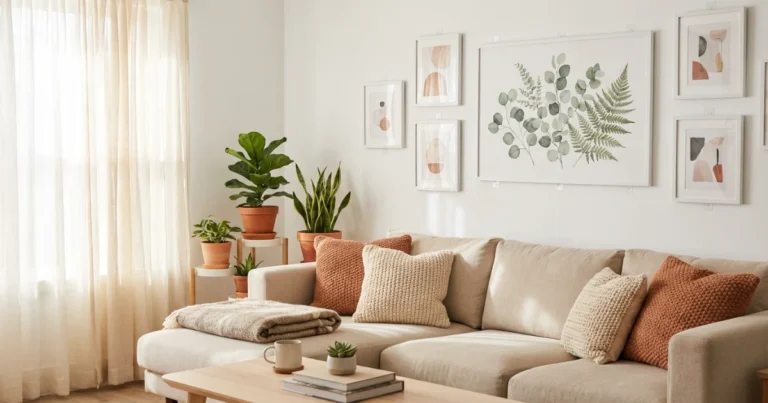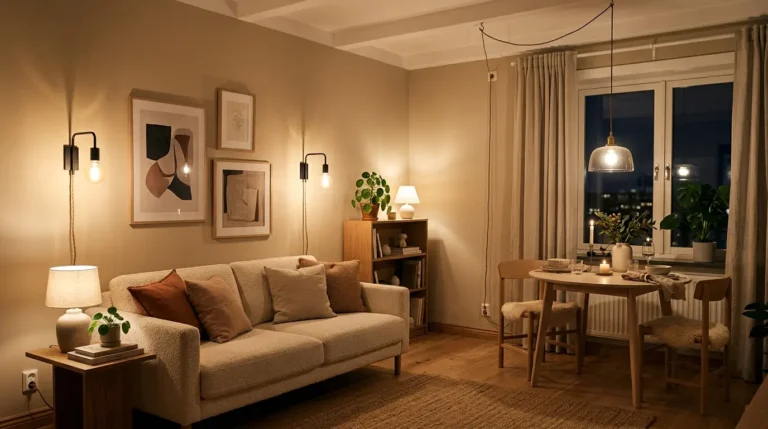
Self-adhesive mirror wall decor refers to mirror shapes with an adhesive backing that sticks directly to a smooth wall, tile, glass or door without drills or nails.
These mirror stickers are offered in a variety of shapes, from basic squares to playful hexagons and daring geometric collections.
They suit small spaces, apartments and home offices.
Key Takeaways
- Self-adhesive mirror wall decor refreshes a room with a streamlined, elegant aesthetic and complements everything from minimalist to eclectic styles. Whether you use single pieces as focal points or mix and match shapes to build custom wall art, these will definitely reflect a little bit of your design vision.
- Well-placed mirrors add depth and make a room feel more spacious, a boon in small rooms, hallways, and tiny apartments. Place your mirrors opposite windows, doors, or long walls to open up tight areas and add depth.
- Mirrors reflect natural light and illuminate dark corners, which means less reliance on lamps in daylight hours. Set them near windows or lights to increase ambient lighting and create a warmer feel.
- Self-adhesive mirrors are available in a variety of shapes and sizes, ranging from pre-cut tiles to pieces that you can cut to size yourself. This versatility lets you create patterns, mosaics, or accent designs that complement your wall size and furniture configuration.
- With peel-and-stick backing, installation is a breeze and there’s no drilling or heavy tools to damage your walls. Follow directions, test placement before sticking, and select smooth, clean walls for enduring appeal.
- Lightweight, flexible and inexpensive, self-adhesive mirror wall decor provides an easy low-cost solution to updating your home with little upkeep. Daily, they get wiped down with a soft cloth and gentle cleaner and stay clear and reflective for day-to-day use.
1. Enhances Room Aesthetic
Self-adhesive mirror decor amps up room chic on the spot. Even a bare room wall begins to appear more intentional and cohesive once those stylish mirror tiles or figures are on! It reflects light, so rooms appear lighter and more spacious without a paint job or taking down a wall. For instance, a boring white wall in a rented flat can now look like a stunning feature wall in less than 60 minutes simply by adding a grid of thin mirror strips.If you’re planning a full room refresh, explore our detailed guide on damage-free wall decor ideas to combine mirrors with renter-safe art, shelves, and lighting without drilling.
Contemporary mirror finishes suit numerous decorating styles, which makes them a breeze to collaborate with. In a minimalist room, basic round or square stickers arrange themselves in straight lines and maintain a subtle, airy mood. For a more eclectic room, mixed shapes, such as hexagons and diamonds, cuddle up together in a loose cluster and add a whimsical appeal. The surface remains neutral, so it does not conflict with bright rugs, walls, or wood tones.
Some crave one powerful statement, while others prefer more subtle accents. Mirror stickers do double duty. A cluster of mirrors above a couch or headboard can provide a centerpiece, similar to that of framed artwork. A slim strip of mirrors along a hallway at eye level functions as a subtle embellishment that still enhances the entire space.
A home office with one mirror row behind the desk, for instance, can appear more sleek and less spare-roomy. Placement has a lot to do with the degree to which a room is transformed. Place mirrors adjacent to a window or lamp and the light reflection back into the room is a boon for dark hallways and dreary home offices.
Others position them close to warm bulbs or LED strips to construct a gentle ambient glow on the wall. The effect can even seem multiplied, as reflective surfaces echo hues, artwork, and botanicals already present in the space. That ‘echo’ look can make small décor pieces seem bigger, adding visual appeal.
Since the stickers apply with a stick application process, they are ideal for daring, yet temporary design statements. A lot of them last around 3 to 5 years, making them a functional decor piece that serves as a consistent but fluid decor move. Before adhering them, it is a good idea to map out the design with painter’s tape.
A loose sketch of a honeycomb cluster in a hallway or a soft wave form over a console table maintains the ultimate arrangement. If a layout doesn’t feel correct, the tape peels away and the scheme restarts with no damage to the wall.For more styling inspiration, check out our complete list of small apartment decor ideas that maximize visual impact without sacrificing wall safety.
2. Creates Illusion of Space
That’s where self-adhesive mirrors really shine for their ability to create the illusion of even more space than there actually is! They don’t alter the floor plan, but they significantly change the feel of the room in an obvious way. In small rooms under 12 m², a single large wall mirror can often make the space appear closer to a mid-size room, primarily because it reflects light and views. This clever use of wall panels can enhance the overall ambiance.
When a blank wall becomes a mirror, the eye sees additional space where it doesn’t actually exist, so the space feels less cramped and less weighty. To visually expand a small room, most of us begin with a primary wall. For instance, a tall mirror behind a sofa in a thin living room doubles the perception of length, making it the perfect solution for limited areas.
If your bedroom is small, a mirror behind a low dresser can give the illusion of that side of the room being deeper, as if you’ve got a little extra zone broken off behind the furniture. The surface reflects both light and color, and even deeper paint colors can feel gentler and less enclosed. Cramped zones such as hallways and diminutive studies gain quite a bit from this illusion of depth, creating a more spacious feel.
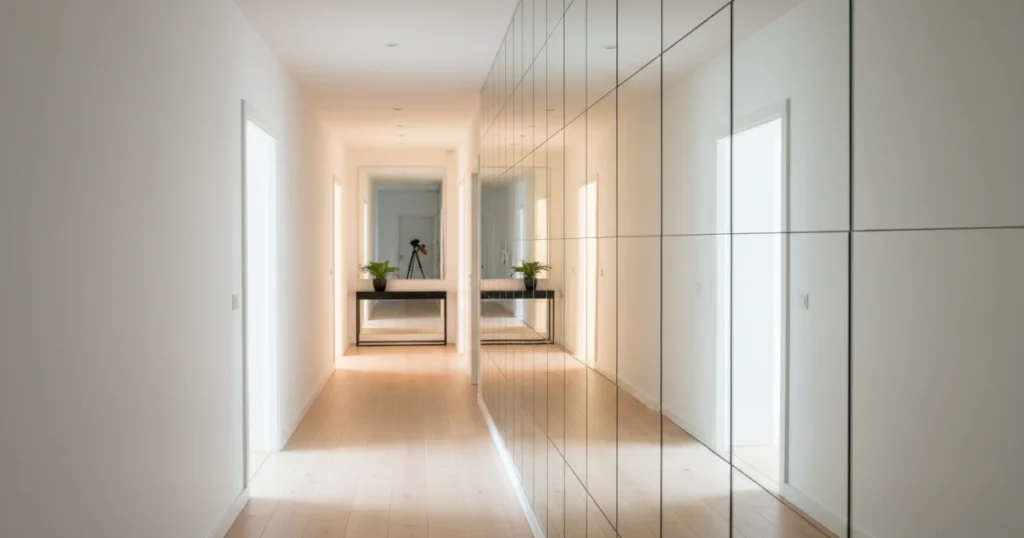
A tight hallway with a mirror along one wall quickly ceases feeling tunnel-like and assumes the aura of a museum. In a home office that’s a guest bed, a mirror beside or behind the desk creates the illusion that the workspace extends beyond the wall, even if it doesn’t. The eye picks up on the recurring lines of furniture and floor, so the mind interprets a more spacious room, enhancing its visual appeal.
Entryways are a prime location for this type of facelift. A mirror across from the front door frequently causes the entry to feel more spacious and inviting once you enter. Light from adjacent windows or fixtures reflects back into the corridor, thereby making the area appear brighter in the day and more evenly lit at night.
Designers tend to select oversized, opulent mirrors with thin gilded frames in this spot, as they provide a bit of shine while assisting the space appear wider and higher. It’s good placement where the real magic occurs. Facing a window, a mirror draws the outside in, infusing the room with light and depth, creating a stunning feature wall that captivates attention.
In a dining room, a mirror that reflects a garden, city skyline, or even a balcony scene can be like a second opening on the wall rather than a hard stop. A few designers design with the sun path over the year in mind, so morning or late afternoon light strikes the mirror and diffuses across the room, which lends small spaces an airier feel without additional lamps.
More than one mirror can extend the effect even further. A tidy grid of smaller self-adhesive mirrors on one wall will produce a panel of reflections that looks like a giant feature piece. In a cramped studio, a 3 by 3 above your sofa can approximate a large window, disrupting a blank wall and creating the illusion of a room beyond.
Patterns help frame what’s already there, like an archway, fireplace, or built-in shelf, which pulls the eyes up and out rather than to the room’s borders. When mirrors frame these beauties, the space around them feels broader and airier, while still connected, making them a versatile choice for modern interior design.
3. Reflects Natural Light
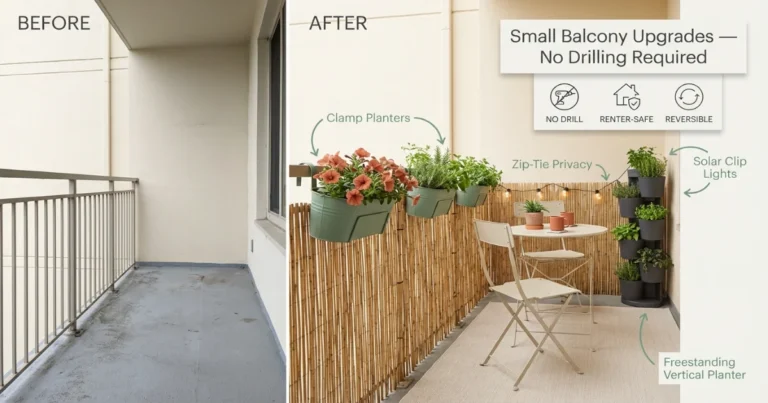
My favorite part of now self-adhesive mirror wall decor is how brilliantly it reflects the natural light in a room. In most homes, certain spaces remain dim, even at noon, such as that shadowy nook behind a couch or the distal end of an expansive hallway. Mirrors reflect natural light and bounce it back into the space, so those shadowy dark corners suddenly appear lighter and more spacious without any significant alteration to the room. This is why wall panels are such a popular choice for enhancing interior design.You can even use lightweight mirror panels in covered outdoor areas — similar to the techniques we share in our small balcony upgrades guide.
Just a small cluster of hexagon mirror tiles on a blank wall opposite a window can raise the light level in an entire corner, which tends to make the room feel bigger. Bigger panels also reflect more daylight than small pieces, so a wide strip of mirror behind a desk or console beats multiple very small stickers scattered about. The versatility of these mirrors makes them a fast decor solution that can easily adapt to any space.
When it comes to enhancing the vibe of a room, natural light is more important than you might expect. When sunlight bounces on a reflective surface, it mellows shadows and makes colors appear more authentic. Positioned at the optimal height, a self-stick mirror panel can capture low morning light in a bedroom or late afternoon light in a living room and distribute it across the adjacent wall. This can create a stunning feature wall that serves as a perfect solution for both functionality and elegance.
That burst of brightness can change the spirit of the room, from lifeless and limp to fresh and dynamic. Certain mirror products are coated or have better quality glass that enhances reflectivity, so they bounce even more of that daylight around the room rather than muffle it. In a home office, a single well-placed cluster of mirror tiles near the window can help mitigate the harsh contrast between your screen and the rest of the room, making it an effective focal point.
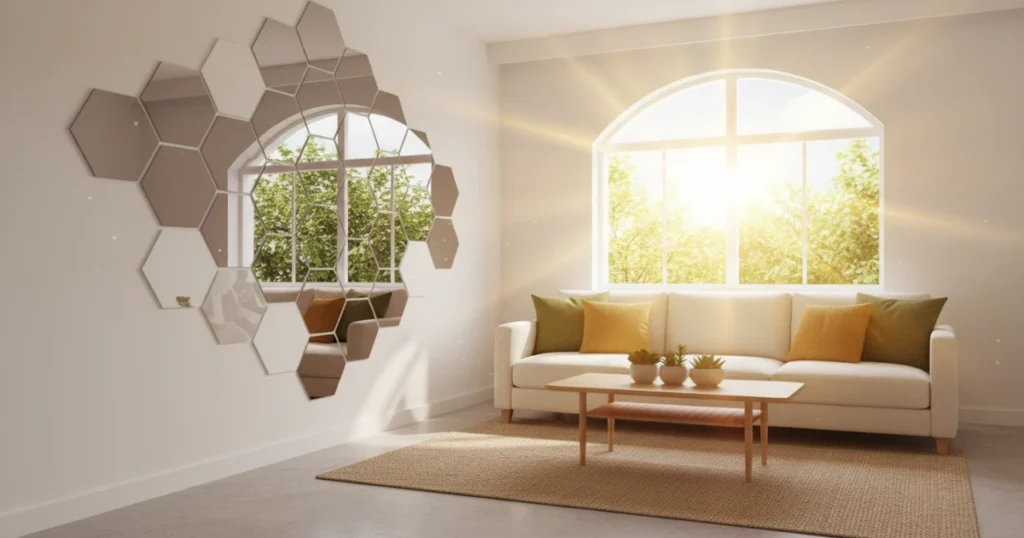
To maximize light distribution, location and angle are key. Positioning mirror decals near a window or next to glass doors yields more robust results than applying them to an arbitrary shaded wall. A vertical strip beside a window can direct light deeper into a room, while a horizontal band above a sofa can capture light from high windows. This strategic placement can significantly enhance the ambiance of your home.
Even a slight shift in angle determines where the reflected light falls, so a mirror on a stairwell wall can cast daylight from an upstairs landing down onto the lower steps. Narrow hallways benefit the most from a long mirror line opposite the primary light source, which can transform a claustrophobic corridor into a much more inviting path. This is an effective way to create a spacious feel in smaller areas.
With improved daylight bounce, a lot of homes can reduce the use of lamps during the day, particularly in the spring and summer. When mirrors draw additional sun into your home, overhead lighting remains off longer, and task lamps by chairs or desks can remain unplugged until dusk. This not only enhances the beauty of your space but also promotes energy efficiency.
Over the course of a year, that modulation might shave energy consumption, but even on a day-to-day basis, it simply feels cleaner to stroll into a room that already appears uncluttered and luminous, without flipping a switch. The creativity involved in arranging these mirrors can lead to stunning setups that elevate the overall aesthetic of your living space.
4. Ideal for Small Spaces
Second, self-adhesive mirror art is a perfect solution for small spaces as it provides depth and shine without occupying any additional space or adding visual noise. The abbreviated moniker most of us employ is “stick-on mirrors,” and they are great where every centimeter of wall matters.
To maximize cramped walls, a lot of us eschew frumpy frames and cumbersome glass. Thin acrylic or lightweight mirror sheets lie nearly flush against the plane, so a skinny hallway or tight entry won’t seem cluttered. A framed wall mirror can extend a few centimeters and seem intrusive. A flat stickum panel keeps the walkway clear and still bounces light down the hallway, enhancing the overall visual appeal.
For instance, a line of frameless tiles down a 1 meter wide corridor can make it feel less like a tunnel and more like a sunlit walkway. In long, narrow spaces, smallish mirror tiles or strips work better than a single large piece. Short strips at eye level in a bathroom can create a stunning feature wall without filling the entire wall.
Small, round mirrors approximately 20 cm in diameter tend to display a nice balance. They are large enough for a cursory face check but small enough for cramped corners above a towel rack or next to a shower door. A lot of tiny apartments are using a grid of 8-inch discs above a sink to incorporate both style and functionality.
For rooms with limited free walls, doors and cabinets make excellent real estate. These adhesive mirrors adhere well to closet doors, pantry doors or cabinet faces and transform “dead” surfaces into useful locations. A full-height strip on a wardrobe door provides a dressing mirror without a floor stand.In compact kitchens, combining mirror strips with our favorite tiny kitchen storage hacks can dramatically open up narrow galley layouts.
A series of small tiles on a bathroom cabinet door allows you to check your hair and keep the counter clear. The majority of stick-ons require no drilling or screws, so renters can install them on the back of a bedroom door and remove them later with barely a mark remaining, ensuring a hassle-free application.
In crowded studios or shared flats, mirrors assist a ton with the room’s ambiance. Securit wall-mounted panels bounce daylight from a single window around the room, so a 20 m² space no longer feels so boxed in. Using a lot of little mirrors instead of one giant sheet can create a collage effect that adds to the room’s sophistication.
A loose cluster of circles over a bed or sofa adds rhythm and breaks up a blank wall while still catching light and views. Since adhesive mirrors come off clean in most cases, they can try out a few different layouts until the room feels more open and serene, offering a fast decor solution for any event.
5. Adds Depth to Decor
Self-adhesive mirrors add real depth by playing with light, layers and sightlines in a room. Short strips or tiles lay flat on the wall, but they transform the entire space’s vibe and appearance.Mirrors pair beautifully with peel-and-stick wallpaper, especially when you want to create a layered feature wall that reflects both texture and light.
To create a more dimensional appearance, some folks even hang mirrors behind shelving or paintings. A slender mirrored panel behind open shelving can bounce back books and little plants and decor items, making the shelf appear deeper than it really is. A framed print hung in front of a mirror strip acquires an added “double” edge, as the frame and wall both show in reflection.
That subtle reverberation of shapes and colors fools your eye into seeing more space. It plays nicely in snug living rooms or compact home offices where space is at a premium. When decorative items sit on those shelves, like vases, sculptures or souvenirs, they appear elevated because the mirror bounces light around them. The eye travels upward and across the wall, making a small room feel taller and wider.
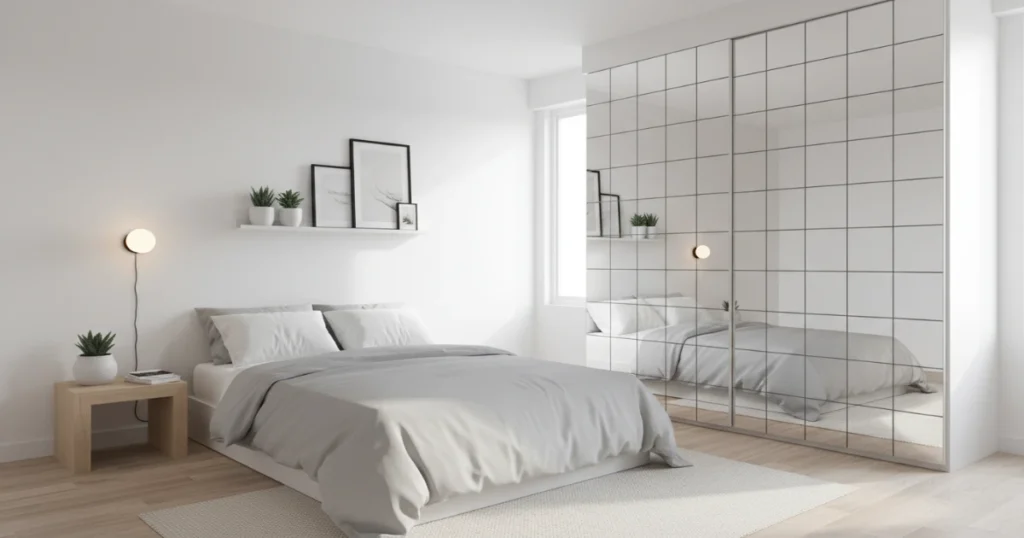
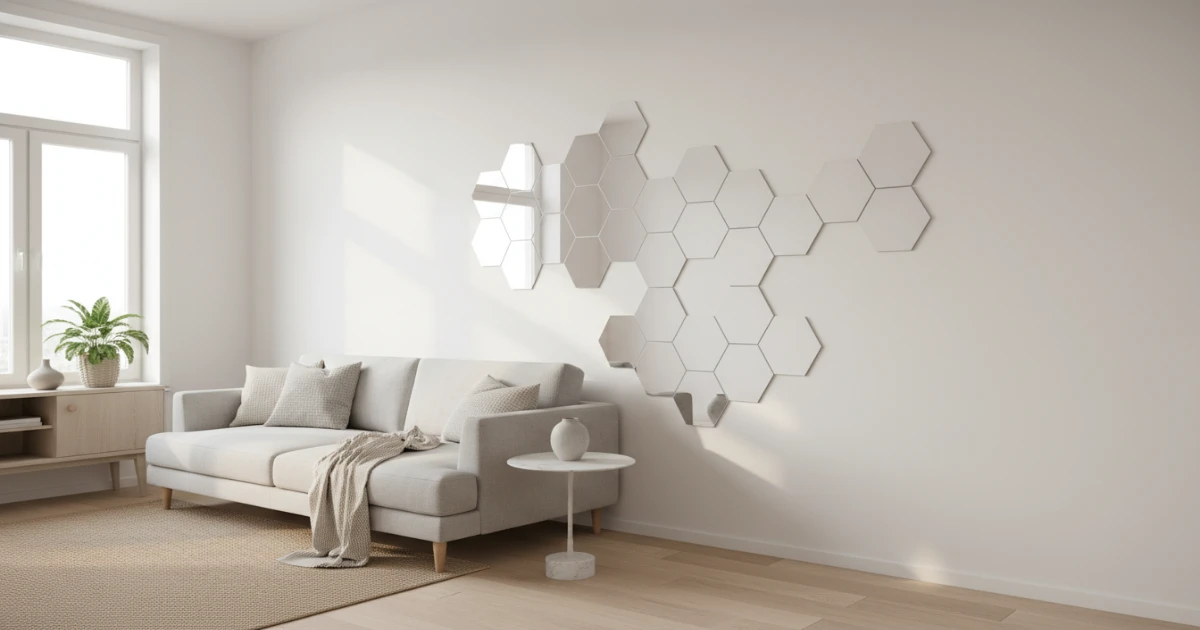
Geometric layouts take the depth effect up a notch. Square, round, or hexagon mirror tiles arranged in a grid or staggered pattern provide visual depth the way textured wallpaper does. A row of hexagon mirrors above a low sofa, matched with a rug sporting a bold-yet-simple pattern, adds both depth and warmth.
The rug grounds the room with color and soft texture on the floor, while the mirrors draw the eye up and out. When a few plants of varying heights sit nearby, the blend of shapes, reflections and leaf textures creates a beautiful, layered composition without clutter.
Gallery walls tend to seem flat if they’re just solid frames on a flat wall. To that mix, sliding in a few self-adhesive mirrors breaks up the mass. A slim vertical mirror between two prints of art or a cluster of little round mirrors between photos adds ‘breathing space’ and light.
Overlapping or staggered mirror pieces add depth to that wall. For instance, three slim strips installed at graduated heights behind a cluster of petite frames introduce gentle reflections of lamps, rugs, and surrounding chairs. Light from a floor or table lamp hits the mirrors and throws gentle shadows while deepening contrast, so the wall no longer feels like a flat block.
Mixed furniture styles in that same space, like a sleek metal side table next to a classic wood chair, become cohesive because the mirrors subtly connect their differing lines and shapes.
6. Customizable Shapes and Sizes
Custom shapes and sizes make self-adhesive mirror decor a flexible design tool that fits in tight corners or entire feature walls. Short mirror tiles are great, but the real power is in how extensively the sizing options go.
For starters, there are a number of pre-cut shapes. Typical options are circles, hexagons, and squares, suited for both basic grids and whimsical arrangements. Round pieces can scale up in custom work to around 84 inches in diameter, perfect for a large dining wall or a hotel-style headboard area.
Hexagon panels align beautifully in a honeycomb pattern over a sofa, whereas square tiles line up nicely for a sleek, contemporary aesthetic in a hallway or home office.
For less standard spaces, users trim mirror sheets or custom-order cuts to achieve a closer fit. Thin strips can outline a door frame, a tiny niche, or a slanted attic wall. Half-circle shapes frequently appear in entryways or above console tables, where they provide a gentle curve that disrupts the linear lines of furniture.
A half-moon mirror above a narrow console, for instance, can help a small foyer feel taller and airier without introducing new cumbersome pieces.
Size selection is important. Custom designs can be anything from a small accent piece to covering an entire wall with a panel. Heights can be under 50 centimetres, between 50 and 75 centimetres, between 75 and 100 centimetres, or above 100 centimetres for different needs, from a little makeup spot to a full dressing area.
Widths can often sit under 45 centimetres for narrow niches, between 45 and 60 centimetres for single vanities, between 60 and 75 centimetres for double sinks, and up to about 90 centimetres for wider wall spans. A combination of small and larger tiles can create a mosaic behind a couch, with little squares saturating spaces around a larger, central panel.
Lots of designs conform to the room furniture. A long line of low mirrors can stretch behind a sideboard, while piled hexagons can mirror the stature of a bookcase. Custom sets with unusual shapes or oversized features tend to come across as more refined and inject a bit of polish into living rooms, lobbies, or dressing rooms.
Generally, custom orders complete within 3 to 5 days. Intricate designs and sizable walls require additional time to design and create.
7. Easy Installation Process
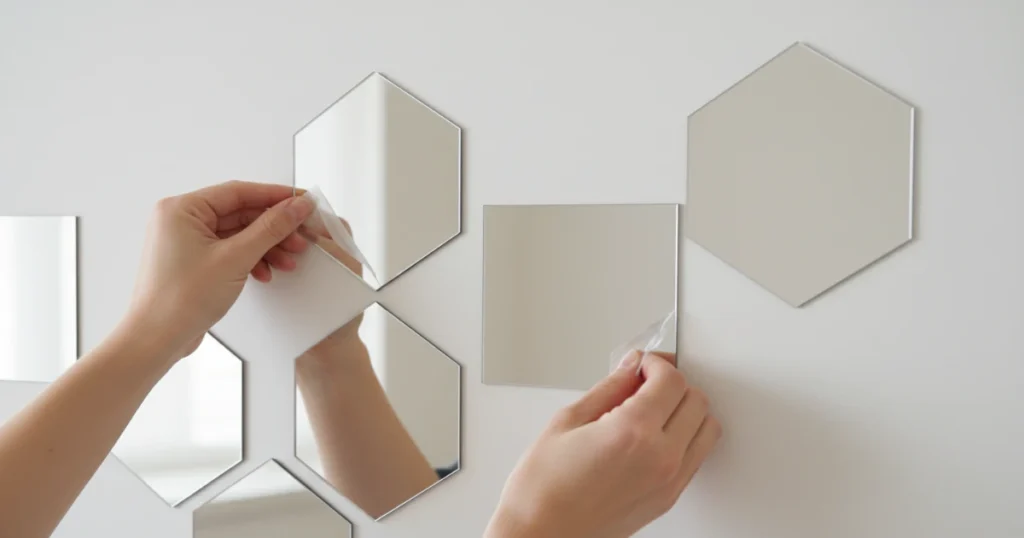
Self-adhesive mirrors are unique because of their quick, tool-free installation that matches our hectic schedules. Peel-and-stick backing means no drill, no anchors, and no dust on the floor. It’s easy to install, making it a fast decor solution. Clean, dry wall, a touch of attention, and the adhesive sticks for the long haul. Take the tiny 30 by 30 cm hallway panel, for instance, that tends to be installed in just minutes, even for a home project novice.
To achieve that speedy install, the pre-installation work is what counts. The surface must remain dry for multiple days prior to and at least 24 hours after applying. A lot of folks tape off the wall, then leave that spot “off-limits” for a couple of days so no one splashes water or leans bags against it. That quiet, dry window assists the glue in getting a great hold and remaining steady. High humidity will eat away at the mirror’s silver backing, so steamy showers or a bad bathroom with no ventilation just won’t do.
The peel and stick system frequently provides an aggressive initial hold with a work time of around 10 to 20 minutes. Within that time window, paneling can be moved, hoisted, and pushed into alignment without sacrificing tack. Just imagine installing a matrix of little tiles in your basement gym. You position each square, step back, check the lines, and slide a piece a few millimeters to patch gaps before pressing down fully. That wiggle room to tweak keeps lines crisp and shine even.
Even with powerful adhesive, not every mirror is made for the “stick it and forget it” lifestyle. Bigger mirrors, particularly those wider than around 120 cm, might require additional support during installation. That could be an assistant holding one side as you line up the other, or a makeshift brace under the lower edge.
While most mirror adhesives can actually continue to cure in colder climates down to approximately −18 °C, makers usually recommend maintaining the room between 15 and 29 °C during bond setting. Warmer ranges assist in the glue flowing into small wall pores, creating a better grip, ensuring the mirror remains a stunning feature wall in your home.
Once the mirror is up on the wall, the space still needs some love. Maintaining it dry and stable without wiping around the edges or spraying cleaner encourages the cure. Moisture too early will compromise the adhesive and reduce the mirror’s lifespan. A little patience here saves both your surface and your backing, allowing you to enjoy the elegance and versatility of your decor for years to come.
8. Lightweight and Versatile
Self-adhesive mirror decor scores with both its lightweight option and flexibility. Many of these mirrors use plastic or acrylic mirror sheets instead of thick glass, allowing each panel to weigh significantly less while still providing a nice, reflective surface. Others choose these mirrors for their versatility, meaning you can easily lift, hold in place, and press onto the wall without assistance or additional tools.
They’ll work great on pretty much any common wall type – painted drywall, tile, or even smooth wood – to safely set them up as accent walls. This setup helps distribute the weight, resulting in less stress on the surface compared to a single heavy glass piece. Weighing in at 16 pounds, it’s lightweight and versatile. A pack of mini acrylic tiles can hang above a sofa on drywall, or a strip of plastic mirror can sit on a tiled backsplash in a kitchen or bathroom, creating a stunning feature wall.
The light construction usually reduces the danger of breakage if a component comes loose, which is especially beneficial in households with children or in leasehold situations. Because they’re so lightweight, it becomes easy to re-arrange the design when your taste shifts. A grid beginning in the entry hall may eventually migrate to a bedroom wall. For a home gym, mirror tiles can start low for floor workouts and then be raised higher to enhance functionality.
Others like to experiment with a layout using painter’s tape first, then stick the adhesive mirrors down once satisfied with the configuration. That sort of trial and error is more difficult with a big, framed glass mirror. Versatile use extends beyond empty walls. There are lightweight mirror options, such as light mirror sheets, which can be applied to doors, closet fronts, or even the side of a wardrobe to introduce depth in a small room.
Even some furniture fronts, like dresser drawers, employ them to provide a lighter, airy appearance without extra bulk. In schools and playrooms, shatter-resistant acrylic mirrors are installed at child height for learning corners, while in a gym, long strips on support columns aid with form checks from various angles. Because weight remains low, shipping and carrying takes less of a toll on the body, making it a perfect solution for those who frequently relocate.
Transporting a bundle of slim acrylic panels upstairs is nothing like hauling one big glass pane. That minimizes the risk of back strain or dropped chunks. Anyone who relocates frequently, whether students or renters, appreciates just how simple it is to throw these lighted mirrors in a box and take them along to a new flat, office, or gym nook without any specialized equipment.
9. Cost-Effective Home Upgrade
Self-adhesive mirrors provide a luxurious appearance for a low cost. Stick-on panels, tiles, or strips reflect light like glass, but bypass the expense of bulky glass, thick frames, and professional installation. A pack of mirror tiles for a full wall accent can sit around €20 to €50, while one framed wall mirror of similar size may reach €150 to €300 and beyond, particularly with custom framing.
Custom cut wall-to-wall glass typically runs much higher and can potentially reach four figures once labor is added. For the person who craves that “designer” shine behind a sofa, in a hallway, or over a console, the price difference is evident.
To freshen up a stale old room, these mirrors serve as an easy, low-commitment solution. A rental hallway can feel dark, flat, and dated. Just a handful of vertical strips down one side reflect daylight from the door and refresh the space in less than an hour.
No drilling, no dust, and often no professional required. Most of us already make inexpensive changes like a new paint color or a slight change in furniture arrangement. Peel-and-stick mirrors belong in that same category of tiny, low-skill enhancements that alter the mood of a room without messing with walls or wiring.
For renters, the low-risk part counts for a lot. Sometimes landlords won’t permit holes or major changes. A lot of adhesive mirrors use backing that peels off cleanly from painted walls or doors when applied carefully, so the room receives a style boost without harm.
A tall mirror strip on a wardrobe door in a compact studio can extend the room. In a tight entry, a grid of tiny squares can illuminate that initial impression when walking in, which can boost daily happiness without affecting the architecture.
There’s a hook in how people perceive the value of a home. Stick-on mirrors aren’t a significant capital upgrade, but clever and modern touches tend to make first impressions. A cheerful, mirrored breakfast nook seems more spacious than the same space with a blank wall, which can come in handy when entertaining visitors or potential buyers.
Minimalist layouts, clean lines, and a handful of strategically positioned mirrored panels tend to read as neat and well cared for. A few owners even use these cheapies to try a style out before spending money on a big framed section or a permanent glass install.
If the layout works and still feels right a few months later, that subsequent spend is a more assured selection.
10. Minimal Maintenance Required
Self-adhesive mirror decor remains low maintenance when treated gently. It requires some maintenance to keep it looking fresh without the typical heavy cleaning of glass mirrors.
To maintain that shiny surface, a soft cloth and gentle cleaner go a long way. A little mild soap solution or a glass safe spray without the nasties does the trick. Light pressure will prevent fine lines on the surface. Most sets utilize acrylic plexiglass and users say it can scratch quickly, even from cotton swabs or microfiber towels.
A better solution is a very soft, lint-free cloth with gentle strokes and no rubbing. For instance, a swift weekly swipe with a damp, soft cloth, then dry buff, can sweep away prints and dust while minimizing streaks.
Reason #1. Minimal Maintenance Required
One obvious advantage is the absence of any exposed backing that traditional framed mirrors sometimes feature. There’s less chance of water sneaking behind a frame and creating dark spots or edge corrosion. On a bathroom wall, above a sink, a glass mirror can exhibit black specks along the border after a few years from moisture and cleaning sprays.
A flat, self-adhesive panel sidesteps most of that as long as the wall is dry and the edges are well-pressed down. The acrylic surface itself still reacts poorly to harsh cleaners, so wiping down with products like Windex and paper towels can leave haze, streaks, and even surface damage.
Another smart advantage is the simplicity of handling damage in limited areas. If a tile gets chipped, warped, or dropped while cleaning, only a single tile has to be replaced. There’s no knocking out a full wall piece like a big glass mirror.
Take, for instance, a grid over a sofa — one cracked tile and you can easily peel it off and replace it. The big watch-out here is the glue. Not all purchasers report that, and some buyers experience issues with the sticky pads losing grip after a few weeks, causing tiles to slip or fall.
In those cases, a more robust double-sided tape or mounting strip frequently provides superior residual hold. With some initial prep and light upkeep, these panels can stick around and look sharp with minimal daily effort.
The build quality counts. A lot of people say that the material is cheap and flimsy and bends, breaks, and gets fine edge marks. Gentle does it when setting it up and cleaning it, which reduces the risk, but means maintenance requires a softer touch than with thick glass
Frequently Asked Questions
Are self-adhesive mirror wall decals safe for painted walls?
These premium self-adhesive mirrors are a lightweight option that offers functionality without damaging walls. Just remember to clean the surface first and read the directions carefully to ensure a successful stick application process for your next gathering.
Do self-adhesive mirror tiles really make a room look bigger?
Yes. Because wall panels like mirror tiles bounce light reflection around the room, they create a spacious feel and make the space appear bigger. They’re particularly effective in hallways, tiny bedrooms, and small living rooms, generating a powerful illusion of depth and added space.
Can I cut self-adhesive mirror decor into custom shapes?
All flexible acrylic self-adhesive mirrors, a lightweight option for wall installations, can be cut with a sharp utility knife or scissors. Outline your design, cut carefully, and smooth edges to enhance the visual appeal of your space. Always refer back to the product description to be safe, as glass-based ones should not be cut at home.
How do I install self-adhesive mirror wall decor correctly?
Begin with a clean, dry, and smooth surface for your wall installations. Use a level and pencil to mark your layout for the best visual appeal. Slowly peel off the backing, press from center to out, and smooth air bubbles for a stunning feature wall.
Are self-adhesive mirrors suitable for bathrooms and humid areas?
Several acrylic self-adhesive mirrors are a lightweight option for bathrooms if the product is marked moisture-resistant. Stick them to dry, non-textured tiles or sealed walls for a stunning feature wall. To preserve adhesion and prevent warping, steer clear of direct water and heavy steam.
How do I clean and maintain self-adhesive mirror wall decor?
Clean by wiping gently with a soft, lint-free cloth and a mild glass or surface cleaner. A light cleaning on a regular basis keeps the surface clear and reflective, enhancing the visual appeal of your wall panels without much effort, making it a perfect solution for maintaining your stunning feature wall.
Can self-adhesive mirror decor be removed without damaging the wall?
With most good stuff, including wall panels, you can easily remove them by gently peeling from a corner. If the glue is strong, warm it a bit with a hair dryer to loosen the adhesive. Otherwise, it is typically cleaned with a mild wall-safe adhesive remover
Conclusion
Self-adhesive mirror wall decor provides a clever combination of style, light and utility. It transforms a dreary wall, illuminates shadowy corners and assists a claustrophobic room to breathe. It works for rentals, small apartments, home offices and children’s rooms. A plain mirror tile border above a sofa or a neat grid in a hallway can change the entire atmosphere of an area.
You skip the drill and heavy tools. You simply cut, peel, and press on. You clean it with a soft cloth every now and then. That’s it.
To complete a room refresh, begin tiny. Try a few tiles on a wall or by a window. Observe how the light dances. Then create a configuration that works for your area and your taste.