Small Apartment Lighting: Plug-In Pendants &lamp; Sconces (2026 Renter-Friendly Guide)
No drilling. No electrician. No deposit lost. Just beautiful light.
Walk into almost any small apartment and you’ll spot the same problem instantly — one flat overhead fixture bathing every corner in the exact same, lifeless glow. It doesn’t make the room feel cozy. It doesn’t make the space feel larger. And if you’re renting, there’s not much you can do about the fixture itself, because rewiring or ceiling drilling is almost always a lease violation waiting to happen.
Good lighting isn’t a luxury — it’s one of the highest-impact design moves available in a small space. It shapes how large a room feels, how relaxing it is to spend time in, and how polished the whole apartment looks at the end of the day. The problem is that traditional lighting upgrades require an electrician, permanent wiring, and permission your landlord probably won’t give.
That’s where plug-in lighting comes in. Plug-in pendant lights and plug-in wall sconces have exploded in popularity because they deliver designer-level lighting without a single hole drilled into the wall or ceiling. Combined with smart no damage wall decor ideas, they give renters a genuinely flexible, stylish, damage-free way to transform any apartment — and take it all with them when they move.
This guide covers everything you need to know: what these lights are, where to use them, how to install them cleanly, and which spots in your apartment will benefit most.
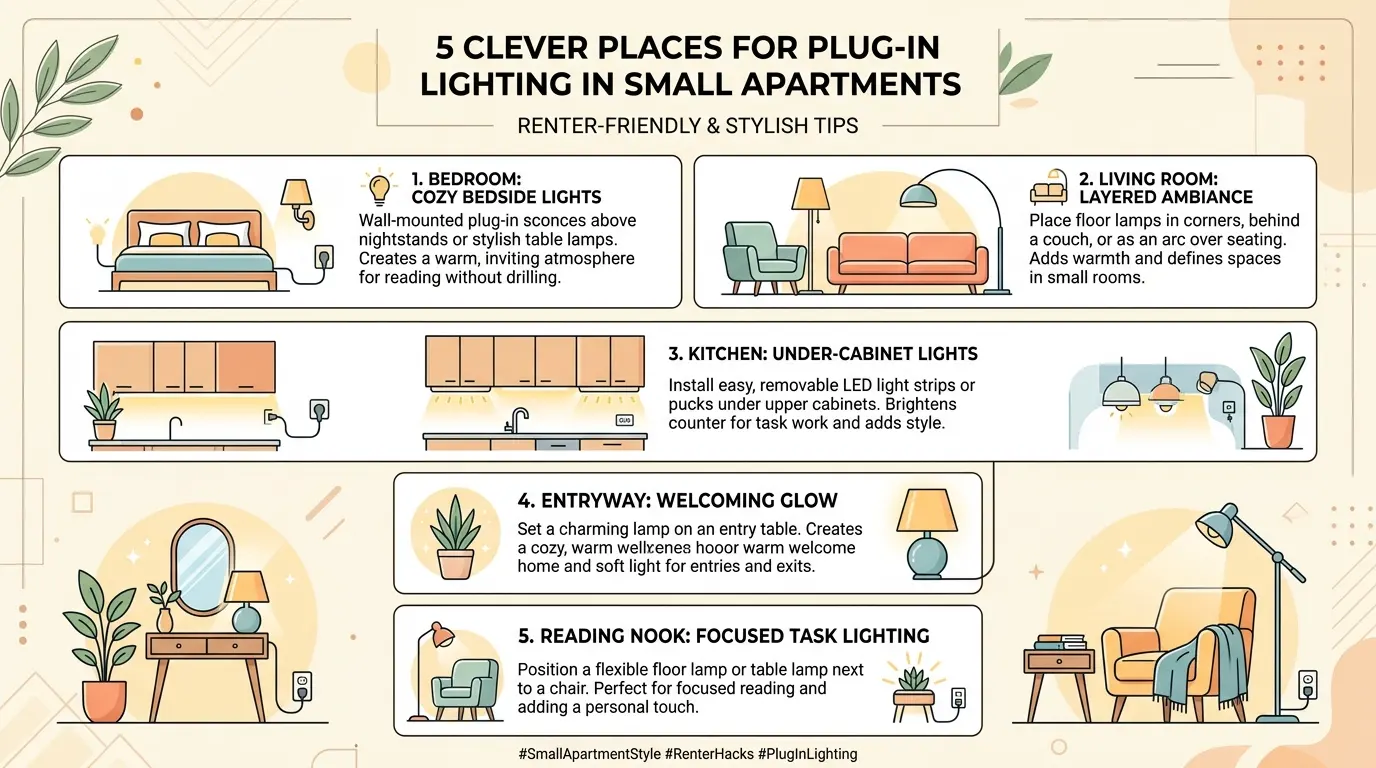
Plug-in pendant lights are hanging lights with a fabric or braided cord that plugs directly into a wall outlet, suspended from a ceiling hook. Plug-in wall sconces mount on the wall and plug into a nearby outlet. Both require zero wiring, zero drilling, and are fully removable — making them ideal renter-friendly lighting solutions for small apartments.
✦ Key Takeaways
- Plug-in pendants and sconces are the most practical renter-friendly lighting upgrade available in 2026
- No electrical installation, no drilling, and no landlord permission needed
- Install and remove them in minutes using adhesive or removable ceiling hooks
- Ideal for creating layered lighting in small apartments where one overhead light falls short
- Works beautifully in every room — bedroom, living room, kitchen, hallway, and reading corners
- Cord covers and cable clips keep the setup looking clean and intentional, not makeshift
Why Lighting Matters in Small Apartments
Lighting is the one design element that affects every other element in a room. The right light can make a 400 square foot apartment feel open and airy. The wrong light — usually one cold overhead bulb — makes the same space feel cramped, clinical, and uninviting.
Interior designers talk a lot about layered lighting: the idea that any well-designed room uses at least three types of light. Ambient lighting fills the whole room. Task lighting focuses on specific activities like reading or cooking. Accent lighting highlights decorative features and creates depth and visual interest. Most apartments come with only ambient lighting — that one ceiling fixture — which is why they so often feel flat.
Beyond aesthetics, lighting directly impacts perceived room size. Warm light pools create visual “zones” that make open-plan spaces feel more intentionally designed. Uplighting draws the eye upward, making ceilings feel higher. Side lighting from sconces softens shadows that overhead lighting creates, making faces and furniture both look better.
Upgrading your lighting is one of the fastest wins available when it comes to small apartment decor ideas — and with plug-in options, renters can do it fully, properly, and damage-free.
What Are Plug-In Pendant Lights?
A plug-in pendant light is essentially a hanging light fixture with one key difference from a traditional pendant: instead of hardwired electrical connections, it has a fabric-wrapped or braided cord that ends in a standard wall plug. You hang it from a ceiling hook, run the cord down to an outlet (usually along the wall or tucked behind furniture), and plug it in. That’s the entire installation.
The look is identical to a hardwired pendant. The cord itself often becomes a design feature — particularly with colored fabric cords in black, ivory, blush, or forest green that complement the rest of the room’s palette.
Best use cases for plug-in pendant lights in small apartments:
- Above a small dining table or breakfast bar to create a restaurant-style focal point
- In a reading corner alongside an armchair for focused task lighting
- On either side of the bed as a floating nightstand alternative that frees up floor space
- In a kitchen above a counter where there is no existing pendant fixture
- As a statement light in an entryway to make a strong first impression
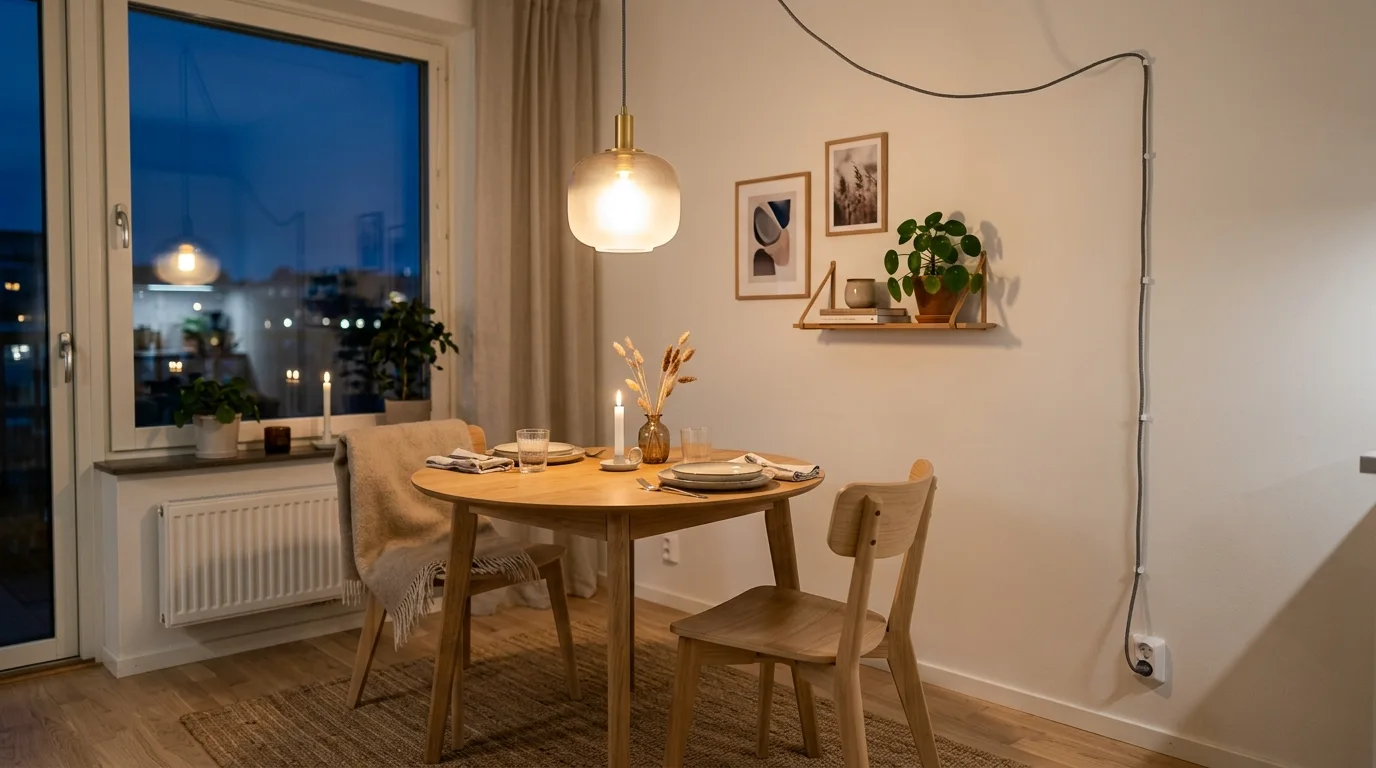
A plug-in pendant light creates an instant focal point above a small dining area — no electrician required.
What Are Plug-In Wall Sconces?
Plug-in wall sconces are wall-mounted light fixtures that — like plug-in pendants — connect to a standard outlet rather than a wired electrical box. They mount to the wall using adhesive strips, small screws into anchors, or a combination of both, and they can be removed cleanly when you move out.
Sconces tend to look more architectural than pendants, sitting flush or semi-flush against the wall in a way that blends with the room’s structure. They’re particularly good for renters because the mounting footprint is small, the adhesive options are strong, and even if a small screw is used, it’s a minor, easily-patchable issue compared to running electrical conduit.
Best use cases for plug-in wall sconces:
- Bedside reading lights mounted on either side of the headboard
- Hallway lighting to soften a narrow corridor that a ceiling fixture can’t reach
- Accent lighting to highlight art, a gallery wall, or a decorative shelf
- Bathroom vanity supplemental lighting near an outlet and away from water
- Living room flanking a console table or fireplace surround
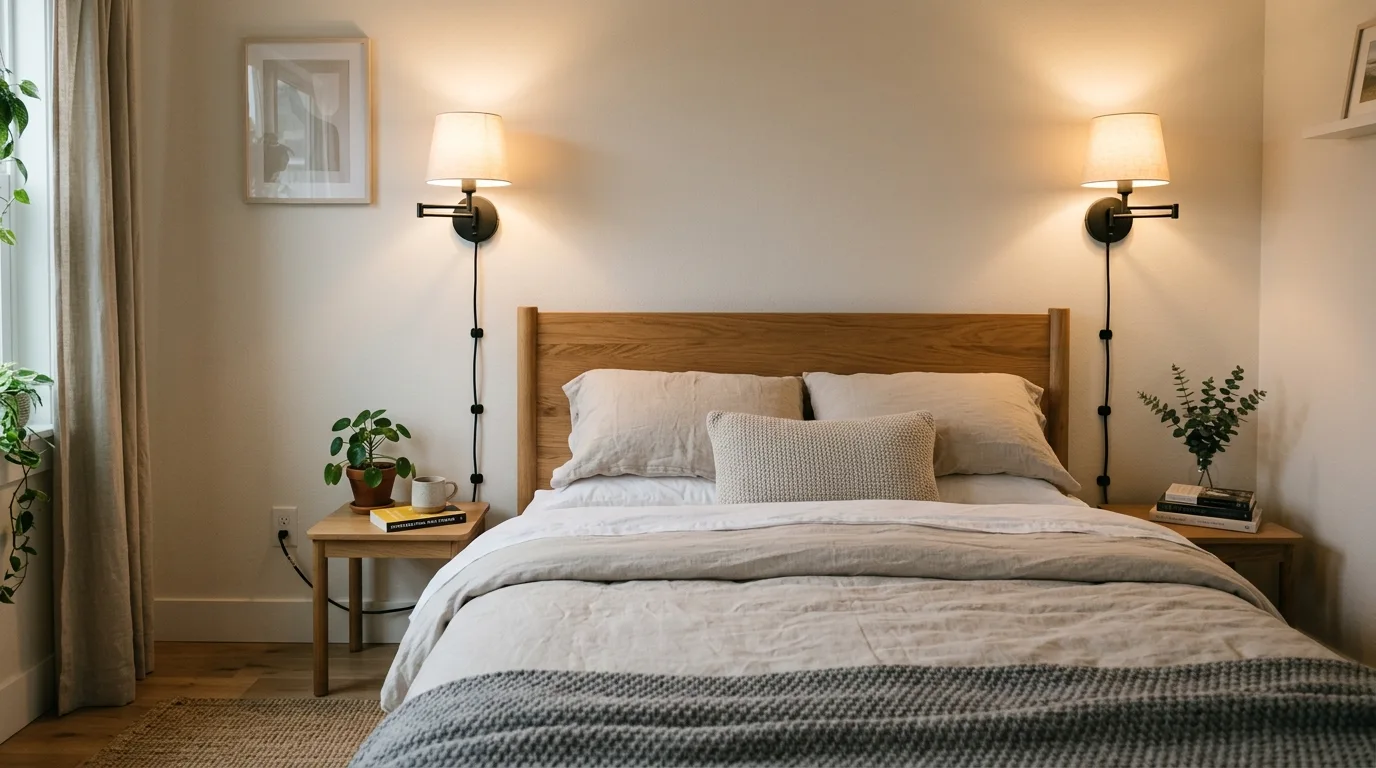
Plug-in wall sconces mounted on either side of the bed create a hotel-suite feel with zero permanent installation.
Best Places to Use Plug-In Lighting in Small Apartments
Bedroom
Replace bedside table lamps with hanging pendants or wall sconces to save surface and floor space.
Living Room
Add a pendant over a coffee table or sconces beside the sofa to create evening atmosphere.
Kitchen
A pendant above a counter adds task lighting where your kitchen layout may have none.
Entryway
A single plug-in pendant near the front door transforms an overlooked entry into a welcoming moment.
Reading Corner
Hang a pendant or aim a sconce directly over your reading chair for perfect focused task light.
Bedroom Lighting Strategy
The bedroom is where plug-in lighting makes the biggest difference in a small apartment. Most rented bedrooms have one ceiling fixture and no wired sconces — which means you are left using floor lamps that eat precious floor space, or bedside table lamps that crowd small nightstands.
Swapping both to plug-in pendant lights hung from ceiling hooks on either side of the bed gives you the look of a high-end hotel room. It keeps your nightstand clear and creates warm, dimmable bedside light. Pair this with a few smart small bedroom organization improvements and the room can feel genuinely transformed.
Living Room Lighting Strategy
In a small living room, a single overhead pendant over the coffee table anchors the seating area and acts as a visual center of the room. Add one or two sconces beside the sofa or behind an armchair and you’ve created a three-layer lighting scheme that feels intentional and cozy after dark. This kind of layering works best when combined with renter friendly furniture ideas that keep the space flexible and uncluttered.
Reading Corner Lighting Strategy
A reading nook — even just an armchair angled toward a window — becomes ten times more usable with a dedicated pendant light overhead. Choose a plug-in pendant with an adjustable cord so you can position the light exactly where you need it without it swaying or sitting too high to be useful.
A plug-in pendant above a reading armchair creates a defined, cozy zone in an otherwise open apartment layout.
Installation Tips for Renters
The practical question everyone asks is: how do you actually make this look good, not like a lamp cord awkwardly draped across your ceiling? The answer is in the details — and there are several tried-and-true methods renters use to install plug-in lighting cleanly.
Adhesive Ceiling Hooks
For plug-in pendants, the cord gets routed from the outlet up the wall and across the ceiling to a hook. Use heavy-duty adhesive hooks rated for at least 5 lbs for the ceiling hook itself, and smaller adhesive clips to keep the cord running flush along the ceiling edge where it meets the wall. These are the same type of renter-safe mounting solutions used to hang art without nails.
Cord Covers and Cable Raceways
For wall sconces, the most common challenge is the cord running down the wall to the outlet. Paintable cord covers — also called cable raceways — are the cleanest solution. They’re plastic channels that adhere to the wall and completely conceal the cord. Once painted to match your wall color, they effectively disappear.
Removable Ceiling Medallions
For a more decorative touch, peel-and-stick ceiling medallions can be placed around the ceiling hook to make the whole installation look intentional and architectural. They’re available in foam or lightweight resin and come off without damage.
When routing a pendant cord across the ceiling, use adhesive cord clips in the corners where the wall meets the ceiling. Space them about 8 to 10 inches apart to keep the cord taut and straight — a cord with gentle, even tension looks clean and deliberate, not sagging or makeshift.
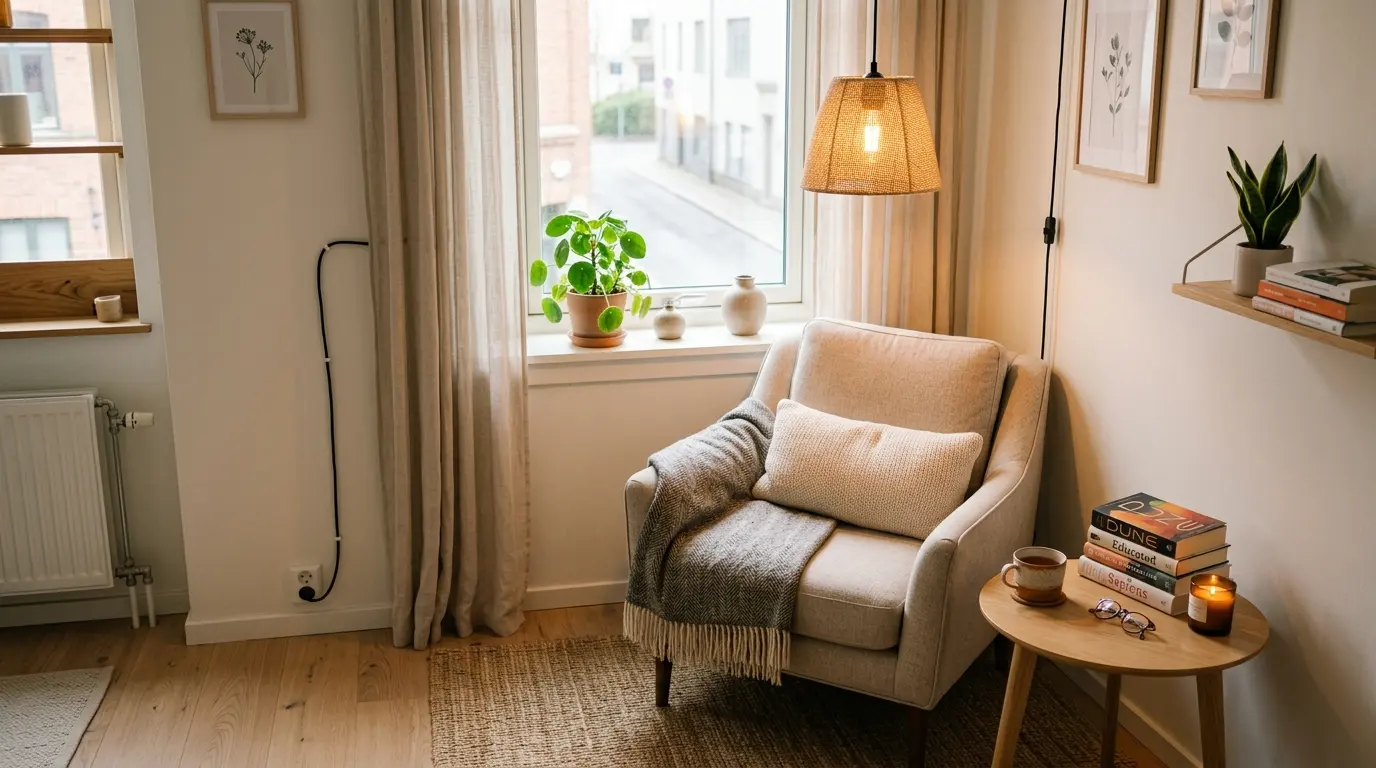
Cable raceways and ceiling cord clips keep plug-in light installations looking polished and intentional in any apartment.
Pros and Cons of Plug-In Lighting
Like any design solution, plug-in lighting comes with genuine advantages and a few limitations worth knowing before you commit to a specific setup.
| ✅ Pros | ⚠ Cons |
|---|---|
| 100% renter-friendly — no lease violations | Visible cords require management or covering |
| No electrician, no wiring, no drilling needed | Brightness can be limited vs. hardwired fixtures |
| Move-out ready in minutes — takes down cleanly | Placement depends on proximity to wall outlets |
| Flexible and repositionable as your layout changes | Adhesive hooks may not hold in humid environments |
| Wide variety of styles from minimalist to statement | Cord length may limit how high a pendant can hang |
| Compatible with smart bulbs for dimming and color control | Heavy pendants need anchored hooks, not just adhesive |
How Plug-In Lighting Improves Apartment Design
Beyond the practical “it works without drilling” argument, plug-in lighting genuinely improves the design quality of a small apartment in ways that are worth understanding.
It creates visual zones. In a studio or open-plan apartment, distinct lighting pools tell the eye where different “rooms” begin and end. A pendant over the dining area and a sconce beside the sofa make a single open space read as multiple distinct rooms — one of the most effective small-space design techniques available.
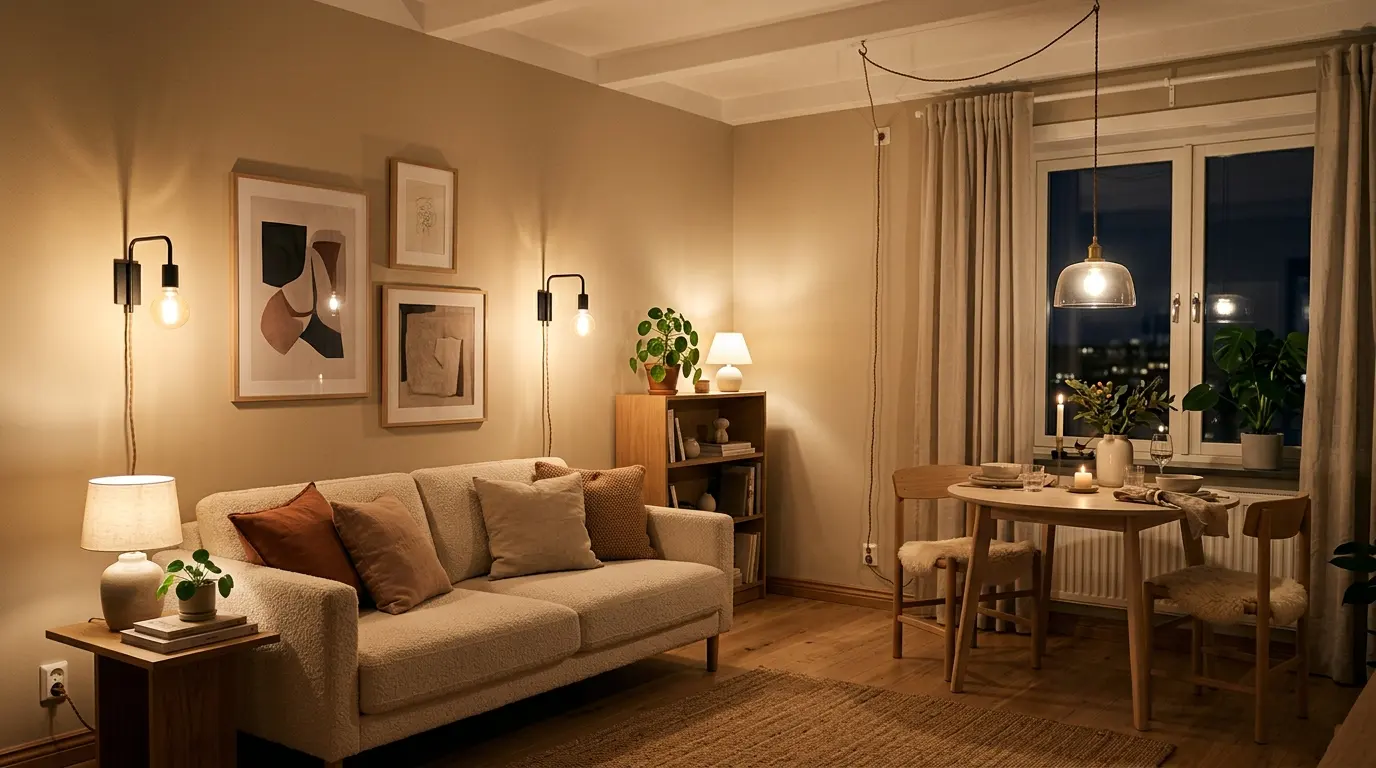
It builds atmosphere after dark. This is the part that’s hard to explain until you experience it. Replacing your one cold overhead light with two or three warm, lower-level light sources in the evening changes how the apartment feels entirely. It becomes a place you want to spend time in. This kind of cozy, layered lighting is the single biggest gap between an apartment that feels “rented” and one that feels like home.
It pairs beautifully with other no-damage upgrades. Plug-in lighting works best as part of a full renter-friendly design approach. Complement it with budget friendly wall decor like framed prints and floating shelves, and add personality with removable wall decals for a complete transformation that doesn’t cost your security deposit.
It follows 2026 renter design trends. The shift toward modular, moveable, non-permanent living is accelerating. People move more frequently, rent longer, and are more design-conscious than ever. Plug-in lighting sits squarely at the intersection of those trends — stylish, flexible, and entirely impermanent by design.
Final Thoughts on Small Apartment Lighting Ideas
Lighting is the single fastest way to change how a small apartment looks and feels — and for renters, plug-in pendants and sconces have removed the last real barrier to doing it properly. You don’t need an electrician. You don’t need your landlord’s blessing. You don’t need to sacrifice your deposit.
Whether you’re hanging a statement pendant above your dining table, mounting sconces on either side of your headboard, or layering warm light sources through an open-plan living space, the approach is the same: start with one well-placed plug-in light and watch what it does to the room. Then add from there.
The best apartment lighting setups are built gradually. A pendant here, a sconce there, a smart bulb that dims to warm amber in the evenings. Combined with the rest of your no-damage decorating toolkit, it’s a setup you can build, refine, and take with you every time you move. Start your full damage-free plan with this wall damage free decor planner to map out your whole space.
Frequently Asked Questions
QAre plug-in pendant lights safe for apartments?
Yes, plug-in pendant lights are completely safe for apartments. They use standard electrical plugs and draw no more power than a regular floor lamp. As long as you’re using the correct wattage bulb specified for the fixture and avoiding overloaded extension cords, they present no electrical risk and no lease violation.
QDo plug-in wall sconces damage walls?
Not if installed correctly. Many plug-in sconces mount using adhesive strips rated for wall mounting — quality removable strips rated for 5 to 7 lbs work well for lightweight models. Some heavier sconces use small screws, which leave minor holes easily patched with spackle. Either way, the wall impact is minimal compared to hardwired installation.
QCan plug-in lights replace ceiling lights entirely?
In most rooms, yes — with the right placement strategy. A plug-in pendant positioned centrally can provide the same ambient coverage as a ceiling fixture. Add one or two wall sconces for supplemental light and the room is fully lit. For high-lumen needs like a kitchen workspace, supplement with under-cabinet LED strips as well.
QHow do you hide cords from plug-in lights?
The cleanest methods are paintable cord raceways glued to the wall and painted to match, adhesive cord clips along the ceiling edge, and routing cords behind furniture where possible. For a pendant, running the cord up the wall and across the ceiling with evenly spaced clips creates a neat, intentional look that reads as designed rather than improvised.
QAre plug-in lights renter friendly?
Absolutely. Plug-in lights are among the most renter-friendly lighting options available because they require no hardwiring, no electrical permits, and no permanent modifications. They install in minutes and come down just as quickly, leaving no trace — perfect for anyone in a rented space who wants real lighting without the risk of losing their deposit.
QDo plug-in sconces need drilling?
Not necessarily. Lightweight plug-in sconces can be hung using heavy-duty adhesive strips — the same technology used in high-rated removable hooks. Heavier models may need a small anchor screw, but this is far less invasive than a standard wired sconce installation. Always check the fixture weight and match it to the hook or strip’s weight rating.
QAre adhesive hooks strong enough for pendant lights?
For most plug-in pendants, yes. Standard pendants typically weigh between 1 and 4 lbs, well within the capacity of quality adhesive ceiling hooks rated for 5 to 7 lbs. For heavier statement pendants or industrial-style fixtures, consider using a toggle bolt in the ceiling or switching to a lighter fixture that fits within adhesive limits.
QWhat type of bulb works best in plug-in pendant lights?
Warm white LED bulbs in the 2700K to 3000K color temperature range work best for residential plug-in pendants. They create a cozy, flattering glow, run cool, and use minimal energy. For ambience-focused spaces like bedrooms or reading corners, a dimmable smart bulb lets you adjust brightness throughout the day without swapping fixtures.
QCan I use a plug-in pendant light without a ceiling hook?
Technically, you can drape the cord over a curtain rod, lean it against a bookshelf, or suspend it from an S-hook on a tension rod — but a proper ceiling hook gives the cleanest, most finished result. Removable adhesive ceiling hooks are the standard renter solution and work well for lights under 4 to 5 lbs without any risk to the ceiling surface.
QHow far should a pendant light hang above a dining table?
The standard rule is 28 to 36 inches above the tabletop for a single pendant. In a small apartment with lower ceilings of 8 feet or under, aim for 28 to 30 inches to keep the light close enough to be functional without making the ceiling feel oppressively low. Adjustable-cord pendants give you the flexibility to get this height exactly right.