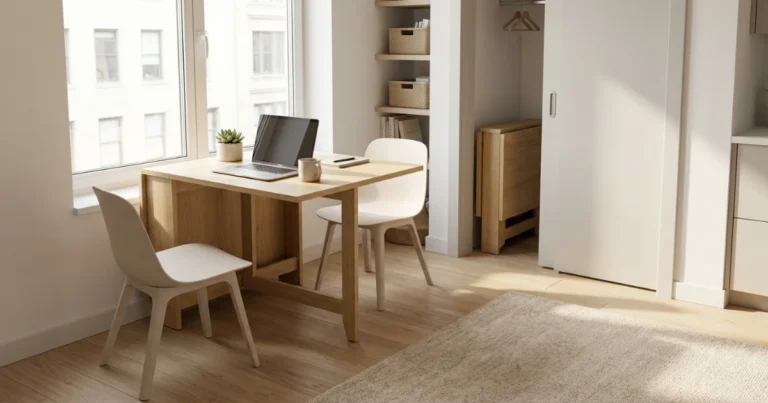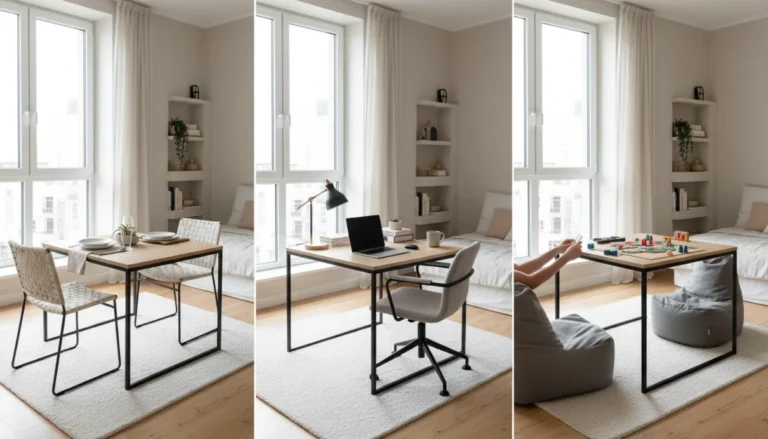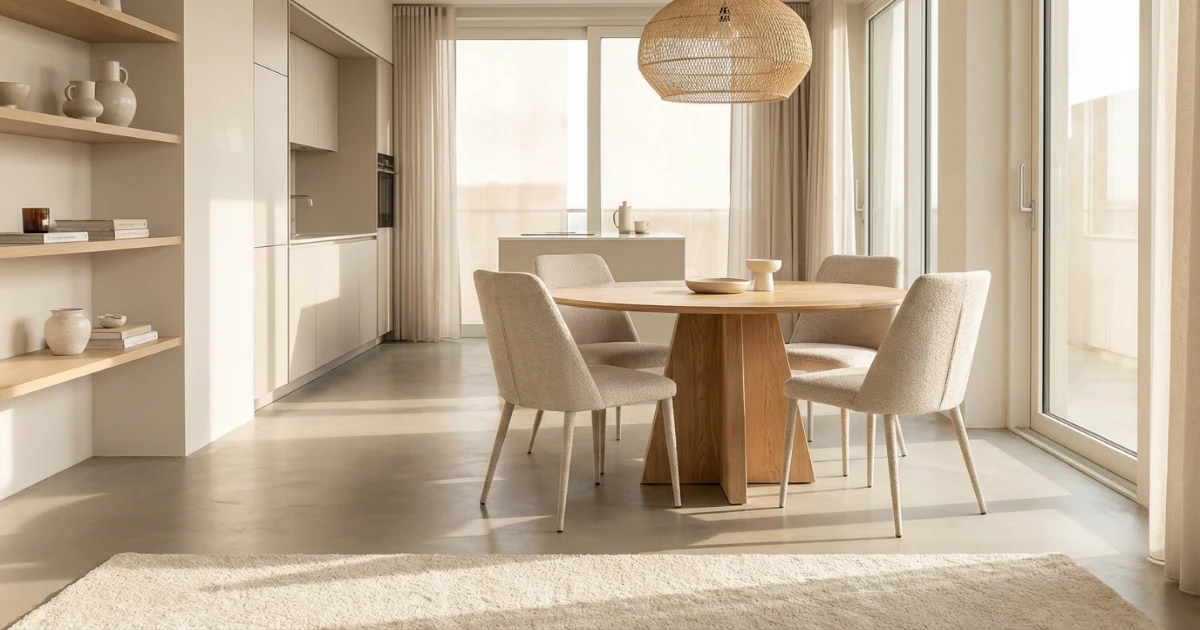
Space saving round dining sets are table-and-chair ensembles that easily fit into small rooms and still provide ample seating for everyday dining.Designed specifically for apartments, condos, and compact dining areas, these cleverly crafted table-and-chair ensembles fit effortlessly into small rooms while still offering comfortable seating for everyday meals and casual gatherings.
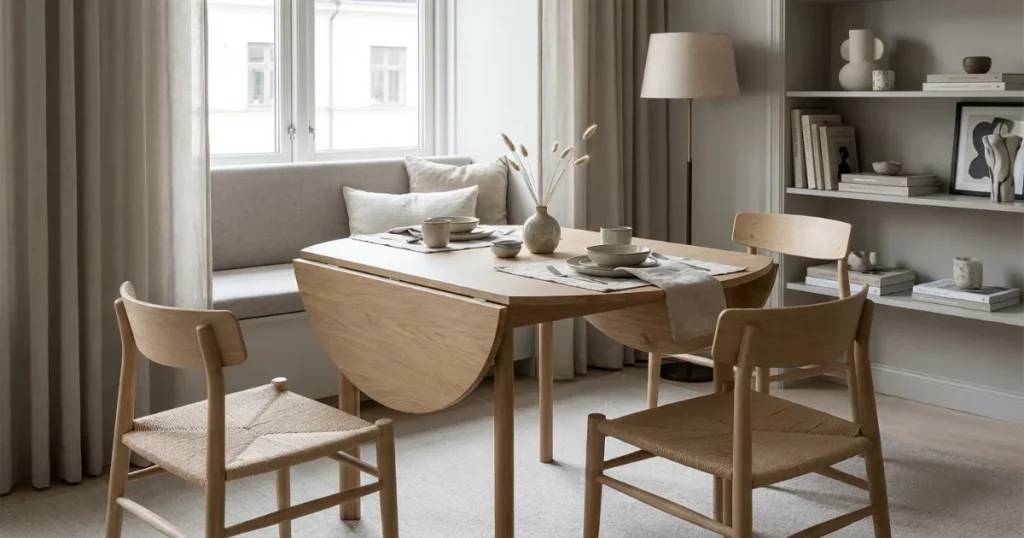
Most sets have drop leaves, stackable chairs or storage under the table to save floor space. Others utilize light wood or glass to maintain a room that is open and bright.When choosing the right set, factors like room layout, table size, seating capacity, and overall design aesthetic all play a crucial role in creating a dining space that feels both practical and inviting.
Some feature durable metal frames for extended use. Size, layout, and style all play a key role in picking the right set.If you’re decorating a compact home, these tips pair perfectly with our small apartment decor ideas to help your dining zone feel bigger without adding clutter.
Key Takeaways
- Round dining sets save space in compact homes by doing away with hard corners and enhancing the flow around the table. They provide a natural, balanced focal point that complements contemporary or traditional interiors.
- A round table enhances the flow of your room and encourages increased sociability since you’re all facing one another. This arrangement minimizes bottlenecks and creates a more intimate feeling. It works for open-plan living areas and studio apartments.
- Opt for visually lighter options like pedestal bases, glass or light wood finishes to keep your dining area open and airy. Pairing a round table with a round rug delineates the zone without crowding the room.
- Extendable tops, transformer round benches, and nesting or stackable chairs allow you to flex your seating for daily meals or larger party-size meals. This flexibility is particularly handy in multi-use rooms or in tiny homes that have visitors frequently.
- When choosing your set, measure your space thoroughly, think about material durability and care, and coordinate the style with your existing decor. Find space-saving designs, kid-safe rounded edges, and strong durable construction to complement your budget and lifestyle.
- Long-term care is easy with a regular cleaning and maintenance schedule and heat, spill, and scratch protection. Careful storage of extension panels and accessories ensures your round dining set remains attractive and functional for years to come.
Why Choose Round Dining Sets?
Round dining sets, especially the transformer round dining table collection, put space to use in a clever manner, particularly in smaller homes and urban flats. They nestle nicely into tight corners, open-plan rooms, and quirky layouts yet still provide plenty of space for plates, elbows, and cozy seating.
In many homes, a round table doubles as a visual anchor, offering a peaceful oasis in an otherwise hectic room. It easily transitions from speedy weekday meals to slow weekend dinners without anyone feeling squished, making it a great choice for family gatherings.
A round dining table typically has a smaller footprint than a rectangular counterpart of the same seating capacity, fitting more easily into rooms under about 10 to 12 square meters. With a pedestal base, it liberates legroom and maintains a more open floor area.
This design can make a small space feel greater and easier to maneuver. For even more versatility, a transformer round dining table set with concealed extension leaves allows you to start compact for everyday living and then expand for visitors without needing a second table.
Round shapes eliminate sharp corners, which counts in tight passageways and busy thoroughfares between the kitchen and living room. Everyone can easily navigate around the table without banging a hip on a corner or obstructing a narrow hallway.
This smooth edge and central base complement both traditional wood chairs and sleek contemporary seats, allowing the transformer round table to blend with various decors while maintaining an airy, balanced feel.
A round table tends to occupy the center of the room like a gentle point of focus. In Feng Shui, the round shape is associated with harmony and equality, given there’s no “head” of the table.
This aligns with how many families leverage their dining spaces currently as a communal space to work, study, and share meals. Everyone has equal access to the center, the food is easy to reach, and conversation can flow easily across the entire group instead of getting stuck at one end.
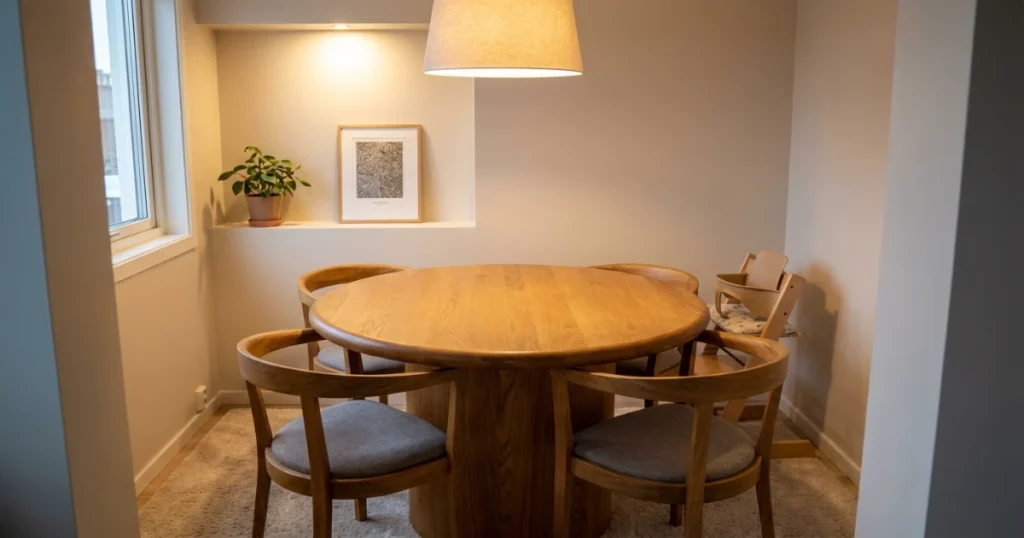
1. Better Flow
One of the reasons round tables promote good room circulation is that individuals can access their chairs from any direction. Since there’s no long edge to work around, paths remain short and direct, which comes in handy in rooms where the table abuts a wall, balcony door, or kitchen island.
In narrow dining corridors orsmall kitchen nooks, the absence of corners cuts down on bottlenecks. Two can walk behind the chairs without corners stabbing into the path.
For everyday living, that means less reaching and sidestepping when passing dishes or clearing plates. When friends and family visit, guests can stand, shove back chairs, and navigate around the table with less likelihood of obstructing other guests.
It works great in open-plan designs, where the dining area lies between the cook and living zones. We love the way a round table in the middle can tie the spaces together while allowing traffic to flow freely around all edges.
2. More Intimacy
Something about a round table draws everyone into a common center. Seats circle so everyone can see everyone’s face with less leaning and yelling. This tends to make meals more laid back even when space is squeezy.
For families or small groups of 4 to 6, that setup keeps distance short, so it’s easy to pass dishes and maintain a single conversation instead of splintering into smaller groups.
The absence of a “head” of the table encourages a feeling of equal standing for each diner, which is great for team meals, blended families, or communal living. The shape lends itself to lazy weekend breakfasts, intimate holiday dinners, and whispered late night conversations.
Since people sit in an easy arc rather than a long line, the table itself sustains a cozy, concentrated ambiance without much decoration.
3. Visual Lightness
A round dining table with a pedestal base or slim legs leaves more open floor visible. This open space beneath and around the table makes the room feel less congested, which is key in studios and tight dining nooks.
Light finishes, such as pale oak, birch or glass tops, can mirror daylight and contribute to a sense of space. In a smaller room under 3 by 3 meters, a glass round table with four slim chairs can keep the visual weight low, whereas a dark, boxy rectangular piece can easily dominate the room.
So to anchor the space without the weight, consider a round rug underneath the table to delineate the dining area in your open plan layout. We found that selecting a rug slightly larger than the table, with chairs still on it when pulled out, keeps the outline soft yet practical.To finish the dining nook without drilling holes, use our no damage wall decor ideas to add personality while keeping your walls rental-safe.
4. Flexible Seating
Flexible seating is perhaps one of the most obvious advantages to a round dining set. A 100 to 120 cm round table can accommodate four on ordinary days, but with a transformer mechanism and some extension panels, it can expand to hold six or even eight when the occasion arises.
This is a great combination for households that blur casual daily use with regular entertaining. Round tables complement stackable dining chairs or a curved bench.
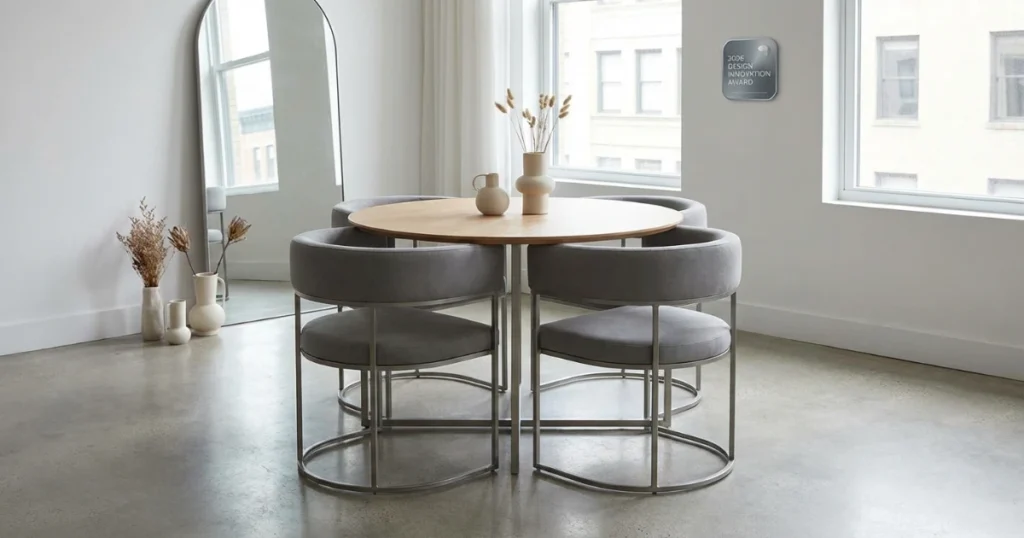
Chairs stack in a corner or closet between uses, and a transformer round bench with add-on sections slips conveniently under the table to save floor space when not needed. This allows the very same set to accommodate quick solo breakfasts, shared laptop work sessions, or more formal dinners.
The arrangement remains simple to switch up without heavy lifting or additional pieces of furniture.
5. Child Safety
In households with kids, the absence of sharp edges is an obvious functional advantage. A round tabletop eliminates the hard points at child head height that you encounter along square or rectangular tables, and this can lessen minor bumps in tight passages.
Safety is equally reliant on a solid base. A sturdy pedestal or transformer round table with a wide base and secure locking mechanism keeps it from wobbling when kids lean or push against the rim.
Smooth, rounded edges on both the table and chairs reduce snags and scrapes. It’s easier to keep walkways clear with a rounded profile since chairs slide around a curve instead of a sharp angle.
It keeps clear, safe paths through tiny dining spaces and open-plan rooms.
| Feature / Benefit | Round Dining Sets | Rectangular Dining Sets |
|---|---|---|
| Footprint in small rooms | Smaller, fits tight or irregular spaces | Often larger, can feel cramped |
| Flow and access | Easy access from all sides, fewer bottlenecks | Corners can block paths |
| Seating flexibility | Easy to add seats, good for transformer designs | Best along long sides, less flexible at ends |
| Social interaction | Equal seating, better eye contact and conversation | Ends can feel distant or more hierarchical |
| Visual impact | Softer, balanced centerpiece, suits many styles | Strong lines, can dominate compact rooms |
| Child safety | No sharp corners, safer in tight spaces | Corners at head height for kids |
Selecting Your Perfect Set
Round dining sets are great in cramped rooms because they eliminate corners and encourage people to sit closer together. To pick a set that truly suits your needs, consider the size of your room, how many you seat on most days, and which space-saving features are most handy day-to-day.After you choose the table size, complete the look with budget friendly wall decor that makes the space feel styled without overspending.
Key factors to weigh when selecting a space‑saving round set include:
- Room size and layout (including doors, windows, and walkways)
- Typical number of diners and occasional guests
- Table diameter and shape vs. seating capacity
- Extension options and transformer elements
- Built‑in or matching storage (shelves, benches, sideboards)
- Material durability, stain and scratch resistance
- Style fit with existing furniture and flooring
- Comfort of chairs or benches for long meals
- Ease of cleaning and upkeep
- Total budget, including chairs and storage pieces
Measure First
Start with a clear checklist so the table does not crowd the room.
- Measure the entire length and width of the dining space in centimeters and mark fixed elements such as radiators, columns, and inward-swinging doors.
- Draw the room and identify where you want clear paths.
- Choose a target table diameter based on how many people you seat most: about 90 cm seats 2 to 4, 120 cm seats 4 to 6, and 150 cm or more can reach 8 to 10. Large round tables over 180 cm can accommodate 10 to 12, although they require a spacious room.
Provide a minimum of 75 cm (approximately 30 inches) of open space from the table edge to a wall or furniture so chairs can slide out and people can pass behind. Make sure that you can still open doors, drawers, or balcony access with chairs in use.
Factor in 60 to 75 cm of tabletop width per person (24 to 30 inches) to prevent cramped place settings. Use 24 inches for casual dining and 30 inches for formal dining. If you opt for a round table with extension panels or a transformer base with add-on benches, measure the closed and fully extended footprints, not just the everyday size.
Round tables tend to save space more than rectangular ones in small rooms. If you regularly hold formal dinner parties, note that a standard rectangular table of 90 by 150 centimeters will seat 4 to 6 slightly more comfortably in a long, narrow space.
Consider Material
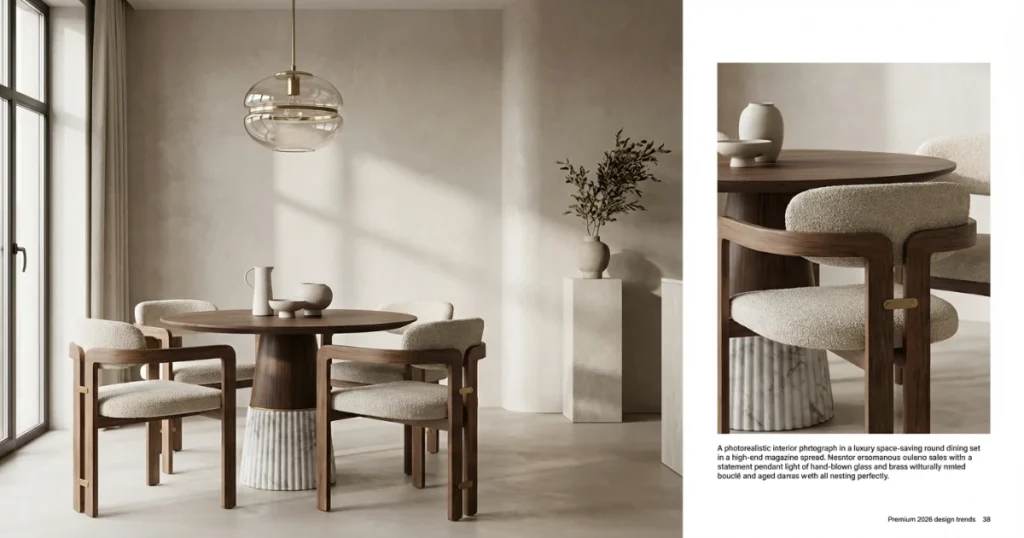
Material defines both the aesthetic and daily maintenance of your dining area. Solid wood is a popular option as it stands up to frequent use, often resists minor scratching and heat, and ages with a warmth that many find appealing. A hardwood sealed finish can withstand spills, stains, and liquids from everyday meals, which counts in homes with kids or regular visitors. Investing in a transformer round dining table set can enhance both functionality and style, especially in homes where gatherings are frequent.
Durable laminates and veneer tops provide a tidy surface for a shrink, and they usually wipe clean quickly with a soft cloth and mild cleanser. They’re great for small apartments where the round dining table serves as both a dining area and work location. Glass tops have a light feel and make a small room seem more open, but they attract fingerprints and smudges more quickly, requiring more upkeep.
For busy families or those utilizing a transformer round dining table, it’s crucial that joints, hinges, and moving components are sturdy and fluid. Test weight limits, scour crumbs-catching crevices, and ensure the finish on flippable leaves aligns with the main top. Match the tone to existing pieces: warm wood with cozy textiles, black metal with sleek cabinets, or a clear glass top paired with neutral chairs for a quiet, simple mood.
Match Style
Your transformer round dining table set should fit seamlessly within the room’s décor so it appears deliberate, not accidental. In a sleek interior with streamlined cabinets and neutral walls, a modern round dining table with thin metal legs, a simple surface, and small upholstered chairs can maintain the space’s serenity. This type of round dining table works well in open-plan spaces where the dining area spills into a living room or kitchen.
If you crave something a little more country or classic, a farmhouse-style round table with a heavy pedestal base, warm wood grain and a set of basic wooden chairs can introduce a homey touch. For a bigger transformation behind the dining set, our removable wallpaper guide shows what works best in small spaces (and how to remove it cleanly later).
This is especially effective with textured fabrics, open shelving and soft, warm lighting, transforming even the most bare-bones dinner or casual game night into a laid-back, welcoming environment. Round tables in this fashion are great for casual get-togethers, as everyone can easily see and converse with one another.
For a more customized blend, others combine a plain round top with mismatched chairs or throw in a curved transformer round bench on one side. Transformer round chairs and benches that tuck completely under the table or stack away can release floor space by day. Mixing materials like a wood top, metal frame, and fabric seats allows the set to straddle different styles in a room without seeming contrived.
Clever Design Features
Space-saving transformer round dining table set works best when each part does more than one job: they seat enough people, leave room to move, and still look calm in a tight area. Nice sets incorporate intelligent bases, foldable tops, and chairs that practically disappear when you fold them up, allowing a compact room to quite literally accommodate both everyday meals and larger family gatherings.
Pedestal Bases
Pedestal bases work well with round tables in small dining areas since they free up the space beneath the surface. One center support keeps things clear for legs and feet so they can slide in from any angle without bumping into corner legs. This design makes a small room feel larger as you view more open floor and less thick frames.
It’s perfect for tight kitchens or studio apartments where every inch of visual space counts. Pedestal bases tend to trump four legs for chairs, particularly on extendable tables. When a round top sprouts additional leaves, four corner legs can block chairs and reduce the seating capacity.
With a single column, you can squeeze in a chair between any two others and still maintain roughly 55 to 60 centimeters per person, which corresponds with the standard 56 to 61 centimeters (22 to 24 inches) comfort goal. That space allows for arms and plates without elbow clashes.
Stability still counts, so a wide, weighted base or cross-shaped foot beneath the pedestal keeps the table from teetering when someone leans in or the top is pulled out. A lot of designs incorporate metal or solid wood cores concealed beneath a thin etching, so the table remains robust but appears delicate.
Easy accents like a tapered column, matte black base, or ribbed wooden center can bring a quiet, sophisticated vibe without adding bulk.
Extendable Tops
Extendable round dining tables convert a single piece into multiple sizes, making them a smart solution for dining spaces. On ordinary days, you can store the transformer round dining table in its most compact position, allowing for easy movement around it, with at least 90 cm (approximately 36 inches) of clearance from the table edge to walls or other furniture. This design makes it easier to pull chairs out and pass behind someone comfortably.
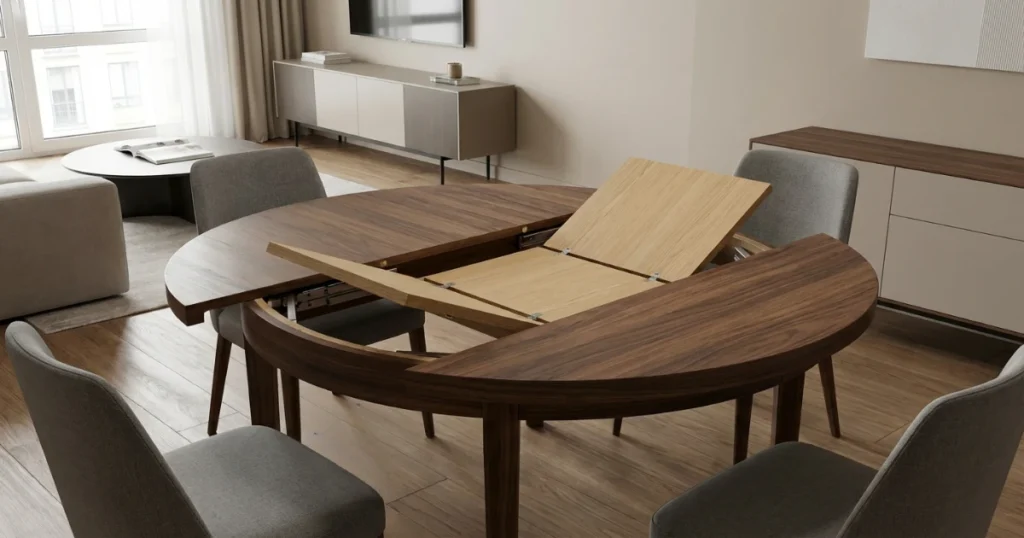
When guests arrive, hidden leaves tucked under the top or in an adjacent transformer round sideboard can slide or fold into position. Some designs divide the circle into two halves that separate, allowing you to insert a central leaf that maintains the same finish and grain direction, making seams difficult to notice.
Others employ a butterfly leaf that flips up from inside the table, which is especially handy if you lack spare storage space for loose leaves. For multi-purpose rooms, such as a living-dining combo, this ‘transformer’ ability enhances the room’s versatility and practicality.
Feel free to use a 100 cm transformer round dining table set every day for two or three people, then stretch it to 130 to 140 cm for those four to six weekend guests. A round or oval shape sidesteps dead corner space, which is beneficial in compact kitchens where square tables often create unreachable pockets.
Glass-topped versions with tempered glass can endure hot plates and daily use without sacrificing the room’s brightness and openness, as light streams through to the base, adding elegance to your dining experience.
Nesting Chairs
Nesting or stackable chairs keep the floor clear in cozy cabins. Almost all space-saving round sets employ curved chairs or stools that tuck directly underneath the table edge, creating a nearly full circle when not in use. In certain designs, the chair backs curve along with the table, so from afar you are looking at one smooth silhouette rather than disjointed chairs.
This arrangement allows you to effortlessly switch up your entertaining capacity. You can keep four chairs tucked in for everyday use, then pull out two more from a surrounding wall when buddies come a callin’. Lightweight frames in metal, molded plastic, or slim wood allow you to easily lift and move chairs without dragging across floors, which is perfect for apartment dwellers where the dining and living areas nearly overlap.
Nesting circular tables provide another level of flexibility. A regular round dining table can coordinate with one or two side tables or stools that tuck away underneath when not in use. These smaller nuggets can serve as additional seating, mini snack tables or laptop nooks during the day, then slide, fold or hide to open up walkways after dark.
Rounded edges further minimize sharp corners in tight walkways that can be safer in households with children or the elderly. Since round tables can angle themselves into two walls, you can jam a snug set into a corner of a tiny kitchen and still extend the nesting chairs as necessary.
This circumvents the dead corner space that square tables tend to generate, and it keeps the room looking neat even when the footprint is minuscule.
The Social Ergonomics
Round dining sets, particularly the transformer round dining table collection, serve a purpose beyond conserving floor space. They influence how we sit, talk, and move, impacting comfort and social ease around the dining table.
Conversation Circle
A round table draws you all into a common circle, so that every chair holds approximately equal prestige and view. There’s no ‘head of the table’ and it lowers social pressure at a family meal, flatmate dinner, or work gathering. By spacing chairs uniformly, you maintain an open, comparable conversational distance between visitors.
This is important because humans are comfortable and able to converse when they don’t have to either lean in far or speak loudly. This is where size comes in: if a round table grows too wide, people across from each other sit beyond a comfortable talking range, and the center becomes hard to reach. Employing the ‘elbow zone’ of roughly 60 cm per guest plus a shared center zone of roughly 30 cm enables you to select a diameter that suits both conversing and serving.
We find a small lazy susan or low centerpiece in the middle makes serving easier without blocking eye contact. A low bowl of fruit or slim vase keeps the sight lines open, while a turntable lets diners share dishes without reaching across others’ plates. Its shape facilitates safer navigation because there are no sharp corners and thus fewer impact points in tight, busy dining spaces, a benefit for homes with little ones, seniors, or confined walkways.
Shared Experience
A transformer round dining table set situates everyone around one obvious focal point—the food, communal utensils, and even a lone candle, all within everyone’s reach. This setup facilitates communal eating, be it shared plates, hot pot, or family-style serving. When the table is sized right, everyone can help themselves without standing or leaning across another, which keeps the atmosphere relaxed and leisurely.
Chair and table pairing affects how long you want to stay. A general rule of thumb is to design for the 5th to 95th percentile of users, so a diversity of seat forms, minimal cushioning, and firm backs beats one slender, inflexible model. Taller users (about 190 cm) sit best at a transformer round dining table, whereas shorter users need chairs that allow their feet to rest flat on the floor.
Fitting these specifics reduces fidgeting and cramping during extended dinners or game sessions. Light and texture help demarcate the table as a communal area, not merely a surface. A soft, diffused pendant light over the center, along with a matte top that does not glare, makes faces easy to read and food look more inviting without feeling staged.
Psychological Space
Curved edges alter the feel and the dimension of a room. In cramped or square rooms, a round table improves the flow since you can circulate around the edges without corners slicing into your route. The space just reads more open even when the footprint is small.
In tiny apartments, setting a round table a little off center can clear a diagonal path, which tends to be more spacious than a close, straight corridor next to a rectangular table. The absence of corners blunts lines of sight. When most of the other pieces in the room are angular—cabinets, shelves, a sofa—the round table serves as a counterpoint and diminishes the feeling of visual ‘clutter.’
This can help the room feel more calm for both fast weekday breakfasts and extended weekend meals with guests. They’re compromises. Four-legged round tables can block legroom if the base is positioned too close to the edge, whereas rectangular tables with a central pedestal or wide-set trestle base can provide better clearance for knees and chairs.
To keep a round set comfortable, the leg structure needs to allow clean approaches from different angles so guests can slide in without twisting or colliding with supports. Finishes count too. There’s something about a warm wood grain, a softly textured stone, or a matte surface that shifts the mealtime mood, soothes the space, and makes folks ease into conversation.
| Material | Pros | Cons |
|---|---|---|
| Solid wood | Strong, repairable, long lifespan; can keep resale value | Needs conditioning, stable humidity, and care to avoid warping and stains |
| Veneer | Real-wood look at lower cost; lighter than solid wood | Thin top layer, cannot be refinished; typical life about 5–10 years |
| Engineered wood | Stable, less prone to warping; often more affordable | Edges can chip; feels less “solid” than full wood |
| Tempered glass | Tough for daily use, easy to wipe, reflects light | Shows fingerprints; needs careful handling of edges and impacts |
| Metal | Slim profiles, strong legs, modern look | Can feel cold; may scratch or chip if finish is thin |
| Laminate | Scratch- and stain-resistant, low upkeep, many colors/patterns | Less “premium” feel; visible seams on low-cost pieces |
Materials That Matter
Material selection defines the appearance, durability, and compactness of a round dining table. It impacts not only weight and maintenance but also resale value and even the perceived size or lightness of the room.
Choose surfaces rated to withstand daily wiping with mild cleaners. Hard-wearing lacquers, powder-coated metal, and quality laminates tend to suffer less from regular wiping and chair moving. Simple habits still matter: coasters, placemats, and quick wipe-downs after spills slow down wear.
Most wood tops benefit from a light furniture polish or conditioning oil every three to four months. This keeps the surface from drying and cracking. For a greener room, seek out certified wood from managed forests, recycled metal bases and low-VOC finishes.
Veneer over engineered cores utilizes less hardwood than thick solid tops. Tempered glass and steel frames can be recycled in many places, which is a nice bonus if you’re thinking long-term. Quality pieces can be a form of “buy once” sustainability.
Well-made tables often keep around 30 to 50 percent of their value after five years, which reduces waste and may ease a later resale. Materials that match your lifestyle keep the set practical. Formal areas that hold long dinners might fit solid wood or kiln-dried oak, which fights warping and wears in, not out, if the room remains around 40 to 50 percent relative humidity.
Casual eat-in kitchens or family zones fare well with tough laminates, tempered glass, or veneer with a robust finish, particularly in scenarios where food, schoolwork, and laptops all cohabitate the same round table.
Lightweight Woods
Lightweight wood is perfect for compact dining areas as it can be easily slid or lifted to move the table near a wall or open floor when hosting guests. Softwoods, a few lighter oaks and even mixed engineered cores function nicely in tight apartments where you could be shuffling the set around a lot.
Round tops in thinner profiles minimize your overall weight, so you can shift the table around on your own. There’s a natural appeal to the grain and warm tones in wood, which layer beautifully with many decor styles. Pale oak or ash complements minimalist and Scandinavian interiors, whereas warmer walnut or acacia skews cozier.
Kiln-dried oak, sometimes in the form of round dining tops or pedestal bases, is a go-to because it won’t warp in daily use as long as the humidity remains consistent. In smaller rooms, a light stain will keep the set from feeling heavy, even if the base is really solid.
Engineered hardwood or veneer tops provide a real-wood appearance without the weight of a solid slab. Veneer refers to a thin layer of genuine wood glued onto an engineered wood core, which helps control weight and cost. These tables usually last 5 to 10 years with typical use, although unlike solid wood, they cannot be sanded and refinished.
That trade-off is fine if you want style and flexibility instead of a long-term heirloom. Solid wood round tables can be more expensive but provide serious durability and the ability to refinish dings and spills down the road. They remain in great condition if you maintain room humidity around 40 to 50 percent relative humidity, avoid extended sun exposure, and utilize coasters and placemats.
Light cleaning with a soft cloth and conditioning oil every few months keeps them from cracking or cupping, which is a key concern in climate-controlled urban homes.
Glass and Metal
Glass and metal round dining table sets make a tight dining corner feel more open because the table top allows light to filter through, and the frame can be very thin. Tempered glass, heat-treated for strength, is sturdy enough to survive everyday meals, remote work, and board games. It does reveal fingerprints and water rings really easily, but a quick swipe with glass cleaner restores it to a clear finish.
Metal legs or pedestal bases provide essential support beneath a transformer round dining table set and form a sleek, contemporary silhouette. Powder-coated steel in black or white fades into many interiors, while brushed stainless or brass-tone finishes can impart a subtle highlight in the room.
The slender profile of metal legs frequently liberates leg space, which counts around a small round dining table where every inch is precious. Glass surfaces bounce off light from windows and overhead fixtures, which can make a small dining room or breakfast nook feel broader.
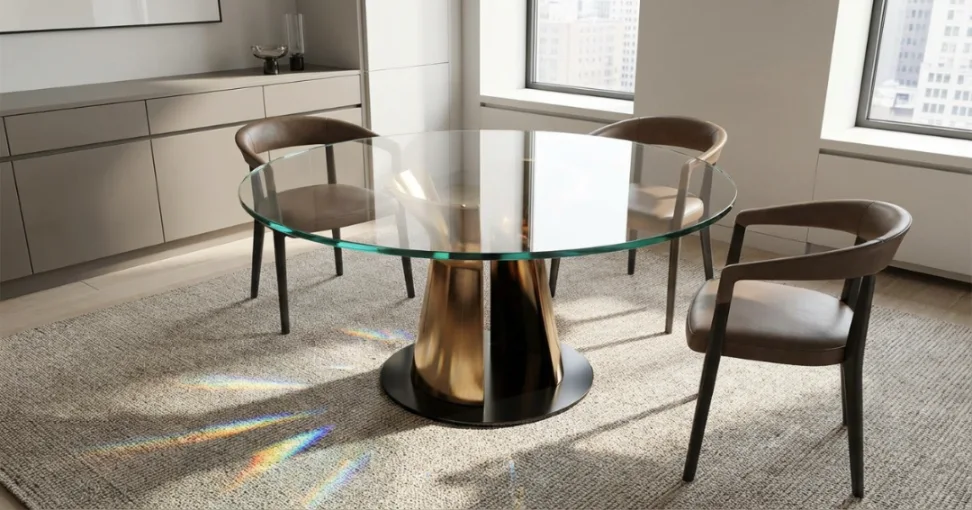
Transparent tops allow patterned rugs and floors to show through, which can assist you in zoning a dining space within a studio or open-plan apartment without introducing visual bulk. Frosted or tinted glass gently diffuses reflections if you’re in the mood for a more understated effect.
Combine glass with wood, stone-look laminates, or mixed metals, and a transformer round table collection becomes a focal point without occupying additional floor space. For instance, a round tempered glass top over a svelte oak tripod base functions in both modern and rustic rooms, whereas a petite chrome pedestal with smoked glass fits a more city vibe.
Felt pads under metal bases shield hard floors, which is helpful if you rearrange the round dining table set frequently when cleaning or entertaining.
Durable Laminates
Laminate tabletops are perfect for busy homes that require low maintenance. They withstand scratches, stains, and hot plates more than a lot of softwoods, making them ideal for spaces where kids do homework or art at the dining table. Many laminates mimic oak, walnut, concrete, or marble, allowing you to enjoy the appearance of a denser material without the upkeep or weight, making them a great choice for a round dining table set.
Their extensive selection of color and pattern ranges from solid white or charcoal to wood-grain prints and subtle textures. This variety allows you to pair a petite transformer round dining table with your existing cabinets, flooring, or chairs without needing a complete room renovation. For instance, a white laminate top complements sleek white cabinetry in a small kitchen, while a warm oak-look finish works well with wood chairs in a multi-functional living space.
Laminate is often more affordable than solid wood or thick glass, which can be advantageous if you’re outfitting a first apartment or rental where longevity is less of a concern. Meanwhile, good construction remains crucial. A rock-solid core, sealed edges, and a sturdy base will ensure the table remains level and chip-free, making it a reliable option for family gatherings.
Coasters and placemats are still your friends, as they safeguard the surface from gouges and maintain the finish’s clean appearance, enhancing the overall elegance of your dining room furniture.
Long-Term Care Guide
Long-term care ensures a space-saving transformer round dining table set remains safe, stable, and accessible, even in compact homes and senior apartments. A couple of easy habits assist the modern round dining table in aging well, minimize potential for harm, and still appear tidy even though the room does double duty as a work, craft, or hobby space.
- Wipe the tabletop every day with a soft, damp cloth.
- For a mild dish soap solution for oily stains, then dry.
- Match cleaners to the surface: wood, veneer, laminate, glass, metal.
- Place mats and coasters should be at every meal or hot drink.
- Lift, don’t drag the table when you move it to save the legs.
- Store leaves, lazy susans, and extra parts flat in a dry location.
- Inspect base screws and glides once every few months.
Daily Cleaning
Wipe crumbs and dust from your transformer round dining table collection with a soft microfiber cloth. For sticky spots, try a little mild dish soap mixed with warm water. Ensure you dry off the top and edges so no water sits in seams, and remember to wipe down the transformer round dining table set’s chair seats and backs to prevent food from collecting.
Avoid using bleach sprays, harsh glass cleaners with ammonia, and abrasive powders, as these can damage the beautiful table‘s wood and laminate, streak glass, and corrode soft finishes. For glass tops, a mixture of vinegar and water works well, while wood or veneer should only be cleaned with soap and water.
Tea, coffee, or soup spills should be addressed immediately, as liquids can leak into joints and cause wood or particle board to swell. This issue is particularly concerning in small dining spaces where the dining table might be near sinks or kettles that are frequently used.
Dust the pedestal base and any nearby corner shelving to keep the entire area looking tidy. For seniors, having a well-defined and organized foundation zone around the transformer round dining table set can help reduce fall hazards near chair feet and footstools.
Deep Maintenance
Polish solid wood or quality veneer surfaces once or twice a year with a product suited to the finish. Use oil for oiled tops and wax or polish for sealed ones. This maintenance keeps the surface slick so placemats slide instead of snag and rip, making your transformer round dining table set even more enjoyable during family dinners.
Tighten screws on the pedestal, support arms, and chair frames bi-annually at minimum. Check the extension mechanism: slides should move smoothly, and locks should click in place. In my practice with elderly patients, loose slides or wobbly drop leaves on a transformer round dining table were frequent safety warnings, particularly as they relied on the table for support.
Identify the chips, peeling edge banding, or hairline cracks and address them while they are still minor. In senior living, I witnessed how a tiny chip on a glass edge became a cut hazard for my own mom as she brushed by with a walker, especially around the dining room furniture.
From time to time, rotate where each chair sits so seat cushions wear at the same pace. In tight senior studios, one chair tends to be the ‘all-day’ chair. Switching it for a seldom-used one makes them all keep going longer, enhancing the practicality of your round dining table.
Protecting Surfaces
Always use tablecloths, placemats, and coasters to protect your round dining table from hot plates, sharp cutlery, and water rings. During the COVID-19 lockdowns, many residents dined for every meal at that same small round dining table in their rooms, and the ones that stood up the best always had a cloth or mats down.
Attach felt pads to chair legs and the table base to preserve floors and prevent abrupt slips. This is especially important when selecting light, senior-friendly transformer round dining table sets. The table can scoot for cleaning, but pads maintain gliding fluid and somewhat restrained movement.
Keep extension panels stored flat, in a dry closet or under a bed — never propped up against a wall. In my mother-in-law’s ritzy assisted living facility, twisted leaves unbalanced a table, and then poorly installed sliding mirrored doors popped off their tracks and struck her.
Stable tracks, flat leaves, and sound hardware are not minor details; they are safety concerns. Don’t place heavy boxes, hobby equipment, or sharp tools directly on the tabletop of your transformer round dining table.
In one senior unit I assisted in outfitting, a corner shelving unit housed plants, photos and craft bins so the round table remained open for meals and light projects. Other pieces, such as a rugged dresser for clothing, might be heavier by necessity, but most other furniture, including tables, small cabinets, and the locked medicine cabinet in my mother-in-law’s room, functioned better when easy and minimal to relocate.
Final Words on space saving round dining sets for 2026
Round dining sets address a serious headache in small homes. They squeeze into tight spots, slice through sharp corners, and still maintain the space inviting and airy. Even a tiny loft, narrow condo, or city studio can now eat an honest meal, not just a plate on the couch!
Smart add-ons, such as drop leaves, pedestal bases, and tuck-in chairs, add even more room to move. Robust woods, easy-clean surfaces, and rigid metal frames maintain the collection in use for decades, not days.Want your dining nook to feel more personal? Try customizable wall decor stickers for quotes, family names, or minimalist icons that match your table aesthetic.
Keep in mind your room size, shape, and daily habits. Choose your round set based on your space and specific lifestyle as you shop. So, whaddya say — ready to get started? Take your room notes, measure your space and choose the one set that feels right for your home.
Frequently Asked Questions
How much space do I need for a round dining set?
For compact spaces, a 90 to 100 cm transformer round dining table typically accommodates 2 to 4 people without a sense of cramping, allowing for a perfect balance of comfort and practicality.
Are round dining tables better than rectangular ones for small rooms?
More often than not, yes. A transformer round dining table enhances flow by eliminating corners and fitting into tight spaces, allowing for the convenient addition or deletion of round chairs as necessary.
What size round table is best for a family of four?
A 100 to 120 cm diameter transformer round dining table typically accommodates 4 persons comfortably, offering ample elbow, plate, and serving space without overwhelming smaller dining rooms, making it a great choice for family gatherings.
Which materials are most durable for round dining sets?
Solid wood or metal bases and tempered glass tops are popular for their durability, making them ideal for a transformer round dining table collection. Wood provides warmth and sturdiness, while tempered glass is scratch resistant and easy to maintain in hectic households.
How can I make a round dining set more space-saving?
Opt for a pedestal base with a transformer round dining table set featuring an extendable design, complemented by slim dining chairs. Nesting or stackable chairs and transformer round benches that slide under the table save floor space.
Are round dining tables comfortable for social gatherings?
Yes. The transformer round dining table collection brings everyone closer together at equal distance, increasing eye contact. This shape encourages laid-back chatter and makes passing dishes and serving platters easy.
How do I care for a round dining table to keep it looking new?
Employ placemats, coasters, and a soft cloth to clean your transformer round dining table set on a daily basis. Skip the chemical litmus tests. For wood, dust regularly and treat with polish to maintain the great quality of your round dining table.