Introduction
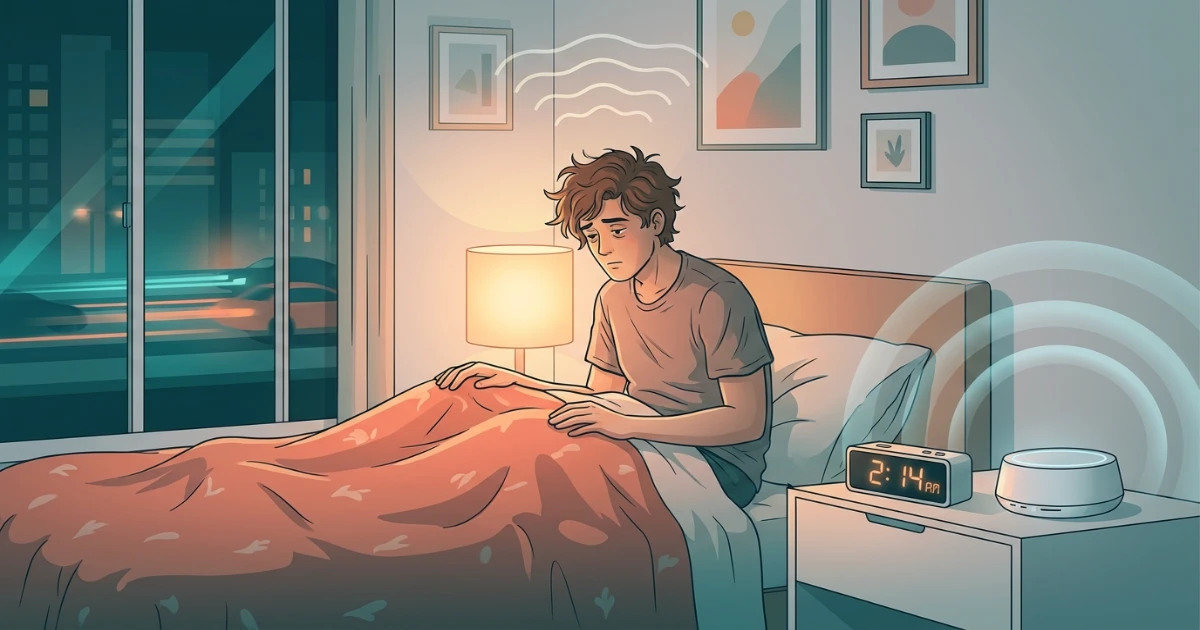
It’s 2:14 AM on a Tuesday. You have a 7 AM meeting.
Your upstairs neighbor is doing what sounds like an aggressive furniture rearranging routine. Or maybe they’re training for a bowling tournament. Hard to tell. Through the paper-thin ceiling of your apartment, every footstep lands like a small earthquake in your bedroom.
You’ve tried the pillow-over-the-head method. You’ve tried premium earplugs that came with promises your ears couldn’t cash. You’ve even considered passive-aggressively leaving a note that says “Hi, I exist below you and have feelings.”
Sound familiar?
Apartment living is wonderful for many reasons — location, flexibility, the freedom to not own a lawnmower — but the acoustic situation in most apartment buildings is genuinely rough. Thin drywall, shared ceilings, hallway echoes, street traffic at 3 AM, the guy next door who apparently loves death metal and has no concept of apartment hours.
The best white noise machines for apartment living in 2026 have quietly become one of the most impactful, renter-friendly sleep tools you can own. No drilling. No damage. No lease violations. Just better sleep, starting tonight.
Let’s dig in.
Key Takeaways
- The best white noise machines for apartment living in 2026 are portable, powerful, and require zero installation — making them perfectly renter-safe.
- White noise works by masking sound contrast, not blocking it. This is sufficient for most apartment noise scenarios.
- Fan-based machines (Dohm, Snooz) offer loop-free natural sound. Digital machines (LectroFan EVO) offer more variety and stronger volume options.
- Placement matters — position near shared walls, window gaps, or door gaps for maximum effectiveness.
- Safe volume range is 50–65 dB measured at your ears. This is effective without any hearing risk.
- The LectroFan EVO wins as the best overall apartment machine; the Dohm Classic wins for natural sound purists; the Hatch Restore 2 wins for the premium integrated experience.
- White noise machines are a temporary coping tool, not a replacement for legitimate tenant action if noise issues are genuinely severe.
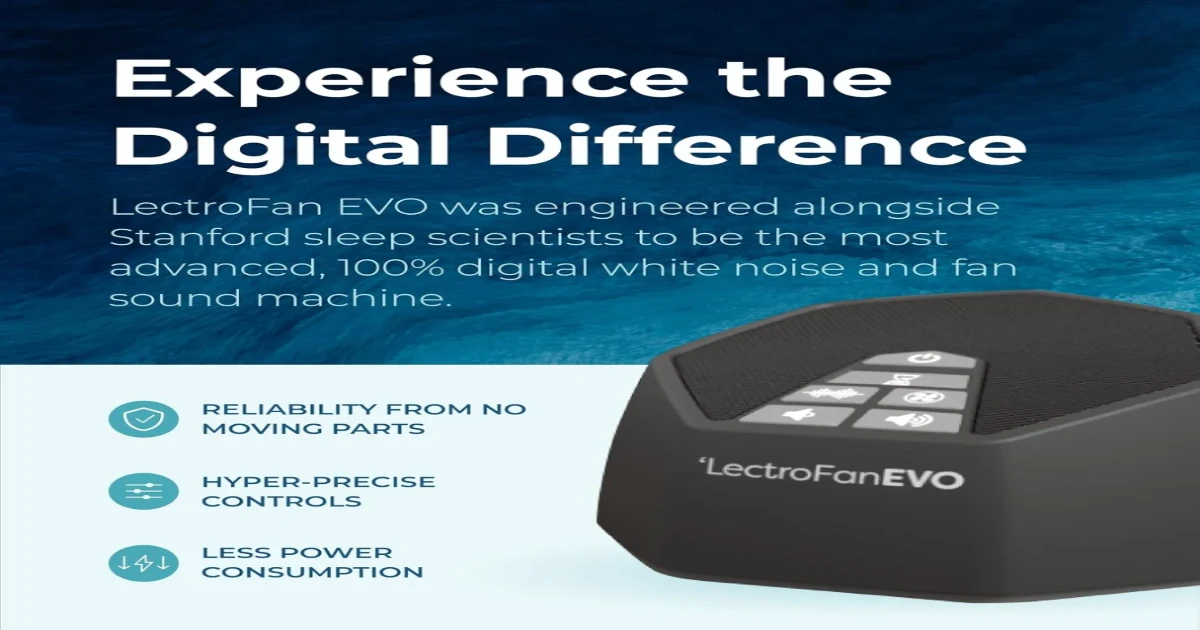
The “powerhouse” option for renters dealing with thin walls, hallway noise, street traffic, and bass bleed. Strong output + non-looping sound variety makes it ideal for real apartment chaos.
- Best for: loud neighbors, street-facing bedrooms, shared-wall sound bleed
- Why it converts: strong masking + lots of sound options so users can “dial in” their perfect sleep
- Placement tip: near the window for traffic, or 3–5 ft from the shared wall
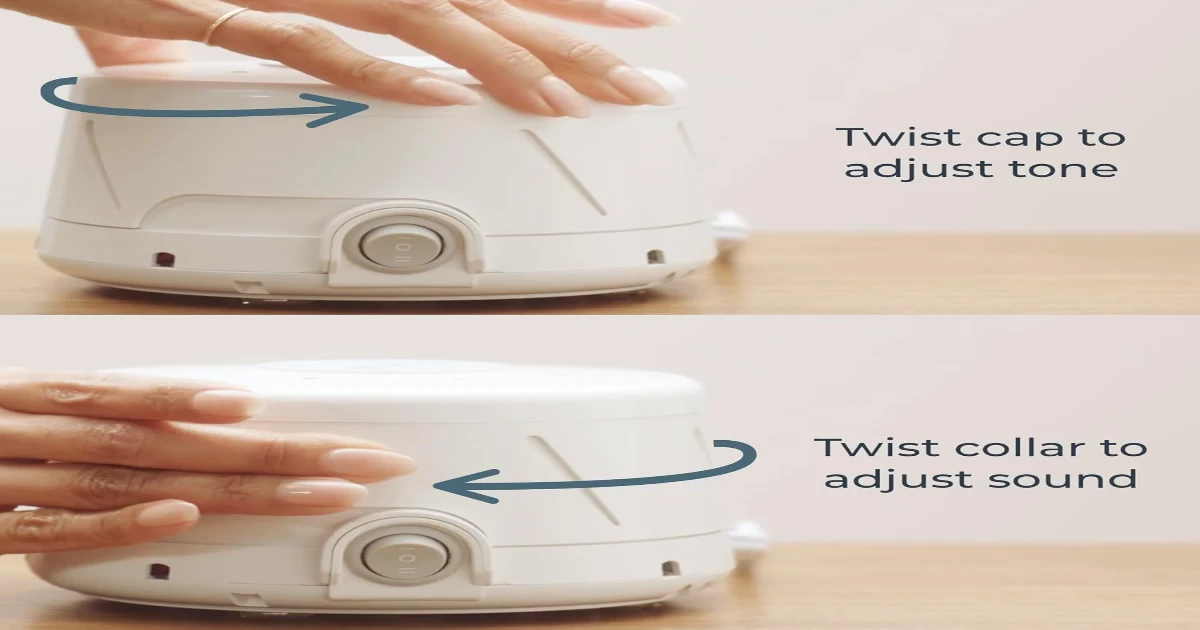
The classic renter pick: warm, natural “real fan” sound that feels continuous (no looping), perfect for light sleepers who notice repeats.
- Best for: bedrooms with shared walls, sensitive sleepers, “I hate looping” people
- Why it converts: simple + trusted + effective without apps or subscriptions
- Placement tip: on the nightstand closest to the shared wall (angled toward the bed)
What Is the Best White Noise Machine for Apartment Living in 2026?
The best white noise machines for apartment living in 2026 are compact, renter-friendly sound masking devices that require no installation. Top picks include the LectroFan EVO, Yogasleep Dohm Classic, and Hatch Restore 2. Look for adjustable volume, loop-free audio, and portability. These devices mask neighbor noise, thin wall sound bleed, and street traffic without any lease-violating modifications.
Why Apartment Living Requires Specialized White Noise Machines
Not all white noise machines are built equal — and apartments have a very specific set of challenges that a machine designed for a suburban bedroom might not address well.
Here’s what renters are actually dealing with:
Thin drywall construction. Most apartment buildings — especially those built in the last 30 years — use standard drywall that offers minimal sound dampening. A conversation in the next unit can sound like it’s happening in your living room. This isn’t a flaw in your specific unit; it’s a feature of modern cost-efficient construction.
Shared walls and ceiling impact noise. Living sound isn’t just airborne. Impact noise — footsteps, dropped objects, furniture scraping — travels through the actual physical structure of the building. A white noise machine won’t eliminate that completely, but it dramatically reduces your brain’s ability to fixate on it, which is really where the suffering happens.
Lease restrictions mean no real soundproofing. You can’t add mass-loaded vinyl to the walls. You can’t install acoustic panels properly. You certainly can’t rip out drywall and add insulation. So you work with portable solutions — and white noise machines are the most effective, legal, and reversible option available.
Small spaces need compact gear. Apartment living means you’re probably working with a studio, a small one-bedroom, or a shared space. The machine needs to fit on a nightstand or shelf without dominating the room.
For all of these reasons, the best sound machine for apartments needs to be portable, sufficiently powerful, and adaptable to variable noise environments — not just a travel machine designed for hotel rooms.
How White Noise Works (Simple, Human Explanation)
Here’s the short version: your brain is an incredibly efficient pattern-detection machine. It’s not loud sounds that wake you up — it’s changes in sound. A sudden bark, a door slamming, bass thumping through the wall. These contrasts are what jolt you out of sleep.
White noise works by raising your ambient sound baseline. Instead of silence interrupted by noise, you have a consistent, low-level sound environment. The gaps between “quiet” and “loud” shrink. Your brain stops noticing them.
Think of it like adjusting your eyes when you walk from a dark room into a bright one. Once adapted, the brightness isn’t painful. White noise does the same thing for your hearing — it gives your brain something predictable to tune out, which makes the unpredictable stuff less disruptive.
There are actually three main varieties of noise color used in sound machines:
- White noise — full frequency spectrum, sounds like radio static, masks the widest range of sounds
- Pink noise — deeper, more natural, like rain or wind; many people find it more soothing
- Brown noise — even deeper and richer, almost like a rumble; great for low-frequency bass sounds from neighbors
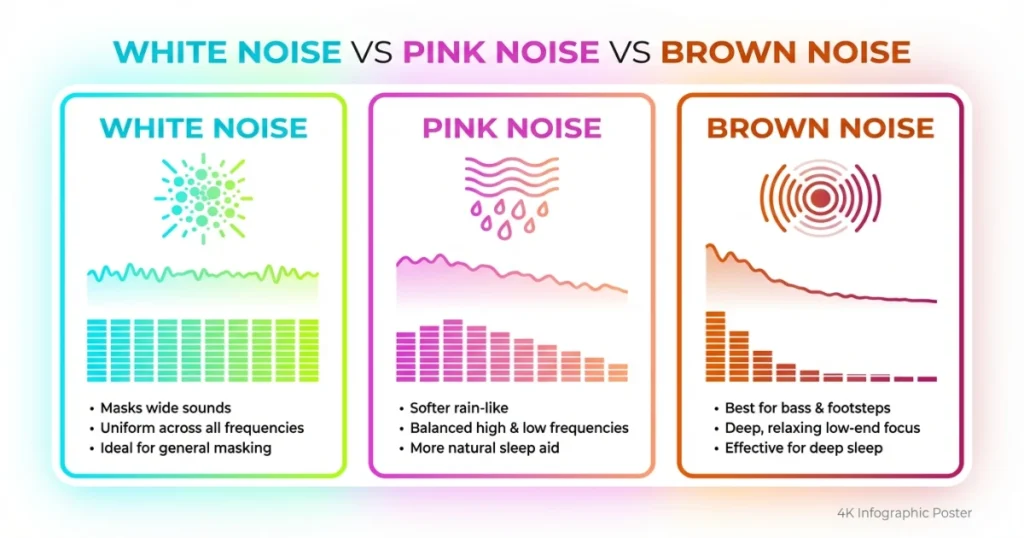
Fan-based machines create analog sound that many people find more natural and easier to sleep to. Digital machines offer more variety. The right choice depends on your specific noise problem and personal preference.
Why does it work better than earplugs for most renters? Simple: earplugs block sound but they also block your alarm, your smoke detector, and any sounds you actually want to hear. White noise machines mask problematic sounds while leaving your environment functional and safe.
What to Look for in a White Noise Machine for Apartments: The Buyer’s Checklist
Before you spend money, run your situation against this checklist:
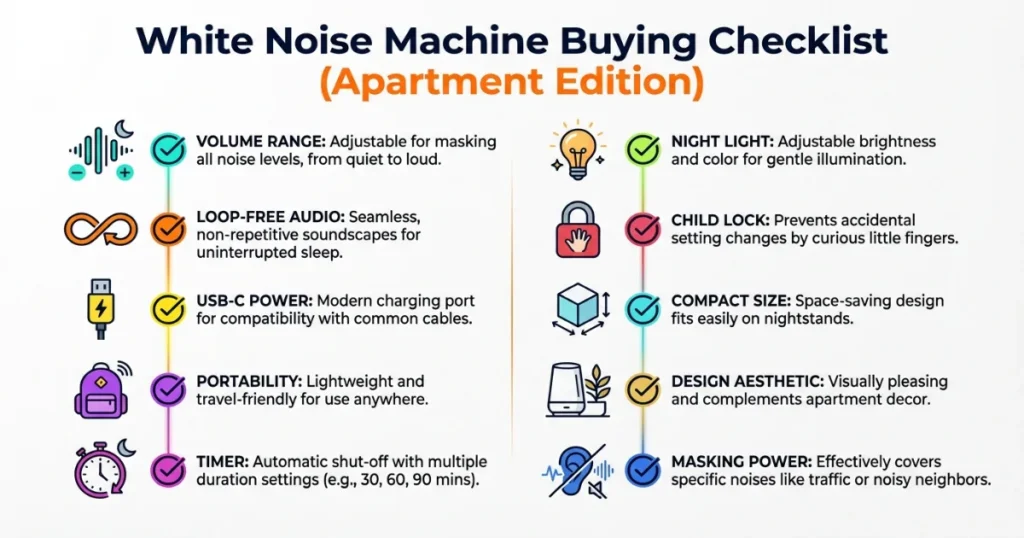
Volume range. You need a machine that goes louder than you’d expect. Thin walls and loud neighbors require real volume to create effective masking. Look for machines that can reach 75–85 dB at close range.
Fan-based vs. digital. Fan-based machines (like the Dohm) create continuous mechanical sound that never loops. Digital machines offer more sound options but use recorded files that may have subtle loop points — a surprisingly annoying issue for light sleepers who can detect the repetition.
Loop-free audio. If you go digital, make sure the manufacturer explicitly states the audio is loop-free or seamlessly looping. A track that resets every 30 minutes can actually train your brain to wake up at the loop point.
Portability. Can it move from bedroom to living room? Can you take it traveling? Great white noise machines are small enough to be flexible.
Timer options. Useful if you want it to run until you’re asleep, then shut off.
USB power. Most modern machines support USB-C charging, which means one less power brick and compatibility with portable batteries.
Travel-friendly size. Especially important for renters who move frequently or travel for work.
Child lock. If you have kids or use it in a shared space, preventing accidental setting changes matters.
Night light options. Some machines double as a dim night light, eliminating the need for another device on your nightstand.
Aesthetic. In a small apartment, every item earns its visual space. Clean, minimal designs that don’t scream “sleep gadget” are worth prioritizing.
Best White Noise Machines for Apartment Living 2026
1. Yogasleep Dohm Classic — Best Analog White Noise for Apartments
Best for: Renters who want the most natural, loop-free sound masking available
Apartment-specific use case: Thin shared walls; the Dohm’s mechanical fan sound is warm and natural, making it ideal for bedrooms that back up to a neighbor’s living room or kitchen
Noise Strength Rating: 8/10 Small Apartment Compatibility: 9/10 Estimated Price: $45–$55
The Dohm Classic has been the gold standard of white noise machines for decades, and it remains one of the best white noise machines for apartment living in 2026 because of one simple reason: it’s real. The sound you hear is an actual fan spinning inside the housing, not a recording of one. That means no loops, no digital artifacts, and a richly textured sound that your brain adapts to incredibly quickly.
You can adjust both the tone and the volume by rotating the housing — a mechanical solution that’s surprisingly satisfying to dial in. The sound profile is warm rather than harsh, landing somewhere between a box fan and a gentle air conditioner.
Pros:
- Completely loop-free analog sound
- Two-speed adjustment for volume and tone customization
- Compact and elegant design that doesn’t look clinical
- 30-year track record of reliability
- Very quiet to operate — the sound is the point, not a byproduct
Cons:
- No digital sound options, timers, or app connectivity
- Single sound type — no pink or brown noise
- Cord-dependent; no battery mode
Why renters love it: It’s permanent-feeling without requiring any installation. Set it on your nightstand and forget about the guy upstairs.
Placement suggestion: On the nightstand closest to the shared wall or ceiling, angled slightly toward your head.
2. LectroFan EVO — Best Digital Powerhouse for Heavy Apartment Noise
Best for: Renters dealing with serious noise — loud neighbors, street-facing windows, bass-heavy music coming through walls
Apartment-specific use case: High-traffic urban apartments; street noise; bass bleed from a neighbor’s subwoofer
Noise Strength Rating: 9/10 Small Apartment Compatibility: 8/10 Estimated Price: $50–$65
The LectroFan EVO is the machine for renters who’ve tried gentler options and found them wanting. It offers 22 unique sounds — 10 fan varieties, 10 white/pink/brown noise variations, and 2 ocean sound profiles — all non-looping. The volume range is genuinely impressive for a device this small, capable of producing enough acoustic output to compete with most apartment noise scenarios.
It’s USB-powered, which is a practical win for apartment setups where outlet real estate is at a premium. The digital precision means you can find exactly the sound and volume that works for your specific noise problem, rather than adapting to what a mechanical fan offers.
Pros:
- 22 non-looping sounds including fan and white/pink/brown noise varieties
- Strong volume output relative to its compact size
- USB-C powered
- Very simple interface — no app required
- Comes with both USB adapter and cord
Cons:
- Digital sound, which some sensitive sleepers find slightly artificial compared to analog
- No night light
- No timer in the standard interface
Why renters love it: It’s the acoustic equivalent of a Swiss Army knife for apartment noise problems.
Placement suggestion: On the nightstand or on a small shelf near the window for street noise; against the shared wall for neighbor sound masking.
3. Hatch Restore 2 — Best Premium All-in-One for Small Apartments
Best for: Light sleepers who want a premium sleep system in a compact package
Apartment-specific use case: Studio apartments or small bedrooms where you need a sound machine, sunrise alarm, and reading light in a single, aesthetically pleasing device
Noise Strength Rating: 7/10 Small Apartment Compatibility: 10/10 Estimated Price: $170–$200
The Hatch Restore 2 isn’t cheap, and it’s upfront about that. What you’re paying for is a beautifully integrated sleep experience — white noise, pink noise, brown noise, sleep meditation content, a sunrise alarm clock, and a dimmable book light all rolled into one minimalist device that looks like intentional decor rather than a gadget.
For small apartments where nightstand space is precious and visual clutter matters, consolidating three or four devices into one premium unit makes real financial and aesthetic sense. The app is polished, the sound quality is excellent, and the sunrise alarm is genuinely useful for waking up naturally.
Pros:
- Elegant, premium design that doubles as decor
- Wide range of high-quality sleep sounds
- Sunrise alarm functionality
- Dimmable warm reading light
- App-controlled with preset routines
Cons:
- Higher price point
- App dependency means setup has a learning curve
- Not the loudest machine — may struggle with severe noise situations
- Requires a subscription for full content library
Why renters love it: It transforms the nightstand of a cramped apartment into a proper sleep sanctuary.
Placement suggestion: Centered on the nightstand as the anchor piece of your sleep setup.
4. Marpac Rohm — Best Portable White Noise Machine for Renters Who Move
Best for: Frequent movers, travelers, or renters in month-to-month situations
Apartment-specific use case: Battery-powered option for bedrooms without convenient outlets; travel use; moving between apartments
Noise Strength Rating: 6/10 Small Apartment Compatibility: 10/10 Estimated Price: $30–$40
The Rohm is small enough to fit in your palm and packs more acoustic punch than its size suggests. It runs on USB power, offers three sound modes (bright white noise, deep white noise, and gentle surf), and has a clip for attaching it to headboards, stroller handles, or bags.
For renters — especially those who move frequently or who want a machine that travels with them — the Rohm is practical in a way that larger machines simply aren’t.
Pros:
- Extremely compact and portable
- USB-powered with cable included
- Simple three-mode operation
- Clip attachment for versatile placement
- Affordable entry point
Cons:
- Not loud enough for severe apartment noise situations
- Limited sound variety
- Better suited as a supplemental machine than a primary solution for heavy noise
Why renters love it: It goes wherever you go, which matters when home is a temporary situation.
Placement suggestion: Clipped to the headboard or placed on a nightstand; can also hang near a door gap to target hallway noise.
5. Snooz — Best Fan-Based Machine for Modern Apartment Aesthetics
Best for: Design-conscious renters who want an analog machine with modern smart features
Apartment-specific use case: Shared bedrooms or couples with different sleep schedules; app-controlled volume adjustment without disturbing your partner
Noise Strength Rating: 8/10 Small Apartment Compatibility: 9/10 Estimated Price: $80–$100
The Snooz bridges the gap between the warmth of an analog fan machine and the convenience of a connected device. It uses a real fan to produce sound (so no looping), but pairs with a smartphone app for volume control, timer setting, and fade-in/fade-out functions. The design is a clean, matte white disc that reads more like a speaker than a sleep gadget.
For couples in a small apartment, the app control is especially useful — one partner can quietly adjust the volume without reaching across the bed or turning on a light.
Pros:
- Real fan mechanism — no audio loops
- App-controlled for quiet partner-friendly adjustments
- Clean, modern design
- Timer and schedule features via app
- Fade in/out functionality
Cons:
- App required for full feature access
- More expensive than basic analog options
- Fan mechanism means no sound variety
Why renters love it: It looks like it belongs in the apartment, not just in the apartment.
Placement suggestion: On a nightstand or floating shelf; the design warrants a visible spot.
6. Big Red Rooster BRRC107 — Best Budget White Noise Machine for Apartments
Best for: Renters on a tight budget who still want effective sound masking
Apartment-specific use case: First apartment setup; supplemental machine for a secondary room; trying white noise before committing to a premium device
Noise Strength Rating: 6/10 Small Apartment Compatibility: 9/10 Estimated Price: $20–$30
Not every renter has $80 to spend on a sound machine. The Big Red Rooster delivers reliable sound masking at a price point that doesn’t sting. Six sound options (white noise, fan, thunder, ocean, brook, summer night), a physical volume knob, and a simple timer make it functional without any complexity.
The build quality reflects the price — it’s plastic and basic — but the core function works. For renters testing whether white noise will help them before investing in a premium machine, it’s a sensible starting point.
Pros:
- Very affordable
- Six sound options covering the most useful categories
- Simple physical controls — no app needed
- Compact size
Cons:
- Audio loops are detectable at longer listening sessions
- Quieter than premium options
- Build quality is noticeably budget-tier
Why renters love it: It answers the “does white noise even work for me?” question without financial risk.
Placement suggestion: On the nightstand or windowsill; consider pairing with a second unit in a particularly loud apartment.
7. Dreamegg D11 Max — Best White Noise Machine for Noisy Neighbors with Kids in the Home
Best for: Families in apartments; parents trying to protect baby sleep from neighbor noise
Apartment-specific use case: Baby’s room adjacent to shared wall; protecting nap schedules in thin-walled apartments
Noise Strength Rating: 8/10 Small Apartment Compatibility: 9/10 Estimated Price: $35–$45
The Dreamegg D11 Max was built with baby sleep in mind, which means it was built with parental sanity in mind. It offers 29 sounds, a warm night light with adjustable brightness, a memory function that restores your last settings, and volume that genuinely masks the kind of noise that wakes babies — dog barks, door slams, neighbor conversations.
For apartment-dwelling parents, this is one of the most practical investments available.
Pros:
- 29 sound options including lullabies and nature sounds
- Warm night light with multiple brightness levels
- Memory function restores last settings after power interruption
- Strong volume for its size
- Timer options
Cons:
- Some sounds have detectable loop points
- Night light can be too bright on lower settings for some infants
- Heavier than the smallest portable options
Why renters love it: It handles the specific, high-stakes challenge of protecting baby sleep in a loud apartment environment.
Placement suggestion: On a dresser 3–5 feet from the crib, angled toward the shared wall.
White Noise vs. Earplugs vs. Noise-Canceling Headphones
| Feature | White Noise Machine | Earplugs | Noise-Canceling Headphones |
|---|---|---|---|
| Comfort (long-term) | High — nothing touching you | Low — ear fatigue, pressure | Medium — heavy for sleeping |
| Cost | $25–$200 one-time | $5–$30 ongoing | $150–$400 one-time |
| Effectiveness | High for masking | Medium — blocks but doesn’t mask | High for constant noise |
| Safety (alarms) | Fully functional | May block alarms | May block alarms |
| Long-term solution | Yes | Uncomfortable over time | Battery-dependent |
| Renter suitability | Excellent — no modifications | Excellent | Good — but not sleep-designed |
| Best use case | Nightly sleep masking | Occasional acute noise | Travel, focused work |
Bottom line: For apartment renters needing a nightly, renter-safe sleep solution, white noise machines win on every practical metric.
Placement Guide: Where to Put a White Noise Machine in an Apartment
Getting the placement right matters almost as much as choosing the right machine.
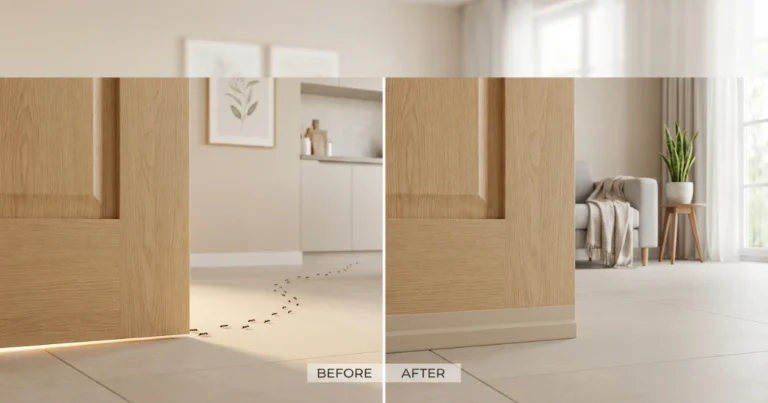
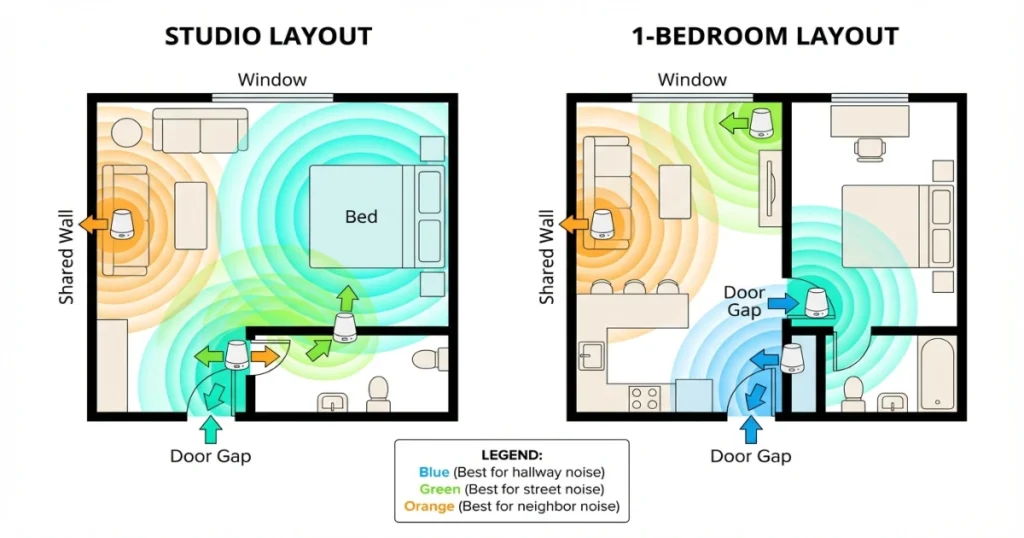
Near door gaps. Apartment hallways can be surprisingly loud — late-night foot traffic, elevator sounds, neighbors’ conversations. Placing a machine near the gap under your bedroom door creates a sound curtain that significantly reduces hallway noise bleed.
Against shared walls. Position your machine within 3–5 feet of the wall you share with a neighbor. The goal is to create a localized zone of masking sound between you and the noise source.
Near windows. Street-facing windows are the primary entry point for traffic noise, urban sound, and early morning garbage trucks. A machine on the windowsill or nearby dramatically reduces the perceived intrusion.
Bedside placement. The closer the machine is to your ears, the more effective the masking. Nightstand placement is ideal for sleep applications.
Studio apartment strategy. In a single open space, place the machine approximately equidistant from both your sleeping area and the primary noise source (usually a shared wall or window). A second machine at the door gap can supplement. For studio apartments, the LectroFan EVO or Dohm Classic work well because their volume is sufficient to cover a larger open space.
Renter-safe tip: Use a Command strip or adhesive riser pads if you want to elevate a machine slightly on a shelf — zero wall damage, fully removable.
Common Apartment Noise Problems & White Noise Solutions
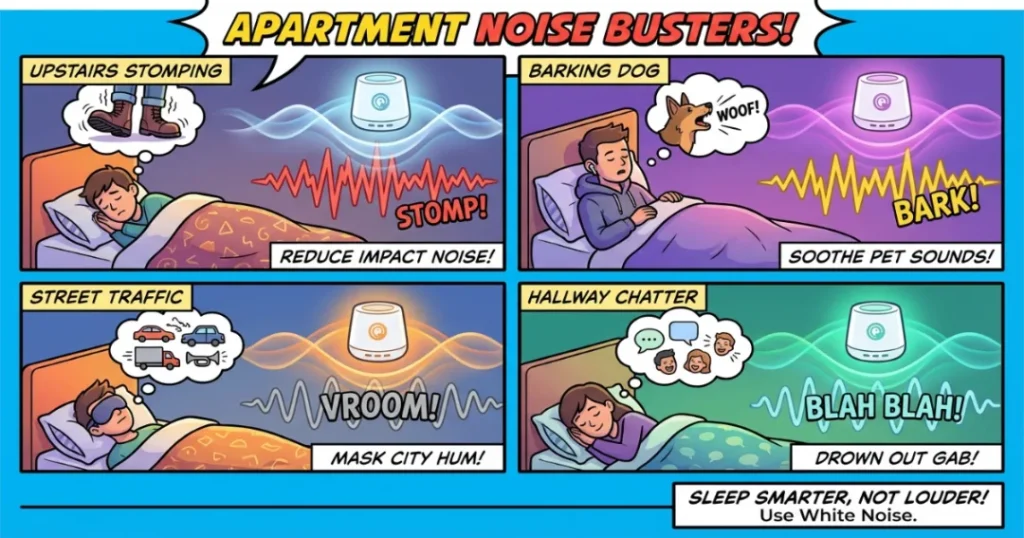
The Stomping Upstairs Neighbor. This is impact noise traveling through the building structure. White noise can’t eliminate the physical sensation of thumping, but it dramatically reduces the sharp, attention-grabbing quality of the sound. Use a higher-volume machine with brown or pink noise, which has a lower frequency profile that better matches and masks impact sound.
Barking Dogs (Next Door or Below). Dog barks are high-frequency, sudden, and exactly the kind of contrast event that jolts you awake. White noise at a steady 65–70 dB creates enough baseline to reduce the perceived sharpness of barks significantly.
Street Traffic and Urban Noise. Consistent traffic noise is actually one of the easier problems to solve with white noise. The rumble and variation of city sound blends well with white or brown noise. Position the machine near the window for best results.
Hallway Noise. Apartment hallways act as acoustic amplifiers. Voices, footsteps, and elevator dings bounce off hard surfaces and travel under doors easily. A machine near the bedroom door gap is specifically targeted at this problem.
Loud Roommates. If you share a unit with a night owl, a white noise machine in your bedroom doesn’t just mask external sound — it creates a psychological and acoustic separation that makes your bedroom feel genuinely private.
Late-Night Move-In or Construction. Building sounds at odd hours are temporary but maddening. Keep a portable machine like the Rohm on hand for these situations — it provides on-demand masking without requiring the full bedside setup.
Is White Noise Safe for Sleep?
Yes — with sensible volume levels and a few considerations.
The World Health Organization recommends keeping bedroom sound environments below 30 dB for optimal sleep. White noise machines work by raising that baseline, which means you want to use them at the lowest effective volume — just enough to mask the noise that’s bothering you, not cranked to maximum.
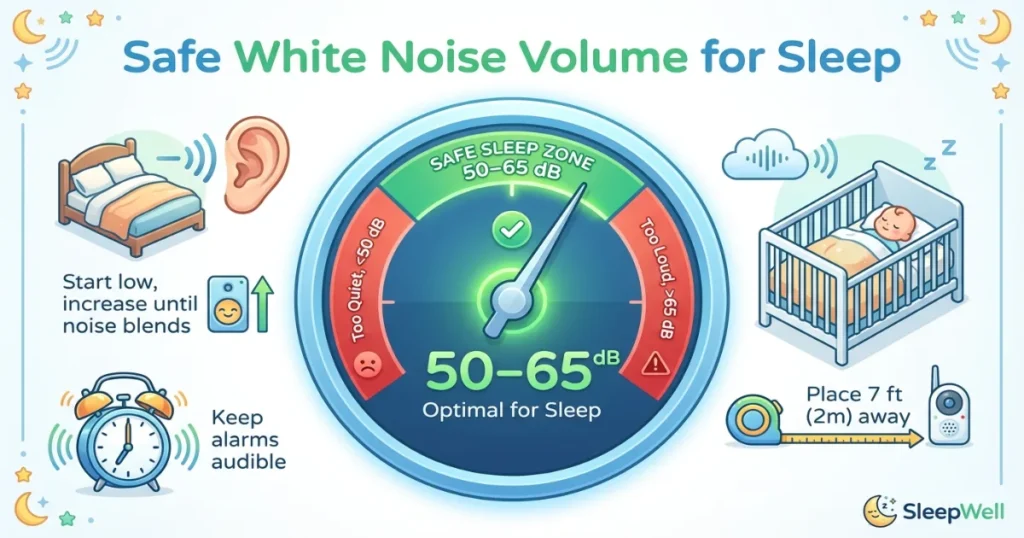
Most sleep researchers and audiologists suggest keeping white noise machines in the range of 50–65 dB, measured at the position of your ears. This is roughly equivalent to ambient office background noise or a quiet conversation — well below the levels associated with hearing risk (which begin around 85 dB over sustained exposure).
For adults, long-term use at reasonable volumes is considered safe by mainstream medical guidance. Your hearing isn’t at risk from a well-placed, reasonably calibrated white noise machine.
For babies and children, the American Academy of Pediatrics recommends keeping machines at least 7 feet from the crib and below 50 dB. Place the machine across the room rather than right next to the baby’s head.
Sleep quality benefits from white noise are real and well-documented. Studies have shown reduced sleep onset time and fewer nighttime arousals in both adults and infants when appropriate white noise is used.
Who Should NOT Buy a White Noise Machine?
White noise machines are excellent tools, but they’re not magic — and they’re not the right solution for every situation.
If your noise problem is structural and severe. Impact noise from a neighbor who stomps at 200 lbs directly above you, or bass from a speaker system running at a concert venue level, requires more than acoustic masking. At a certain point, you need to pursue formal tenant remedies — noise complaints filed with building management, documentation for potential lease-based disputes, or a conversation with a tenant rights organization.
If you’re in a legal dispute with your landlord or neighbors. A white noise machine is a coping tool, not evidence of good-faith noise management on anyone else’s part. Don’t let it substitute for documenting problems that require formal resolution.
If the noise is a safety signal. If you’re in an environment where you need to hear alarms, a crying infant, or potential security threats, using white noise requires careful calibration. Don’t mask sounds you genuinely need to detect.
If you have tinnitus or audiological conditions. Consult a hearing specialist before using white noise long-term, as some conditions are aggravated by certain frequency profiles.
Final Verdict: Which White Noise Machine Is Best in 2026?
After evaluating the full landscape of options specifically through the renter’s lens — portability, volume, no-damage setup, small apartment compatibility, and real-world noise masking — here’s the breakdown:
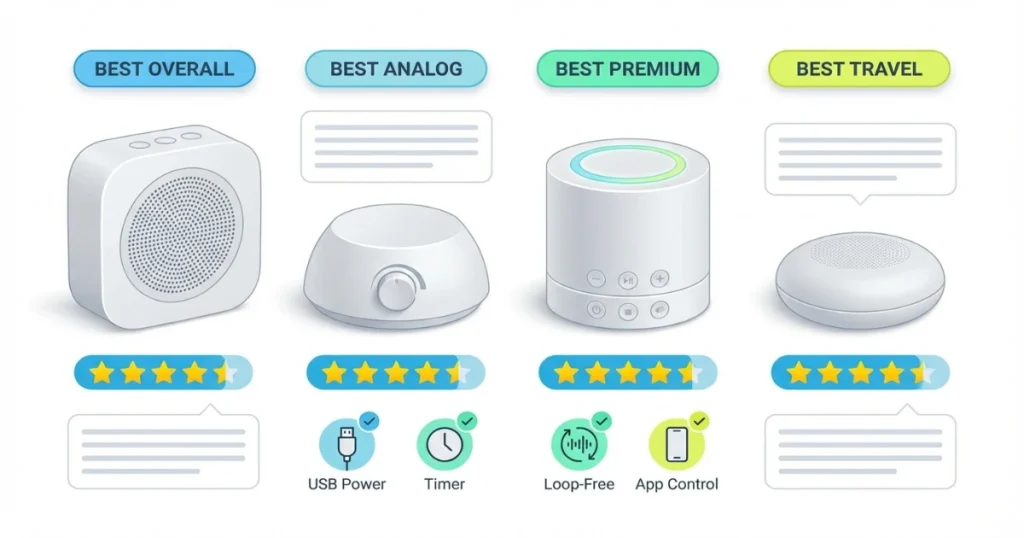
Best overall for apartment living: LectroFan EVO. Maximum versatility, strong volume, USB-powered, no loops. It handles virtually every apartment noise scenario effectively.
Best for budget renters: Big Red Rooster BRRC107. Gets the job done without financial stress. Upgrade later if needed.
Best for light sleepers: Yogasleep Dohm Classic. The warm, analog, loop-free sound is the gentlest and most natural option available.
Best for heavy noise situations: LectroFan EVO at full volume, or pair two Dohm Classics in a particularly challenging space.
Best for travel: Marpac Rohm. Goes anywhere, weighs almost nothing, does the job.
Best for couples: Snooz. App-controlled quiet adjustments mean no disturbing your partner at 2 AM.
Best for families with babies: Dreamegg D11 Max. Built for exactly this use case.
Best premium investment: Hatch Restore 2. If you want a complete sleep system and you’re willing to invest, nothing beats it for small apartment integration.
Frequently Asked Questions
Do white noise machines block neighbor noise?
White noise machines don’t block or absorb neighbor noise — they mask it. Rather than stopping sound waves from reaching your ears, they add consistent ambient sound that reduces your brain’s ability to detect and fixate on disruptive sounds. The result is similar: you sleep through things that would otherwise wake you. For most apartment noise scenarios, masking is just as effective as blocking, and far more achievable without structural modifications.
How loud should white noise be in an apartment?
Most sleep specialists recommend between 50–65 dB measured at ear level. This is approximately the volume of a quiet conversation or soft background music. Start low and increase until the intrusive sounds are no longer distinctly audible. Avoid running a machine at maximum volume continuously — find the minimum effective volume for your specific noise situation and stick with it.
Can white noise damage hearing?
At recommended volumes (below 65–70 dB at ear level), white noise does not damage hearing. Hearing damage typically occurs with sustained exposure above 85 dB. The key is using machines at sensible volumes — effective masking doesn’t require blasting the machine. If you use a machine that has a decibel meter option, aim for 55–65 dB as a target range.
Is white noise better than a fan for apartment sleep?
A fan provides similar masking benefits but with less control. White noise machines offer adjustable volume, multiple sound profiles, timer functions, and consistent output regardless of ambient temperature. They’re also easier to position strategically. For apartment living specifically, a dedicated machine’s flexibility and control make it superior to a fan for systematic sleep improvement.
Do landlords allow white noise machines?
Yes — white noise machines require no installation, drilling, or modifications of any kind. They’re electrical appliances, no different from a lamp or phone charger. No lease restriction on the market prohibits a freestanding sound machine. They are the definition of a renter-friendly sleep solution and will never create lease compliance issues.
Are white noise machines good for thin walls?
Thin walls are one of the primary use cases white noise machines are designed for. While they don’t add physical sound insulation, they effectively mask the sound that passes through thin drywall. The combination of a high-volume machine positioned near the shared wall and a secondary machine near your bed creates substantial acoustic relief in thin-walled apartments.
Can I use a white noise machine for babies in an apartment?
Yes, with proper precautions. Place the machine at least 7 feet from the crib, keep the volume at or below 50 dB in the baby’s room, and choose a machine with a natural sound profile like fan noise or pink noise. The Dreamegg D11 Max is specifically designed for infant sleep use. White noise has been shown to reduce infant sleep onset time and protect baby sleep from household and neighbor noise.
Do white noise machines use a lot of electricity?
No. Most white noise machines consume between 5–15 watts of power — similar to an LED light bulb. Running a machine for 8 hours nightly costs approximately $1–$3 per month in electricity, depending on your rate. USB-powered models are even more efficient. The energy cost is negligible compared to the sleep quality benefit.
What’s the difference between white, pink, and brown noise?
White noise contains equal energy across all frequencies — it sounds like static or a loud fan. Pink noise reduces higher frequencies, producing a softer, deeper sound resembling steady rain or wind. Brown noise goes deeper still, with a rumbling, bass-heavy quality like distant thunder. White noise masks the widest range of sounds; pink and brown are often more comfortable for extended listening and better at masking low-frequency sounds like bass or footsteps.
Can I use multiple white noise machines in my apartment?
Absolutely — and it’s a strategy experienced renters frequently use. A machine in the bedroom handles sleep-time masking, while a unit near the front door gap addresses hallway noise. In a studio apartment, two machines can provide overlapping coverage that a single unit can’t match. There’s no safety or technical reason to limit yourself to one.