Nano Tape vs Command Strips: Which Removes More Cleanly?
For renters, the best adhesive is not simply the one that sticks hardest. It is the one whose surface limits, removal method and paint risk you can understand before move-out.
Quick Answer
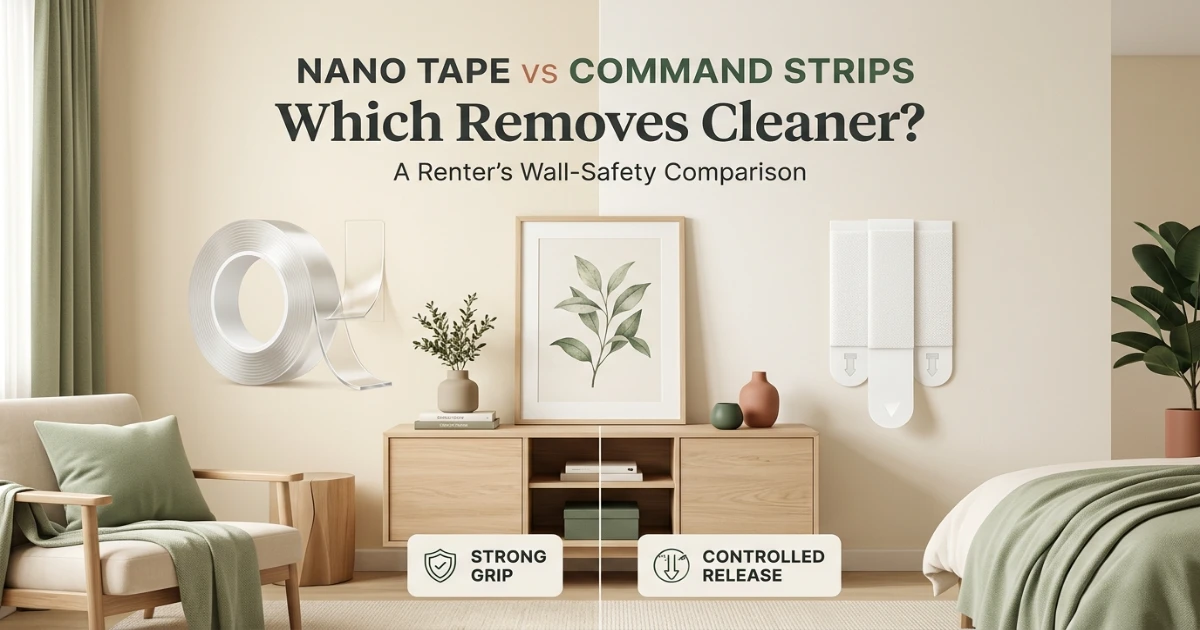
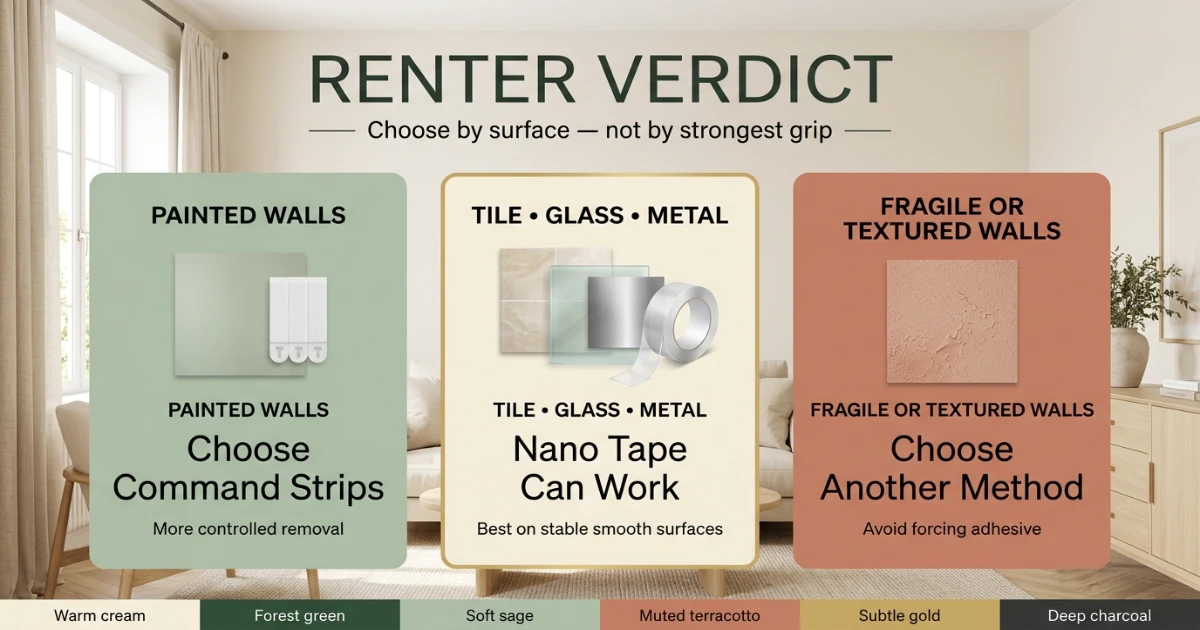
For most renters hanging lightweight decor on a compatible smooth painted wall, Command picture-hanging strips are the more predictable choice for clean removal because 3M publishes a specific stretch-release process, surface rules and preparation instructions. “Nano tape” is a broad category of high-tack acrylic-gel tapes rather than one standardized system. Some nano tapes are marketed as removable and residue-free on smooth hard surfaces, but even a major nano-tape brand warns that strong adhesion can lift fragile painted drywall or wallpaper. On glass, tile, metal and other solid non-porous surfaces, nano tape can make sense for temporary positioning, but it still needs product-specific removal guidance and an inconspicuous test.
At a Glance
Nano Tape vs Command Strips: The Core Difference
The biggest difference is not transparency, thickness or even headline holding power. It is how the adhesive system is designed to release from the surface.
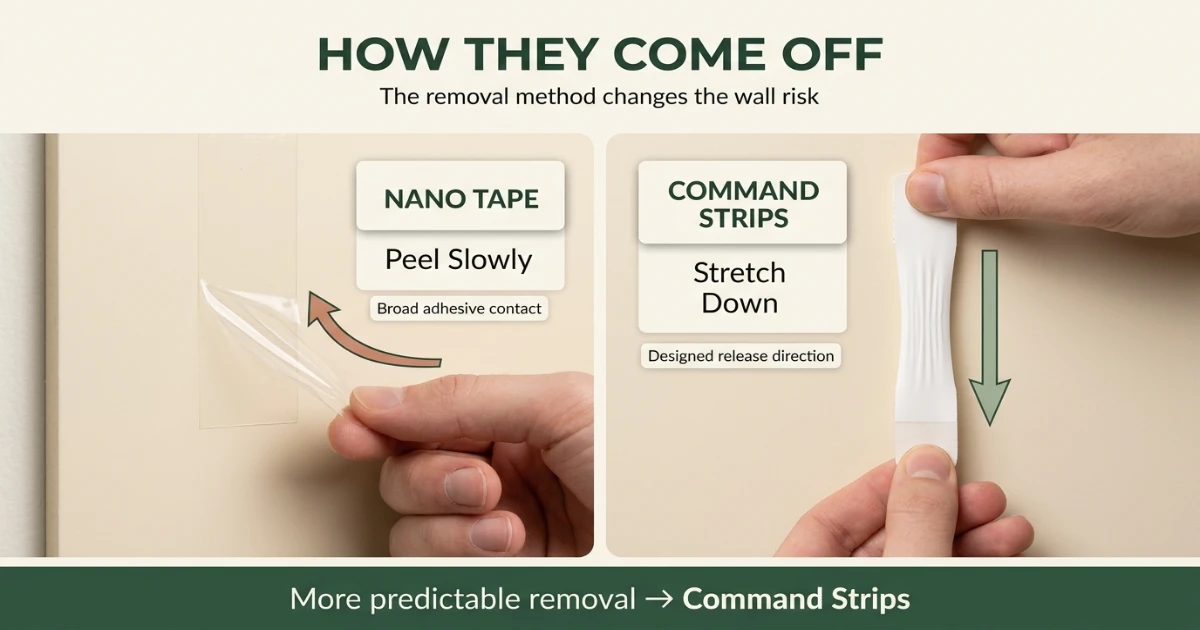
Command picture-hanging strips use a removable stretch-release adhesive system. For current picture-hanging strips, 3M instructs users to remove the frame first, then pull the exposed adhesive tab slowly down against the wall rather than outward. That long stretch changes the adhesive geometry as it releases. 3M also publishes surface preparation, freshly painted wall guidance, indoor temperature guidance and explicit exclusions such as wallpaper.
Nano tape works differently. The term commonly refers to a thick, clear, double-sided acrylic-gel tape sold by many brands. There is no single “nano tape” specification shared by every roll on the market. One representative US brand, EZlifego, describes its tape as nano-tech acrylic and recommends smooth, non-porous surfaces. Its own guidance says removal should be slow and parallel to the surface, while warning that strong adhesion can damage fragile painted drywall or wallpaper.
That distinction matters in rentals. A product that releases cleanly from glass can still pull paint from drywall. Likewise, a removable strip can still damage a wall if it is used on the wrong surface, applied before paint has cured, or removed in the wrong direction.
Side-by-Side: Which Removes More Cleanly?
“Clean removal” has two parts: whether adhesive residue remains and whether the surface itself survives. A tape can leave no sticky residue yet still lift paint. For renters, surface damage is usually the more important outcome.
| Comparison Point | Nano Tape | Command Picture-Hanging Strips |
|---|---|---|
| Adhesive type | Typically thick double-sided acrylic gel; specifications vary by brand. | Brand-specific removable strip system with published application and stretch-release instructions. |
| Removal style | Product-dependent; representative guidance calls for a slow peel close and parallel to the surface. | Remove the mounted item, then stretch the exposed tab slowly down against the wall. |
| Painted drywall | Higher uncertainty. Strong gel adhesion may lift fragile paint or drywall coating. | More predictable when used on an approved smooth painted wall and all directions are followed; not guaranteed damage-free. |
| Glass, tile, metal | Often a more natural use case because these are solid, smooth, non-porous surfaces. | Many Command products also list smooth glass, tile and metal as compatible, subject to the exact product. |
| Wallpaper / fragile finish | Avoid unless the exact manufacturer explicitly supports it; representative nano-tape guidance warns about wallpaper. | 3M says not to use picture-hanging strips on wallpaper. |
| Removal predictability | Varies widely across generic and branded tapes. | Higher because the manufacturer publishes a repeatable removal sequence. |
| Renter move-out confidence | Better on hard, non-porous surfaces than on unknown paint systems. | Generally the stronger choice for compatible painted walls when installed and removed correctly. |
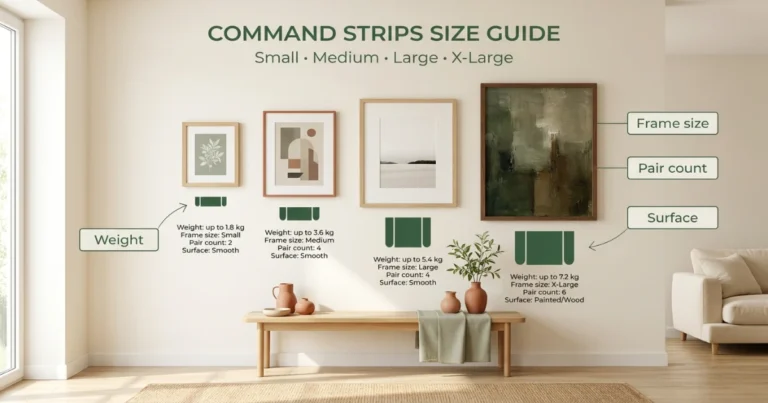
If your goal is a gallery wall, compare this decision with our Command strips weight limit guide before choosing a specific strip size. If adhesives feel too uncertain for your wall, our guide to hang art without nails covers alternatives that do not rely on a high-tack gel bond.
Surface Compatibility Matters More Than the Tape Name
Renters often ask, “Which tape is safer?” A better question is, “Which product is approved for this exact surface and finish?”
Smooth Painted Walls
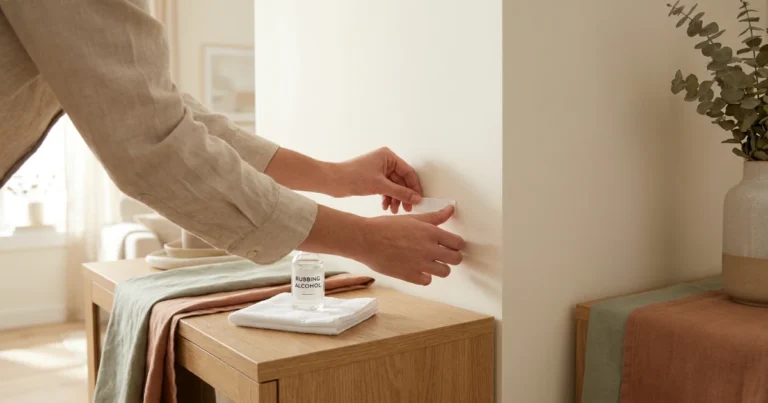
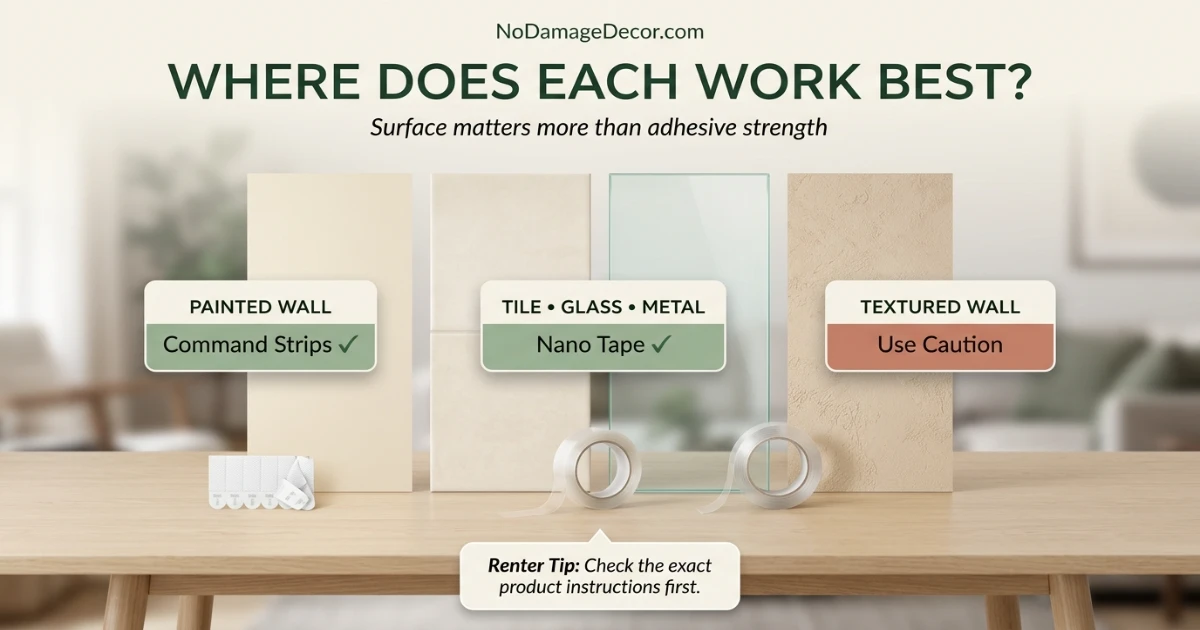
Command picture-hanging strips are specifically documented for many smooth painted-wall applications, but 3M still limits when and where they should be used. Current instructions say to wait seven days after painting, prepare the wall with rubbing alcohol rather than household cleaner or water, and avoid wallpaper. The exact strip package remains the final authority for your product.
Nano tape is less predictable on painted drywall because paint quality varies. A strong acrylic gel can bond to the top paint film more strongly than that paint film is bonded to the primer or drywall paper beneath it. If that happens, the adhesive may come off “clean” while taking paint with it.
Tile, Glass and Metal
This is where nano tape has a more convincing renter use case. Smooth tile, glass and metal are harder, more cohesive surfaces than painted drywall. EZlifego lists glass, metal, tile, plastic, wood, stone, acrylic and ceramic among its preferred smooth non-porous surfaces. Even there, you should remove slowly and confirm that the finish itself is stable.
Textured, Powdery or Uneven Walls
Neither option should be treated as a universal fix for rough walls. Current Command guidance excludes rough or textured surfaces for picture-hanging strips, and nano-tape manufacturers commonly emphasize flat, clean surfaces. Texture reduces full adhesive contact and can make load and removal behavior inconsistent.
Wallpaper and Delicate Finishes
Avoid the assumption that “removable” means wallpaper-safe. 3M specifically says not to use its picture-hanging strips on wallpaper, and EZlifego warns that fragile surfaces including wallpaper may be damaged. For removable wall covering projects, use products designed for that purpose; our guide to the best removable wallpaper for renters is a better starting point.
Why Nano Tape Can Lift Paint Even Without Sticky Residue
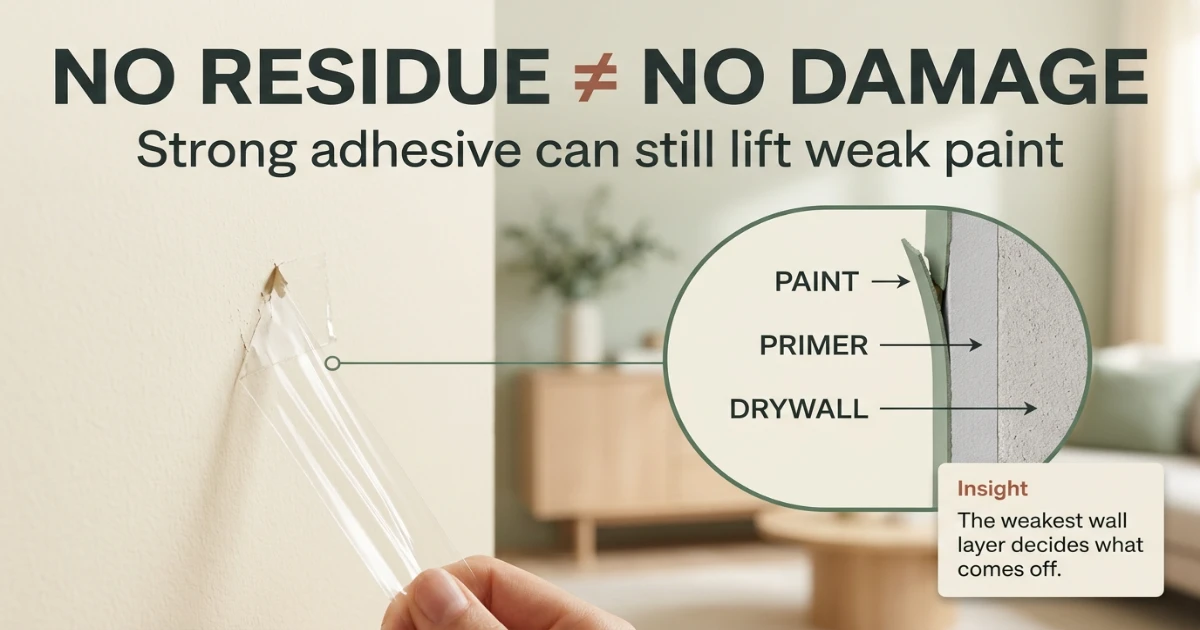
Painted drywall is a layered system: drywall paper, joint compound or skim coat, primer, and one or more paint coats. The weakest interface controls what happens during removal.
Acrylic-gel tape can create a broad contact area. That is useful for grip, but the same broad bond can place peel stress across a large section of paint during removal. If the top coat is poorly bonded, chalky, freshly painted, previously moisture-damaged or simply delicate, the gel may pull the coating away from the wall.
This is why “no residue” and “no damage” are not interchangeable claims. Residue describes adhesive left behind. Damage describes the substrate or finish that leaves with the adhesive.
Installation Differences That Affect Removal Later
Command Strips Reward Following the Full Sequence
For current picture-hanging strips, 3M says to clean the wall with rubbing alcohol, click the paired strips together, attach them to the frame, press the frame to the wall, remove the frame to reinforce the wall-side strips, press those strips firmly, then wait one hour before remounting. It also says to wait seven days after painting before application and to use the product indoors within its stated temperature range.
Skipping those steps can turn a controlled system into an unpredictable one. Household cleaner residue can weaken adhesion. Hanging too soon can overload an incomplete bond. Pulling the strip toward you during removal can place unnecessary stress on paint.
Nano Tape Is Simpler to Apply but Easier to Overuse
Gel tape is usually cut to length and pressed between the object and surface. That simplicity encourages a common mistake: using a long continuous piece “for extra security.” More contact area can mean more removal force later, especially on painted drywall.
If you use nano tape on a hard compatible surface, use only the amount supported by the exact product instructions and the actual task. Do not improvise load ratings, do not mount valuable or fragile objects, and do not assume adding more tape automatically makes a setup safer.
Removal: Command Has the More Controlled Painted-Wall Method
For a renter comparing these systems mainly on move-out removal, this is the decisive category.
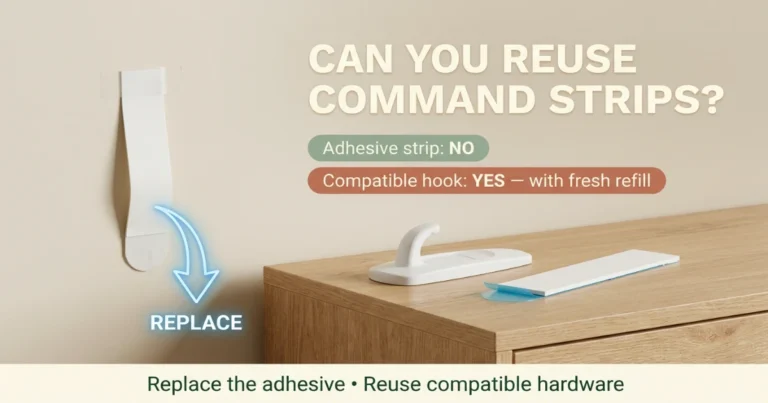
Command strips are engineered around an exposed stretch-release tab. For picture-hanging strips, 3M instructs users to peel the frame away first, never pull the wall strip outward, and instead stretch the adhesive slowly down against the wall until it releases. The direction is repeatable and the product is designed around that action.
With nano tape, removal depends more heavily on the exact acrylic gel formulation, the surface and how much tape was used. EZlifego’s own guidance says to peel slowly parallel to the surface and warns that its strong adhesive may damage fragile painted drywall or wallpaper. That is a useful caution precisely because it acknowledges that residue-free removal on a solid surface does not translate into universal paint safety.
For a detailed move-out technique, use our guide on how to remove Command strips without damage. No method can guarantee that weak paint will remain intact, but controlled technique reduces avoidable stress.
Which Renter Should Choose Which?
Choose Command Strips When…
- You are hanging lightweight decor on a smooth, compatible painted wall.
- You want a documented application and stretch-release removal sequence.
- Your paint is fully cured and in good condition.
- You can keep the removal tab accessible.
- Your item fits the exact product’s stated size, surface and capacity limits.
Choose Nano Tape When…
- You are mounting or stabilizing a light item on a solid, smooth, non-porous surface such as tile, glass or metal.
- A visible foam strip or hook would be awkward.
- The exact nano-tape manufacturer supports the surface and removal method.
- You can test a hidden area without risking a fragile finish.
- You are willing to use less tape rather than maximizing contact area.
Use Another Method When…
Choose another method if the wall is textured, paint is unstable, the object is valuable, the object could injure someone if it falls, or the installation is above a bed or crib. A leaning frame, easel, tension solution, existing fixture or landlord-approved mechanical fastener may be easier to document and repair than uncertain adhesive damage.
For broader renter-safe planning, see our no-damage wall decor ideas and our guide to apartment decor mistakes that cost your deposit.
Verified Product Examples
These examples help show how the two categories differ. They are not universal recommendations for every wall or object. Check the current package instructions before use.
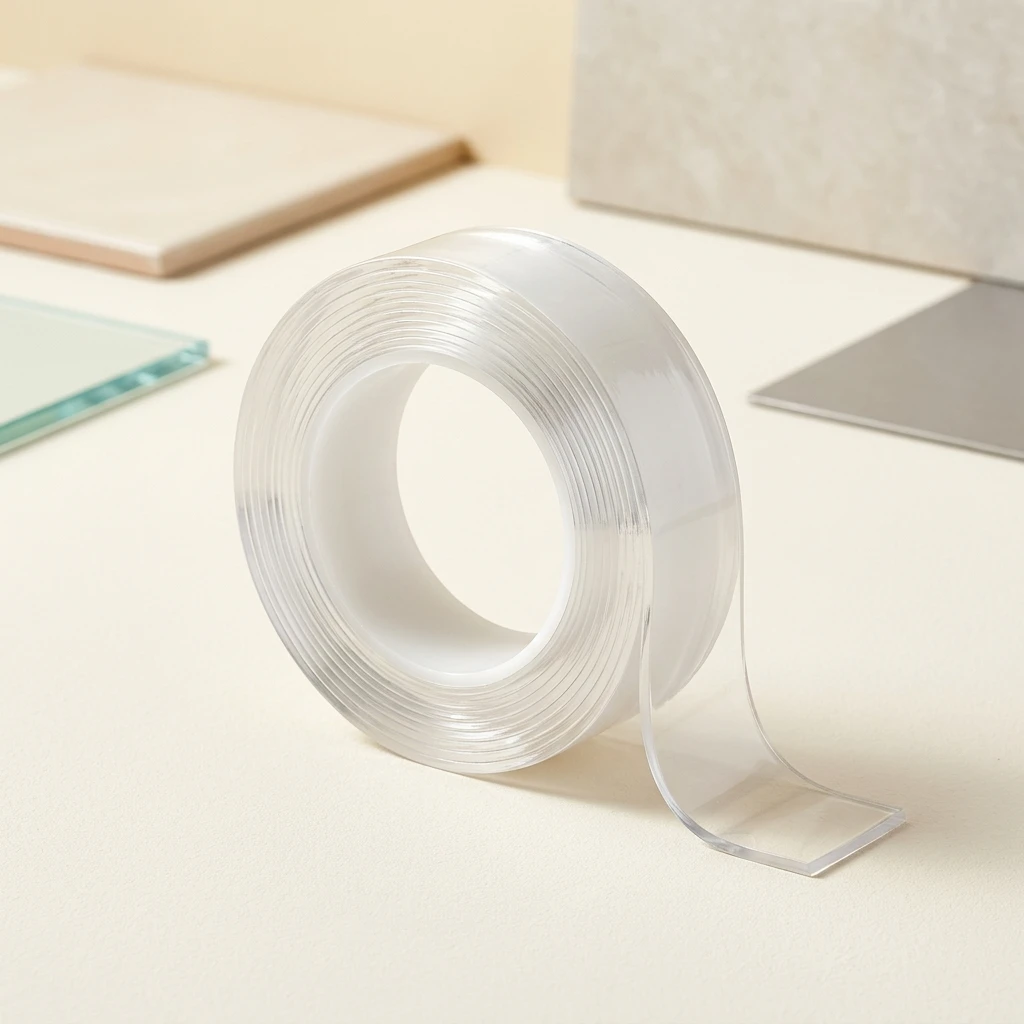
EZlifego Heavy Duty Invisible Bond Nano Double Sided Mounting Tape, 9.85FT
Best for: Temporary mounting or stabilization on smooth, solid surfaces where a clear gel tape is useful.
Verified material: The brand identifies this line as nano-tech acrylic gel tape and says it works best on smooth, non-porous surfaces.
Renter caution: EZlifego warns that its strong adhesion may damage fragile painted drywall or wallpaper during removal. Its guidance calls for slow removal parallel to the surface.
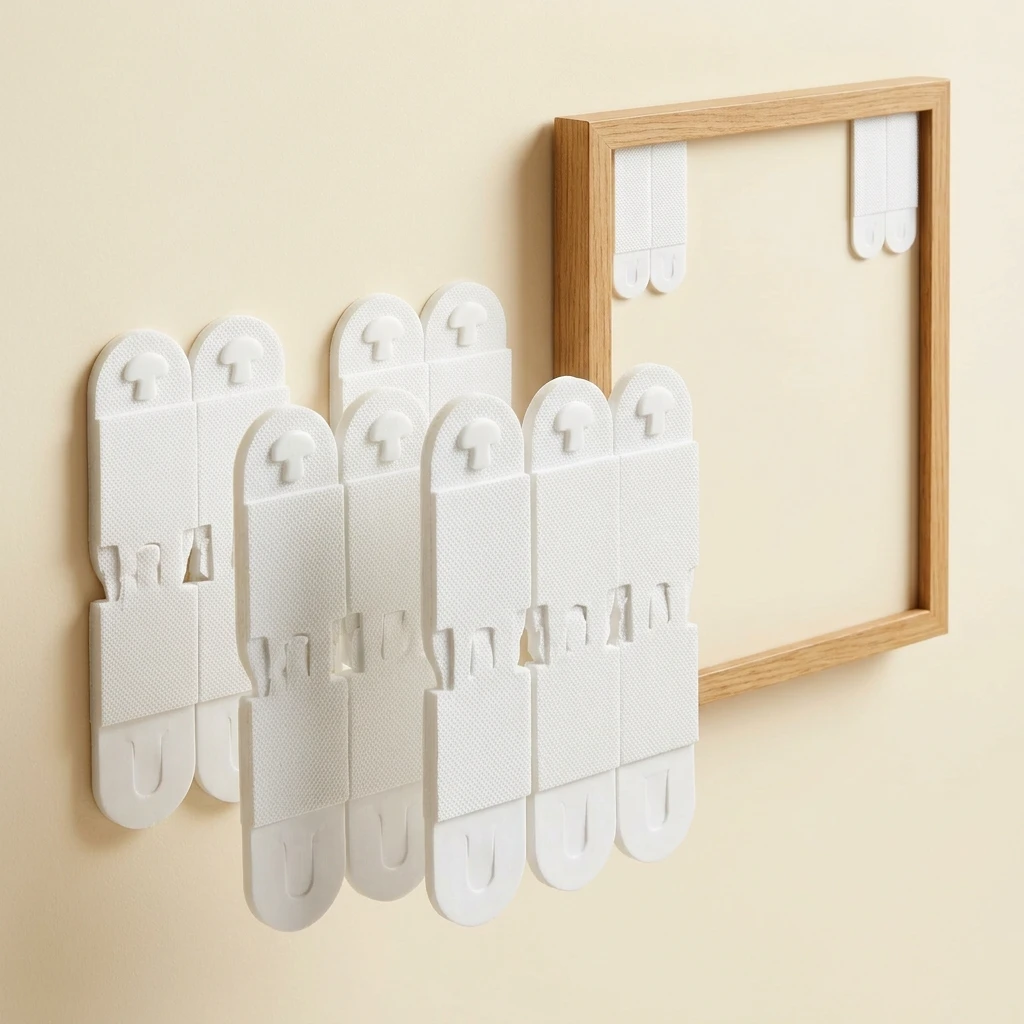
Command 15 lb Large Picture Hanging Strips 14 Pairs (28 Strips)
Best for: Frames and similar decor that fit the exact strip package’s current surface, dimension and capacity instructions.
Verified system: Command publishes a specific picture-strip application process, including rubbing-alcohol prep, a bonding wait and slow stretch-down removal.
Renter caution: Do not use on wallpaper, do not hang over beds, and do not use for valuable or irreplaceable items. Follow the current package because specifications can vary by strip size and pack.
Common Mistakes That Turn “Removable” Into Wall Damage
Using Nano Tape on Weak Paint Because the Listing Says “Traceless”
“Traceless” usually refers to residue or visible adhesive, not the structural strength of your paint system. If the paint releases from the wall, the adhesive can still look clean while the wall does not.
Pulling Command Strips Toward You
That works against the intended stretch-release mechanism. Keep the tab close to the wall and follow the exact removal direction shown for your strip.
Applying Adhesive to Fresh Paint
Fresh paint can feel dry before it is ready for an adhesive installation. Command’s current picture-hanging guidance says to wait seven days after painting. For any other tape, use the paint and adhesive manufacturer’s instructions rather than guessing.
Using More Tape Than Necessary
A longer gel-tape contact patch can increase the surface area you later have to peel. More adhesive is not automatically more renter-friendly.
Mounting Something That Should Not Depend on Adhesive Alone
Large mirrors, valuable art, fragile objects and anything in an injury-risk location deserve a more conservative mounting plan. If a failure could hurt someone or destroy the object, use a method engineered for that risk and approved by the property.
A Better Move-Out Strategy Than Waiting Until the Last Day
If your security deposit matters, removal planning should begin when you install the decor, not when the moving truck arrives.
- Photograph the wall before installation. Capture existing chips, patches, scuffs or bubbling paint.
- Keep the product instructions. A photo of the package is enough if you tend to lose paper inserts.
- Leave removal tabs accessible. Do not bury a stretch-release tab behind trim or another object.
- Remove one installation early. If you have a large gallery arrangement, remove a low-risk item before move-out day so you have time to respond calmly if paint is fragile.
- Photograph the wall after removal. Dated documentation helps distinguish pre-existing condition from new damage.
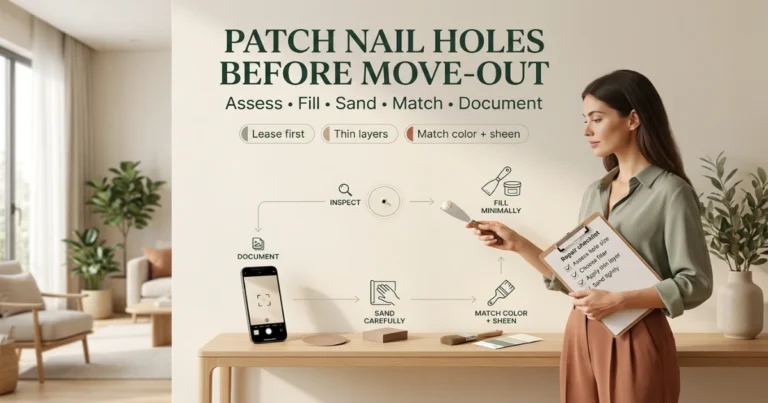
- Check your lease before repairing. Paint matching, patching expectations and tenant responsibilities can vary by lease, property and jurisdiction.
If a small area does lift, avoid making the problem larger with aggressive scraping or solvents. Document it first, review your lease, and use the property’s preferred repair process. Rules around damage, normal wear and security-deposit deductions vary by state, city, lease and circumstances.
Renter-Safety Verdict
For compatible smooth painted rental walls, Command picture-hanging strips are the better bet for predictable clean removal. The reason is not that they are universally damage-proof; they are not. The advantage is a more clearly defined system: approved surfaces, preparation guidance, bonding sequence and a specific stretch-release removal method.
Nano tape makes more sense on stable hard surfaces such as tile, glass or metal when the exact tape manufacturer supports that use. Its strong acrylic-gel bond can be useful, but that same strength is a reason to be cautious on painted drywall. If paint quality is unknown, the “stronger” adhesive may be the worse renter choice.
Whichever product you use, check the exact current instructions, keep heavy or valuable objects out of adhesive-only setups, test where appropriate, and document the wall before and after. That is more reliable than trusting a broad “removable” or “traceless” claim.
Sources & Renter-Safety Note
This comparison uses current manufacturer guidance for the named examples. Product instructions can change, and “nano tape” is not a single standardized product category. Always check the package or current manufacturer page for the exact item you own.
Frequently Asked Questions
Does nano tape remove more cleanly than Command strips?
Not generally on painted rental walls. Nano tape can remove cleanly from solid smooth surfaces, but strong acrylic gel can lift fragile paint. Command picture-hanging strips have a defined stretch-release removal method, making their behavior more predictable on compatible painted walls when the instructions are followed.
Can nano tape damage painted drywall?
Yes. Paint damage is possible because the tape can bond more strongly to the paint film than the paint is bonded to the wall beneath it. EZlifego specifically warns that strong adhesion may damage fragile painted drywall during removal.
Do Command strips always come off without damage?
No adhesive method is guaranteed on every wall. Weak paint, incompatible surfaces, incorrect preparation or pulling the strip outward can still cause damage. Follow the exact product instructions and avoid wallpaper or other excluded surfaces.
Is nano tape better on tile or glass?
Nano tape is often better suited to stable, smooth, non-porous surfaces such as tile, glass and metal than to fragile painted drywall. Confirm the exact manufacturer’s surface list and remove slowly using its instructions.
Can I use nano tape for picture frames in an apartment?
Only if the exact tape supports the frame, surface and load, and the location is not an injury risk. Avoid valuable or fragile frames and be especially cautious on painted drywall because removal can lift paint.
How should I remove Command picture-hanging strips?
Remove the frame as directed, then keep the adhesive tab close to the wall and stretch it slowly down against the wall rather than pulling it toward you. Follow the exact package because removal details can vary by product.
What if I do not know how strong the apartment paint is?
Use the most conservative option. Inspect for flaking, bubbling, chalkiness or previous repairs, document the wall, and consider a non-adhesive display method. A hidden test can provide useful information on a stable surface, but it cannot guarantee future damage-free removal.
Remove Existing Strips the Right Way
If Command strips are already on your walls, removal technique matters more than rushing them off on move-out day.
See the Removal GuideEditorial note: Adhesive performance depends on the exact product, surface, paint system, environment and installation. This article does not guarantee damage-free removal or replace manufacturer instructions or lease requirements.