Command Strips on Cinder Block Walls: Do They Work in Dorms?
They can work on the kind of smooth, painted cinder block found in many dorms—but rough, raw, porous block is a different surface and usually does not give the adhesive enough contact.

At a Glance
The Real Answer: Painted Cinder Block and Raw Cinder Block Are Not the Same
College dorm walls are often described casually as “cinder block,” but that label hides the detail that matters most for adhesive strips: surface texture. A painted block wall can have a reasonably smooth sealed face. A raw block wall can be chalky, porous and deeply pitted.
3M’s current Command guidance says its products work best on smooth, clean surfaces and are not recommended for brick, rough concrete or heavily textured surfaces. At the same time, current Command product pages specifically list painted concrete cinder block among suitable surfaces for several hooks, picture-hanging strips and cord-management products.
Choose Command Strips when…
- The block is painted.
- The paint is fully cured and firmly bonded.
- The face is relatively smooth rather than gritty.
- The strip can contact the wall across its full adhesive face.
- The dorm allows removable adhesive products.
Avoid Command Strips when…
- The block is raw or unpainted.
- The face is deeply pitted or sandy.
- The paint is flaking or chalky.
- The wall is heavily textured.
- The housing policy bans adhesive wall products.
Painted vs. Rough Cinder Block: Check the Wall Before You Stick Anything
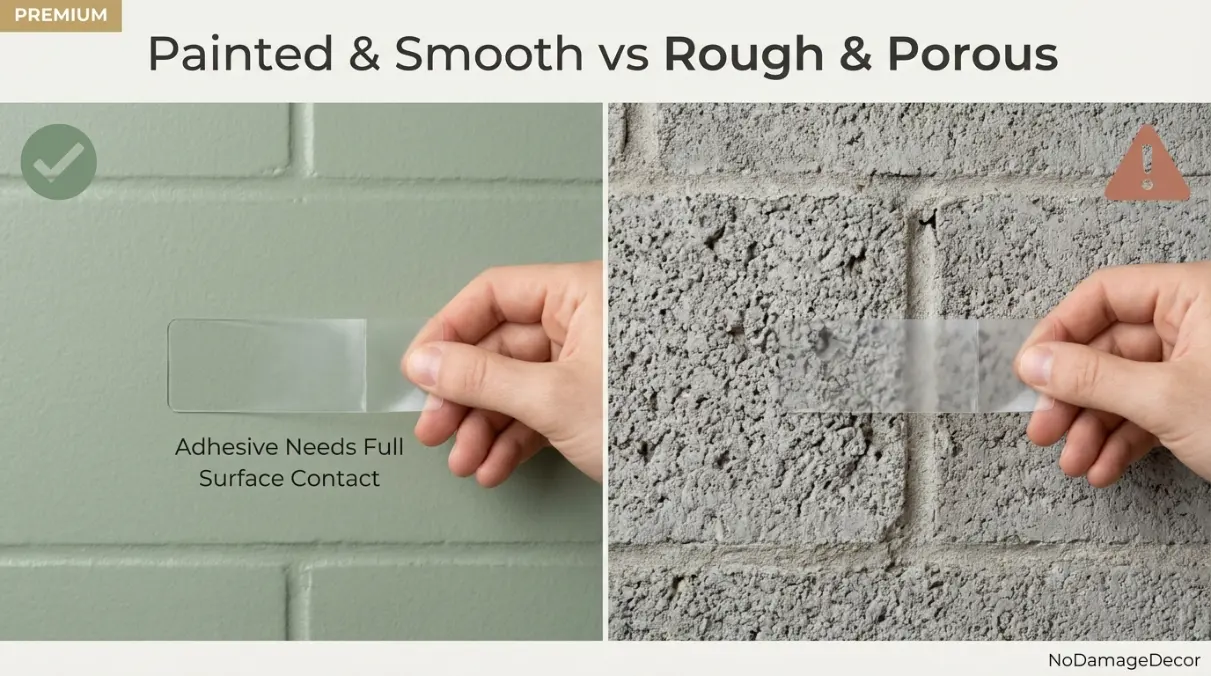
The best cinder-block candidate for Command products that specifically list painted concrete or cinder block.
Still risky. Paint alone does not make the wall smooth enough for full adhesive contact.
Usually too porous and rough for standard Command Strips.
The adhesive may bond to loose paint rather than a stable wall surface.
Wait for the coating to cure according to the current paint and Command guidance before applying strips.
Potentially workable if the exact product approves the surface and the finish is sound.
| Dorm Wall | Command Strip Decision | Why |
|---|---|---|
| Smooth, painted cinder block | Often suitable | Several current Command products specifically list painted concrete cinder block as compatible. |
| Raw, rough cinder block | Avoid | 3M says Command products are not recommended for rough concrete or rough surfaces. |
| Painted block with deep pits | Usually avoid | The adhesive may only contact raised areas. |
| Flaking or chalky paint | Avoid | The coating itself may fail even if the strip sticks. |
| Wallpaper over block | Avoid | Command generally excludes wallpaper from normal use. |
| Housing-approved smooth block | Use exact product guidance | Dorm policy and manufacturer surface rules both matter. |
What Should You Hang on Painted Cinder Block With Command Strips?
Once the wall passes the surface check, match the object to the specific Command product. A small wire hook, a picture-hanging strip and a cord bundler are different systems with different published limits and use cases.
For dorms, the more renter-conscious approach is to keep adhesive-mounted items modest, replaceable and within the exact product rating. Do not use removable strips as a shortcut for items that could hurt someone if they fell.
Better dorm uses
- Lightweight framed prints within the exact strip rating
- Small signs and dry-erase boards where approved
- Light organizers on correctly rated hooks
- Cord management using approved Command cord products
- Posters using a lighter method where appropriate
Use another method
- Large or valuable mirrors
- Heavy shelves
- Breakable décor above a bed
- Irreplaceable framed art
- Anything heavier than the current product rating
Before choosing a strip by guesswork, use the Command strips weight limit guide and match the exact item to the current manufacturer instructions.
How to Use Command Strips on Smooth Painted Cinder Block

Check the dorm housing rules
Some residence halls allow Command products; others restrict all adhesives or specify what can be used. Housing policy comes before the decorating plan.
Confirm the block is painted and smooth
Run your hand across the intended spot. If it is gritty, sharply textured, deeply pitted or dusty, standard strips are a poor choice.
Check the paint condition
Do not apply strips over loose, flaking or chalky paint. The strip can only be as reliable as the coating beneath it.
Clean with rubbing alcohol
3M instructs users to clean suitable surfaces with rubbing alcohol to remove grime, dust and residue. Avoid cleaners that leave a film.
Let the wall dry
Apply the strip only after the cleaned area is dry, then follow the exact orientation and pressing instructions on the package.
Follow the product-specific waiting step
Different Command products can have specific application instructions. Follow the current package rather than borrowing timing from another product.
Stay within the current rating
Use the correct number and size of strips or hooks specified for the item. Do not add extra strips as a substitute for choosing the right product.
How to Remove Command Strips From Painted Cinder Block
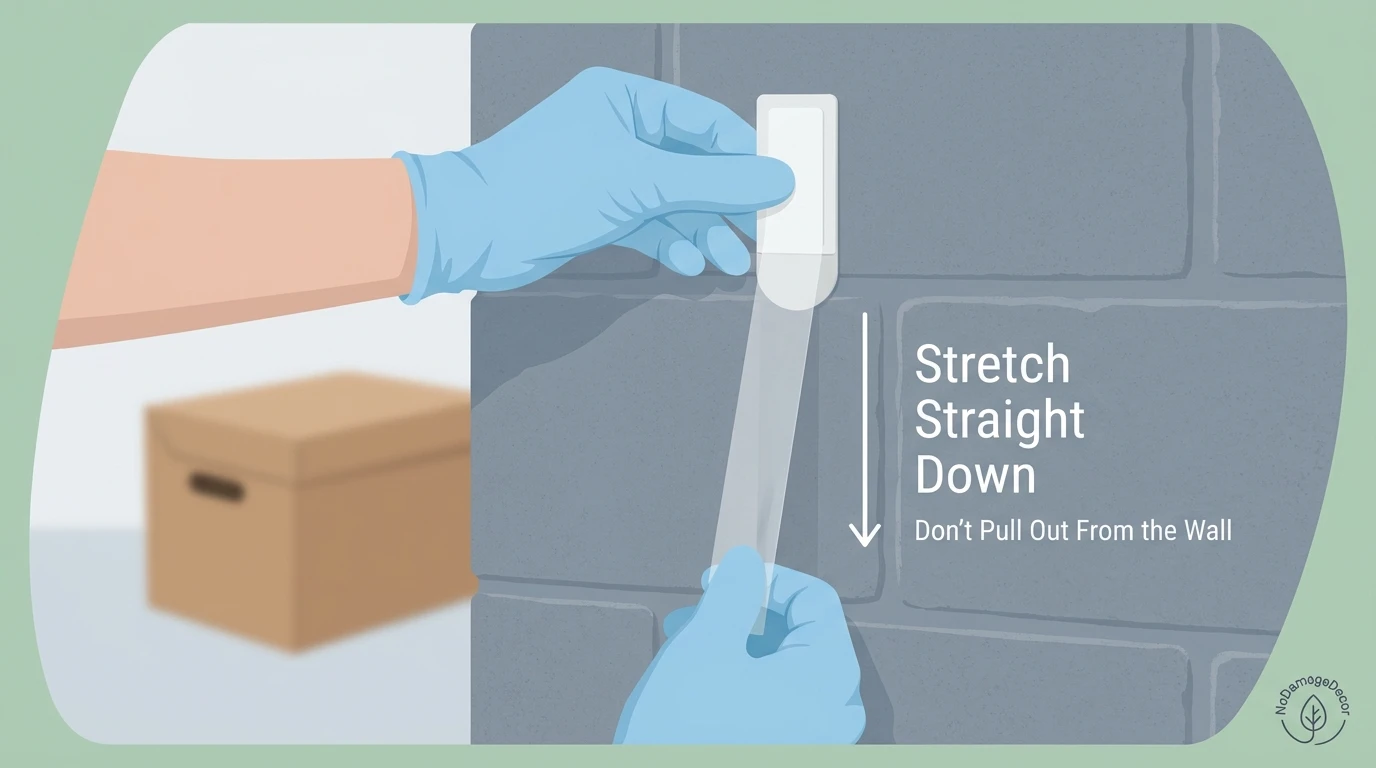
Removal technique matters as much as installation. For standard stretch-release Command strips, the tab is designed to be stretched slowly in the direction shown in the product instructions rather than pulled outward from the wall.
On block walls, pulling the base away from the surface can put extra stress on the paint film. If the paint is weak or the wall was poorly prepared before it was painted, even a correctly used removable adhesive can reveal an existing coating problem.
- Remove the hanging item first.
- Lightly support the hook or strip base as instructed.
- Pull the release tab slowly in the manufacturer-specified direction, typically straight down and close to the wall.
- Do not yank the tab toward yourself.
- Do not use a metal scraper to force adhesive from painted block.
- Photograph the wall after removal if you are preparing for dorm checkout.
For a more detailed removal walkthrough, see remove Command strips without damage.
What If Your Dorm Wall Is Rough, Raw Cinder Block?
This is where many dorm decorating hacks go wrong. A raw block wall may look solid, but its pores and pits prevent a flat adhesive strip from contacting the whole surface. Standard Command Strips are not the right fix for that problem.
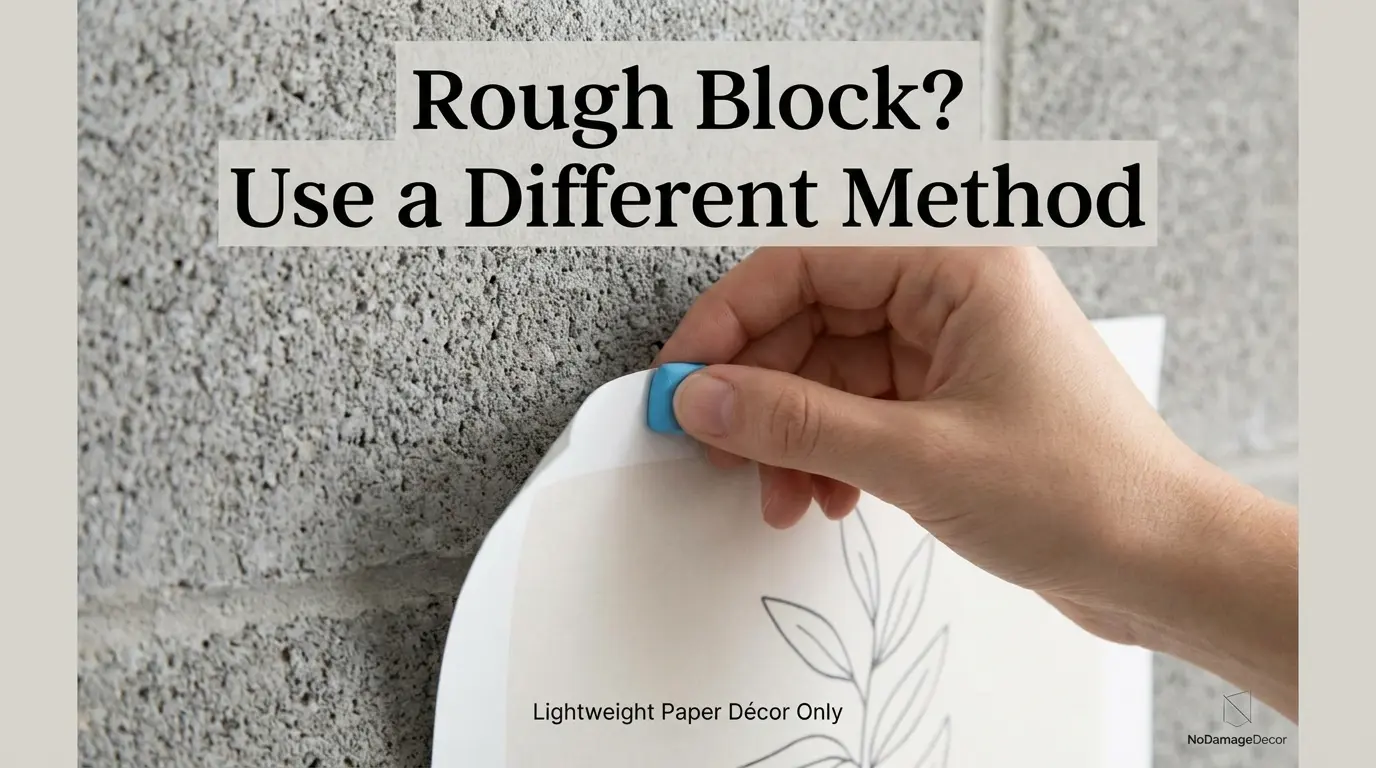
For very lightweight paper décor, a mounting putty that explicitly lists cinder block can be a more appropriate category. Loctite currently lists cinderblock among the surfaces for Fun-Tak Mounting Putty. That does not turn putty into a heavy-duty hanger—it remains a lightweight décor option.
If you are decorating a whole dorm wall, also see no-damage wall decor ideas and hang art without nails.
Verified Products for Painted or Rough Cinder Block
The first product below is for smooth painted cinder block. The second is a lightweight alternative for surfaces—including cinderblock—that Loctite explicitly lists for Fun-Tak.
As an Amazon Associate I earn from qualifying purchases.
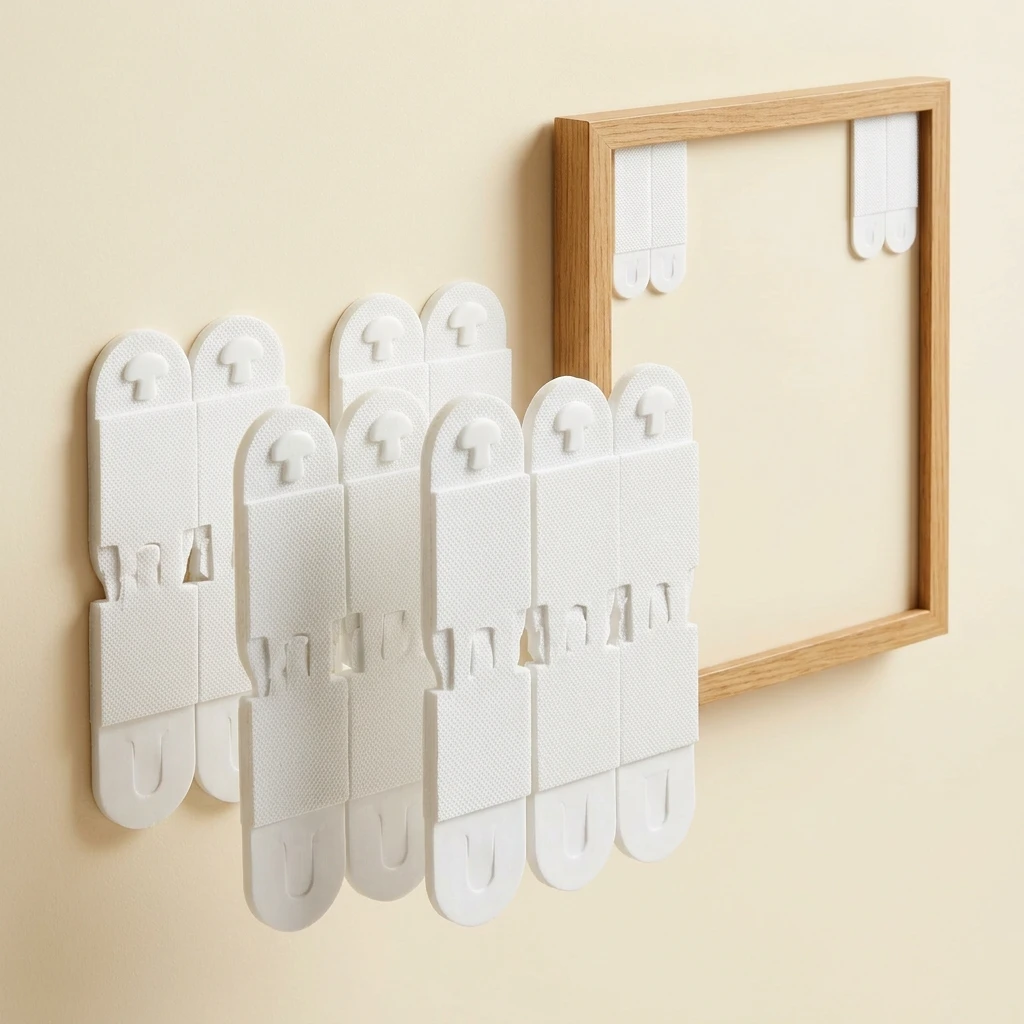
Command 15 lb Large Picture Hanging Strips, 14 Pairs (28 Strips), White
Best for: framed dorm décor on smooth painted cinder block when the exact wall and item fit 3M’s current instructions.
3M’s current large picture-hanging strip guidance lists painted concrete among compatible smooth surfaces and excludes textured walls, brick and rough surfaces. For the 17206 large-strip system, 3M states that four pairs can hold up to 15 lb and sets a maximum frame size of 24 × 36 inches.
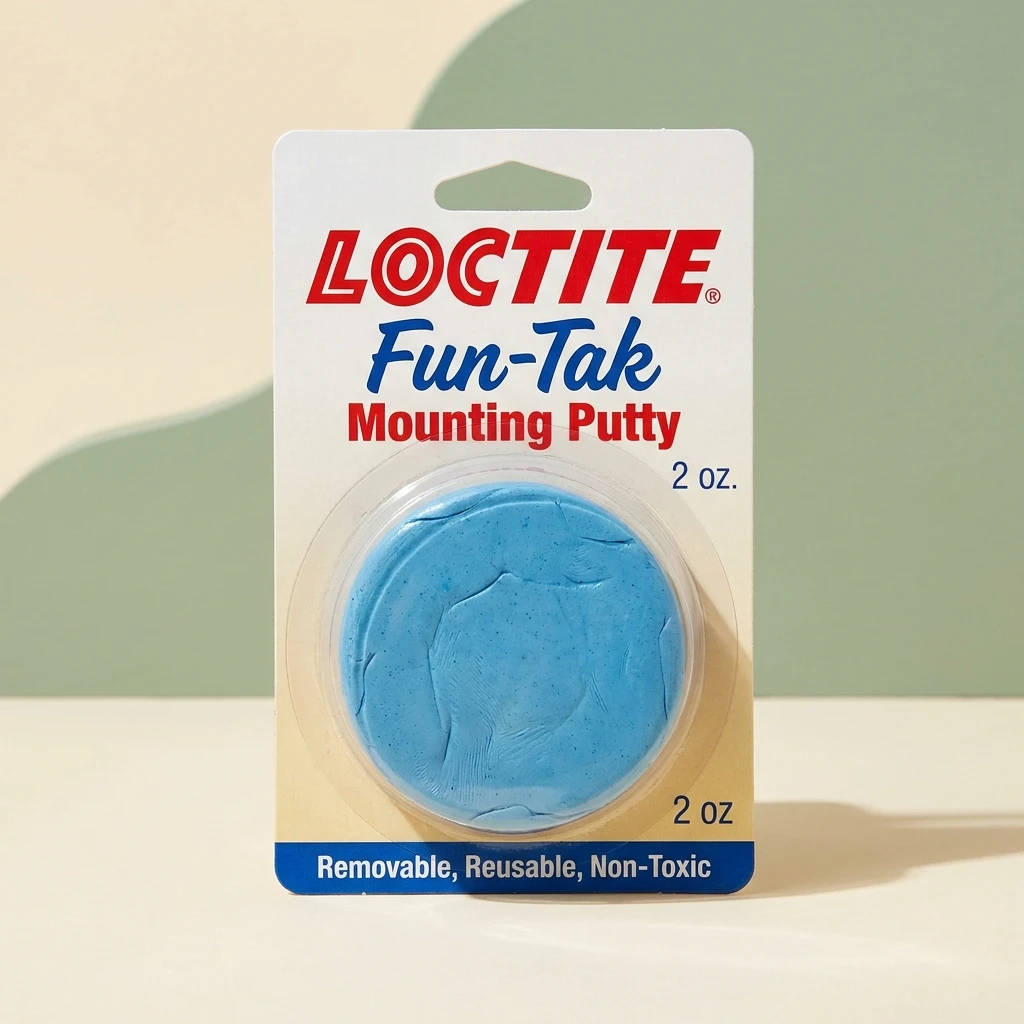
Loctite Fun-Tak Mounting Putty, Blue, 2 oz
Best for: lightweight paper dorm décor on rough cinder block when a flat adhesive strip cannot make full contact.
Loctite describes Fun-Tak as reusable, removable and repositionable for lightweight items, and its current manufacturer page specifically lists cinderblock among compatible surfaces.
Common Dorm Mistakes With Command Strips on Cinder Block
Assuming all cinder block is compatible
Painted smooth block and rough raw block behave very differently with pressure-sensitive adhesive.
Wiping the wall with household cleaner
Some cleaners leave residue. Follow 3M’s surface-preparation instructions instead.
Hanging too soon after repainting
Fresh paint needs to cure. Follow current paint and Command guidance rather than guessing.
Using more strips to overcome texture
Extra strips do not fix poor surface contact. If the wall is rough, change methods.
Pulling the strip outward at move-out
Stretch-release systems depend on the correct removal direction. Pulling toward yourself increases surface stress.
Ignoring dorm policy
A product can be technically compatible and still be prohibited by housing rules.
For move-out planning, review deposit-costing decor mistakes and keep dated photos of the wall before and after decorating.
Sources & Renter-Safety Note
3M’s current Command guidance says Command products work best on smooth, clean surfaces; several current product pages explicitly include painted concrete cinder block among compatible surfaces. The same guidance excludes brick, rough concrete and heavily textured surfaces. Loctite’s current Fun-Tak page lists cinderblock among compatible surfaces for its lightweight mounting putty. Dorm and residence-hall rules vary, so always check housing policy before applying any adhesive product.
Command FAQs · Command Large Picture Hanging Strips · Loctite Fun-Tak
Frequently Asked Questions
Do Command Strips work on cinder block walls?
They can work on smooth painted cinder block when the exact Command product lists painted concrete or cinder block as compatible. They are not recommended for rough, raw or heavily textured block.
Why do Command Strips fall off rough cinder block?
The adhesive cannot make full contact across the strip because it only touches the high points of the porous, pitted surface.
Can I use Command Picture Hanging Strips on painted dorm block?
Yes, some current Command Picture Hanging Strips list painted concrete cinder block among compatible smooth surfaces. Follow the exact product’s weight, frame-size, preparation and removal instructions.
Should I clean cinder block before applying Command Strips?
Yes. For compatible smooth painted surfaces, 3M instructs users to clean with rubbing alcohol and let the surface dry before application.
Can I use Command Strips on unpainted concrete block?
Standard Command products are not recommended on rough concrete or rough surfaces. Raw cinder block is usually a poor fit.
What can I use instead on rough dorm cinder block?
For very lightweight paper décor, consider a mounting putty that explicitly lists cinder block, such as Loctite Fun-Tak. Keep the item light and test for marks first.
Can Command Strips damage a painted dorm wall?
Any adhesive method can create risk if the paint is weak, uncured, dirty or the strip is removed incorrectly. Follow the exact removal method and document the wall before move-out.
Renter-Safety Verdict
Use Command Strips when: the cinder block is smooth, painted, clean, dry and specifically compatible with the exact Command product.
Avoid them when: the block is raw, gritty, deeply pitted, heavily textured, or the paint is loose.
For rough block: use another lightweight method that explicitly lists cinder block rather than trying to force a flat strip to bond.
Before dorm move-out: remove strips exactly as directed, inspect the paint, and photograph the final wall condition.
Decorate the Wall Without Guessing What Will Hold
Compare lower-damage wall décor methods by surface type, object weight and removal risk.
Explore No-Damage Wall Decor Ideas