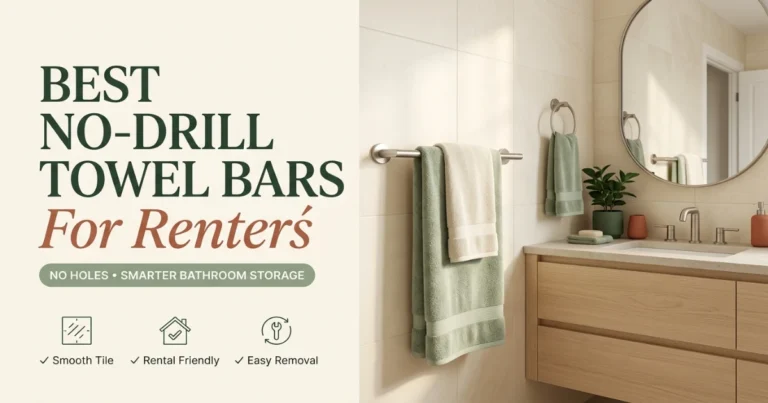
Lease-Friendly Home Improvement Ideas You Can Reverse
Practical, reversible upgrades that make a rental feel like yours — without permanent changes that risk your security deposit.
Quick Answer: The most reliable lease-friendly improvements are those that attach to surfaces without drilling: removable adhesive strips for lightweight art, tension rods for windows and showers, peel-and-stick wallpaper on smooth cured walls, and plug-in lighting that requires no wiring. The key is matching the method to the surface, following manufacturer instructions exactly, and testing in an inconspicuous area first. No method is universally damage-free — results depend on paint condition, surface texture, and removal technique.
At a Glance

What “Reversible” Really Means in a Rental
A reversible improvement is one you can undo without leaving evidence. That sounds simple, but the word “reversible” is often used too loosely. An adhesive hook is reversible on a smooth, cured painted wall. On fresh paint or a textured surface, it may not be.
Three factors determine whether an upgrade is genuinely reversible in your apartment:
- Surface condition. Smooth, clean, fully cured paint gives adhesives the best chance of releasing cleanly. Chalky flat paint, peeling paint, and heavy texture increase risk.
- Method compatibility. Some products are designed for specific surfaces. Using them elsewhere may work — or may cause damage. Always check the manufacturer’s approved surfaces.
- Removal technique. Even a well-applied removable product can damage paint if removed too quickly, at the wrong angle, or without following the manufacturer’s instructions.
Before any reversible upgrade, review your lease. Some leases restrict wallpaper, adhesive mounts, or window treatments even if they are removable. When in doubt, ask your landlord or property manager in writing.
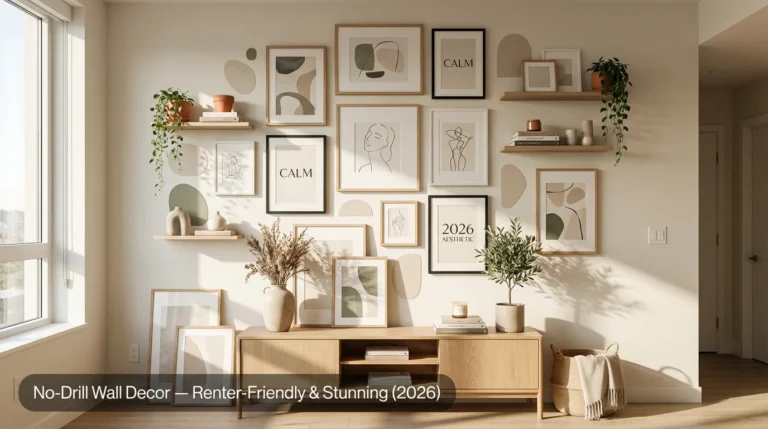
If you want a broader framework for choosing renter-safe wall decor, the no-damage wall decor ideas guide covers surface-by-surface options.
Lease-Friendly Home Improvement Ideas for Walls Without Holes
Walls are where most deposit anxiety lives. Nail holes, adhesive residue, and peeled paint are the three most common wall-related deductions. The good news: most of these risks are manageable with the right method and a small amount of patience.
Adhesive Strips for Lightweight Art
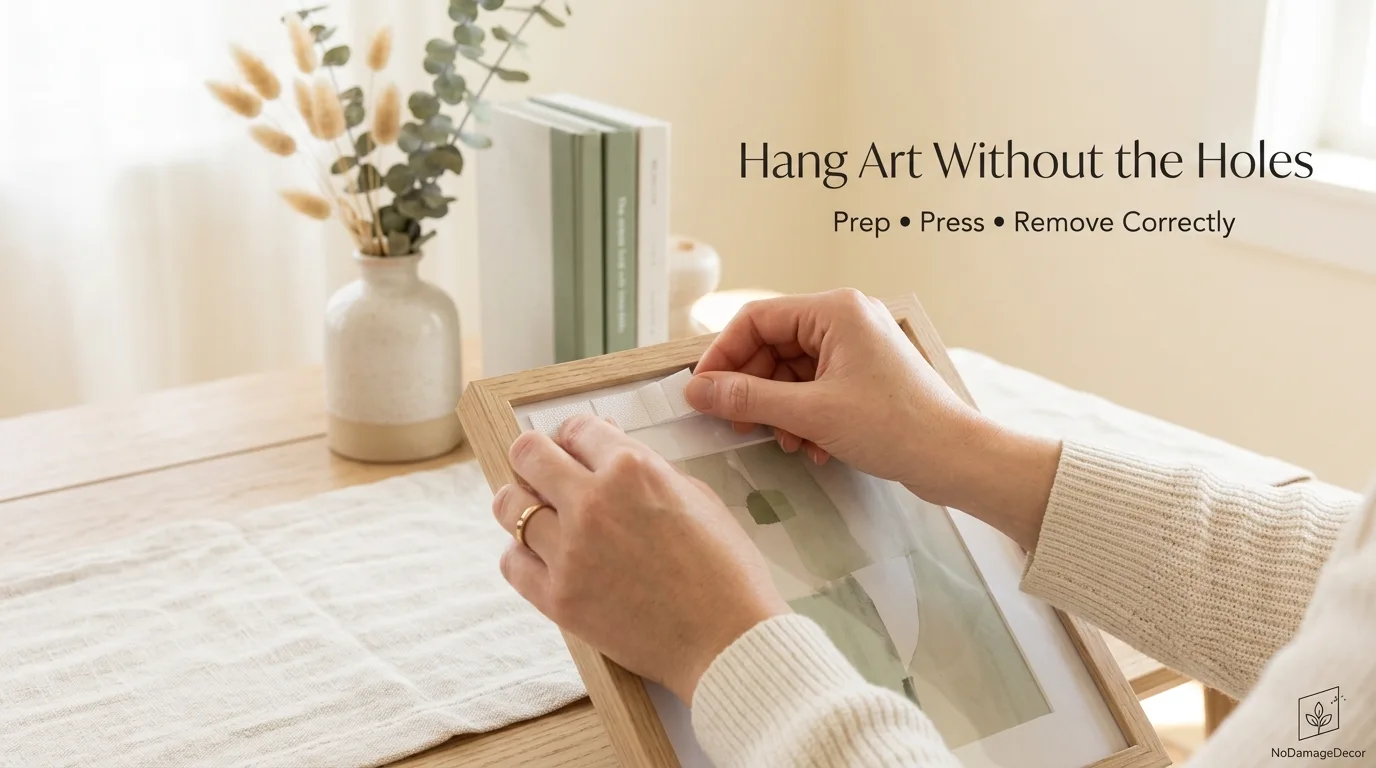
Removable adhesive strips — the kind with a pull-tab that stretches — are designed to hold lightweight frames and decor without nails. 3M Command Picture Hanging Strips are the most widely available option. Large strips are rated for frames up to a specified weight and frame size; always check the current package for the exact limit and follow the instructions for the number of strips per frame weight.
These strips work best on smooth, painted walls. They are not recommended for wallpaper, vinyl surfaces, or delicate finishes. Wait at least seven days after painting before using them so the paint can cure. For a deeper look at load ratings, see the Command strips weight limit guide.
Removable Peel-and-Stick Wallpaper
Removable wallpaper can transform a wall without paint or paste. Quality products with gentle-tack adhesive generally remove cleanly from smooth, fully cured painted walls when installed and removed correctly. The biggest risk is applying it to fresh paint — most manufacturers recommend waiting 28 to 30 days after painting before installation. Flat or matte finishes and textured walls also increase the chance of paint lifting.
Always test a small square in an inconspicuous area for 48 to 72 hours before covering a full wall. For product-specific guidance, see the best peel and stick wallpaper guide.
Lean and Layer Instead of Hang
Not every wall improvement needs to be attached. Leaning framed art against the wall on a console table, resting a mirror on a mantle, or layering prints on a picture ledge are all zero-attachment options. These approaches eliminate wall risk entirely, though they do require floor or surface space.
For more no-attachment options, see hang art without nails.
Window Treatments with Tension Rods
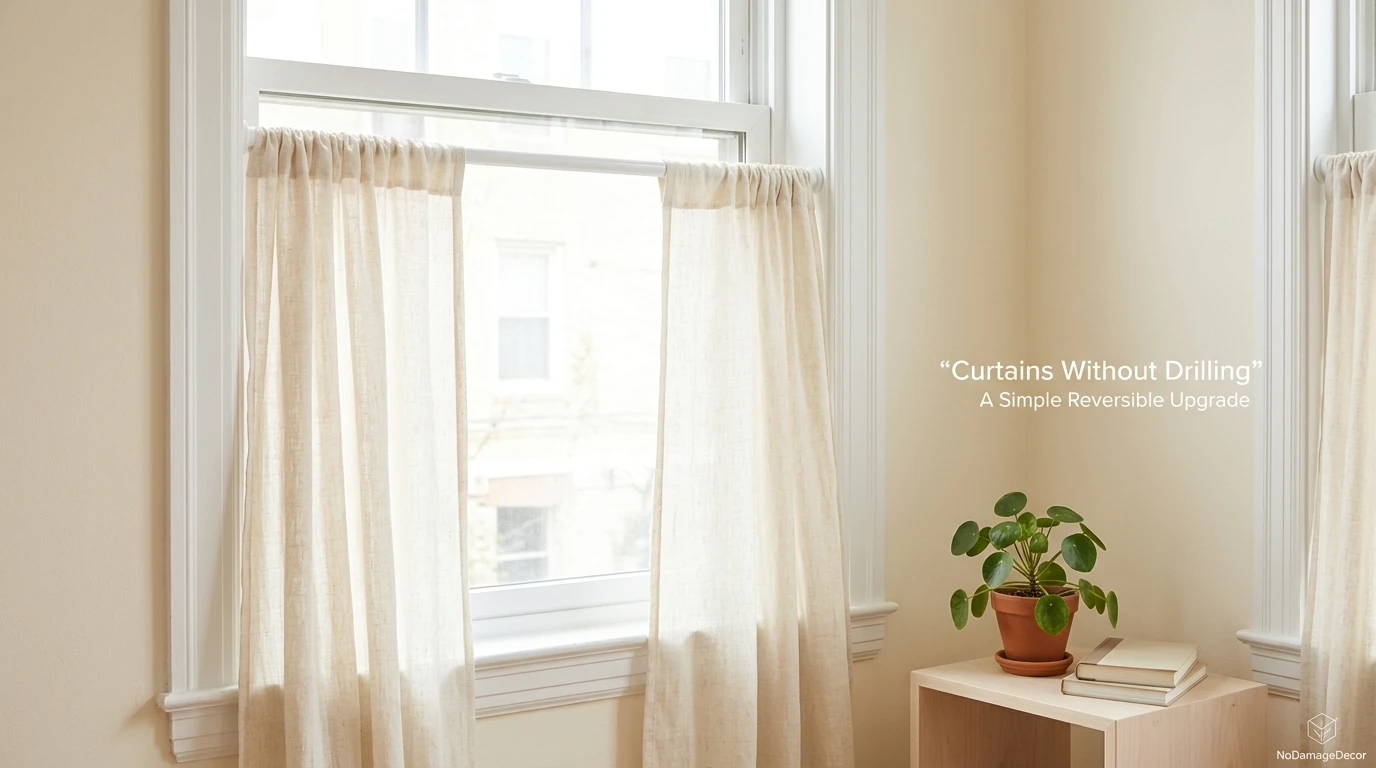
Curtain rods typically require drilling into the window frame or wall. Tension rods eliminate that step entirely. They expand to press against two surfaces, holding curtains, sheers, or valances without hardware.
Tension rods work well for lightweight to medium-weight curtains. Heavier blackout curtains may exceed the rod’s grip or weight capacity, causing it to slip. Check the manufacturer’s rated capacity for the exact rod and curtain weight. Tension rods are commonly used in bathroom windows, shower curtains, and small apartment windows where drilling is restricted.
Before installing, clean the surfaces the rod will contact. Dust or moisture reduces grip. Avoid placing a tension rod on surfaces that cannot withstand pressure, such as loose trim or fragile plaster. For more reversible apartment ideas that do not rely on permanent wall changes, see no-damage wall decor ideas.
Kitchen and Bathroom Upgrades That Come Off
Kitchens and bathrooms are high-moisture areas, which affects how adhesives perform. Heat, steam, and grease can weaken bonds over time. Any upgrade in these spaces should be chosen with moisture in mind.
Peel-and-Stick Backsplash
Peel-and-stick tile sheets can cover an existing backsplash or a painted kitchen wall. They adhere to smooth, clean surfaces. On painted drywall, there is a risk of paint lifting on removal, so a patch test is essential. Avoid installing near direct heat sources like stovetops unless the product is rated for that environment.
For options and surface considerations, see peel and stick backsplash.
Removable Caulk and Sealant
Removable caulk products are designed to seal edges around sinks, tubs, and countertops, then peel away without damaging the surface. These are useful for temporarily improving the look of a worn caulk line or sealing a small gap. They are not a substitute for proper waterproofing in areas with active leaks. Always clean and dry the surface before application, and follow the manufacturer’s cure and removal instructions.
For no-drill storage ideas in the bathroom, see no-drill bathroom storage.
Lighting That Plugs In and Comes Down
Hardwired lighting changes are out of reach for most renters. Plug-in options fill the gap: floor lamps, table lamps, clip-on lights, and LED strip lights that adhere to surfaces or rest on furniture.
LED strip lights are popular for adding ambient light behind a TV, under a shelf, or along a headboard. Most strips use adhesive backing that may not hold on textured or dusty surfaces. For critical support points, some renters use removable mounting tabs instead of the factory adhesive. Never run LED strips under carpets or inside enclosed spaces without ventilation — heat buildup can affect the adhesive and create a safety risk.
For more ideas, see renter-friendly lighting ideas.
Surface Compatibility Check
Not every reversible method works on every surface. Use this table as a starting point, then verify with the specific product’s instructions.
| Surface | Adhesive Strips | Removable Wallpaper | Tension Rod | Key Risk |
|---|---|---|---|---|
| Smooth cured paint (eggshell/satin) | Good | Good | Not applicable | Removal technique |
| Flat or matte paint | Caution | Caution | Not applicable | Paint lifting |
| Fresh paint (< 7–30 days) | Avoid | Avoid | Not applicable | Uncured paint |
| Textured walls | Poor adhesion | Poor adhesion | Not applicable | Bubbling, lifting |
| Wallpaper or vinyl | Avoid | Not applicable | Not applicable | Surface damage |
| Window frame (smooth) | Not applicable | Not applicable | Good | Pressure marks |
| Tile (smooth, clean) | Good | Not applicable | Good | Grout lines |
| Bathroom (high humidity) | Caution | Caution | Good (if rated) | Adhesive failure |
Verified Product Options
As an Amazon Associate, NoDamageDecor earns from qualifying purchases.
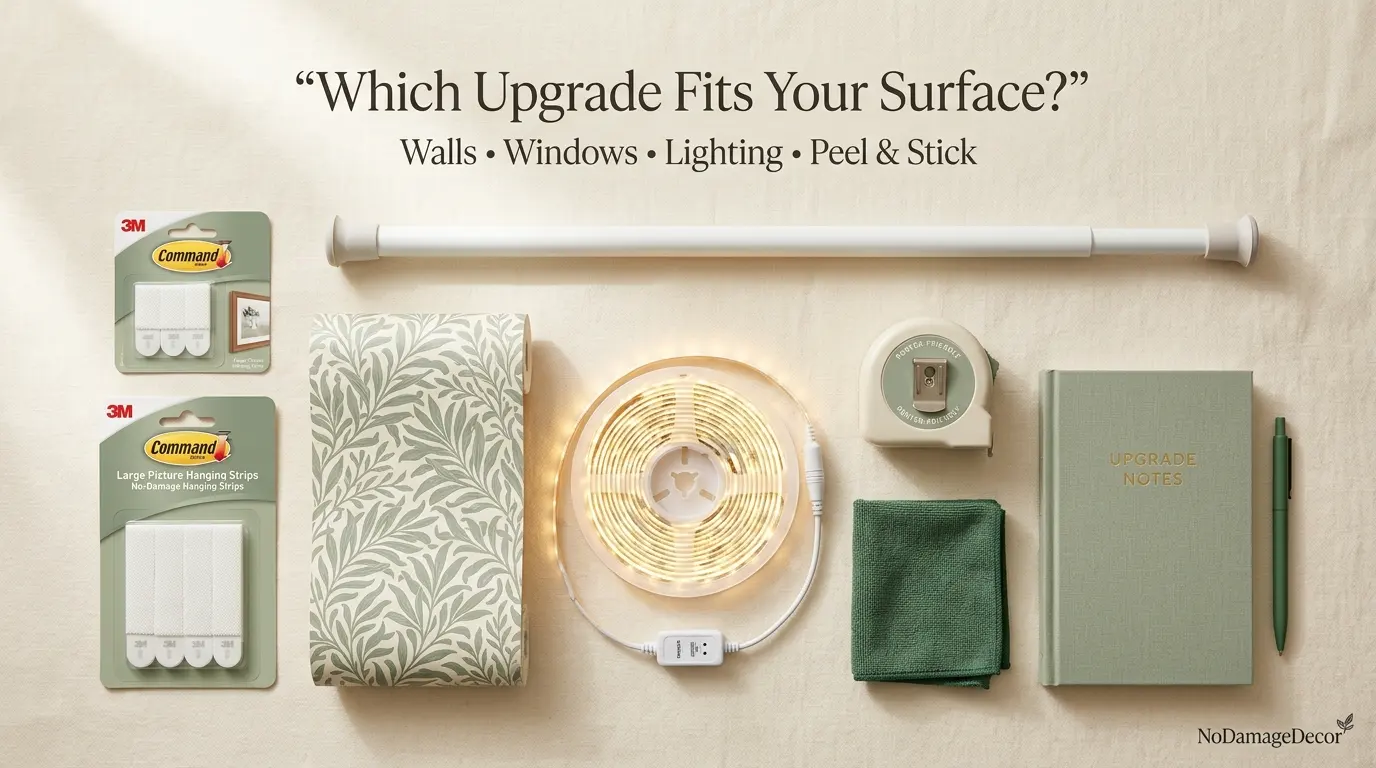
The following products are real product options commonly used for reversible upgrades. Always check the current manufacturer or retailer listing for the latest specifications, weight limits, surface compatibility, and availability before purchasing.
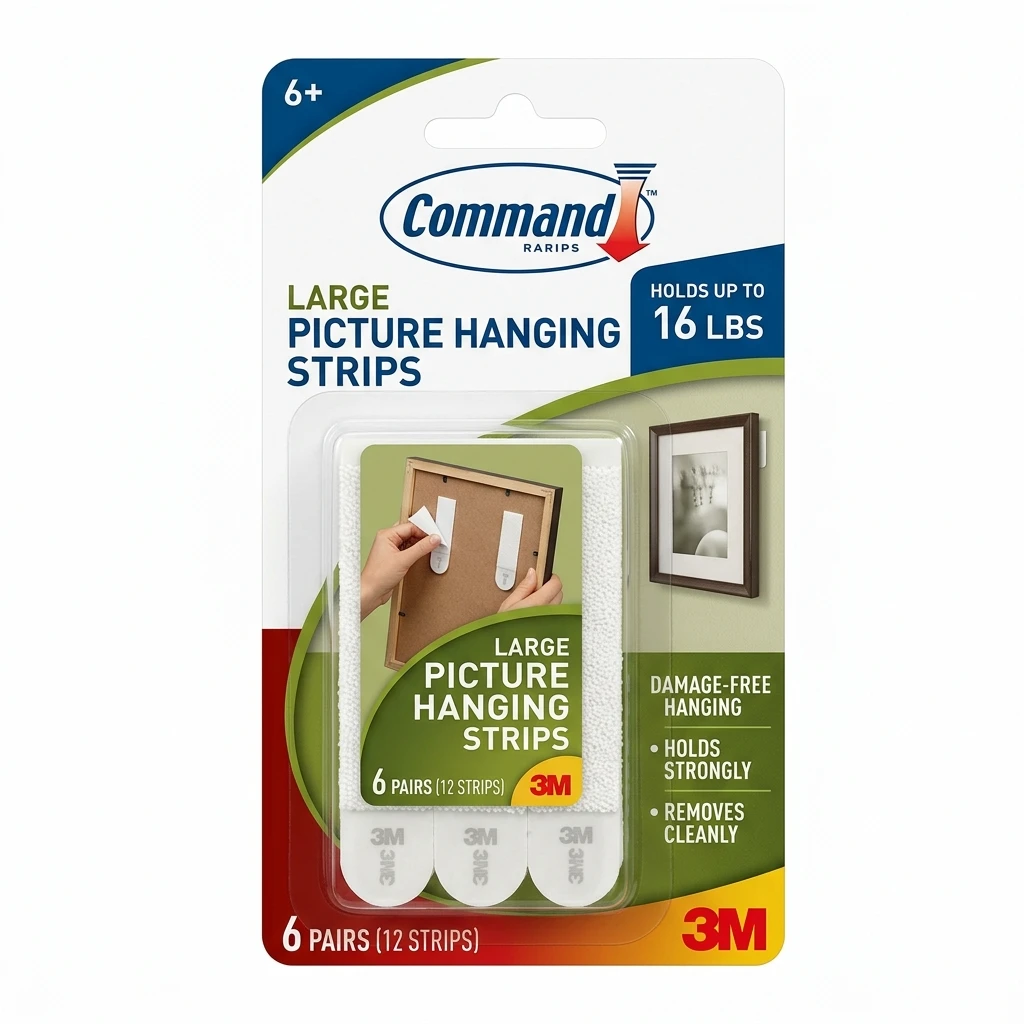
Command 16 lb Large White Picture Hanging Strips, 6 Pairs (12 Strips)
Best for: Lightweight to medium frames on smooth, cured painted walls
These interlocking adhesive strips hold frames without nails. The large size is rated for frames up to a specified weight and frame size — check the current package for the exact limit. They work on painted walls, finished wood, and tile. Not for use on wallpaper or vinyl surfaces.
Caution: Wait at least seven days after painting before use. Do not hang valuable or irreplaceable art with adhesive strips. Follow the removal instructions exactly — pull straight down, parallel to the wall.
Check Price on Amazon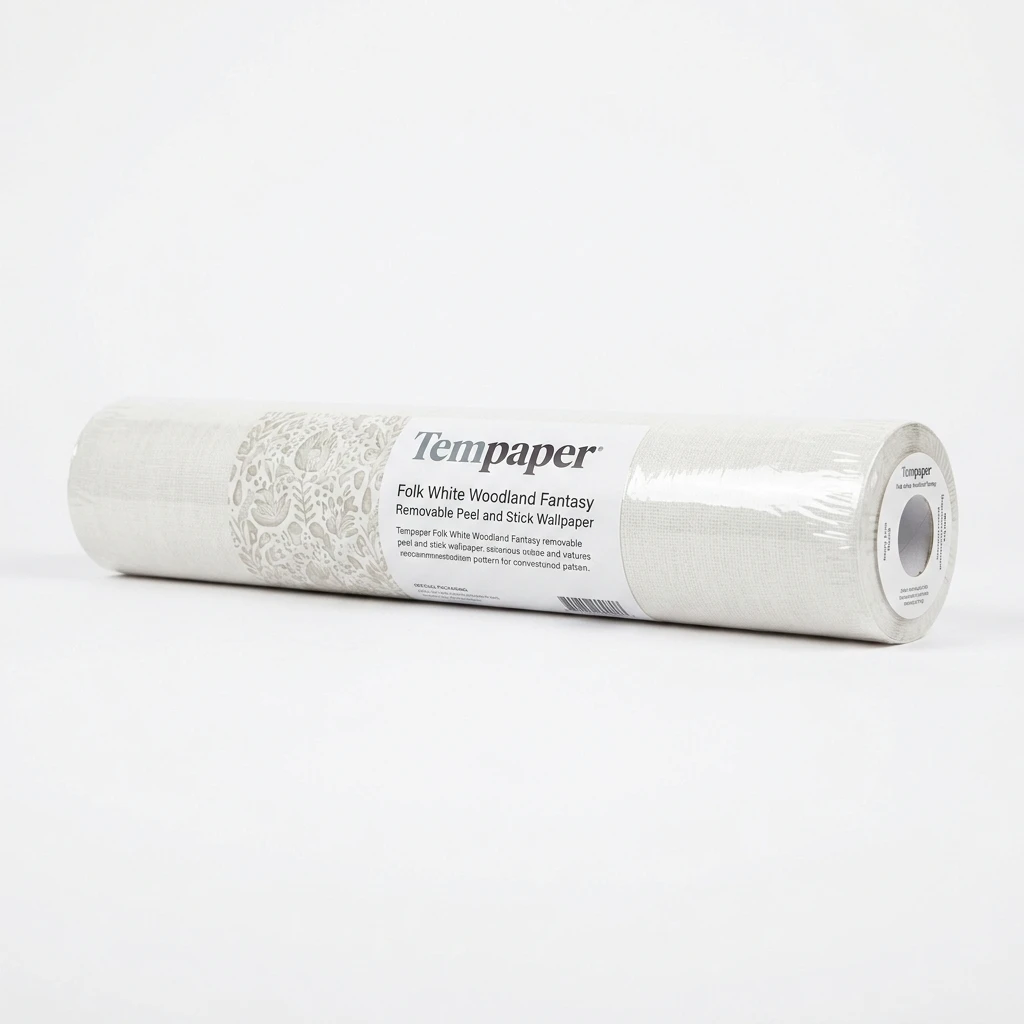
Tempaper Folk White Woodland Fantasy Removable Peel and Stick Wallpaper
Best for: Accent walls or full-room coverage on smooth, fully cured painted walls
This removable wallpaper uses a self-adhesive backing that requires no paste or glue. It is repositionable during installation and designed to remove without residue on properly prepared surfaces. Each roll covers approximately 27.5 square feet. The manufacturer recommends against textured surfaces and matte or flat paint finishes.
Caution: Do not install on freshly painted walls. Allow 28–30 days for paint to cure. Test a small area first. Moisture and steam can affect adhesion over time.
Check Price on Amazon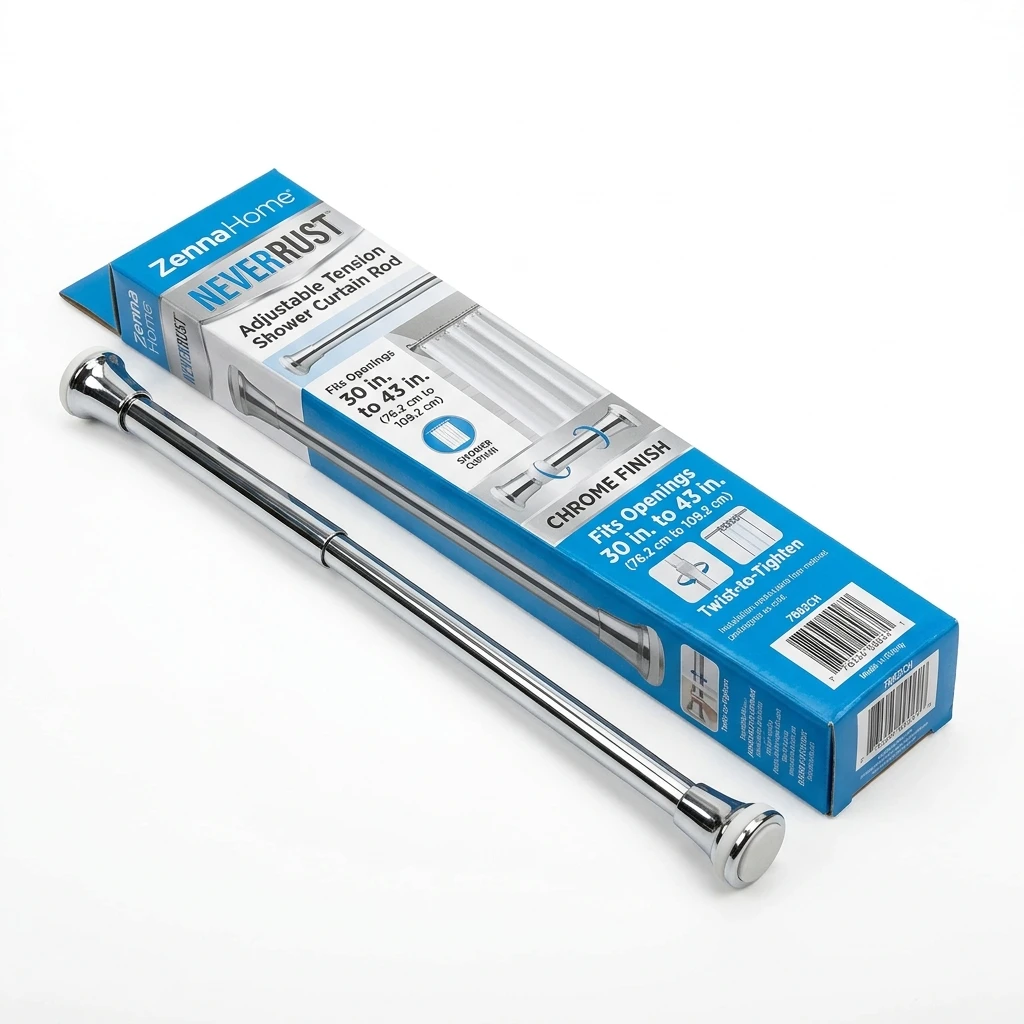
Zenna Home NeverRust Adjustable Tension Shower Curtain Rod, 30 to 43 Inches, Chrome
Best for: Shower curtains or lightweight window curtains in small to medium openings
This tension rod installs by pressure — no drilling, screws, or tools required. It is rustproof and adjusts from 30 to 43 inches. It works in standard bathtub enclosures and small windows. Check the current listing for the exact weight capacity and confirm it suits your curtain weight.
Caution: Tension rods rely on friction. Heavier curtains may exceed the rod’s grip. Clean both contact surfaces before installation. Avoid over-tightening, which can mark soft surfaces.
Check Price on Amazon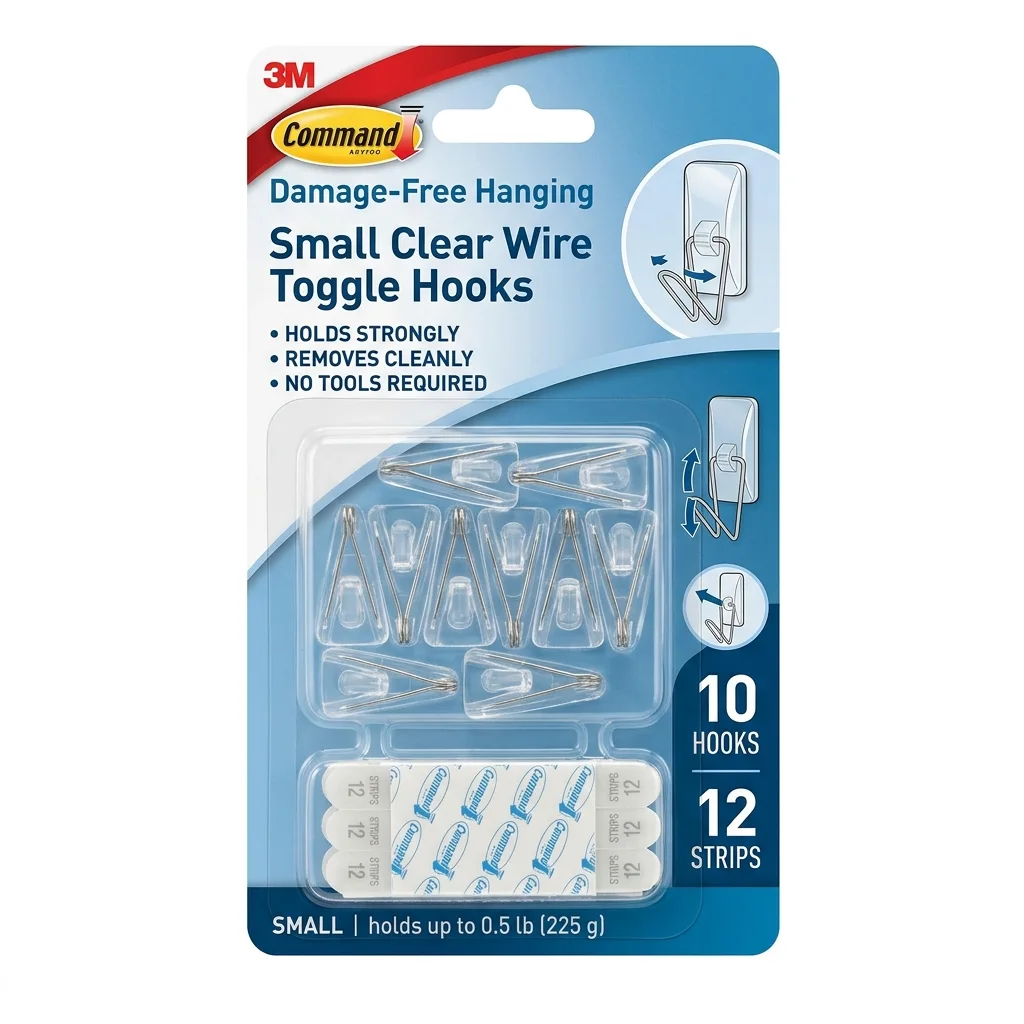
Command Small Clear Wire Toggle Hooks, 10 Wall Hooks and 12 Strips
Best for: Hanging lightweight items like keys, calendars, and small accessories
These clear hooks use removable adhesive strips and are rated to hold up to 0.5 pounds each. They work on smooth surfaces including painted walls, finished wood, laminate, glass, metal, and tile. The clear design keeps the hook visually unobtrusive.
Caution: Do not use for valuable or heavy items. Not for wallpaper or delicate surfaces. Wait seven days after painting before use. Follow the removal instructions exactly.
Check Price on AmazonInstallation and Removal: Getting Both Right
Removal is a common point where paint damage can occur. A product that goes on correctly can still pull paint if it is removed too quickly or at the wrong angle. The following principles apply to most adhesive-based reversible improvements.
Before You Install
- Clean the surface according to the specific product instructions. For Command products, 3M recommends wiping smooth surfaces with isopropyl rubbing alcohol and allowing them to dry; avoid household cleaners that can leave residue.
- Test an inconspicuous area first. Apply a small piece of the product, wait 48–72 hours, then remove it slowly. Check for paint lift or residue.
- Check the temperature. Most adhesive products specify a temperature range for application. Cold surfaces can reduce adhesion.
During Installation
- Press firmly and hold for the recommended time. Adhesive bonds strengthen over the first hour.
- Wait before adding weight. Many strips require a waiting period (often one hour) before hanging the object.
- Do not exceed the rated weight. Use more strips for heavier items, following the manufacturer’s guidance.
During Removal
- Remove the object first. For picture hanging strips, separate the frame from the wall by lifting it gently. Do not pull the frame outward.
- Locate the pull-tab. Hold the top of the strip and pull slowly straight down, parallel to the wall. Do not pull outward.
- Stretch, don’t snap. The adhesive should stretch and release gradually. If the tab breaks or the strip does not release as expected, stop and follow the manufacturer’s product-specific removal guidance.
- Work slowly. Rushing is the most common cause of paint damage. Take your time.
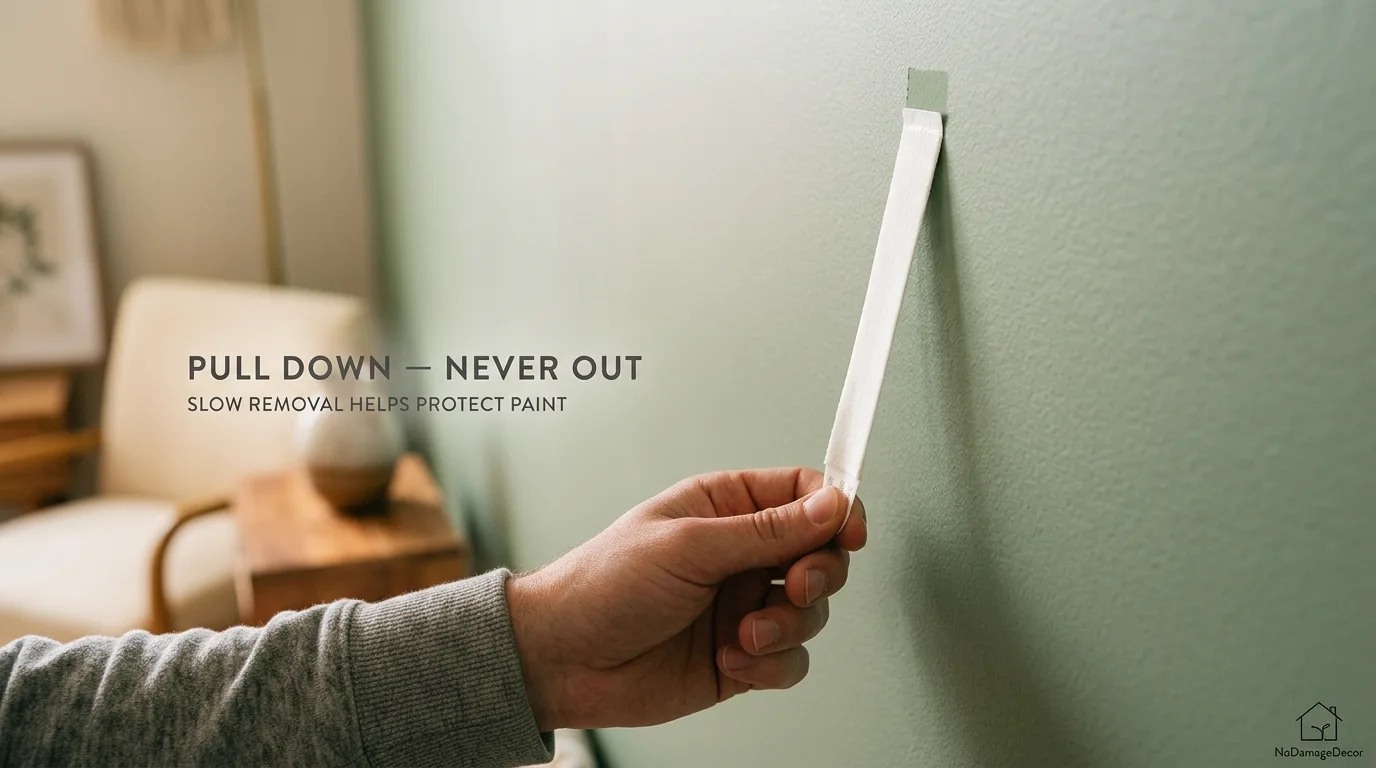
For more detailed removal guidance, see remove Command strips without damage.
Mistakes That Cost Deposits
These are the most common errors renters make when attempting reversible improvements — and how to avoid them.
Using adhesive on fresh paint
Paint needs time to cure. Adhesive applied too soon can bond to uncured paint and lift it on removal. Wait at least seven days for strips and 28–30 days for wallpaper.
Pulling adhesive strips outward
The strip is designed to stretch and release when pulled down. Pulling outward puts stress on the paint and increases the chance of peeling.
Ignoring weight limits
Adhesive strips have rated weight capacities. Exceeding them can cause the object to fall, potentially causing damage or injury. Use the correct number of strips for the weight.
Applying to textured or damaged walls
Texture prevents full contact. Peeling or flaking paint is a weak base that adhesive can pull away. These surfaces are not suitable for most adhesive-based upgrades.
Skipping the lease check
Some leases restrict wallpaper, window treatments, or adhesive mounts even if they are removable. Review your lease or ask in writing before making changes.
Not documenting condition
Without dated move-in photos, it is harder to dispute a deduction for pre-existing damage. Photograph walls, floors, and fixtures before you change anything.
For a deeper look at common renter decor errors, see apartment decor mistakes that cost your deposit.
Renter-Safety Verdict
Reversible home improvements can reduce deposit risk, but they are not risk-free. The most reliable approach is to match the method to the surface, follow every manufacturer instruction, and test first.
Adhesive strips are the lowest-risk option for lightweight art on smooth, cured painted walls. Removable wallpaper can work well on the same surfaces but demands more preparation and careful removal. Tension rods are excellent for windows and showers when the rod is rated for the curtain weight and the contact surfaces are sound. Peel-and-stick backsplash and removable caulk are useful in kitchens and bathrooms but are more sensitive to moisture and heat.
No method is universally damage-free. Paint condition, surface texture, removal technique, and environmental factors all affect the outcome. If you are unsure, test an inconspicuous area first, review your lease, and keep dated photos of the before and after condition.
Frequently Asked Questions
Are adhesive strips really damage-free?
Adhesive strips are designed to remove cleanly from smooth, cured painted walls when used and removed according to the manufacturer’s instructions. However, they are not universally damage-free. Fresh paint, flat finishes, textured surfaces, and rushed removal can all increase the risk of paint damage. Always test in an inconspicuous area first.
Can I use removable wallpaper in a bathroom?
Some removable wallpapers are moisture and steam resistant, but high humidity can affect adhesion over time. Ensure the bathroom has ventilation during showers. Avoid applying wallpaper in direct contact with water spray. Test a small area first and check the manufacturer’s recommendations for bathroom use.
How much weight can a tension rod hold?
Weight capacity varies by rod. Lightweight curtains are generally safe. Heavier blackout curtains may exceed the rod’s grip and cause it to slip. Check the manufacturer’s rated capacity for the exact rod and compare it to your curtain weight.
Will my landlord charge me for small nail holes?
Whether small nail holes are treated as normal wear or chargeable damage depends on your lease and applicable state or local rules. Check your lease and local tenant guidance before move-out. Keeping dated move-in and move-out photos can help document the condition.
How long should I wait to apply adhesive after painting?
Wait at least seven days for adhesive strips. For removable wallpaper, most manufacturers recommend waiting 28 to 30 days for paint to fully cure. Check the specific product’s instructions, as recommendations can vary.
Can I reuse adhesive strips and hooks?
Command hooks can be reused with replacement adhesive strips. The strips themselves are generally not reusable after removal. Check the product packaging for guidance on replacement strips.
What should I do if a strip pulls paint off?
Stop pulling immediately. If paint has already lifted, do not try to reattach it with adhesive. Document the damage with dated photos, keep the detached piece, and consult your lease and landlord about the best next step. Small repairs may be manageable with spackle and touch-up paint, but matching the original finish can be difficult.
Sources & Renter-Safety Note
Technical claims in this article reference manufacturer guidance from 3M Command and Tempaper, along with general renter-safety principles. Security deposit rules vary significantly by state, city, lease, and property. Nothing in this article is legal advice. Always review your lease and consult local tenant resources for guidance specific to your situation.
Keep Your Deposit Intact
Plan Your Rental Upgrade Carefully
Reversible improvements work best when you start with a clear plan and the right surface knowledge. Our first apartment decorating checklist walks you through the order of operations.
Read the First Apartment Checklist