Landlord-Approved Wall Decor Ideas for Renters
Stylish wall decor that respects your lease, your walls, and your security deposit—without settling for bare rooms.

Quick answer: The lowest-risk landlord-friendly wall decor methods for renters are leaning art, tension-rod displays, compatible adhesive picture-hanging strips, and removable peel-and-stick wallpaper on suitable smooth, cured walls—when your lease and the product instructions allow them. The key is matching the method to the surface, staying under the manufacturer’s weight limit, and testing an inconspicuous area first. No method is damage-proof—but with careful preparation and removal, you can dramatically reduce the risk of deposit deductions.
At a Glance
Best for lightweight art
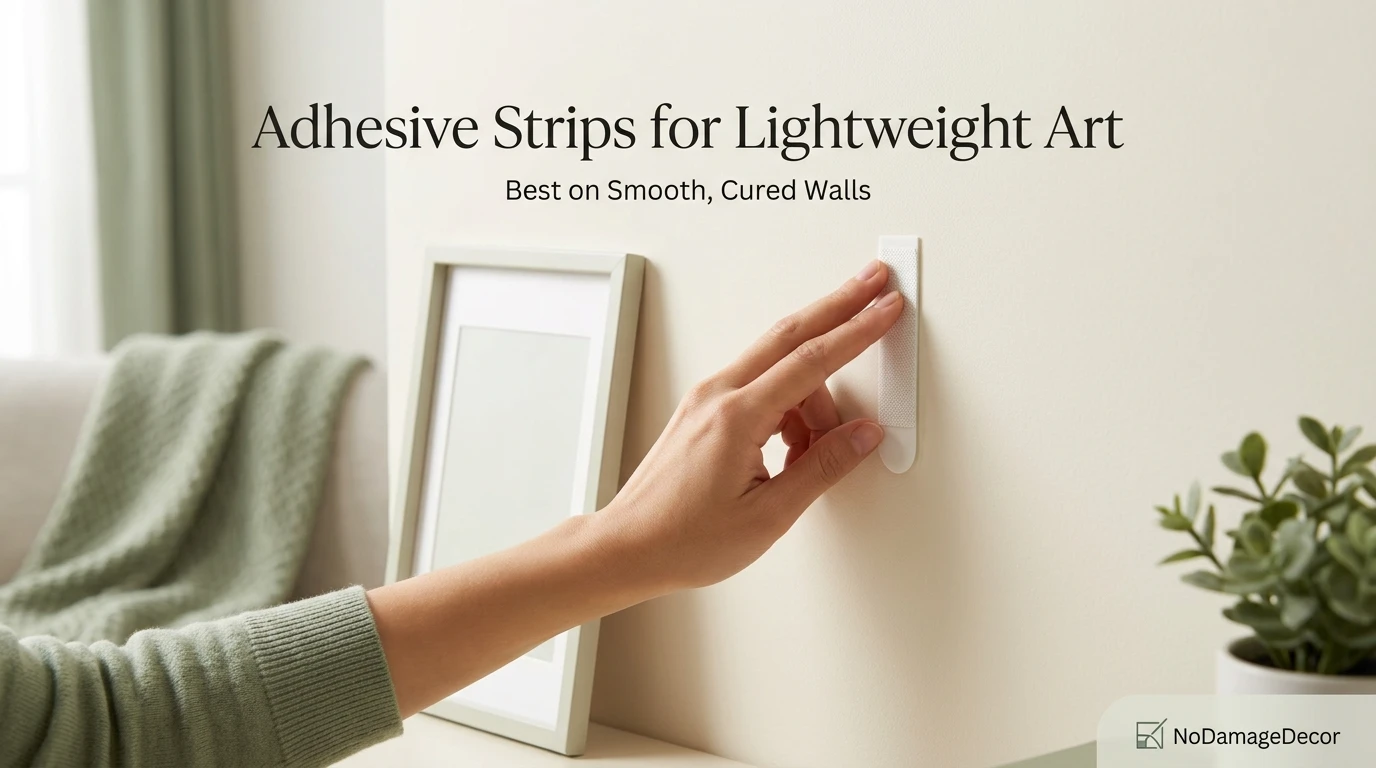
Adhesive picture-hanging strips work well for flat-backed frames under the manufacturer’s rated weight limit on smooth, clean, cured paint.
Best for flexibility
Tension rods and leaning displays require no wall contact and are easy to rearrange or remove at move-out.
Biggest risk
Removing adhesive from fresh, soft, or poorly cured paint can pull the finish. Always test first and pull straight down slowly.
Legal note
Small picture-hanging holes may be treated as normal wear in some leases or jurisdictions, while other properties may charge for patching. Check your lease and local rules rather than assuming.
Planning Principles for Renter Walls
Before choosing a single frame or strip, spend five minutes understanding what you are working with. Renter wall decor succeeds or fails based on preparation, not product marketing.
Read your lease first
Your lease is the final word on what is permitted. Some leases explicitly allow small picture-hanging nails. Others prohibit any wall penetration. Some require written approval for adhesive products. Read the relevant section before you buy anything.
Know your wall surface
Adhesive products behave differently on flat paint, glossy paint, textured drywall, plaster, and wallpaper. Run your hand across the wall. If it feels grainy or bumpy, adhesive strips may not achieve full contact—and a partial bond is a failed bond.
Understand paint curing
Paint cure time varies by paint and conditions. For Command picture-hanging strips, current 3M guidance says to wait at least seven days after painting before use. For any other adhesive product, follow that manufacturer’s stated wait time and approved-surface instructions.
Document everything
Photograph your walls at move-in, before you decorate, and after you remove everything at move-out. Dated photos are your best protection in a deposit dispute. Keep them with your lease and any written landlord communication.
Adhesive Strips & Hooks: The Renter Workhorse
Adhesive picture-hanging strips and hooks are the most widely recommended renter-friendly wall decor method for good reason. They create no holes, they are removable according to manufacturer instructions, and they work on a range of indoor surfaces.
How they work
Command-style strips use interlocking adhesive tabs. One side attaches to the frame, the other to the wall. When pressed together, they lock. To remove, you peel the frame away and pull the tab straight down—stretching the adhesive until it releases. This stretch-release mechanism is what allows clean removal when done correctly.
Weight limits matter
Every Command product has a rated weight limit. Exceeding it—even slightly—increases the risk of failure. A falling frame can damage the wall, the frame, or both. Use enough strips for the weight, and space them near the corners for flat-backed frames.
Command weight ratings vary by product. Current 3M U.S. listings include 5 lb Small, 10 lb Medium, 15 lb Large, and 20 lb X-Large picture-hanging options. Always use the exact number of strip pairs specified for the product and verify the current package instructions before hanging.
Surface compatibility
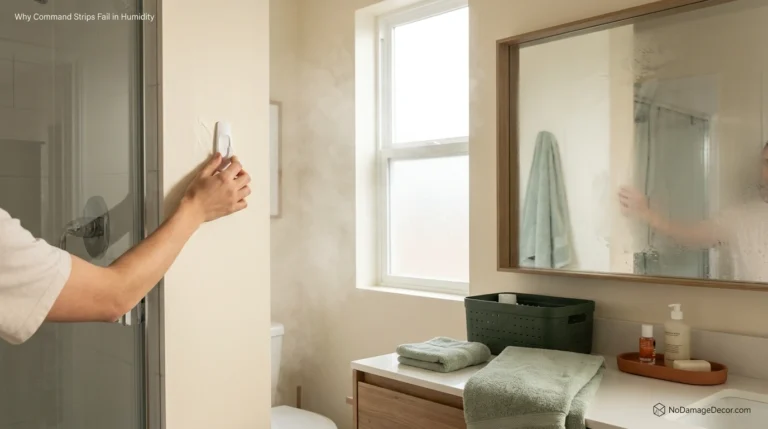
Adhesive strips work best on smooth, clean, fully cured painted walls, finished wood, tile, and glass. They are not suitable for wallpaper, vinyl surfaces, textured walls, or delicate finishes. Moisture and heat can weaken the bond—avoid using them in bathrooms, above stoves, or near windows that sweat.
Important caution: Do not use adhesive-only mounting for heavy objects, fragile items, valuable art, large mirrors, or anything positioned above a bed or crib where a fall could cause injury. Use adhesive products only within their rated limits and only where the manufacturer’s guidance supports the use.
Removal technique
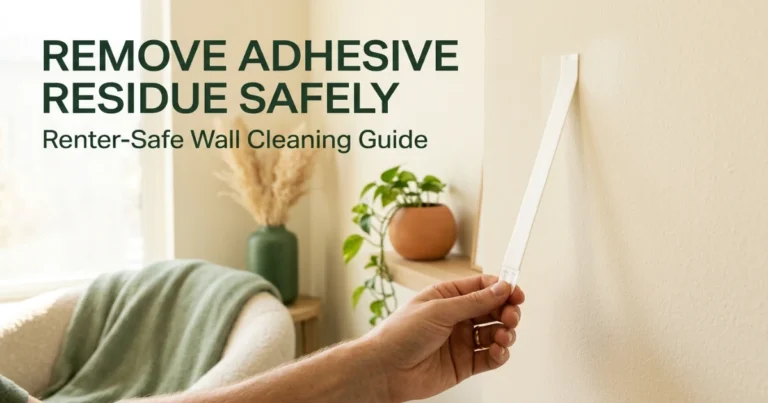
Pull the tab slowly and straight down—parallel to the wall, not outward. Rushing or pulling at an angle can peel paint. If the pull tab breaks or the strip does not release normally, stop rather than prying at the wall. Follow the troubleshooting instructions for that exact product or use the dedicated removal guide linked below.
For a complete walkthrough, see our guide on how to remove Command strips without damage.
Tension Rods & Leaning Displays: No Wall Penetration
If you want a lower-risk approach to wall decor, choose methods that avoid wall penetration. Tension rods and leaning displays are two of the most renter-conscious options available.
Tension rod gallery walls
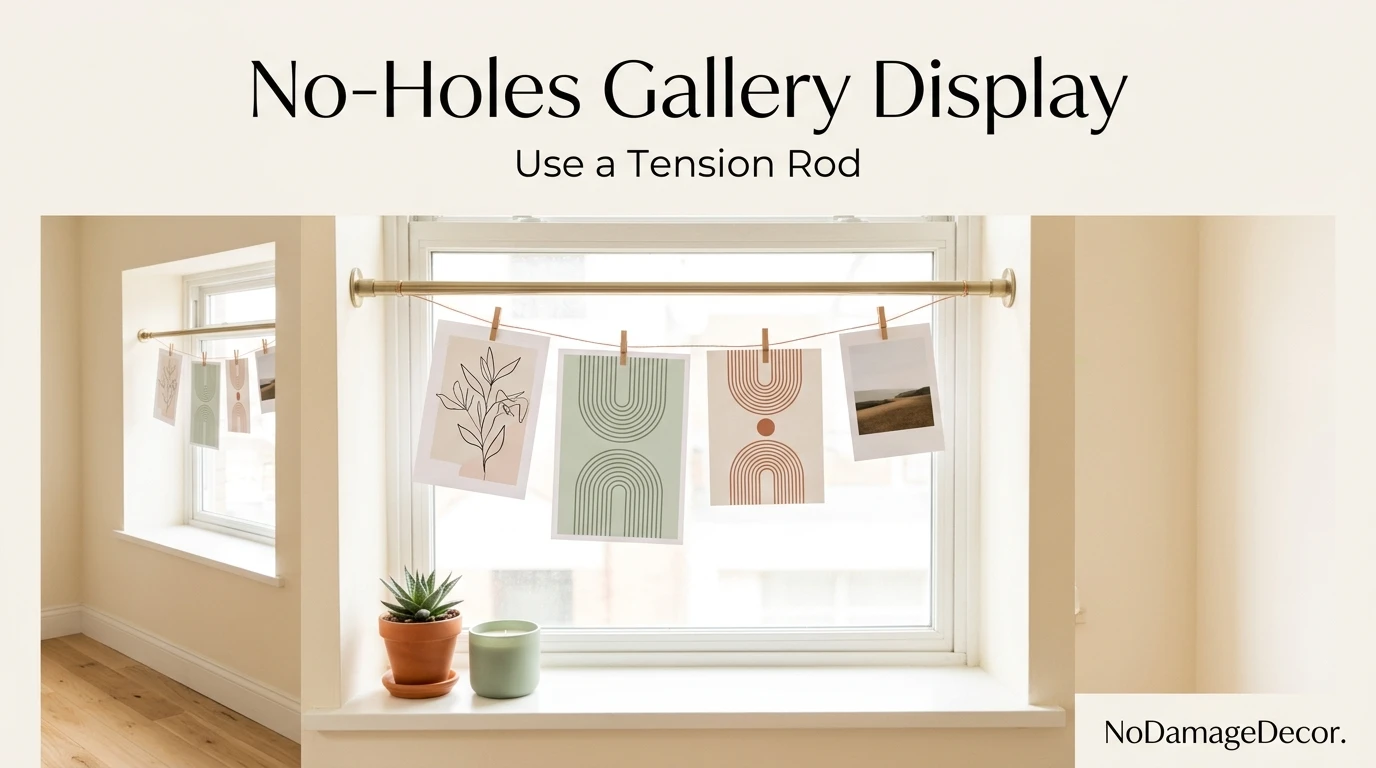
A tension rod fitted into a doorway, window recess, or between two walls can hold a wire or cord with clips for lightweight art prints. The rod touches only the sides of the recess, leaving the main wall surface untouched. This works well in apartments with architectural openings or recessed windows.
Choose lightweight prints or unframed canvas. Heavy frames can bow the rod or cause it to slip. Check the tension rod’s rated capacity before loading it.
Leaning art on furniture
Large framed prints and canvases can lean against the wall on a console table, sideboard, bookshelf, or even the floor. This is a genuinely stylish approach that reads as intentional rather than improvised. Layer different sizes for depth. The practical limitation is stability—smaller pieces may slide or tip more easily, so use a stable easel, ledge, or another support when needed.
Leaning art avoids wall penetration. At move-out, you simply pick it up. Use stable supports and soft contact points where needed to reduce the chance of scuffs or marks.
Picture ledges with adhesive mounting
Some picture ledges are designed for adhesive mounting rather than screws. These create a shelf for leaning art without drilling. Check the manufacturer’s rated weight capacity carefully—these ledges are typically suitable for lightweight prints, not heavy books or large frames.
For more no-drill display ideas, see our guide on no-damage wall decor ideas.
Removable Wallpaper & Decals: Big Impact, Reversible
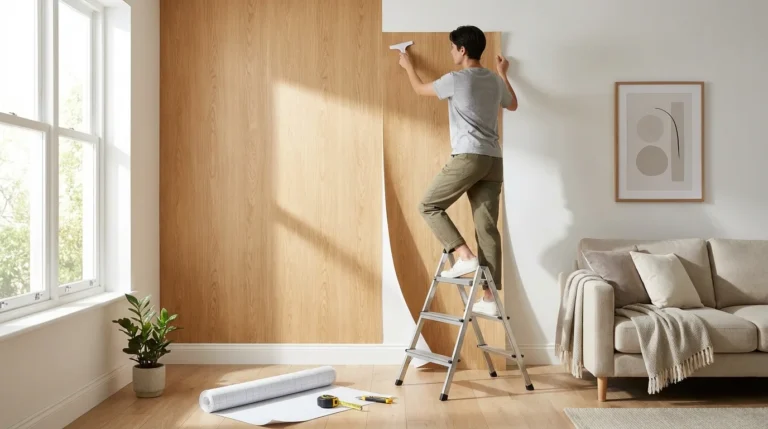
Peel-and-stick wallpaper has become a staple of renter-friendly decorating. It can transform an accent wall, a kitchen backsplash area, or the space behind a bed without paint or permanent adhesive.

Where it works well
Removable wallpaper performs best on smooth, flat, fully cured painted walls. It is generally a better fit for smooth, clean, fully cured painted walls. Do not apply it over existing wallpaper or another delicate wall covering unless the wallpaper manufacturer explicitly approves that use. Textured, dusty, greasy, damaged, or freshly painted walls are higher-risk surfaces.
What to check before buying
- Wall condition: Smooth, clean, and cured. Any peeling paint or loose wallpaper should be repaired before installation.
- Removal instructions: Follow the manufacturer’s guidance exactly. Some wallpapers require slow, even peeling at a low angle to avoid pulling paint.
- Coverage: Measure your wall and buy enough to complete the project with a small margin for trimming and mistakes.
- Test patch: Apply a small piece in an inconspicuous area, wait several days, then remove it to check how your wall responds.
Caution: Removable wallpaper is not universally damage-free. On poorly bonded or freshly painted walls, it can lift the paint film during removal. Always test first and follow the manufacturer’s surface preparation and removal instructions.
Decals and wall stickers
Vinyl decals offer a lighter-impact alternative for adding pattern or personality. They work best on smooth, clean surfaces and are generally easier to remove than full wallpaper. The same surface preparation rules apply: clean, dry, and fully cured.
For a deeper look at wallpaper options, see our guide to the best peel and stick wallpaper.
Surface Compatibility Check
Not every wall accepts every method. Use this table as a starting point, then verify with the exact product’s manufacturer instructions.
| Wall Surface | Adhesive Strips | Removable Wallpaper | Tension Rods | Leaning Art |
|---|---|---|---|---|
| Smooth, cured painted drywall | Good (within weight limit) | Good | Good (if recess exists) | Excellent |
| Textured drywall | Poor (limited contact) | Poor | Good (if recess exists) | Excellent |
| Fresh paint (uncured) | Risky (may lift paint) | Risky | Good | Excellent |
| Plaster walls | Manufacturer-dependent; test only if specifically approved | Manufacturer-dependent; older plaster can be fragile | Good | Excellent |
| Existing wallpaper | Not recommended | Not recommended (may lift) | Good | Excellent |
| Tile / glass | Often compatible when the exact adhesive product approves tile or glass | Manufacturer-dependent; avoid moisture-prone applications unless specifically rated | Not applicable | Not applicable |
This table is general guidance only. Product formulations vary. Always check the current rated compatibility and surface recommendations for the exact product you plan to use.
Verified Product Picks
These products directly address the renter’s need for lower-risk wall decor. Each has been verified for a real Amazon ASIN. Affiliate disclosure: As an Amazon Associate I earn from qualifying purchases.
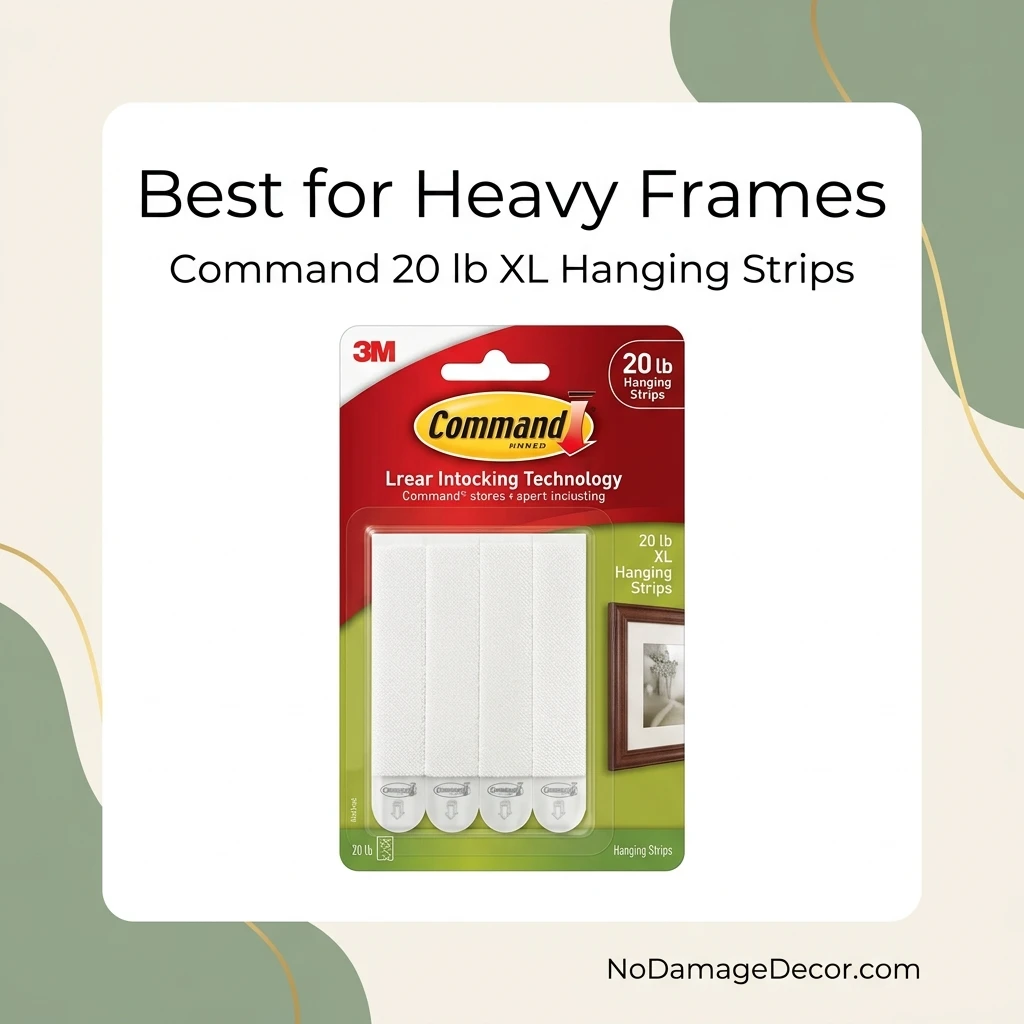
Command 20 lb XL 16 Pairs Heavyweight Picture Hanging Strips (32 Strips)
Best for: Flat-backed frames and lightweight decor on smooth, cured painted walls.
3M’s current U.S. product page says four pairs (eight strips) of the X-Large picture-hanging strips hold a frame up to 20 pounds and up to 24 × 36 inches when used as directed. The interlocking design lets you remove the frame from the wall while the strip bases remain in place, and the stretch-release tabs are designed for clean removal when used correctly.
Current manufacturer specification: Four pairs (8 strips) hold up to 20 lb; maximum frame size 24 × 36 in. Verify the current package before use.
Caution: Not suitable for wallpaper, vinyl surfaces, textured walls, or freshly painted walls that have not fully cured. Do not exceed the rated weight.
Check Price on Amazon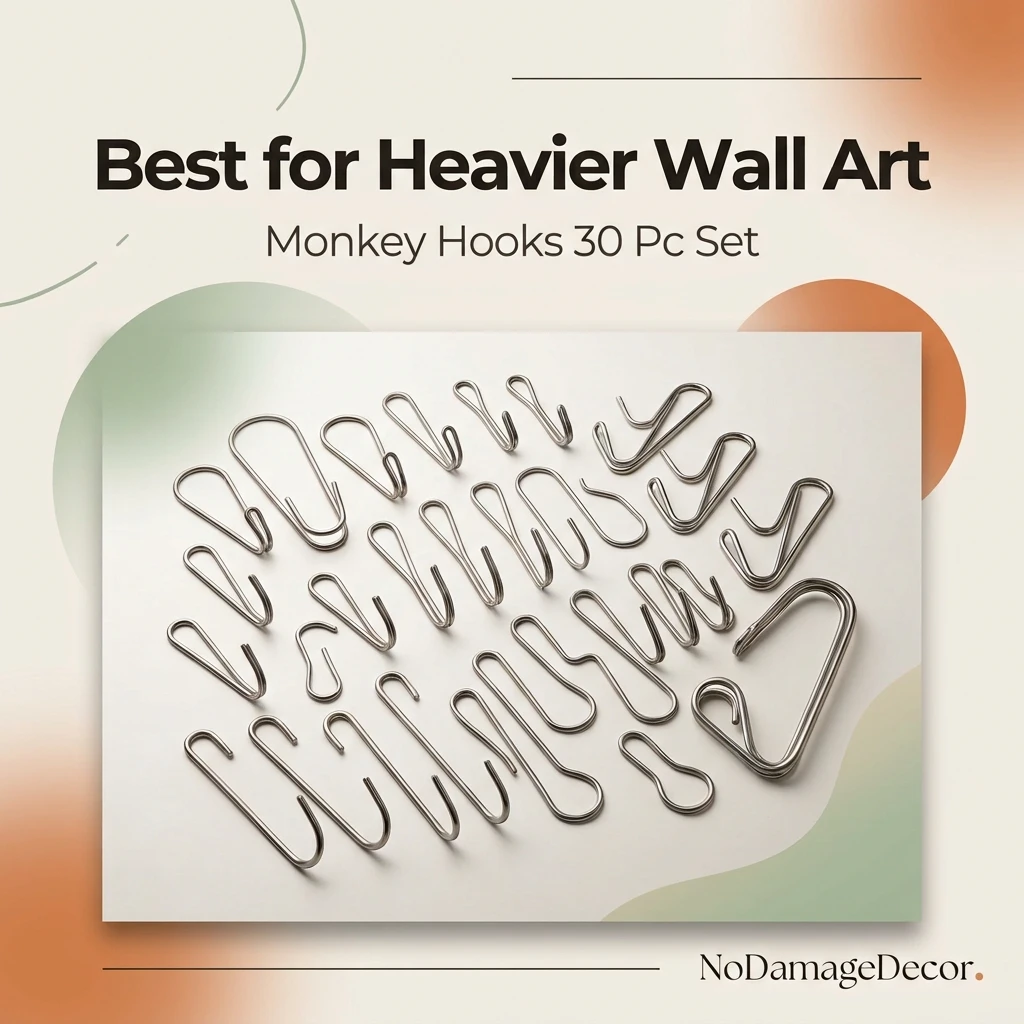
Monkey Hooks Picture Hangers Home and Office Pack, 30 Pc Set
Best for: Heavier frames when adhesive strips are not rated for the weight.
Monkey Hooks push into drywall by hand—no drill, no hammer. The variety pack includes original, gorilla-grade, and flush-mount hooks. The self-boring tip penetrates drywall with hand pressure and a twisting motion, leaving only a small pinhole. The variety pack contains Original, Gorilla Grade, and Flush Mount hook styles. Current retail listings describe Gorilla Grade as the higher-capacity option, but the safe load depends on the exact hook style and wall construction.
Current listing guidance: Listings for this 30-piece variety pack describe capacities up to 50 lb for the higher-capacity hook style. Verify the capacity printed for the exact hook you use and confirm the wall is hollow drywall.
Caution: Designed for hollow drywall only. Do not use on plaster, brick, tile, or walls with a stud directly behind the insertion point. Leaves a small pinhole that may require patching.
Check Price on Amazon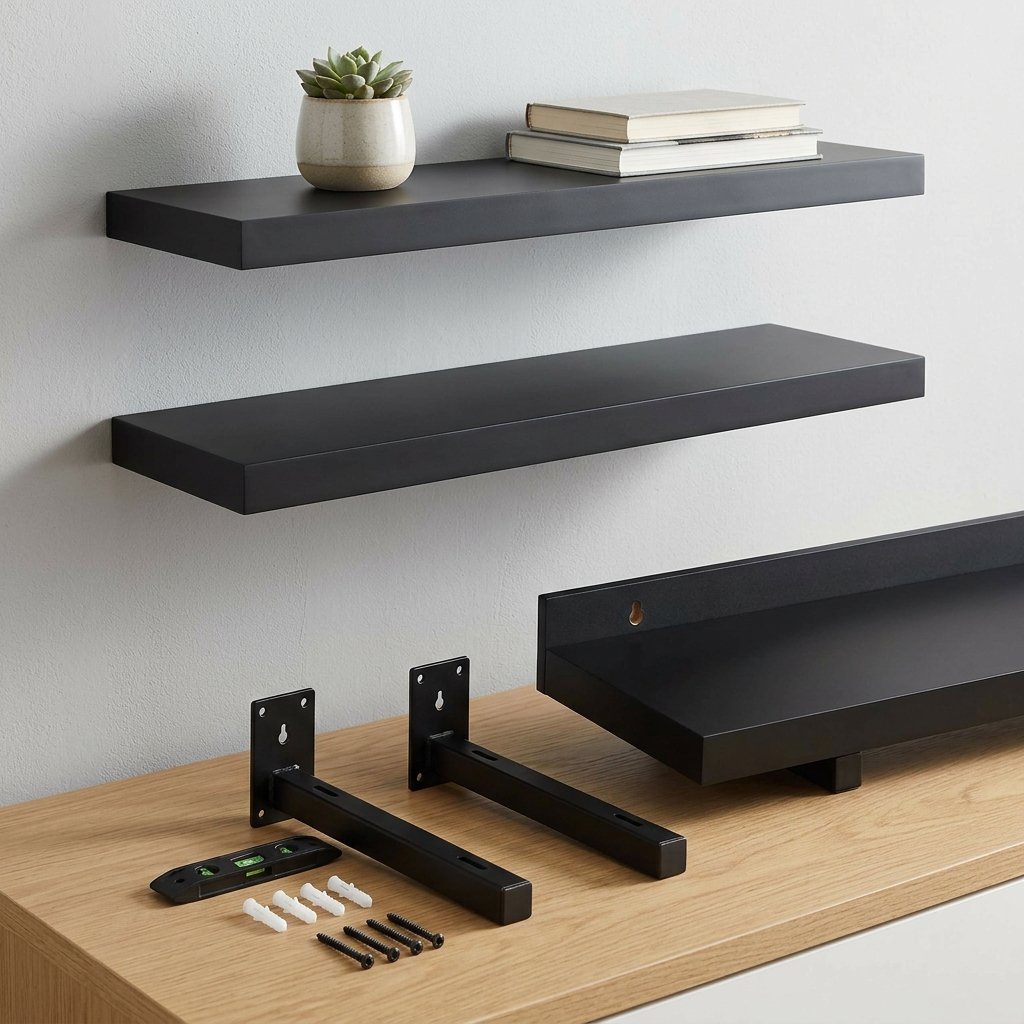
Sorbus Floating Shelves for Wall – 16 Inch (Black, 2 Pack)
Best for: Displaying small decor objects, plants, and lightweight art without floor space.
These floating shelves mount with concealed brackets and require screws/anchors, so they are not a no-damage option. They make sense only where the lease permits wall penetration and the renter is prepared to repair approved holes at move-out.
Current listing details: Black 2-pack, approximately 16.25 in × 5.5 in × 1.5 in per shelf, with mounting hardware; the current listing states up to 22 lb per shelf when properly installed. Verify the live listing and installation instructions before use.
Caution: Installation requires drilling and wall anchors. Not a no-damage product. Suitable only if your lease permits small screw holes or if you are prepared to patch and repaint at move-out.
Check Price on AmazonSmall-Space Wall Logic
Studio apartments and small rentals have unique wall decor challenges. Limited wall space means every piece needs to work harder, and poorly placed decor can make a small room feel cramped.
Go vertical, but stay light
In a small apartment, use vertical wall space for storage and display. A single tall leaning mirror or a vertical stack of lightweight frames draws the eye upward without adding visual weight. Adhesive hooks can hold lightweight wall planters or string lights to create a vertical garden effect.
Use corners and recesses
Tension rods work beautifully in small apartments because they exploit existing architectural features—doorways, window recesses, and alcoves. A tension rod gallery in a narrow window recess turns dead space into a display area.
Choose multi-functional decor
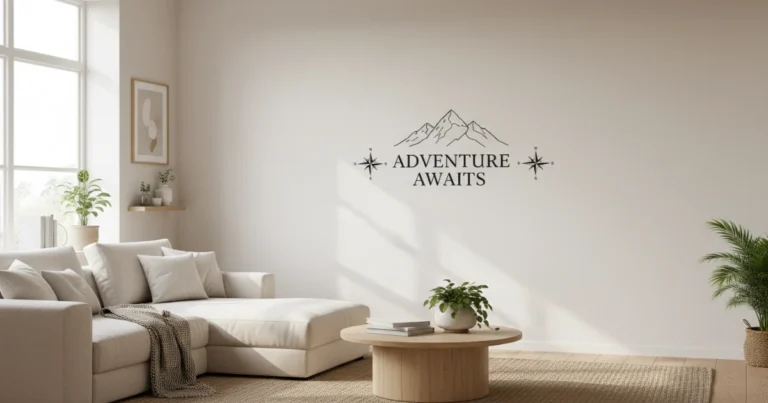
Wall decor that also serves a purpose earns its space. A leaning mirror bounces light and makes a small room feel larger. A picture ledge with adhesive mounting holds art and small objects. A removable wallpaper accent wall can define a “zone” in a studio without physical dividers.
For more small-space strategies, see our studio apartment decor ideas guide.
Mistakes That Risk Your Deposit
1. Ignoring the weight limit
The single most common cause of adhesive failure is overloading. A frame that falls can dent the wall, break the frame, and create a repair bill. Use the rated number of strips for the weight, and never push past the limit.
2. Applying adhesive to dirty or fresh walls
Adhesive needs a clean, dry, fully cured surface. Dust, grease, and curing paint all weaken the bond and increase the risk of paint lifting during removal.
3. Rushing removal
Yanking a strip outward instead of pulling straight down is the fastest way to peel paint. Slow, steady, straight-down pressure is the correct technique.
4. Using adhesive in moisture-prone areas
Bathrooms, above stoves, and near sweating windows are hostile environments for adhesive. Humidity weakens the bond and can cause sudden failure.
5. Hanging heavy or fragile items with adhesive alone
Large mirrors, heavy canvas, and valuable art should not rely on adhesive alone unless the manufacturer explicitly rates the product for that weight and use. A fall can cause injury or property damage.
6. Skipping the test patch
Every wall is different. A five-minute test patch in an inconspicuous area can reveal whether your wall’s paint will release cleanly—before you commit to a full gallery wall.
Move-Out Removal Guide
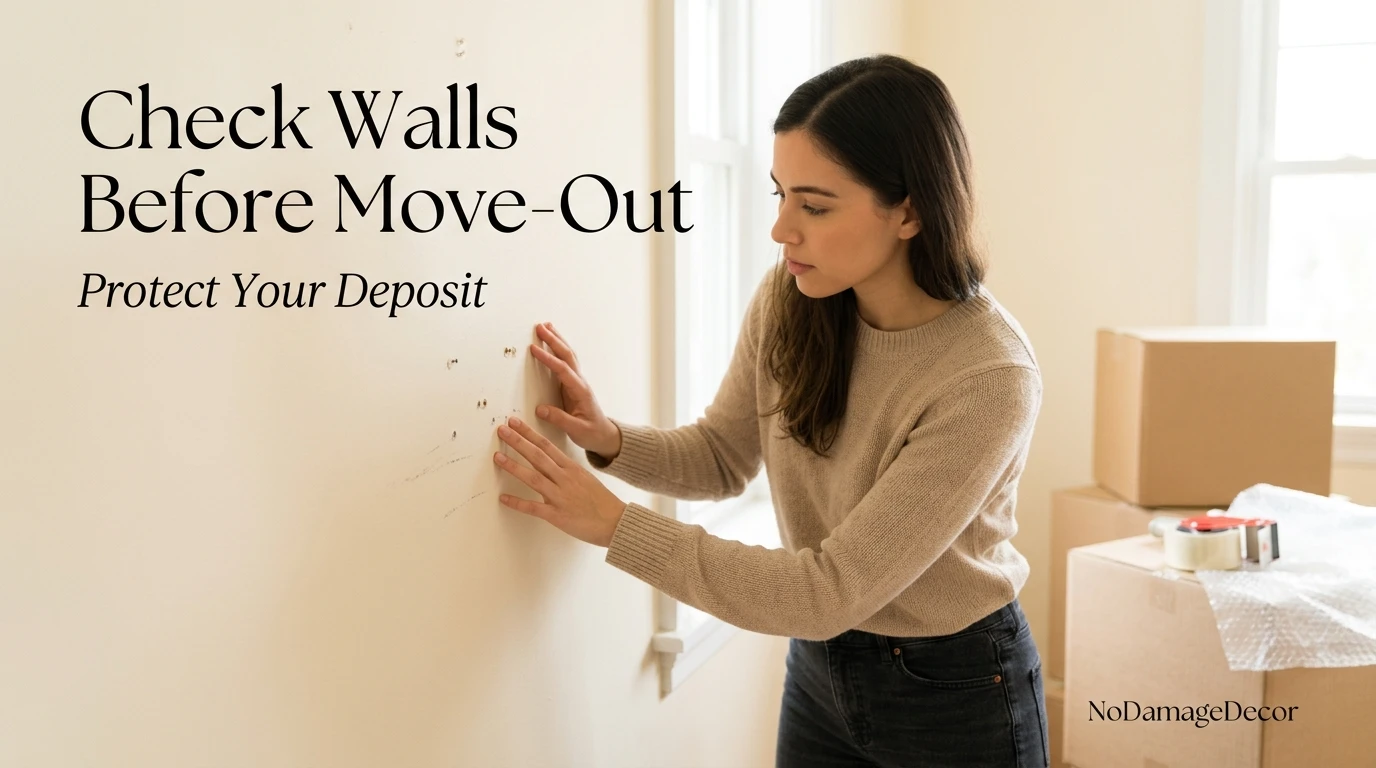
How you remove wall decor matters as much as how you install it. A careful removal process protects your deposit and leaves the wall ready for the next tenant.
Step-by-step removal
- Remove frames and objects first. Take everything off the wall before touching the adhesive. This reduces the risk of dropping or damaging items.
- Pull adhesive tabs straight down. Grasp the tab, pull slowly and steadily downward—parallel to the wall. Do not pull outward or at an angle.
- Use heat for stubborn strips. If a pull tab breaks or the strip will not release normally, stop rather than prying at the wall and follow the troubleshooting directions for that exact product.
- Use dental floss for stuck residue. If adhesive remains on the wall, use only a removal method recommended for that exact adhesive product and wall finish; avoid scraping the painted surface.
- Clean residue carefully. If a small amount of adhesive residue remains, rub it gently with your finger or a soft cloth. Avoid scrapers and harsh chemicals that could damage the paint.
- Patch small holes if needed. If you used nails or hooks that left holes, lightweight spackle and a putty knife can fill them. Let it dry, sand lightly, and touch up with matching paint if you have it.
Documentation tip: Photograph the walls after removal. If a dispute arises, dated before-and-after photos are your strongest evidence that you left the wall in acceptable condition.
Rules about what counts as normal wear and tear vary by state, city, and lease. Small nail holes from picture hanging are often considered normal wear, but excessive holes or large anchors may cross into damage. Check your lease and your state’s landlord-tenant rules.
For a deeper look at the legal side, see our guide on can your landlord charge for nail holes.
Frequently Asked Questions
Are Command strips really damage-free?
Command strips are designed to remove cleanly when used according to the manufacturer’s instructions. However, they can lift paint if the wall is freshly painted, poorly cured, textured, or if the strip is removed too quickly or at the wrong angle. Test an inconspicuous area first and follow the removal instructions carefully.
Can my landlord charge me for small nail holes?
Treatment of small nail holes varies by state, city, lease, and property. Some may treat a limited number of small picture-hanging holes as ordinary wear, while others may charge for repair. Excessive holes, large anchors, or holes in unusual locations are more likely to be classified as damage. Check your lease and your state’s specific rules.
What is the safest way to hang art in a rental?
The lowest-risk methods are those that avoid wall penetration—such as leaning art on furniture or using a tension rod in a recess. If you need wall-mounted decor, adhesive strips on smooth, cured paint within the rated weight limit are a renter-conscious option. Always test first and follow the manufacturer’s guidance.
Will peel-and-stick wallpaper damage my walls?
Removable wallpaper can lift paint if the wall is not properly prepared or if the product is not removed according to instructions. It works best on smooth, clean, fully cured painted walls. Always test a small patch first, wait several days, then remove it to check how your wall responds.
How much weight can Command strips hold?
Weight capacity varies by product. Current 3M U.S. listings include 5 lb Small, 10 lb Medium, 15 lb Large, and 20 lb X-Large picture-hanging options. Always check the exact package and use the required number of strip pairs for your frame.
What should I do if a Command strip pulls paint off my wall?
If paint lifts during removal, stop pulling immediately and document the area. Before patching or repainting, check your lease or ask the property manager how they want the repair handled; matching the wrong paint or finish can make the repair more visible.
Can I hang a mirror with adhesive strips?
Only if the mirror is within the manufacturer’s rated weight limit and the wall surface is compatible. Large or heavy mirrors should not rely on adhesive alone. If a mirror falls, it can cause injury and significant damage. For heavier mirrors, consider leaning them against the wall on stable furniture or using a method that does not rely solely on adhesive.
Sources & Renter-Safety Note: This guide references general renter-safety principles and manufacturer guidance. Weight limits, surface compatibility, and removal instructions vary by product and can change. Always check the current manufacturer documentation for the exact product before use. Security deposit rules vary by state, city, lease, and property. Review your lease and consult your state or local landlord-tenant resources for guidance specific to your situation. 3M Command official product information; U.S. Department of Housing and Urban Development (HUD) guidance on normal wear and tear.
Renter-Safety Verdict
Landlord-approved wall decor does not require bare walls—it requires matching the method to the surface, respecting weight limits, and removing everything carefully. The lowest-risk approach is to avoid wall contact entirely with leaning art or tension rods. When wall-mounted decor is necessary, adhesive strips on smooth, clean, fully cured paint within the rated weight limit are a renter-conscious choice. Removable wallpaper can transform a space but demands careful surface preparation and removal. No method is universally damage-proof. Test an inconspicuous area first, follow the manufacturer’s instructions exactly, document your walls with dated photos, and check your lease before you decorate.
Keep Reading
Ready for More Renter-Safe Wall Ideas?
Explore practical, deposit-minded decorating strategies for every room in your rental.
Explore No-Damage Wall Decor Ideas