Window Privacy Film for Renters: Does It Remove Cleanly?
The answer depends on the film type. True static-cling film is the renter-friendlier choice because it uses no glue, while adhesive film can need more careful removal and may leave residue after long use.
At a Glance
Static Cling and Adhesive Window Film Are Not the Same
The phrase “window privacy film” covers two very different installation systems. For renters, that distinction matters more than the pattern, color, or privacy rating.
Static-cling film
Static-cling privacy film uses water and surface tension/static attraction rather than a permanent adhesive layer. Rabbitgoo describes its non-adhesive frosted and decorative films as removable and reusable, and Gila describes several static-cling home films as easy to remove and reinstall.
Choose this when: you want privacy without adding glue to the glass and you may need to remove the film at move-out.
Adhesive-backed film
Adhesive window film uses a bonding layer. Gila’s current guidance says adhesive film can be peeled from glass, but older film that does not release easily may need a remover kit. Adhesive film also is not generally reusable after removal.
Choose this when: the manufacturer’s performance benefits matter more than easy reuse, and your lease/window type allow it.
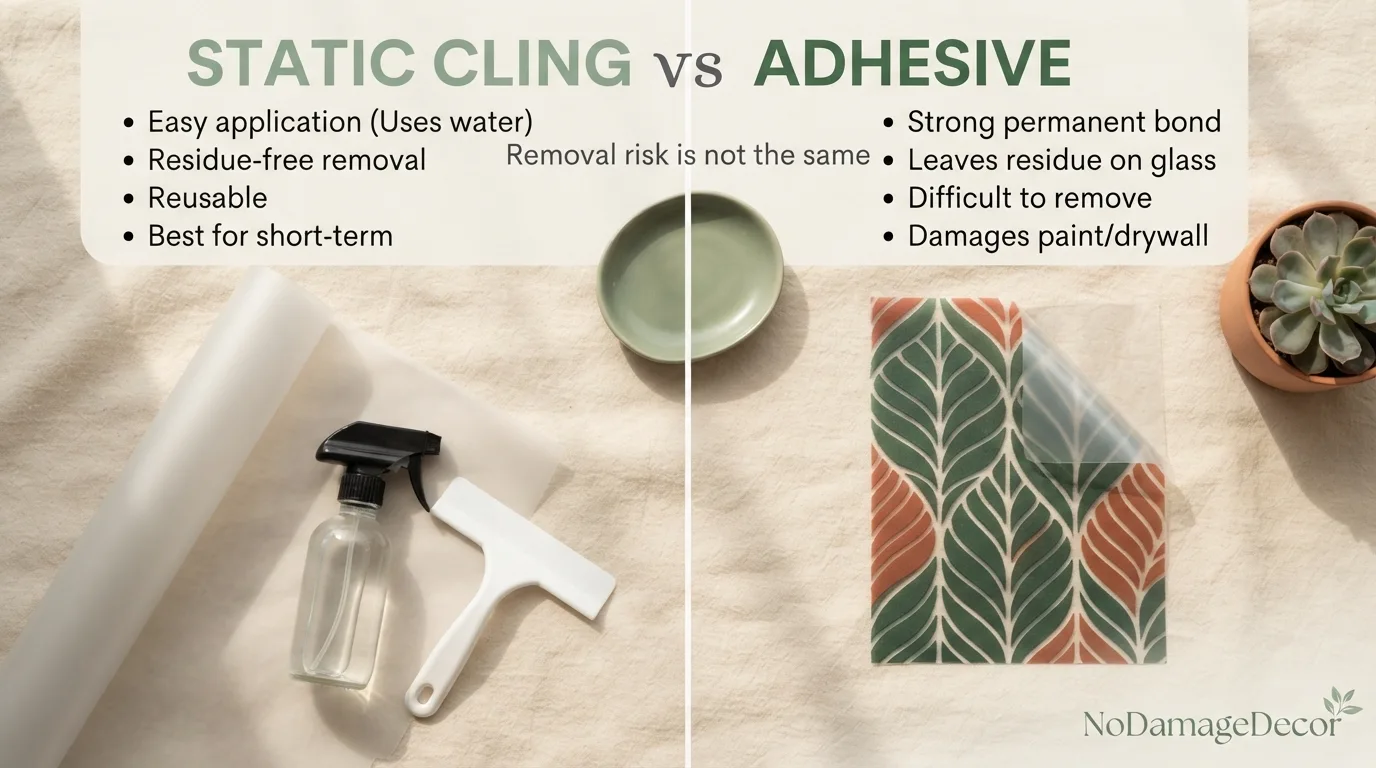
Does Window Privacy Film Remove Cleanly?
Static cling: usually, yes, when it is installed on clean, smooth, intact glass and the product is genuinely non-adhesive. The film should peel away as a flexible sheet rather than leaving a glue layer behind.
Adhesive film: often removable, but not equally renter-friendly. Long installation time, heat, dirt around edges, and the adhesive formulation can make removal more work. Gila notes that film installed for years may require a dedicated remover kit if it does not peel easily.
Also check the frame and gasket. The film itself may leave the glass clean, while old caulk, paint, tape, or previous adhesive around the perimeter can create a separate cleaning problem.
Check the Window Before You Apply Film
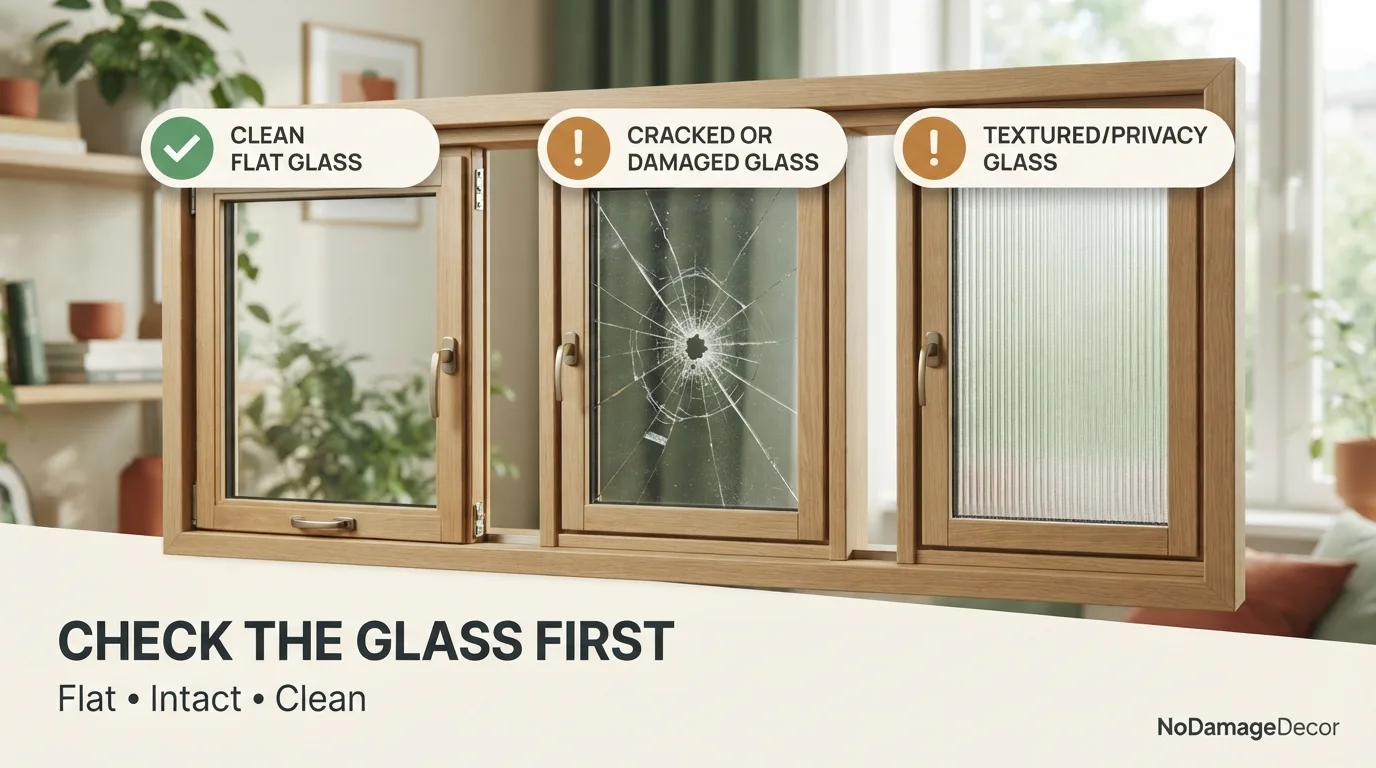
Static-cling privacy film works best on flat, smooth, clean glass. Rabbitgoo specifically states that some of its cling films are intended for flat, clean, smooth surfaces and may not stick correctly to plastic, broken, or uneven surfaces.
| Surface / Condition | Static-Cling Film | Renter Note |
|---|---|---|
| Clean flat window glass | Best candidate | Follow the exact manufacturer cleaning and water-application instructions. |
| Glass door or sidelight | Often suitable | Choose a film whose size and privacy level suit the location. |
| Textured or patterned glass | Often unreliable | The film may not make full contact; verify the exact product instructions. |
| Cracked, chipped, or damaged glass | Avoid DIY film as a fix | Film is not a repair product. Address damaged glass first. |
| Plastic / acrylic panel | Product-specific | Do not assume a glass film is approved for plastic. |
| Old adhesive residue on glass | Clean first | Residue can create bubbles and poor contact even with cling film. |
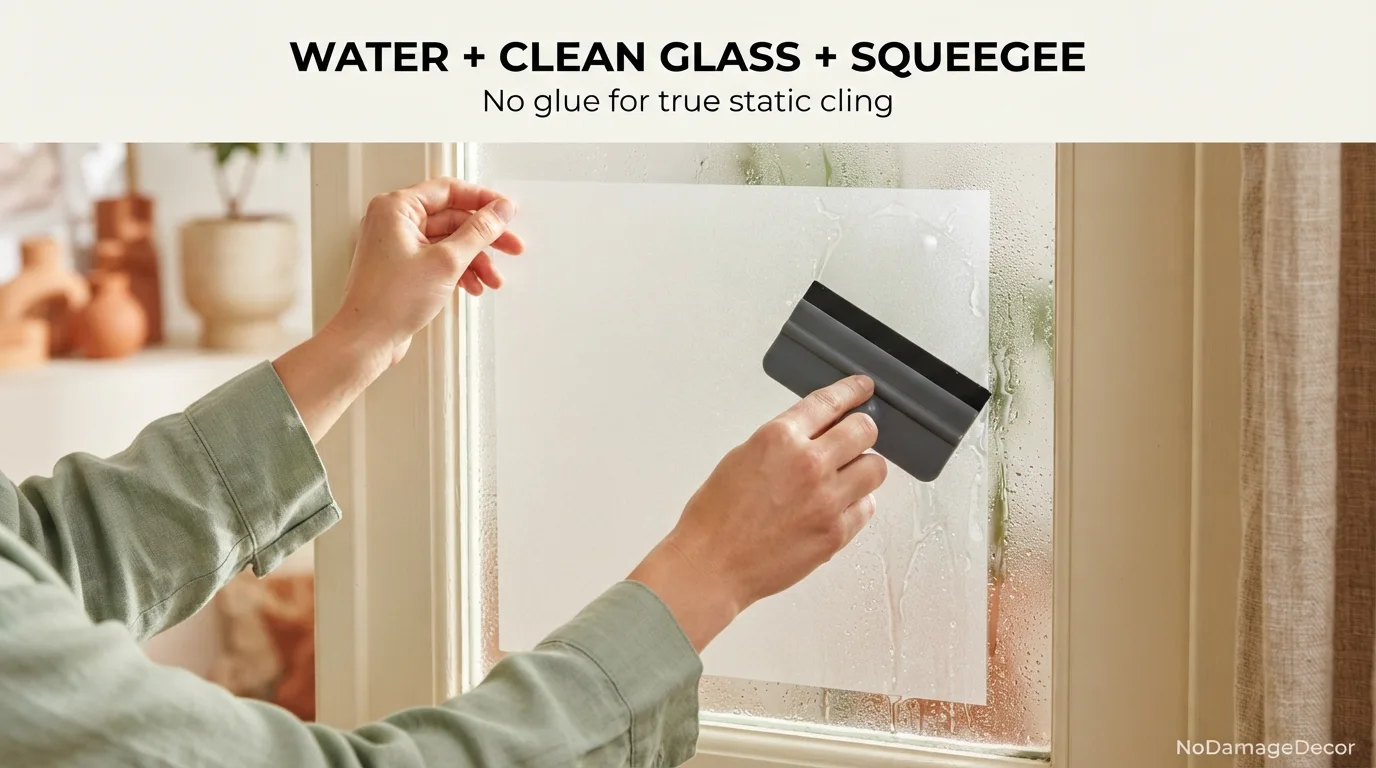
How to Install Static-Cling Privacy Film With Lower Removal Risk
Installation quality affects both appearance and removal. The cleaner the glass and the more accurately the film is fitted, the less likely you are to trap grit or end up compensating with tape around the edges.
Confirm it is truly non-adhesive
Read the product description and package. Look for static cling, non-adhesive, or no-glue language. Do not treat “removable adhesive” as the same thing.
Measure the glass, not the whole frame
Cut for the actual glass area. Leave the adjustment allowance recommended by the manufacturer, then trim to the final fit after positioning.
Clean the glass thoroughly
Dust, paint flecks, grease, and old residue create bubbles. Follow the product’s current cleaning instructions rather than using whatever cleaner is nearby.
Use enough water for positioning
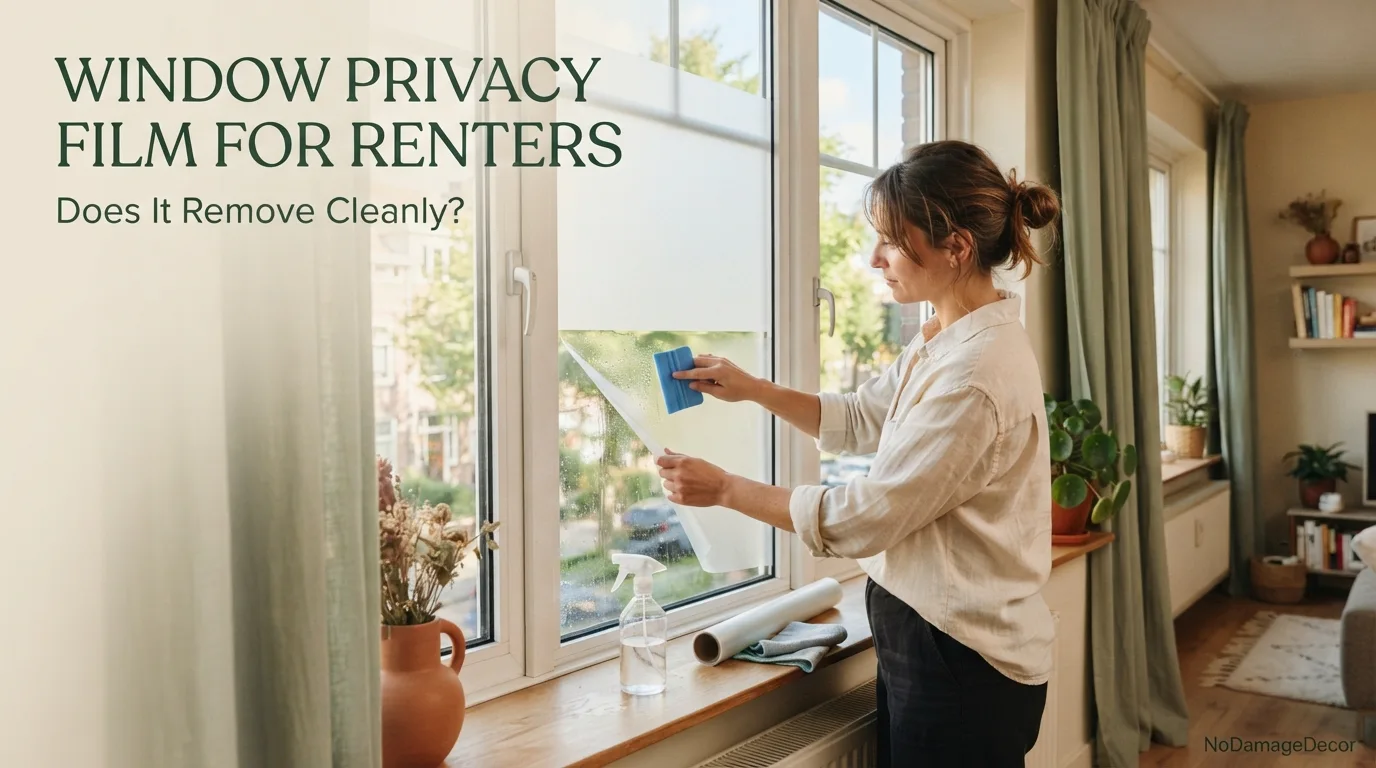
Rabbitgoo’s current instructions for static-cling film emphasize wetting both the glass and the film’s smooth side so the film can slide into position and bubbles can be pushed out.
Squeegee from the center outward
Use a soft-edge squeegee or card as directed, pushing water and air toward the nearest edge instead of trapping it in the center.
Trim without cutting into seals or frames
Keep blades away from soft gaskets, painted trim, and rental window seals. If a clean trim cannot be made safely, remove the film and recut it on a protected flat surface.
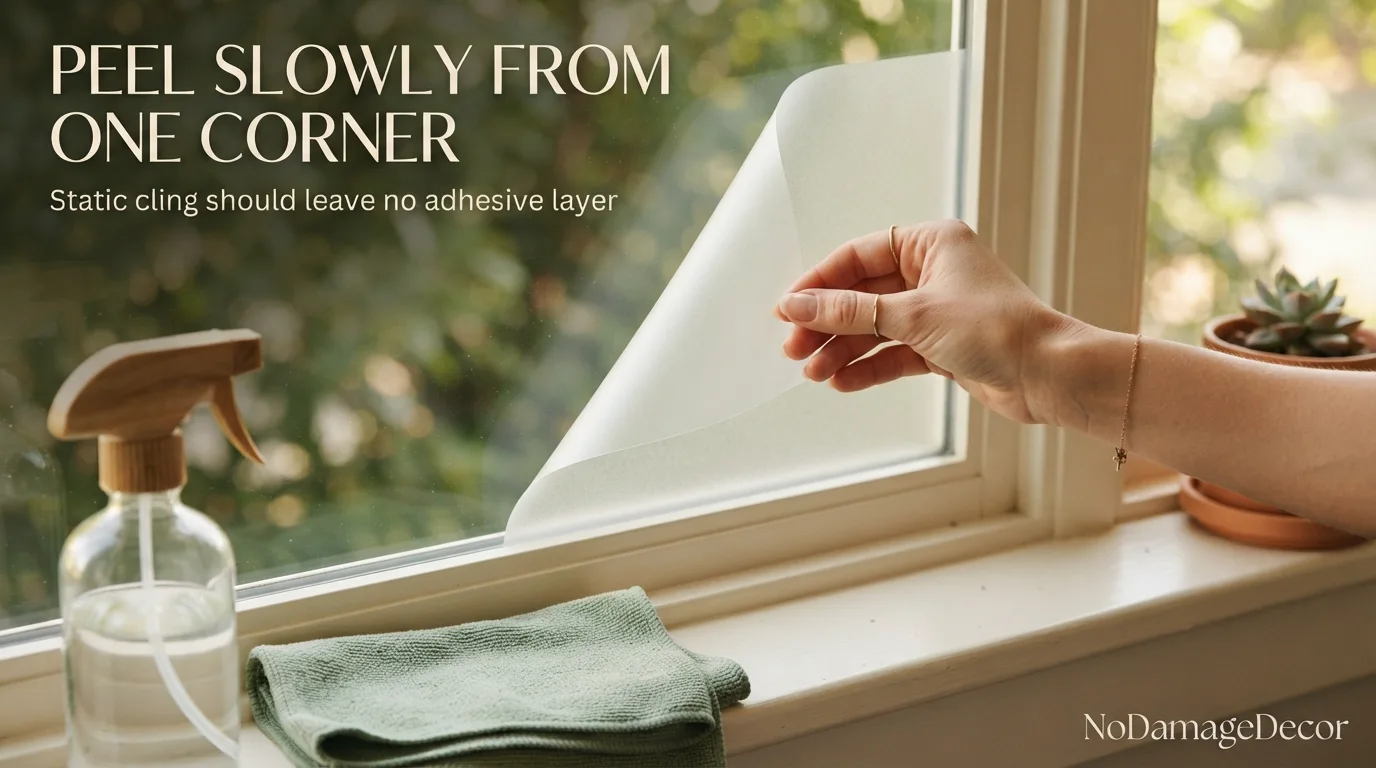
How to Remove Static-Cling Film at Move-Out
Removal is normally simple because there is no glue layer to dissolve. Work slowly so the film stays in one piece and can potentially be reused.
Start at one accessible corner
Use a fingernail or plastic edge to lift the film. Avoid metal scrapers unless the manufacturer specifically calls for one and the glass condition makes it appropriate.
Peel steadily across the pane
Pull the film back slowly as a sheet. If it resists, stop and check whether you are dealing with true static cling or an adhesive-backed product.
Wipe the glass afterward
Any remaining marks are often water spots, dust lines, or residue that was already on the glass. Use a glass-safe cleaning method appropriate for the window.
Photograph the finished window
Take a clear move-out photo showing the glass, frame, sill, and nearby paint after the film is removed.
Privacy Level: Frosted, Decorative, or Dark Film?
“Privacy” is not one single result. Frosted films blur views while allowing diffuse light. Decorative prism films can obscure detail but still show movement or silhouettes. Dark or reflective films can provide stronger daytime privacy, but some one-way styles lose privacy after dark when interior lighting is brighter than outdoors.
Choose frosted film when…
You want steady visual obscuring for a bathroom, ground-floor room, or entry sidelight while keeping soft daylight.
Choose decorative prism film when…
You want moderate privacy plus a decorative effect. It is better for softening a view than creating total visual blackout.
Choose dark privacy film when…
Daytime privacy and glare reduction matter more than maximum daylight. Check nighttime behavior before relying on it for bedrooms or street-facing rooms.
Use curtains or shades when…
You need dependable nighttime privacy, easy daily control, or your lease does not allow window film.
For other renter upgrades that avoid permanent attachment, see renter-friendly lighting ideas and make your rental feel like home.
Verified Static-Cling Window Film Options
These options are included because they use a non-adhesive static-cling design, which directly matches the renter-removal problem. Exact size availability can change, so confirm the current listing before ordering.
As an Amazon Associate I earn from qualifying purchases.
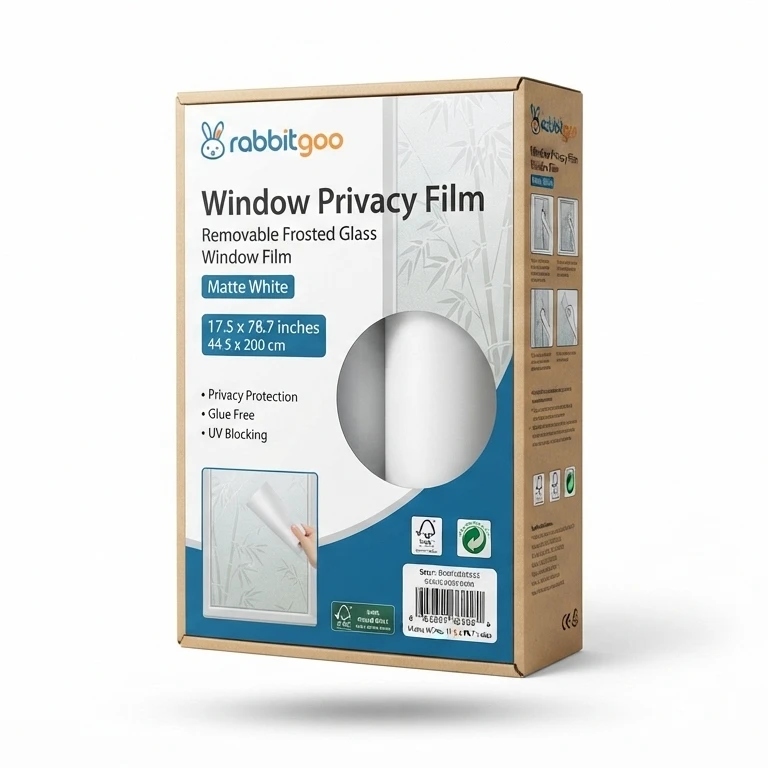
rabbitgoo Window Privacy Film, Removable Frosted Glass Window Film, Matte White, 17.5 x 78.7 inches
Best for: Bathrooms, sidelights, and apartment windows where stronger visual obscuring is more important than seeing outside.
Rabbitgoo’s current frosted-film guidance describes a static-cling, non-adhesive system that can be removed and reused. Its installation method uses water on clean glass and a squeegee or hard card to remove trapped air and water.
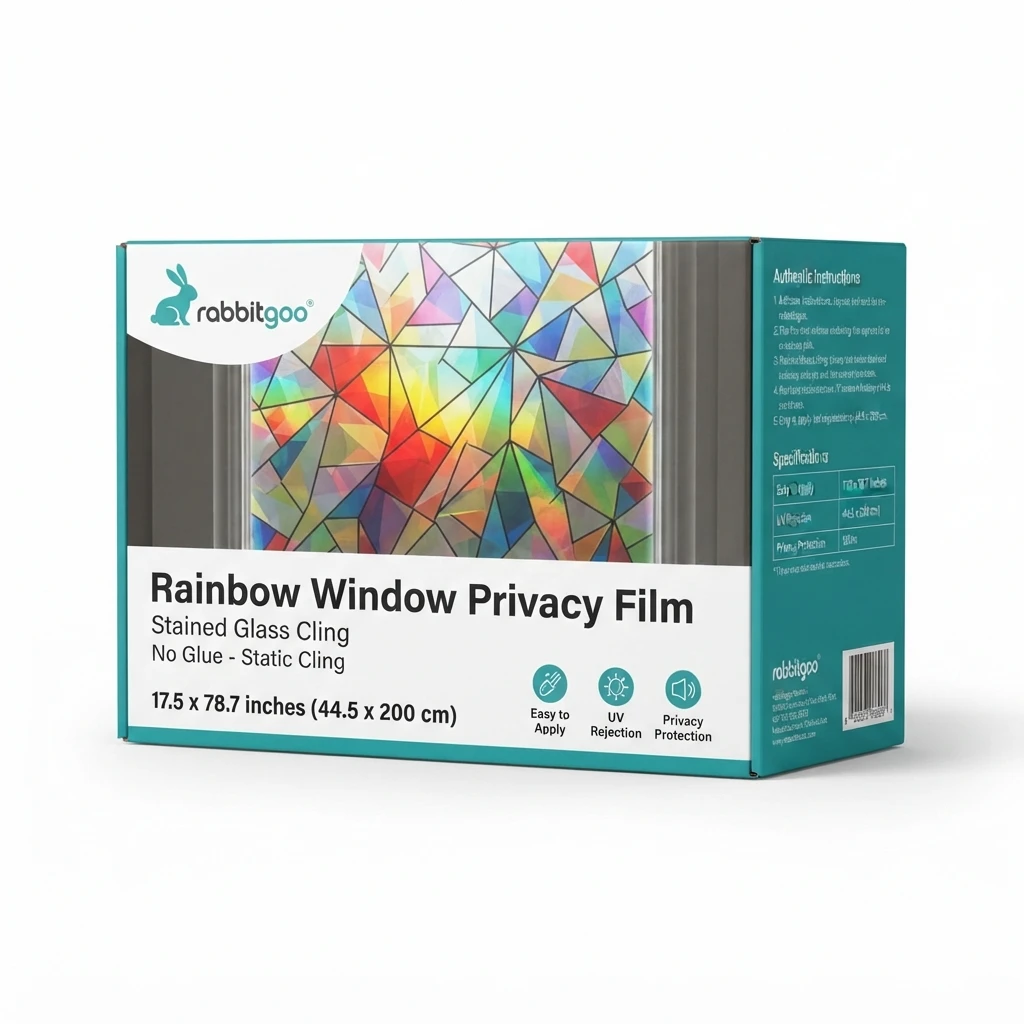
rabbitgoo Rainbow Window Privacy Film, Stained Glass Cling, 17.5 x 78.7 inches
Best for: Renters who want decorative semi-privacy, softened views, and a removable stained-glass effect.
Rabbitgoo’s official decorative-film guidance describes the film as static cling, non-adhesive, removable, repositionable, and reusable. The rainbow/prism effect changes with incoming light.
Common Renter Mistakes
Buying peel-and-stick when you wanted cling
“Removable” and “static cling” are not interchangeable terms. Check whether the film actually uses adhesive.
Applying film over dirty glass
Dust and residue create bubbles and can make the film look worse than the bare window.
Expecting one-way film to guarantee nighttime privacy
Reflective privacy behavior changes with lighting direction. Use curtains or shades when nighttime privacy must be dependable.
Cutting directly against rental seals
A blade can nick rubber gaskets, caulk, painted trim, or the frame. Trim carefully and away from vulnerable materials.
For other low-commitment apartment upgrades, see no-damage wall decor ideas and the first apartment decorating checklist.
Sources & Renter-Safety Note
Current removal and installation guidance was checked against Gila’s home window film FAQ, Gila’s installation guidance, and current Rabbitgoo frosted static-cling guidance. Static-cling products use no glue, but compatibility still depends on the exact film and window. Do not use window film as a repair for cracked glass. Lease and building rules can also restrict visible window treatments, so check your agreement where appearance is regulated.
Frequently Asked Questions
Does window privacy film leave residue?
True static-cling privacy film does not use an adhesive layer, so it is the lower-residue renter option. Adhesive-backed film can behave differently and older installations may need residue removal.
Is static-cling window film good for renters?
It can be a good renter-conscious choice on clean, smooth, intact glass because it is designed to be removable and, for many products, reusable. Check your lease and the exact product instructions first.
Can I reuse window privacy film after removing it?
Many static-cling films can be reused if they are removed carefully and kept clean. Adhesive-backed films are generally less suitable for reuse after removal.
Can I put privacy film on textured glass?
Many static-cling films need smooth, flat glass to make full contact. Textured or uneven glass can prevent a reliable cling. Check the exact manufacturer guidance before applying.
Does one-way privacy film work at night?
Not always. Reflective one-way privacy depends on the lighting balance between inside and outside. If the room is brighter than outdoors at night, visibility can reverse. Use curtains or blinds when nighttime privacy must be reliable.
How do I remove static-cling film?
Lift one corner and peel the film slowly from the glass as a sheet. Because true static cling uses no glue, it should not leave an adhesive layer. Clean the glass afterward and document the window condition.
Can window film damage apartment windows?
Film is not automatically suitable for every window. Damaged glass, specialty glazing, textured surfaces, old seals, or an incompatible film type can create problems. Follow the exact manufacturer guidance for your window and film.
Renter-Safety Verdict
Best renter choice: true static-cling, non-adhesive privacy film on clean, smooth, intact glass.
Best for stronger visual obscuring: frosted static-cling film.
Best for decorative semi-privacy: prism or stained-glass static-cling film.
Higher move-out risk: adhesive-backed film, especially if left for years or installed on a window the manufacturer does not approve.
If clean removal is your priority, shop by attachment method first and pattern second.
Plan More Renter-Friendly Upgrades
Use removable, no-drill, and freestanding choices together so your decor is easier to reverse at move-out.
Make Your Rental Feel Like Home