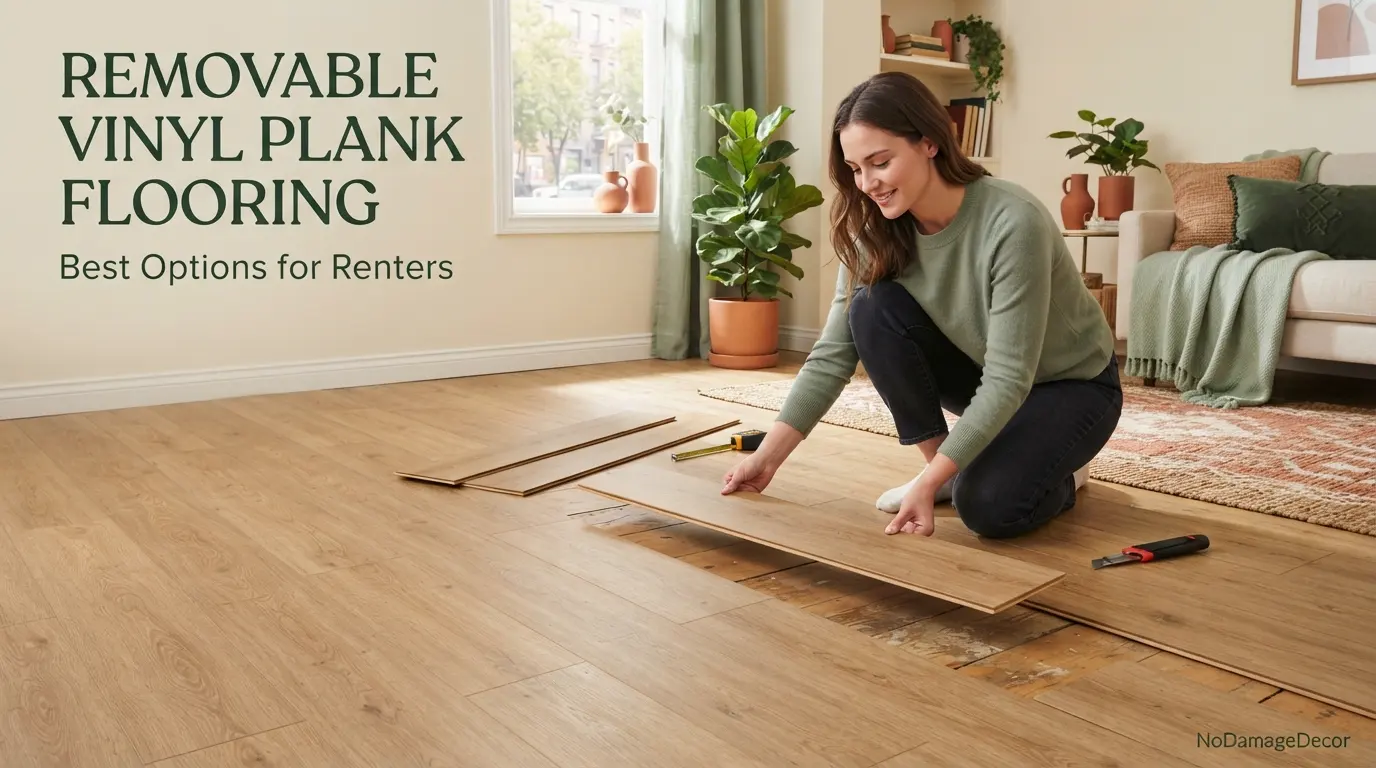
Removable Vinyl Plank Flooring for Renters
If you want a floor you can realistically reverse at move-out, installation method matters more than the wood look: loose-lay and click-lock systems are usually more renter-conscious than ordinary peel-and-stick.
At a Glance
“Removable Vinyl Plank” Can Mean Three Different Things
Retailers often use words such as removable, floating, reusable, peel-and-stick, or DIY as if they describe the same level of reversibility. They do not. For renters, the attachment method is the first thing to check.
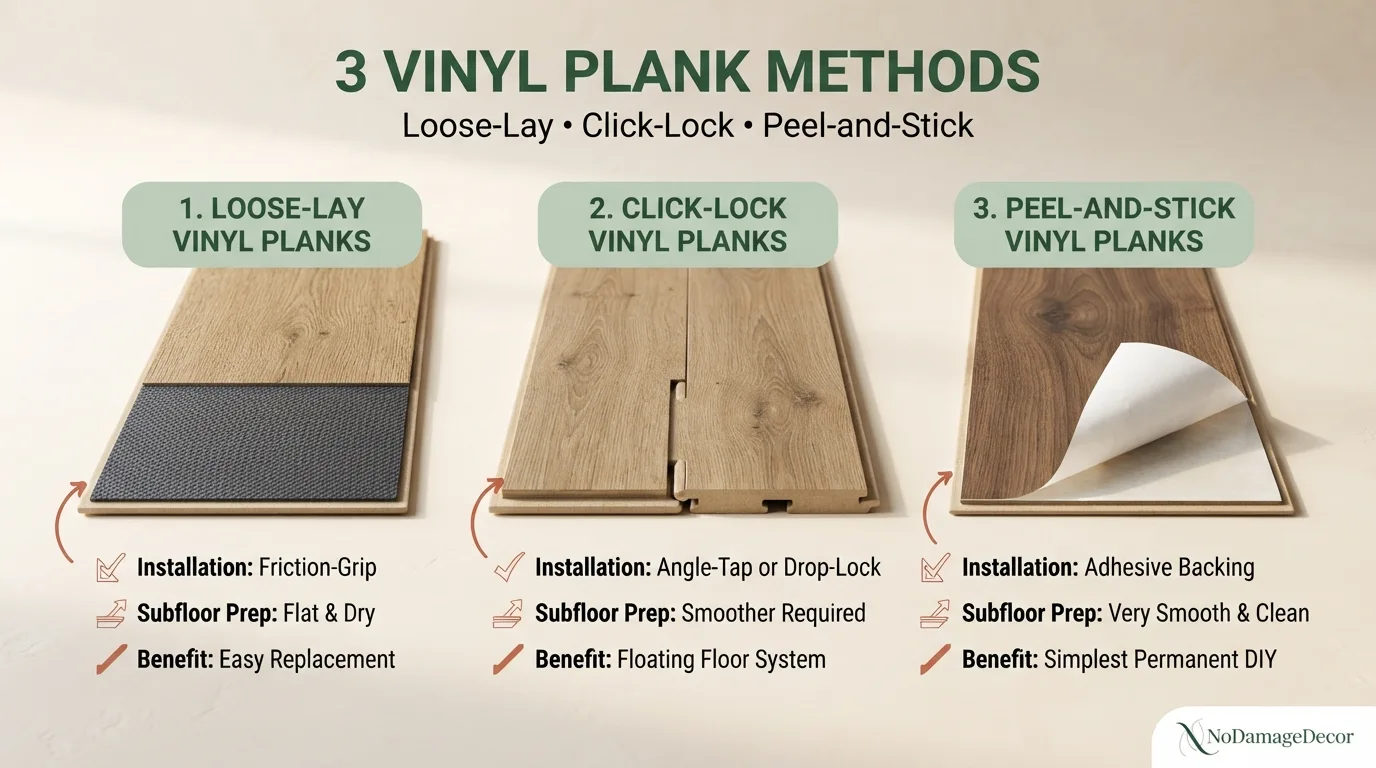
Loose-lay vinyl plank
Loose-lay LVP uses a heavy plank and friction-grip backing instead of full-spread adhesive. Karndean says its LooseLay format uses K-Wave friction backing and does not require full-spread adhesive. Individual pieces can be removed and replaced.
Best for: renters who want the lowest direct adhesive contact and have a flat, approved hard surface.
Click-lock / floating vinyl plank
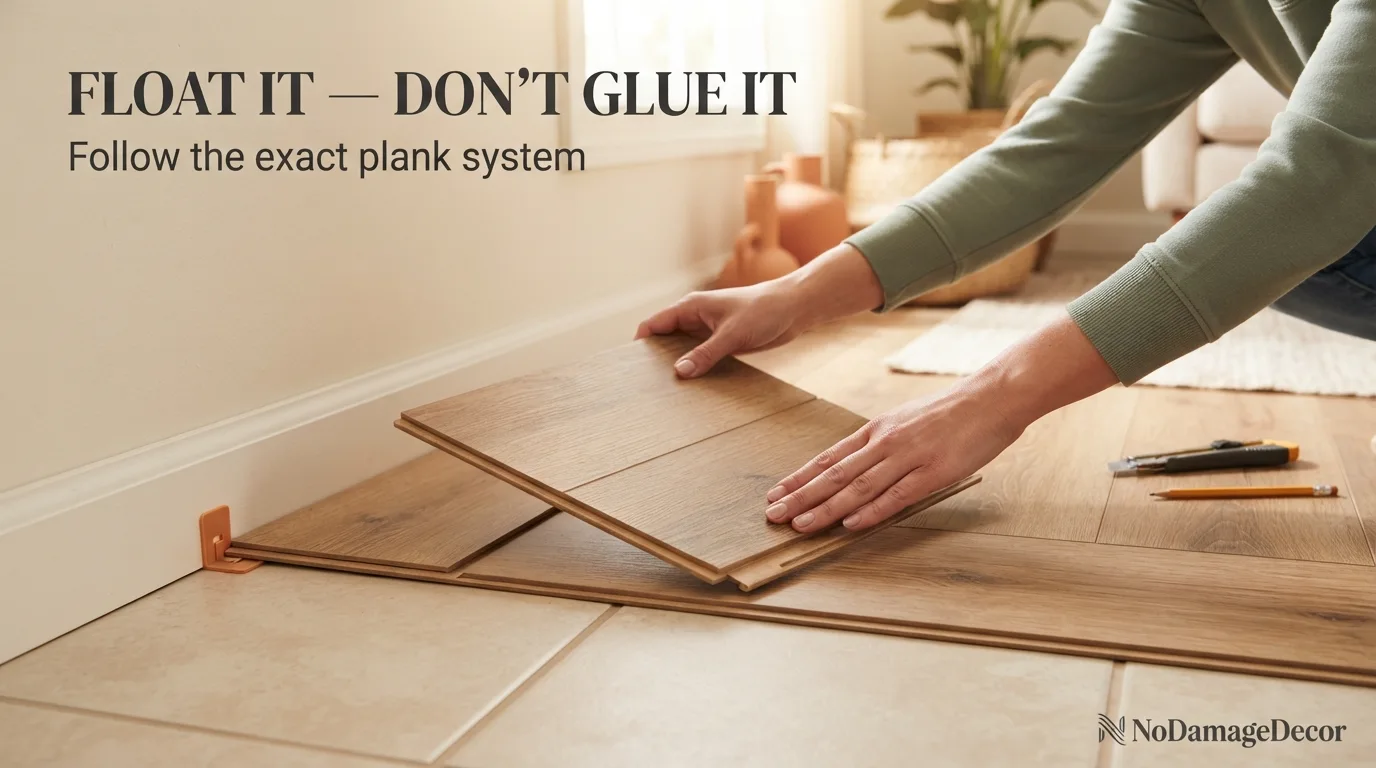
Floating rigid-core planks connect to each other rather than sticking to the floor. Karndean describes rigid core as a floating system that clicks together without adhesive. Art3d also sells interlocking vinyl planks designed for glue-free installation and disassembly.
Best for: renters who want a room-size floor that can be dismantled later.
Peel-and-stick vinyl plank
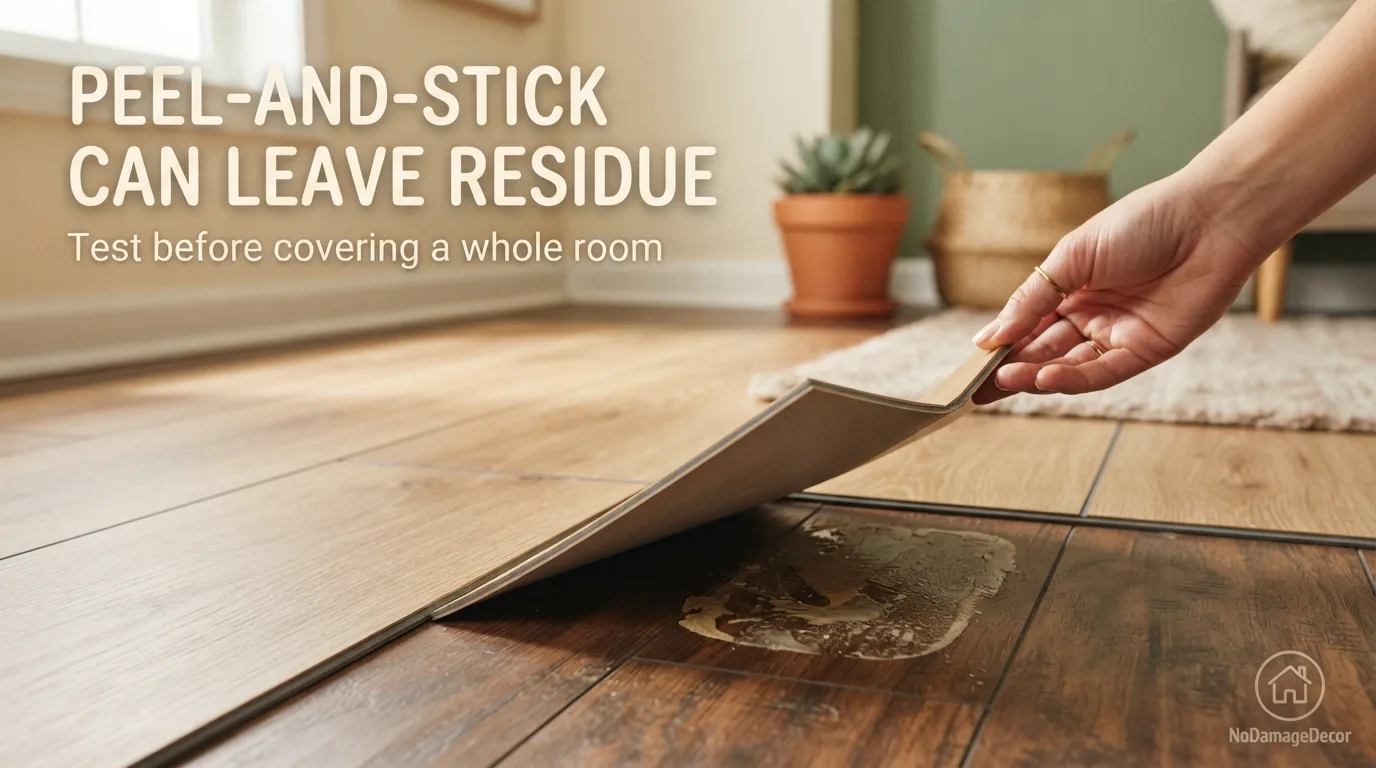
Peel-and-stick flooring has adhesive on the back. It is easy to install, but that adhesive is pressed directly onto the original floor. Some peel-and-stick products are marketed as removable, yet current retailer/manufacturer answers also acknowledge that residue can remain.
Best for: only when your landlord approves the adhesive method and you accept possible cleanup.
Traditional glue-down LVP
This is not a renter-first reversible option. The flooring is bonded to the subfloor with adhesive and is intended as a more permanent installation.
Best for: owned spaces or landlord-approved permanent renovations.
Best Renter Option: Floating or Loose-Lay First
If the goal is to restore the apartment to its original condition, minimize the number of materials bonded to the existing floor. That makes loose-lay and click-lock systems easier to justify than peel-and-stick.
Loose-lay flooring relies on friction and weight. Click-lock flooring relies on plank-to-plank joints. Neither system needs adhesive spread across the entire rental floor. That does not mean installation is consequence-free: poor subfloor preparation, trapped moisture, heavy furniture, incorrect perimeter gaps, or unsuitable underlayment can still cause problems.
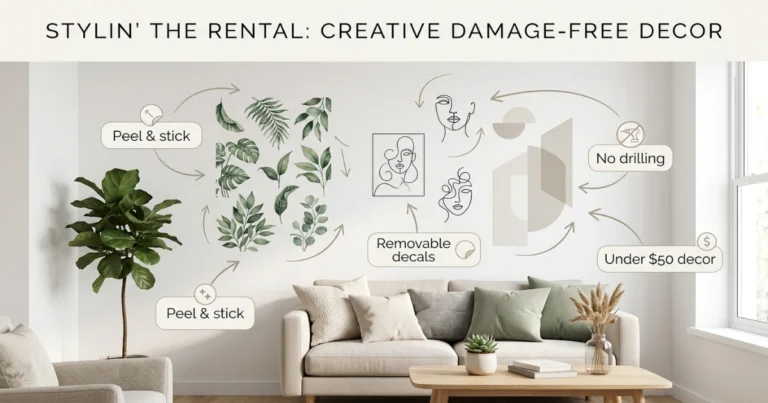
For a broader reversible-decor plan, pair flooring changes with make your rental feel like home and no-damage wall decor ideas.
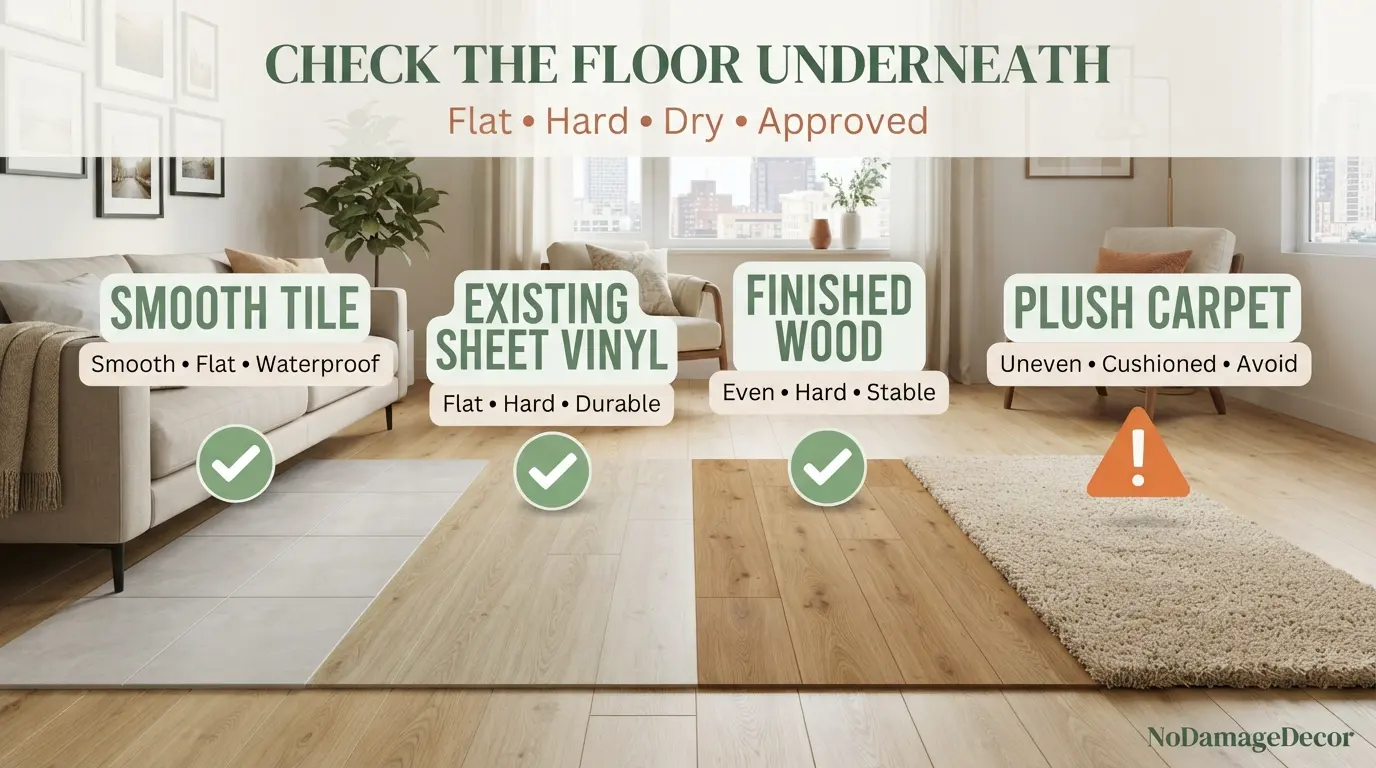
Check the Existing Floor Before Covering It
The original rental floor matters as much as the new plank. A temporary overlay should not trap moisture, rock over deep grout joints, crush carpet, block doors, or abrade a delicate finish.
| Existing Surface | Loose-Lay / Click-Lock | Peel-and-Stick | Renter Note |
|---|---|---|---|
| Smooth tile | Often workable if the system approves it and the floor is flat. | Adhesive may bond strongly; grout telegraphing can also matter. | Check grout depth and transitions. |
| Sheet vinyl / resilient flooring | Often a better candidate for floating systems when approved. | Direct adhesive contact can complicate removal. | Confirm manufacturer compatibility first. |
| Finished wood | Use only when the flooring maker approves the substrate and moisture conditions. | Higher caution: adhesive can affect finish. | Written landlord approval is especially important. |
| Concrete | Can work when flat, dry, and prepared to system requirements. | Peel-and-stick may need strong bond and careful prep. | Moisture testing may be required by the flooring system. |
| Plush carpet | Usually not a stable base for standard vinyl plank systems. | Not appropriate for peel-and-stick. | Do not improvise a floating floor over soft carpet unless the exact system allows it. |
Plan Installation for Easy Reversal
Get written permission
Flooring changes can affect leases, building rules, warranties, moisture responsibility, and move-out requirements. Ask management what is allowed and what must be restored.
Photograph the original floor
Take dated photos before covering it, including seams, existing scratches, stains, transitions, baseboards, and thresholds.
Check flatness and moisture requirements
Follow the exact flooring manufacturer’s substrate guidance. Loose-lay products still require a firm, hard, flat, smooth, dry, clean base.
Dry-plan the room
Check plank direction, door clearance, appliance clearance, transitions, vents, and edge cuts before committing.
Avoid unnecessary glue
If the product is designed to float or interlock, do not add construction adhesive “for extra strength.” That defeats the reversible installation goal.
Keep spare planks and packaging
Save model information, removal instructions, and a few extra pieces. This helps if a plank is damaged or needs replacement.
Why Peel-and-Stick Is Not Automatically “Renter-Friendly”
Peel-and-stick looks ideal for renters because it is thin, inexpensive, and simple to install. The problem is that a flooring adhesive strong enough for foot traffic is intentionally stronger than removable wall decals.
FloorPops has explicitly said its peel-and-stick floor tiles are not removable in the same temporary sense as removable wallpaper, and that adhesive residue can remain. A current Art3d Home Depot Q&A similarly states that its peel-and-stick flooring can be removed but residue may remain to varying degrees.
Removal at Move-Out
Floating and loose-lay floors should be removed in the reverse order required by the exact system. Click-lock planks generally need to be unlocked rather than bent upward randomly. Loose-lay pieces can often be lifted individually, but edge tackifiers or localized adhesive may exist in some installations.
Once the temporary floor is out, inspect the original floor in daylight. Look for trapped grit marks, moisture, scratches, color differences, adhesive, or damage at thresholds. Clean only with products safe for the original material.
Document the restored floor with dated photos. If you discovered pre-existing damage while removing the temporary floor, keep your move-in photos and written records together.
Verified Product Options
The first product below fits the renter goal better because it is interlocking and glue-free. The second is included as a peel-and-stick alternative only for renters whose lease explicitly allows adhesive flooring.
As an Amazon Associate I earn from qualifying purchases.

Art3d Interlocking Luxury Vinyl Flooring Tile, Venice Ash, 18-Pack
Best for: Renters who want a glue-free interlocking vinyl plank system that can be dismantled later.
Art3d’s current interlocking LVT line is designed to install without glue and is marketed as removable/reusable. The Venice Ash variant is an 18-pack wood-look plank system.

Art3d 36-Pack Peel and Stick Luxury Vinyl Flooring Tiles, Grey Ash
Best for: A landlord-approved adhesive installation where easy DIY application matters more than guaranteed residue-free removal.
Art3d sells this Grey Ash wood-look product as self-adhesive 36-by-6-inch planks. It installs by peeling the backing and pressing the plank to a flat surface.
Common Renter Mistakes
Calling every peel-and-stick floor temporary
Flooring adhesive is designed to resist foot traffic. Removal can be much more involved than removing wall decals.
Floating over plush carpet
Soft carpet can let planks flex, move, or separate. Use only a system whose instructions explicitly allow the substrate.
Ignoring door clearance
Adding flooring height can make doors scrape, trap appliances, or create unsafe transitions.
Skipping landlord approval
A technically removable floor can still violate lease or building rules if alterations need written permission.
Before any larger apartment project, review the first apartment decorating checklist and apartment decor mistakes that cost your deposit.
Sources & Renter-Safety Note
Installation-format guidance was checked against Karndean LooseLay guidance, Karndean installation formats, and Art3d flooring guidance. Peel-and-stick removal cautions were cross-checked against current retailer/manufacturer Q&A showing that adhesive residue can remain. Flooring compatibility depends on the exact product, subfloor, moisture conditions, lease, and property rules. Get written permission before covering a rental floor.
Frequently Asked Questions
What is the best removable vinyl plank flooring for renters?
Loose-lay or floating click-lock vinyl is usually the more renter-conscious choice because it does not rely on adhesive bonded across the original floor. The exact system still needs an approved flat, hard, dry substrate.
Is peel-and-stick vinyl plank flooring renter-friendly?
It can be easy to install, but it is not automatically temporary. Strong flooring adhesive may leave residue or affect the original surface, so use it only with written landlord approval and product-specific compatibility guidance.
Can click-lock vinyl plank be removed and reused?
Some interlocking systems are designed to be dismantled and reused. Follow the exact manufacturer instructions so locking edges are not damaged during removal.
Can I install vinyl plank over existing tile?
Some loose-lay and floating vinyl systems can go over existing hard floors when the surface is flat, clean, dry, and approved by the manufacturer. Deep grout joints or uneven tile may need additional preparation.
Can I put removable vinyl plank over carpet?
Standard vinyl plank systems generally need a firm, hard, stable base. Plush carpet is often unsuitable unless the exact flooring system explicitly allows it.
Will peel-and-stick vinyl leave residue?
It can. Current manufacturer/retailer guidance for multiple peel-and-stick flooring products acknowledges that residue may remain after removal.
Do I need landlord permission for temporary flooring?
Yes, if your lease requires approval for alterations or floor coverings. Written permission is especially important for any adhesive flooring or any installation that changes transitions, doors, or moisture behavior.
Renter-Safety Verdict
Best overall: loose-lay or click-lock vinyl plank on an approved hard surface, installed without bonding the entire floor.
Best for easy move-out: a system that lifts or unlocks mechanically and can be removed without scraping adhesive.
Higher risk: peel-and-stick flooring directly on the landlord’s original floor.
Avoid: installing over unsuitable carpet, damaged flooring, moisture problems, or any surface the manufacturer excludes.
The most renter-friendly floor is the one you can reverse by disassembling it—not by dissolving glue.
Make the Apartment Feel Like Yours Without Permanent Changes
Pair reversible flooring with removable wall decor, renter lighting, and freestanding storage for a cohesive space that is easier to restore.
Make Your Rental Feel Like Home