It’s 2:14 AM. Someone Upstairs Is Rearranging Furniture. Again.
You’ve got a 7 AM meeting, a lease that says no drilling, and a ceiling that transmits every footstep like a snare drum. This is the guide for that exact situation — no tools, no landlord calls, just something that actually works tonight.
The short version
The best white noise machines for apartment living in 2026 are the ones built to mask, not just play sound — compact, loop-free, and loud enough to compete with an actual building. Our top pick is the LectroFan EVO for sheer noise-masking muscle; the Yogasleep Dohm Classic wins if you want something that sounds real instead of recorded; and the Hatch Restore 2 is the one to get if your nightstand is basically your whole apartment and every object on it needs to earn its keep.
Key takeaways
- White noise doesn’t block sound — it masks the contrast between quiet and loud, which is actually what wakes you up.
- Fan-based machines (Dohm, Snooz) sound real because they are; digital machines (LectroFan) trade a little warmth for a lot more volume and variety.
- Placement changes outcomes more than price does — three feet from a shared wall beats a $200 machine on the wrong side of the room.
- 50–65 dB at ear level is the sweet spot: loud enough to mask, nowhere near loud enough to matter for hearing health.
- This is a coping tool for the noise apartments come with — not a substitute for a real complaint if a neighbor is genuinely, structurally out of line.
The problem
Apartments Are Built to Be Heard
Nobody warns you about this when you sign the lease. The unit looks great, the light is nice, the commute works — and then week two happens, and you discover that the building was engineered around cost, not silence.
The drywall is doing its actual job — poorly, for you. Most apartments built in the last few decades use standard drywall between units, which is cheap, fast to install, and acoustically closer to a drum skin than a wall. A conversation two units over can land in your bedroom at almost full volume.
Impact noise doesn’t care about your ceiling. Footsteps, dropped shoes, a dining chair scraping — that’s sound traveling through the building’s actual frame, not through the air. No machine erases that entirely, but it can stop your brain from locking onto every single thump, which is where most of the suffering lives anyway.
Your lease is doing exactly what it’s supposed to. No panels, no mass-loaded vinyl, no ripping into the wall — which is fair, it’s not your wall. That leaves you with solutions that are portable, reversible, and entirely yours to take with you when you move.
And your apartment is probably not large. Whatever you buy has to earn its spot on a nightstand that’s also holding your phone charger, a lamp, and possibly a stack of books you’re pretending you’ll get to.
Put all of that together and the actual brief becomes clear: something portable, genuinely loud when it needs to be, and adaptable to whatever specific noise your particular building has decided to specialize in.
How it actually works
Why Noise You Can’t Predict Is Worse Than Noise You Can
Here’s the part most product pages skip: it’s not volume that wakes you up. It’s contrast. A silent room interrupted by a bark, a slammed door, or bass through the wall is far more jarring than the same sounds layered onto a steady background.
White noise raises the floor. Instead of silence broken by spikes, you get a continuous, predictable baseline — and your brain, which is extremely good at ignoring predictable things, stops flagging every small change as an event worth waking up for.
There are three flavors worth knowing:
- White noise — full-spectrum, closer to radio static, the broadest mask available
- Pink noise — softer and rounder, closer to steady rain, generally described as more pleasant
- Brown noise — deep and rumbling, especially good at swallowing bass-heavy noise like footsteps or a neighbor’s subwoofer
And here’s why this beats earplugs for most people: earplugs block indiscriminately. Your alarm, your smoke detector, your name being called from the next room — gone along with the noise you didn’t want. A white noise machine masks the problem sound while leaving the rest of your senses online.
Before you buy
The Renter’s Checklist
Run any machine you’re considering against this before you hand over your card.
Real volume headroomLook for machines that can push 75–85 dB up close. Thin walls need actual output, not a gentle hum.
Loop-free audioA recording that resets every 30 minutes can quietly train your brain to notice — and wake up at — the loop point.
PortabilityBedroom tonight, living room tomorrow, next apartment in eight months. It should move as easily as you do.
A timer, if you want oneSome people want it running all night. Others just want help falling asleep and then silence.
USB powerOne less wall-wart competing for your one working outlet behind the nightstand.
Something you don’t mind looking atIn a small space, every object is on display. Pick something that reads as decor, not gadget.
The picks
Seven Machines, Tested Against Real Apartment Noise
Ranked by how they actually perform against the specific problems apartments generate — not by star ratings.
LectroFan EVO
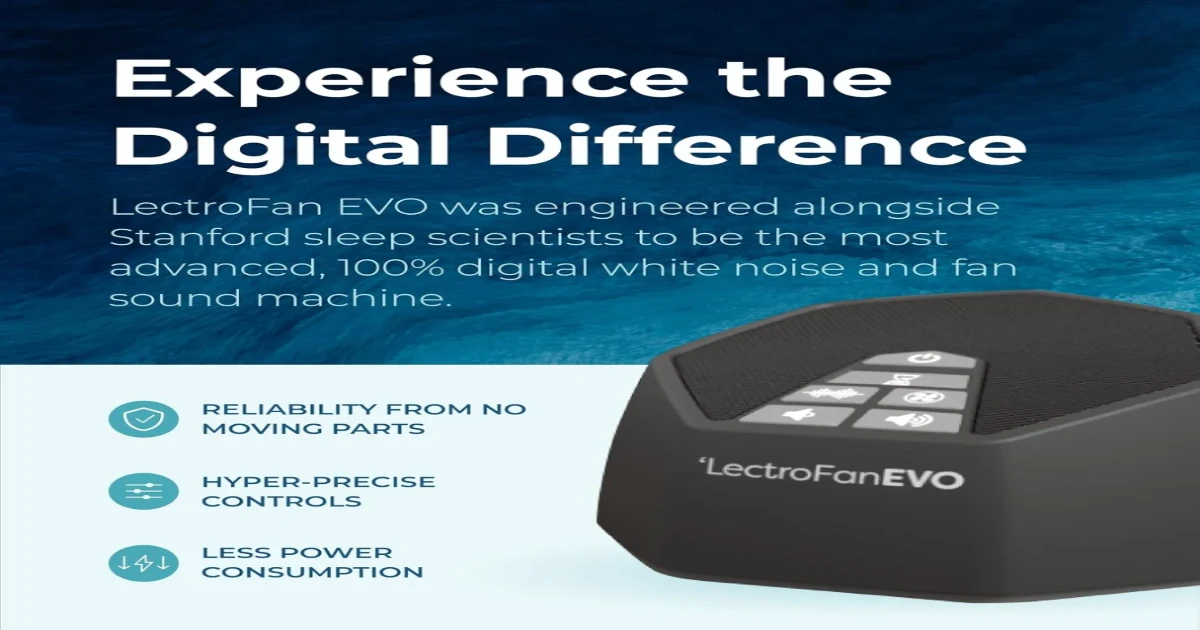
This is the one for the apartment where gentle solutions have already failed you. 22 non-looping sounds, real volume headroom, and the kind of digital precision that lets you dial in exactly the frequency your particular noise problem needs.
Best for: loud neighbors, street-facing bedrooms, bass bleeding through a shared wall.
Yogasleep Dohm Classic
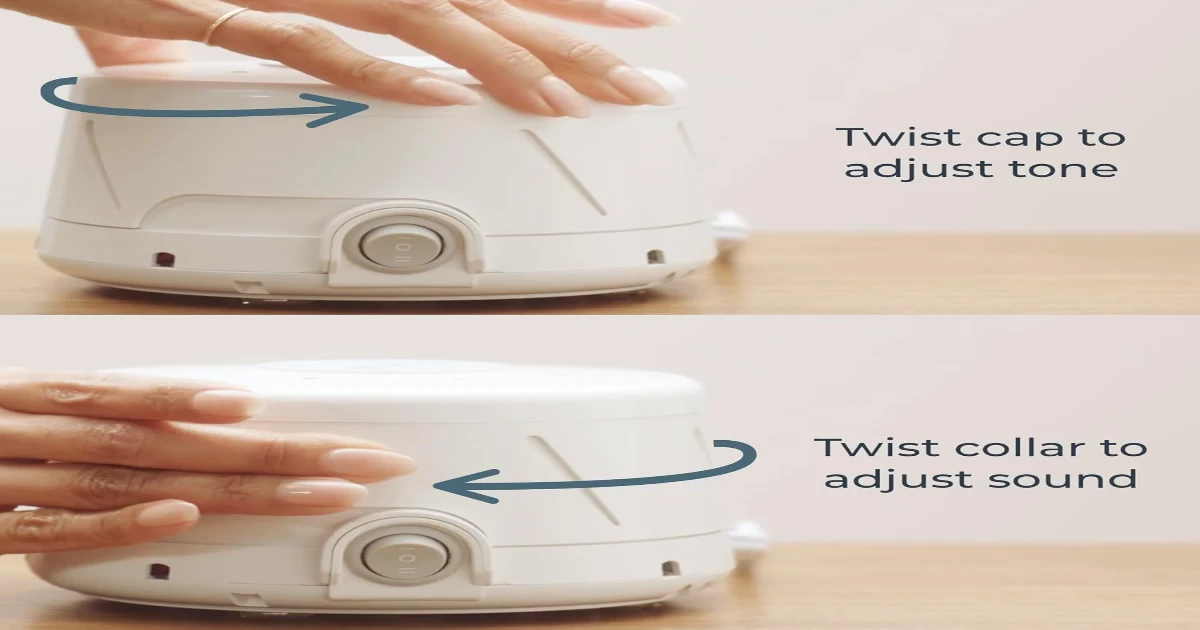
There’s a real fan spinning inside this thing — that’s the entire pitch, and it’s a good one. No loops, no digital artifacts, just a warm mechanical hum you rotate louder or softer by hand. It’s been the default recommendation for thirty years for a reason.
Best for: light sleepers, shared walls, anyone who’s noticed a loop point and can’t unhear it.
Hatch Restore 2
Sound machine, sunrise alarm, and reading light folded into one object that looks like it belongs on a shelf, not a nightstand. Ideal if your bedroom is small enough that every device needs to justify its footprint.
Pros & cons
Marpac Rohm
Fits in a palm, clips to a headboard, runs on USB, and does three sound modes without pretending to be more than it is. The machine you actually remember to pack.
Pros & cons
Snooz
A real fan inside, an app on the outside — so one of you can drop the volume from a phone at 2 AM without turning on a light or reaching across the bed.
Pros & cons
Big Red Rooster BRRC107
Six sounds, a physical volume knob, a timer, and a price that lets you find out if white noise even works for you before you commit to anything fancier.
Pros & cons
Dreamegg D11 Max
29 sounds, a warm adjustable night light, and a memory function that survives a power blip — built around protecting a nap schedule in a building you don’t control.
Pros & cons
The alternatives
White Noise vs. Earplugs vs. Noise-Canceling Headphones
| Feature | White noise machine | Earplugs | Noise-canceling headphones |
|---|---|---|---|
| Comfort overnight | High — nothing touching you | Low — pressure, ear fatigue | Medium — bulky for side sleepers |
| Cost | $25–200 once | $5–30, repeatedly | $150–400 once |
| Masks vs. blocks | Masks the contrast | Blocks indiscriminately | Blocks indiscriminately |
| Alarms still audible | Yes | Often not | Often not |
| Renter suitability | Excellent — zero setup | Excellent | Good, not sleep-designed |
| Best use case | Nightly sleep masking | One-off loud nights | Travel, focused work |
For a nightly, renter-safe routine, the machine wins on nearly every axis that matters at 2 AM.
Placement
Where You Put It Matters More Than What You Bought
A — Against the shared wall. Three to five feet from the wall you share with a neighbor creates a localized buffer between you and the noise source.
B — Near the window. Street traffic and early garbage trucks enter through glass. A machine on the sill cuts the perceived intrusion dramatically.
C — At the door gap. Hallways amplify footsteps and voices, and sound slides straight under the door. A second, smaller machine here handles what the bedside unit can’t reach.
Studio apartment? Split the difference — place one machine roughly between your bed and whichever source is loudest, and add a second at the door gap if the building has a hallway problem too.
Match the fix to the noise
Six Apartment Noise Problems, Six Specific Fixes
The stomping neighbor upstairs
That’s impact noise moving through the building’s frame — no machine erases it entirely. Run brown or pink noise at higher volume; the lower frequency profile matches and dulls the thump.
Barking dogs next door
Barks are sudden, high-frequency, and exactly the kind of contrast that jolts you awake. A steady 65–70 dB baseline takes most of the sharpness out of them.
Street traffic
One of the easier problems — the rumble and variation of traffic blends naturally into white or brown noise. Keep the machine near the window.
Hallway noise
Hard surfaces turn hallways into amplifiers. A machine near the door gap targets this specifically instead of trying to cover the whole room.
A loud roommate
A machine in your own room doesn’t just mask sound from outside your door — it creates a psychological line between your space and theirs.
Late-night construction or move-ins
Temporary but maddening. Keep a small portable unit like the Rohm on standby for exactly these nights.
Safety
Is This Actually Safe to Run All Night?
Yes, within sensible limits. The World Health Organization recommends keeping bedroom sound below roughly 30 dB for ideal sleep — white noise raises that floor on purpose, which means the goal is the lowest volume that still masks your specific problem, not maximum output.
Sleep researchers generally point to 50–65 dB at ear level — about the volume of a quiet conversation, and well under the 85 dB threshold where sustained exposure becomes a hearing concern. For adults, steady use at that range is considered safe by mainstream medical guidance.
For babies, the American Academy of Pediatrics recommends keeping machines at least seven feet from the crib and under 50 dB — across the room, not inches from a sleeping head.
When a Machine Isn’t the Real Fix
If the noise is structural and severe — a neighbor stomping directly overhead, bass at concert-level volume — that’s beyond what masking can solve. That’s a building-management complaint, documented, in writing.
If you’re already in a dispute with a landlord or neighbor, a white noise machine is a coping tool, not evidence anyone handled the problem correctly. Don’t let it substitute for a real paper trail.
If the sound is a safety signal — an alarm, a crying infant, anything you genuinely need to hear — calibrate volume carefully rather than maximizing masking.
The verdict
Which One, Specifically, For You
Questions renters actually ask