Command Strips vs Velcro Strips for Hanging: Which Is Safer for Rental Walls?
A practical comparison of two popular adhesive hanging methods—so you can keep your decor up and your security deposit intact.
- Renter-conscious
- Surface-safe guidance
- Deposit-minded
Quick answer: Both Command strips and Velcro strips are renter-friendly when used correctly, but they serve different purposes. Command strips are better for lightweight frames, hooks, and temporary placements because they stretch to release cleanly. Velcro strips (hook-and-loop adhesive) are stronger for heavier items but require more care during removal. For most renters, Command strips are the lower-risk choice for everyday wall decor, while Velcro is better for heavier mirrors or shelf brackets—provided you follow the exact removal instructions and test an inconspicuous area first.

What Renters Need to Know First
Choosing between Command strips and Velcro strips isn’t just about holding power—it’s about protecting your walls and your security deposit. Both products are marketed as removable, but the reality depends on surface type, weight, humidity, and removal technique. As a renter, you need to weigh convenience against risk every time you stick something to a wall.
Here’s the core tension: Command strips use a stretch-release adhesive that’s designed to release cleanly when you pull the tab straight down. Velcro strips (often called hook-and-loop adhesive strips) rely on a two-part system: one side sticks to the wall, the other to your item, and they mate together. The removal process is different—and that difference matters for deposit safety.
⚠️ Before you stick anything
Check your lease. Some landlords explicitly prohibit adhesive wall products, even if they’re marketed as removable. Always test an inconspicuous area—like behind a piece of furniture—before applying any adhesive to a visible wall. And follow the exact package instructions for both application and removal. These products are lower-risk when used correctly, but they are not risk-free.
Best Low-Risk Approach for Renters
For most renter situations, Command strips are the lower-risk choice—provided you stay within the weight limits and use them on smooth, clean, painted drywall. The stretch-release tab is designed to break the adhesive bond without pulling paint or paper off the wall. Velcro strips can hold more weight, but the removal process is more delicate: you need to slowly peel the adhesive backing off the wall rather than stretch it.
That said, Velcro strips are a better choice when you need a stronger hold for heavier items like larger mirrors, floating shelf brackets, or decorative wall panels. The trade-off is a higher risk of surface damage if you rush the removal or apply them to textured or poorly prepared surfaces.
Our guidance: Start with Command strips for any item under 4 lbs (or under 8 lbs for the larger sizes). Reserve Velcro strips for items that exceed that weight range, and only after you’ve thoroughly cleaned the surface and tested a small area.
Step-by-Step Decision Guide
Weigh your item
Use a kitchen scale or check the packaging. Command strips come in sizes rated for 1–8 lbs per pair. Velcro strips typically hold more—some up to 10–16 lbs per pair. Always use more strips than the minimum recommendation to distribute weight evenly.
Inspect your wall surface
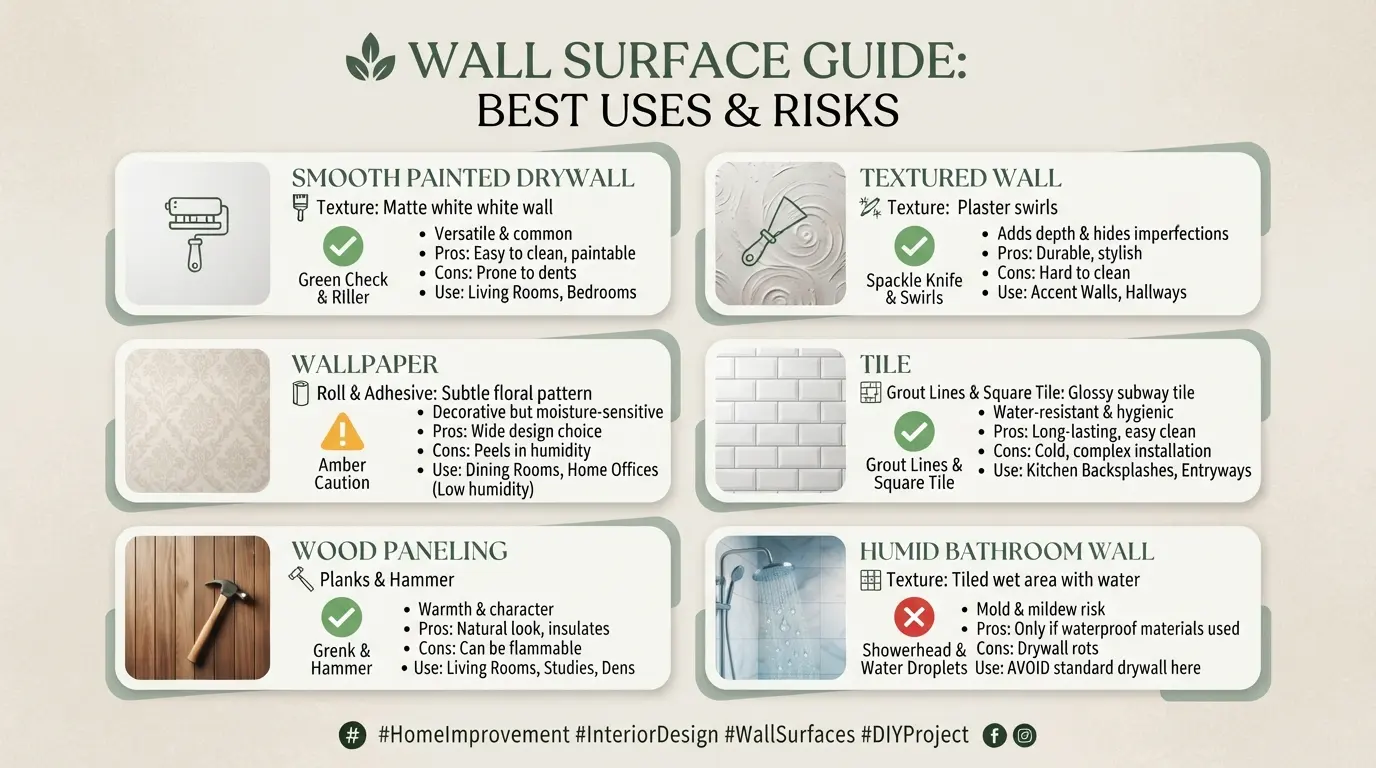
Both products work best on smooth, clean painted drywall. If your wall has texture (orange peel, knockdown, or popcorn), adhesive contact is reduced. Glossy tile, wood paneling, and wallpaper are also risky—the adhesive may bond too strongly or not at all. Run your hand over the surface: if it feels rough or uneven, consider a different hanging method.
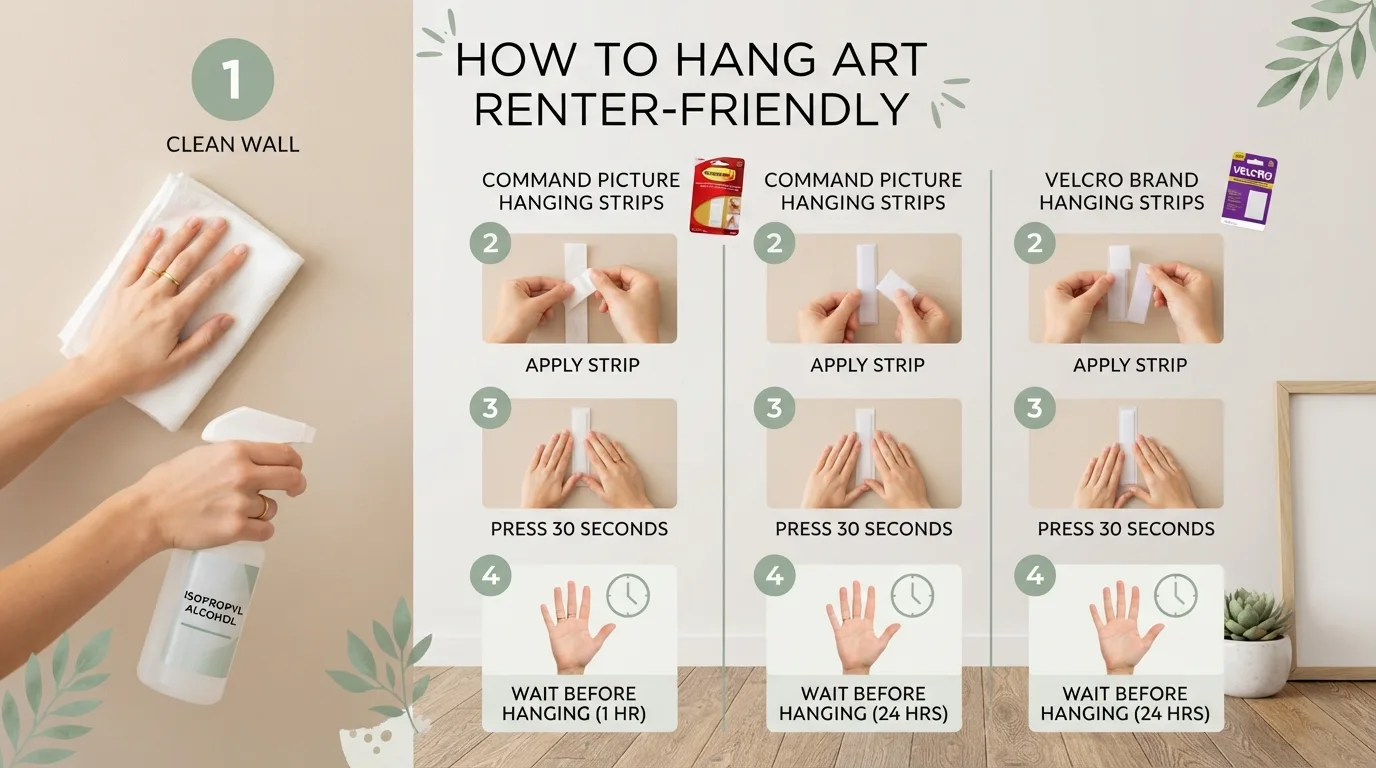
Clean the surface properly
Wipe the wall with isopropyl alcohol (70% or higher) and let it dry completely. This removes oils, dust, and residue that reduce adhesive performance. Do not use household cleaners—they leave behind residues that weaken the bond.
Apply at room temperature
Adhesive strips need moderate temperatures to cure properly. If your apartment is cold or humid, the bond will be weaker. Wait for a dry day, and keep the room at a comfortable temperature for at least 24 hours after application.
Press and hold—don’t just stick and release
For both Command and Velcro strips, press firmly against the wall for 30 seconds (or as directed on the package). This activates the adhesive and ensures maximum contact. Then wait at least one hour before hanging your item—longer if the item is heavy.
Test the hold before trusting it
Gently tug on the item after the waiting period. If it moves or feels loose, remove and reapply with fresh strips. Never reuse adhesive strips—they lose holding power after one application.
Plan your removal before you install
Before you stick anything, know how you’ll remove it. For Command strips, locate the pull-tab. For Velcro strips, separate the hook-and-loop first, then slowly peel the adhesive from the wall. Mark the location of each strip with a piece of painter’s tape so you don’t forget where they are when it’s time to move out.
Surface Compatibility & Renter Risk Table
| Surface | Works Better When | Risk Level | Renter Tip |
|---|---|---|---|
| Smooth painted drywall | Clean, matte or eggshell finish | Low | Best surface for both products. Wipe with alcohol before applying. |
| Textured drywall | Light texture only | Moderate | Adhesive contact is reduced. Command strips are slightly better than Velcro here. |
| Glossy tile / glass | Perfectly clean, dry | Moderate | Bond can be very strong—removal is trickier. Test first. |
| Wood paneling | Sealed, smooth finish | Higher | Adhesive can damage the finish. Use caution. |
| Bathroom / humid areas | Well-ventilated | Higher | Moisture weakens adhesives. Avoid or use specialized waterproof strips. |
| Wallpaper | — | Higher | Adhesive may pull wallpaper off. Avoid both products on papered walls. |
Product / Method Comparison Table
| Method | Weight Capacity (per pair) | Removal Process | Best For | Renter Risk |
|---|---|---|---|---|
| Command Small Strips | 1–3 lbs | Stretch-release tab, pull straight down | Small frames, hooks, lightweight decor | Low |
| Command Large Strips | 4–8 lbs | Stretch-release tab, pull straight down | Medium frames, key racks, small shelves | Low |
| Velcro Adhesive Strips | 6–12 lbs (some up to 16 lbs) | Separate hook-and-loop, then slow peel | Heavier mirrors, large frames, shelf brackets | Moderate |
| Velcro Heavy-Duty Strips | 12–16 lbs | Slow peel with heat (hair dryer) if stubborn | Very heavy decor, wall-mounted organizers | Higher |
Renter-Favorite Products
Command Large Picture Hanging Strips
These stretch-release strips are the renter standard for picture frames and lightweight wall decor. Rated for up to 8 lbs per pair when used correctly. The pull-tab removal is straightforward and lower-risk for painted drywall.
Velcro Brand Heavy Duty Adhesive Strips
Hook-and-loop strips with strong adhesive backing. Capable of holding up to 16 lbs per pair, making them suitable for heavier wall decor. Removal requires careful peeling—use a hair dryer on low heat if the adhesive resists.
Command Water-Resistant Strips
Designed for humid environments like bathrooms and kitchens. These strips hold up to moderate moisture while still offering stretch-release removal. Rated for 4–6 lbs per pair. A safer choice for rental bathrooms when used correctly.
Common Mistakes Renters Make
Safer Alternatives If You’re Unsure
If you’re concerned about wall damage or your lease is strict, consider these lower-risk alternatives:
- Lean large frames and mirrors against the wall on furniture or shelves instead of hanging them.
- Use a floor-to-ceiling tension rod system for curtains, plants, or lightweight shelving—no adhesive required.
- Try removable putty (museum putty) for securing lightweight items to surfaces without strong adhesive.
- Freestanding picture ledges let you display framed art without any wall attachment.
- Consider peel-and-stick wall panels that are designed specifically for renters—but always follow the removal instructions carefully.
Remember: the safest choice for your deposit is always the one that requires no adhesive at all. When that’s not possible, choose the lowest-risk method for your specific surface and weight requirement.
Move-Out & Removal Guidance
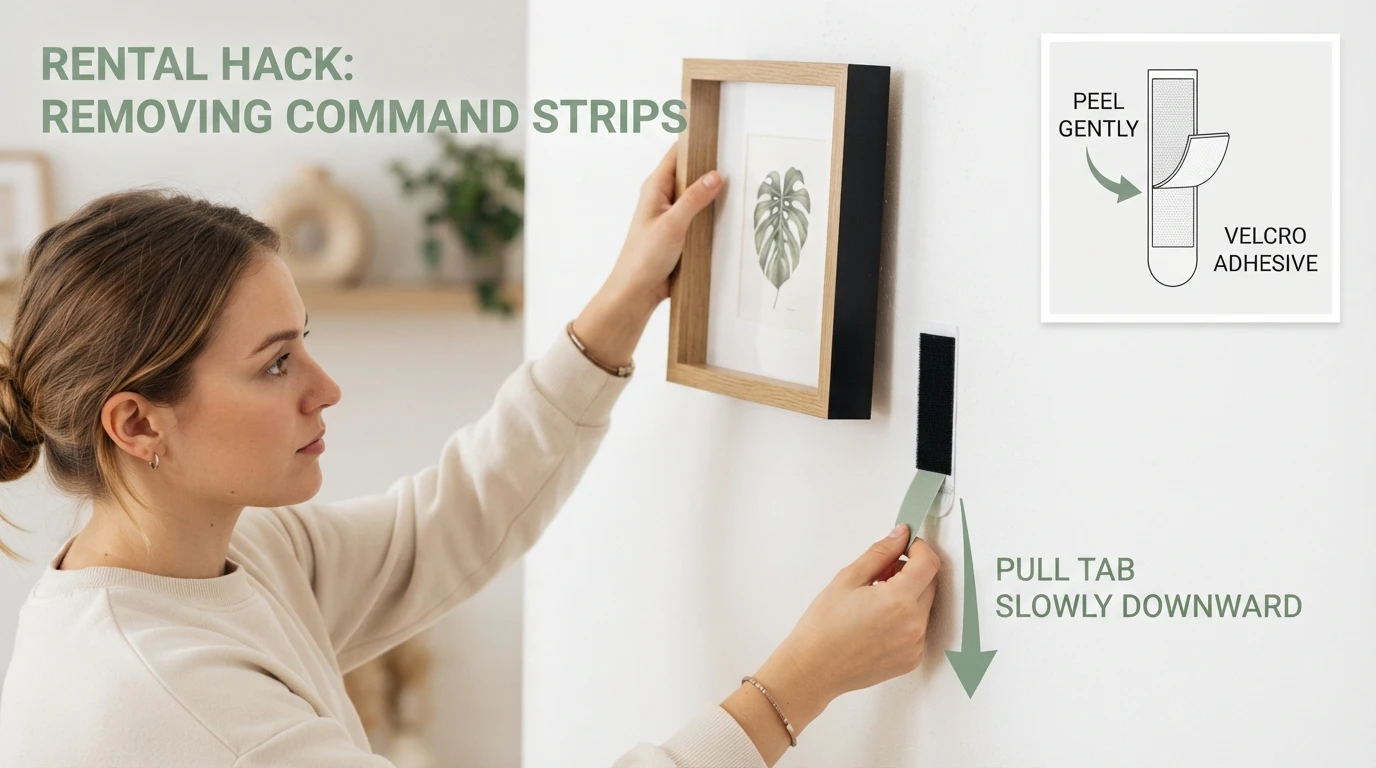
When it’s time to move out, your goal is to leave the walls looking exactly as they did when you moved in. Here’s a step-by-step removal process for both Command and Velcro strips:
For Command Strips
- Locate the pull-tab at the bottom of the strip.
- Grasp the tab firmly and pull straight down, slowly and evenly, keeping the strip close to the wall.
- The adhesive should stretch and release from the surface without damaging the paint. If it doesn’t release, stop—you may need to use a hair dryer on low heat to warm the adhesive slightly.
- Once removed, gently press any raised paint fibers back down with your thumb.
For Velcro Strips
- First, separate the hook-and-loop by gently pulling the two sides apart.
- Starting from a corner, slowly peel the adhesive backing off the wall. Go at a 45-degree angle, pulling gently.
- If the adhesive resists, use a hair dryer on low heat to warm it—this softens the glue and reduces the risk of paint pulling.
- Remove any remaining residue with a soft cloth and a mild soap solution. Test on an inconspicuous area first.
📋 Document before you remove
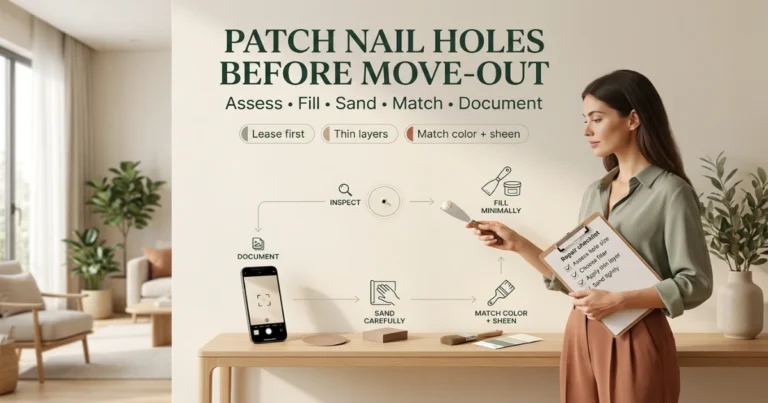
Take dated photos of the walls before you start removing adhesive. This can protect your security deposit if there’s a dispute about pre-existing damage. Also, review your move-in inspection report to see what the walls looked like when you arrived.
Frequently Asked Questions
Which is better for renters: Command strips or Velcro strips?
For most renters, Command strips are the better choice because of their stretch-release removal method, which is lower-risk for painted drywall. Velcro strips hold more weight but require more careful removal. If you’re hanging lightweight frames and decor, start with Command strips. For heavier items, Velcro may be necessary—but always test first.
Can Command strips damage walls?
Command strips are designed to be lower-risk when used correctly, but they can still damage walls if you remove them improperly, use them on textured or unsealed surfaces, or exceed the weight limit. Always follow the package instructions, test an inconspicuous area first, and pull the tab straight down during removal.
How much weight can Command strips hold compared to Velcro strips?
Command strips range from 1–8 lbs per pair depending on the size. Velcro strips typically hold 6–16 lbs per pair, with heavy-duty options at the higher end. Always check the specific product packaging—and use more strips than the minimum to distribute weight safely.
Will Command strips work on textured walls?
Command strips work less effectively on textured walls because the adhesive can’t make full contact with the surface. Light texture may be okay, but heavy orange peel or knockdown texture reduces the bond and increases removal risk. If your walls are textured, consider an alternative hanging method.
How do I remove Velcro strips without damaging paint?
First separate the hook-and-loop sides, then slowly peel the adhesive backing from a corner at a 45-degree angle. If it’s stubborn, use a hair dryer on low heat to warm the adhesive before peeling. Never yank or pull aggressively—that’s what causes paint to lift.
Can I reuse Command strips or Velcro strips?
No. Both Command and Velcro adhesive strips are designed for single use only. Reusing them dramatically reduces holding power and increases the risk of your item falling—or the strip damaging the wall during removal. Always use fresh strips for each application.
Are Command strips safe for bathroom humidity?
Standard Command strips are not recommended for humid areas. However, Command makes a water-resistant version specifically for bathrooms and kitchens. These hold up better to moisture but still require proper surface prep and should not be exposed to direct water spray.
What’s the safest way to hang heavy items in a rental?
For heavy items, consider leaning them against the wall on furniture, using a floor-to-ceiling tension system, or installing a freestanding shelf unit. If you must use adhesive, Velcro heavy-duty strips are a stronger option—but always test an inconspicuous area first, follow removal instructions carefully, and document the condition of the wall before installation.
Renter-Safety Verdict
Command Strips vs Velcro Strips: Final Take
Both products have a place in a renter’s toolkit, but they serve different needs. Here’s how to choose—and how to stay safe.
Safe when
You’ve cleaned the surface properly, stayed within the weight limits, and followed the exact removal instructions. Command strips are safer for most lightweight applications; Velcro is acceptable for heavier items with extra removal care.
Avoid when
Your walls are textured, unsealed, or in a high-humidity area (unless using water-resistant products). Also avoid if your lease explicitly prohibits adhesives or if you’re not confident in your removal technique.
Best next step: Start with Command strips for everyday decor, reserve Velcro for heavier items, and always—always—test an inconspicuous area before committing to a visible wall.
More Renter-Friendly Decor Guidance
Explore our complete guide to hanging art without nails for even more deposit-safe decorating strategies.
Read the full guide →Sources & renter-safety note: This guide is based on manufacturer-published product specifications and general renter best practices. Always verify product details on the official packaging or brand website before use. Individual results vary based on surface condition, application technique, and environmental factors. No adhesive wall product is completely risk-free—test first, follow instructions, and check your lease.