Command Strips for Frames in an Apartment: 7 Tips
A practical, deposit-minded guide to hanging picture frames without nails — what works, what to avoid, and how to remove strips when your lease is up.

Choosing the right Command strip for your frame weight and wall surface is the most important first step.
What Renters Need to Know First
Hanging frames in a rental apartment comes with an underlying tension: you want your space to feel personal and finished, but you also want your full security deposit back. Traditional nails and screws can leave holes that landlords may charge to patch and repaint — and in some leases, even small nail holes can trigger deductions. Before you reach for any hanging solution, check whether your landlord can charge for nail holes under your specific lease terms.
Command strips have become a go-to renter solution because they are designed to be removable without leaving holes. But here is what most quick-tip articles skip: Command strips rely on a pressure-sensitive adhesive bond that performs differently depending on your wall surface, paint type, room humidity, and frame weight. If any of those variables are off, strips can fail — and when they fail, they can tear paint, peel off textured coating, or drop your frame onto the floor.
That does not mean you should avoid using them. It means you should use them strategically. This guide walks you through seven practical tips to lower your risk and help you make a confident, informed decision before you mount anything on your apartment wall.
For a broader look at non-damaging hanging methods, our guide to hanging art without nails covers additional options worth knowing.
Best Low-Risk Approach
If we had to give one clear, renter-first recommendation, it would be this:
This approach covers the most common apartment-wall scenario and gives you the best balance of holding power and clean removability. The key phrase is when used correctly. Skipping surface prep, overloading strips, or rushing removal are the top three reasons strips cause wall damage. For a deeper dive into weight limits across different Command products, see our Command strips weight limit guide.
Step-by-Step Guide: 7 Tips for Hanging Frames With Command Strips
These seven tips move from planning through removal. Each one addresses a specific point where renters commonly run into problems.
-
Check Your Lease and Wall Type Before Buying Anything
Some leases prohibit adhesive wall products entirely. Others require written permission for any wall-mounted decor. Read your lease first. Also, identify your wall surface: smooth painted drywall, textured drywall, plaster, wallpaper, or glossy enamel paint. Command strips work best on smooth painted drywall. If your wall is textured, you need a different approach — textured surfaces reduce adhesive contact area significantly. Snap a photo of your wall texture for reference when shopping.
-
Weigh Your Frame — Don’t Guess
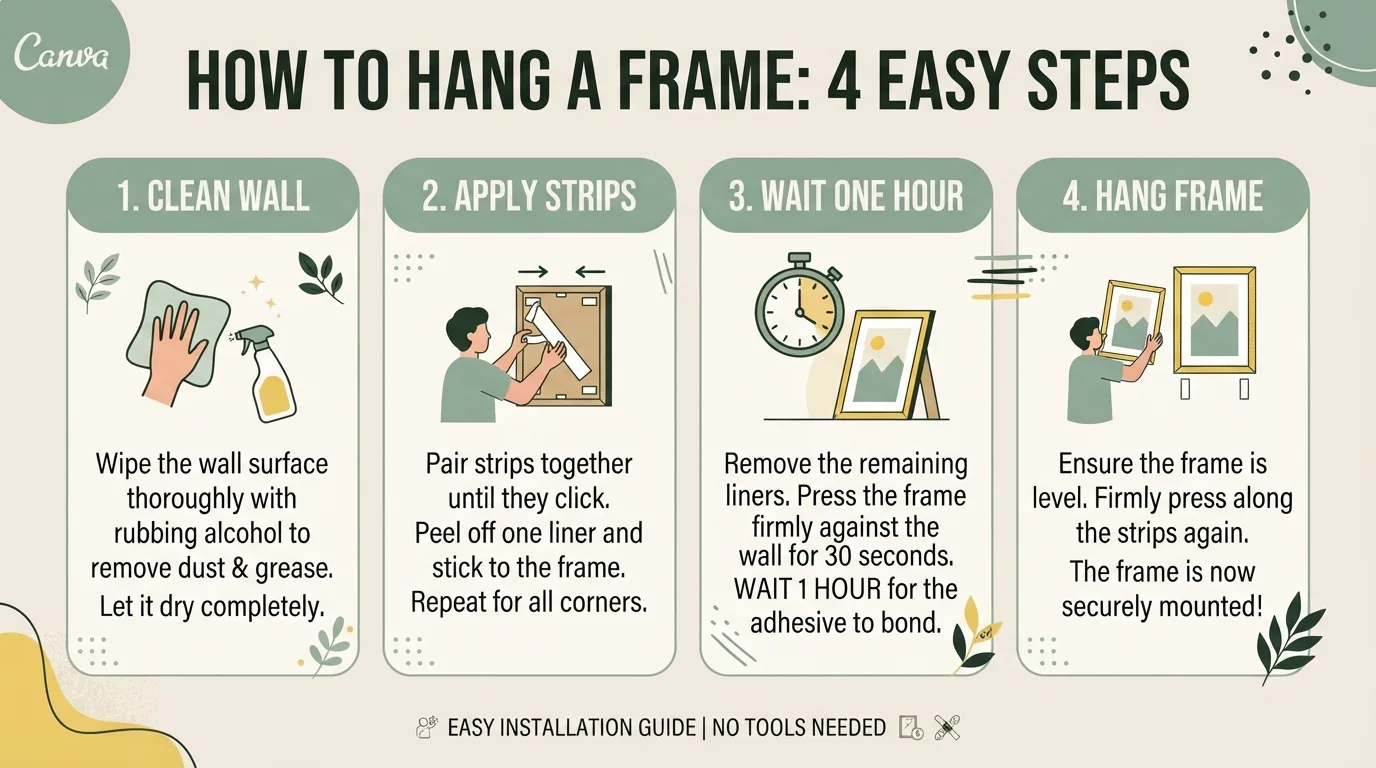
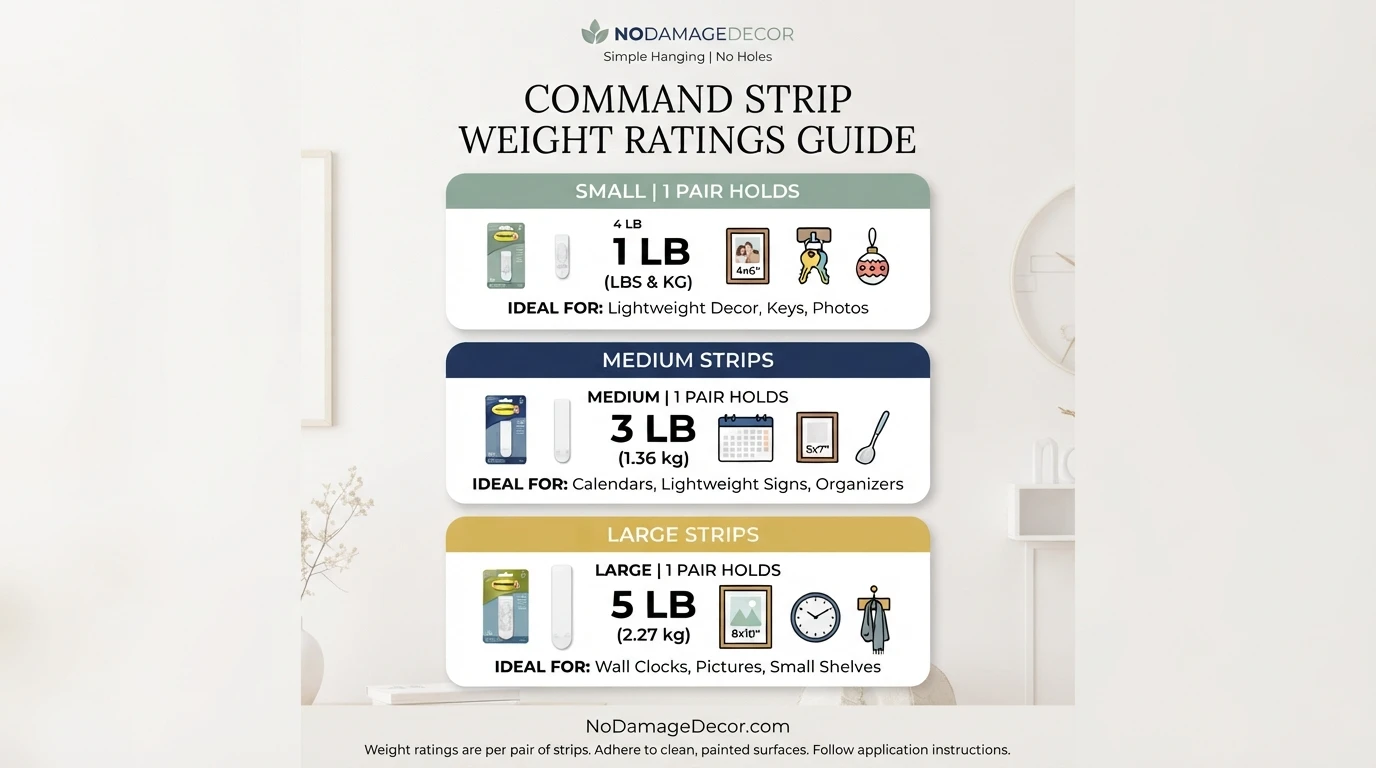
Most frame-related Command strip failures happen because the frame is heavier than the renter assumed. A wood frame with glass, matting, and backing can easily exceed 5 pounds even at modest sizes. Use a kitchen scale or bathroom scale to weigh the fully assembled frame. Command Large Picture Hanging Strips hold up to 16 pounds (four pairs). For frames between 5 and 16 pounds, use at least four pairs. For frames under 5 pounds, the medium strips may suffice. Never push the stated limit — aim to use strips rated for at least 1.5x your frame’s actual weight.
-
Clean the Wall Surface Thoroughly
Adhesive needs a clean, dry, dust-free surface to bond properly. Wipe the area with a clean microfiber cloth lightly dampened with water only — avoid cleaners that leave residue. Let the wall dry completely. If your apartment has kitchen grease residue, bathroom humidity buildup, or dust from construction, this step matters even more. Skip it, and the bond strength drops noticeably.
A quick wipe-down with a dry or lightly damp microfiber cloth removes dust that weakens adhesive bonding.
-
Test in an Inconspicuous Area First
This is the single most valuable renter tip that most articles skip. Before mounting your frame in a visible spot, apply one strip to a hidden area — inside a closet, behind a door, or low on a wall that furniture will cover. Wait 24 hours, then remove it using the proper stretch method. Observe whether any paint lifts, texture peels, or residue remains. If the test strip damages the wall, you know the surface is incompatible before you risk a prominent area.
-
Measure and Mark Placement Before Applying
Once strips are adhered, repositioning is difficult and can weaken the bond. Use a level and a light pencil mark or a piece of painter’s tape to plan your frame placement. Hold the frame against the wall to confirm the position. For gallery walls or multiple frames, plan the entire layout first. Our DIY gallery wall without nails guide covers layout planning in detail.
Planning your layout before you apply strips prevents repositioning mistakes that weaken adhesion.
-
Apply Strips Correctly and Wait Before Hanging
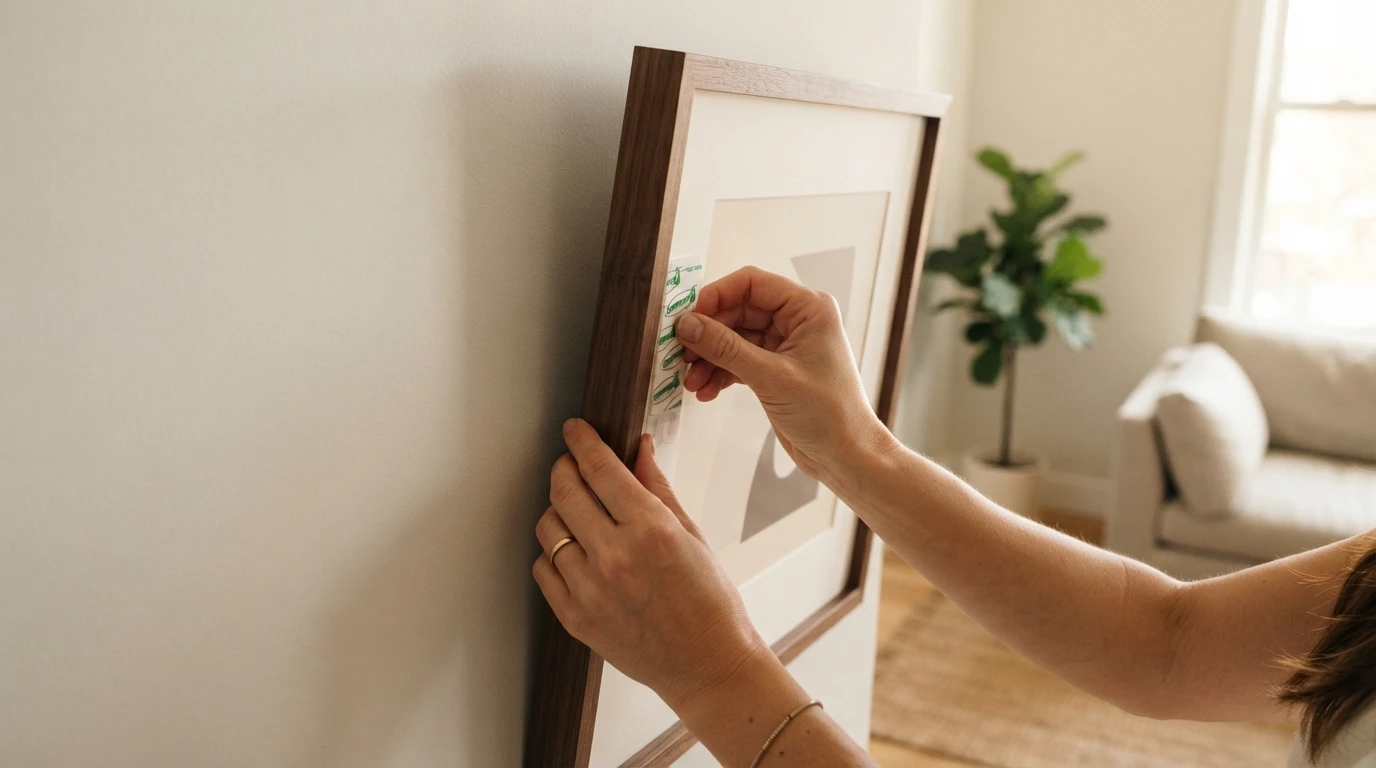
Follow the package instructions exactly. Press each strip firmly against the wall for 30 seconds along its entire length. After applying, wait at least one hour (some products recommend longer) before hanging the frame. This allows the adhesive to build full bond strength. Do not hang the frame immediately after application. For heavier frames near the weight limit, waiting overnight is a safer practice.
-
Document Everything for Move-Out
Take clear before-and-after photos of the wall area — before you apply strips, while the frame is hung, and after removal. Timestamped photos provide evidence of the wall’s condition. At move-out, if any residue or slight paint lift occurs, knowing the original wall condition helps in conversations with your landlord. Clean removal is covered in the Move-Out & Removal Guidance section below.
Surface Compatibility & Renter Risk Table
Not all apartment walls are the same. Use this table to gauge whether Command strips are likely to work on your specific surface.
| Surface | Works Better When | Risk Level | Renter Tip |
|---|---|---|---|
| Smooth painted drywall | Paint is fully cured (30+ days), wall is clean and dry | Lower Risk | Test in a closet first; use proper removal technique |
| Lightly textured drywall (orange peel) | Texture is minimal; strips are pressed firmly into depressions | Medium Risk | Adhesion is reduced; use lighter frames only |
| Heavily textured / knockdown walls | Rarely works reliably | Higher Risk | Consider alternative hanging methods instead |
| Glossy / semi-gloss paint | Surface is lightly scuffed to improve adhesion | Medium Risk | Gloss reduces bond; do not scuff without landlord approval |
| Wallpaper (vinyl or paper) | Wallpaper is firmly adhered with no peeling edges | Higher Risk | Strips may peel wallpaper upon removal; avoid if possible |
| Bathroom walls (humid) | Bathroom has excellent ventilation; strips rated for humidity | Medium Risk | Humidity weakens adhesive over time; check frame weight regularly |
| Plaster walls (older buildings) | Plaster is in good condition, not crumbling | Medium Risk | Older plaster may be brittle; test carefully |
Product & Method Comparison
Command strips are not the only option. Here is how they compare to other renter-considered methods for hanging frames.
| Method | Best For | Max Weight | Surface Risk | Removability |
|---|---|---|---|---|
| Command Large Picture Hanging Strips | Frames up to 16 lb on smooth drywall | 16 lb (4 pairs) | Lower when removed correctly | Stretch-tab removal, designed to be clean |
| Command Medium Picture Hanging Strips | Small frames under 5 lb | 5 lb (3 pairs) | Lower when removed correctly | Stretch-tab removal |
| Removable adhesive putty | Very lightweight items, posters, paper | Under 1 lb | Variable — may leave oily residue | Peel and roll off; residue possible |
| Traditional nails/screws | Heavy frames, mirrors, permanent placement | High (depends on anchor) | Holes require patching | Requires spackle and paint at move-out |
| No-drill adhesive hooks (non-Command) | Temporary lightweight use | Varies (often under 3 lb) | Higher — adhesive may be stronger than paint bond | May tear paint; test first |
If you are considering drilling into walls, first review our article on deposit-costing decor mistakes to understand what landlords commonly charge for at move-out.
Recommended Products for Renter-Friendly Frame Hanging
As an Amazon Associate I earn from qualifying purchases.
Command Large Picture Hanging Strips
Best for: Wood or metal frames with glass, up to 16 pounds total, on smooth painted drywall.
Why renters may like it: These are the most commonly recommended strips for framed art in apartments. Four pairs hold a substantial frame without nails. The stretch-tab removal system is designed to release cleanly when pulled correctly.
Surface caution: Not designed for textured walls, wallpaper, or surfaces with peeling paint. Test in an inconspicuous area first.
Command Medium Picture Hanging Strips
Best for: Small frames, lightweight plastic or thin metal frames, under 5 pounds total.
Why renters may like it: A good match for 4×6, 5×7, and small 8×10 frames without heavy glass. Less adhesive surface area means slightly easier removal on delicate paint.
Surface caution: Same surface limitations as all Command adhesive products. Do not exceed the stated weight limit.
Wall-Safe Adhesive Remover Wipes
Best for: Cleaning any minor adhesive residue left behind after strip removal, without damaging paint.
Why renters may like it: Even proper removal can occasionally leave a slight residue, especially on older paint. A gentle, paint-safe adhesive remover can help address that without scrubbing or harsh chemicals.
Surface caution: Test on an inconspicuous area first. Not all “paint-safe” products work on all paint types. Avoid abrasive scrubbing.
Common Mistakes Renters Make With Command Strips and Frames
These are the errors we see most often in renter forums, move-out inspection disputes, and product reviews. Avoiding them will significantly lower your risk of wall damage.
Safer Alternatives When Command Strips Are Not the Right Choice
If your walls are heavily textured, covered in wallpaper, exposed to humidity, or if your frame exceeds 16 pounds, consider these renter-friendly alternatives:
- Lean frames on shelves or ledges. A picture ledge or a deep windowsill lets you display framed art without any wall attachment. This is the lowest-risk method of all and works in any apartment.
- Use a floor-standing picture easel. For a single statement frame, a decorative easel placed on the floor or a console table eliminates wall contact entirely.
- Try a tension rod gallery system. Floor-to-ceiling tension rods with adjustable shelves or hanging cables can support multiple frames without drilling or adhesives touching the wall surface.
- Explore removable adhesive hooks designed for textured surfaces. Some specialty products claim better performance on light texture. As always, test in an inconspicuous area first.
- Use lightweight canvas prints instead of glass frames. Canvas wraps and unframed prints weigh far less, reducing the demands on any adhesive or hanging system.
For more no-commitment decor inspiration, browse our no-damage wall decor ideas collection.
Move-Out & Removal Guidance
When your lease ends, removing Command strips correctly is just as important as applying them correctly. Here is a step-by-step removal checklist for renters:
- Remove the frame first. Separate the frame-side strip from the wall-side strip by sliding or lifting the frame off carefully. Do not yank.
- Locate the stretch tab. The wall-side strip has a small tab at the bottom. Do not cut it off. If the tab has been painted over or is missing, proceed with extra caution.
- Pull straight down — slowly. Grip the tab and pull it straight down along the wall surface, stretching it. The goal is to stretch the adhesive until it releases. Pulling slowly and steadily is safer than pulling fast.
- Keep the strip parallel to the wall. Do not pull outward at an angle. The strip should stretch in the same plane as the wall. Outward pulling concentrates force on the paint.
- If resistance is high, use heat. A hair dryer on low heat, held a few inches from the wall for 15–30 seconds, can soften the adhesive and make removal easier. Do not overheat the paint.
- Check for residue. After removal, inspect the area in good light. If a faint adhesive residue remains, a gentle wipe with a damp microfiber cloth or a paint-safe adhesive remover may help.
- Photograph the wall after removal. Timestamped photos of the clean, undamaged wall provide documentation for your move-out inspection.
For a complete walkthrough, read our dedicated guide: how to remove Command strips without damage.
The correct removal technique: pull the stretch tab straight down slowly, keeping the strip parallel to the wall.
Sources & Renter-Safety Note
The guidance in this article is based on manufacturer instructions for Command brand adhesive products, widely reported renter experiences, and general best practices for temporary wall mounting on painted drywall. No two apartment walls are identical. Paint age, paint type, application technique, humidity, temperature, and frame weight all affect outcomes. This article does not guarantee that Command strips will work on your specific wall surface or that removal will leave zero trace. Always test in an inconspicuous area first. Always follow the exact product package instructions for your specific Command product. Always check your lease before making changes to your apartment.
Frequently Asked Questions
Do Command strips really work for hanging picture frames in an apartment?
Yes — on smooth, clean, painted drywall with frames that fall within the product’s stated weight limit, Command strips can hold picture frames securely for months or years. Success depends on proper surface preparation, correct product selection, and following the application and removal instructions exactly. They are not a guaranteed solution for every wall type.
What is the maximum weight Command strips can hold for a frame?
Command Large Picture Hanging Strips are rated to hold up to 16 pounds when using four pairs. Individual strip pairs hold approximately 4 pounds each. Always weigh your frame fully assembled — including glass, matting, and backing — and use strips rated for at least 1.5 times the actual weight when possible.
Will Command strips damage my apartment wall paint when I remove them?
When removed correctly — pulling the stretch tab straight down slowly along the wall surface — Command strips are designed to release cleanly from most smooth painted drywall. However, damage can occur if the paint is old, improperly adhered, freshly applied (less than 30 days cured), or if the strip is pulled outward instead of downward. Testing in an inconspicuous area first is the best way to assess your specific wall’s response.
Can I use Command strips on textured apartment walls?
Light orange-peel texture may work with reduced holding power, but heavily textured or knockdown walls significantly reduce the adhesive contact area. This makes bond failure more likely. If you must try, use strips rated for twice the frame weight and test in a hidden area for at least 48 hours before committing. For heavily textured walls, alternative hanging methods are generally safer.
How long do Command strips last once a frame is hung?
On a properly prepared surface with a frame within the weight limit, Command strips can hold for years under stable indoor conditions. However, temperature swings, humidity, and vibration (from slamming doors, nearby foot traffic, or thin walls) can gradually weaken the bond. Periodically check that frames remain secure — especially in bathrooms, kitchens, and near exterior walls.
Are Command strips allowed in most rental apartments?
Many leases do not specifically address adhesive strips, but some prohibit any wall-mounted items or require written permission for alterations. Read your lease carefully. If the lease is unclear, consider asking your landlord or property manager in writing before applying strips — especially for large or heavy frames.
What should I do if a Command strip tears the paint during removal?
Stop pulling immediately. Apply gentle heat with a hair dryer to soften the remaining adhesive, then continue pulling slowly. If paint has lifted, document the area with photos. Small paint chips can sometimes be touched up with a matching paint sample — many landlords keep records of wall paint colors. For larger damage, be upfront with your landlord; proactive communication often results in a more reasonable resolution than surprising them during the final inspection.
Can I reuse Command strips after removing them?
No. Command strips are designed for single use only. Once the adhesive tab has been stretched for removal, the strip cannot form a reliable bond again. Always use fresh strips for any new application.
Renter-Safety Verdict
Safe when: You have smooth, cured painted drywall; your frame weighs well under the strip’s weight limit (ideally no more than 70% of the rating); you clean the wall, test in a hidden area, apply correctly, wait the recommended time, and remove by stretching the tab straight down slowly.
Avoid when: Your walls are heavily textured, wallpapered, freshly painted, or in high-humidity areas without proper product ratings; your frame exceeds 16 pounds; or your lease explicitly prohibits adhesive wall products.
Best next step: Weigh your frame, check your wall surface, and test one strip in an inconspicuous closet area. That single test will tell you more about your specific apartment’s compatibility than any general guide can.
Ready to Hang More Without Risk?
Now that you know how to approach frames with Command strips, explore our complete guide to hanging art, mirrors, and decor — all without nails or unnecessary deposit risk.
Explore: Hang Art Without Nails →