How to Soundproof a Shared Wall in a Rental Apartment
Reduce voices, TV noise and room echo with renter-conscious methods that avoid permanent construction. The goal is meaningful noise reduction—not a promise of full sound isolation.
Check flanking paths first
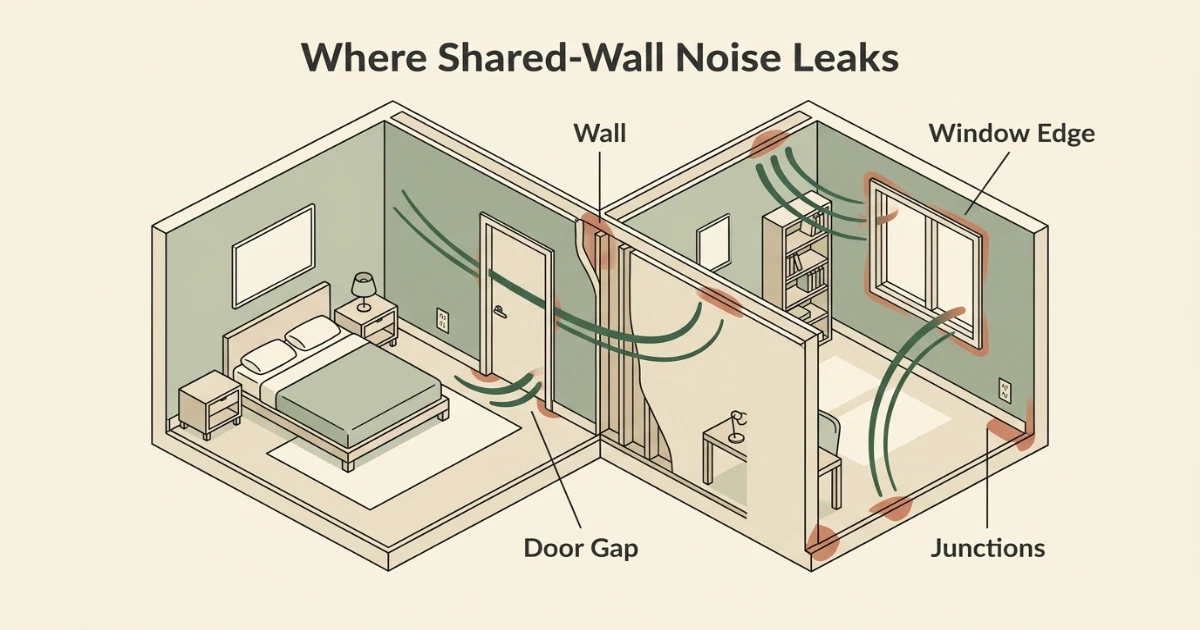
Doors, windows, junctions and penetrations can let sound bypass an otherwise decent wall. Find the path before buying treatment.
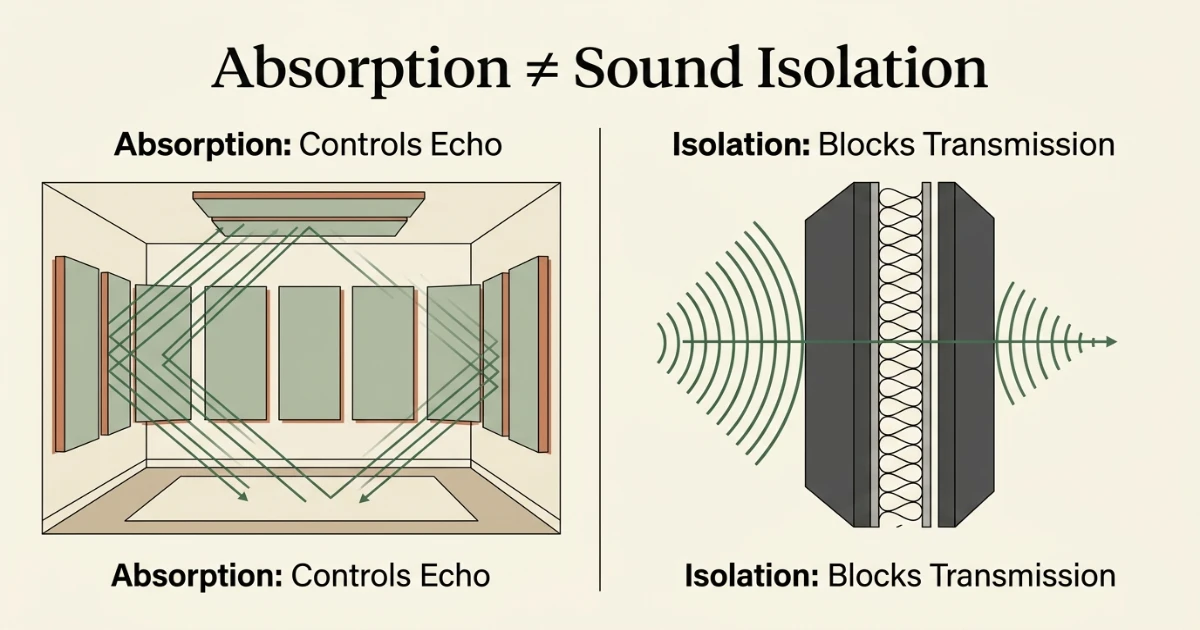
Absorption is not isolation
Foam, fabric and blankets can reduce room reflections. True sound blocking depends on the whole building assembly, mass, sealing and decoupling.
Keep heavy treatments freestanding
Lightweight panels may suit removable mounting when the exact surface and product allow it. Heavy blankets need a properly rated support method.
No method is fully damage-free
Lower-risk methods exist, but paint condition, texture, and wall quality affect removal. Test an inconspicuous area first and check your lease.
How to Soundproof Shared Wall Apartment Noise Without Drilling
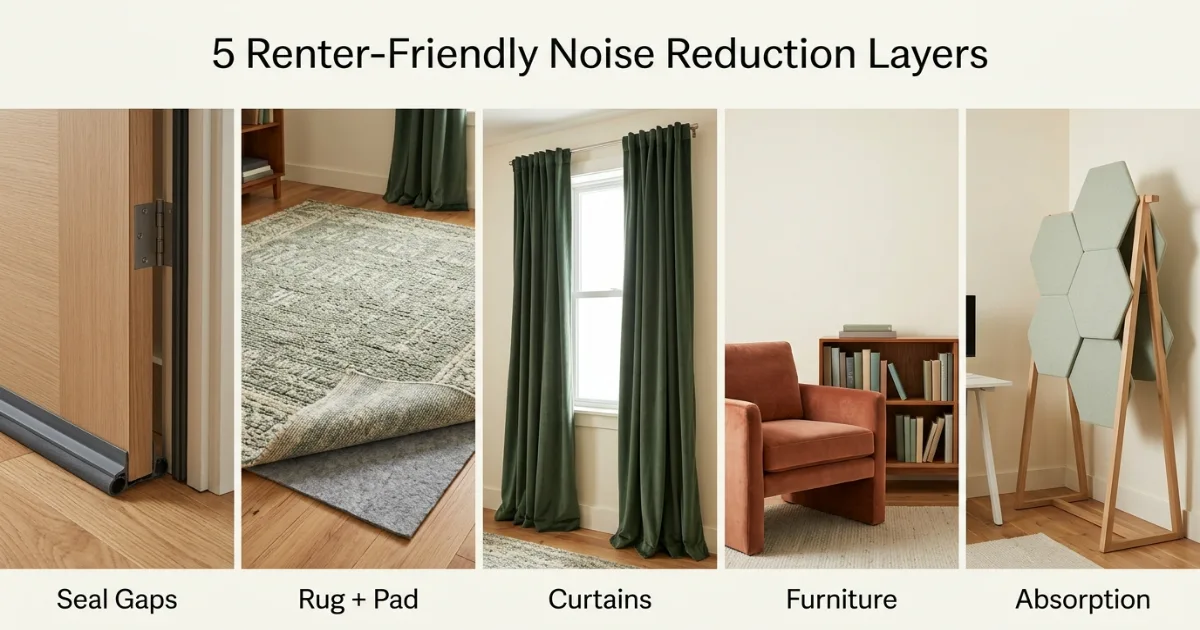
In a rental, think in layers. Each step solves a different part of the problem, and none should be treated as a guaranteed cure.
- Identify the noise type. Voices and television are mainly airborne; footsteps, bass vibration and furniture impact can travel through the structure.
- Look for flanking paths. Check door edges, window perimeters, wall/ceiling junctions and visible penetrations. Do not open electrical boxes, block vents or modify building systems yourself.
- Seal only appropriate reversible gaps. Use a draft stopper or weather seal on a compatible door/window surface, following the exact product instructions.
- Use furnishings for room-side control. Rugs, curtains, upholstered furniture and a stable low bookcase can reduce reflections and sometimes make the room feel quieter without changing the wall assembly.
- Add absorption where useful. Lightweight acoustic panels or a quilted sound blanket can control echo and reflected sound, but they should not be marketed as a replacement for structural soundproofing.
Why Shared Walls Leak Sound
Noise can reach your apartment by more than one path. Airborne sound such as conversation, television and music can transmit through the separating wall, but it can also travel around it through doors, windows, ceiling/floor junctions, service penetrations and other flanking paths. Impact and vibration noise can travel through the building structure itself.
That distinction matters because surface treatments solve different problems. Porous materials such as acoustic foam mainly absorb reflections inside your room. They can make speech and media sound less echoey, but they do not turn a lightweight partition into a high-isolation wall. Structural sound isolation normally depends on the complete wall/floor/ceiling assembly, including mass, insulation, airtightness and decoupling.
Before buying anything, listen from several points in the room. If voices are much louder near the door or a window edge, a flanking path may deserve attention first. If the noise is equally strong across the wall, or you mainly feel vibration and bass, a renter-side surface treatment has more limited potential.
Seal Appropriate Gaps Before Buying Wall Panels
Airborne sound can bypass a wall through flanking paths, so check the obvious openings first. Doors and windows are the easiest renter-controlled places to inspect because they can have visible perimeter gaps.
- Gap under an interior or entry door
- Door jamb and stop where a compatible weather seal can compress
- Window sash or frame gaps that the lease allows you to weather-strip
- Visible building penetrations that should be reported to management rather than filled casually
A slide-under draft stopper is the lowest-commitment option because it does not bond to paint. Self-adhesive weather stripping can also reduce a door or window air gap when the exact profile fits and the manufacturer approves the surface.
Gap sealing is useful when sound is following an air path, but it will not solve structure-borne vibration or transform a weak wall assembly into a professionally isolated one.
Renter-Friendly Soundproofing Methods Compared
No single method solves a shared-wall noise problem. The table below separates gap control, room absorption and furnishing changes so you can choose methods that match the actual noise path.
| Method | Best for | Limitation | Surface risk |
|---|---|---|---|
| Weather stripping and door sweeps | Sealing door and window gaps | Only addresses gaps, not wall mass | Low; adhesive residue possible on textured trim |
| Lightweight acoustic foam panels | Reducing echo and absorbing high-frequency sound inside the room | Does not block neighbor noise through the wall on its own | Moderate; adhesive strips may pull weak paint |
| Sound-absorbing blanket | Reducing room reflections and adding temporary soft coverage | Not a tested replacement for a sound-isolating wall assembly | Low when freestanding; mounting risk depends on support method |
| Heavy curtains | Reducing window and sliding-door noise | Limited wall coverage; needs a rod or track | Low to moderate; rod mounting may require holes |
| Rugs and rug pads | Reducing reflections and impact noise generated in your own room | Limited effect on neighbor noise already traveling through a shared wall | Very low; no wall contact |
| Low bookcases and upholstered furniture | Adding soft/dense furnishings and breaking up room reflections | Not a substitute for a rated wall assembly; tall furniture needs tip-over protection | Low when stable and safely freestanding |
Lightweight Acoustic Panels: Useful for Echo, Not Wall Isolation
Acoustic foam and other porous panels are sound absorbers. Their job is to reduce reflections and reverberation inside the room. That can improve call clarity, make a TV sound less harsh and reduce the “hollow” quality of a sparsely furnished apartment.
They should not be sold to renters as a way to block a neighbor’s voice through a shared wall. Sound isolation depends on the wall assembly and flanking paths; surface foam does not add the kind of sealed, dense construction used for high sound-transmission loss.
Choose lightweight panels when…
- Your own room sounds echoey or harsh
- You want better speech or media clarity
- The panel is light enough for a mounting system that is explicitly compatible with both the panel and your wall
Do not choose foam panels when…
- Your only goal is to stop voices or bass coming through the wall
- The wall is textured, fragile, wallpapered or otherwise excluded by the adhesive manufacturer
- The panel or mounting method would exceed the current product rating
For removable picture-hanging products, 3M currently says to wait seven days after painting, clean with rubbing alcohol, avoid wallpaper and follow the exact product rating and release method. Do not use a hidden test to override a surface the manufacturer excludes.
Sound-Absorbing Blankets: Portable Coverage With Real Limits
A large quilted blanket can absorb reflected sound and create temporary soft coverage over a hard wall. That can make a room feel less live and may reduce some perceived chatter, especially when combined with gap control and furnishings. It should not be described as equivalent to a tested sound-isolating wall assembly.
Weight is the practical renter issue. The verified US Cargo Control blanket below weighs about 12 pounds and has grommets for hanging. That does not mean a generic removable hook is appropriate: the blanket’s own weight, leverage, movement and support spacing all matter. A freestanding garment rack or another properly rated support is a safer renter-first plan when drilling is not allowed.
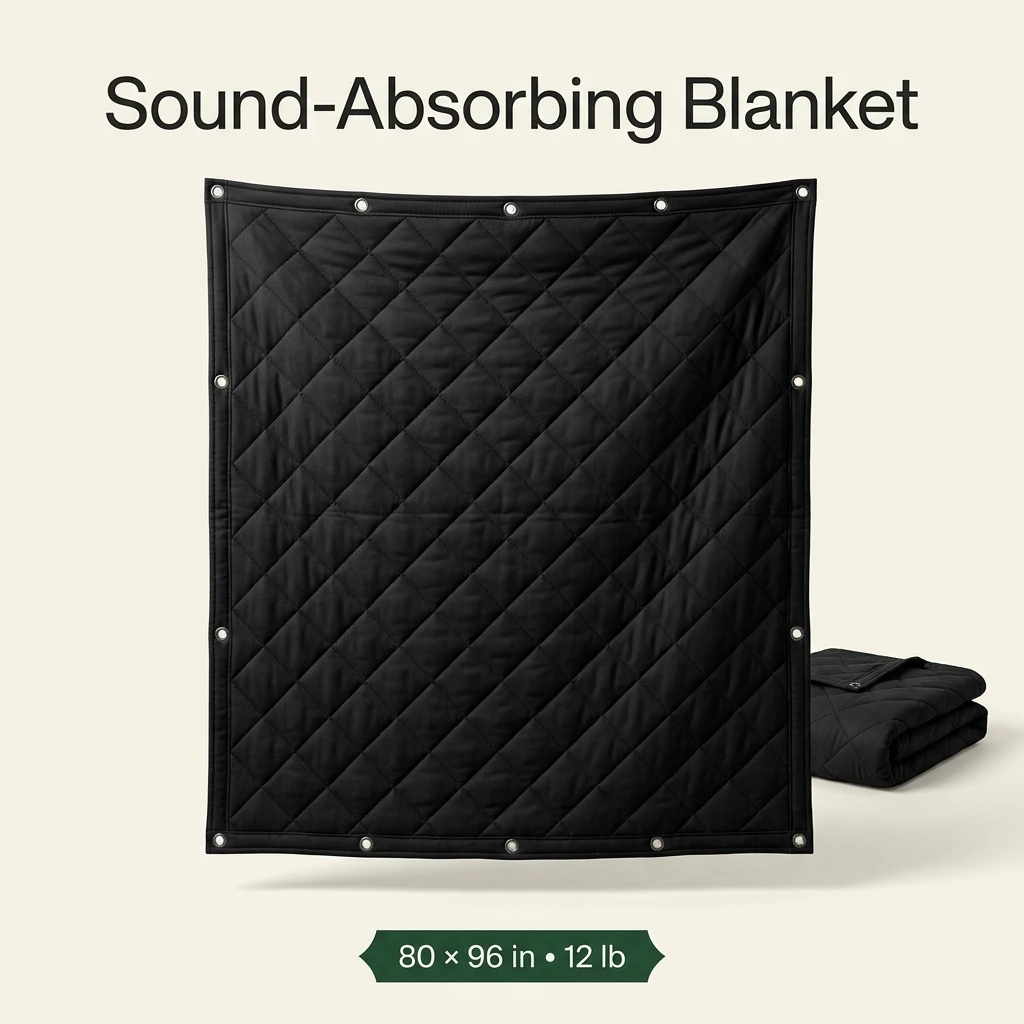
US Cargo Control 80″ x 96″ Sound-Absorbing Blanket with Grommets
Best for: portable room-side sound absorption and temporary wall coverage
The manufacturer’s current page lists an 80-by-96-inch quilted sound blanket weighing 12 pounds, with 18 one-inch grommets, a recycled-cotton fill and machine-washable construction.
Limitation: Treat this as an absorber, not a guaranteed sound barrier. Use a support method that is rated for the blanket and does not create a fall hazard.
Check Price on AmazonWeather Stripping and Door Draft Stoppers
Door and window gaps are easy flanking paths to inspect. The goal is not to compress the door until it no longer works; it is to match a seal profile to a real air gap without interfering with latching, required clearance or building safety.
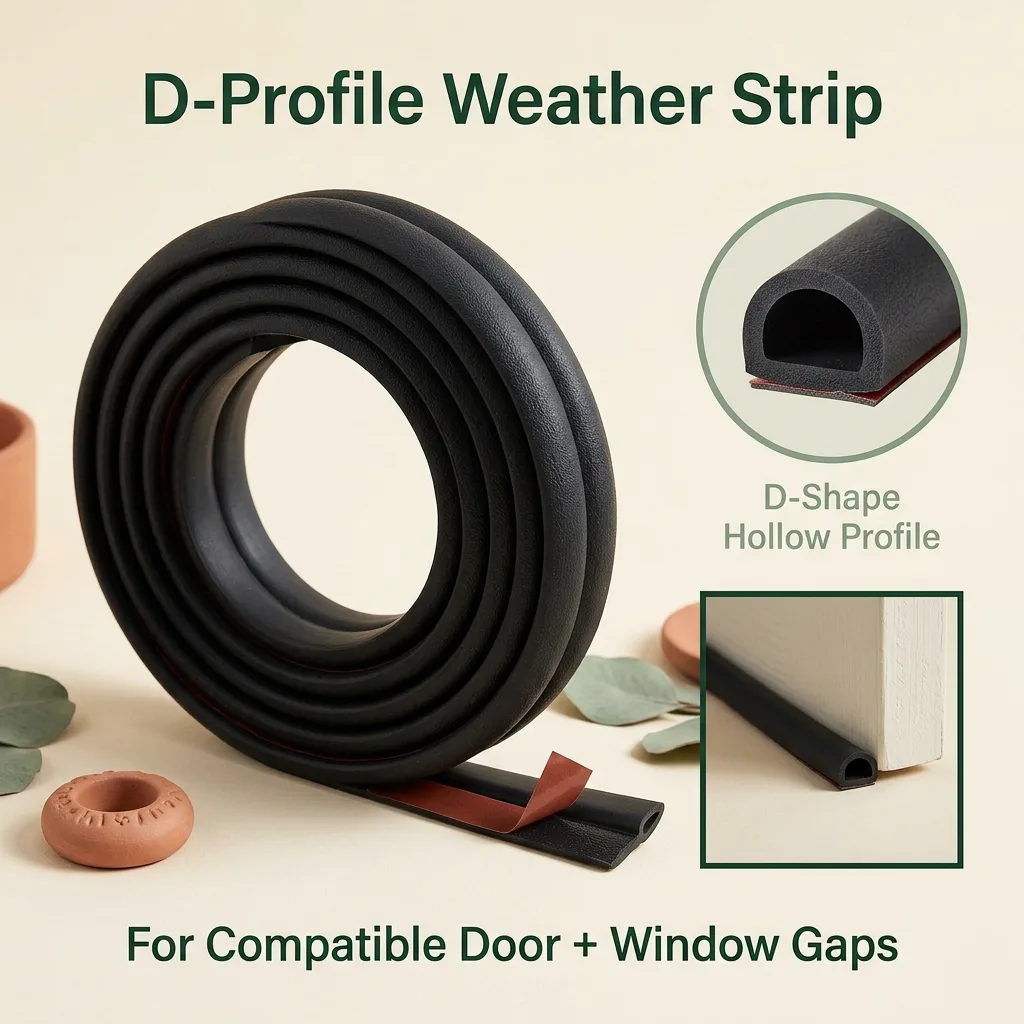
Protalwell 20FT Silicone D-Shaped Self-Adhesive Weather Stripping, Black
Best for: compatible door or window perimeter gaps
This 20-foot black silicone D-profile weather strip is intended for compatible door and window perimeter gaps. The referenced profile is approximately 3/8 inch wide by 1/4 inch thick; verify the current listing dimensions before ordering.
Limitation: Adhesive performance and clean removal depend on the trim finish and preparation. Do not use it where the seal prevents a door from closing, latching or meeting a required clearance.
Check Price on Amazon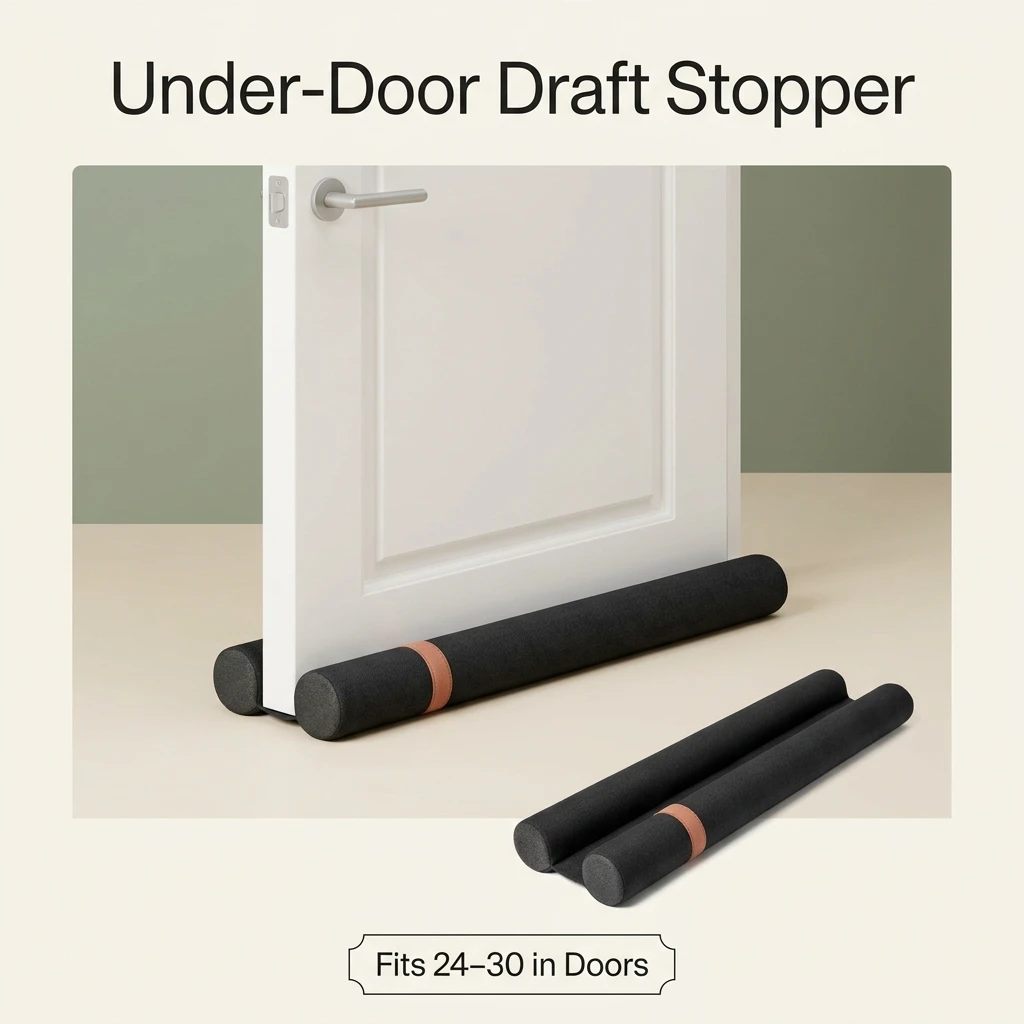
MAXTID Under Door Draft Stopper, Adjustable 24″ to 30″
Best for: blocking an under-door air path without adhesive on the frame
MAXTID’s current product page links ASIN B07VWN9RLB for its adjustable double-sided stopper sized for 24- to 30-inch doors and windows. The manufacturer says it moves with the door and can cover gaps up to about 1 1/5 inches.
Limitation: Measure the door first and make sure the stopper does not interfere with door operation, thresholds, fire/smoke requirements or accessibility.
Check Price on AmazonFurniture and Soft Furnishings as Sound Buffers
Not every soundproofing method requires a purchase. The way you arrange what you already own can make a measurable difference.
Bookshelves and heavy furniture
A stable low bookcase or other dense freestanding furniture placed near the shared wall can add soft/dense material and break up reflections inside the room. It is not a rated sound barrier, and tall furniture introduces tip-over risk that may require anchoring. For renters, choose a stable configuration that follows the furniture manufacturer’s safety instructions.
An upholstered sofa or armchair near the shared wall adds absorption and can make the room sound less reflective. It may improve comfort, but it does not guarantee meaningful reduction in sound transmitted through the building assembly.
Rugs and rug pads
Hard floors reflect sound and can make footsteps and room noise more noticeable. A thick rug with a suitable pad can reduce reflections and some impact noise generated inside your room. It is especially useful when your own footsteps are disturbing a downstairs neighbor, but it is not a fix for impact noise arriving through a shared wall.
Heavy curtains
Windows are thin and acoustically weak. A floor-length, heavier curtain can add absorption around an acoustically weak window and reduce reflections inside the room. It is not a substitute for a high-performing window assembly. If you already have curtains, adding a compatible liner can increase soft surface coverage without changing the wall.
| Furnishing | What it helps with | Renter consideration |
|---|---|---|
| Bookshelf against shared wall | Room reflections and acoustic comfort near the shared wall | Freestanding; no wall attachment needed |
| Upholstered sofa or chair | Absorption and mass | Freestanding; no damage risk |
| Thick rug with pad | Impact noise and floor vibration | No wall contact; very low risk |
| Heavy curtains | Window noise and echo | Rod mounting may require holes; check lease |
Surface Compatibility and Damage Risk
Rental surfaces vary. Paint condition, texture, age and previous repairs all affect removable adhesives. Use the exact product’s approved-surface list and removal instructions rather than a generic “renter-safe” label.
| Surface | Renter-conscious approach | Key caution |
|---|---|---|
| Smooth, sound painted drywall | May suit lightweight removable mounting when the exact product approves it | Paint still needs to be fully cured and firmly bonded |
| Fresh paint | Wait the adhesive manufacturer’s stated cure period | Current Command picture-hanging guidance says at least seven days after painting |
| Textured or knockdown wall | Prefer freestanding treatment | Many removable strips do not make reliable full contact on strong texture |
| Wallpaper or delicate wall covering | Avoid generic removable wall adhesive unless specifically approved | Current Command guidance excludes wallpaper |
| Painted wood trim | Use only a weather seal compatible with that finish | Older or brittle trim paint can lift during removal |
| Brick, rough concrete or unknown masonry | Use freestanding treatment unless a product explicitly supports the surface | Do not improvise with ordinary wall strips |
What Not to Do
- Do not rely on foam panels alone. Lightweight acoustic foam absorbs echo inside the room but does not block neighbor noise through a shared wall.
- Do not assume removable hooks can support a heavy blanket. Use only a support system whose exact rating, spacing, surface and installation instructions cover the blanket and setup. A freestanding rack is often the simpler renter option.
- Do not install permanent sealants or caulk without written permission. Some acoustical sealants are removable, but others are not. Check your lease first.
- Do not cover outlets or block HVAC vents. Soundproofing materials should never obstruct airflow, electrical access, or safety equipment.
- Do not expect full soundproofing. Complete sound isolation requires structural changes. Renter-friendly methods reduce noise; they do not eliminate it.
Renter-Safety Verdict
For a rental shared wall, aim for noise reduction and acoustic comfort, not a promise of full soundproofing. The most renter-conscious sequence is:
- Identify whether the problem is airborne sound, flanking sound or structure-borne impact.
- Address reversible door/window air gaps with an appropriate draft stopper or compatible weather seal.
- Use rugs, curtains and upholstered furnishings to reduce reflections inside your room.
- Use lightweight acoustic panels only for echo control, and mount them only with a method approved for both the panel and wall.
- Use a quilted acoustic blanket as a portable absorber/covering, not as a substitute for structural sound isolation.
If voices, bass or vibration remain intrusive after these reversible steps, the problem may be in the building assembly or a flanking path you cannot safely alter. Document the issue and ask property management about building-side solutions.
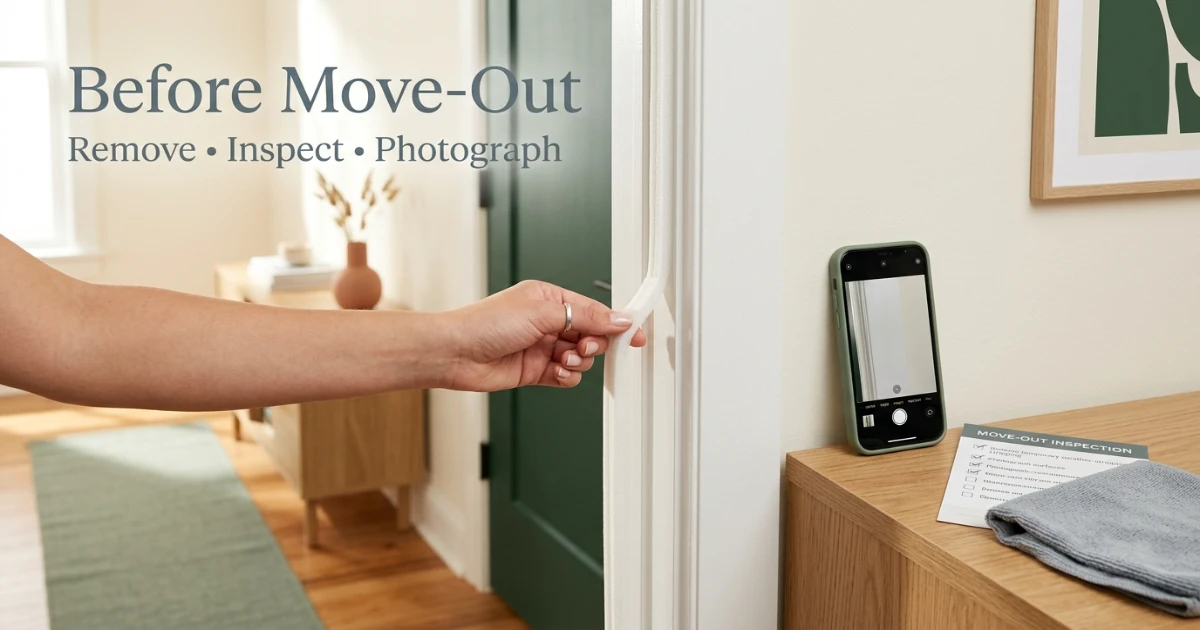
Before attaching anything, review the lease, photograph the surface, and follow the exact manufacturer instructions. If you use removable strips elsewhere in the setup, see the Command strips weight limit guide. For broader renter mistakes, see how to decorate without losing your security deposit.
Frequently Asked Questions
What is the most effective renter-friendly way to reduce shared-wall noise?
Start by identifying the noise path. Address reversible door or window gaps where appropriate, then use rugs, curtains and upholstered furnishings to reduce room reflections. Acoustic panels and blankets can help absorption, but full sound isolation usually requires changes to the building assembly.
Do acoustic foam panels block neighbor noise?
Not by themselves. Lightweight foam is mainly an absorber: it reduces echo and reverberation inside your room. Blocking sound transmission through a shared wall depends on the wall assembly, airtightness, mass, decoupling and flanking paths.
Will removable weather stripping damage painted trim?
It can. Results depend on the adhesive, paint condition, surface preparation and removal method. Use a product intended for the trim surface, follow its removal instructions, and avoid fragile, chalky or uncured paint.
Can I hang a 12-pound acoustic blanket with Command strips or hooks?
Do not assume so. The blanket’s own weight is only one part of the load; movement, leverage, hook spacing and the exact product rating also matter. Use a support method whose current instructions explicitly cover the load and surface. A freestanding rack is often the lower-commitment rental option.
How can I reduce shared-wall noise without drilling?
Use a slide-under door draft stopper, compatible removable weather seals, rugs with pads, curtains, upholstered furniture, a stable low bookcase and freestanding acoustic treatment. These methods avoid drilling but cannot reproduce the performance of structural soundproofing.
What should I check in my lease before adding acoustic treatment?
Check rules on adhesives, wall attachments, window or door alterations, furniture anchoring and noise. If a method is unclear, ask the property manager in writing and keep the response with your move-in photos.
Related Renter Guide
Keep Your Deposit Safe While Decorating
Soundproofing is one part of renter-friendly decorating. Learn how to hang, mount, and remove decor without creating deposit risk.
Explore No-Damage Wall Decor IdeasSources & Renter-Safety Note: Acoustic guidance is based on the distinction between sound absorption, transmission loss and flanking paths described by ROCKWOOL and Acoustical Surfaces. Product-specific details come from current manufacturer/product information. Rental rules vary by property and jurisdiction; this article is general information, not legal advice.