Best Wall Safe Tape for Posters in Apartments
Hang your posters securely without nails, screws, or deposit-risk damage — using renter-conscious adhesive methods that work on real apartment walls.
Quick Answer
For lightweight unframed posters, Command Poster Strips are the most widely used renter-friendly option for smooth painted drywall. For very light paper items and temporary display, Scotch Wall-Safe Tape offers a low-tack, removable hold. For double-sided mounting of small posters and photos on primed or painted walls, Scotch Removable Poster Tape provides a clear, discreet bond. Always test a small area first, follow the manufacturer’s surface and weight guidance, and check your lease before hanging anything.
At a Glance
Best for lightweight posters
Command Poster Strips hold firmly on smooth painted drywall and remove cleanly when the pull-down technique is followed.
Best for temporary display
Scotch Wall-Safe Tape uses low-tack adhesive designed for short-term hanging of paper items on multiple wall surfaces.
Best for double-sided mounting
Scotch Removable Poster Tape is a clear, double-coated tape that bonds on contact and removes from primed or painted walls.
Critical rule
No adhesive method is universally damage-free. Texture, paint condition, humidity, and removal technique all affect the outcome.
Why Apartment Walls Are Different
Rental walls are not blank canvases. They are layered surfaces with a history: multiple coats of builder-grade paint, patch jobs from previous tenants, sometimes a skim coat of joint compound that never fully cured, and texture applied unevenly. That history directly affects how any adhesive behaves.
A strip that holds beautifully on a smooth, well-cured wall in one apartment may fail on a chalky, low-VOC paint surface in another. Or it may hold too well — bonding to the paint more strongly than the paint bonds to the drywall — and peel a patch of finish when removed. Neither outcome is predictable from the product label alone.
This is why renter-conscious poster hanging starts with the wall, not the tape. Before you choose a product, assess what you are actually sticking to.
Three questions before you hang anything
- Is the wall smooth, or does it have visible texture or bumps?
- Was the wall painted recently? (Fresh paint needs time to cure.)
- Does your lease say anything about adhesives, wall coverings, or hanging hardware?
If you cannot confidently answer all three, start with a small, low-weight test on an inconspicuous area — behind a door, inside a closet, or near the baseboard.
Deposit risk is not just about holes. Tape residue, pulled paint, and adhesive stains are all commonly listed as deductible damage beyond normal wear and tear. What counts as normal wear varies by state, city, and lease, so review your rental agreement and keep dated move-in photos of every wall surface.
How Wall Safe Tape for Posters Actually Works
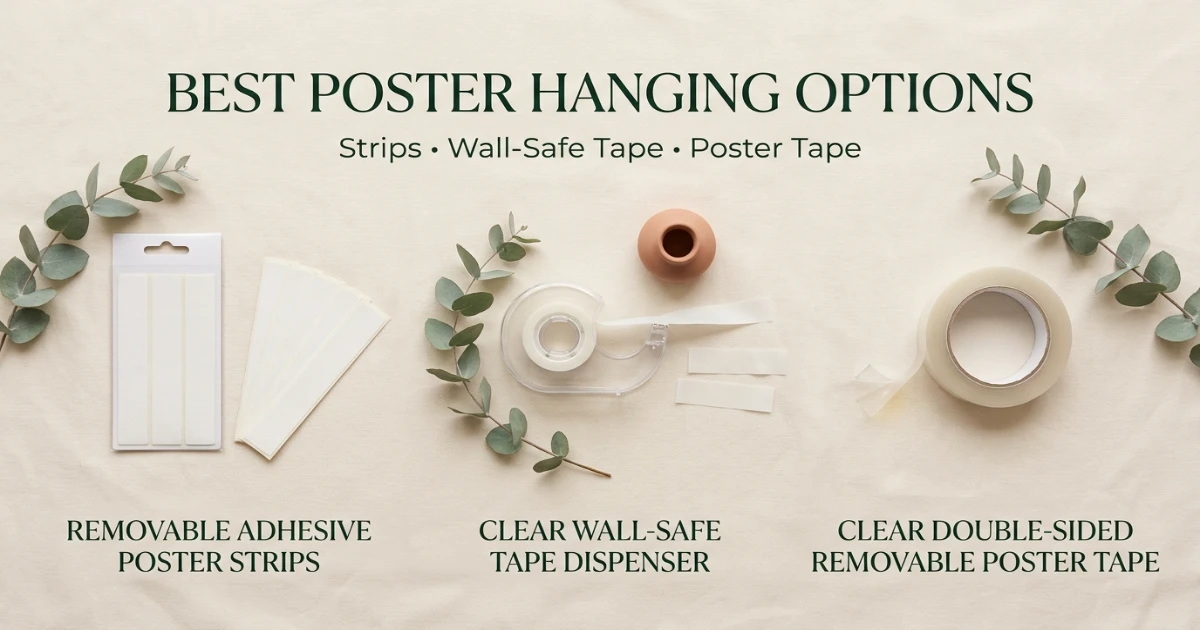
Wall-safe tapes and strips fall into three broad categories, and each has a different mechanism, weight range, and best use case.
1. Interlocking adhesive strips (Command-style)
These use a two-part system: one adhesive pad attaches to the poster or frame, another attaches to the wall, and the two interlock. The wall-side adhesive is designed to stretch and release when pulled straight down. This is the category most people mean when they search for poster hanging strips. They work best on smooth, painted surfaces and are not recommended for wallpaper or heavily textured walls.
2. Low-tack single-sided tape (Wall-Safe-style)
This is essentially a stronger, wider version of a removable label adhesive. It sticks securely enough to hold light paper items for temporary display — typically up to about 30 days according to manufacturer guidance — and peels away without leaving residue on most painted surfaces, glass, and metal. It is not a mounting tape for anything with weight or dimension.
3. Double-sided removable mounting tape
This category uses a double-coated adhesive film. One side bonds to the poster, the other to the wall. Removal is usually by peeling rather than stretching. Weight capacity is low — often around a quarter-pound per application — and performance depends heavily on the surface being clean, dry, and primed or painted. These are best for small, flat items like photos, cards, and lightweight prints.
Surface Compatibility Check
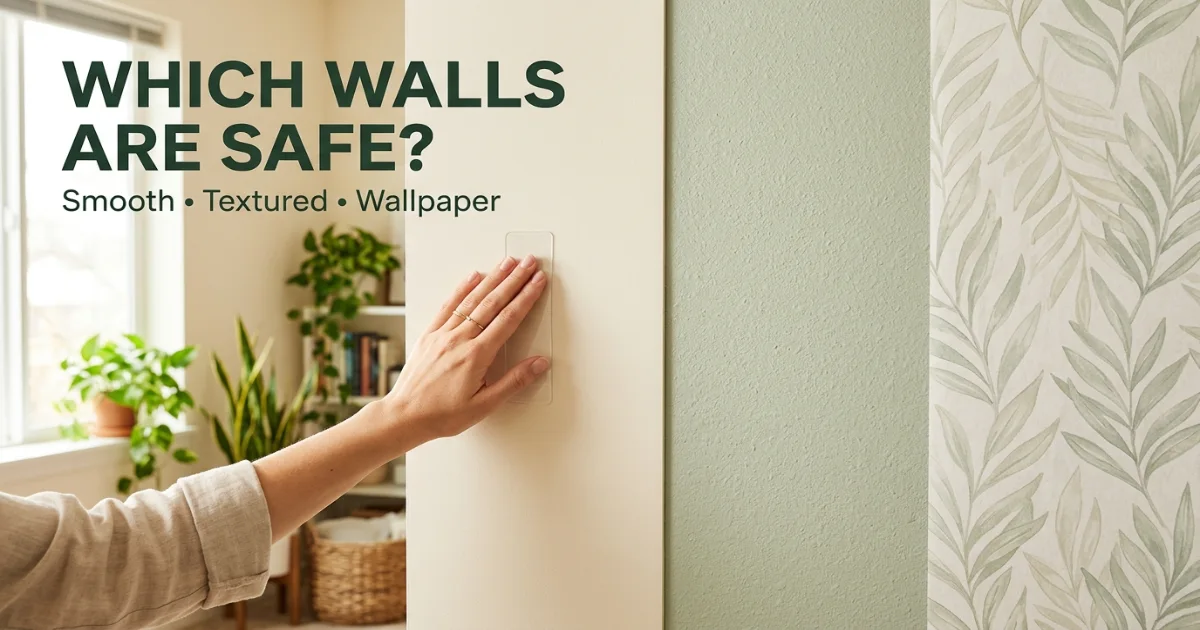
The single biggest predictor of whether wall-safe tape will work — and whether it will remove cleanly — is the wall surface itself. Here is how the most common apartment wall conditions compare.
| Wall Surface | Adhesive Strips | Wall-Safe Tape | Double-Sided Poster Tape | Renter Note |
|---|---|---|---|---|
| Smooth painted drywall (cured, clean) | Good | Good | Good | Best-case surface. Test removal technique first. |
| Freshly painted wall (less than 7 days) | Avoid | Avoid | Avoid | Paint needs time to cure. Adhesive can bond to soft paint. |
| Light texture (orange peel, fine knockdown) | Limited | Limited | Limited | Adhesion is reduced; removal risk increases. |
| Heavy texture (popcorn, heavy knockdown) | Not suitable | Not suitable | Not suitable | Adhesive cannot make full contact. |
| Wallpaper (vinyl or delicate paper) | Not suitable | Some formulas limited | Not suitable | Adhesive may tear or lift wallpaper. |
| Painted brick or cinder block | Limited | Limited | Limited | Smooth painted cinder block may work; raw brick will not. |
| Glass, tile, metal, finished wood | Good | Good | Good | Generally reliable when clean and dry. |
If your wall falls into a “limited” or “not suitable” row, do not force an adhesive solution. Consider a freestanding poster display, a leaning frame on a shelf, or a tension rod system instead. Those methods carry no wall-contact risk at all.
Three Verified Options for Renter Poster Hanging
As an Amazon Associate I earn from qualifying purchases.
The three products below are real, currently available options that directly address the renter problem of hanging posters without nails. Each has a specific best-use case. None is universally right for every wall.
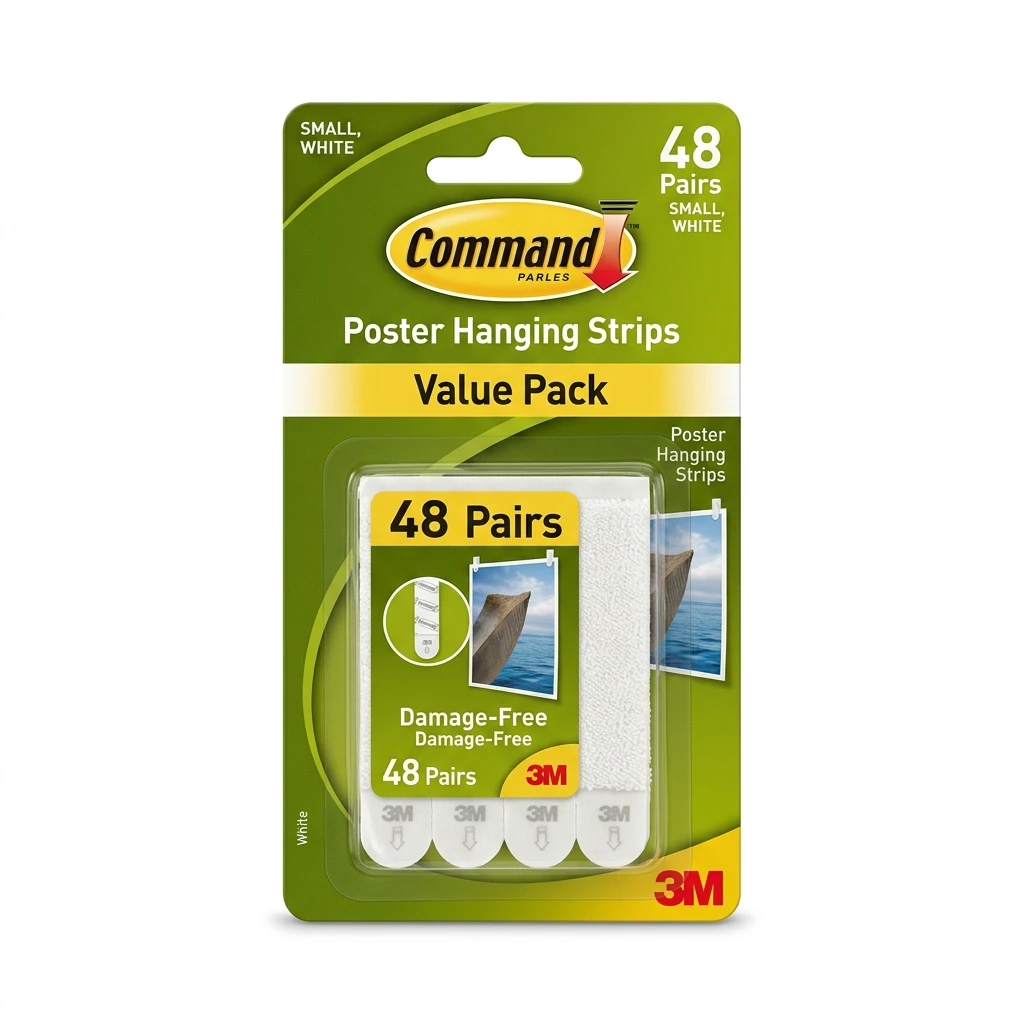
Command Poster Hanging Strips Value Pack, Small, White, 48 Pairs
These are the strips most renters already know: a two-part interlocking system that attaches to the poster and the wall, then releases when you pull the tab straight down. The value pack includes 48 pairs, enough for roughly 24 posters using two pairs per poster. They are designed for smooth surfaces including painted walls, finished wood, glass, tile, and metal.
Verified specification: Each pair is rated to hold up to 1 pound on a properly prepared surface. Follow the manufacturer’s surface preparation and removal instructions exactly.
Not recommended for wallpaper, textured walls, or freshly painted surfaces. Not for valuable or irreplaceable items.
Check Price on Amazon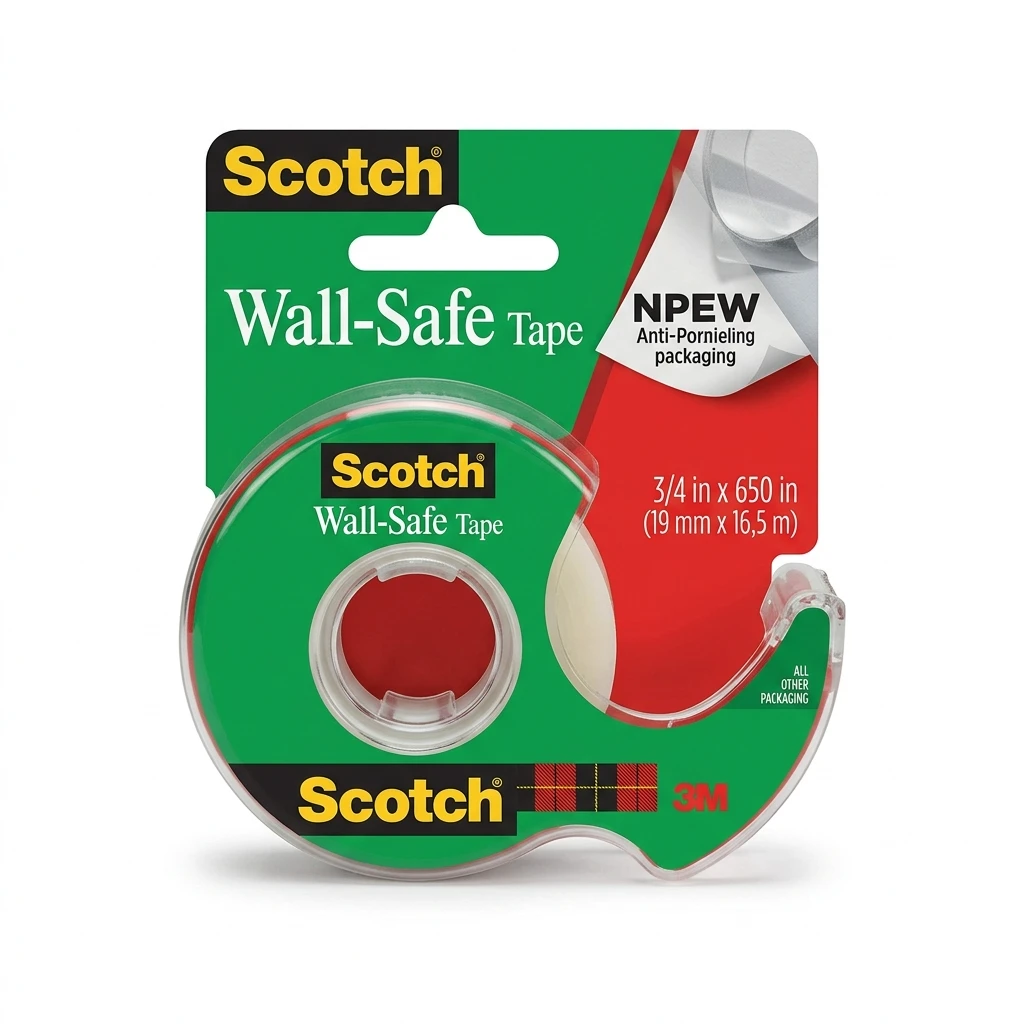
Scotch Wall-Safe Tape, 1 Dispenser Roll, Removable Wall Safe Tape, for Hanging Photos, Art, Décor, 3/4 in x 650 in
This is not a mounting tape. It is a low-tack, single-sided tape designed to hold lightweight paper items — photos, notes, lightweight posters — for temporary display. The adhesive is engineered to remove cleanly from painted drywall, wood, stainless steel, tile, mirrors, and windows. It comes on a dispenser roll for easy application.
Verified specification: Manufacturer guidance describes removal without residue on compatible surfaces for up to 30 days. It is photo-safe and intended for lightweight items only.
Not double-sided. Not for anything with weight or dimension. Over time, adhesion can diminish and the item may fall.
Check Price on Amazon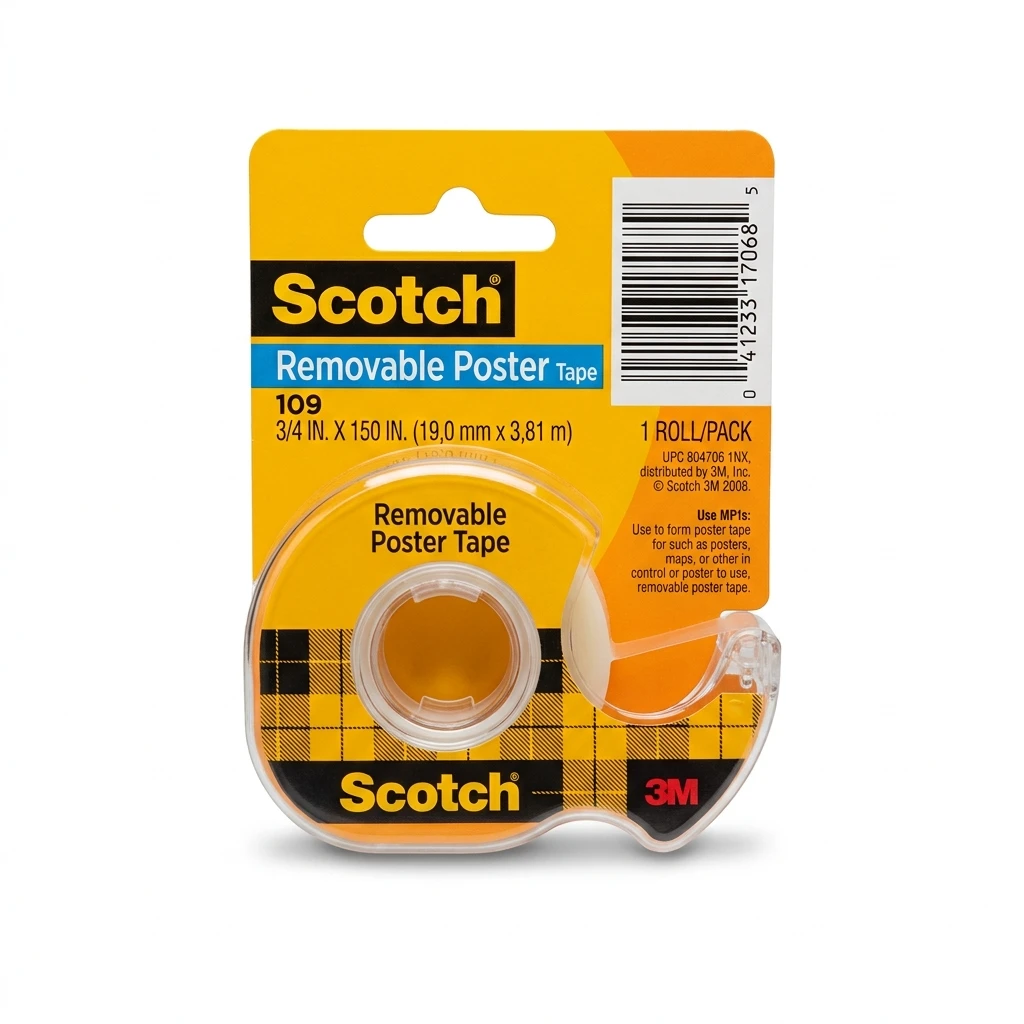
Scotch Removable Poster Tape, 3/4-inch x 150-inches, Clear, 1 Roll/Pack (109)
A double-coated clear tape designed to mount posters, photos, and cards directly to primed and painted walls, wood, tile, glass, and refrigerators. It bonds on contact with no curing time and removes without visible hardware. The clear appearance keeps the display clean and hardware-free.
Verified specification: Rated for lightweight objects up to approximately 0.25 pounds per application. Surfaces should be clean, dry, and primed or painted.
Very low weight capacity. Not for textured surfaces, wallpaper, or anything heavier than a single sheet of poster paper. Removal technique matters — peel slowly and parallel to the wall.
Check Price on AmazonSide-by-Side Comparison
| Feature | Command Poster Strips | Scotch Wall-Safe Tape | Scotch Removable Poster Tape |
|---|---|---|---|
| Type | Interlocking strips | Single-sided low-tack tape | Double-sided mounting tape |
| Weight guidance | Up to 1 lb per pair | Lightweight paper only | Up to ~0.25 lb per application |
| Best surface | Smooth painted drywall | Painted drywall, glass, metal | Primed/painted walls, wood, tile |
| Removal method | Pull tab straight down | Peel slowly | Peel slowly, parallel to wall |
| Wallpaper safe | No | Some formulas limited | No |
| Textured wall safe | No | No | No |
| Best for | Frameless posters, lightweight art | Notes, photos, temporary paper | Flat posters, cards, small prints |
Installation & Removal: Doing It Right
Even the best wall-safe tape can cause damage when applied or removed carelessly. These steps reflect manufacturer guidance for adhesive strips and tapes.
Installation
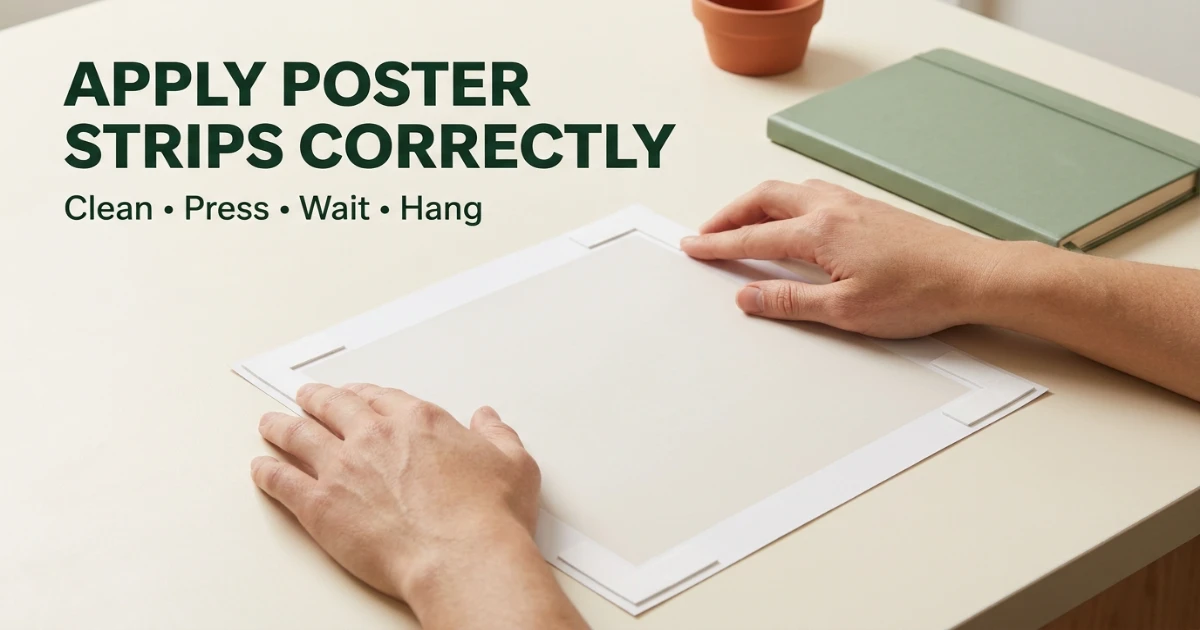
- Clean the surface. Wipe the wall area with isopropyl rubbing alcohol and let it dry completely. Do not use household cleaners — residue from spray cleaners can interfere with adhesion.
- Check temperature. Most adhesive products are designed for indoor use between 50°F and 105°F. Cold walls reduce adhesion; hot, humid conditions can soften adhesive.
- Plan your layout. For a poster, apply strips at all four corners. For larger or heavier items, add strips along the edges. More contact points distribute the load.
- Press firmly. Apply the strip to the poster and press for the recommended time — often 30 seconds per strip. Then press the poster to the wall and hold firmly for another 30 seconds.
- Wait before loading. Some products recommend waiting before hanging weight. Check the specific instructions on your product.
Removal
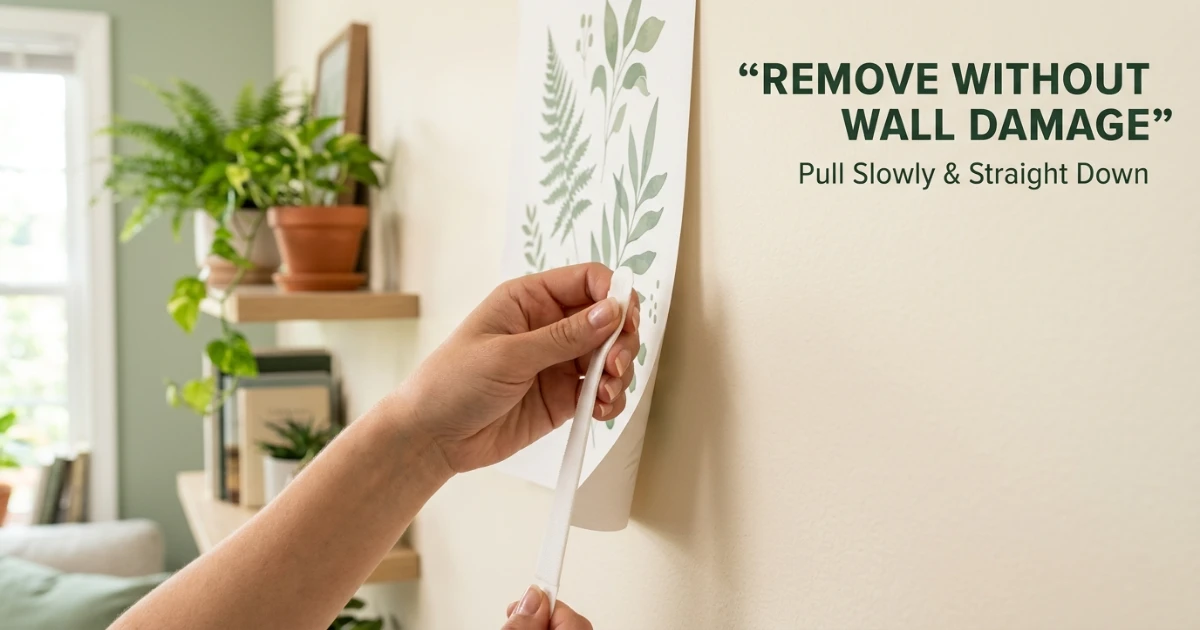
- Never pull toward you. For interlocking strips, press the top of the strip, grab the tab, and stretch it straight down toward the floor — slowly — at least 6 inches. Pulling outward can rip paint or drywall paper.
- Peel tape slowly. For single- or double-sided tapes, peel back at a low angle, close to the wall surface. Rushing the peel increases the risk of lifting paint.
- Warm stubborn adhesive. If tape resists, a gentle pass with a hair dryer on low heat can soften the adhesive. Do not use high heat.
- Address residue carefully. If a small amount of residue remains, a dab of rubbing alcohol on a cloth can help. Test on an inconspicuous area first. Do not scrub aggressively.
Document the wall before and after
Take dated photos of the wall surface before you hang anything and after you remove everything. This gives you a visual record of the wall’s condition and your removal results. If a dispute arises at move-out, documentation is your most practical protection.
Mistakes That Risk Your Deposit
Using duct tape, packing tape, or generic double-sided foam tape
These adhesives are not designed for painted walls. They bond aggressively, leave residue, and frequently pull paint or drywall paper when removed. Tape residue is a commonly listed deduction in rental damage schedules.
Hanging on freshly painted walls
Paint needs time to fully cure. Adhesive applied to soft paint can bond with the paint film rather than releasing from it. Check the paint age with your landlord or property manager if possible, and wait at least seven days after any repainting.
Ignoring texture
Textured walls reduce adhesive contact area. A strip that feels secure at installation may fail days later, especially in humid conditions. If your wall has visible texture, consider a non-adhesive display method.
Overloading the strip
Weight ratings assume proper surface preparation and correct installation. Exceeding the rated weight — even slightly — increases the risk of sudden failure and potential poster damage. If in doubt, use more strips or choose a different method.
Skipping the test
Every wall is different. A test strip on an inconspicuous area gives you real information about how adhesive behaves on your specific surface before you commit to a full display.
When Tape Isn’t the Answer
Wall-safe tape is not the only renter-friendly way to display posters. In some situations, a non-adhesive method is the lower-risk choice.
Leaning displays
A poster in a lightweight frame can lean on a shelf, console table, or floor against the wall. This method uses zero wall contact and zero adhesive. It works particularly well for larger posters in small apartments where floor space is already tight.
Tension rods
In a recessed alcove or between two cabinets, a tension rod can support a lightweight hanging display without any wall contact. This is a practical option for kitchen and bathroom areas where humidity makes adhesive less reliable.
Freestanding poster stands
For a gallery-style display without wall mounting, a simple A-frame or easel stand keeps posters visible and completely independent of the wall surface.
If you need wall-mounted display and adhesive is not suitable, discuss options with your property manager. Some leases allow small nail holes, and some do not. Knowing the specific rules for your unit is better than guessing.
Renter-Safety Verdict
For most apartment renters hanging lightweight unframed posters, Command Poster Strips on smooth, cured, painted drywall represent the most practical balance of hold, removability, and widely available surface guidance. They are not risk-free — no adhesive is — but they are designed for the use case and have clear removal instructions.
For very light paper items and temporary display, Scotch Wall-Safe Tape is a lower-commitment option with a shorter intended display period. For double-sided flat mounting of small posters and photos, Scotch Removable Poster Tape works within its low weight limits on clean, primed surfaces.
In every case, the deciding factors are your specific wall surface, the paint’s age and condition, the weight of the item, and your willingness to follow the manufacturer’s instructions precisely. Test first. Document everything. Check your lease. Those three habits protect your deposit more reliably than any product.
Frequently Asked Questions
Will wall-safe tape definitely come off without damaging paint?
No product can promise that on every wall. Manufacturer instructions describe clean removal on compatible surfaces when the correct removal technique is used. Paint age, surface texture, and application method all affect the outcome. Always test on an inconspicuous area first and follow the exact removal directions.
Can I use Command Poster Strips on textured walls?
Manufacturer guidance generally recommends smooth surfaces. Lightly textured painted walls may work in some cases, but adhesion is less reliable and removal risk is higher. Heavily textured walls such as popcorn ceilings or heavy knockdown are not suitable. Test first and consider a non-adhesive display method if texture is significant.
How much weight can wall-safe tape hold?
It depends on the product. Command Poster Strips are typically rated at up to 1 pound per pair. Scotch Wall-Safe Tape is designed for lightweight paper items with no meaningful weight rating for dimensional objects. Scotch Removable Poster Tape is rated at approximately 0.25 pounds per application. Always check the current product packaging and instructions for the exact rated limit.
Can my landlord charge me for tape residue or pulled paint?
Rules vary by state, city, and lease. Landlords generally cannot deduct for normal wear and tear, but damage beyond that — including significant paint removal, residue, or wall surface damage from adhesives — may be deductible. Review your lease, keep dated photos, and check your local tenant laws. No universal answer applies to every rental situation.
How long can I leave wall-safe tape on the wall?
Scotch Wall-Safe Tape is designed for temporary display, typically up to 30 days according to manufacturer guidance. Command Poster Strips do not have a strict time limit in the same way, but leaving any adhesive in place for months increases the risk of residue or surface bonding. If you plan a long-term display, check the wall periodically and follow the product’s removal instructions when you take it down.
What if the tape pulls paint off when I remove it?
Stop pulling immediately. Do not try to rush the removal. If a small area of paint lifts, document it with a dated photo. For larger damage, consult your lease and consider discussing the situation with your property manager in writing. In some cases, a small paint touch-up is a reasonable repair; in others, the wall may need professional attention. Your move-in photos and documented removal method are your best records.
Are there renter-friendly alternatives to adhesive poster hanging?
Yes. Leaning a framed poster on a shelf, using a tension rod in an alcove, or placing a poster on a freestanding easel all avoid wall contact entirely. These methods carry no adhesive risk and are worth considering for larger or heavier displays. For a broader look at renter-safe wall decor, see our no-damage wall decor ideas.
Sources & Renter-Safety Note: Product weight ratings, surface compatibility, and removal guidance referenced in this article are based on manufacturer guidance. For current instructions, see the official Command Brand website and the official Scotch Brand website. Rental deposit and normal wear rules vary significantly by jurisdiction and lease. Review your own rental agreement and local tenant resources before making decisions about wall adhesives or repairs.
Keep Your Deposit Safe
Next: Master the Weight Limits Before You Hang
Knowing which adhesive holds what weight — and on which surface — is the difference between a secure display and a deposit deduction. Our weight limit guide breaks down the numbers.
Read the Command Strips Weight Limit Guide