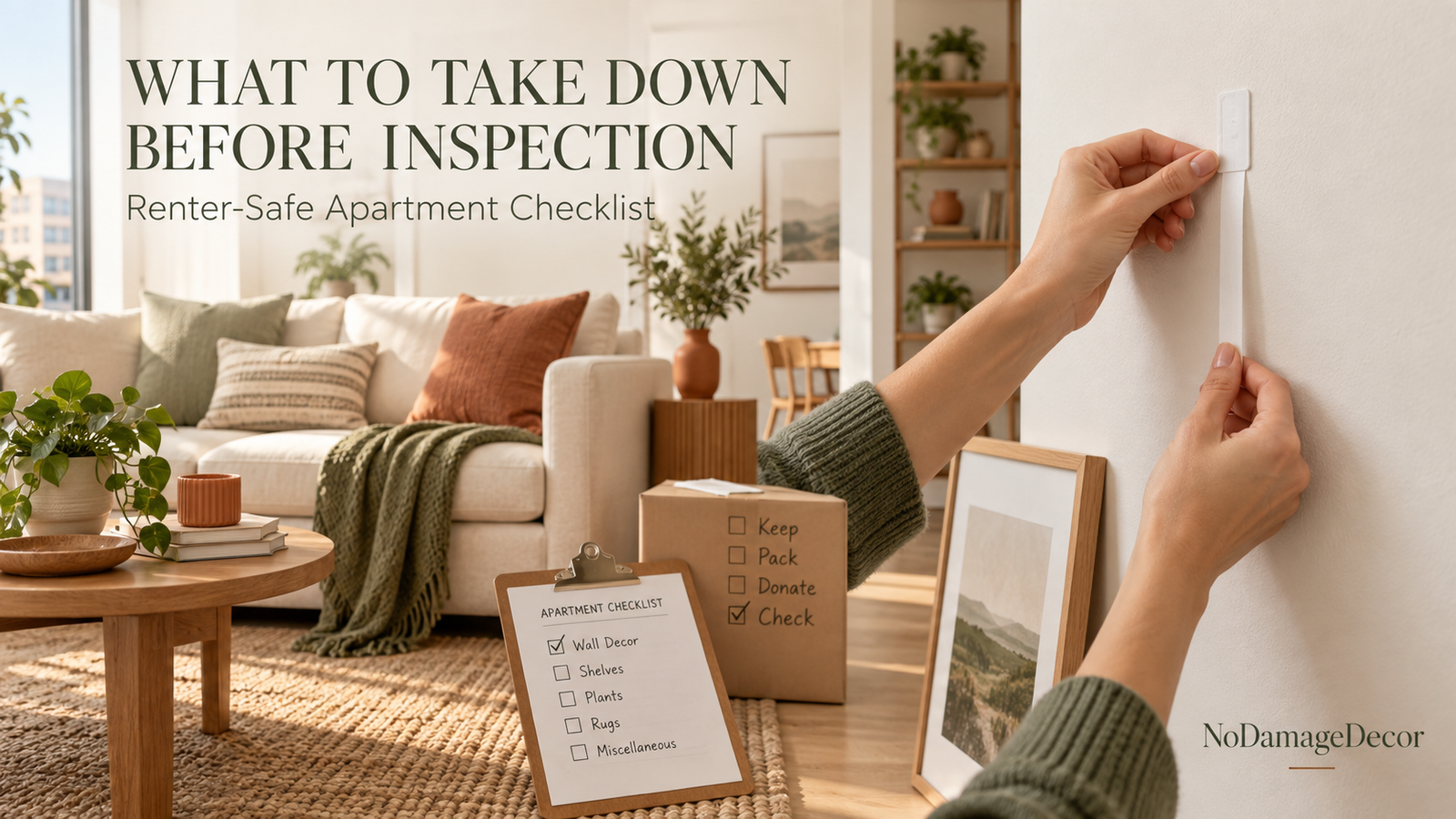
Removable Decor Before Apartment Inspection: What Should You Take Down?
Walk into your inspection with confidence by knowing exactly which renter-friendly decor items to remove, how to remove them safely, and what to leave in place.
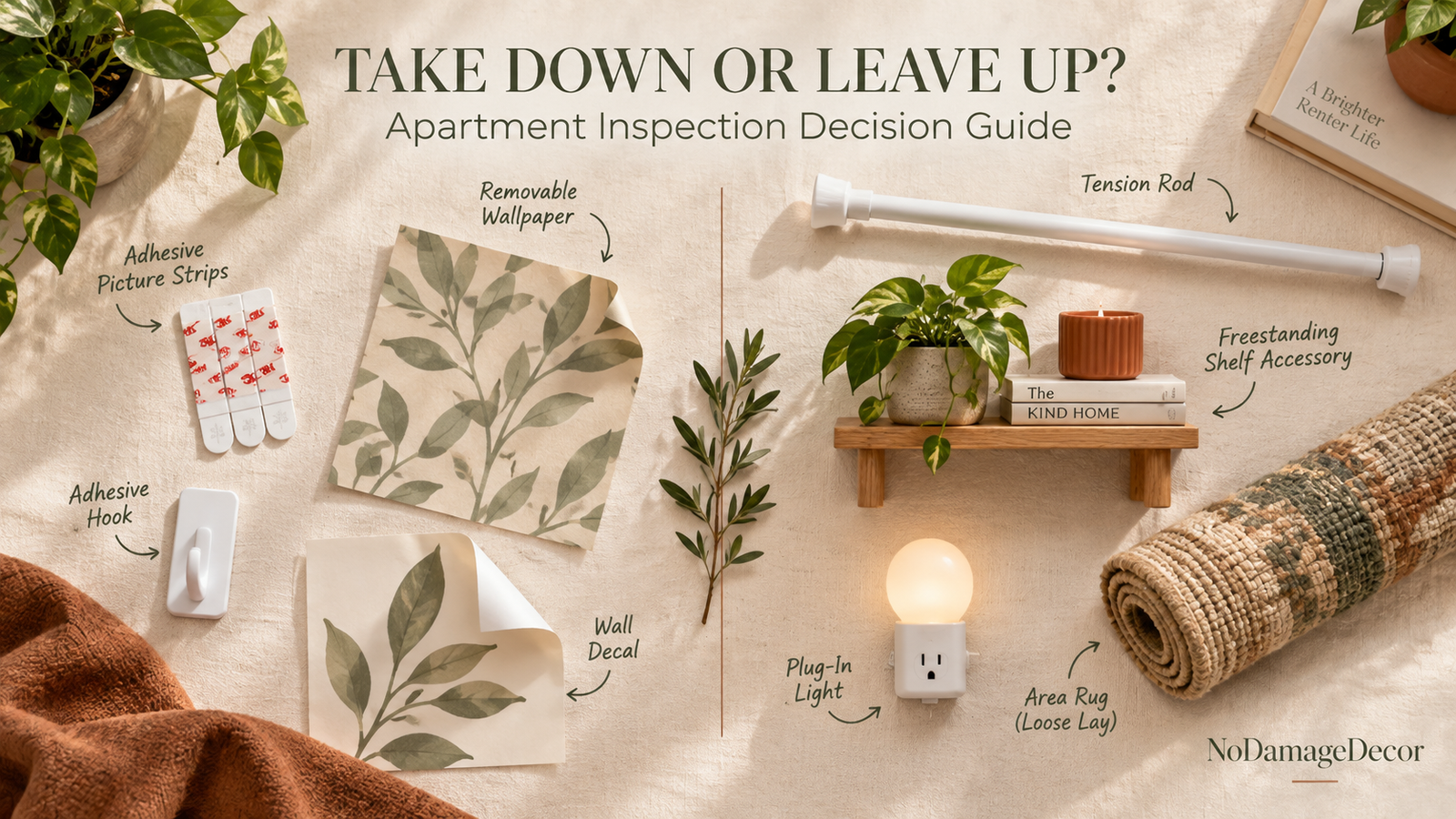
Before an apartment inspection, take down adhesive picture hanging strips, removable wallpaper, adhesive hooks, and wall decals — especially any that are loose, curling, or near moisture. Leave tension rods, freestanding furniture, plug-in lighting, and area rugs in place. Always remove adhesive products slowly according to the manufacturer’s instructions, and check your lease for any rules about wall decor. Small picture-hanging holes may be treated as normal wear in some jurisdictions, while others may treat them differently. Your lease and local rules control.
At a Glance
What Removable Decor to Take Down Before an Apartment Inspection
Not every removable decor item needs to come down. The goal is to remove anything that looks like it is failing, anything a landlord might reasonably interpret as damage, and anything that could worsen while you wait for the inspection date.
Adhesive Picture Hanging Strips and Hooks
Adhesive strips and hooks are the most common renter decor items, and they are also the ones most likely to show problems during an inspection. A strip that is still firmly attached and sitting flat against the wall is usually fine. A strip that is curling at the edges, sagging, or has already released one side is a different story.
If a hook is holding a lightweight item and the strip looks clean and flat, you may leave it. If the strip is visibly stressed, remove it before the inspection. A sagging hook reads as “this was overloaded” even if it wasn’t, and that can invite closer scrutiny of the wall behind it.
Removable Wallpaper and Peel-and-Stick Panels
Peel-and-stick wallpaper is designed to be removable, but removal results depend heavily on paint condition, cure time, and how the paper was installed. A small accent panel that is still flat and well-adhered may pass inspection. A panel with lifted corners, visible bubbles, or peeling edges should come down.
If you plan to leave removable wallpaper up during the inspection, be prepared to remove it afterward if the landlord asks. Some leases require wallpaper to be removed before move-out regardless of condition. Check your lease before deciding.
Wall Decals and Stickers
Vinyl wall decals are usually easy to remove from smooth, well-cured paint. But decals applied to flat or matte paint, or to paint that was still curing, can lift the paint surface when removed. If a decal has been up for more than a year, remove it before the inspection so you can address any paint issues yourself rather than having them discovered during the walkthrough.
Anything That Looks Like It Is Already Failing
This is the simplest rule: if a decor item looks loose, crooked, bubbled, or stressed, take it down. An inspection is not the time to hope a failing adhesive strip holds. Removing it on your schedule gives you control over the process. Leaving it up and hoping for the best gives the landlord control.
What You Can Usually Leave in Place
An inspection is not a move-out. Landlords expect to see a furnished, lived-in apartment. Removing everything you have ever hung will not make the inspection go better. In fact, an apartment that looks stripped might raise questions about what was on the walls.
✅ Tension rods and curtains
Tension rods do not attach to the wall and are usually considered normal window treatments. Leave them up unless your lease specifically prohibits them.
✅ Freestanding furniture and shelving
Bookcases, shoe racks, and freestanding shelves rest on the floor. They are personal property, not alterations, and can stay.
✅ Plug-in wall sconces and lamps
Plug-in lighting does not modify wiring. It is typically treated the same as any other lamp or small appliance.
✅ Area rugs and floor coverings
Rugs protect flooring. Unless the lease bans them (uncommon), leave them in place.
✅ Over-the-door organizers
Over-the-door hooks and organizers do not require wall attachment. They can stay unless they are causing visible door damage.
✅ Well-adhered adhesive hooks with lightweight items
If the strip is flat, clean, and holding a lightweight item, it does not automatically need to come down. Use your judgment based on how it looks.
How to Remove Adhesive Decor Safely
The way you remove adhesive decor matters as much as the decision to remove it. Pulling too fast, at the wrong angle, or without warming the adhesive can cause paint damage that turns a simple task into a deposit deduction.
Gather the right tools
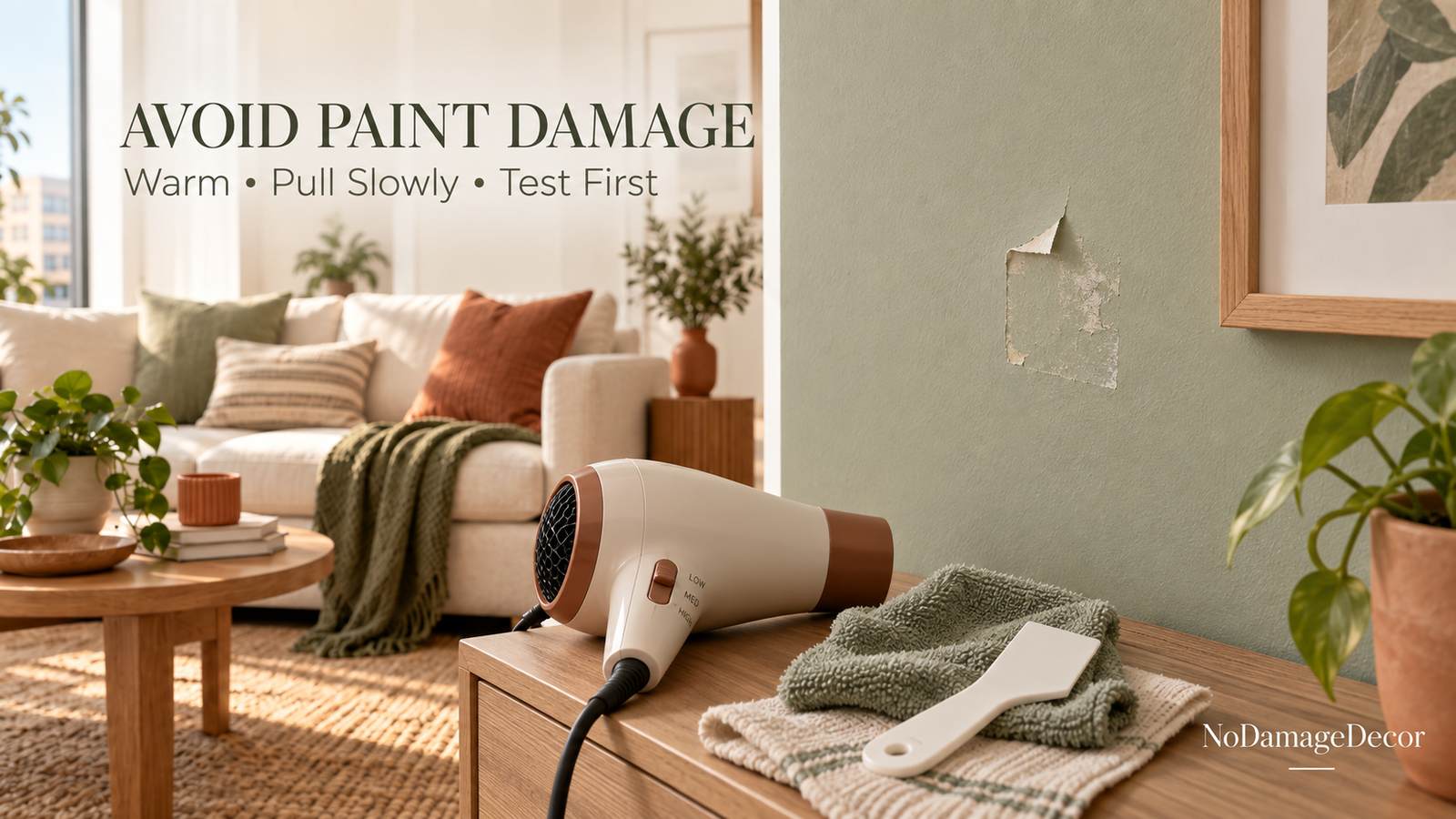
You will need a hair dryer (on low), dental floss or a plastic scraper, a clean microfiber cloth, and a small container for used strips. If residue remains, use only a cleaner approved for your exact wall finish. Do not use metal tools — they can gouge drywall and scratch paint.
Warm the adhesive gently
Hold a hair dryer on low about 6 to 8 inches from the strip or decal for 20 to 30 seconds. Warm adhesive releases more cleanly than cold adhesive. Do not use high heat, and do not hold the dryer in one spot for too long — moving warm air is enough.
Stretch Command strips straight down
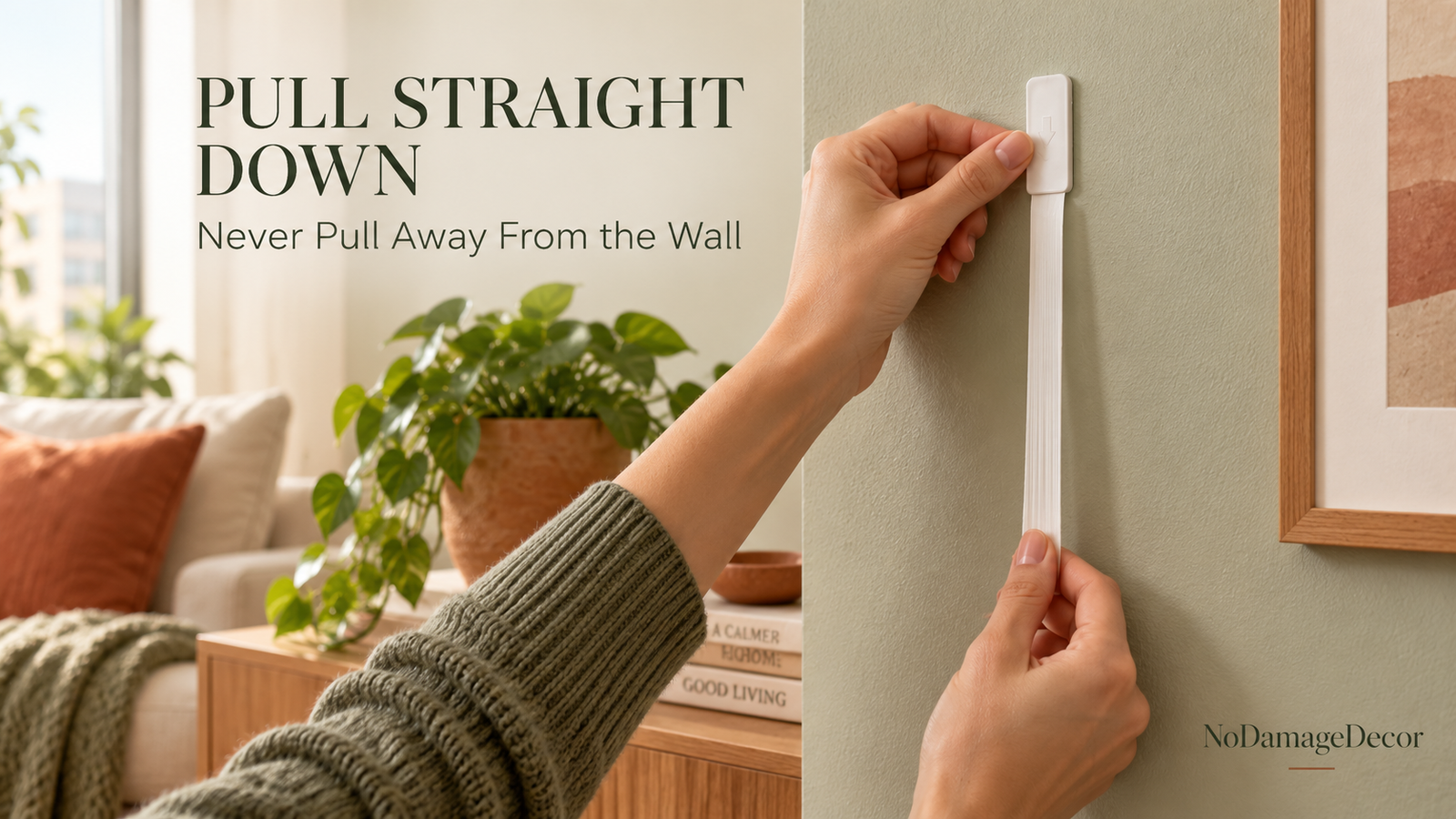
For Command strips specifically, grab the tab and stretch it slowly and straight down along the wall. Do not pull toward yourself. Keep stretching — the strip should elongate like a rubber band — until the adhesive releases. If it tears, warm the base plate and use dental floss to saw through the remaining foam.
Peel wallpaper and decals at a low angle
Start at a corner and peel back at a low, parallel angle — not straight out from the wall. Pull slowly and steadily. If resistance increases, stop and warm the area again. Rushing is what tears paint.
Clean any residue
For remaining residue, start with a clean dry microfiber cloth. If needed, use a cleaner approved for your exact wall finish. If you choose 70% isopropyl alcohol, spot-test first on a hidden area because some flat or matte paints can dull or discolor. Do not scrub aggressively.
Document the wall surface
Once the decor is removed, take dated photos of the bare wall. If there is any paint lift or residue, photograph that too. This creates a record of the wall’s condition before the inspection and helps if there is a later dispute.
For a deeper walkthrough of the removal process, see our guide on remove Command strips without damage. If you are considering removing wallpaper as well, our best peel and stick wallpaper guide explains what to look for in removable products.
Surface Compatibility: Where Adhesive Decor Is Lower-Risk
Not every rental wall is the same. The surface underneath your decor determines how cleanly adhesive products will release, and how much risk you are taking by leaving them up for an inspection.
| Surface | Adhesive Risk Level | What to Know |
|---|---|---|
| Smooth satin or semi-gloss paint | Lower risk | Adhesive releases most cleanly from smooth, well-cured paint. Test a small area first. |
| Flat or matte paint | Higher risk | Flat paint has a more porous surface and can lift or peel more easily when adhesive is removed. |
| Freshly painted walls (under 30 days) | High risk | Paint needs time to fully cure. Adhesive applied to curing paint can bond with the paint film and cause peeling. |
| Lightly textured drywall | Moderate risk | Texture reduces adhesive contact. Strips may not hold as well, and removal can pull texture loose. |
| Heavily textured or popcorn walls | Avoid adhesive | Adhesive products generally do not perform reliably on heavy texture. Check the product’s approved surfaces before use. |
| Wallpaper (existing landlord wallpaper) | Avoid adhesive | Adhesive can lift or tear existing wallpaper. Do not apply removable decor to wallpaper you did not install. |
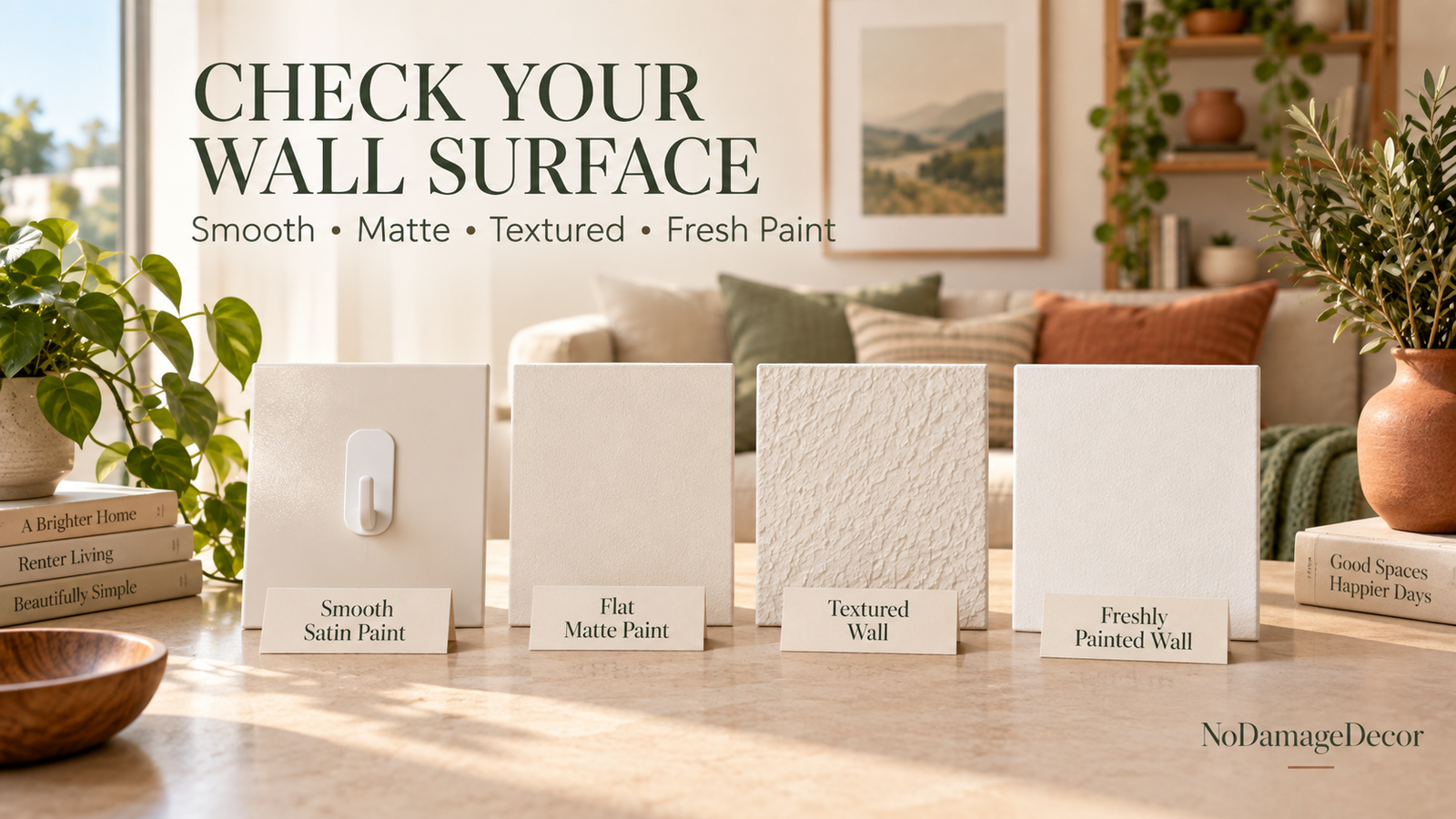
The safest approach is to test any adhesive product on a small, inconspicuous area before applying it broadly. The manufacturer’s instructions list approved surfaces and recommended preparation steps — follow those exactly. If you are planning wall decor in a new rental, our no-damage wall decor ideas guide covers surface-friendly options.
Lease and Security Deposit Rules: What Varies
Rules about wall decor, nail holes, and security deposit deductions vary significantly by state, city, lease, and property management company. There is no single national standard that covers every rental situation.
Normal Wear vs. Damage
US landlord-tenant rules commonly distinguish between normal wear and tenant-caused damage, but the treatment of small nail holes varies by jurisdiction, lease language, and the extent of the wall damage. Larger holes, damaged drywall, and paint peeling caused by removal are more likely to be treated differently.
Some jurisdictions provide more specific guidance than others. The practical outcome can vary based on local law, lease language, wall condition, and the facts documented at move-in and move-out.
What Your Lease Might Say
Some leases prohibit adhesive wall decor entirely. Others require written approval before hanging anything. Some say nothing about wall decor at all. Before an inspection, read the section of your lease that covers alterations, wall decor, and move-out condition. If the lease is silent, your state’s default rules may apply — but “may” is doing a lot of work in that sentence.
Documentation That Protects You
- Move-in photos showing the walls before you added any decor
- Dated photos of the walls after you removed decor
- Written communication with your landlord about any wall decor approval
- A copy of your move-out inspection report, if one is provided
- Your lease’s section on alterations and wall decor
If you are worried about how nail holes or wall damage could affect your deposit, our guide on can your landlord charge for nail holes explains the general framework. For a broader look at decor choices that create deposit risk, see deposit-costing decor mistakes.
Common Mistakes Renters Make Before an Inspection
❌ Removing adhesive strips too quickly
Yanking a strip straight out from the wall instead of stretching it down is the fastest way to lift paint. Slow, steady pressure is the correct method.
❌ Leaving failing strips up “just in case”
A curling strip is already a problem. Hoping it will look fine during the inspection gives the landlord control over how it is handled.
❌ Removing wallpaper without warming it
Cold adhesive is more likely to tear paint. A few seconds with a hair dryer on low makes a significant difference.
❌ Not reading the lease before the inspection
Lease terms on wall decor and alterations determine what you are allowed to leave up. Guessing is not a strategy.
❌ Skipping photo documentation
Dated photos of the walls before and after removal are your best protection if a landlord disputes the wall condition.
❌ Using the wrong removal tools
Metal scrapers, knives, and harsh solvents can cause damage that is worse than the adhesive itself. Stick with low heat, dental floss, microfiber cloths, and only surface-approved cleaners.
Products That Help Renters Remove Decor Safely
These are real products that solve specific problems in the removal and inspection process. Each one is included because it directly supports the steps described above.
As an Amazon Associate I earn from qualifying purchases.
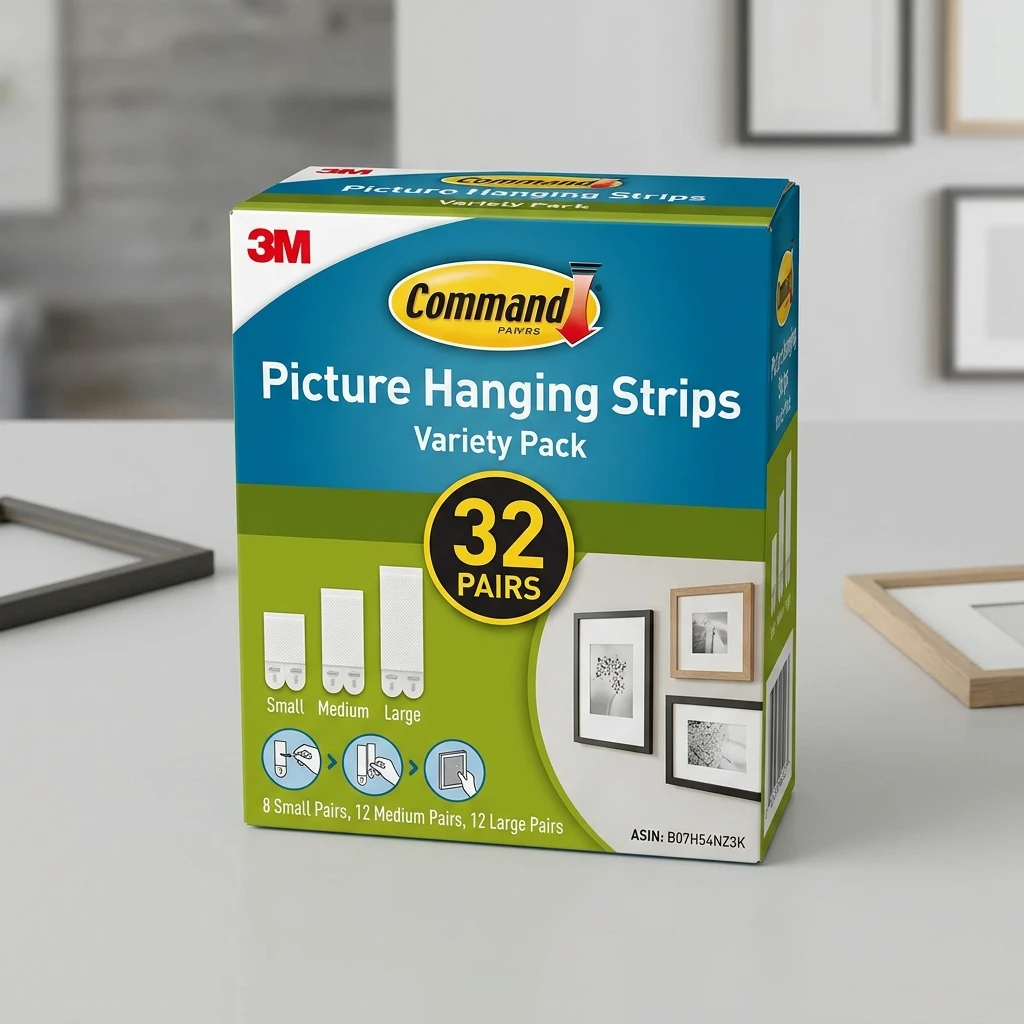
3M Command Picture Hanging Strips Variety Pack, 32 Pairs (64 Strips) — Small, Medium & Large
Best for: Renters who want a single pack that covers small frames, medium wall art, and larger canvas prints without guessing at sizes.
This variety pack includes eight small pairs, sixteen medium pairs, and eight large pairs of white Command picture hanging strips. The different sizes let you match the strip to the weight and frame size of each item rather than defaulting to one size for everything.
- Includes 64 strips total (32 pairs) across three sizes
- Designed for damage-free hanging on smooth, painted surfaces
- Strips lock together and release by stretching the tab down
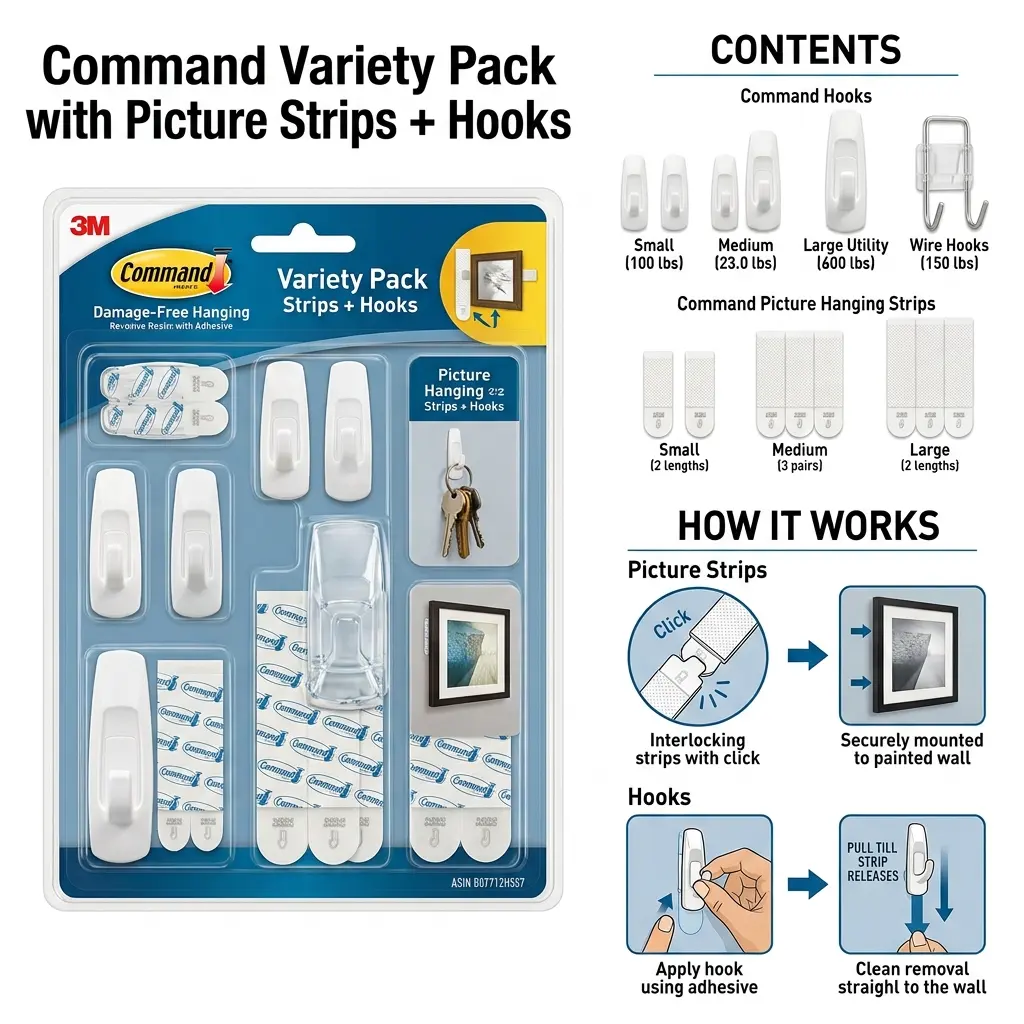
Command Variety Pack, Including 10 Pairs of Picture Hanging Strips, 6 Wire Hooks and 8 Utility Hooks — 1 Kit
Best for: Renters who want one kit covering both picture hanging and everyday hooks for keys, towels, and light decor.
This kit combines picture hanging strips with wire hooks and utility hooks in a single package. It is useful if you are not sure which type of adhesive product you will need most, or if you are equipping a first apartment.
- Includes 10 pairs of picture hanging strips, 6 wire hooks, and 8 utility hooks
- Works on a variety of smooth surfaces including painted walls and finished wood
- Damage-free removal when used according to manufacturer instructions
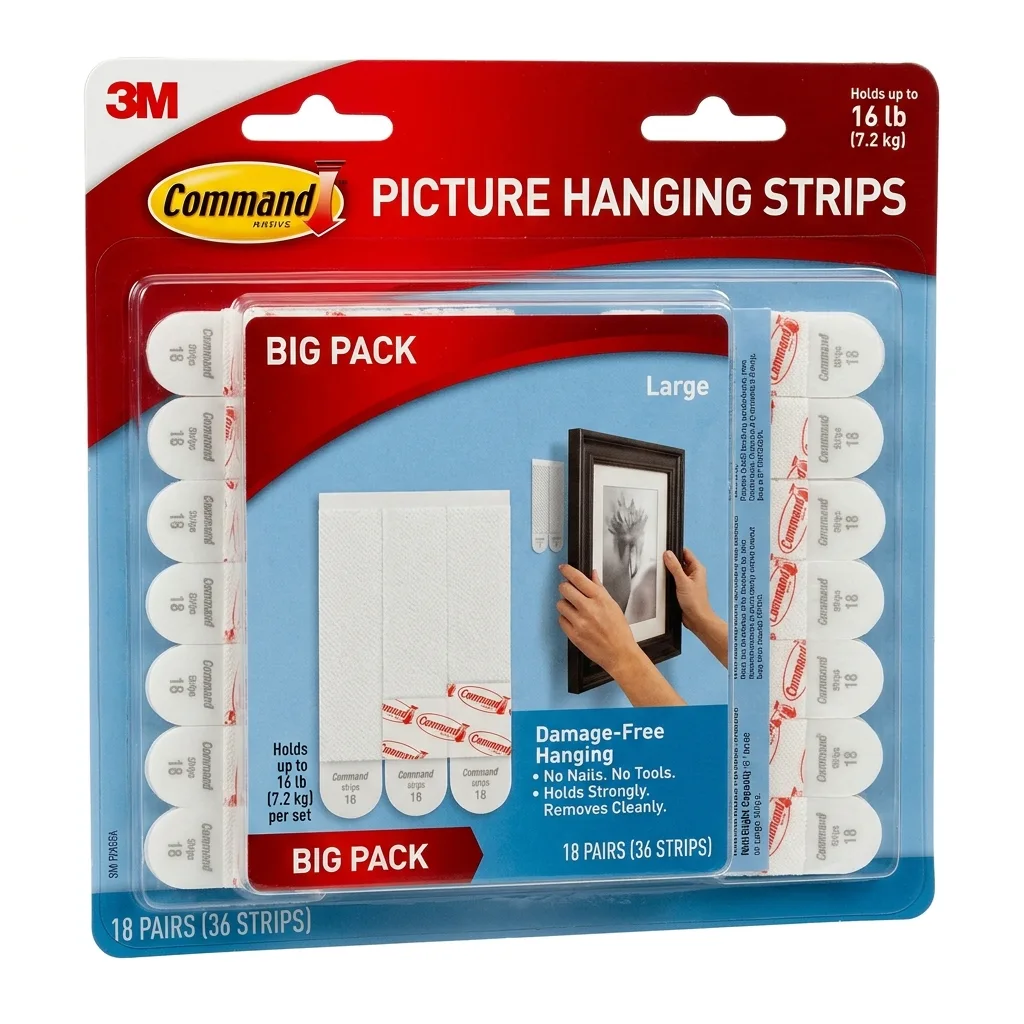
3M Command Picture Hanging Strips Big Pack, Removable, (4) Small, (6) Medium, (8) Large, White, 18 Pairs/Pack
Best for: Renters hanging a gallery wall or multiple frames who want a focused pack of picture hanging strips without extra hooks.
This pack includes 18 pairs of picture hanging strips in three sizes. It is a practical choice if your inspection prep involves taking down several framed pieces and you want refill strips on hand for rehanging after the walkthrough.
- 18 pairs total: 4 small, 6 medium, and 8 large
- Removable and reusable with replacement strips
- Designed for smooth, painted surfaces
If you are still deciding what to hang and what to skip, our first apartment decorating checklist covers the basics of setting up a renter-friendly space.
Frequently Asked Questions
Do I have to take down all removable decor before an apartment inspection?
No. You only need to remove items that are failing, look damaged, or that your lease requires you to remove. Well-adhered adhesive strips holding lightweight items and freestanding furniture can usually stay. The inspection is meant to assess the condition of the apartment, not to penalize you for decorating.
Will Command strips damage paint when removed?
Command strips are designed to remove cleanly when the manufacturer’s instructions are followed. Stretching the tab slowly and straight down is the correct method. Pulling toward yourself or removing the strip too quickly can lift paint, especially on flat or matte finishes.
Are small nail holes from pictures considered normal wear and tear?
Whether small nail holes count as normal wear depends on your jurisdiction, lease, and the extent of the wall damage. Larger holes or damage to the drywall are more likely to be treated as tenant-caused damage. Check your lease and local landlord-tenant rules.
Can my landlord charge me for removing removable wallpaper?
Some leases require tenants to remove all wall coverings before move-out. If your lease includes that requirement, leaving removable wallpaper up during an inspection may result in a request to remove it. If removal damages the paint, the cost of repainting could be deducted from your deposit depending on your lease and local rules.
What is the safest way to remove adhesive hooks?
Warm the adhesive with a hair dryer on low, then stretch the Command strip tab straight down along the wall. Do not pull toward yourself. If the strip tears, warm the base plate and use dental floss to cut through the remaining foam. If residue remains, use only a cleaner approved for your exact wall finish; if using 70% isopropyl alcohol, spot-test first because some paint finishes can dull or discolor.
Should I take photos before removing decor?
Yes. Take dated photos of the walls with the decor still up, and again after removal. These photos document the condition of the wall before and after and can be useful if a landlord later disputes the wall’s condition or a deposit deduction.
What if my lease says I cannot hang anything on the walls?
If your lease prohibits wall decor, adhesive products that attach to the wall may also be prohibited. Review the exact lease language. In some cases, “no nails” clauses are intended to prevent holes, and removable adhesive products may be acceptable — but the only way to know is to read the lease or ask your landlord in writing.
Renter-Safety Verdict
Take down: any adhesive strip, hook, wallpaper, or decal that is curling, sagging, bubbling, or peeling. Remove items in high-moisture areas and anything that has been up for more than a year without inspection.
Leave in place: tension rods, freestanding furniture, plug-in lighting, area rugs, and well-adhered adhesive products holding lightweight items that look clean and flat.
The safest removal method: warm the adhesive with a hair dryer on low, stretch Command strips straight down, peel wallpaper and decals at a low angle, and clean residue only with a surface-approved method; if using 70% isopropyl alcohol, spot-test first. Never rush.
Before the inspection: read your lease’s wall decor and alterations section, take dated photos of the walls before and after removal, and keep any written communication with your landlord about wall decor.
Small nail holes may be treated as normal wear in some jurisdictions, but deposit rules vary by jurisdiction, lease, wall condition, and property. When in doubt, document everything and check your local rules.
Keep Your Deposit Safe From the Start
Inspection prep is easier when you choose lower-risk decor from the beginning. Our no-damage wall decor guide covers surface-safe options, installation tips, and removal methods for every rental wall type.
Explore No-Damage Wall Decor IdeasSources & Renter-Safety Note
This article provides general guidance for US renters. Wall decor rules, inspection procedures, and security deposit laws vary by state, city, lease, and property management company. This is not legal advice. Always review your lease and check your state’s landlord-tenant statutes for rules that apply to your specific situation.
Product weight limits, approved surfaces, and removal instructions are set by the manufacturer. Check the current package label and manufacturer documentation for the exact product you are using. For authoritative guidance, see 3M Command Brand and your state’s consumer protection or landlord-tenant resources.