Command Strips vs Mounting Putty for Posters & Lightweight Decor
Choose the lower-risk option for your poster, photo, or lightweight decor by matching the adhesive to the wall finish, item type, and how often you expect to move it.
At a Glance
The Core Difference: Structured Strip vs Moldable Putty
Command Poster Strips and removable mounting putty solve a similar renter problem—holding lightweight decor without nails—but they work differently enough that they should not be treated as interchangeable.
Command Poster Strips are a purpose-built adhesive strip system. The strip has a defined installation method and a defined removal method: apply it to an approved smooth surface, press as directed, and later stretch the release tab slowly down along the wall. The manufacturer also publishes specific cautions for newly painted walls, wallpaper, valuable items, temperature, surface texture, and removal technique.
Mounting putty is a soft, kneadable adhesive material. You pinch off a small amount, press it between the paper item and the surface, and adjust the amount based on the object. That makes it fast and flexible for photos, cards, classroom-style paper displays, and temporary placement. The tradeoff is that surface interaction is less predictable. Putty can leave an oily-looking mark, discoloration, or residue on some porous or delicate finishes, and current Scotch guidance specifically warns against some surfaces.
Command Strips vs Mounting Putty: Side-by-Side
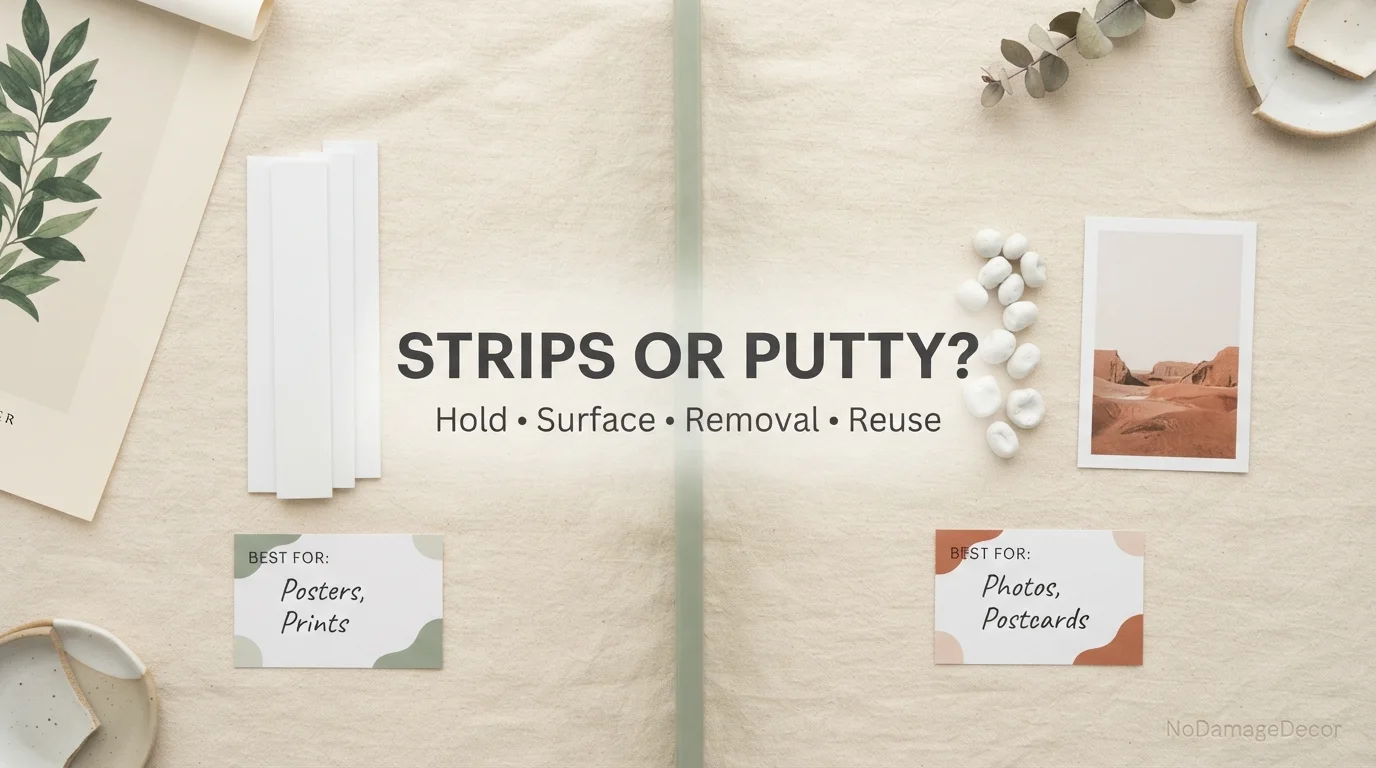
| Decision Point | Command Poster Strips | Removable Mounting Putty |
|---|---|---|
| Best item type | Posters, signs, lightweight paper decor and other uses listed on the exact package. | Very lightweight paper items such as posters, photos, cards and similar small decor. |
| Surface guidance | Clearer manufacturer guidance for smooth, clean, approved surfaces. | More surface-sensitive; current Scotch guidance warns about delicate finishes and possible staining. |
| Repositioning | Not intended for repeated on-wall repositioning after final placement. | Easy to pinch, move, and re-form for lightweight paper items. |
| Removal method | Slow stretch-release motion along the wall when the exact strip is designed for it. | Peel or roll the putty away carefully; residue or staining can depend on surface and dwell time. |
| Flat/matte paint | Use only if the exact package and wall condition support it; weak or porous paint increases risk. | Scotch specifically warns against flat paint on current guidance. |
| Wallpaper | Command guidance says not to use Picture Hanging Strips on wallpaper. | Scotch guidance says not recommended for wallpaper/delicate surfaces. |
| Best renter use | More deliberate, longer-term poster placement on a verified smooth wall. | Short-term, ultra-light paper placement on a verified tolerant surface. |
If you are deciding between several no-hole systems, the broader hang art without nails guide is useful for comparing strips, hooks, tension methods, and freestanding alternatives.
Surface Compatibility Matters More Than the Poster
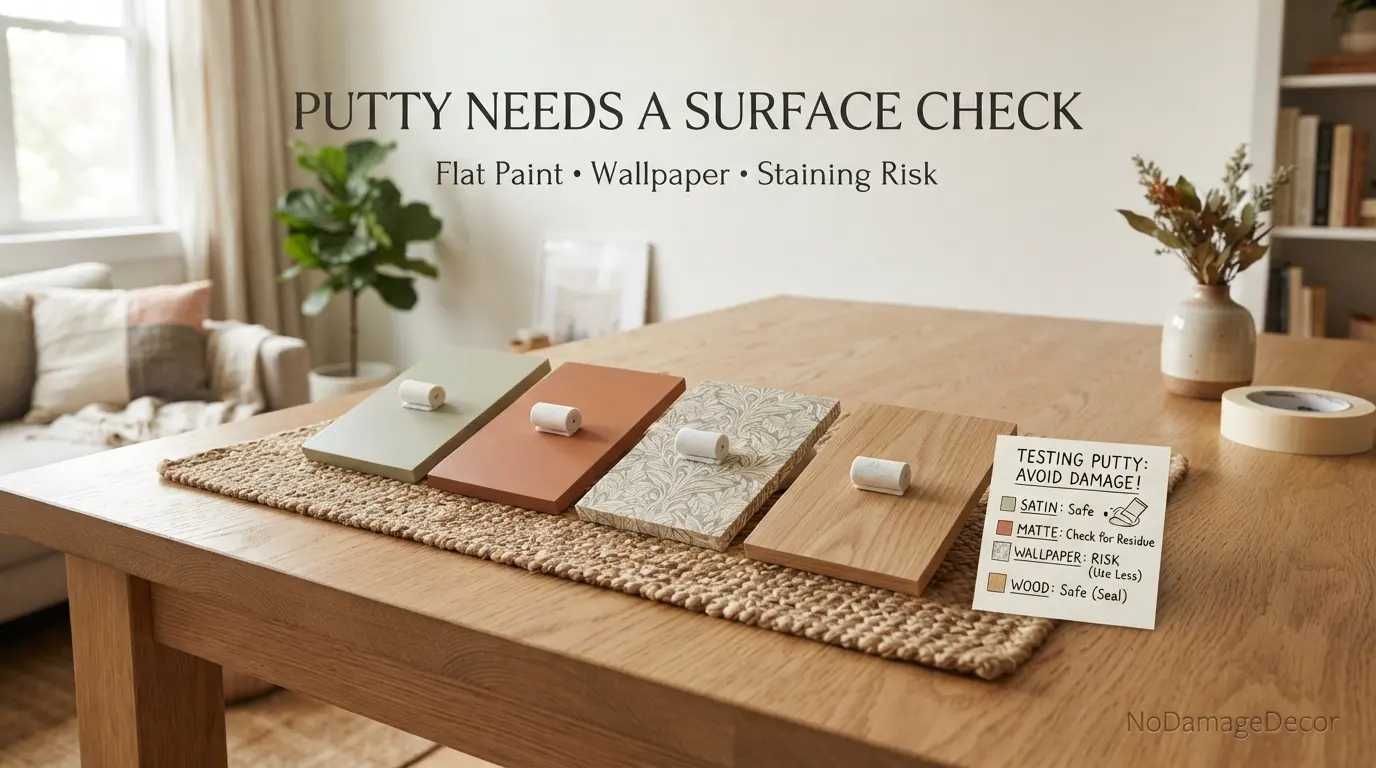
A lightweight poster is rarely the difficult part. The wall finish is. Adhesive products interact with paint sheen, paint age, wall texture, dust, humidity, and previous repairs. A method that releases cleanly from a smooth satin wall can behave very differently on chalky matte paint or a patched area.
Smooth, sound painted wall
This is the strongest case for Command Poster Strips, assuming the paint has cured for the time stated by the manufacturer and the exact product lists the surface as approved.
Flat or matte paint
Treat both methods cautiously. Putty is specifically cautioned against on current Scotch guidance, and porous or weak paint can also lift during strip removal.
Wallpaper
Avoid both unless the exact manufacturer explicitly approves the combination. Current Command and Scotch guidance both warn against wallpaper/delicate surfaces.
Textured or rough walls
Neither option is a confident default. Incomplete adhesive contact can reduce holding performance, while removal may catch texture or fragile coating.
Installation: Strips Need More Process, Putty Needs More Judgment
Using poster strips
With Command Poster Strips, treat the package instructions as the installation system, not as optional fine print. Command’s current guidance for picture-hanging products includes surface cleaning, pressing for the stated amount of time, and waiting before loading certain strip systems. Poster-strip packaging can differ, so use the exact instructions supplied with the pack rather than borrowing a process from a different Command product.
Do not improvise by cutting strips smaller, stacking them, placing them over dust, or applying them to a freshly painted wall before the manufacturer’s stated cure period. Also avoid wallpaper and other surfaces the package excludes.
Using mounting putty
Putty is physically simpler: knead a small piece, place it behind the paper item, and press the item to the surface. The bigger decision is how the surface may react. A thin poster and a dense glossy photo are both light, but the putty can still behave differently against porous paint, delicate coatings, finished wood, glass, or tile.
Use the smallest amount that does the job, keep it away from fragile or valuable paper, and avoid assuming that “removable” means stain-free on every surface. If the poster is collectible, signed, or irreplaceable, use a method that does not place adhesive directly on the artwork.
Removal and Paint Risk
This is where the comparison matters most for renters. A product can hold perfectly for months and still become a problem at move-out if the removal method is wrong or the paint underneath is weak.
Removing Command Poster Strips
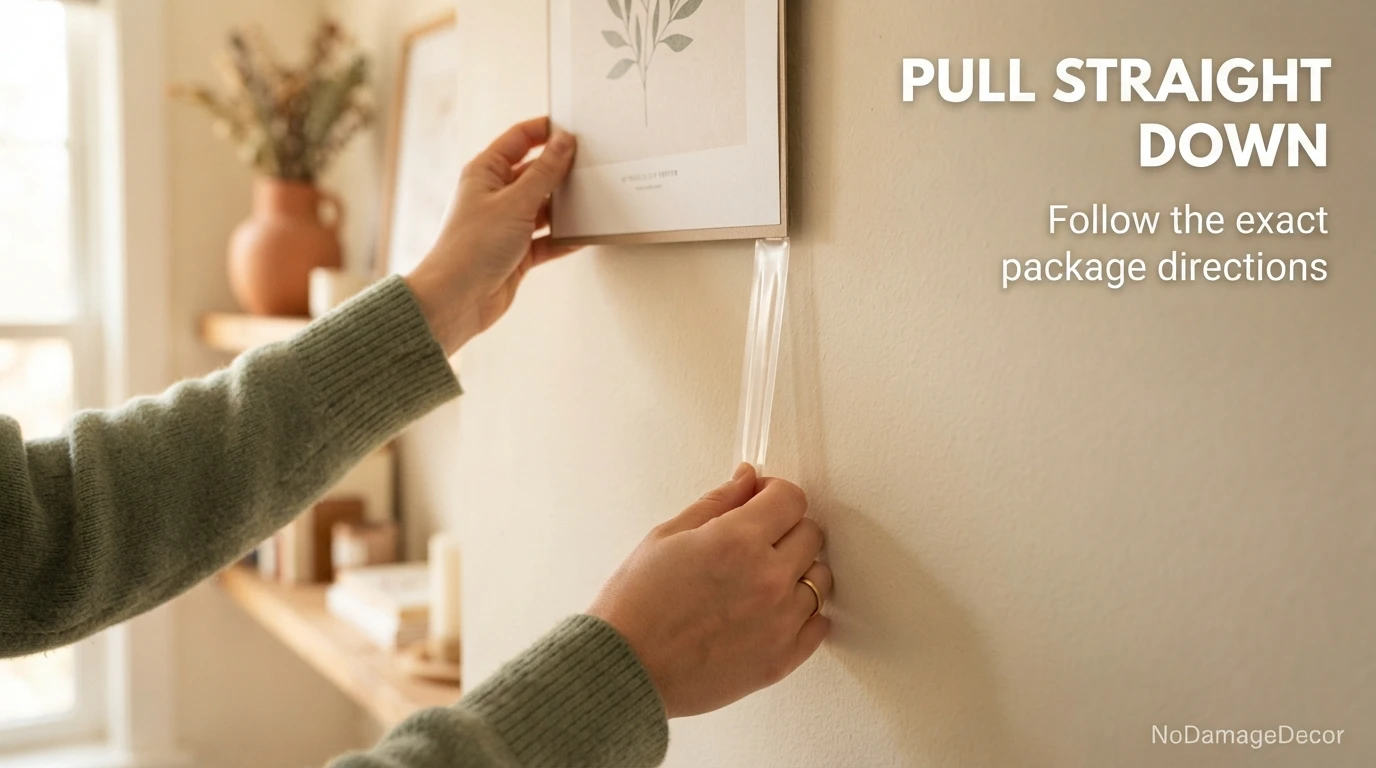
For stretch-release Command products, do not pull the strip outward from the wall. Current Command guidance says to stretch the release tab slowly down along the wall. Pulling toward yourself can concentrate force on the paint film and increase the chance of lifting it.
If the tab breaks, do not yank the remaining adhesive away. Command’s current FAQ suggests using the exact broken-tab guidance for the product and notes that floss/string and gentle heat may help with some products.
Removing mounting putty
Work slowly and roll or peel the putty away rather than smearing it over a larger area. If a faint mark remains, stop before introducing a solvent automatically. A cleaner that is safe for one paint sheen may dull another. Test any cleaner on a hidden area and follow the paint or surface manufacturer’s guidance.
Long contact time can matter. Even if the putty lifts away physically, some porous surfaces may show discoloration or an oily-looking shadow. That risk is one reason putty is not the automatic winner just because it is reusable.
For detailed strip removal, see remove Command strips without damage.
Which Should You Choose?
Choose Command Poster Strips when…
- You have a smooth, sound, approved wall surface.
- The poster or lightweight decor will stay in one position.
- You want a clearly defined manufacturer removal method.
- You are willing to follow the exact cleaning, pressing, waiting, and removal steps.
Choose mounting putty when…
- The item is extremely light—such as a photo, card, or small poster.
- You expect to reposition the item frequently.
- The exact putty package approves your surface.
- A hidden test shows no stain, dulling, or finish change.
Use another method when…
The wall is wallpapered, chalky, freshly painted, heavily textured, already peeling, or valuable to restore. Also use another method for heavy, fragile, valuable, or injury-risk decor. A freestanding frame ledge, tension system, easel, shelf, or other non-adhesive solution may be a better renter choice.
The no-damage wall decor ideas guide covers alternatives that reduce direct adhesive contact with the wall.
Verified Product Options
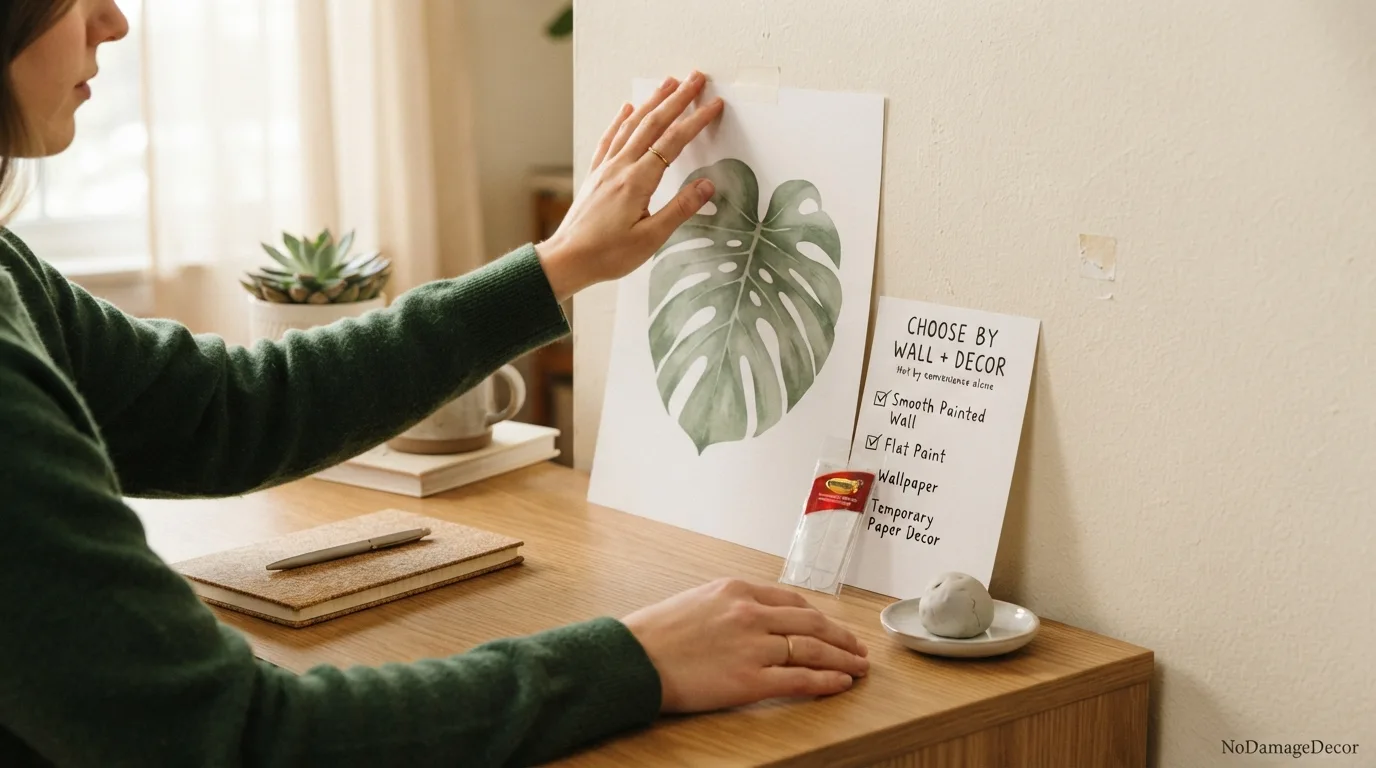
These two products match the comparison directly. The point is not that one product is universally “safe”; it is that each has a different use case and different surface cautions.
As an Amazon Associate I earn from qualifying purchases.
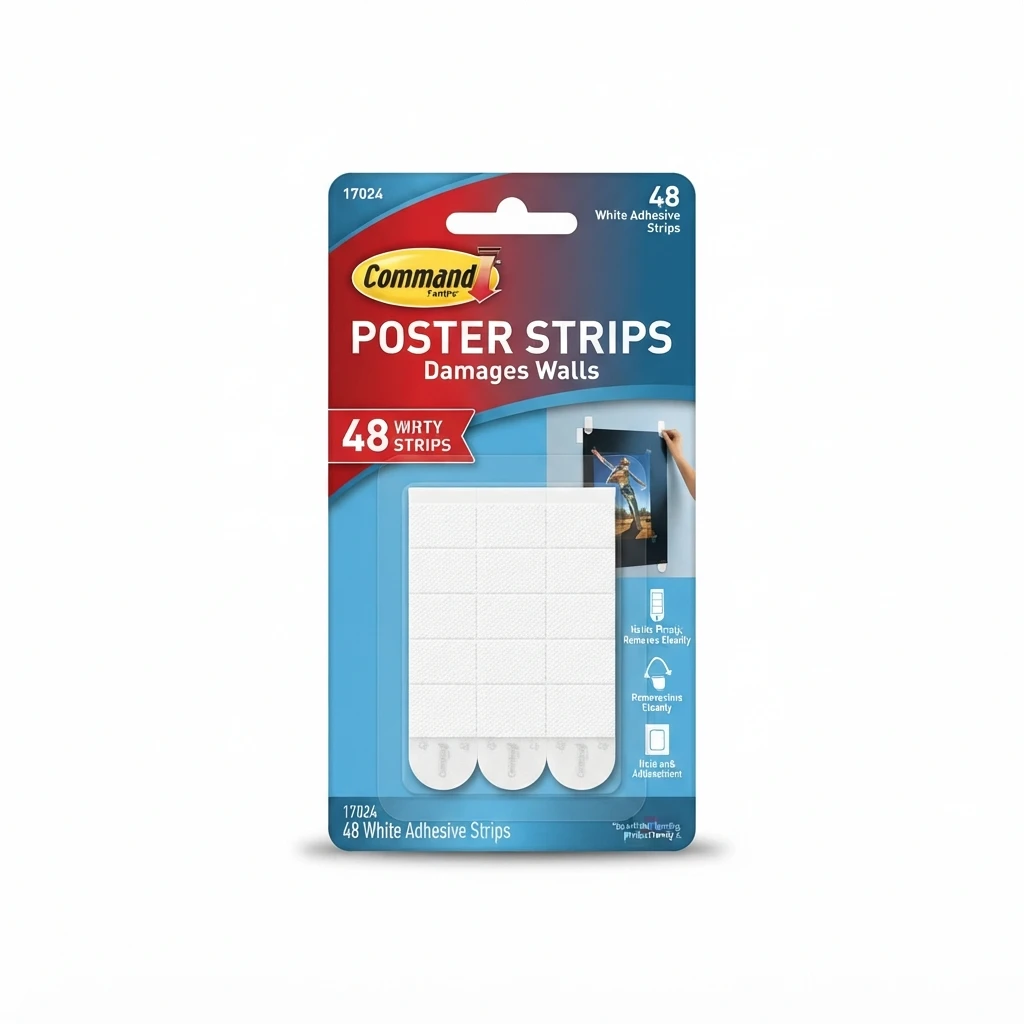
Command Poster Strips, 48 White Adhesive Strips
Best for: Posters, signs, and lightweight paper decor on approved smooth indoor surfaces.
Command’s 17024 Poster Strip family is made specifically for posters, kid’s artwork, banners, signs, and similar lightweight decor. The current manufacturer page lists painted walls, finished wood, glass, tile, metal, smooth ceilings, and other smooth indoor surfaces among the compatible use cases.
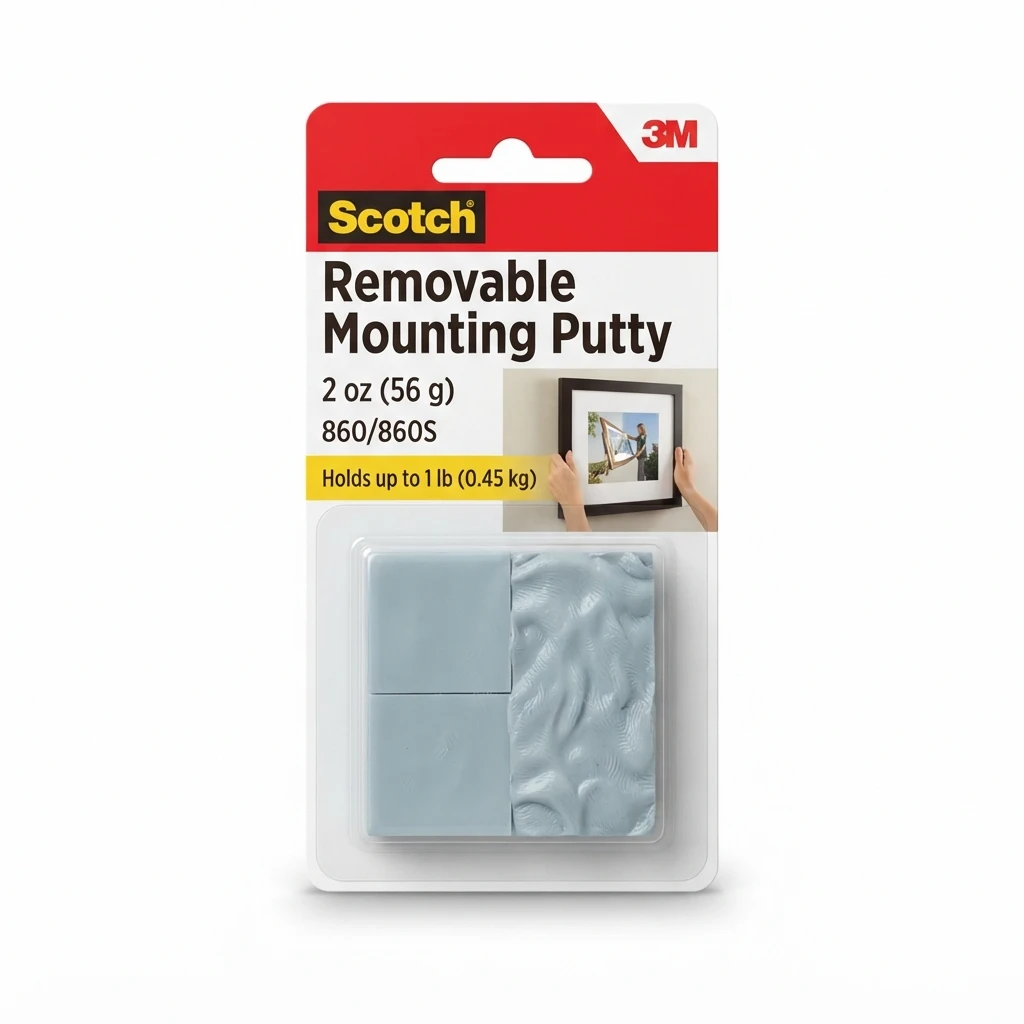
Scotch Removable Mounting Putty, 2 oz
Best for: Very lightweight paper items when the exact surface is approved and frequent repositioning matters.
Scotch describes its removable mounting putty for lightweight paper items such as artwork, photos, and cards. It can be shaped to the item and reused, which makes it convenient for temporary displays.
Common Renter Mistakes
Assuming lighter means safer
A paper poster is light, but the wall finish can still stain, dull, or lift during removal.
Using putty on flat paint without testing
Current Scotch guidance specifically cautions against flat paint. Test first or choose another method.
Pulling strips outward
Stretch-release strips are designed to release in a specific direction. Pulling away from the wall can increase paint stress.
Ignoring weak paint
No removable adhesive can repair poor paint adhesion. If paint is already chalky, cracked, or peeling, use a non-adhesive display method.
For broader deposit-risk planning, see apartment decor mistakes that cost your deposit and the Command strips weight limit guide.
Sources & Renter-Safety Note
Current installation and removal guidance was checked against the official Command Picture Hanging Strips instructions, the official Command Poster Strips product page, and the official Scotch Removable Mounting Putty page. Surface conditions vary. A product described as removable can still damage weak paint, leave a mark, or interact differently with an older rental wall. Check your lease where wall attachments are restricted, test an inconspicuous area, and keep move-in/move-out photos where deposit questions may arise.
Frequently Asked Questions
Are Command Strips better than mounting putty for posters?
For many renters on smooth, well-cured painted walls, Command Poster Strips are the clearer default because the manufacturer provides more specific surface and removal instructions. Mounting putty is convenient for very lightweight paper items and repositioning, but surface staining and finish compatibility need more caution.
Can mounting putty stain painted walls?
Yes, it can on some surfaces. Current Scotch guidance warns that the putty may stain certain surfaces and is not recommended for flat paint or delicate finishes. Test a hidden area first and follow the exact package guidance.
Can I use mounting putty on drywall?
Current official guidance is inconsistent: one 3M product page lists drywall among suitable surfaces, while the Scotch Brand page warns against delicate surfaces such as drywall. For a rental, follow the instructions printed on the exact package you purchase and test an inconspicuous area before use.
Can I use Command Poster Strips on wallpaper?
Command’s current guidance says not to use its Picture Hanging Strips on wallpaper. Use a method specifically approved for the wallpaper or choose a non-adhesive display option.
Which option is easier to reposition?
Mounting putty is generally easier for repeated repositioning because you can remove, knead, and reapply small amounts. That convenience does not remove the need to check surface compatibility and staining risk.
What is the safest way to remove Command Poster Strips?
Follow the exact package instructions. For stretch-release Command products, hold the strip as directed and stretch the release tab slowly down along the wall rather than pulling outward.
What should I use on a delicate rental wall?
If the paint is weak, flat, peeling, freshly repaired, wallpapered, or otherwise delicate, consider a non-adhesive method instead of assuming either strips or putty will be low-risk.
Renter-Safety Verdict
Best default for most posters: Command Poster Strips, when the exact package approves the surface and the paint is smooth, cured, clean, and sound.
Best niche use for putty: Very lightweight paper decor that you expect to move often, on a surface the exact putty package approves after a hidden test.
Avoid both: Wallpaper, weak or peeling paint, delicate finishes, heavily textured surfaces, valuable art, heavy decor, and any location where failure could injure someone.
The safest renter choice is not the adhesive with the fewest steps. It is the method whose surface instructions, item type, removal process, and lease rules all match your actual wall.
Build a Lower-Risk Renter Wall Setup
If you are decorating more than one wall, start with options that match your surfaces and your move-out plan.
Explore No-Damage Wall Decor Ideas