Can You Put Peel-and-Stick Floor Tile Over Linoleum?
The useful answer is not a blanket yes or no. It depends on the exact tile, the condition of the existing floor, and whether you are prepared for the removal risk at move-out.
Quick answer: do not assume peel-and-stick tile can go over linoleum. Start with the exact product’s current installation guide. FloorPops currently says it does not recommend installing its floor tiles over linoleum. Its instructions also require a clean, smooth, flat and dry surface free of grease, dirt, wax and oils, and the company warns that its strong floor adhesive may leave residue when tiles are removed. In a rental, product approval, written landlord permission and a move-out plan all matter.
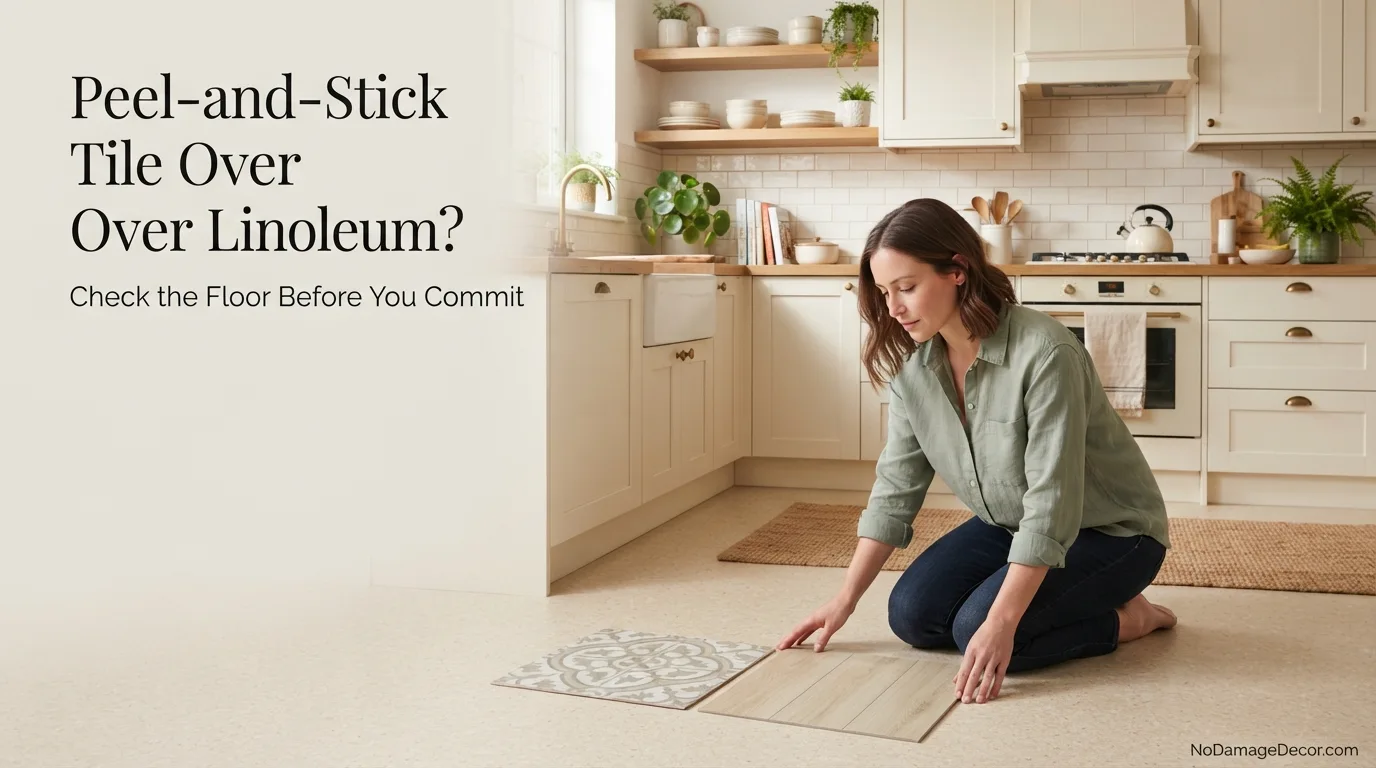
YES — only if approved
The product instructions specifically allow your existing floor type and the floor is stable, smooth and properly prepared.
MAYBE — if the floor is uncertain
You may need to identify whether the surface is true linoleum, vinyl, cushioned vinyl or another resilient product before deciding.
NO — if the maker says no
If the exact manufacturer excludes linoleum, do not override that guidance because another brand or video says it worked.
Manufacturer first
Approved substrates outrank general DIY advice.
Condition second
Loose seams, bubbles, wax and texture can undermine direct bonding.
Move-out third
Peel-and-stick floor adhesive is not the same as removable wall adhesive.
Old floors need caution
Do not sand or grind suspect resilient flooring to improve adhesion.
Peel-and-Stick Tile Over Linoleum: The Real Answer
The biggest mistake is treating “peel-and-stick flooring” as one universal product. Different manufacturers use different adhesives, backing systems and substrate rules.
Direct installation can make sense when…
- Your exact tile instructions specifically approve the existing resilient floor.
- The original floor is fully bonded, firm, flat and dry.
- There are no loose seams, bubbles or damaged edges.
- The required preparation is safe for the original surface.
- Your landlord has approved the flooring change in writing.
Skip direct installation when…
- The manufacturer says not to install over linoleum.
- The original floor is cushioned, loose, bubbling or heavily textured.
- Wax or polish cannot be removed safely.
- Preparation would require sanding an old or unknown resilient floor.
- Your lease requires the existing floor to remain unaltered.
Why Manufacturer Instructions Matter More Than General Advice
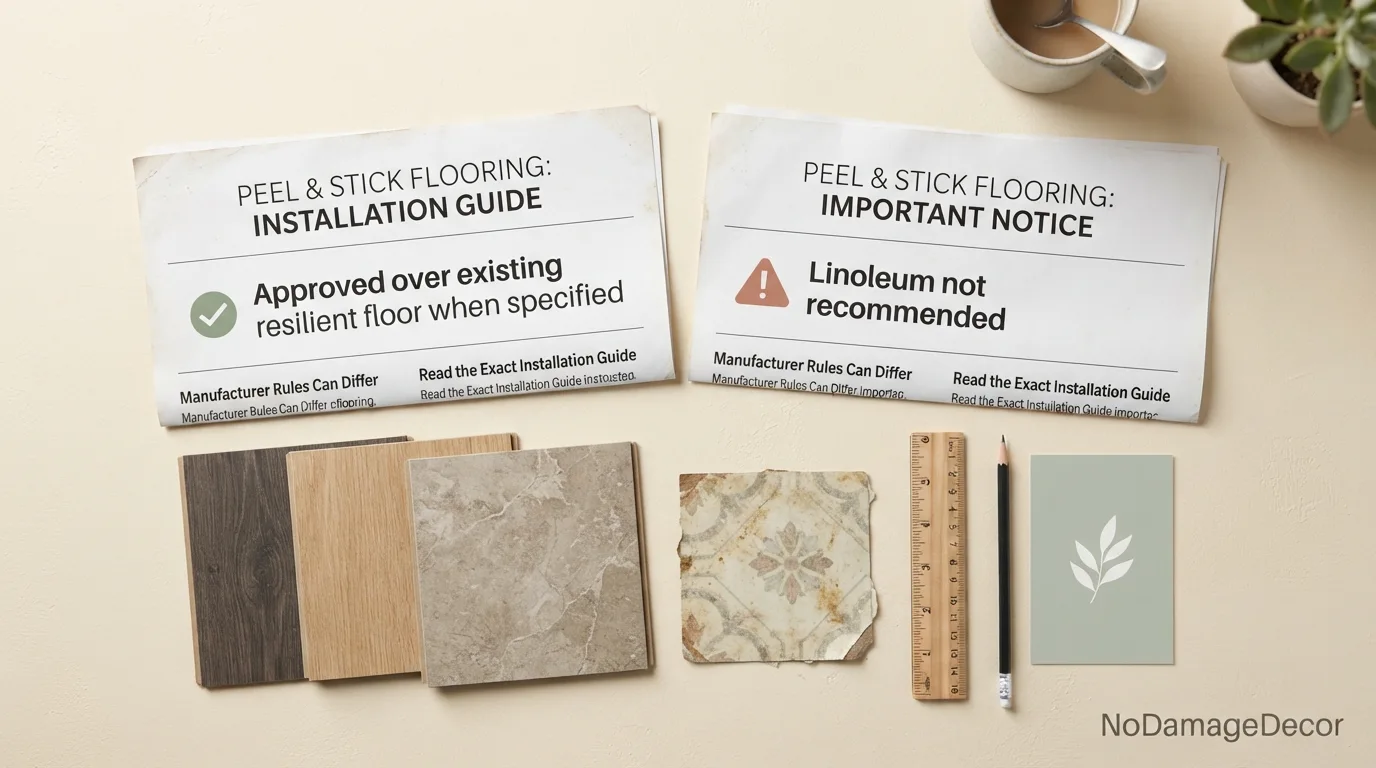
FloorPops is a useful example because its current guidance is clear: the company does not recommend installing its floor tiles over linoleum. FloorPops also says the installation surface should be clean, smooth, flat and dry, with grease, dirt, wax and oils removed. Its current instructions warn against loose or uneven flooring and say not to add extra adhesive to the system. citeturn407541search0turn407541search1
That does not mean every peel-and-stick product on the market follows the same substrate rules. It means you should not transfer one brand’s instructions to another. Before buying, search the exact installation guide for terms such as linoleum, existing resilient flooring, sheet vinyl, approved substrates and do not install over.
Check the Existing Linoleum Before You Cover It
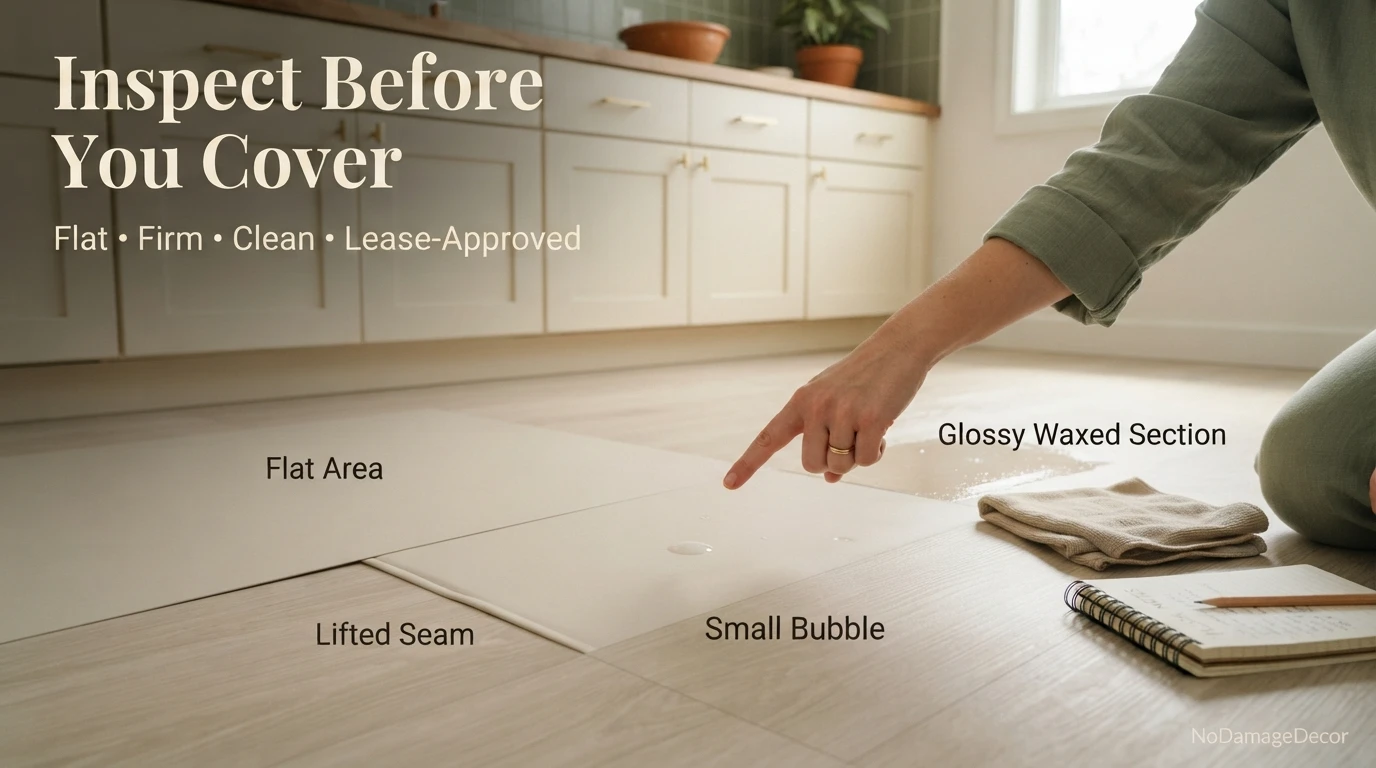
Press around seams, corners and high-traffic areas. Movement or lifting means the original floor is not acting like a stable base.
Heavy embossing or texture can reduce adhesive contact and may telegraph through a thin tile.
Polish and floor finish can act as a bond breaker. Only use preparation methods allowed by the new tile maker.
Moisture beneath or on top of a floor can create adhesion problems and may point to a larger maintenance issue.
Soft or flexible flooring can move beneath self-stick tile and may be excluded by the instructions.
Bubbles, loose edges, cracks and water damage should not simply be hidden beneath another adhesive layer.
| Existing Floor | Direct Peel-and-Stick? | Renter Decision |
|---|---|---|
| Firm, smooth and fully bonded; exact product approves it | Potentially | Get written permission and follow that product’s instructions exactly. |
| Waxed or polished | Not until approved preparation is complete | Avoid aggressive stripping methods unless both surfaces allow them. |
| Loose seams or bubbles | No | Covering instability does not repair the original floor. |
| Heavily embossed or textured | Poor candidate unless an approved leveling system is specified | Do not improvise sanding on an older unknown floor. |
| Cushioned or soft | Often unsuitable | Choose another approach unless specifically approved. |
| Manufacturer says “not over linoleum” | No | Use a different product or a non-bonded solution. |
For Renters, Removal Risk Matters More Than Installation Speed
Self-stick flooring is designed to survive foot traffic, cleaning and furniture movement. That requires a stronger bond than most temporary wall decor.
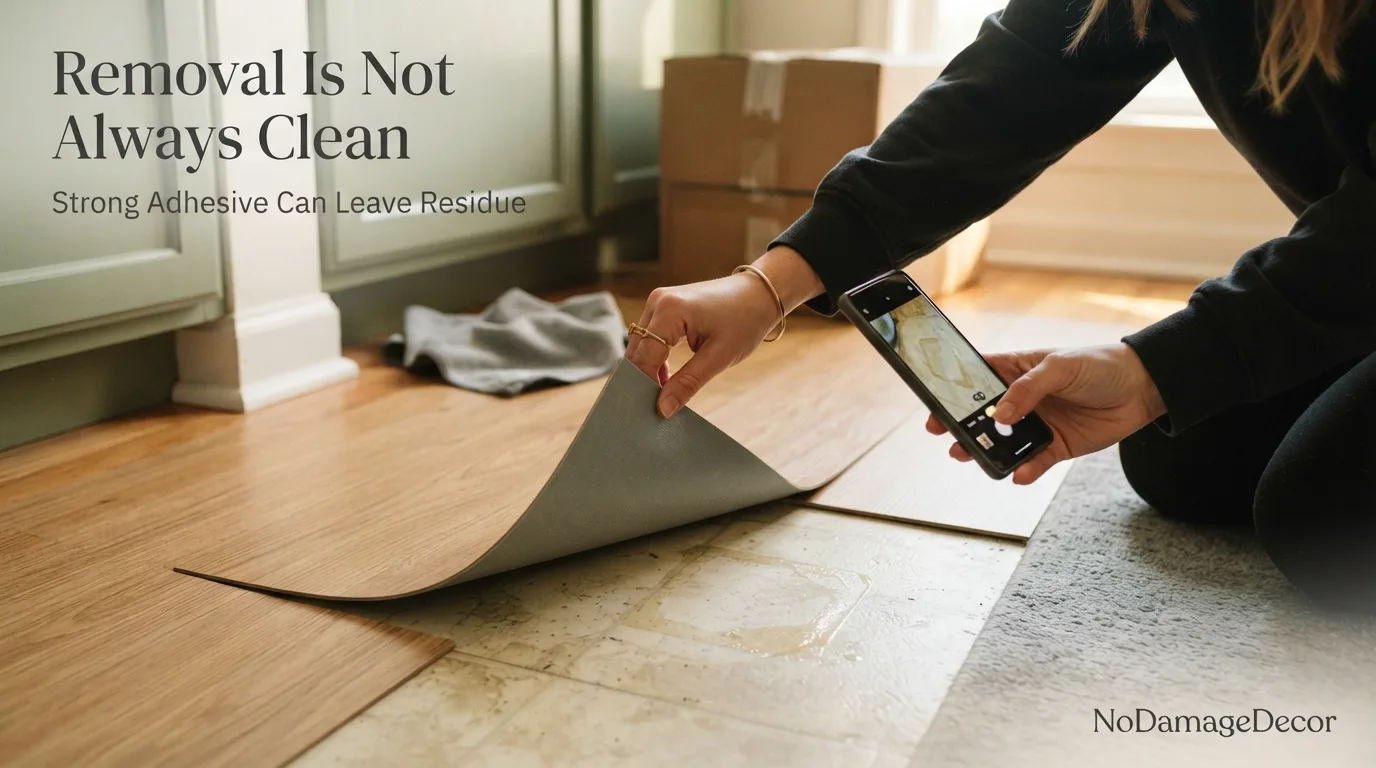
FloorPops says its floor tiles are not removable in the same temporary sense as its removable wallpaper or wall decals. The company notes that tiles can be removed, but strong adhesive can leave residue behind. citeturn407541search0turn407541search1
What may happen at move-out
- Adhesive residue remains on the original flooring.
- The old floor has a different sheen where it was covered.
- A weak wear layer lifts during removal.
- Loose seams or existing damage worsen.
- Residue removers alter the original finish.
What to document
- Full-room photos before installation.
- Close-ups of existing seams and defects.
- Written landlord approval.
- The exact product and installation instructions.
- After-removal photos before move-out.
For broader move-out planning, see deposit-costing decor mistakes and our first apartment decorating checklist.
Older Linoleum or Resilient Flooring: Do Not Sand First and Ask Questions Later
If preparation would disturb an old or suspect floor, involve the landlord or property manager. A cosmetic renter project is not worth turning into a hazardous-material disturbance. If the material needs testing or professional evaluation, that should happen before abrasive preparation.
A Better Renter Decision Sequence
Identify the floor
Linoleum, sheet vinyl and cushioned vinyl can look similar but may have different compatibility rules.
Check the lease
An adhesive floor covering can still count as an alteration even though there are no nails or screws.
Read the exact product guide
Do not rely on a tutorial that uses a different brand or substrate.
Inspect the floor
Look for loose seams, bubbles, texture, wax, moisture issues and movement.
Plan the move-out
Ask what removal might leave behind before exposing the adhesive backing.
Photograph everything
Keep dated before photos and any written approval with your rental records.
If your main goal is simply to make the rental feel more finished, see how to make your rental feel like home before choosing a higher-commitment floor project.
If Your Exact Product Approves the Floor, Prep Still Matters
Preparation is not a generic checklist. Follow the product instructions. For FloorPops, current guidance says the base should be clean, smooth, flat and dry and free of grease, dirt, wax and oils; the company also says not to use additional adhesive. citeturn407541search0turn407541search31
Clean without damaging
Remove dust and contamination using methods appropriate for the existing floor and the new tile instructions.
Deal with wax carefully
Do not improvise aggressive stripping or abrasion in a rental just to create more bite for the adhesive.
Do not bridge defects
A bubble or loose seam remains a weak point under a new adhesive tile.
Dry-layout first
Plan the pattern and edge cuts before removing backing so you minimize repositioning.
Removal: Plan It Before Installation
How a tile behaves months or years later depends on the adhesive, age, heat, cleaning history and condition of the original floor. A small test patch can reveal initial compatibility, but it cannot guarantee a clean long-term removal.
Use only the removal method suitable for both the new flooring and the original surface. A scraper, solvent, adhesive remover or heat method that works on one substrate can dull, soften or stain another.
One Real Peel-and-Stick Product to Research Further
This product is included as a real, currently identifiable peel-and-stick flooring option—not as a guarantee that it is suitable over your specific linoleum. Confirm the current installation instructions for your exact existing floor before buying or installing.
As an Amazon Associate I earn from qualifying purchases.
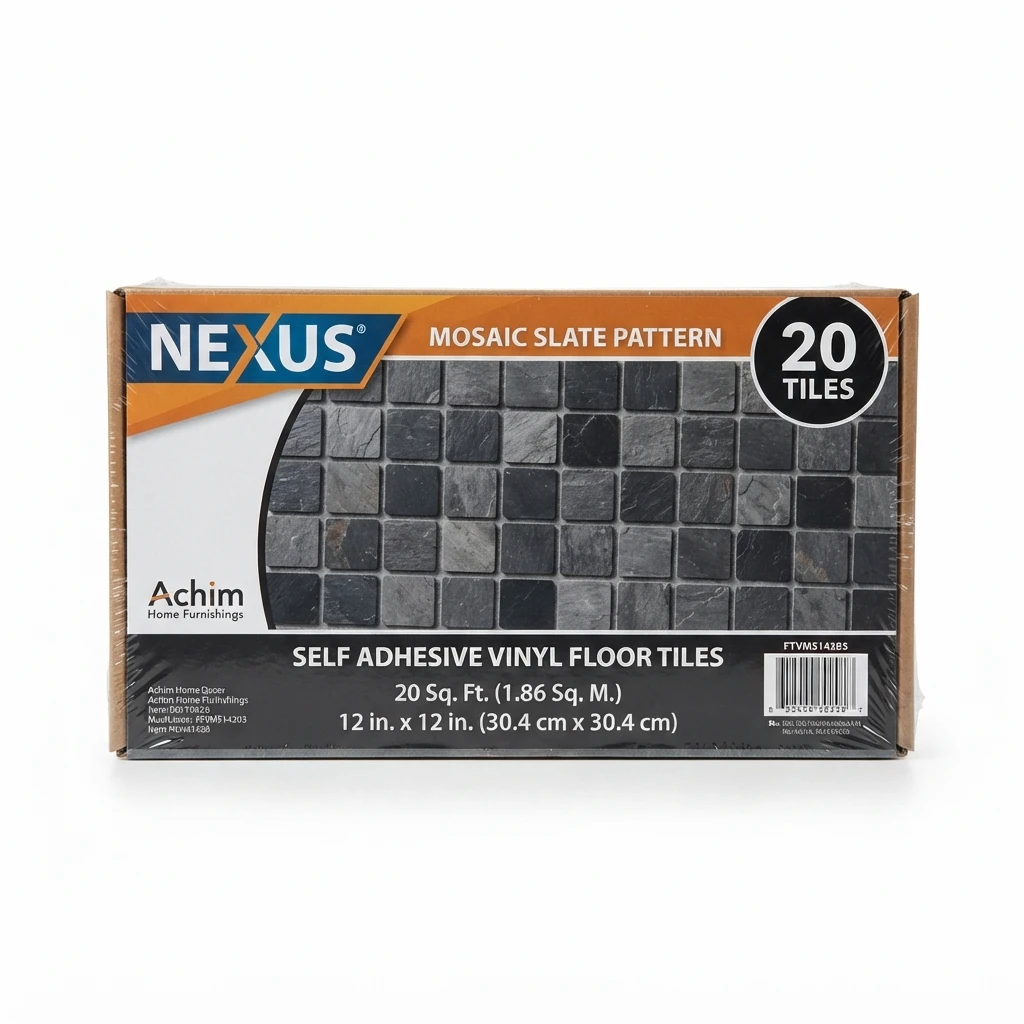
Nexus Self Adhesive 12-Inch Vinyl Floor Tiles, Mosaic Slate Pattern, 20 Tiles
Best for: shoppers who want a real 12-by-12-inch peel-and-stick vinyl tile option and are prepared to verify substrate compatibility before installation.
The current product identity matches Achim Home Decor’s Nexus Mosaic Slate 20-tile peel-and-stick flooring with ASIN B0829RHPMW.
Limitation: This card does not claim the product is approved over your linoleum. Check the current Achim installation instructions for your exact substrate, and get landlord approval before bonding it to a rental floor.
Check Price on AmazonWhat to Look For Before Buying
This page intentionally does not push an Amazon floor tile as a “safe” answer for installation over linoleum. The current FloorPops guidance specifically says it does not recommend installing its floor tiles over linoleum, so recommending a pattern first and checking compatibility later would be backwards. citeturn407541search0turn407541search2
Look for linoleum or your exact resilient floor type in writing.
Avoid products requiring permanent leveling or priming your lease will not allow.
Check whether residue, strong adhesion or permanent installation is mentioned.
Kitchen, bathroom and entry conditions are different; follow the exact product guidance.
Do not assume more adhesive means a better renter installation.
Keep spare tiles if the pattern may be difficult to match later.
Lower-Risk Alternatives for Renters
If the product does not approve linoleum—or your landlord does not approve an adhesive floor covering—use the project budget somewhere easier to reverse.
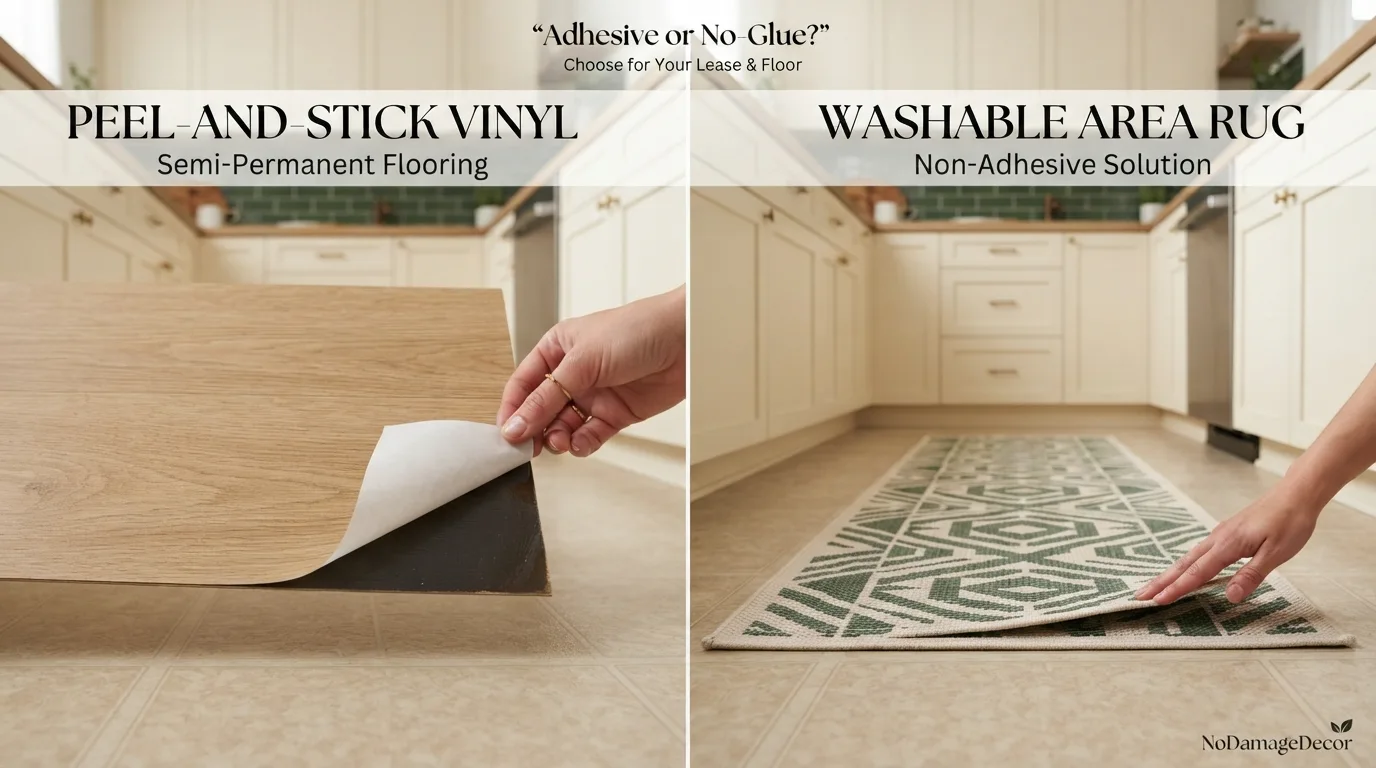
Cover visually, not permanently
A large washable rug or runner can hide a tired floor without bonding a second layer directly to it. Choose a backing compatible with the original floor.
Shift the makeover upward
A peel and stick backsplash, lighting or textiles may deliver more visual impact with less floor-restoration risk.
For a broader low-damage makeover, explore renter-friendly lighting ideas.
Frequently Asked Questions
Can you put peel and stick tile directly over linoleum?
Only when the exact peel-and-stick flooring manufacturer approves that existing floor type and the linoleum meets its substrate requirements. FloorPops currently says it does not recommend its floor tiles over linoleum.
Why can peel-and-stick tile fail over linoleum?
Wax, polish, loose seams, bubbles, heavy texture, moisture, movement or incompatible surface chemistry can interfere with the bond. Covering an unstable floor does not make it stable.
Is peel-and-stick floor tile renter-friendly?
It can avoid demolition, but it should not automatically be treated as temporary or damage-free. Flooring adhesive is designed for foot traffic and may leave residue when removed.
Can I sand linoleum before applying peel-and-stick tile?
Do not sand old or suspect resilient flooring simply to improve adhesion. If the material is old or unknown, involve the landlord before doing anything that would disturb it.
Will peel-and-stick tile remove cleanly from linoleum?
There is no universal guarantee. Removal depends on the adhesive, the age and condition of the original floor and how long the new tile has been installed. Some products may leave residue.
Should I add extra adhesive?
Only if the exact manufacturer requires it. Otherwise extra glue can conflict with the system and make move-out restoration more difficult.
What if I am not sure whether my floor is linoleum or vinyl?
Do not guess. Ask the landlord or property manager, check property records if available and compare the material with the definitions in the product installation guide.
Sources & Renter-Safety Note
Floor compatibility is product-specific. Current FloorPops guidance says the surface should be clean, smooth, flat and dry, says not to install over linoleum, and explains that its strong floor adhesive is not temporary in the same sense as removable wall products. citeturn407541search0turn407541search1
Renter-Safety Verdict
Do not treat peel and stick tile over linoleum as an automatic renter hack. The first question is whether the exact tile manufacturer approves the original floor. If the answer is no, stop there. If the answer is yes, the floor still needs to be stable, properly prepared and acceptable under your lease.
For renters, direct-bond peel-and-stick flooring is a higher-commitment project than removable wall decor because the adhesive is intended to survive daily foot traffic. If product compatibility, landlord approval or clean removal is uncertain, a non-bonded decorating solution is usually the more renter-conscious choice.
KEEP READING
Want a Better Rental Without Committing to the Floor?
Start with reversible changes that create a bigger visual shift with less restoration risk.
Make Your Rental Feel Like Home