Kitchen Towel Bar Without Drilling: Best Renter Options
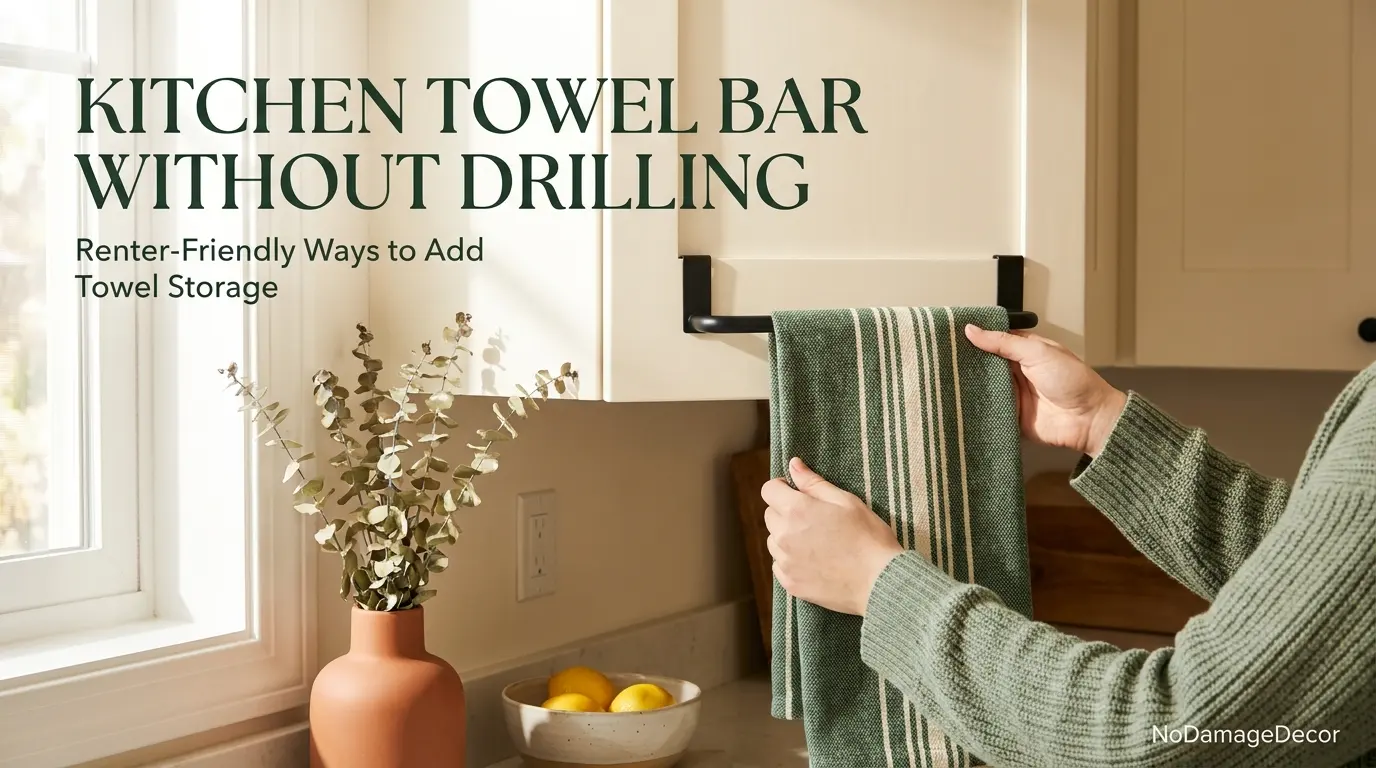
Kitchen towel bar without drilling setups work best when you match the mounting method to the cabinet, wall, backsplash, and lease—not just the style of the bar.
At a Glance
Best Ways to Add a Kitchen Towel Bar Without Drilling
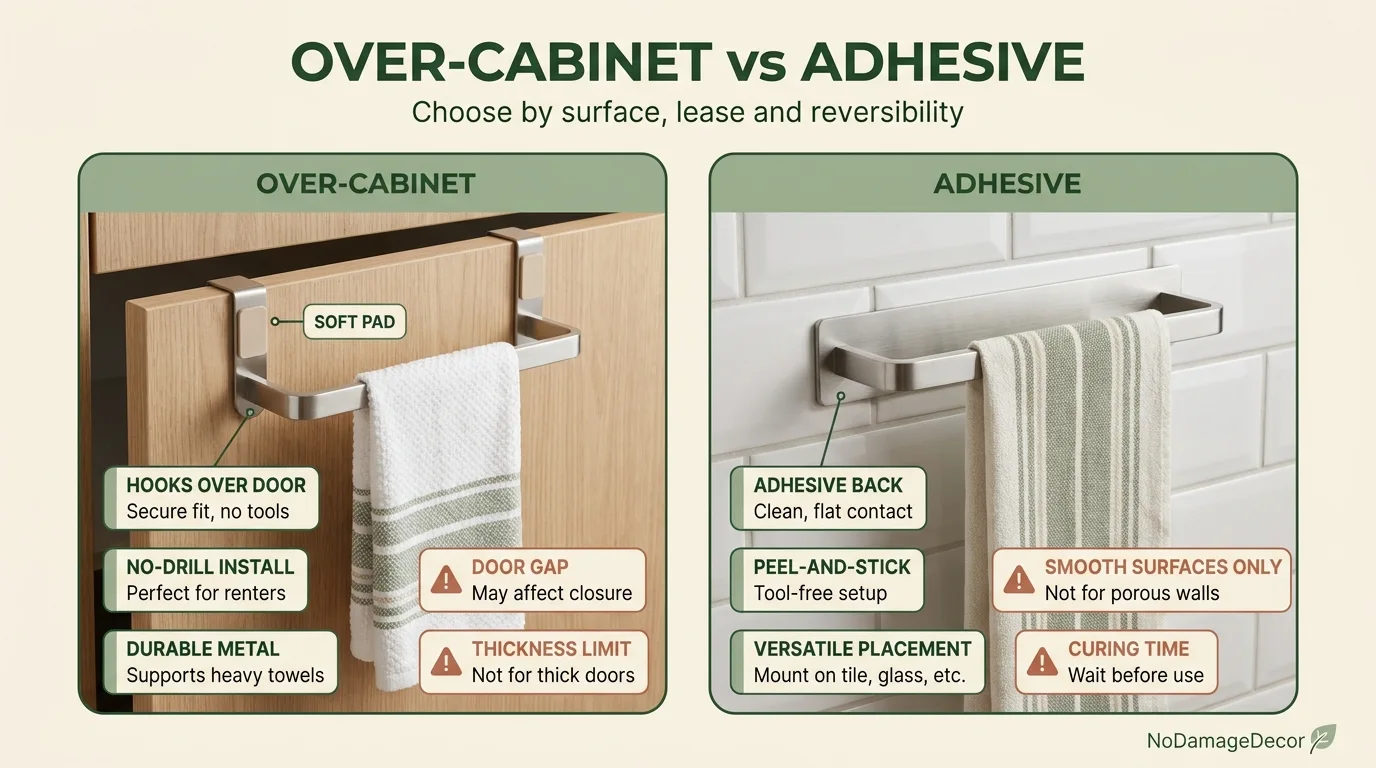
There are three practical renter approaches: hang the bar over a cabinet door, attach a removable adhesive bar to a compatible smooth surface, or use existing hardware that is already part of the kitchen. The right choice depends on whether you prioritize zero wall contact, a fixed visual location, or the ability to spread out a full dish towel.
| Method | Best For | Surface Contact | Main Trade-Off |
|---|---|---|---|
| Over-cabinet towel bar | Renters who want the least permanent setup | Hooks rest on cabinet door; padded models reduce rubbing | Must fit door thickness and not interfere with closing |
| Removable adhesive towel bar | Smooth tile, metal, finished wood, or suitable painted surfaces | Adhesive contacts surface directly | Removal risk depends on finish condition and exact product instructions |
| Existing cabinet pull / rail | Kitchens with a convenient existing handle | No new hardware | Towel may drag, bunch, or block drawers |
| Freestanding or sink-side towel stand | Fragile cabinets or unsuitable walls | No wall/cabinet attachment | Uses counter space |
Check Cabinet Door Thickness and Clearance Before You Buy
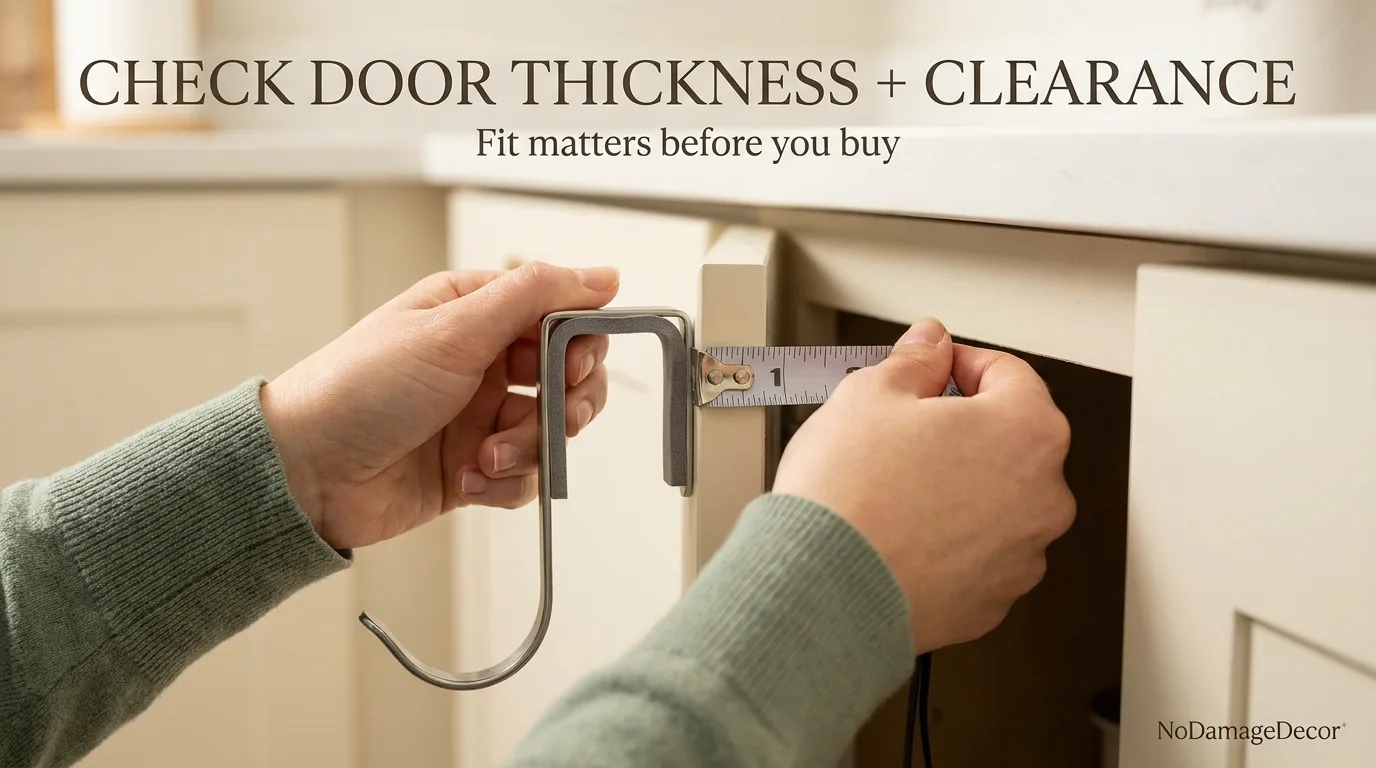
Over-cabinet towel bars look universal in product photos, but the hook depth still has to match the actual door. A bar that is too tight can scrape the finish. A bar that is too loose can shift every time you pull the towel. Some kitchens also have very small gaps between the cabinet door and the frame, so a metal hook can stop the door from closing cleanly.
Measure the door at the top edge where the towel bar will sit. Then check the product’s current fit range instead of assuming a “standard cabinet” size. Also look at the countertop lip, drawer below, nearby appliance handles, and whether the towel will touch the floor or oven door when hanging.
Choose an over-cabinet bar when…
The cabinet door is solid, smooth, in good condition, the hook fits without force, and there is enough clearance for the door to close normally.
Use another method when…
The door is frameless glass, very thin, unusually thick, peeling, freshly refinished, or so tightly fitted that the hook changes how the door closes.
When a Removable Adhesive Towel Bar Makes Sense
An adhesive towel bar can be useful when there is no suitable cabinet door near the sink and you want the towel to stay in one fixed location. Command’s current towel-bar guidance says its bath towel bars use removable adhesive and can adhere to surfaces including glass, metal, mirror, tile, laminates, finished wood, and painted surfaces when the exact instructions are followed. Command’s broader FAQ also emphasizes a clean, dry, smooth surface.
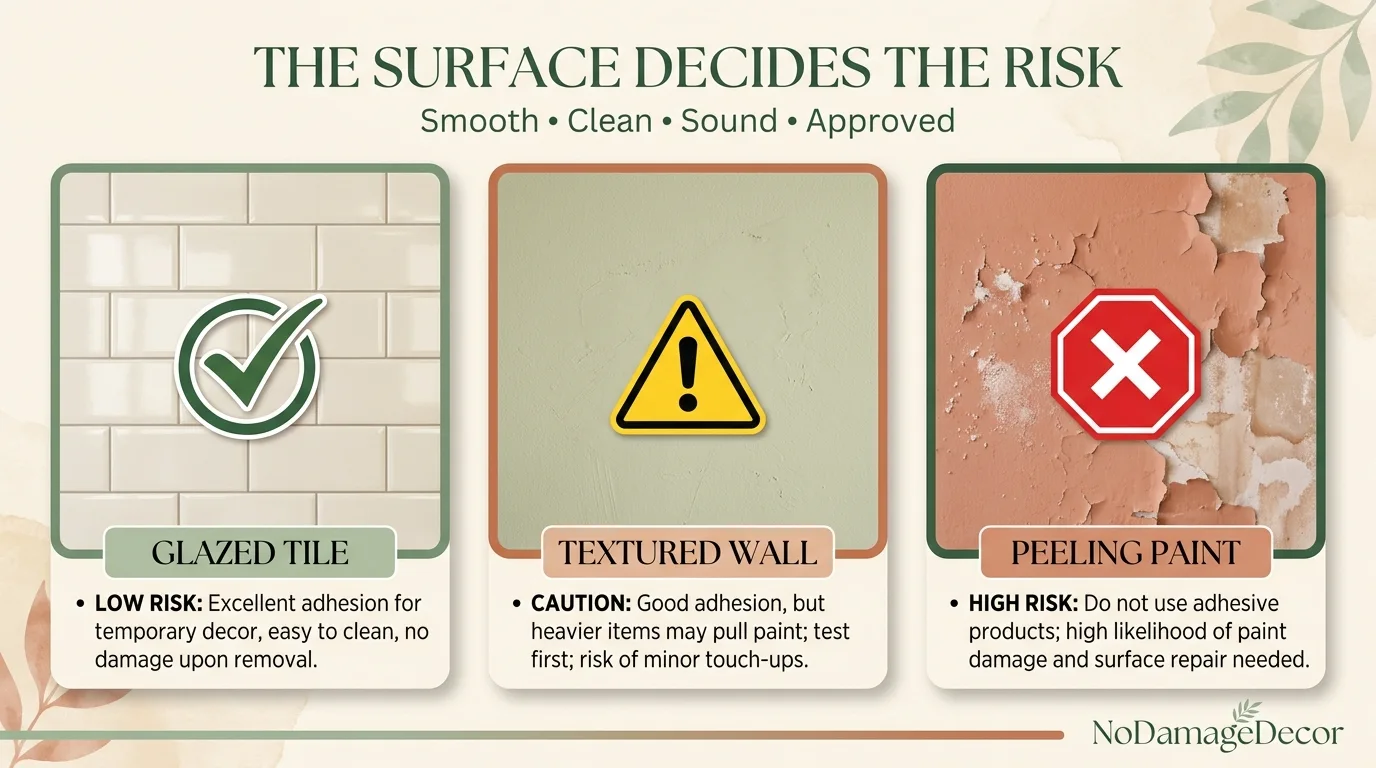
That does not mean every kitchen finish is equally renter-friendly. A glazed tile backsplash is usually a more predictable adhesive surface than old matte paint or a cabinet face with an unknown coating. Finished wood can be listed as compatible by a manufacturer while still being more emotionally expensive to damage than a basic tile backsplash, so a discreet test and lease check are sensible.
Surface Compatibility: Where to Be More Careful
| Surface | Renter Decision | Why |
|---|---|---|
| Glazed tile | Good candidate for an approved adhesive product | Smooth, hard surface can provide consistent contact when clean and dry |
| Painted drywall | Use caution | Paint age, texture, moisture exposure, and prior repairs can affect removal |
| Finished wood cabinet | Potentially compatible if the exact product allows it | Finish condition matters; test first because cabinet repair can be costly |
| Laminate cabinet | Potentially suitable when smooth and firmly bonded | Edge seams and older laminate can be vulnerable |
| Textured wall | Avoid adhesive bar | Reduced full contact can weaken the bond |
| Peeling, chalky, or soft paint | Avoid | The finish may release before the adhesive |
| Raw or unfinished wood | Avoid unless manufacturer specifically approves it | Porous surfaces can absorb adhesive or mark unevenly |
If you are already planning several no-drill kitchen changes, see our no-drill kitchen upgrades guide before adding separate adhesive systems all over the room.
How to Set Up a No-Drill Kitchen Towel Bar
Choose the location by use, not only appearance
Put the towel close enough to the sink or prep area to be useful, but far enough from stove burners, open flame, or appliance doors that the fabric cannot touch a heat source.
Check the lease and the surface
If the setup uses adhesive on painted or finished surfaces, review the lease and photograph the area before installation. For over-cabinet bars, check the cabinet edge for existing chips or wear.
Measure cabinet thickness or mounting area
For a hang-over bar, confirm the door thickness and clearance. For adhesive, confirm there is enough flat area for the entire mounting pad.
Protect the cabinet contact point
Choose a bar with soft foam or protective backing where the hooks touch the cabinet. Keep the pad clean so trapped grit does not act like sandpaper during daily movement.
Install without forcing the fit
An over-cabinet bar should slide into place without bending the door or forcing the hook. Adhesive products should be installed only with the exact cleaning, pressing, and waiting sequence provided by the manufacturer.
Test normal cabinet operation
Open and close the cabinet several times. Check that the towel bar does not strike a neighboring door, drawer, counter edge, appliance, or wall.
Use it for towels—not as a grab bar
A kitchen towel bar is not designed for body weight, hanging heavy cookware, or supporting bags. Keep the load limited to the intended towel-storage use.
Verified No-Drill Kitchen Towel Bar Options
Both options below hang over the cabinet rather than bonding to the wall. That makes them especially useful for renters who want to minimize paint and adhesive exposure.
As an Amazon Associate I earn from qualifying purchases.
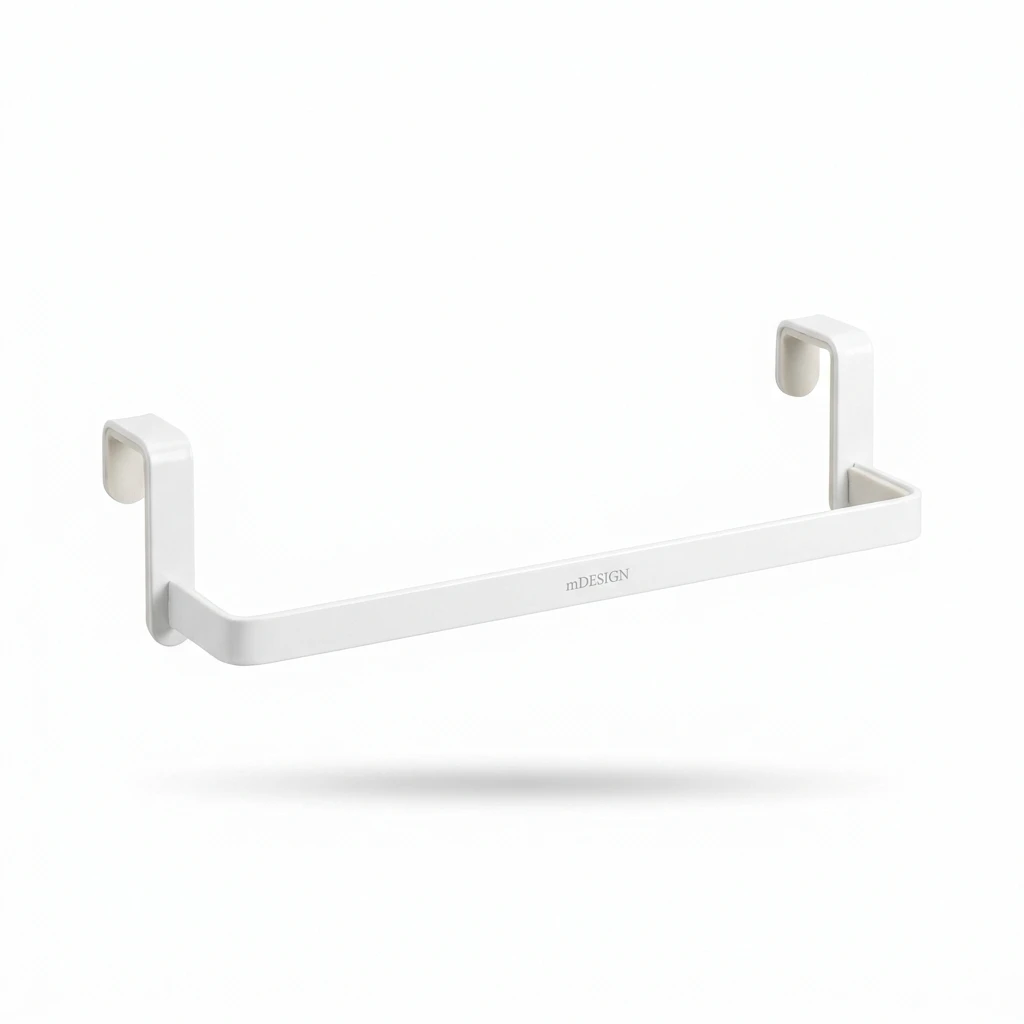
mDesign Modern Kitchen Over Cabinet Towel Bar, White, 9.2-Inch
Best for: Renters who want a compact, tool-free towel bar on a standard cabinet door.
Current product information identifies this mDesign bar as a steel over-cabinet towel holder with soft foam backing. The verified listing describes a 9.2-inch-wide bar designed to fit cabinet doors up to 0.75 inch thick.
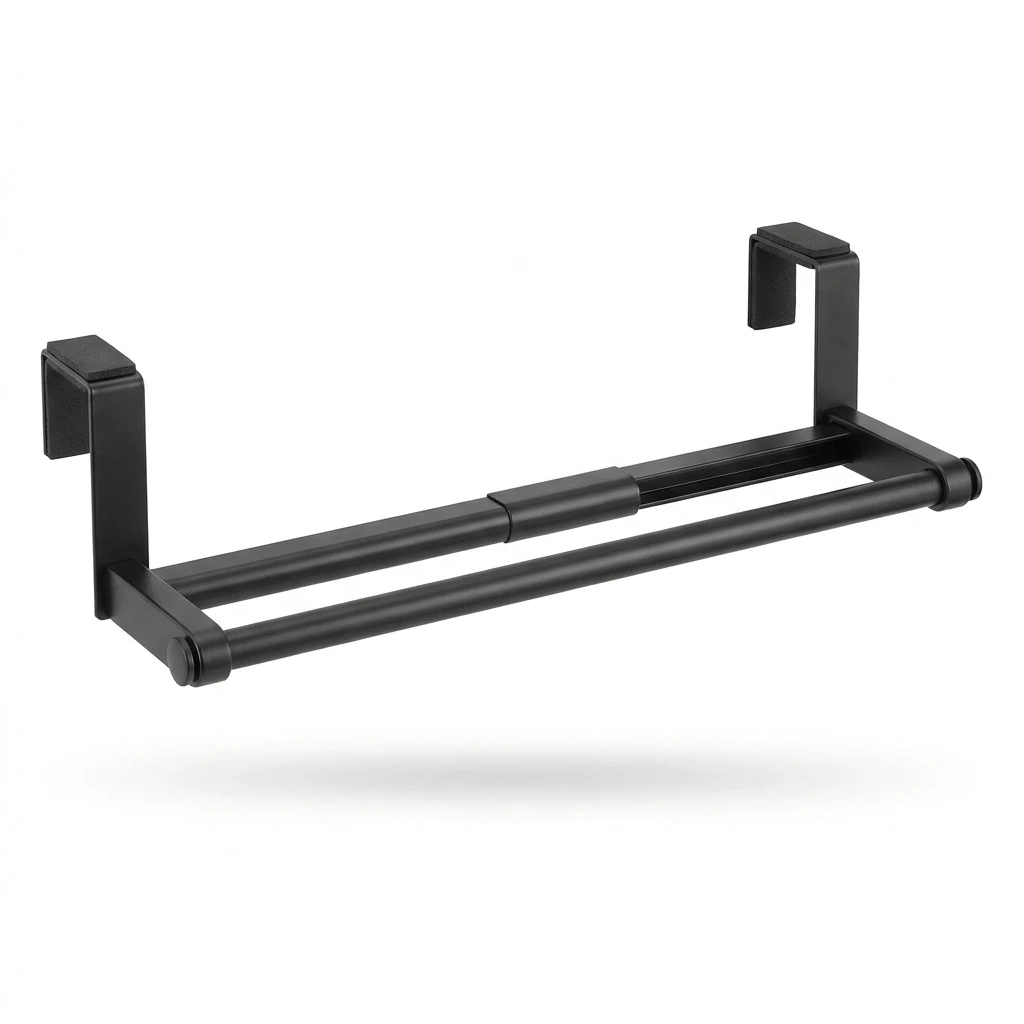
mDesign Adjustable Expandable Kitchen Over Cabinet Towel Bar, Matte Black
Best for: Renters who want a wider towel spread or need the bar width to adjust to the cabinet area.
The current listing for this model identifies it as an adjustable over-cabinet kitchen towel bar with a range of about 9.25 to 17 inches. The design hangs over the cabinet door instead of requiring screws.
Kitchen Moisture, Grease, and Daily Movement Matter
Kitchen towel storage gets handled more aggressively than decorative wall hardware. Towels are pulled one-handed, hung damp, swapped often, and used near sinks where water droplets and cooking residue can reach nearby surfaces.
For an over-cabinet bar, wipe both the hook and cabinet edge occasionally so trapped grease or grit does not build up between the two surfaces. If the protective foam backing becomes dirty, compressed, or detached, stop using the bar until it can be cleaned or replaced.
For an adhesive bar, follow the manufacturer’s moisture and surface-preparation instructions. Do not install directly where steam, grease splatter, or dishwater constantly hits the mounting pads unless the exact product is designed for that environment.
Common Mistakes to Avoid
Buying before measuring the door
The bar may look universal but still rub the finish or prevent the cabinet from closing.
Using adhesive on weak paint
Removable adhesive cannot make a poorly bonded paint layer stronger.
Ignoring protective padding
Metal-on-cabinet contact can create wear marks over time, especially when the towel is pulled sideways.
Hanging wet heavy items
Dish towels are appropriate; cookware, filled bags, and other heavy objects are not the same use case.
Mounting too close to heat
Keep towels away from open flame, exposed heating elements, and hot appliance vents.
Leaving grit trapped under the hook
Even a padded hook can scratch if hard debris gets trapped between the bar and cabinet finish.
For a wider renter checklist, see apartment decor mistakes that cost your deposit, first apartment decorating checklist, and make your rental feel like home.
Sources & Renter-Safety Note
Removable adhesive guidance was checked against the current Command Bath Towel Bar product page and Command FAQ, which emphasize smooth, clean surfaces and list compatible materials such as glass, metal, tile, laminates, finished wood, and painted surfaces for the relevant product family. Over-cabinet product dimensions and ASINs were cross-checked against current listings for the mDesign models used above. Always verify the current product instructions and your cabinet dimensions before installation.
Frequently Asked Questions
What is the best kitchen towel bar without drilling for renters?
An over-cabinet towel bar is usually the lowest-contact option because it does not require holes or adhesive. Choose one with protective backing and verify the cabinet-door fit first.
Will an over-cabinet towel bar scratch cabinets?
It can if the fit is too tight, the protective pad is missing, or grit becomes trapped underneath. Use a padded design, keep the contact area clean, and stop using it if the finish starts rubbing.
Can I use an adhesive towel bar on a kitchen backsplash?
Potentially, if the backsplash is smooth, clean, dry, and approved by the exact product manufacturer. Glazed tile is generally a more predictable adhesive surface than textured or weak paint.
Can I put a no-drill towel bar on painted cabinets?
An over-cabinet bar can work if the hook fits and the finish is sound. An adhesive bar should only be used when the exact manufacturer approves the surface and you are comfortable testing the finish first.
Do I need landlord permission for an over-cabinet towel bar?
Usually it is less invasive than drilling, but leases vary. If the bar could affect a delicate cabinet finish or your property has specific alteration rules, written permission is sensible.
How do I remove a no-drill kitchen towel bar at move-out?
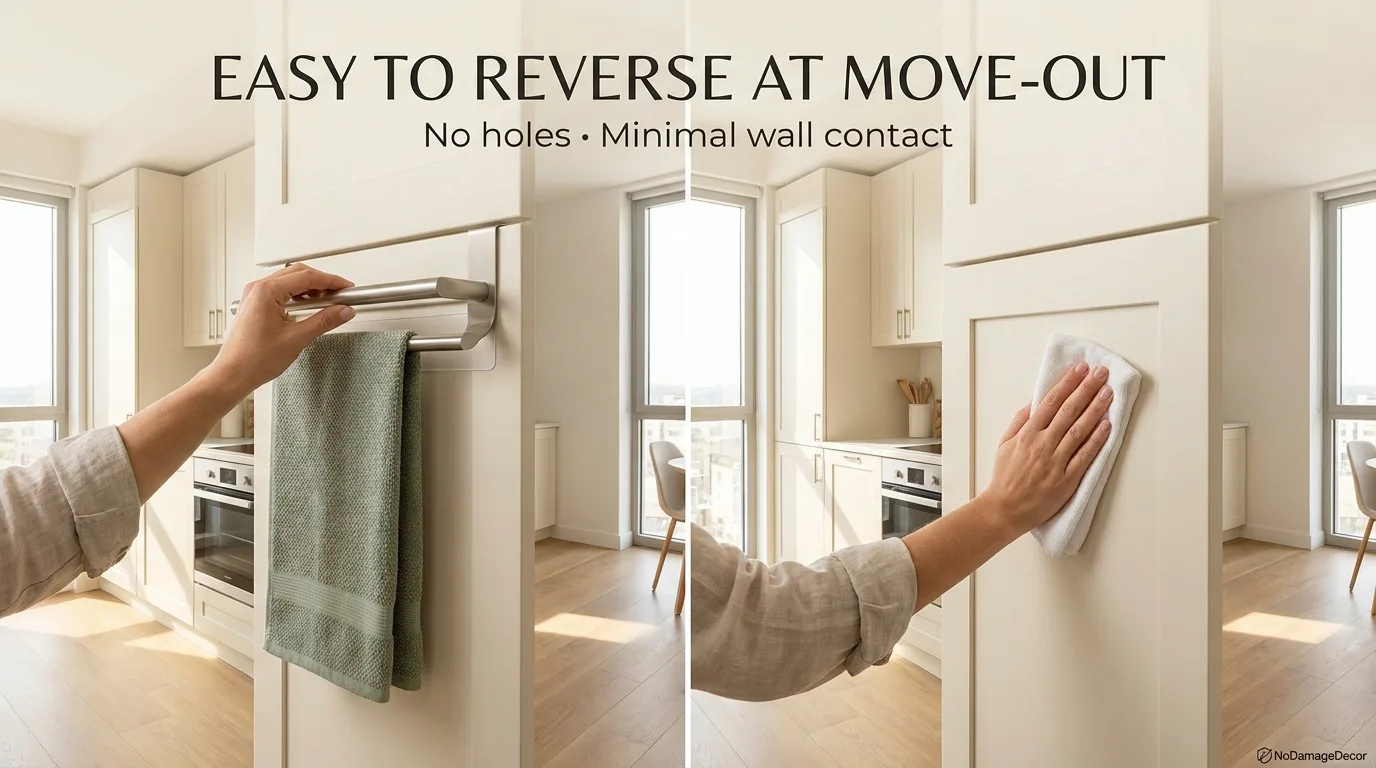
Lift an over-cabinet bar straight off and clean the contact area gently. For adhesive bars, follow the exact manufacturer removal method rather than pulling the fixture outward.
Is a kitchen towel bar safe near the stove?
Keep towels away from open flames, exposed heating elements, and hot appliance surfaces. Choose a cabinet or wall location where hanging fabric cannot reach a heat source.
Renter-Safety Verdict
Best overall renter choice: a padded over-cabinet towel bar that fits the cabinet door without force.
Best adhesive scenario: a smooth, sound, manufacturer-approved tile, metal, finished-wood, laminate, or painted surface where the exact removal method can be followed.
Avoid: weak paint, rough texture, raw wood, poor cabinet clearance, unpadded metal hooks, and placing towels where they can contact heat.
Move-out advantage: an over-cabinet bar can usually be lifted off without holes or adhesive cleanup, making it the most reversible starting point.
For renters, the right towel bar is the one that fits the kitchen physically and reverses cleanly—not simply the one with the strongest adhesive.
Upgrade the Kitchen Without Adding New Holes
Combine towel storage with other reversible kitchen improvements so the space works better without creating unnecessary repair work.
See No-Drill Kitchen Upgrades