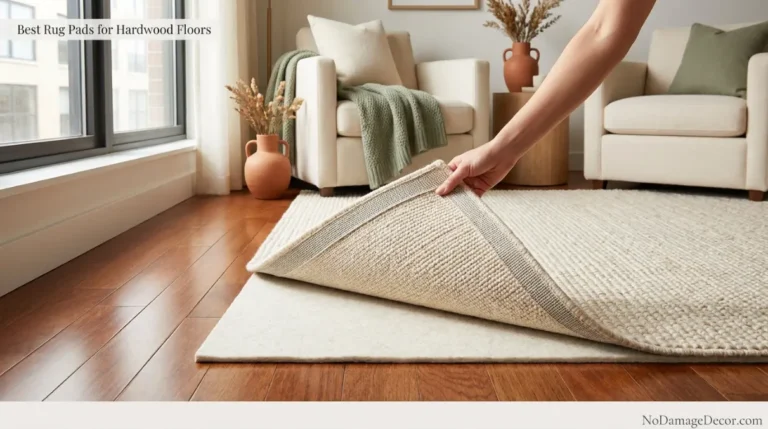
Suction Cup Shower Shelves: Do They Actually Stay Up?
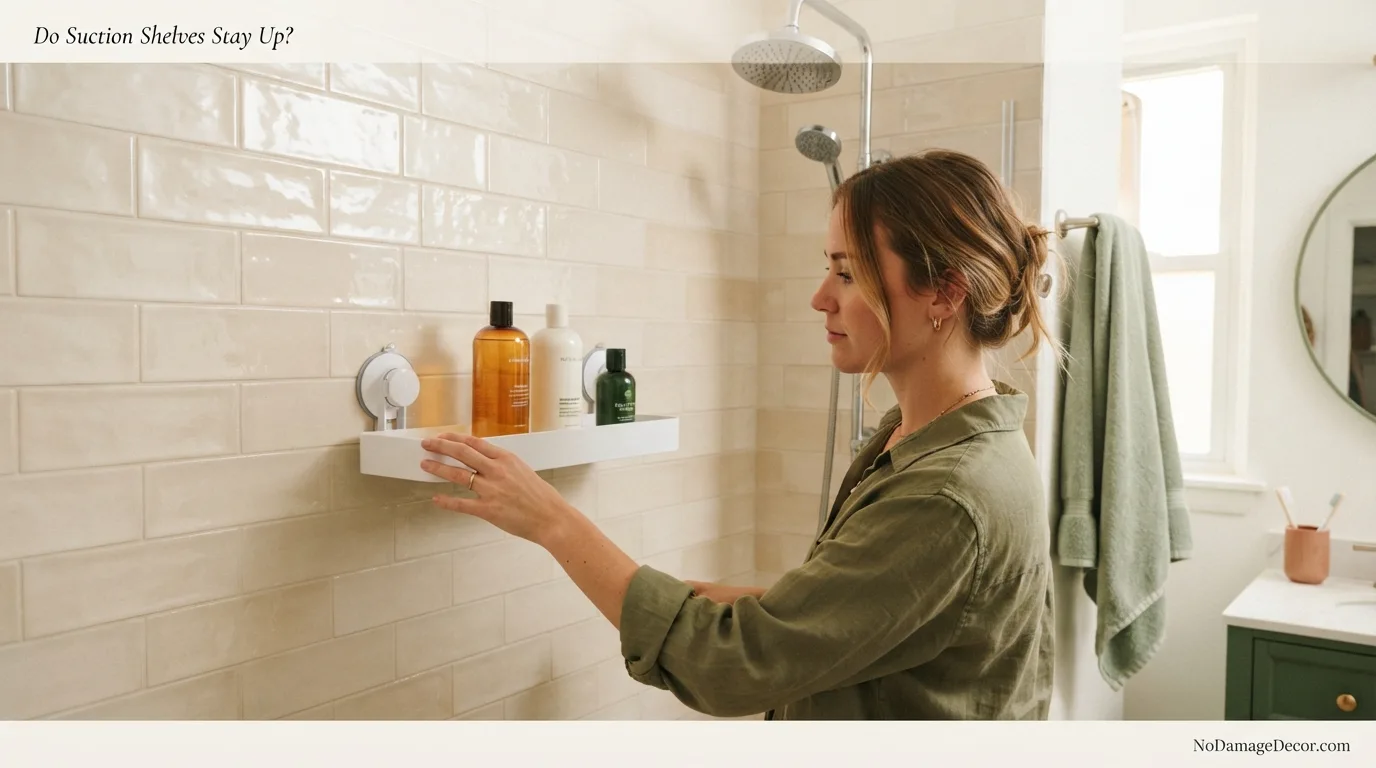
Suction cup shower shelves can stay up surprisingly well when they are mounted on the right surface, installed cleanly and loaded sensibly. They are far less reliable on grout, textured tile, porous stone or surfaces coated with soap film, so the wall matters just as much as the shelf.
Quick Answer
Yes—good suction cup shower shelves can stay up on smooth, non-porous shower surfaces such as glazed tile, glass, stainless steel and acrylic when the full suction cups sit flat, the wall and cups are clean and dry, and the load stays within the manufacturer’s current limits. They are a poor match for uneven or textured tile, grout lines, wallpaper, painted walls and unfinished porous stone unless the exact product says otherwise.
At a Glance
Do Suction Cup Shower Shelves Actually Stay Up?
They can—but only if the suction system gets the conditions it needs. A suction shelf is not held by glue. The flexible suction cup is pressed against the wall and air is pushed out, creating a pressure difference that helps hold the cup in place. Any path that lets air slowly leak back under the cup weakens the seal.
That is why two renters can buy the same shelf and have completely different experiences. One may install it on a large glossy porcelain tile and leave it untouched for months. Another may bridge a grout line, install over faint soap residue or use a micro-textured stone-look tile, then watch the shelf slide down after a shower.
Current TAILI manufacturer guidance for its suction shower caddies repeatedly limits use to smooth, non-porous surfaces such as tile, glass, metal, stainless steel and acrylic. The same guidance tells users not to install on uneven tiles, textured surfaces, unfinished marble, wallpaper or painted walls, and not to place suction cups over grout lines.
Best and Worst Surfaces for Suction Shower Shelves
| Surface | Suitability | Renter-conscious guidance |
|---|---|---|
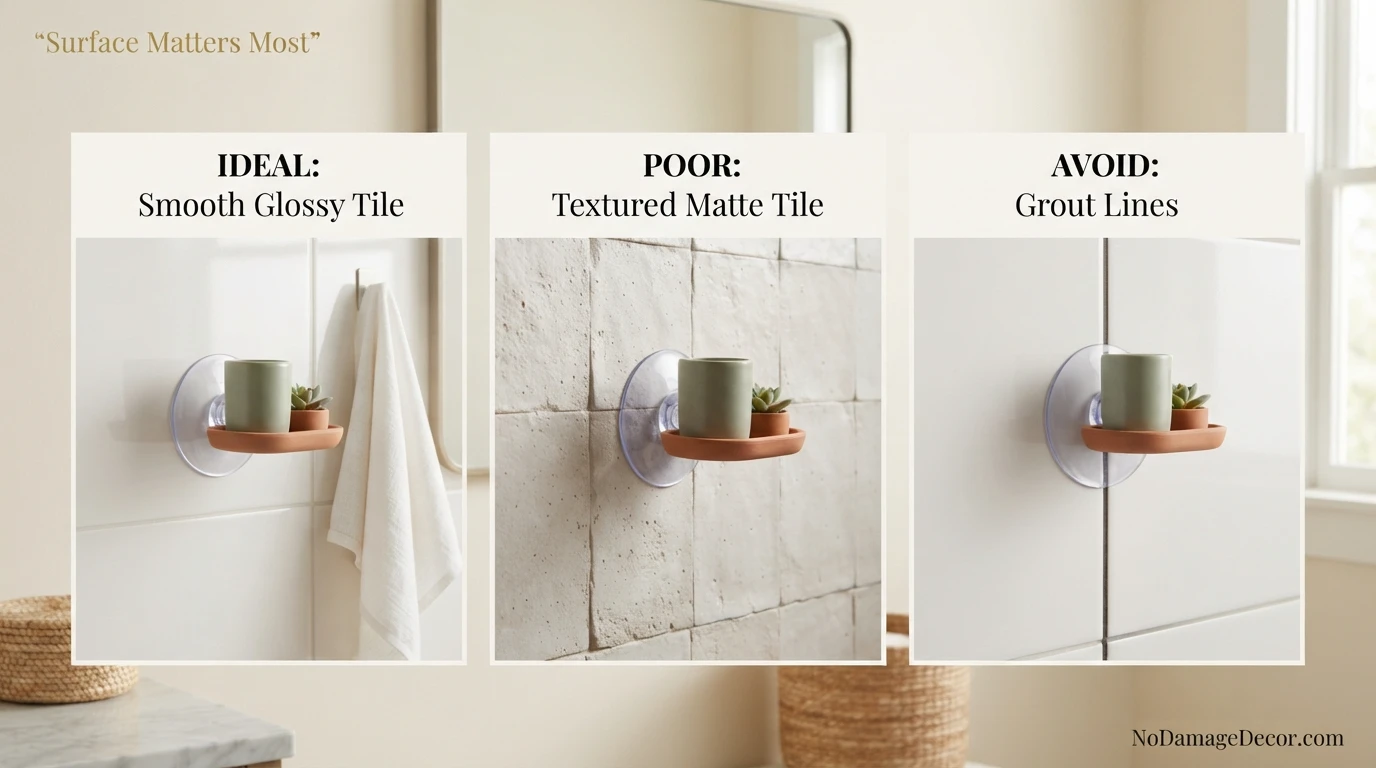
| Smooth glossy glazed ceramic or porcelain tile | Strong candidate | Use a shelf whose full suction footprint fits inside uninterrupted tile. |
| Glass shower enclosure | Strong candidate | Usually excellent for suction if clean, smooth and dry at installation. |
| Stainless steel or smooth acrylic | Often suitable | Use only where the shelf manufacturer lists the material and where the surface is flat. |
| Fine matte tile | Uncertain | Some matte finishes are smooth enough; others have microtexture. Test with light contents only if manufacturer guidance supports the surface. |
| Textured, 3D or stone-look relief tile | Poor candidate | Texture prevents full sealing contact. |
| Grout line under suction cup | Avoid | Do not bridge grout. Reposition the shelf so each cup sits entirely on smooth tile. |
| Unfinished marble or porous natural stone | Usually avoid | TAILI specifically excludes unfinished marble for its suction caddies. |
| Painted shower wall or wallpaper | Avoid unless explicitly approved | TAILI excludes painted walls and wallpaper; suction may also stress a weak coating. |
Small mosaic tile is a special problem. Even if every individual tile is glossy, the grout grid may be too dense to fit a full suction base. Before buying, compare the cup diameter with the actual uninterrupted tile area.
Why Suction Cup Shower Shelves Fall Down
Soap or cleaner film
Conditioner, body wash and some bathroom cleaners leave residue that reduces direct contact between cup and wall.
Grout under the cup
A grout joint creates a path for air to seep into the vacuum. A shelf may feel secure at first, then slowly loosen.
Texture
Raised patterns, stone texture and matte microtexture can prevent the flexible cup edge from sealing all the way around.
Wet installation
“Waterproof in use” does not mean “install on a wet wall.” Manufacturer guidance commonly starts with a clean, dry surface.
Uneven loading
One giant bottle at the outside edge creates more leverage than evenly distributed everyday toiletries close to the wall.
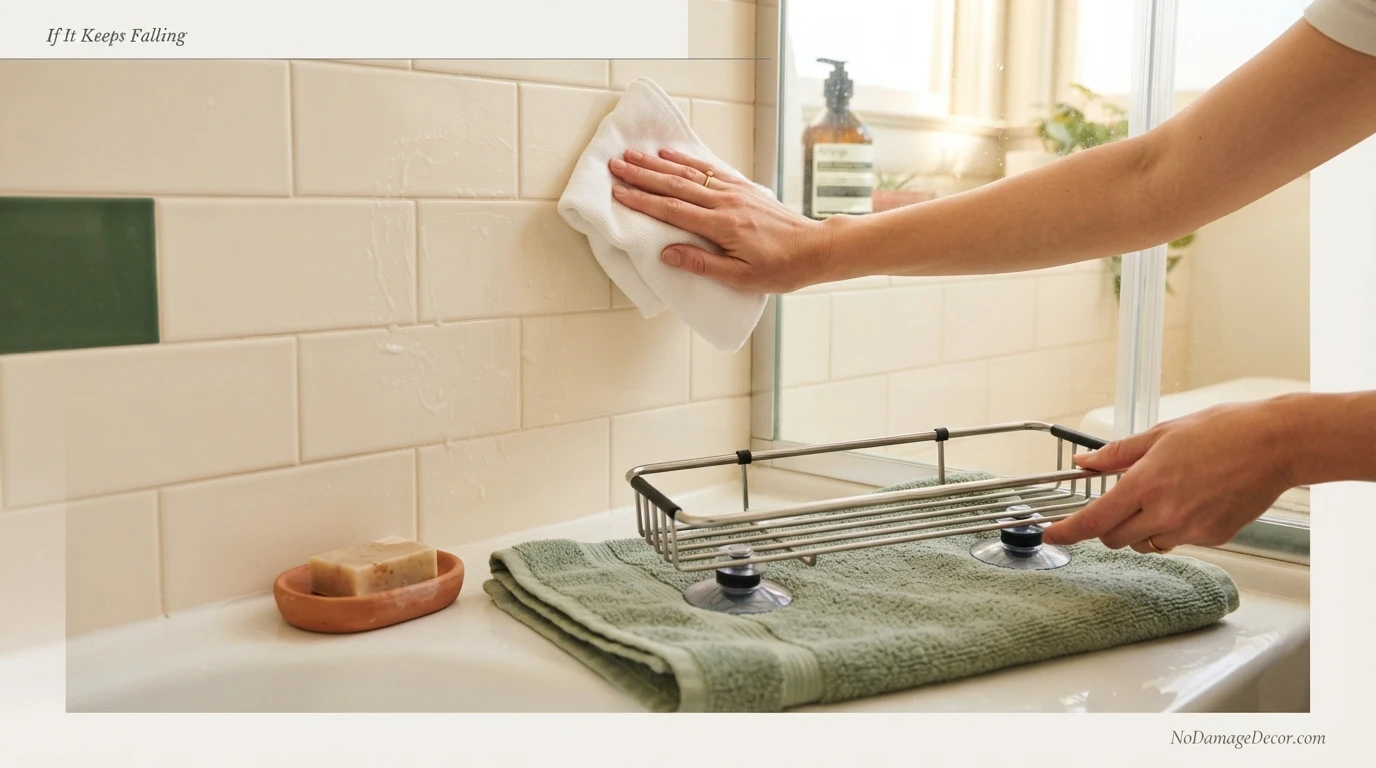
Dirty or distorted cups
Hair, lint, mineral scale or a deformed cup edge can prevent the cup from conforming tightly to tile.
How Much Should You Put on a Suction Shower Shelf?
Use the manufacturer’s current rating as an upper limit under the stated installation conditions—not as a target. TAILI currently states that each of several shower-caddy designs with two suction cups can hold up to 22 lb on suitable smooth, non-porous surfaces. That rating assumes the correct surface and installation.
For a renter, the smarter goal is margin. A shelf carrying two or three normal toiletry bottles is less consequential than a shelf packed with bulk shampoo jugs, glass skincare, razors, electrical items and heavy pump bottles.
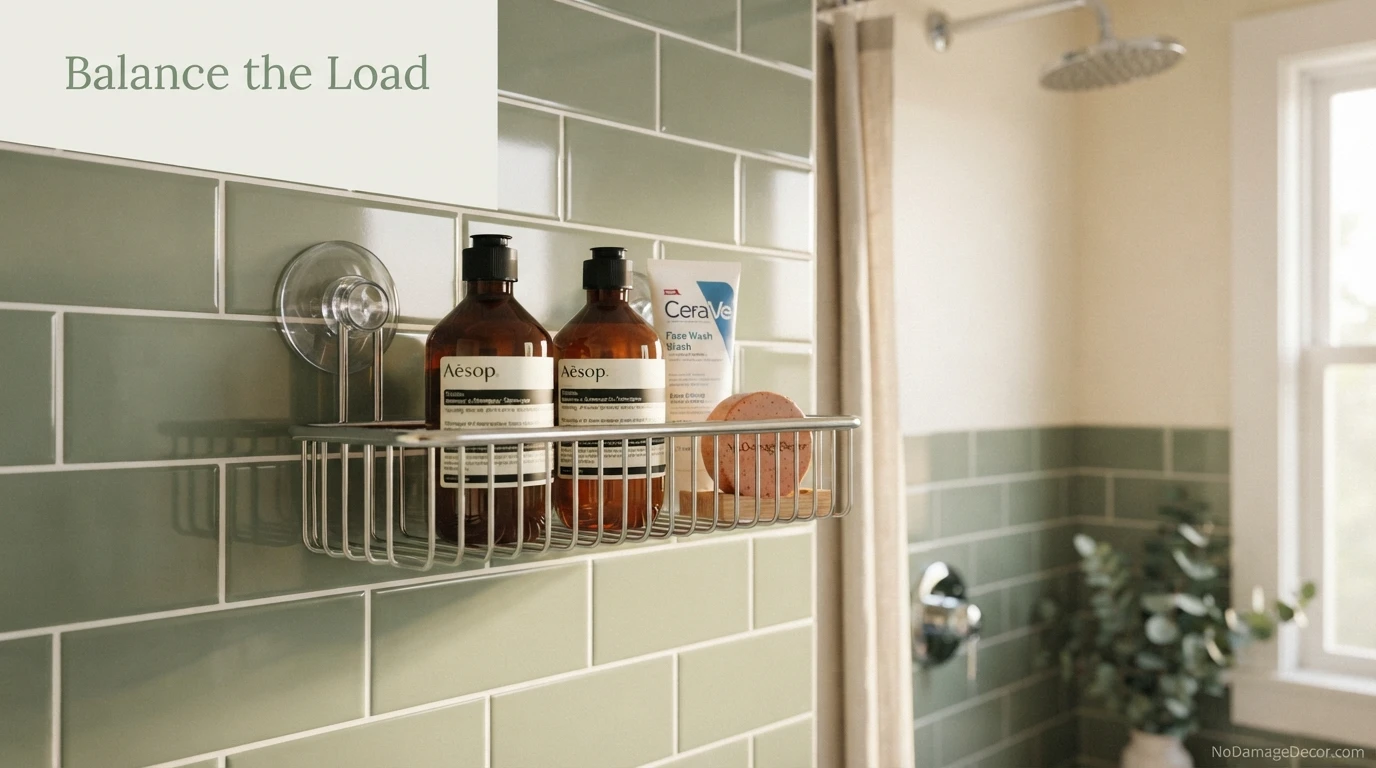
Your storage load is ordinary and replaceable
- Shampoo and conditioner bottles
- Body wash
- Face wash
- Soap
- Loofah or shower brush
- Plastic razor or lightweight accessories
A release could cause injury or expensive damage
- Glass jars or glass bottles
- Heavy ceramic containers
- Electric devices
- Anything directly above a child or seated bather
- Objects that could chip the tub or tile if they fall
- Items that encourage someone to grab or lean on the shelf
How to Install Suction Cup Shower Shelves So They Stay Up
Follow the exact instructions for your shelf because suction mechanisms vary. The process below reflects the core requirements repeated in current TAILI guidance and adds renter-focused checks.
Choose the exact location first
Hold the unloaded shelf against the wall and check that every suction cup sits entirely on smooth, non-porous material. Do not let a cup cross grout, a tile bevel or a textured accent strip.
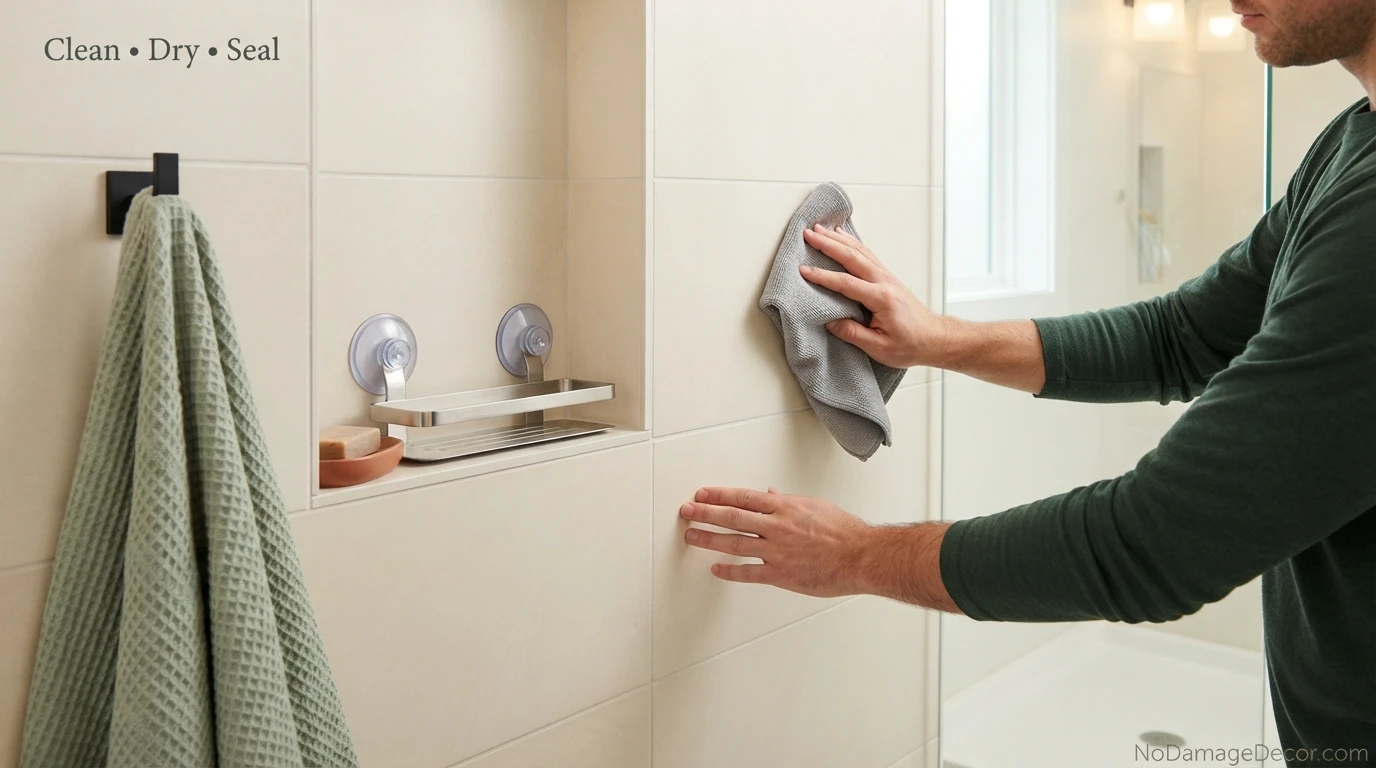
Remove soap film and residue
Clean the wall using a method that is safe for your tile and consistent with the shelf manufacturer’s instructions. The goal is direct cup-to-surface contact without oily or waxy cleaner residue.
Dry the mounting area completely
Use a lint-free cloth and give the surface time to air dry. Also check the suction cups themselves; they should be clean and free from hair, lint or mineral buildup.
Seat the cups flat
Position the shelf level. Press each suction mechanism exactly as the manufacturer directs. TAILI’s current product guidance describes pressing the cups firmly to squeeze air out.
Confirm the lock before loading
Gently test the empty shelf. It should not rotate, lift at the cup edge or rock because one cup is sitting higher than the other.
Load gradually and evenly
Add ordinary toiletries instead of placing every bottle on the shelf at once. Keep the heaviest items nearer the wall and distribute them across the basket.
Recheck after the first showers
Look for edge lifting, sagging or a change in shelf angle. If anything moves, unload and reset it rather than waiting for a full release.
Suction Cup Shower Shelves With Verified Amazon ASINs
The two options below are included because the exact product identities can be matched to current Amazon ASINs, and TAILI publishes relevant surface and load guidance for its suction-caddy systems. Prices, ratings, stock and review counts are intentionally omitted because they change.
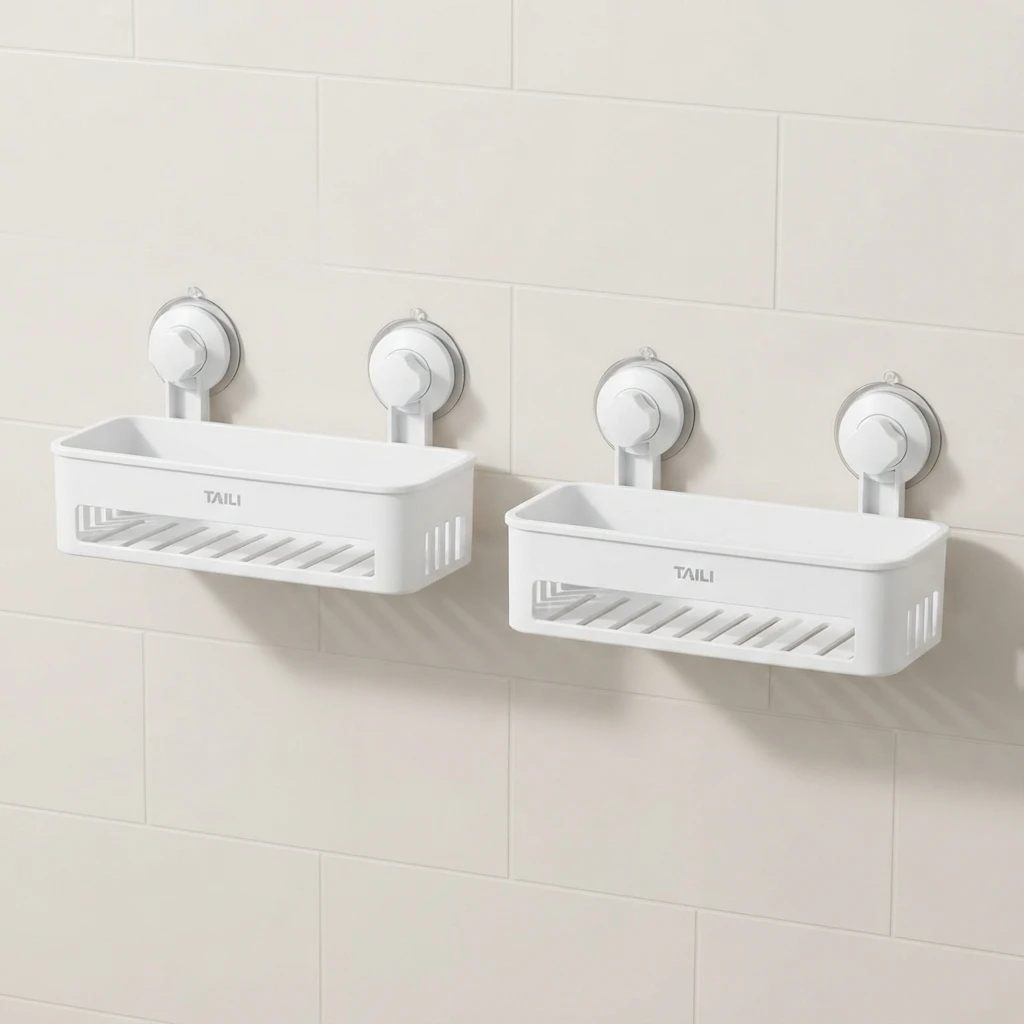
TAILI Shower Caddy Suction Cup 2 Pack, White
This white two-shelf plastic set is sold under Amazon ASIN B09687GWCL. Current product information lists two baskets, suction mounting, shower use and a 22 lb maximum recommendation. TAILI’s suction-caddy guidance says the system is for smooth, non-porous surfaces and should not be installed over grout lines or on uneven/textured surfaces.
Practical limitation: plastic construction is lightweight, but the surface rules still control whether it stays up. Do not rely on the published maximum if your wall is marginal or your load contains fragile items.
Check Price on Amazon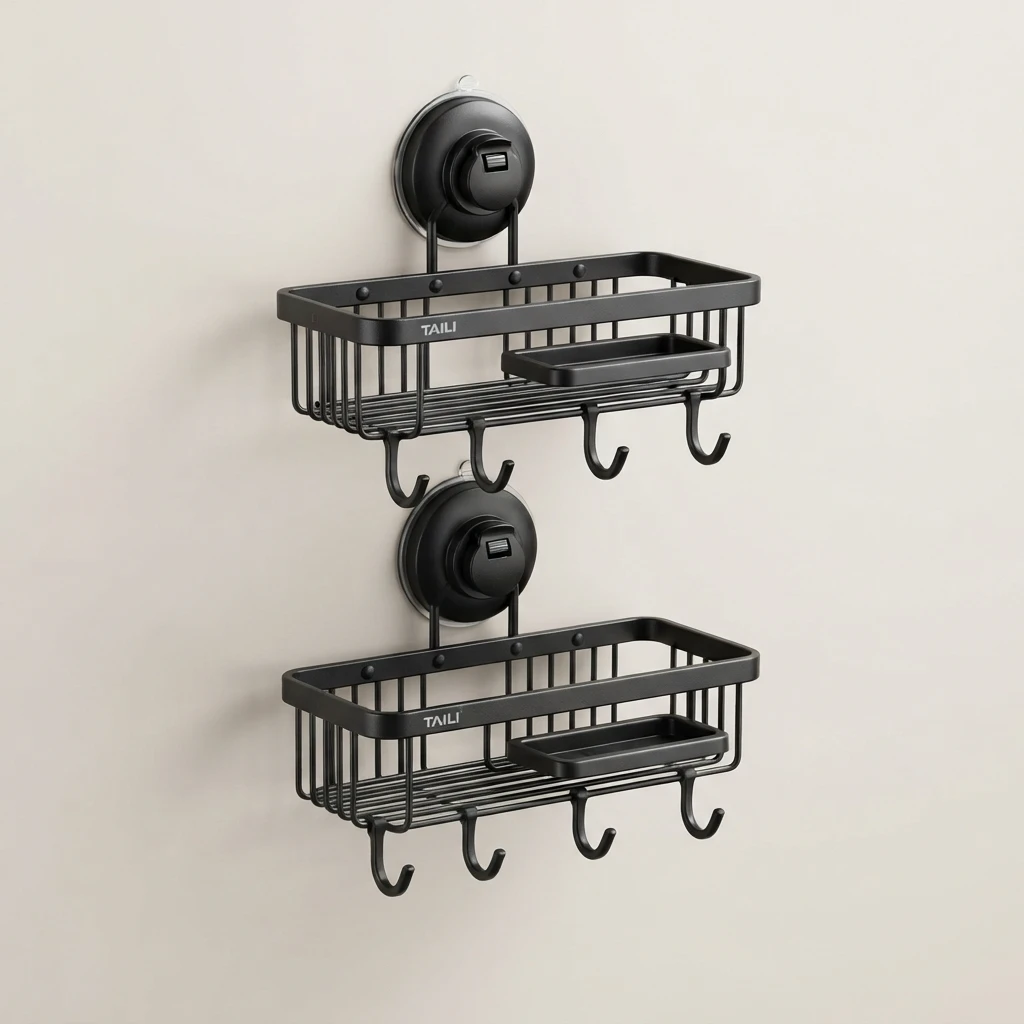
TAILI Shower Caddy Suction Cup 2 Pack with Hooks and Soap Holder, Black
This black metal two-shelf set with hooks is matched to Amazon ASIN B0D1C6J36J. Current TAILI information for its metal suction-caddy lines describes stainless-steel baskets, waterproof suction cups, large-capacity storage and a stated 22 lb capacity per shower caddy when installed on a suitable surface.
Practical limitation: the metal basket itself is heavier than a lightweight plastic shelf, so a clean, full vacuum seal matters even more. Keep glass containers and other breakables off a suction-mounted shelf.
Check Price on AmazonWhite Plastic vs. Black Metal TAILI Suction Shelves
| Feature | White plastic 2-pack | Black metal 2-pack |
|---|---|---|
| Amazon ASIN | B09687GWCL | B0D1C6J36J |
| Primary construction | Plastic baskets with suction mounting | Metal/stainless-steel style baskets with suction mounting |
| Published maximum | 22 lb maximum recommendation in current product information | 22 lb per caddy in current TAILI guidance for this suction-caddy design |
| Best renter use | Everyday shampoo, conditioner and lightweight bath products | Everyday toiletries plus hooks for razors, loofahs or brushes |
| Surface rule | Smooth, non-porous surface; keep suction cups off grout and away from uneven/textured material | |
| Main caution | Do not assume plastic means the shelf can tolerate a poor seal. | Metal construction adds its own weight, so conservative loading is especially sensible. |
A published capacity is only meaningful when the product is installed on an approved surface under the manufacturer’s instructions. It should not be treated as a target load.
Common Renter Mistakes With Suction Shower Shelves
Buying before measuring the tile
If the suction bases are wider than the uninterrupted area between grout lines, the shelf may never achieve a proper seal.
Installing on a just-used wet shower wall
Wait until the surface is clean and dry. Waterproof performance after installation does not replace proper initial sealing.
Leaving shampoo residue behind
Even invisible film can reduce direct cup contact. A shelf that repeatedly slips deserves a full cleaning reset.
Trying to “help” suction with permanent glue
Construction adhesive or caulk defeats the renter-friendly point of a removable shelf and can create expensive cleanup at move-out.
Using glass containers
A suction shelf can release if conditions change. Keep breakable or sharp items off storage that depends on a vacuum seal.
Ignoring a shelf that starts tilting
A change in angle or cup edge lift is an early warning. Unload and reset it rather than pressing harder while fully loaded.
For more rental-safe storage ideas, see our no-drill bathroom storage guide and renter-friendly bathroom decor ideas.
What to Use If Suction Will Not Stay Up
If your shower wall is textured, porous or divided by dense grout lines, replacing one suction shelf with another usually does not change the physics. Pick a storage system that matches the surface instead.
Tension-pole or freestanding storage
This avoids tile contact entirely and is often the lowest-surface-risk choice for difficult walls.
Over-showerhead caddy
A hanging caddy can work where wall suction cannot, provided it fits securely and does not stress plumbing fixtures.
Bathroom-rated removable adhesive
Some systems are designed for wet areas, but they are a different technology from suction. Follow the exact surface and removal instructions, and confirm your lease permits adhesive mounting.
Drilled shelves
Do not drill tile in a rental without written approval. Tile, waterproofing layers and hidden plumbing make this more than a cosmetic change.
You can also compare broader options in our first apartment decorating checklist and deposit-costing decor mistakes.
Sources & Renter-Safety Note
This guide uses current manufacturer information for suction surface compatibility, installation and stated load capacity, then applies conservative renter-focused guidance to reduce the consequence of a possible release.
- TAILI Nice Series Suction Shower Caddy — official surface, installation and 22 lb guidance
- TAILI Face Series Suction Shower Caddy — official metal shelf and surface guidance
Product designs and instructions can change. Check the exact packaging or current manufacturer page for the shelf you purchase. Lease rules also vary; if suction will not work and you want to switch to adhesive or drilled hardware, check your lease and ask management in writing where appropriate.
FAQs About Suction Cup Shower Shelves
Do suction cup shower shelves really stay up?
They can stay up well on smooth, clean, non-porous surfaces when the full cups seal correctly and the shelf is loaded within current manufacturer guidance. Texture, grout, soap film and poor installation are common reasons for failure.
What tile is best for suction shower shelves?
Large smooth glossy glazed ceramic or porcelain tile is usually the best candidate because it provides a flat, non-porous sealing surface. Keep each suction cup fully off grout lines.
Why does my suction shower shelf keep falling?
Check for grout under the cups, textured tile, soap or cleaner residue, moisture during installation, dirty suction cups, an unevenly loaded shelf or a deformed cup edge. Clean and dry both surfaces and reinstall on a better location.
Can suction shower shelves hold full shampoo bottles?
Many suction caddies are designed for everyday toiletries, but use the exact product’s current load guidance and keep a safety margin. Avoid breakable containers and do not treat the maximum stated capacity as your target load.
Can I put a suction shower shelf over grout?
No. A grout line under the suction edge can let air into the vacuum. Position each cup entirely on smooth tile or another approved non-porous surface.
Should I wet the suction cups before installing the shelf?
Do not assume wetting improves the seal. Current TAILI guidance for these shower caddies emphasizes suitable smooth surfaces and proper suction installation; start with clean cups and a clean, dry mounting zone unless your exact product instructions say otherwise.
Are suction shower shelves good for renters?
They can be a strong renter-conscious choice because they avoid drilling and adhesive when used on a suitable surface. They are not universally risk-free, so use non-fragile items, inspect the seal periodically and switch methods if the wall is not compatible.
Yes—On the Right Wall, With a Sensible Load
Suction cup shower shelves can be a practical no-drill storage choice for renters when mounted on smooth, non-porous tile, glass, stainless steel or acrylic that allows a full vacuum seal. The best installations avoid grout, texture, soap residue and overloaded baskets.
They are a poor choice for uneven tile, unfinished porous stone, dense mosaic grout, wallpaper or painted surfaces that the manufacturer does not approve. Keep glass and other breakables off the shelf, and reset it immediately if a cup edge starts lifting or the basket changes angle.
Need a Backup Plan for a Difficult Shower Wall?
Compare suction, tension, hanging and other no-drill storage methods when your tile cannot hold a reliable vacuum seal.
See No-Drill Bathroom Storage Ideas