Peel and Stick Herringbone Tile: A Renter-Friendly Guide
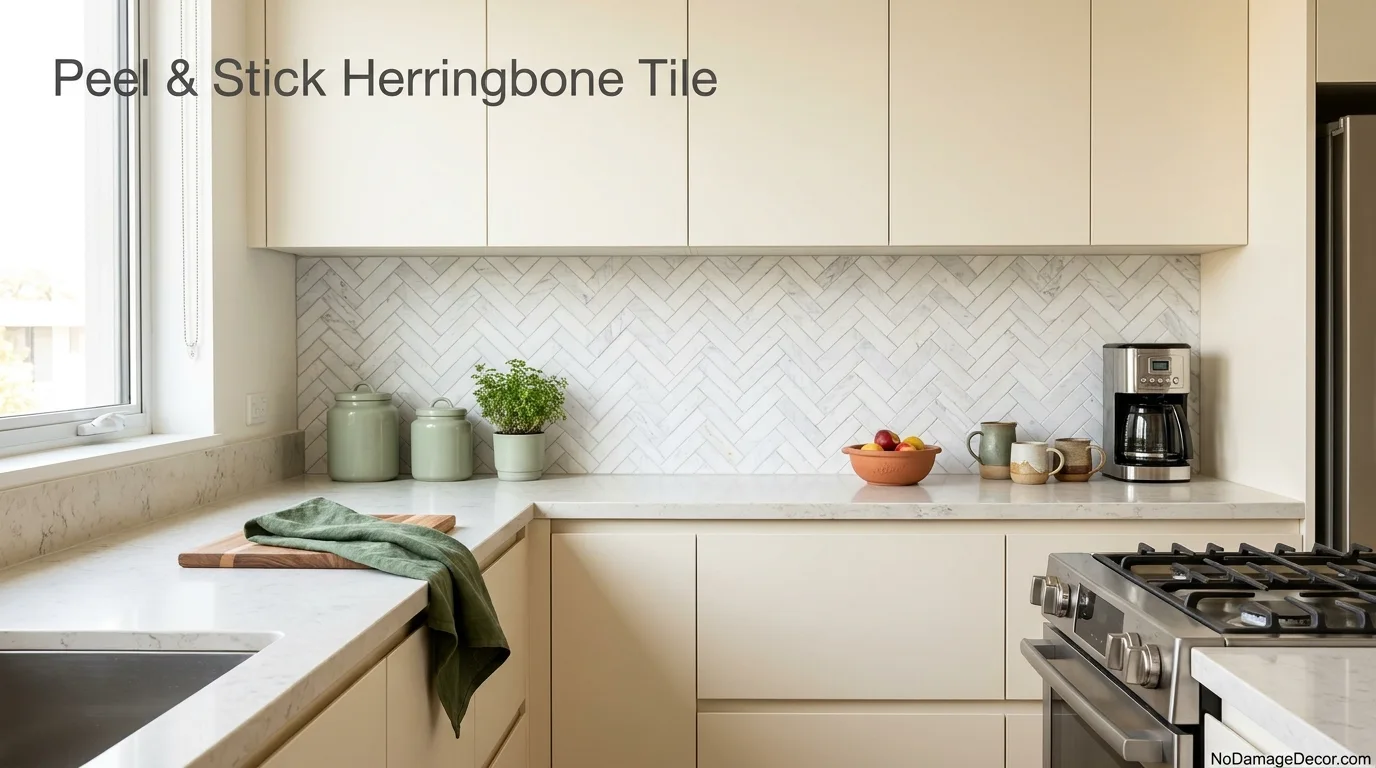
Peel and stick herringbone tile can create a high-impact backsplash without mortar or traditional grout, but the pattern is less forgiving than a simple subway layout and the adhesive may be stronger than renters expect. The smart decision starts with the surface, the exact product and your removal plan—not the pattern alone.
Quick Answer
For renters, herringbone peel-and-stick wall tile is most practical on a smooth, clean, dry, stable surface that the manufacturer approves—especially a kitchen backsplash or bathroom vanity wall outside unresolved moisture problems. Dry-fit the pattern before exposing adhesive, use level reference lines, and avoid adding permanent glue simply to force a questionable surface to work. If the product requires extra adhesive on your wall or your lease restricts adhesive coverings, choose a lower-commitment option.
At a Glance
What Is Peel and Stick Herringbone Tile?
Search results for “peel and stick herringbone tile” mix several products together. The most common renter-facing option is a self-adhesive wall tile sheet that already contains a herringbone-style pattern. You align the sheets, trim the edges and press them onto the wall. This is different from installing dozens of individual rigid tiles one by one.
You will also find peel-and-stick floor tiles printed with a herringbone look. Those belong to a different use case. Floors deal with foot traffic, furniture, cleaning, substrate movement and a much larger bonded area. A product that works as a backsplash is not automatically a floor product, and a floor tile is not automatically a renter-friendly wall solution.
Herringbone backsplash sheets
Usually the most relevant category for this guide. They create a diagonal woven look while keeping installation manageable for a kitchen or vanity wall.
Individual stick-on wall pieces
These can look more like traditional tile but require more placement decisions and cuts. Check the exact product because installation and removal can differ significantly.
Herringbone-look floor tile
A separate category. Use only products specifically rated for floors, and treat removal as a much larger rental commitment.
One more buying detail: product listings sometimes use herringbone and chevron loosely. True herringbone uses rectangular pieces meeting at right angles; chevron pieces meet in continuous V shapes. Marketplace titles may blur that distinction, so judge the exact visual pattern and sheet geometry rather than relying on one word in the listing.
If you want a simpler straight-line backsplash with fewer pattern-alignment decisions, compare our peel and stick backsplash guide before choosing herringbone.
Will Peel and Stick Herringbone Tile Work on Your Rental Wall?
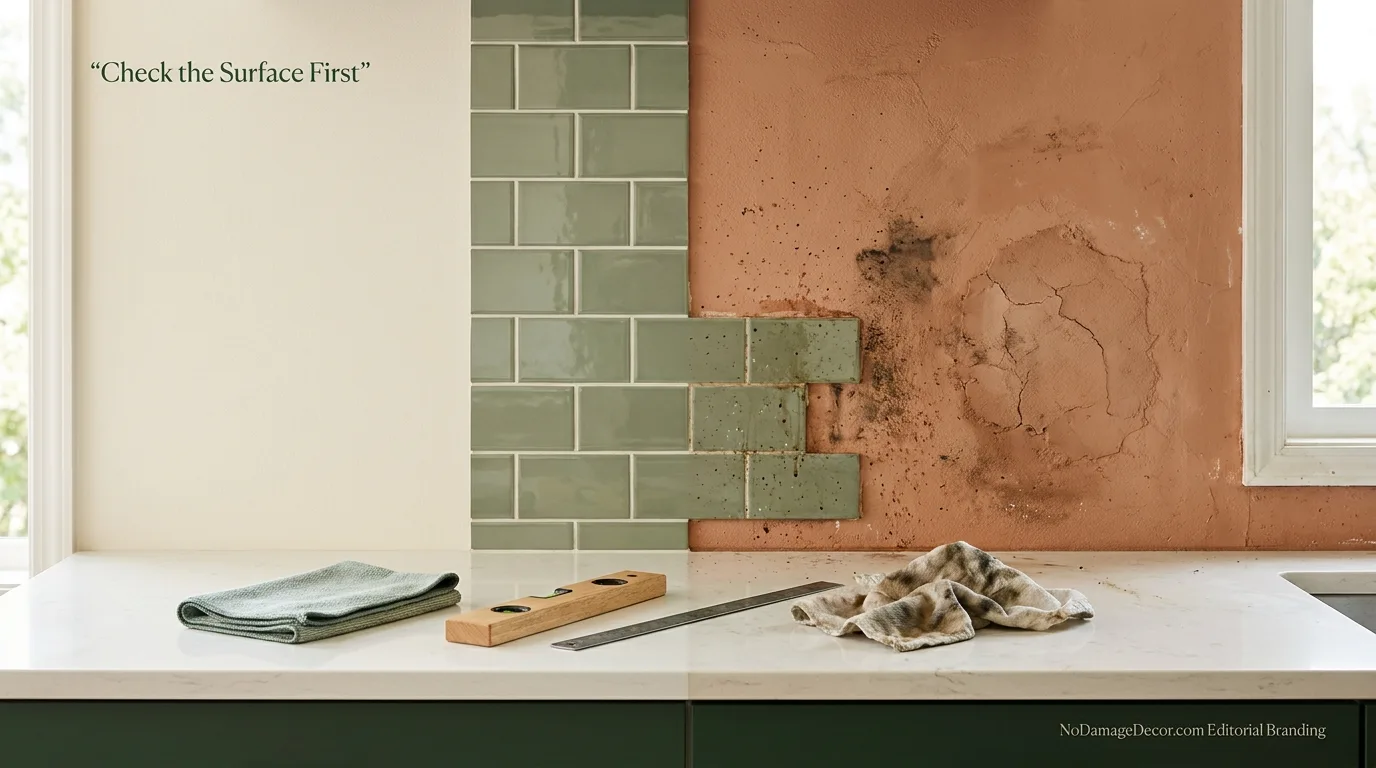
The adhesive only knows the surface it touches. A stable, smooth, clean wall or existing backsplash gives you a more predictable starting point than texture, loose paint, grease or a damp surface.
| Surface | Renter outlook | What to verify |
|---|---|---|
| Smooth glazed ceramic tile | Often a practical candidate when the exact product permits it | Cleanliness, loose tile, deep grout, sealers and removal behavior. |
| Smooth painted wall | Potentially suitable | Paint age, cure, strength and manufacturer-approved surface list. |
| Glass, metal or laminate | Some herringbone products allow these | Check the exact product page rather than generalizing across brands. |
| Light texture | Higher commitment | Whether the manufacturer allows it without extra adhesive or surface alteration. |
| Heavy texture, brick, unfinished plaster or porous surfaces | Usually a poor renter match | Some manufacturers recommend sanding or extra adhesive, which increases alteration and removal risk. |
| Greasy, dusty or damp backsplash | Avoid until corrected | Clean, dry and solve moisture problems before any adhesive covering. |
STICKGOO’s current herringbone guidance lists smooth ceramic tile, glass, acrylic wall panel, painted gypsum, metal, mirror and laminate among recommended surfaces for one herringbone line. The same manufacturer gives extra preparation and adhesive instructions for rough or heavily textured surfaces. For a renter, that is an important decision point: if your wall only works after sanding, filling or adding spray adhesive, the project is no longer a simple low-commitment cosmetic change.
Why Herringbone Layout Needs More Planning Than Subway Tile
Herringbone is visually repetitive in two directions at once. A small error in the first sheet can make the pattern appear to climb, dip or break as you move across the wall. That is why the first few minutes of layout matter more than how quickly the rest of the sheets go up.
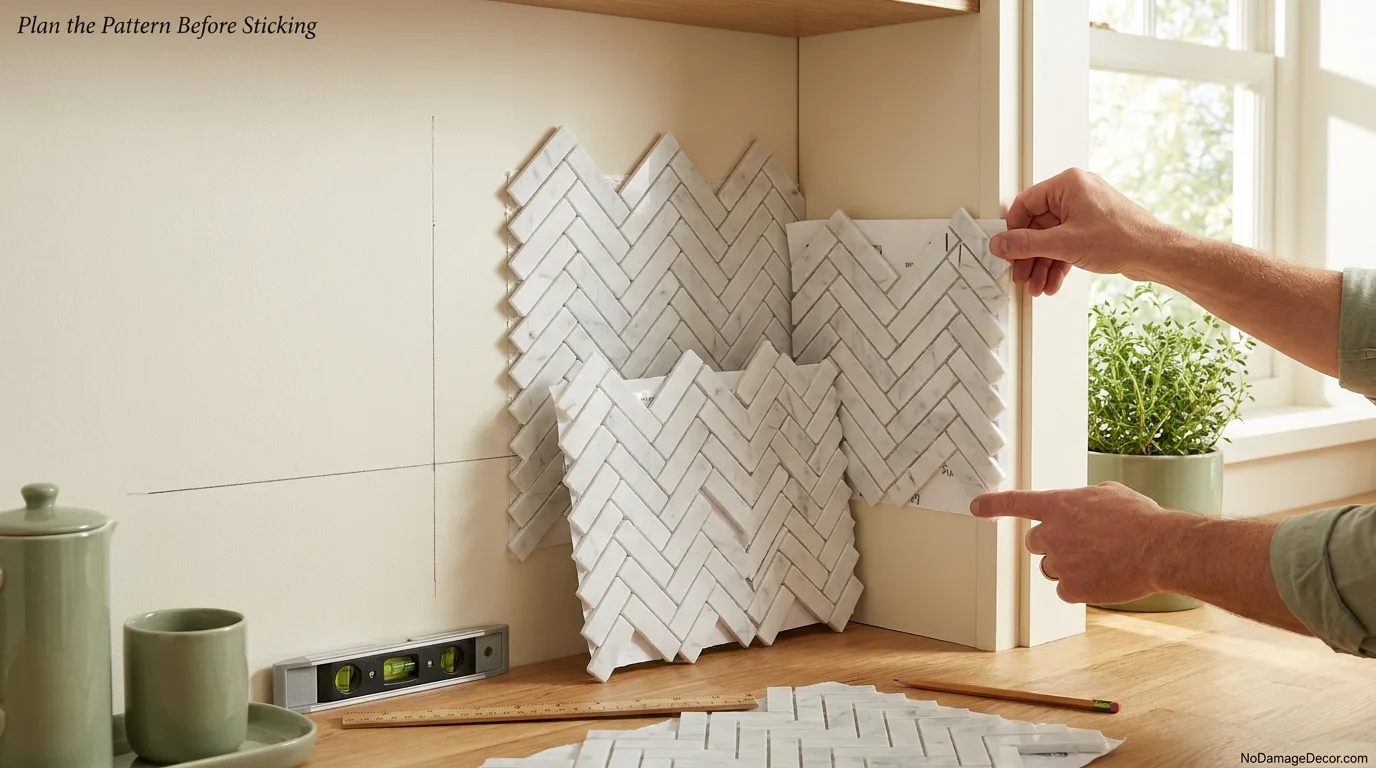
Do not assume the countertop or upper cabinets are perfectly level. Use a level or reference line. STICKGOO’s current installation guidance recommends at least one vertical and one horizontal reference line, then aligning the adhesive portion to those guides.
Also plan the visible ends. A herringbone sheet can leave small triangular or diagonal cut areas where the pattern meets a side wall, cabinet or trim. If one edge of the backsplash is highly visible, decide in advance whether you want the pattern centered, balanced or allowed to finish naturally at one side.
You want the pattern to be the focal point
It works especially well on a contained backsplash run where the pattern can read clearly without many broken corners.
The wall has many outlets, offsets or tiny returns
A straight subway or simple grid pattern may produce cleaner cuts and less visual pattern disruption.
How to Install Peel and Stick Herringbone Tile in a Rental
The exact manufacturer instructions always take priority. The sequence below reflects current peel-and-stick backsplash guidance and adds renter-specific decision points before the adhesive is fully committed.
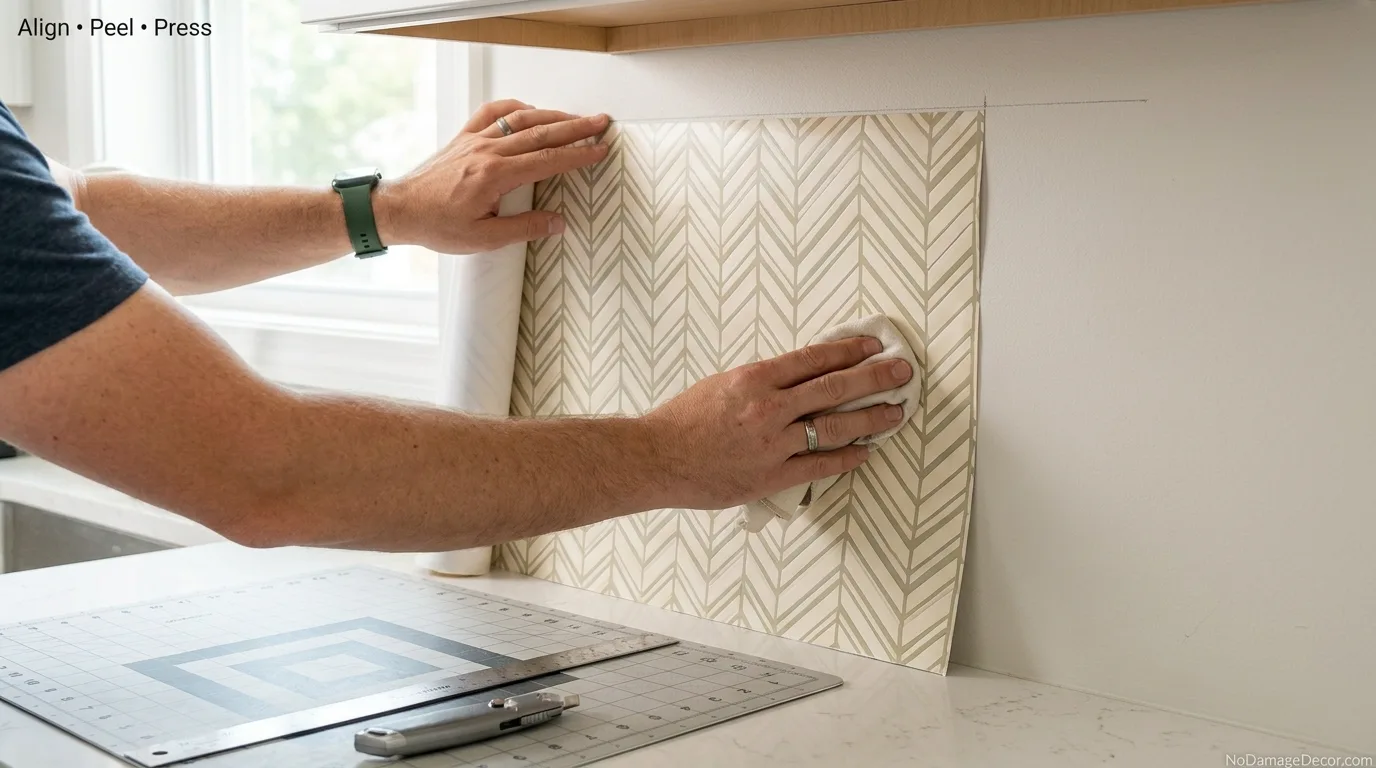
Read the exact product instructions and lease
Confirm the product is intended for your surface and room. If the lease restricts adhesive coverings, backsplash changes or surface alterations, get written clarification before installing.
Inspect the entire backsplash zone
Look for grease, flaking paint, cracked grout, loose tile, water staining and repairs. Decorative tile should not hide a moisture or substrate problem.
Clean and let the surface dry fully
Remove cooking film, soap residue, dust and other contamination using a method compatible with the existing surface and the tile manufacturer’s instructions.
Measure and dry-fit several sheets
Plan the pattern around outlets, corners, cabinet ends and the most visible edge. STICKGOO recommends allowing additional material for cutting loss, so plan cuts before ordering the minimum amount.
Create level reference lines
Mark one horizontal and one vertical guide rather than trusting the counter or cabinet edge. Check how the herringbone pattern sits against both lines before peeling backing.
Cut before you stick where possible
Use the cutting method appropriate for the exact material. Manufacturer guidance notes that softer vinyl can be cut with scissors while harder material may require a utility knife. Work on a cutting mat, not directly on the rental countertop.
Expose only part of the backing
Align the first portion to your guide, then press progressively while removing more liner. Avoid touching the adhesive unnecessarily. Correct a visible alignment issue before the entire sheet is bonded.
Press the seams and inspect after normal use
Follow the exact overlap or interlock design. Check edges after cooking, cleaning or bathroom humidity. If a renter installation only stays up after adding permanent glue, reconsider the location instead of escalating the bond.
Kitchen, Bathroom, Heat and Moisture: Where Herringbone Tile Fits
Peel-and-stick herringbone backsplash is commonly marketed for kitchens and bathrooms, but “kitchen and bathroom” does not mean every spot within those rooms has the same conditions.
Kitchen backsplash
A smooth backsplash wall outside unsafe heat exposure is one of the clearest use cases. Keep the tile within the manufacturer’s guidance and respect appliance clearances rather than treating the decorative tile as heat shielding.
Bathroom vanity
A vanity backsplash can be a practical decorative zone when the surface is smooth, dry and free from unresolved moisture. Wipe splashes rather than allowing water to sit along seams.
Direct shower or wet wall
Use only when the exact product is explicitly approved for that wet location. Do not infer shower suitability from a generic “bathroom” marketing claim.
STICKGOO’s herringbone product information describes water and heat resistance and lists bathroom backsplash among common uses. Its installation guidance also recommends trim and caulk or glass glue where contact with water is expected. That advice may be reasonable for a homeowner seeking durability, but renters should notice the trade-off: extra sealant or adhesive can make removal more involved.
For bathroom styling that does not depend on a bonded backsplash, compare our renter-friendly bathroom decor ideas. For the rest of a rental kitchen, see no-drill kitchen upgrades.
Peel and Stick Herringbone Tile Products to Compare
Both options below are real STICKGOO herringbone backsplash products with verified Amazon ASINs. Manufacturer information confirms the herringbone wall-tile format, 10-sheet packs and 12 × 12-inch class sizing for the line. These products use strong self-adhesive backing, so “peel and stick” should not be read as a universal clean-removal guarantee for rental walls.
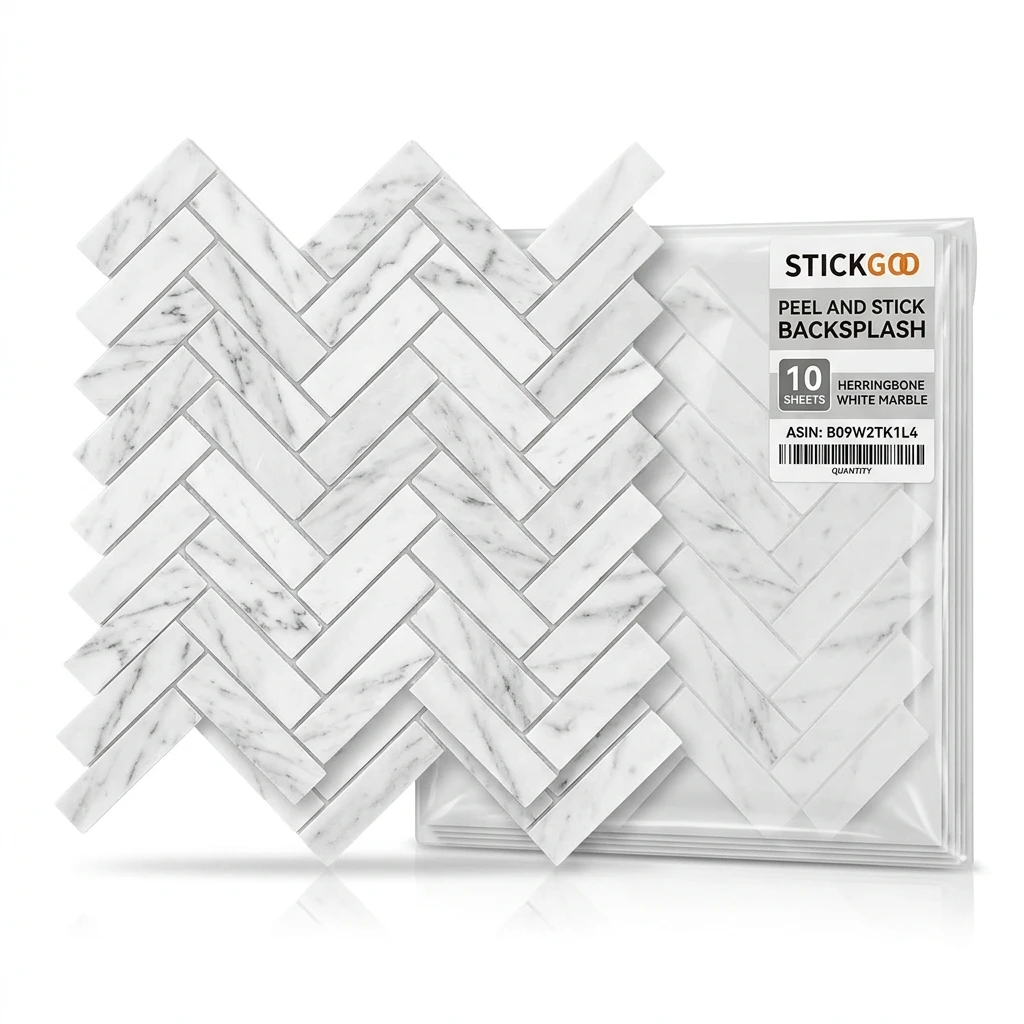
STICKGOO 10-Sheet Herringbone Tile Peel and Stick Backsplash — White Marble
Best for: renters who want a light marble-look herringbone pattern for a contained kitchen backsplash, vanity wall or other manufacturer-approved wall surface.
Renter caution: STICKGOO describes strong backing adhesive. Test the actual wall or existing tile before covering a large area, and avoid escalating to extra glue simply because the surface is textured or weak.
Check Price on Amazon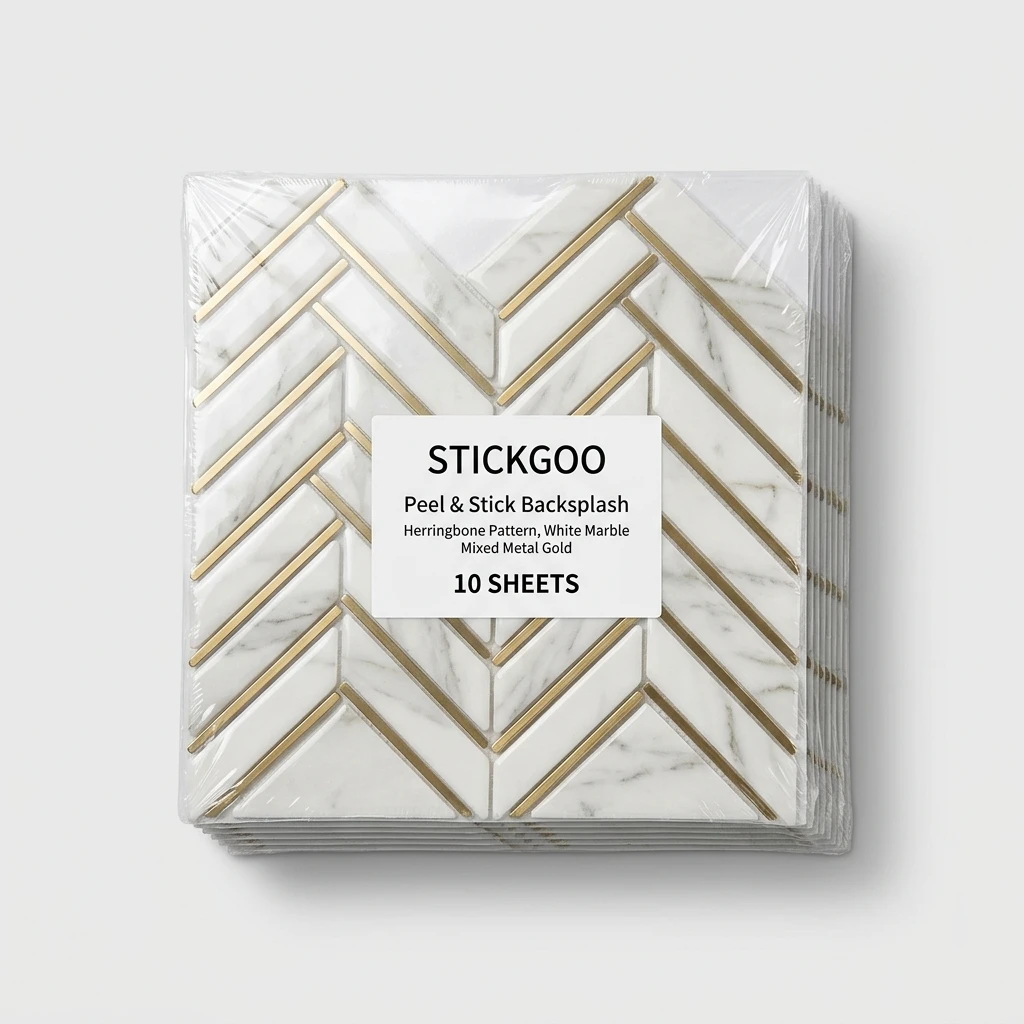
STICKGOO 10-Sheet Herringbone Tile Peel and Stick Backsplash — White Marble Mixed Gold
Best for: renters who want the same diagonal herringbone rhythm with a warmer decorative accent that can work with brass, gold-tone or warm-neutral kitchen details.
Renter caution: the busier color contrast makes sheet alignment and cuts more noticeable. Dry-fit the pattern before exposing adhesive, especially at visible cabinet ends.
Check Price on AmazonWhite Marble vs White Marble Mixed Gold Herringbone Tile
| Decision | White Marble — B09W2TK1L4 | White Marble Mixed Gold — B09YXSMT3J |
|---|---|---|
| Visual effect | Cleaner, quieter marble look | Warmer, more decorative contrast |
| Best renter use | Small backsplash where you want the pattern without extra color emphasis | Accent backsplash where the gold detail supports existing warm metal finishes |
| Sheet format | 10-sheet herringbone backsplash format | 10 sheets; manufacturer lists 12 × 12 × 0.12-inch sheets |
| Layout sensitivity | Diagonal alignment remains important | Alignment and cut consistency can be more visually obvious because of the metallic contrast |
| Renter caution | Strong self-adhesive backing; test before full coverage | Same strong-adhesive concern plus a more visually specific pattern to match at edges |
Neither option is automatically “more removable.” Choose based on surface compatibility, the pattern you can live with, and how comfortable you are with the manufacturer’s adhesive strength and installation guidance.
Removing Herringbone Peel-and-Stick Tile at Move-Out
Removal is the part of the project most likely to separate a renter-friendly idea from a renter headache. Strong backsplash adhesive is designed to stay attached through cleaning, humidity and ordinary kitchen use. That durability is useful while you live there, but it means you should not assume the sheet will lift like a low-tack wall decal months later.
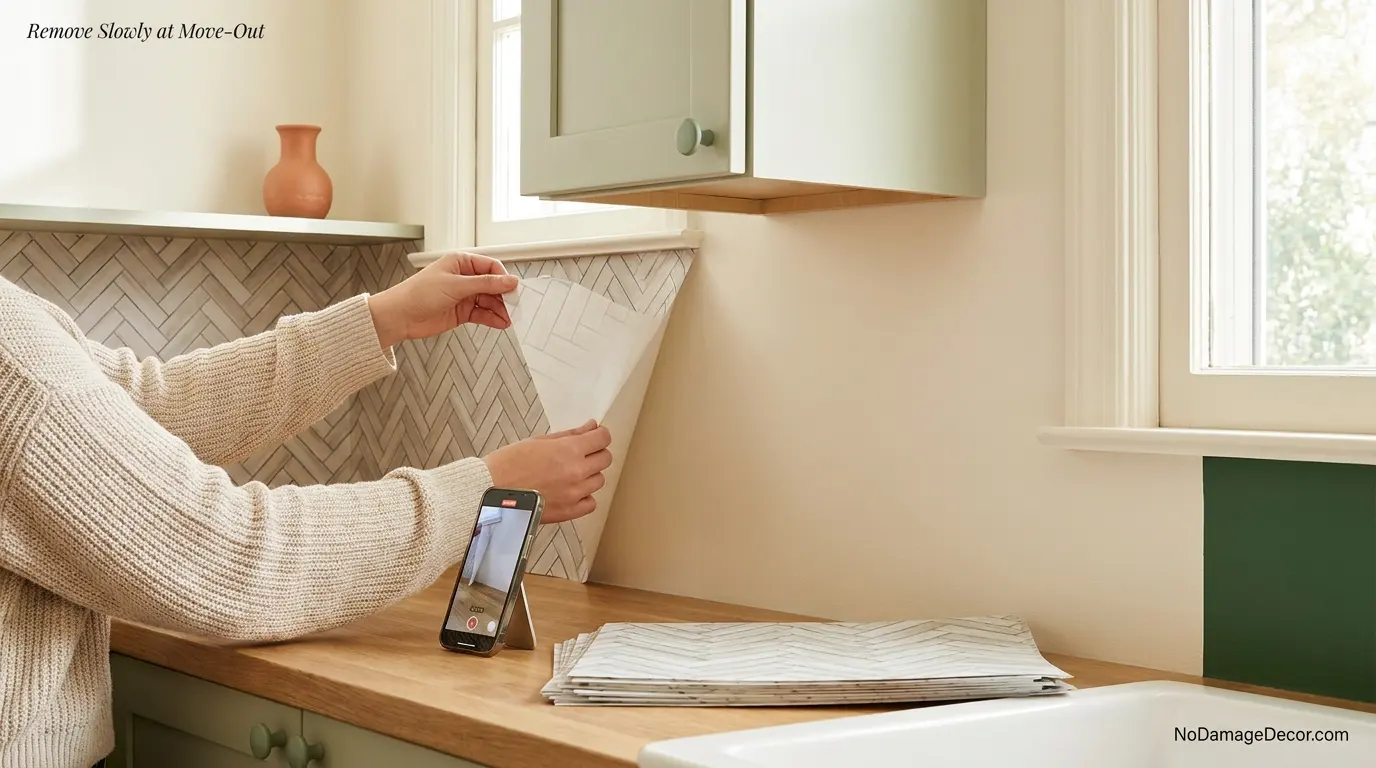
- Keep the exact product name and instructions. Removal advice can vary by material and backing adhesive.
- Photograph the original surface before installation. Document existing chips, grout discoloration, repairs and paint condition.
- Start removal in a discreet corner. A small test tells you more than pulling an entire sheet quickly.
- Do not assume heat or solvent is automatically appropriate. Use only a method compatible with both the tile product and the underlying surface.
- Stop when the substrate changes. If paint softens, glaze pulls, caulk stretches or residue behaves unexpectedly, reassess before continuing.
- Photograph the finished wall. Once the area is clean and dry, keep move-out documentation.
Lease requirements vary by property and location. If your agreement specifically addresses adhesive coverings or backsplash changes, follow that language. When the lease is unclear, written management approval is stronger than assuming “removable” means automatically permitted.
Common Peel and Stick Herringbone Tile Mistakes
Starting from the counter without checking level
A slightly uneven counter can make the diagonal pattern look increasingly crooked across the wall.
Peeling the full backing too early
Once strong adhesive touches the wall, correcting a herringbone alignment error may be difficult.
Ignoring cut waste
Diagonal ends and interlocking sheets create offcuts. Manufacturer guidance for the herringbone line recommends allowing extra material for cutting loss.
Using extra glue because an edge lifts
Lifting may signal poor prep, texture, moisture or an unsuitable surface. Permanent glue can make a renter problem worse.
Assuming bathroom means shower-safe
Confirm the exact product and location rather than treating every moisture-exposed wall as the same use case.
Waiting until move-out to think about removal
Save the product information, photograph the original wall and know how you plan to reverse the project before covering a large area.
These decisions are part of a broader rental strategy. Our guide to deposit-costing decor mistakes covers other temporary upgrades that can create unnecessary move-out work.
Use Another Method When the Pattern or Adhesive Is Too Much
Herringbone is a style choice, not a requirement for making a rental feel finished. If the wall is fragile, heavily textured or covered in paint you do not trust, a different temporary treatment may give you the visual change without asking a strong backsplash adhesive to bond to a questionable surface.
Choose removable wallpaper
Use it when the wall finish is compatible and you want pattern without the thickness and seam structure of tile. Compare the best peel and stick wallpaper options before committing.
Choose freestanding or lower-contact decor
If the backsplash itself is fine and you mostly want personality, color from countertop accessories, lighting and art can change the room with less bonded surface area. See our no-damage wall decor ideas.
Sources & Renter-Safety Note
Product details, installation guidance and surface recommendations were checked against current STICKGOO manufacturer pages and current Amazon-indexed product records. The manufacturer’s exact instructions for the product you purchase should take priority because formulations, backing adhesives and use guidance can change.
- STICKGOO — White Marble Mixed Gold herringbone wall tile specifications and surface guidance
- STICKGOO — Statuario White Marble herringbone wall tile
- STICKGOO — peel-and-stick backsplash installation guidance
Rental rules and responsibility for alterations vary by lease, property, city, state and circumstances. Keep move-in photos and written landlord communication when a backsplash change is unclear.
FAQs About Peel and Stick Herringbone Tile
Is peel and stick herringbone tile good for renters?
It can be a renter-conscious backsplash option on a compatible smooth, stable surface when the lease allows it and you have a realistic removal plan. Strong self-adhesive backsplash tile is usually a higher-commitment choice than lightweight removable wall decor, so patch-test before covering a large area.
Is herringbone peel-and-stick tile harder to install than subway tile?
Usually it requires more visual alignment because the diagonal pattern continues across sheets and errors are easier to notice. Level reference lines, dry-fitting and gradual backing removal help control the pattern.
Can peel and stick herringbone tile go over existing ceramic tile?
Some herringbone products explicitly list smooth ceramic tile as a recommended surface. The existing tile still needs to be clean, dry, stable and compatible with the exact product, and deep grout lines or texture may affect the result.
Can I install herringbone peel-and-stick tile on textured walls?
Some manufacturers provide extra preparation or adhesive instructions for rough walls, but that increases commitment in a rental. If the wall needs sanding, filling or additional spray adhesive, a lower-commitment decor method may be a better renter choice.
Can herringbone peel-and-stick tile be used in a bathroom?
Many backsplash products are marketed for bathroom walls and vanity areas, but direct shower use needs exact product approval. Do not assume a general bathroom recommendation means every wet wall or shower location is supported.
How much extra herringbone tile should I plan for cuts?
Follow the exact manufacturer guidance. STICKGOO currently recommends considering roughly 3–5% cutting loss for its herringbone backsplash line, but complicated corners and outlets may change the amount you need.
Does peel and stick herringbone tile remove cleanly?
No universal clean-removal guarantee is appropriate. Results depend on the adhesive, installation time, wall finish, existing tile, surface preparation and removal method. Test your actual rental surface before committing to full coverage.
Herringbone Works Best When the Surface Is Easy—Not When the Adhesive Has to Fight the Wall
Peel and stick herringbone tile is a strong visual option for renters when the project is contained, the surface is smooth and approved, and the pattern can be installed without extra permanent bonding. A clean kitchen backsplash or vanity zone is a more controlled starting point than a heavily textured wall or full wet-area installation.
Choose this when…
You want a statement backsplash, can dry-fit the diagonal pattern, have a stable approved surface and are comfortable patch-testing the adhesive before full installation.
Avoid this when…
The wall is weak, heavily textured, freshly repaired, damp, greasy or only compatible after sanding and added adhesive. Those extra steps reduce reversibility.
Use another method when…
You mainly want pattern or color but do not need a tile-like surface. Removable wallpaper, countertop styling or other lower-contact decor can give you a visible update with less bonded area.
Compare Herringbone With Other Peel-and-Stick Backsplash Styles
Before ordering, compare the surface rules, pattern complexity and removal trade-offs with simpler backsplash formats.
See the Renter Peel-and-Stick Backsplash Guide