Bathroom Hooks Without Drilling: Best Options for Renters
Choose no-drill bathroom hooks by surface, humidity exposure, item weight, and removal method—not by appearance alone.
At a Glance
Best Bathroom Hooks Without Drilling
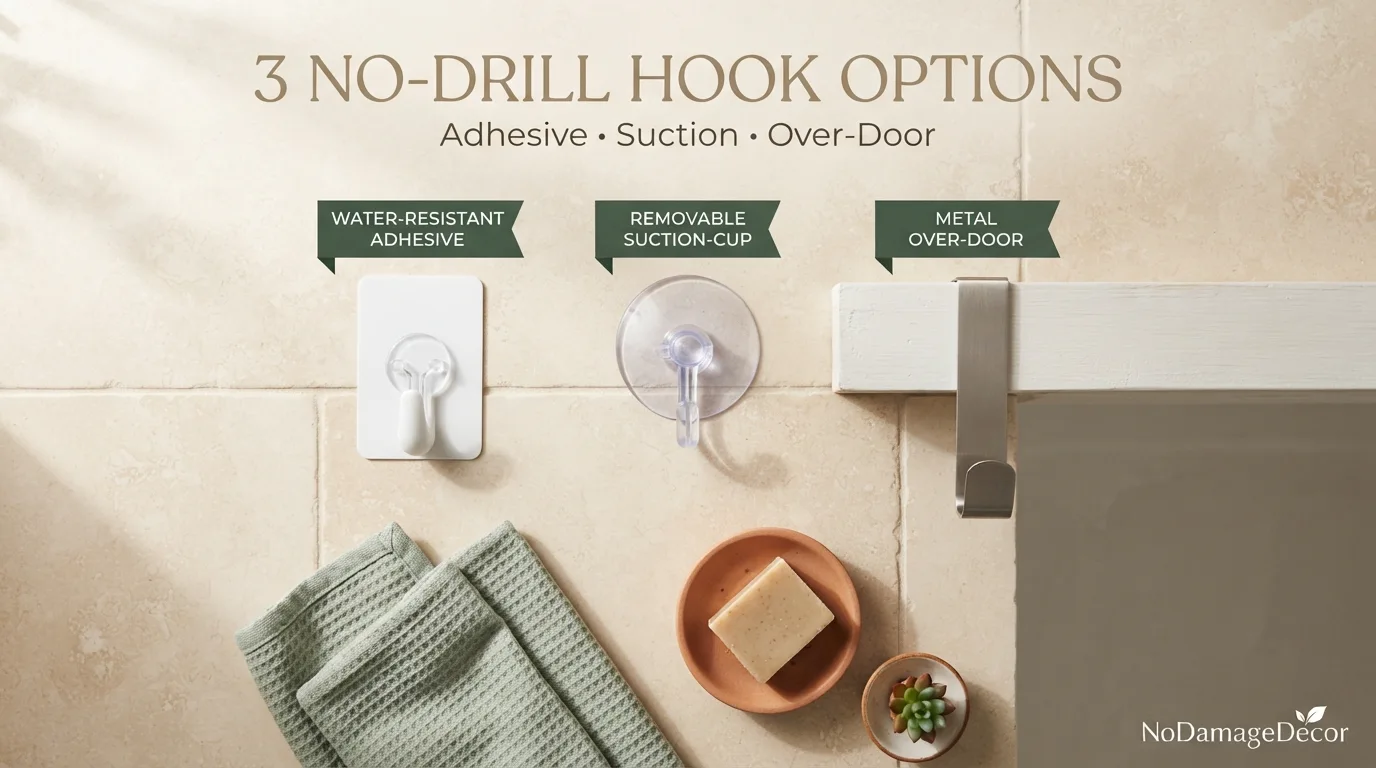
No-drill bathroom hooks fall into three practical categories: water-resistant adhesive hooks, suction hooks, and over-door hooks. They all avoid screws, but they solve different problems.
Water-resistant adhesive bath hooks
These are the most versatile renter option when you have a smooth, sound surface and want the hook to stay in one place. Bathroom-specific systems use water-resistant strips designed for humid conditions rather than ordinary dry-room adhesive strips.
Choose this when: you need a towel, robe, loofah, shower-cap, or lightweight bath accessory in a fixed spot and the exact hook approves your surface.
Suction hooks
Suction hooks rely on an airtight seal rather than adhesive. They are easy to reposition and leave no strip behind, but performance drops quickly on grout, textured tile, stone, matte finishes, or surfaces with soap film.
Choose this when: you have very smooth glass or glossy tile and want frequent repositioning without adhesive.
Over-door hooks
Over-door hooks avoid the wall completely. They are useful for robes, clothing, towels, or organizers when the door can still close freely and the hook does not rub or dent the door or frame.
Choose this when: wall surfaces are questionable or your lease is strict about adhesives.
Freestanding alternatives
A slim towel ladder, standing rack, shower caddy, or vanity organizer can be the lower-risk choice when every nearby wall surface is textured, freshly painted, wallpapered, or vulnerable to moisture.
Choose this when: you do not trust the surface, the item is heavier, or the bathroom is frequently wet.
For broader renter storage planning, see our no-drill bathroom storage guide and our renter-friendly bathroom decor ideas.
Surface Compatibility Comes First
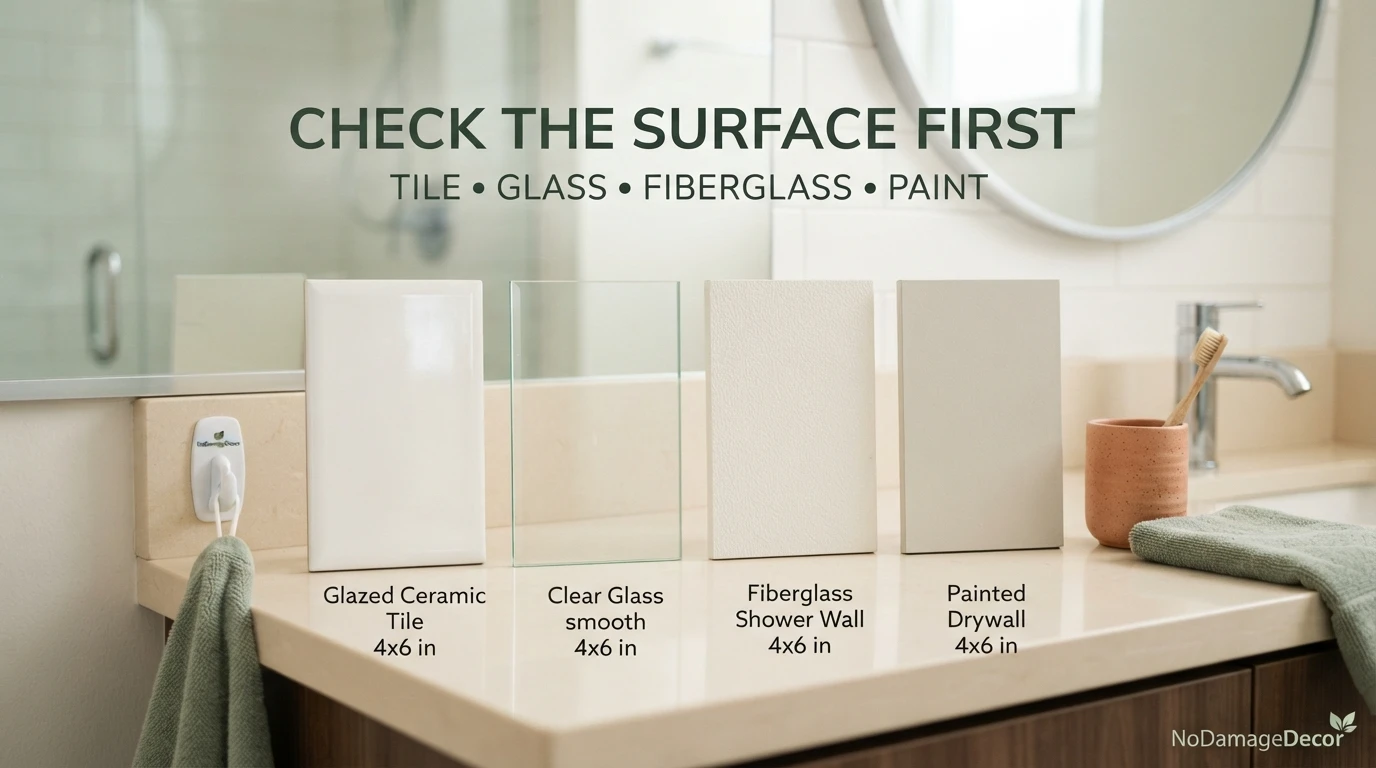
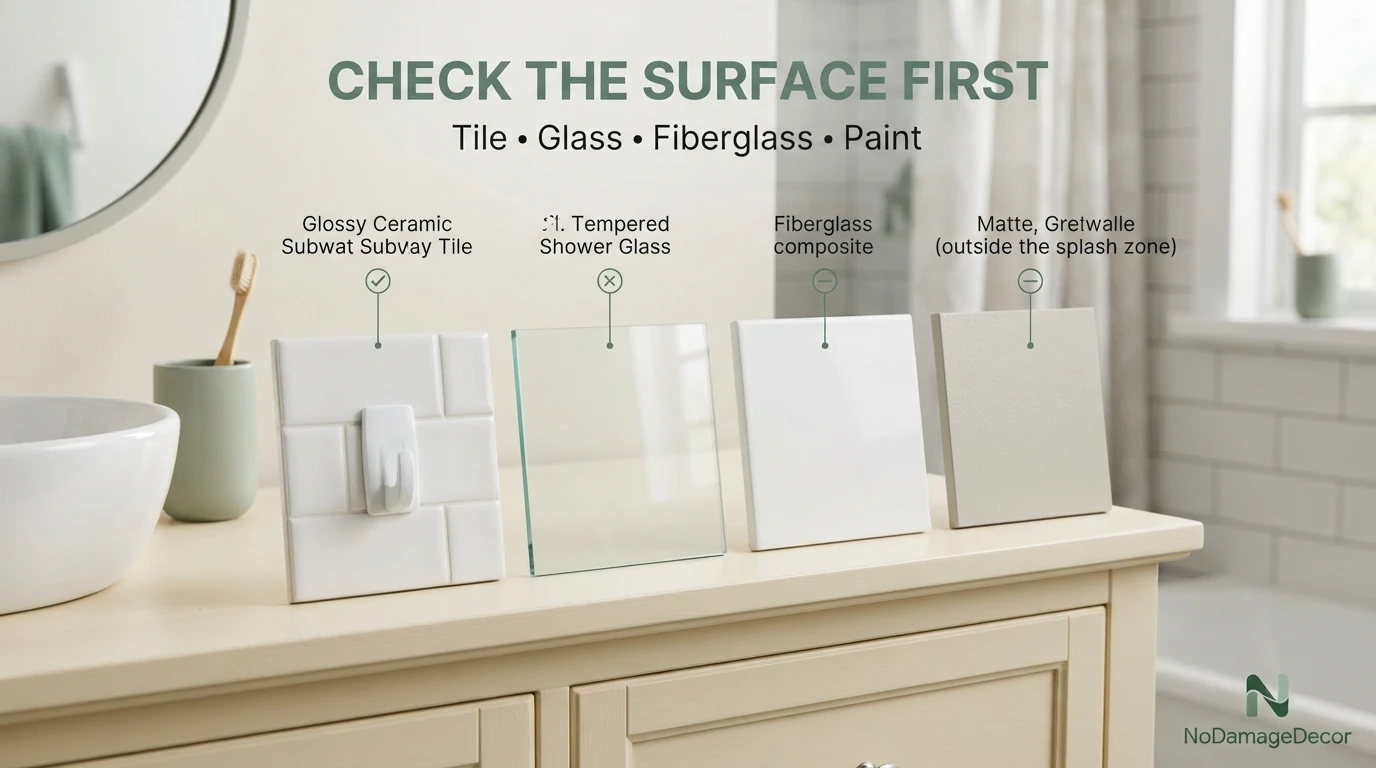
The hook itself may be well designed, but the wall surface decides whether a no-drill installation is sensible. Bathrooms combine moisture, steam, cleaning products, soap film, grout, caulk, and painted surfaces—exactly the conditions that make surface prep more important.
| Surface | Water-Resistant Adhesive Hook | Suction Hook | Renter Note |
|---|---|---|---|
| Glazed ceramic or porcelain tile | Often a strong choice when the exact product approves tile. | Often works if the tile face is smooth and large enough for a complete seal. | Avoid placing the mount across grout lines. |
| Glass or mirror | Commonly listed by bathroom-hook manufacturers as compatible. | Usually one of the best surfaces for suction. | Clean off soap film and residue first. |
| Fiberglass shower surround | Some bathroom-specific adhesive systems list fiberglass as compatible. | Can vary by surface texture and curvature. | Follow the exact product instructions. |
| Painted bathroom wall | Possible only when the exact hook approves painted surfaces and the paint is sound. | Usually unreliable because paint texture and porosity reduce the seal. | Keep extra caution near shower steam and recently painted areas. |
| Grout | Poor mounting zone because the surface is narrow, textured, and porous. | Not suitable for a reliable seal. | Mount on the tile face, not the grout joint. |
| Wallpaper or delicate wallcovering | Avoid unless the exact manufacturer explicitly approves it. | Usually unsuitable. | Use an over-door or freestanding option instead. |
| Rough stone or textured tile | Often poor because adhesive contact is incomplete. | Usually poor because suction cannot seal. | Use a different location or non-wall method. |
Humidity Changes the Decision
A bathroom hook used beside a dry vanity is not facing the same environment as a hook placed inside a shower. Steam, splash, condensation, and repeated cleaning can all affect both adhesive and suction performance.
Bathroom-specific Command products use water-resistant strips and are marketed by 3M for wet, hot, and humid bathroom conditions. Official 3M pages for current bath hooks list surfaces including glass, mirror, tile, fiberglass, wood, and painted surfaces. That makes them more appropriate for bathrooms than ordinary dry-room adhesive hooks. Still, “bathroom rated” does not mean every location or surface is automatically suitable.
Inside or directly beside a shower, choose only a product whose current manufacturer instructions allow that environment. Keep the hook away from loose grout, crumbling caulk, a constantly wet seam, or a surface that flexes.
How to Install a No-Drill Bathroom Hook
Use the exact package instructions for the hook you buy. The steps below are renter-safe decision logic, not a replacement for manufacturer directions.
Choose the surface before choosing the hook
Identify whether the mount will sit on glazed tile, glass, mirror, fiberglass, painted wall, or another surface. Check that surface against the current product instructions.
Keep the mount off grout, caulk, and edges
Place the hook base fully on one flat surface. A base that bridges tile and grout or sits partly on a caulk seam may not achieve uniform contact.
Clean exactly as the manufacturer directs
Soap film, body oil, cleaning residue, dust, and condensation can all reduce adhesion. Do not substitute your own cleaner if the product specifies a preparation method.
Let the area become fully dry
Do not apply adhesive to a visibly wet surface. If the bathroom was recently used, allow the mounting area to dry and cool before installation.
Press and wait for the stated time
Different hook systems use different pressing and waiting instructions. Use the exact times printed on the package rather than copying a number from another Command product.
Load only what the hook is designed to hold
Do not convert a towel hook into a shelf support or hang a heavy basket from it. Check the current rated limit and the intended use for the exact model.
Which No-Drill Bathroom Hook Should You Choose?
For towels and robes on tile
Choose a bathroom-specific water-resistant adhesive hook whose current package approves glazed tile. This gives you a defined installation and removal system while avoiding drilled tile.
For a loofah inside the shower
Use a bath/shower-rated hook and confirm the exact product is intended for wet conditions. Do not assume a standard adhesive utility hook is equivalent.
For glass shower doors
A bathroom-specific adhesive hook or a well-designed suction hook may work. Adhesive tends to stay fixed; suction is easier to move but requires a reliable seal.
For questionable paint or wallpaper
Skip direct adhesive. Over-door hooks, freestanding storage, or a nearby tile/glass mounting point can reduce the risk of pulling a delicate finish.
If you need more storage than hooks can provide, the no-drill bathroom storage guide covers caddies, racks, shelves, and non-permanent storage zones.
Verified Bathroom Hook Options
These are current bathroom-specific Command products with water-resistant strip systems and verified Amazon product identifiers. Check the current package for the exact rated limit, installation sequence, approved surfaces, and use location before mounting.
As an Amazon Associate I earn from qualifying purchases.
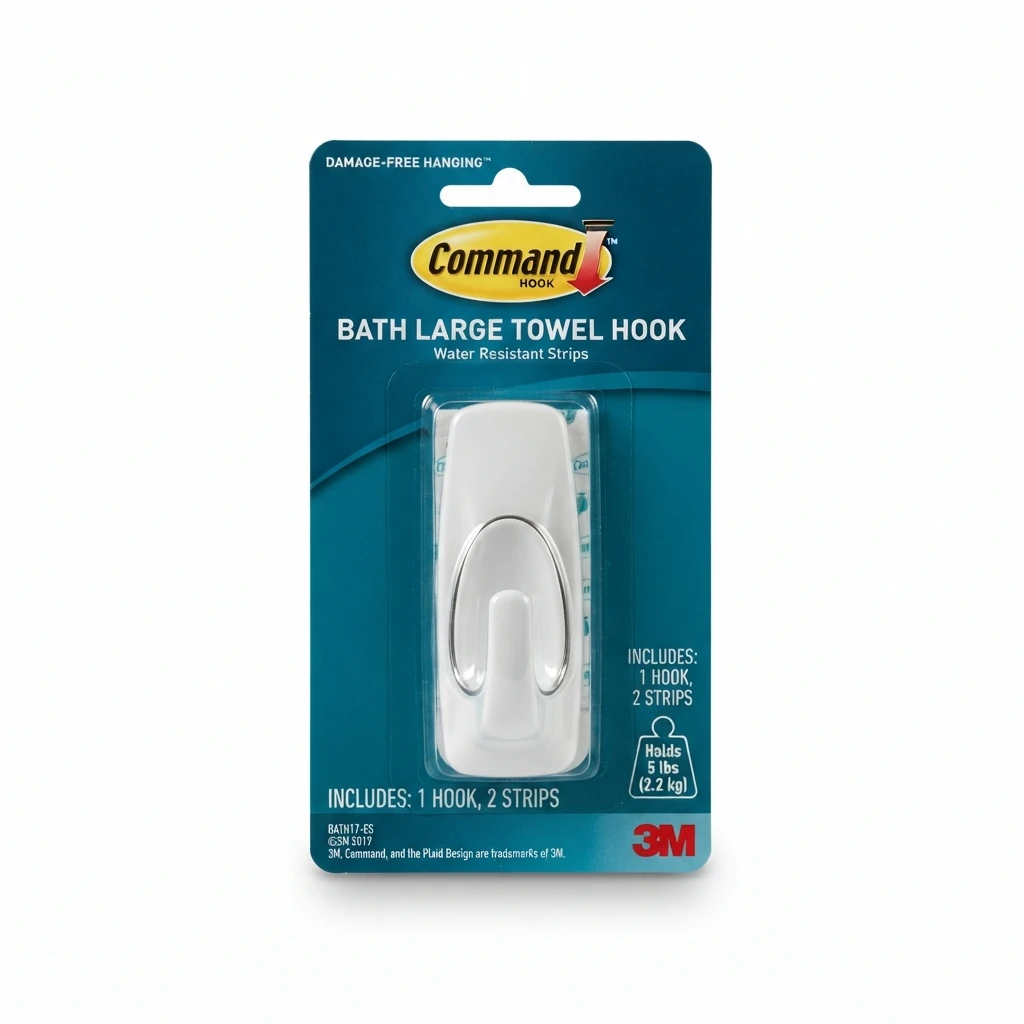
Command Bath Large Towel Hook, BATH17-ES
Best for: A larger bathroom hook for towels, robes, and similar bath accessories on approved smooth surfaces.
3M lists this as a bathroom-specific hook using water-resistant strips. The official product page says the hook is intended for wet bathroom conditions and lists glass, mirror, tile, fiberglass, wood, and painted surfaces among compatible surface types.
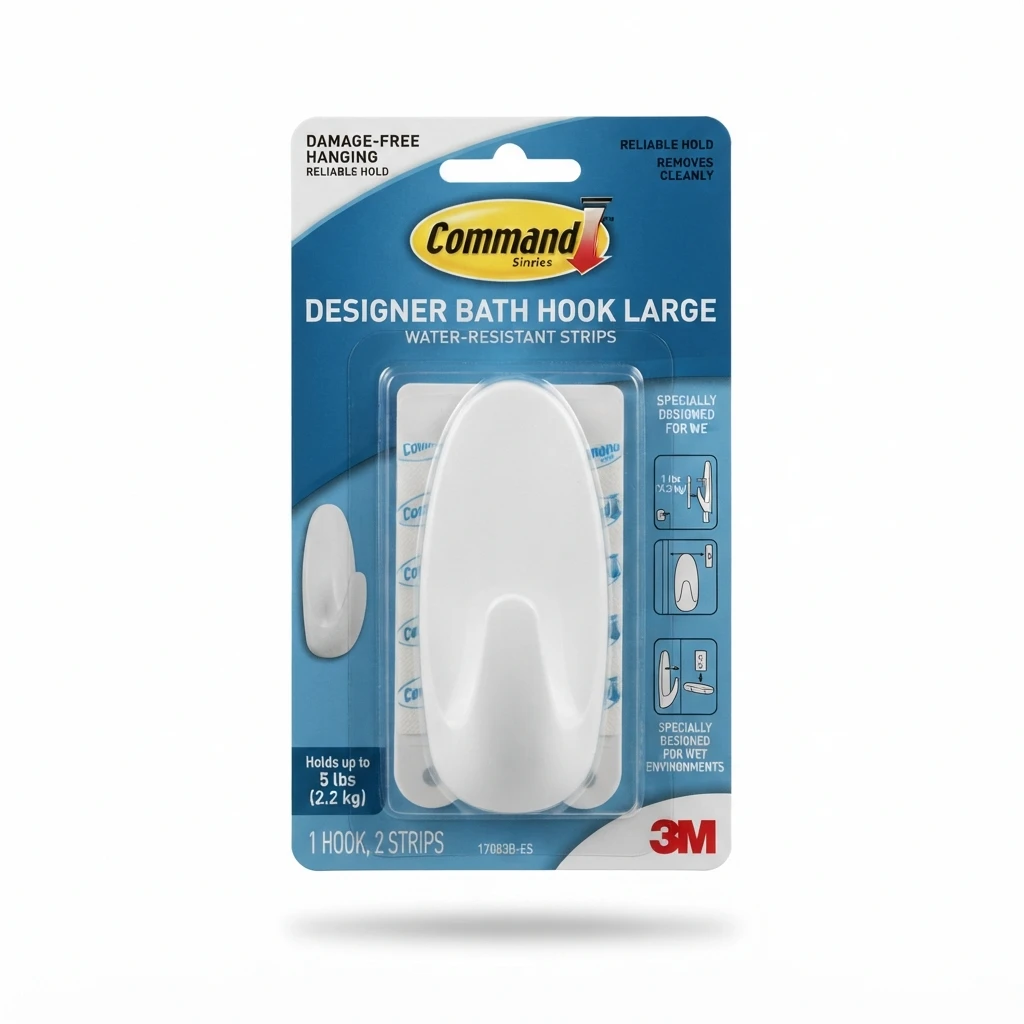
Command Designer Bath Hook, Large, White, 17083B-ES
Best for: Renters who want a simple white large bath hook for a smooth tile, glass, fiberglass, finished wood, or approved painted surface.
3M’s current bath-hook guidance for the 17083 family uses water-resistant strips and describes the hook for hot, wet, and humid bathroom conditions. It can be repositioned later using replacement water-resistant strips.
Common Renter Mistakes
Using a standard dry-room hook in the shower
Bathroom humidity and direct splash change the environment. Use a hook specifically rated by the manufacturer for bath or shower conditions.
Mounting on grout
Grout is textured and porous. It is also narrower than most hook bases, creating poor contact and awkward removal.
Loading the hook immediately
If the exact product requires a waiting period, skipping it can reduce performance. Follow the package instructions rather than guessing.
Pulling the hook outward during removal
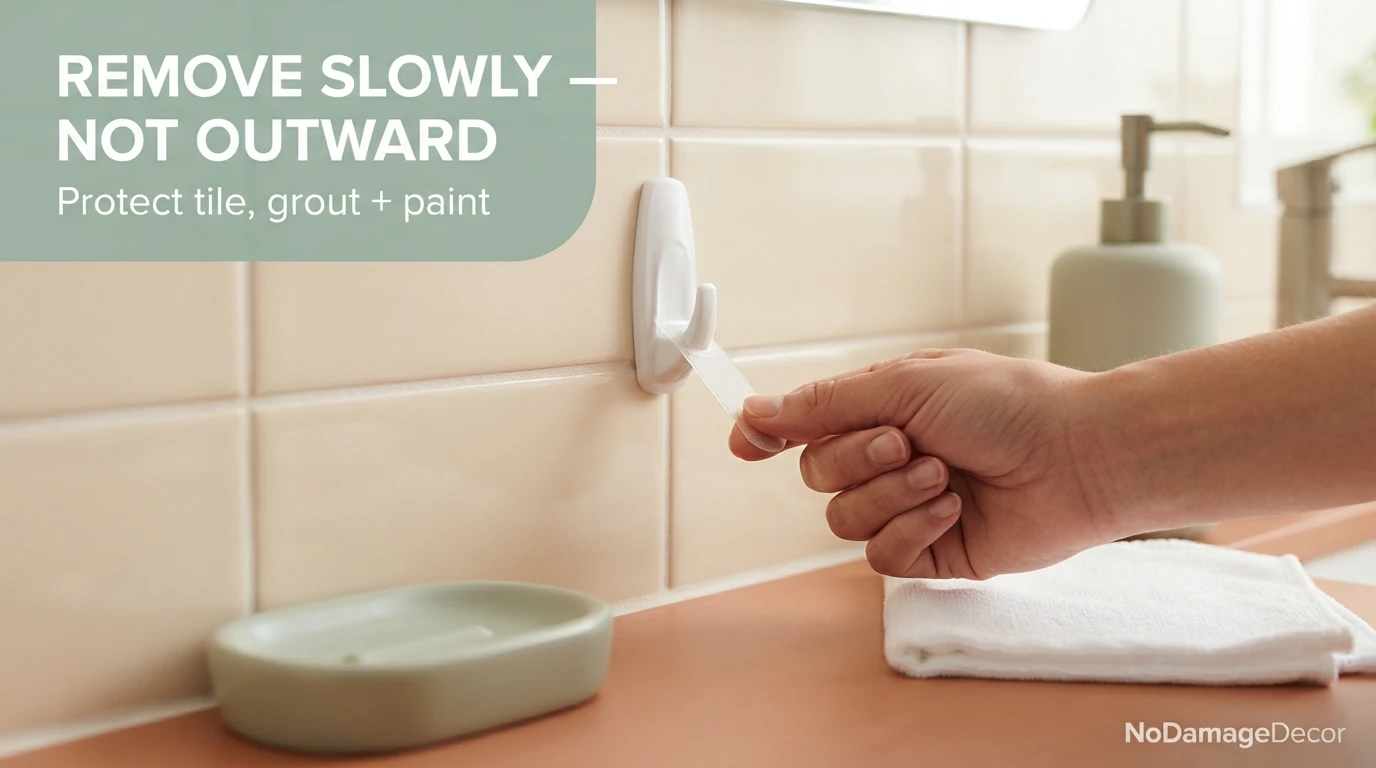
Stretch-release strip systems use a specific removal direction. Pulling away from the wall can put extra stress on tile edges, paint, or the adhesive base.
For other bathroom upgrades that avoid drilling, see renter-friendly bathroom decor and no-damage wall decor ideas.
Removal and Move-Out
Removal deserves the same care as installation. A hook can perform perfectly for months and still become a move-out problem if the adhesive is yanked, scraped, or peeled against the manufacturer’s removal method.
For stretch-release bathroom adhesive strips, follow the exact package direction and pull slowly. Do not lever the hook away from the tile or wall first. If the strip tab is hard to reach, use the manufacturer’s broken-tab guidance rather than a metal scraper.
After removal, photograph the wall or tile in normal lighting. If your lease has specific rules about adhesive hooks, keep written approval or move-in photos with your other move-out records.
If you also use adhesive products elsewhere in the apartment, our guide to remove Command strips without damage explains the general stretch-release approach in more detail.
Sources & Renter-Safety Note
Current bathroom-hook guidance was checked against official 3M/Command product pages for the Command Bath Large Towel Hook, the Command Bath Large White Hook 17083 family, and current Command bath-hook surface guidance. These products use water-resistant strip systems designed for bathroom environments and list smooth surfaces such as glass, mirror, tile, fiberglass, wood, and painted surfaces among compatible use cases. Exact ratings, strip counts, package directions, and approved surfaces can change by model or pack, so the current package controls. Lease rules also vary by property; if your lease restricts adhesive wall attachments, ask management in writing before installing.
Frequently Asked Questions
What are the best bathroom hooks without drilling for renters?
For many renters, bathroom-specific water-resistant adhesive hooks are the best all-around option on smooth approved surfaces such as glazed tile, glass, mirror, fiberglass, finished wood, and some painted surfaces. Over-door hooks are best when you want no wall adhesive at all, while suction hooks are useful on very smooth nonporous surfaces when easy repositioning matters.
Do adhesive bathroom hooks work in a shower?
Only use a hook whose manufacturer specifically approves it for bath or shower conditions. Bathroom-specific Command products use water-resistant strips and are marketed for wet and humid environments, but the exact model and package instructions should control.
Can I put a no-drill bathroom hook on grout?
Grout is generally a poor mounting surface because it is narrow, textured, and porous. Place the hook base fully on the smooth tile face rather than bridging a grout line.
Are suction hooks better than adhesive hooks for tile?
They solve different problems. Suction hooks are easy to move and can work well on very smooth glossy tile or glass, but they depend on a complete seal. Water-resistant adhesive hooks are better when you want a more fixed location and the manufacturer approves the tile surface.
Can I use a bathroom hook on painted drywall?
Only if the exact hook lists painted surfaces as compatible and the paint is sound, cured, clean, and not exposed to excessive moisture. Weak, flat, peeling, recently repaired, or constantly damp paint deserves extra caution.
How do I remove a bathroom adhesive hook without damaging tile?
Follow the exact manufacturer removal instructions. For stretch-release strip systems, pull the release tab slowly in the stated direction rather than levering the hook outward. Avoid metal scraping near tile edges or grout.
What should I use if my rental bathroom wall is textured?
If the wall is heavily textured, a direct adhesive or suction hook may be unreliable. Consider an over-door hook, freestanding rack, shower caddy, or another storage method that does not rely on smooth wall contact.
Renter-Safety Verdict
Best overall: A bathroom-specific water-resistant adhesive hook on a clean, smooth, manufacturer-approved surface.
Best with no adhesive: An over-door hook that fits the door and does not scrape the frame.
Best for easy repositioning: A suction hook on smooth glass or glossy tile, with realistic expectations that the seal may need checking.
Avoid: Grout, rough texture, wallpaper, weak or peeling paint, failing caulk, and any installation that exceeds the exact hook’s current rated use.
The renter-friendly choice is the hook that matches the bathroom surface, moisture level, item, and removal method—not simply the hook with the strongest marketing claim.
Build a No-Drill Bathroom Storage Plan
Combine hooks with renter-conscious caddies, shelves, and freestanding storage so one wall attachment is not doing all the work.
Explore No-Drill Bathroom Storage