Command Strips vs Nails Cost Comparison: What Renters Actually Pay
A practical comparison of upfront price, repair burden, wall compatibility, and move-out risk for renters choosing between removable strips and picture nails.
Quick answer: Nails are usually cheaper at checkout, while Command Picture Hanging Strips cost more but avoid creating a hole when the exact product is used on a compatible surface and removed correctly. The cheapest option at move-out depends on your lease, wall condition, whether you can patch and color-match a nail hole, and whether adhesive removal goes cleanly. A single contractor visit can cost far more than either hanging method, so do not compare hardware price alone.
At a Glance
The useful comparison is total cost, not just the price of the hanging hardware. Small picture-nail holes are much smaller than the “small holes” used in contractor cost guides, but minimum service charges, texture matching, and paint can make professional help expensive relative to the hardware itself.
The Core Difference: Upfront Cost vs. Move-Out Cost
A Command strip is a removable adhesive product. A nail is a permanent fastener. That single difference drives everything else about the cost comparison.
When you buy Command strips, you pay for the adhesive, the packaging, and the convenience of removal. When you buy nails, you pay almost nothing — but you take on a repair obligation that follows you until you patch, sand, and repaint.
For a renter, the calculation is not “$4 for strips vs. $1 for nails.” It is “$4 for strips vs. $1 for nails plus the realistic cost of undoing what the nails did.”
Choose Command strips when…
- Your walls are smooth painted drywall in good condition.
- You are hanging lightweight to medium-weight items.
- Your lease discourages or prohibits nail holes.
- You want the option to rearrange decor without patching.
Avoid Command strips when…
- Your walls are textured, brick, wallpapered, or were painted less than seven days ago.
- The item is heavy, fragile, or above a bed or crib.
- The location is persistently humid or steamy and the exact product is not documented for that environment.
- The surface itself is excluded by the manufacturer; a hidden test should not be used to override that exclusion.
Use another method when…
- You need a secure mount for a large mirror or heavy shelf.
- The surface is rough or painted with low-adhesion paint.
- The item has high injury risk if it falls.
Command Strips vs Nails Cost Comparison: Real Cost Breakdown
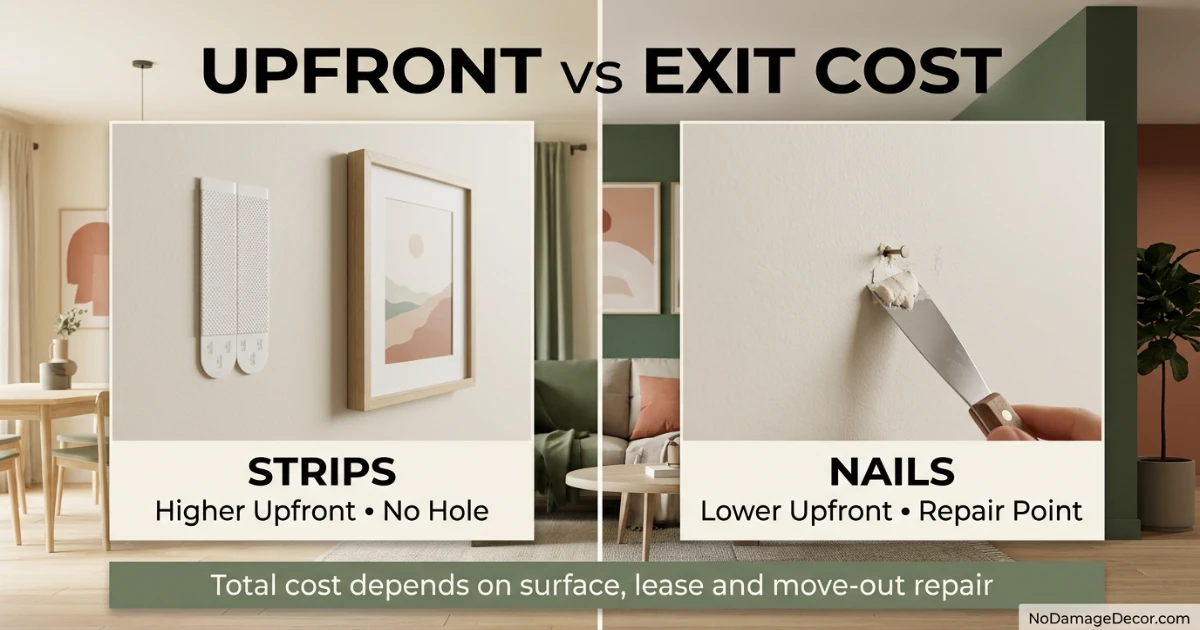
Retail prices move constantly, so a static “cost per strip” can become stale quickly. The durable comparison is simpler: nails are usually cheaper to buy, while removable strips shift more of the cost toward the mounting product and less toward hole repair.
| Cost category | Command Picture Hanging Strips | Picture Nails |
|---|---|---|
| Upfront hardware | Higher. Cost varies by strip size, pack count, color and retailer. | Lower. Small picture nails are inexpensive, especially in multipacks. |
| Installation tools | No hammer required. Current Command instructions call for rubbing alcohol, firm pressing and product-specific wait time. | Usually a hammer; heavier items may need a stud, hanger or anchor rather than a simple nail. |
| Move-out repair if everything goes well | No hole to patch. Clean removal still depends on a compatible surface and correct stretch-release technique. | A tiny hole remains. Whether you must patch it depends on the lease and local rules. |
| DIY repair budget | If paint or drywall paper lifts, supplies can include spackle, sanding materials, primer and matching paint. | For a nail hole, repair is usually simpler: fill, smooth and touch up if the lease/property expects it. |
| Professional drywall repair context | Angi’s 2026 guide lists about $20–$120 for professional repair of small drywall holes up to 4 inches, and notes that contractor minimum trip fees can make tiny jobs uneconomical. This is not a per-nail-hole landlord fee. | |
| Deposit exposure | Depends on lease language, local law, move-in condition, the quality of any repair, and whether the mounting method caused damage. Neither method guarantees a deposit outcome. | |
For many renters, the hardware-price difference is small compared with the cost of matching paint, repairing torn drywall paper, or paying a contractor minimum. But a clean nail hole can also be easier to repair than adhesive damage on weak paint. That is why surface condition and removal technique belong in the cost calculation.
Surface Differences That Change the Math
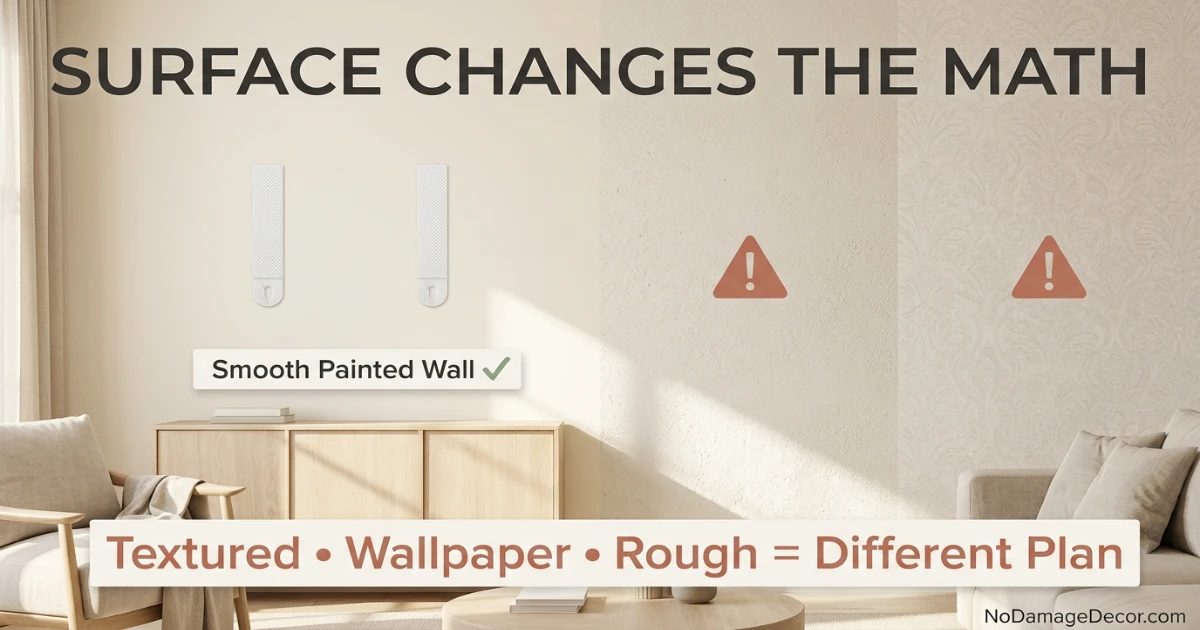
Current Command Picture Hanging Strip guidance is specific: the products are intended for compatible smooth surfaces such as painted walls, metal, painted concrete, laminate/finished wood, tile and glass. Current 3M guidance says not to use them on wallpaper, fabric, textured walls, brick or rough surfaces.
For painted walls, 3M currently says to wait at least seven days after painting before use. The indoor-use guidance for Picture Hanging Strips is 50°F to 105°F, and the wall-prep step calls for rubbing alcohol rather than household cleaners or water.
Surface decision logic
- Smooth, sound painted drywall: A compatible Command Picture Hanging Strip can be a lower-hole option when the frame size, strip count and weight all match the current instructions.
- Textured, rough, brick or wallpapered surfaces: Do not use a hidden test to override a surface the manufacturer excludes. Choose another mounting method.
- Freshly painted walls: Current Command guidance says to wait seven days after painting before use.
- Bathrooms or persistently humid locations: Use a mounting product specifically designed and documented for that environment rather than assuming standard indoor picture strips are moisture-rated.
- Nails: A nail may work where adhesive does not, but wall material, hidden services, item weight and lease rules still matter.
Installation Reality: Time, Tools, and Skill
Command Picture Hanging Strips require a defined sequence rather than simply “stick and hang.” Current 3M instructions say to wait seven days after painting, clean the wall with rubbing alcohol, click strip pairs together, attach them to the frame, press the frame to the wall, then remove the frame and press each wall-side strip for 30 seconds. After that, wait one hour before remounting the frame.
A picture nail is faster, but the tradeoff is a permanent puncture. For lightweight framed art, that may be a tiny repair point. For heavier items, a simple picture nail may be inappropriate and you may need a stud, picture hanger or anchor—changing both the cost and the size of the eventual repair.
| Installation factor | Command strips | Nails / mechanical hardware |
|---|---|---|
| Tools needed | No hammer. Rubbing alcohol and a clean cloth are part of current wall-prep guidance. | Hammer for a small picture nail; heavier mounting may require a stud finder, drill or anchor. |
| Surface prep | Compatible smooth surface; current instructions say rubbing alcohol and a fully dry wall. | Less adhesive-sensitive, but you still need to know the wall material and avoid hidden wiring/plumbing. |
| Time before loading | Current Picture Hanging Strip instructions: one hour after reinforcing the wall-side strips. | Immediate once the correct fastener is safely installed. |
| Repositioning | Possible with fresh replacement strips and the full installation sequence. | A new location means a new hole. |
| Move-out task | Stretch-release removal if the product/surface combination worked as intended. | Leave as permitted or patch/touch up as required by the lease/property. |
Removal and Damage Risk: Where the Real Cost Hides
Removal is where the two methods create different renter risks. A nail leaves a visible repair point. A Command strip is intended to release without a hole, but only when the wall is compatible and the removal method is followed correctly.
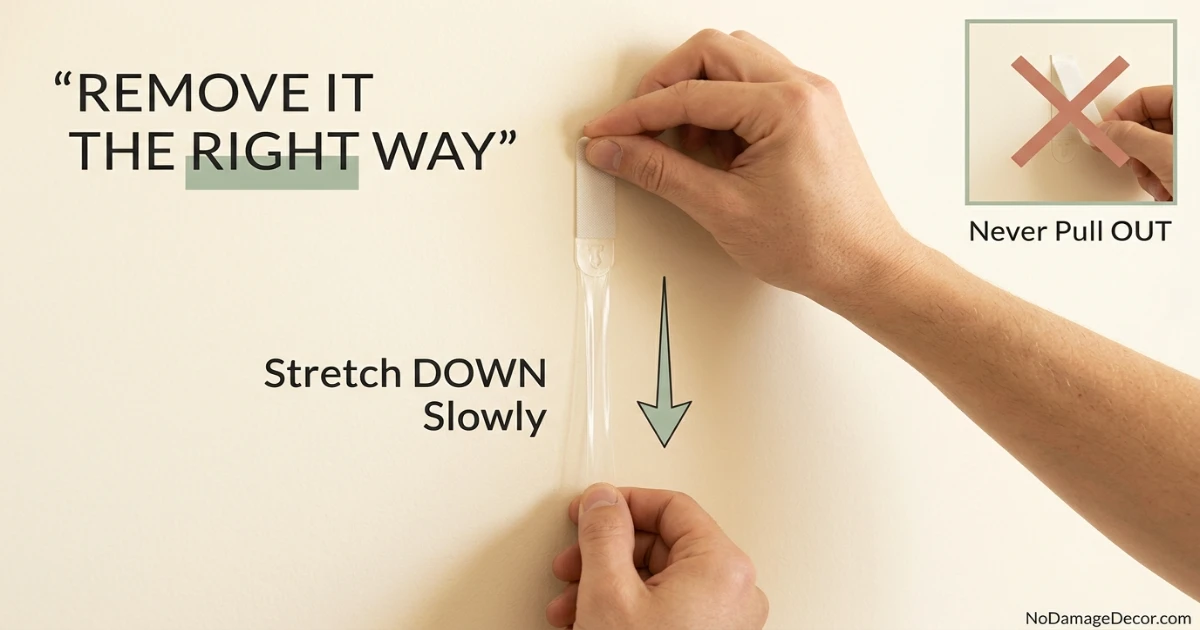
Current 3M Picture Hanging Strip instructions say to remove the frame first, never pull the wall strip away from the wall, and stretch the release tab slowly straight down against the wall—at least 15 inches (38 cm)—until it releases.
If the paint is weak, poorly bonded or incompatible with the adhesive, damage can still occur. If the release tab breaks or the product does not behave as the current instructions describe, stop rather than improvising with heat, blades, scrapers or solvents unless the manufacturer provides a supported recovery method for that exact product.
Important: A hidden-area test can reveal weak paint only when the surface is already allowed by the product instructions. Do not use a successful test to override exclusions such as wallpaper, rough surfaces or heavy texture.
Deposit Rules and Nail Holes: What Actually Varies
There is no universal US rule that makes every picture-nail hole “normal wear,” and there is no universal rule that makes every nail hole chargeable. Lease language, state/local law, move-in condition, the number and size of holes, and the quality of any repair can all matter.
Documentation steps that protect you
- Review your lease before hanging anything. Look for clauses about nails, adhesives, picture hangers and wall alterations.
- Take dated move-in photos of every wall, including existing holes, scuffs and paint defects.
- If the lease is unclear, ask the landlord or property manager in writing what hanging methods are permitted.
- At move-out, photograph the wall after decor is removed and after any repair you perform.
- Use your state or local tenant resources for deposit rules that apply to your property.
If your lease prohibits nails but permits removable adhesives, Command strips may be one option on a compatible surface. If the lease permits picture nails, a small nail can be an economical choice when you understand the repair expectation and can match the wall finish properly.
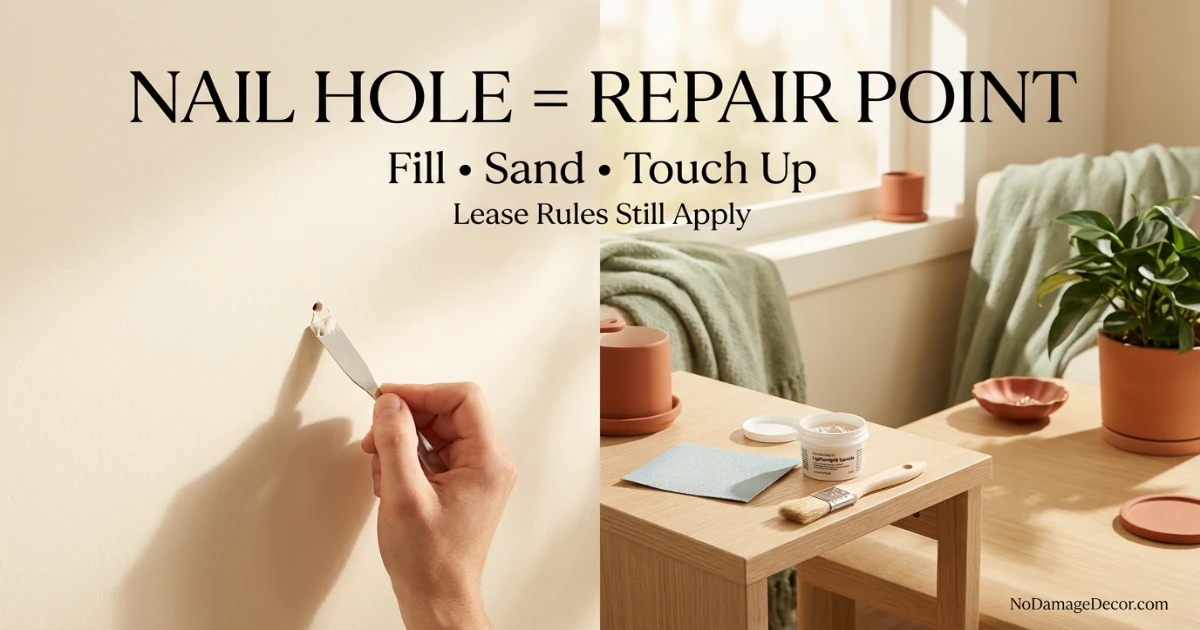
For a closer look at lease and deposit questions, see our guide on can your landlord charge for nail holes.
Which Renter Should Choose Which
The right choice is not universal. It depends on your wall, your lease, your item, and your willingness to repair.
| Renter scenario | Lower-risk starting point | Why |
|---|---|---|
| First apartment, smooth painted drywall, lightweight frames | Command strips | No holes, no patching, and easier to reposition if you change your mind. |
| Lease allows nails, you are comfortable patching | Nails or picture-hanging hardware allowed by the lease | Lower upfront hardware cost; the move-out advantage depends on what the lease expects and whether the repair blends cleanly. |
| Textured or rough walls | Check lease and consider alternatives | Adhesive strips may not bond reliably; nails create holes that may be harder to disguise on texture. |
| Heavy mirror or large art | Hardware rated for the weight; check lease | Adhesive-only mounting may not be appropriate for high-weight or high-risk items. |
| Bathroom or kitchen with heat and moisture | Moisture-rated products or another method | Adhesive performance can vary in humid environments; follow manufacturer guidance. |
| Student housing or short-term rental | Command strips on compatible surfaces | Removal is faster and less messy if you follow instructions and test first. |
If you are leaning toward adhesive but want a weight-specific reference, our Command strips weight limit guide walks through the manufacturer’s rated capacities and how to match them to common items.
Verified Products for Lower-Risk Hanging and Repair
As an Amazon Associate I earn from qualifying purchases.
These products solve the two sides of the comparison: hanging with adhesive and repairing holes if you choose nails. Check the current rated limits, approved surfaces, and installation instructions for the exact product before use.
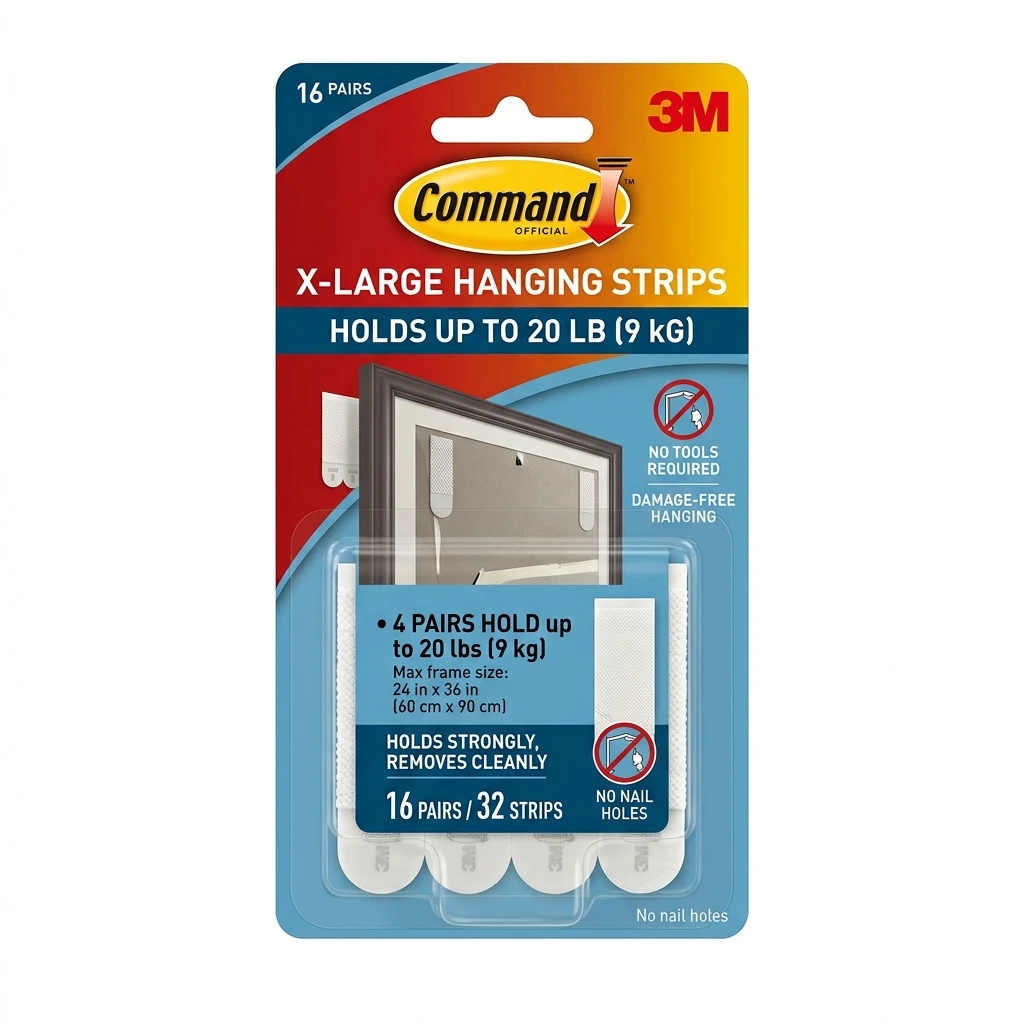
Command 20 lb XL Heavyweight Picture Hanging Strips, 16 Pairs (32 Strips)
This pack includes 16 pairs of X-Large strips. Current 3M guidance says four X-Large pairs (8 strips) hold up to 20 pounds with a maximum frame size of 24 × 36 inches. It is designed for compatible smooth indoor surfaces such as painted walls, painted concrete/cinder block, laminate, finished wood, tile, glass, and metal.
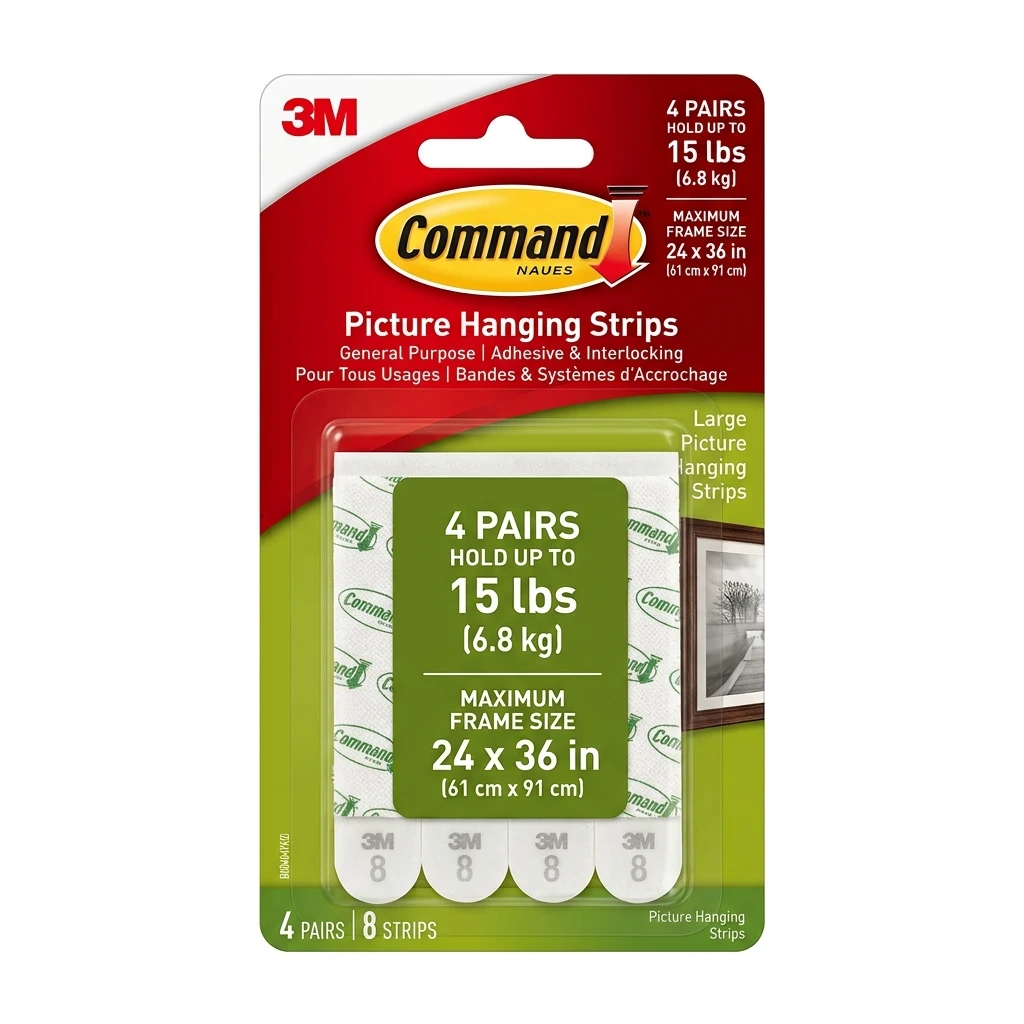
Command Large Picture Hanging Strips, 4 Pairs (8 Strips)
This pack includes four Large pairs (8 strips). Current 3M guidance says four Large pairs hold up to 15 pounds with a maximum frame size of 24 × 36 inches on compatible smooth surfaces.
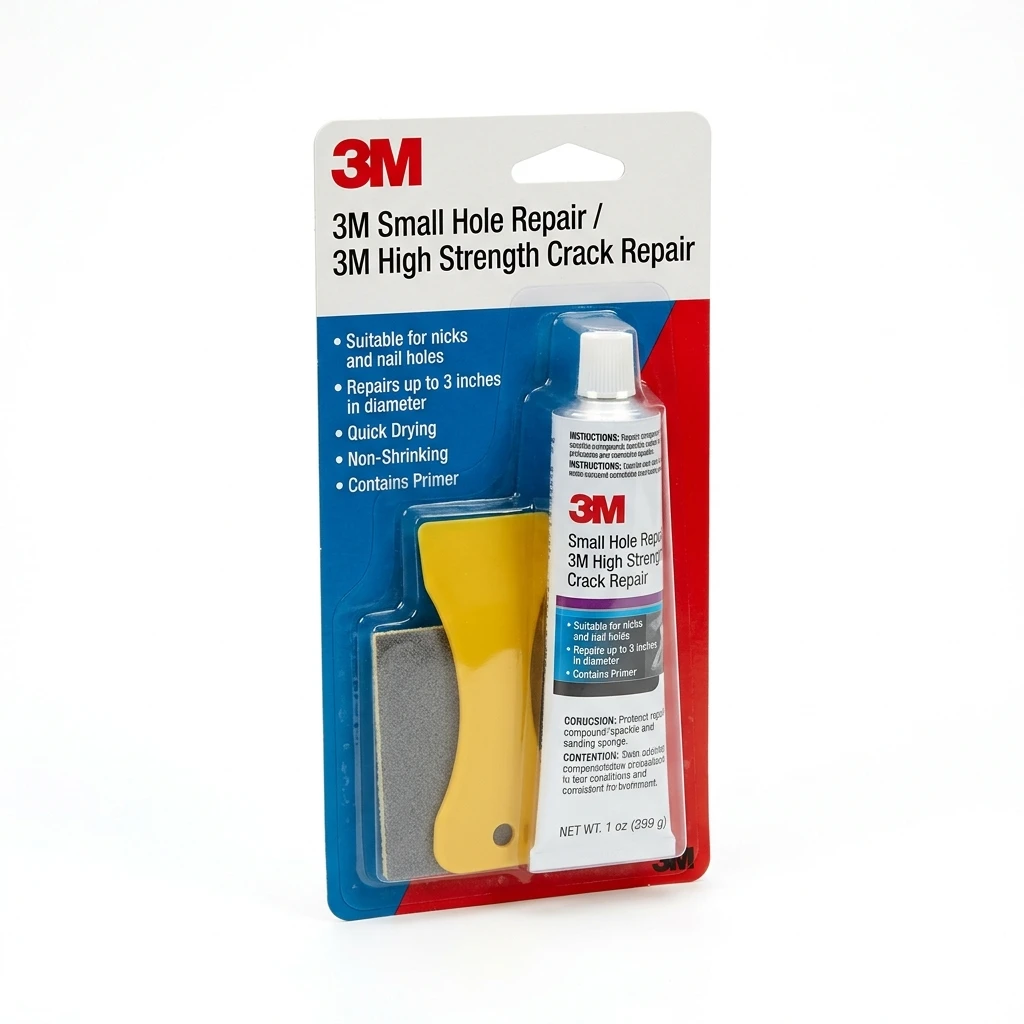
3M Small Hole Repair High Strength, All in One Applicator Tool
This all-in-one tool includes a putty knife, primer-enhanced spackle, and a sanding pad. Manufacturer documentation describes it as suitable for nail holes and nicks up to 3 inches in diameter. It is designed for quick interior wall repairs before sanding and touch-up finishing.
Sources & Renter-Safety Note
Hardware prices vary by retailer and date. Repair costs vary by location, finish, contractor minimums and the size of the damage. The cost figures below provide context, not a guaranteed landlord charge. Security-deposit rules also vary by lease and jurisdiction.
Renter-Safety Verdict
Nails usually win on upfront price. Command strips can win on convenience and avoiding a hole—but only on a compatible surface and only when the exact product instructions are followed.
For smooth, sound painted walls and lightweight-to-medium frames within the published configuration, Command Picture Hanging Strips are a reasonable lower-hole starting point. For a lease that permits picture nails, a small nail can be cheaper and mechanically simple, with the tradeoff of a visible repair point.
The expensive outcome is not “using nails” or “using adhesive” by itself. It is using the wrong method for the surface or load, then needing a difficult repair or facing a lease/deposit dispute. Check the lease, document the wall, and choose the method whose installation and move-out consequences you understand.
Frequently Asked Questions
Are Command strips cheaper than nails?
No. Nails are usually cheaper at checkout. Command strips cost more but avoid making a hole when used correctly on a compatible surface. The cheaper total option depends on whether you need to patch, match paint, hire help, or deal with adhesive-related wall damage.
Can a landlord charge me for nail holes?
Possibly. There is no universal rule for every US rental. Whether a nail hole can lead to a deduction depends on the lease, state or local law, the wall’s move-in condition, the size and number of holes, and the quality of any repair. Check your lease and local tenant guidance rather than assuming every nail hole is normal wear or every nail hole is chargeable.
Will Command strips damage my paint?
They can if the paint is weak, the surface is incompatible, the wall was painted too recently, or the strips are removed incorrectly. Current Command Picture Hanging Strip instructions say to wait seven days after painting and remove by stretching the release tab slowly straight down against the wall.
How much weight can Command Picture Hanging Strips hold?
Capacity depends on the strip size and the exact number of pairs. Current 3M guidance says four X-Large pairs hold up to 20 lb and four Large pairs hold up to 15 lb, both with a maximum frame size of 24 × 36 inches. Check the exact package because other sizes use different limits.
What surfaces should I avoid with Command Picture Hanging Strips?
Current 3M guidance says not to use Picture Hanging Strips on wallpaper, fabric, textured walls, brick or rough surfaces. Use them only on compatible smooth surfaces and follow the exact product instructions.
What is the cheapest way to hang pictures in a rental?
A small picture nail is usually the cheapest hardware option when the lease permits it. A removable strip costs more but can avoid a hole. The lowest total cost depends on the wall, the item, the lease, and whether you can complete any move-out repair cleanly.
Do I need to patch nail holes before move-out?
That depends on your lease and local rules. Some properties expect tenants to fill picture holes; others handle minor wear themselves. Ask the property manager in writing if the lease is unclear, and document the wall after any repair.
Next Step
Learn How to Remove Command Strips Without Damage
Removal technique is the single biggest factor in whether adhesive strips protect your deposit or create a repair bill. Our step-by-step guide covers the correct stretch-release method, broken-tab situations, and what to do if the wall finish starts to lift.
Read the Removal Guide