Temporary Floor Covering for Renters: Best Ideas for Rentals
Ugly vinyl, cold tile, worn carpet and scratched wood can change how a rental feels—but covering the floor does not have to mean gluing down a permanent new one.
At a Glance
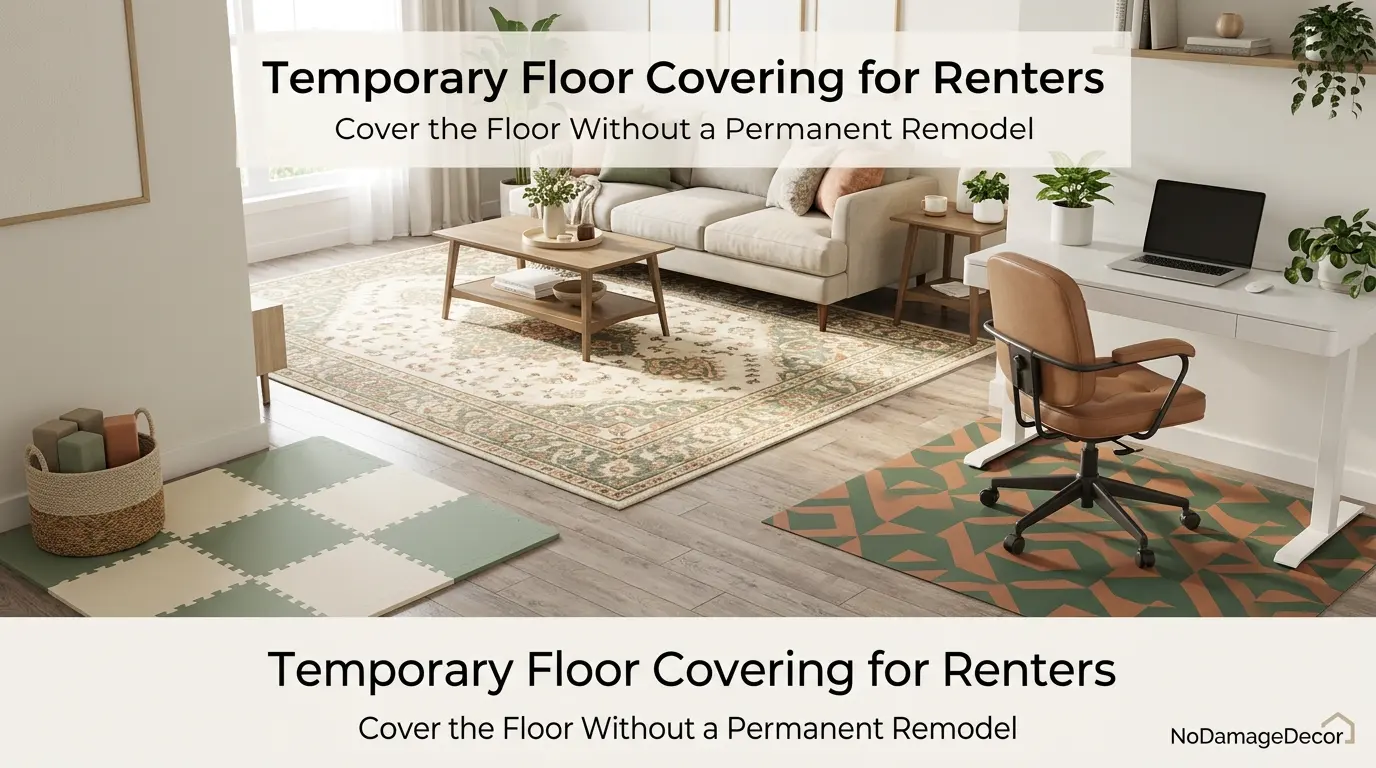
The Best Temporary Floor Covering Ideas for Renters
The right method depends on what you are trying to fix. A stained-looking rental vinyl floor needs a different solution than a cold tile bedroom or a living room where the flooring is simply dated.
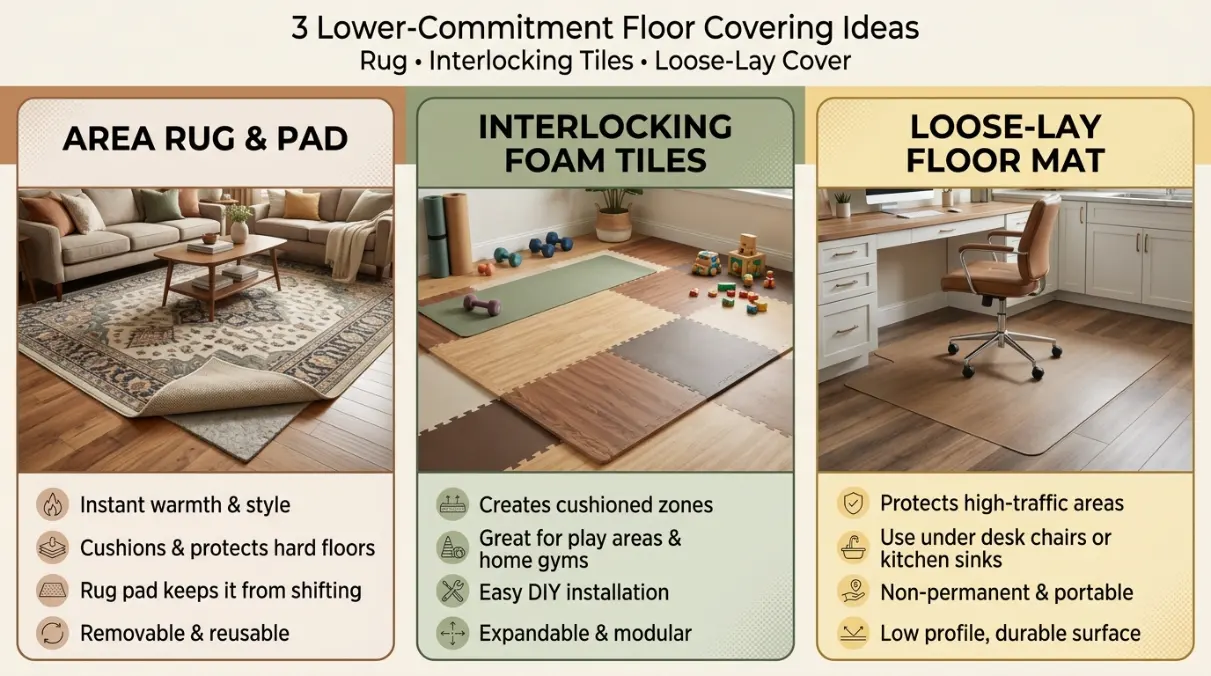
1. Large area rugs
The easiest whole-room visual fix. Rugs add warmth, color and acoustic softness without changing the floor underneath.
2. Interlocking foam tiles
Useful for workouts, children’s zones, desk areas and temporary utility spaces. They assemble without floor adhesive.
3. Loose-lay floor mats
Large vinyl or protective mats can cover ugly zones without bonding to the entire room.
4. Floating click-lock flooring
Potentially attractive for larger makeovers, but thickness, transitions and moisture management matter.
5. Peel-and-stick tiles
Visually polished, but adhesive makes them a higher-commitment renter choice.
6. Loose carpet tiles
Can work in some low-moisture rooms if they remain stable without permanent adhesive.
Temporary Flooring Options Compared
| Method | Adhesive | Best For | Move-Out Effort | Main Risk |
|---|---|---|---|---|
| Area rug + rug pad | None | Living rooms, bedrooms | Low | Wrong pad backing may mark sensitive floors |
| Interlocking foam tiles | None | Gym, play, desk zones | Low | Compression, shifting, trapped grit |
| Loose-lay floor mat | None | Kitchens, desks, pet zones | Low | Moisture or dirt trapped underneath |
| Floating floor | Usually none to substrate | Larger room makeover | Medium-high | Door clearance, transitions, moisture |
| Peel-and-stick tile | Yes | Longer-term cosmetic upgrade | High | Residue or substrate damage |
Check the Original Rental Floor Before You Cover It
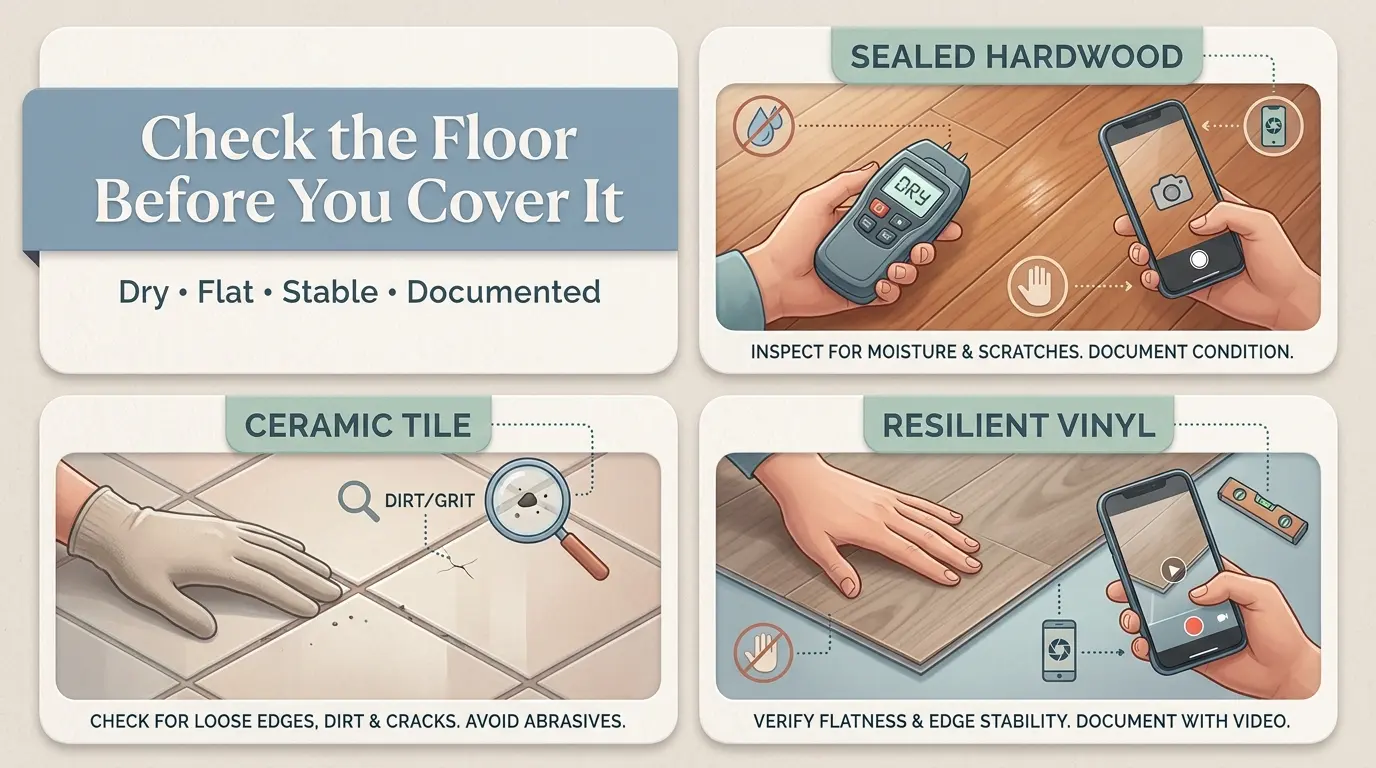
Temporary coverage should protect the existing floor, not hide a problem that gets worse underneath. Photograph scratches, stains and worn areas before installation. Check for moisture, leaks, loose edges and grit. Vacuum carefully before placing rugs or mats, and confirm that the pad or foam material is compatible with the exact floor finish.
Area Rugs: The Easiest Whole-Room Renter Solution
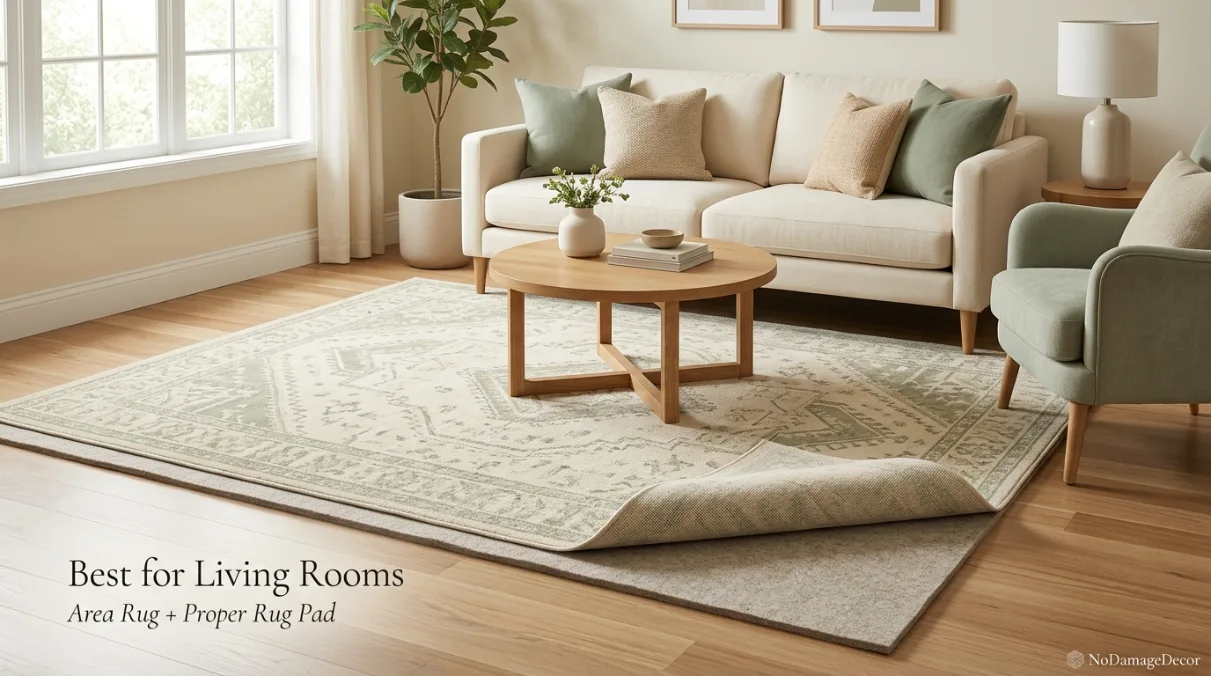
Area rugs are usually the best first move because they change the color, feel and acoustics of a room without bonding anything to the floor. A larger rug can visually replace most of an unattractive surface while remaining easy to lift.
The rug pad matters. It helps reduce shifting and abrasion, but pad materials can behave differently on hardwood, vinyl and sealed floors. Match the pad to the flooring manufacturer’s guidance instead of assuming every non-slip pad is universal.
Interlocking Foam Tiles: Best for Temporary Zones
Foam puzzle tiles are genuinely temporary because they interlock mechanically and can be taken apart again. ProsourceFit describes its puzzle mat as lightweight, easy to assemble and disassemble, and designed to protect floors while creating a cushioned workout or play area.
- Use them on flat floors so edges stay engaged.
- Inspect underneath periodically for dust and moisture.
- Expect heavy furniture to compress foam.
- Keep transitions flat enough to reduce trip risk.
Loose-Lay and Floating Floors: Better for Bigger Makeovers
Floating systems can transform a room without bonding directly to the old floor, but they are not automatically simple or lease-safe. Added thickness can interfere with doors, closets, appliances and transitions. Moisture can also become trapped below.
Choose floating coverage when…
You have written approval, the original floor is flat and dry, door clearance works, and you are staying long enough to justify the work.
Use a simpler method when…
You expect to move soon, the floor is uneven, the room has moisture issues, or the new layer would interfere with fixtures.
Peel-and-Stick Flooring: Attractive, but Not Truly Temporary by Default
Peel-and-stick tile is popular in renter makeovers because it changes the appearance quickly. The problem is the adhesive. FloorPops states that its flooring uses strong adhesive and is not removable in the same sense as its temporary wall products. It also warns that residue can remain after removal.
FloorPops further requires a clean, smooth, flat and dry base and does not recommend its floor tiles over linoleum or floating laminate. Substrate rules matter more than social-media makeover claims.
For related planning, see deposit-costing decor mistakes.
Verified Temporary Floor-Covering Products
These picks stay on the lower-commitment, non-adhesive side of renter flooring.
As an Amazon Associate I earn from qualifying purchases.
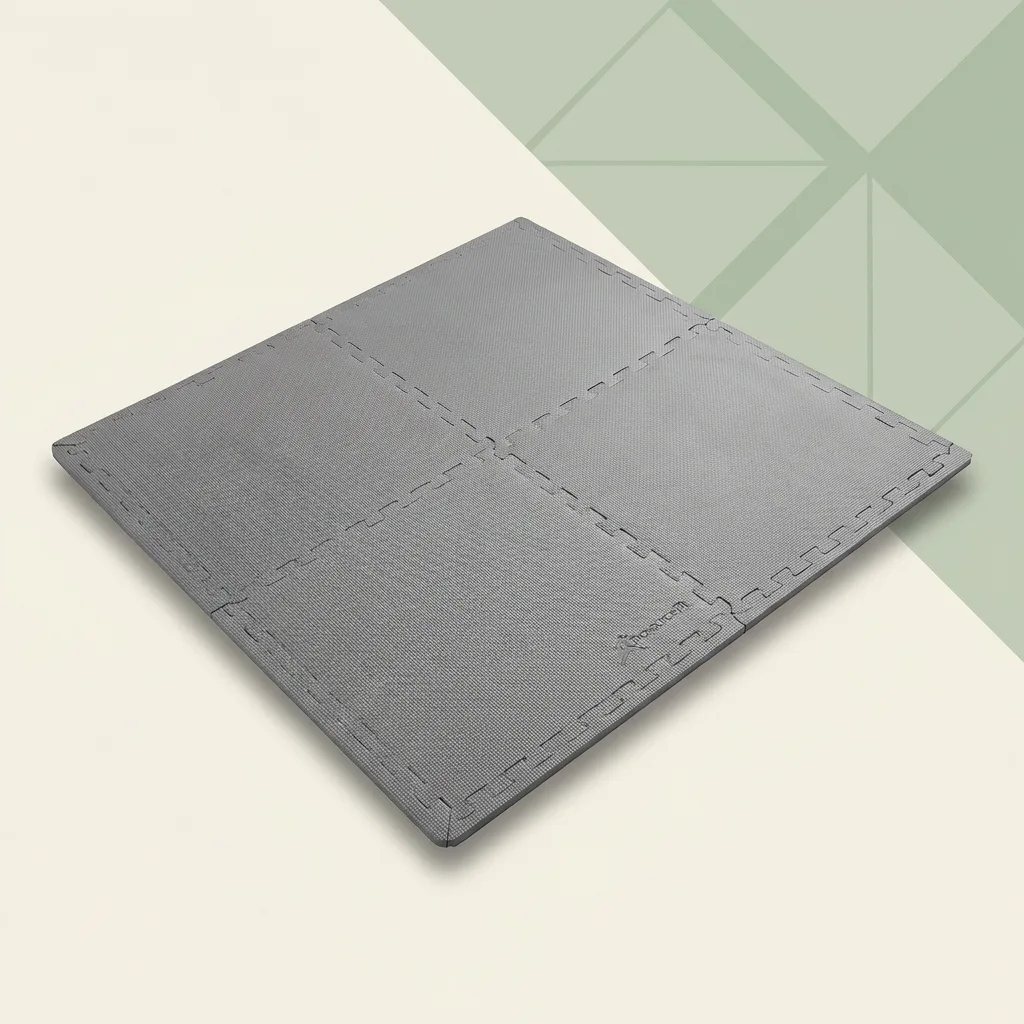
ProsourceFit Puzzle Exercise Mat 1/2 Inch, 24 Sq Ft, 6 Tiles
Best for: temporary workout, play, desk or utility zones.
The ProsourceFit puzzle mat uses interlocking EVA foam tiles and covers 24 square feet with six 24-by-24-inch tiles.
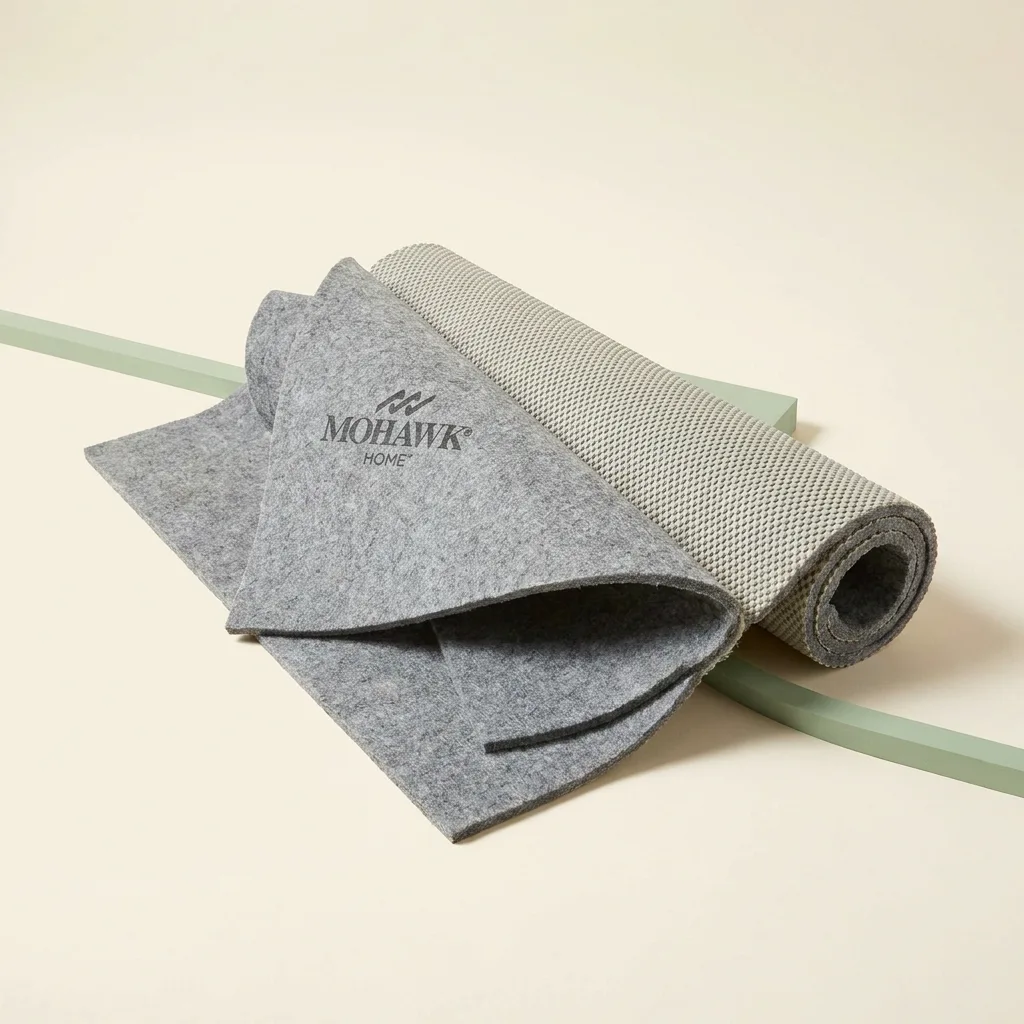
Mohawk Home Non Slip Rug Pad 6′ x 9′, 1/4 Inch Thick Felt + Latex Rubber Gripper
Best for: stabilizing a large area rug over a compatible hard floor.
This Mohawk Home pad combines felt cushioning with a latex rubber gripping layer and is sold for hardwood, tile and carpet surfaces.
Common Renter Mistakes
Calling peel-and-stick temporary
Strong adhesive can leave residue or affect the floor below.
Skipping the rug pad
Rugs can slide, bunch or abrade the floor if the backing is not appropriate.
Covering a wet floor
Trapped moisture can turn a cosmetic fix into a maintenance problem.
Ignoring door clearance
Thicker mats and floating floors can stop doors from opening properly.
Leaving grit underneath
Dust and sand can act like an abrasive under a mat.
Skipping move-in photos
Document pre-existing wear before covering the floor.
For a broader setup, see the first apartment decorating checklist and make your rental feel like home.
Sources & Renter-Safety Note
Current FloorPops guidance says its floor tiles use strong adhesive, are not removable in the same sense as temporary wall products, and may leave residue after removal. FloorPops also requires a clean, smooth, flat and dry base and does not recommend its floor tiles over linoleum or floating laminate. Product information for ProsourceFit puzzle mats and the Mohawk Home rug pad was cross-checked against current listings. Always confirm compatibility with the exact original floor in your rental.
Frequently Asked Questions
What is the best temporary floor covering for renters?
For most living rooms and bedrooms, a large area rug with a floor-compatible rug pad is the lowest-commitment option. For utility, workout or play zones, interlocking foam tiles are another easy-to-remove choice.
Can renters use peel-and-stick floor tiles?
Only with care. Peel-and-stick flooring uses adhesive and may leave residue or affect the surface below. Check the exact product’s approved substrates and your lease before installation.
Can I cover ugly vinyl flooring without glue?
Yes. Area rugs, rug pads, interlocking foam tiles and loose-lay mats can cover large portions of the floor without bonding directly to it.
Are foam floor tiles renter-friendly?
They can be because they interlock mechanically and are easy to disassemble. Keep them on a flat, dry floor and inspect underneath periodically.
Can a rug pad damage hardwood or vinyl?
Some pad materials can be unsuitable for specific finishes. Match the rug pad to the flooring manufacturer’s guidance.
Should I ask my landlord before covering the floor?
Lease rules vary. Ask in writing before higher-commitment adhesive or floating-floor changes.
What should I do before move-out?
Lift the covering, clean the original floor appropriately, inspect for marks or trapped moisture, and take dated photos.
Renter-Safety Verdict
Lowest-risk whole-room choice: a large area rug with a floor-compatible rug pad.
Best functional choice: interlocking foam tiles for temporary zones.
Higher-commitment choice: floating floor systems because thickness and moisture management matter.
Highest caution: peel-and-stick flooring because adhesive can leave residue and compatibility varies by substrate.
Move-out rule: choose a covering you can lift, inspect beneath and remove without scraping or solvents whenever possible.
Make the Apartment Feel Better Without Permanent Changes
Use furniture, rugs, lighting and removable décor before taking on higher-commitment surfaces.
Make Your Rental Feel Like Home