Best Rug Pads Safe for Rental Hardwood Floors
Rug pads safe for hardwood floors are not chosen by material name alone. The safest renter decision depends on the exact floor finish, whether it is recently refinished, the rug size, how much grip you need, and whether the pad manufacturer explicitly allows that floor type.
Quick Answer
For an ordinary, fully cured hardwood finish, a manufacturer-approved felt-and-rubber pad is often a practical combination of floor protection, cushioning and grip. Natural-rubber-backed pads are widely sold specifically for hardwood, but you should still check the flooring manufacturer and rug-pad instructions. Be extra cautious with newly refinished, lacquered, acrylic, waxed or otherwise specialty finishes, because some pads that are fine on standard hard floors explicitly exclude those surfaces.
At a Glance
What Makes Rug Pads Safe for Hardwood Floors?
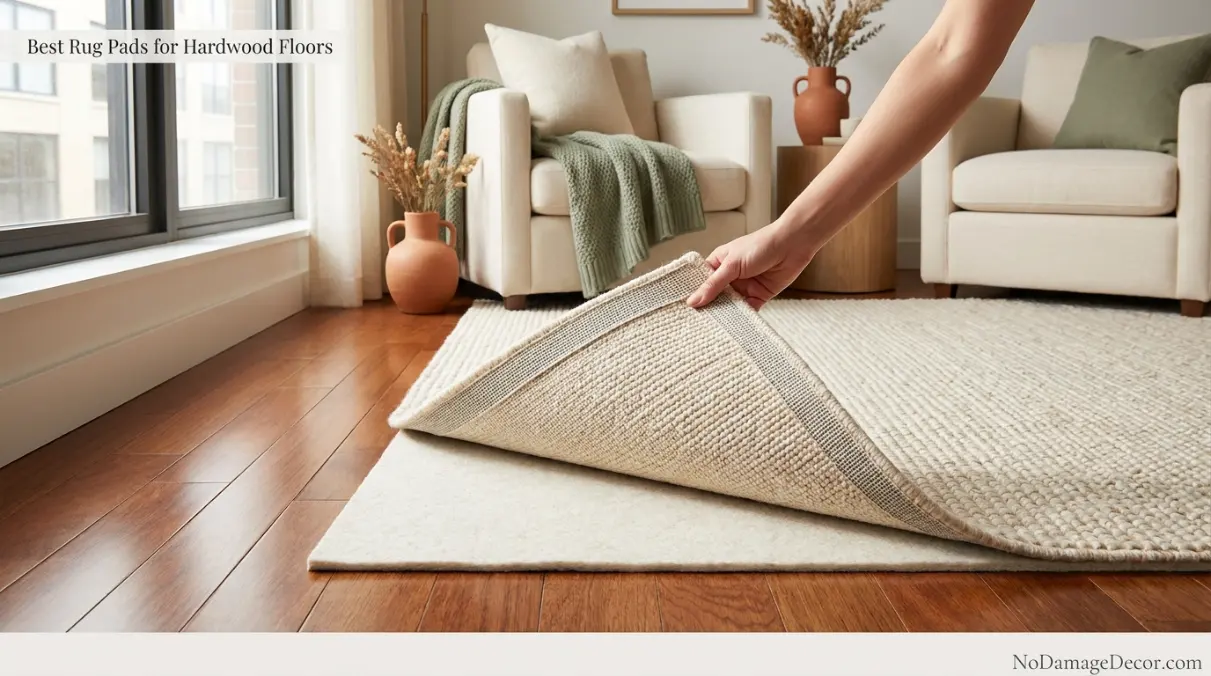
A rug pad has two jobs in a rental: help the rug behave better and reduce avoidable wear on the floor. That can mean cushioning the rug backing, reducing sliding or bunching, buffering grit, and keeping rough rug fibers from rubbing directly against the finish.
Mohawk Home recommends rug pads in part because they help protect floors from scratching or color transfer. RugPadUSA similarly markets several felt-and-natural-rubber pads specifically for hardwood and says its natural-rubber rug pads are intended to be safe with hardwood floors and finishes.
But there is an important renter caveat: compatibility belongs to the complete floor system, not just the wood species. Oak, maple and engineered hardwood can all be covered by very different finishes. A pad that is allowed on one sealed floor may be excluded on another recently refinished or specialty-coated surface.
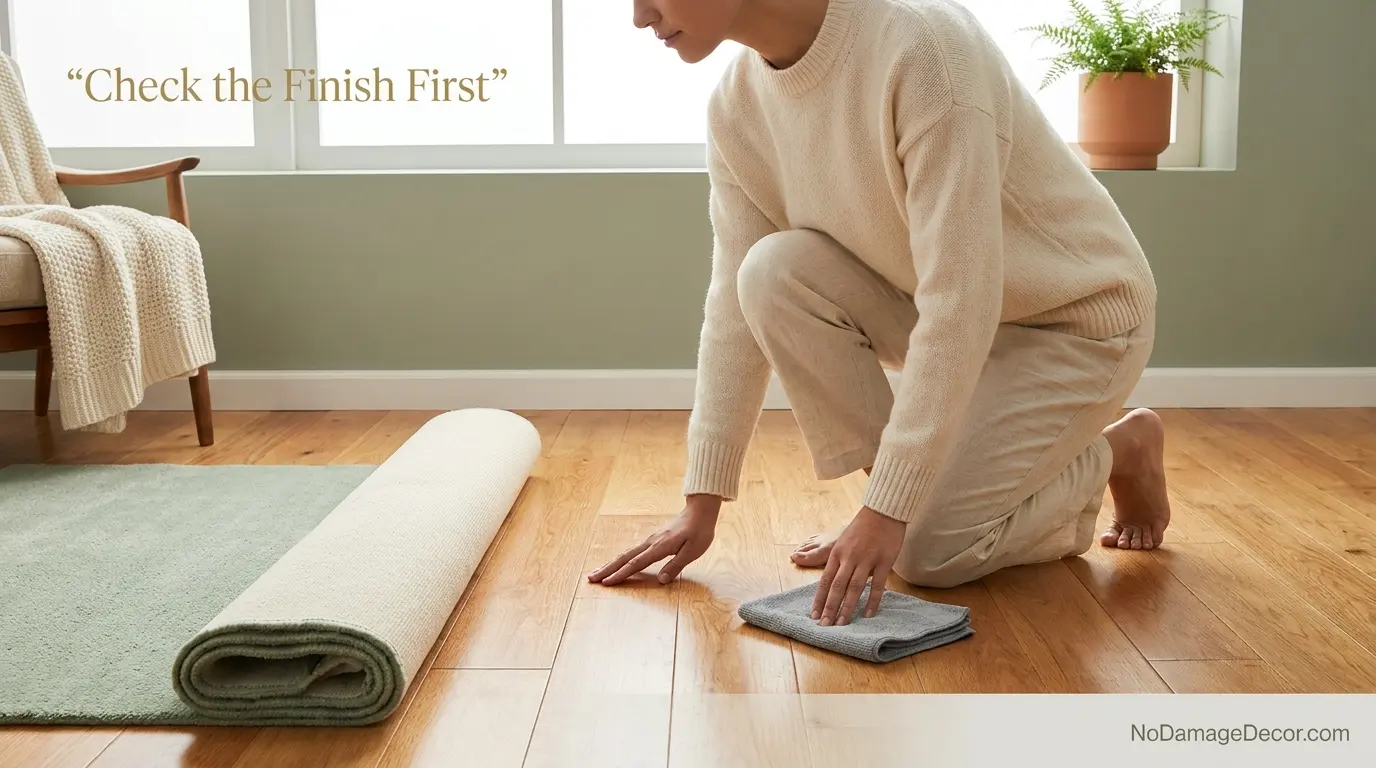
Check the Rental Hardwood Finish First
Clean, dry, stable, fully cured finish
If the floor is in normal service, has no tackiness or fresh coating, and the pad manufacturer lists hardwood or hard floors as compatible, you have a much clearer path.
Recently refinished or unknown finish
Do not guess a cure time. Ask management when the floor was refinished and what rug pads are allowed, then follow the finish manufacturer’s instructions before covering the surface.
Gorilla Grip’s current slip-resistant rug-pad instructions show why this check matters. The brand markets the pad for hard floors, but its official warning says it is not intended for lacquered, acrylic, natural-stone, porous or refinished surfaces. That is a much more useful renter detail than a generic “for hardwood” label.
If you move into a unit with visible finish wear, existing dark spots or scratches, photograph them before placing the rug. Security-deposit rules vary by state, city, lease and circumstance, so dated move-in documentation is more useful than assuming every mark will be treated as normal wear.
Best Rug Pad Materials for Rental Hardwood
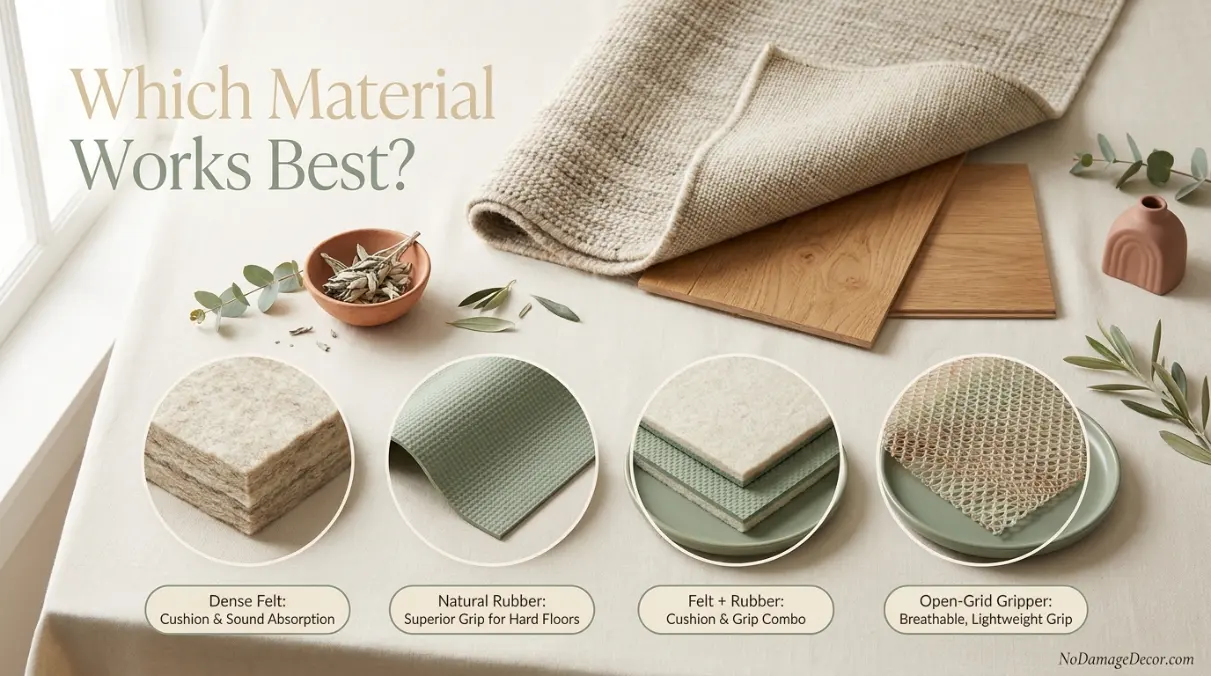
| Pad type | What it does well | Best renter scenario | Important caution |
|---|---|---|---|
| Felt + natural rubber | Combines cushioning with grip; felt supports the rug while rubber contacts an approved hard floor | Living rooms, bedrooms and medium-to-large rugs that need both comfort and stability | Confirm the rubber formula is approved for your exact finish |
| Natural rubber | Strong grip with a relatively low profile | Runners, entry rugs and thinner rugs where sliding is the main problem | Check finish compatibility, especially after refinishing |
| Dense felt only | Adds cushion and helps buffer rough rug backing | Large rugs already anchored by furniture and not prone to sliding | Felt alone usually provides less grip on smooth hardwood |
| Open-grid gripper | Low-cost grip, ventilation and easy trimming | Standard hard floors where the exact manufacturer explicitly allows the floor finish | Do not assume every PVC-style or gripper pad is suitable for refinished, lacquered or specialty surfaces |
RugPadUSA’s current hardwood guidance highlights felt bonded to natural rubber as a strong option because the felt layer grips the rug while the rubber provides friction against the floor. Its RugPro, Contour-Lock and Superior-Lock lines are all presented for hardwood, with different thicknesses for low-profile grip versus cushioning.
Mohawk Home’s dual-surface guidance uses the same basic logic: latex side down on hard floors, felt side toward the rug. The felt layer adds cushion while the grippy backing stabilizes the system.
What Renters Should Avoid or Verify Carefully
Adhesive rug tape directly on hardwood
Adhesive tapes can leave residue or pull at a vulnerable finish. Use them only if the exact tape and flooring manufacturer approve that application.
Unknown rubber or plastic compounds
A low-cost gripper may work well on one floor and react poorly with another coating. Prefer products that publish a floor-compatibility list.
Freshly refinished flooring
Covering a new finish too soon can create problems. Ask when the work was done and follow the coating manufacturer’s current cure guidance.
Moisture trapped under rugs
Never put a pad over damp hardwood. Dry spills promptly and allow both rug and floor to dry before reassembling the layers.
Grit between pad and finish
Sand and debris can become abrasive under foot traffic. Vacuum the rug and clean the exposed floor periodically.
Pad edges extending beyond the rug
Visible pad edges can create a ridge, collect dirt and look unfinished. Trim the pad so it sits comfortably inside the rug perimeter.
For broader move-out planning, review our deposit-costing decor mistakes and the first apartment decorating checklist.
Rug Pads Safe for Hardwood Floors: Two Current Options
These products are included because their Amazon identities can be matched to current ASINs and their manufacturers publish hard-floor guidance. They suit different renters: one is a ventilated gripper for standard hard floors, while the other adds thicker felt cushioning with a latex backing.
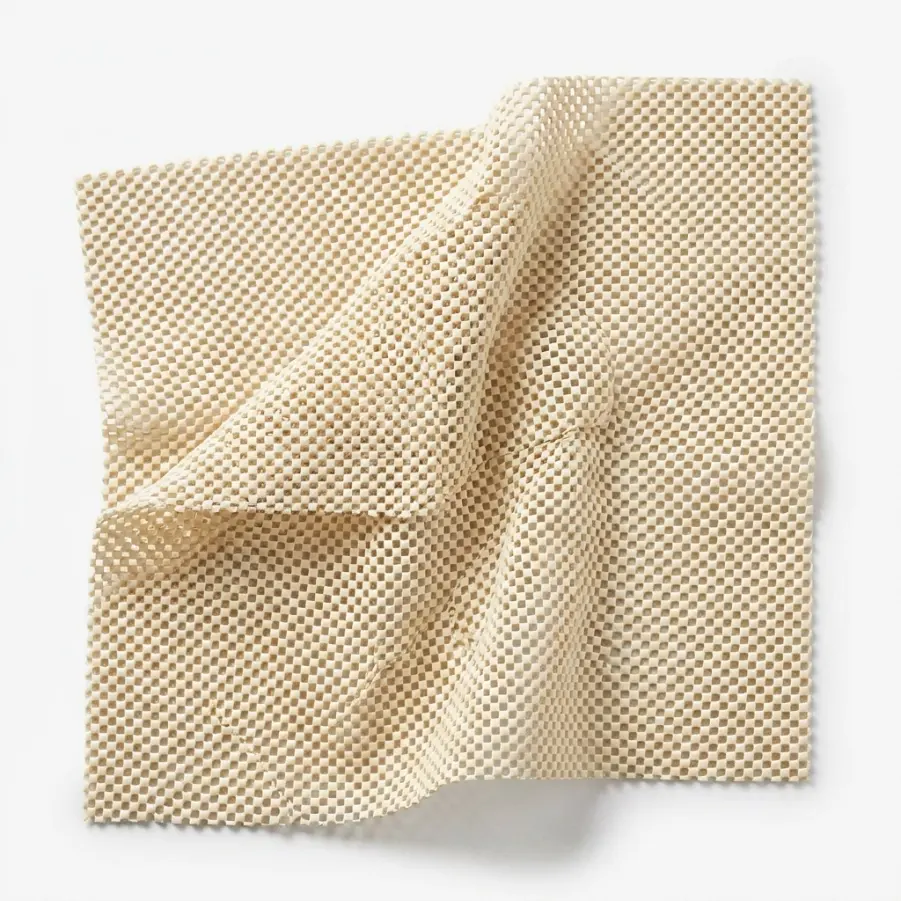
Gorilla Grip Original Area Rug Gripper Pad, 8×10, Made in USA, for Hard Floors
Gorilla Grip describes this as a non-adhesive, dual-sided gripper for hard floors. Its open-grid construction is intended to allow air circulation and help buffer everyday wear while reducing rug bunching and sliding.
Critical renter limitation: Gorilla Grip’s current official instructions say this pad is not intended for lacquered, acrylic, natural-stone, porous or refinished surfaces. Check your floor manufacturer’s directions before using it.
Check Price on Amazon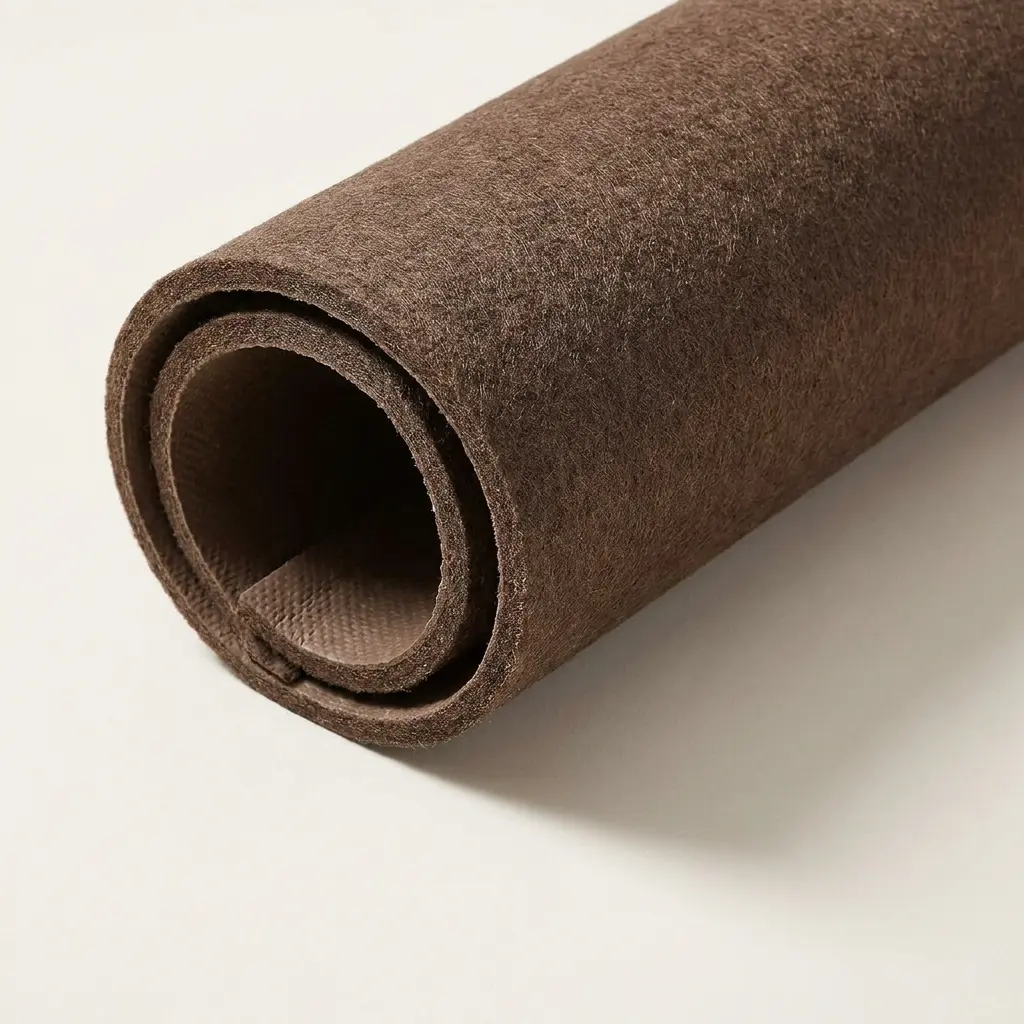
Mohawk Home Dual Surface Felt and Latex Non Slip Rug Pad, 1/4 Inch Thick, 8×10, Brown
Mohawk Home’s dual-surface rug-pad guidance says the latex side goes down for hard floors while the felt side faces the rug. The felt layer adds cushion and helps buffer the rug backing from the flooring below.
Practical limitation: a thicker pad can raise the rug profile near doors and transitions. Trim it slightly smaller than the rug and confirm your floor finish permits latex-backed pads.
Check Price on AmazonGorilla Grip vs. Mohawk Home for Rental Hardwood
| Decision point | Gorilla Grip Original 8×10 | Mohawk Home Dual Surface 8×10 |
|---|---|---|
| Construction | Open-grid non-adhesive gripper | Felt cushion with latex non-slip backing |
| Main strength | Low-profile grip and easy trimming | More cushioning plus hard-floor grip |
| Hard-floor setup | Place on clean, dry approved hard floor and keep rug flat | Latex side down, felt side toward rug |
| Best renter scenario | Runner or area rug where low profile matters | Living room or bedroom rug where comfort matters |
| Important restriction | Officially excludes refinished, lacquered and acrylic surfaces among others | Verify that the rental hardwood finish allows latex-backed pads |
Do not use a product’s “hard floor” label as permission to ignore your flooring manufacturer. The finish-specific restriction is the deciding detail.
How to Size and Place a Rug Pad on Hardwood
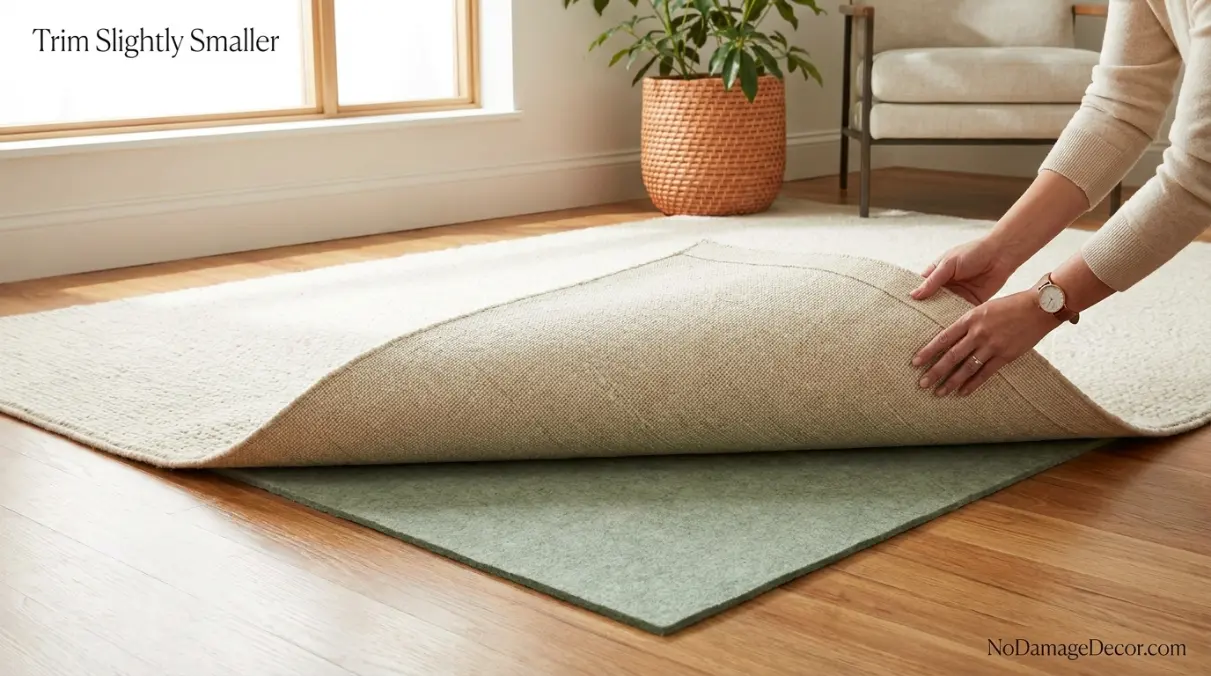
Confirm the floor is ready to cover
Make sure the floor is clean, dry and not recently refinished unless the finish manufacturer says the cure period is complete.
Measure the actual rug
Do not rely only on the label. Handmade and woven rugs can vary slightly from their nominal dimensions.
Trim the pad smaller than the rug
Mohawk advises sizing the pad slightly inside the rug edges so the perimeter of the rug can taper to the floor. Follow the exact sizing instructions for the pad you buy.
Orient the material correctly
For dual-surface pads, use the manufacturer’s specified side against the hard floor. For Mohawk’s Dual Surface pad, the latex side faces the hard floor.
Flatten the pad before loading furniture
Remove wrinkles, center the rug, and confirm the rug edges lie flat before adding tables or chair legs.
Check doors and transitions
A thicker felt pad may cause a door to rub or create a raised transition. Use a lower-profile pad where clearance is tight.
Inspect Under the Rug Before Move-Out—Not Only at Move-Out
A rug can hide a floor problem for months. Periodic checks make it easier to catch grit, moisture, dye transfer, rubber degradation or a finish reaction while the issue is still small.
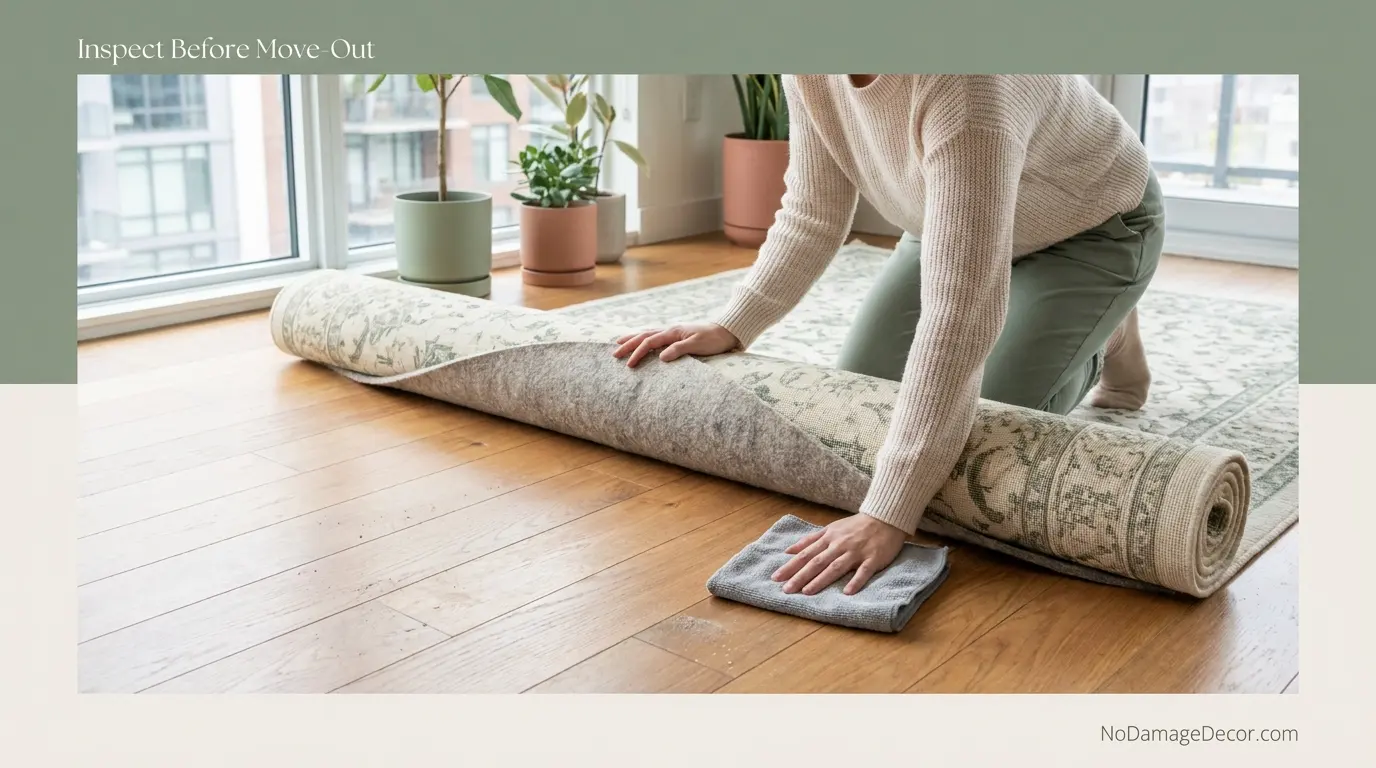
- Vacuum the rug regularly so abrasive grit is less likely to work through to the floor.
- Lift corners periodically and look for transfer, sticking, discoloration or crumbling pad material.
- Handle spills promptly and dry all layers before putting the rug back down.
- Clean only with products approved for the hardwood finish. Do not saturate the floor beneath a rug.
- Photograph the area at move-out after the rug and pad are removed and the floor is clean.
If you are deciding how much reversible decor to use throughout the rental, see our make your rental feel like home guide and studio apartment decor ideas.
Furniture placement matters too. Heavy furniture legs resting partly on the rug and partly on exposed hardwood can create uneven pressure at the rug edge, while chairs dragged repeatedly across a raised pad transition can bunch the rug. After installing the pad, walk the full perimeter and test doors, chair movement and common traffic paths. If an edge curls or a door begins to rub, trim or reposition the pad rather than forcing the rug system to stay where it is.
Sources & Renter-Safety Note
This guide uses current manufacturer guidance for rug-pad materials, hard-floor placement and surface restrictions. Flooring finishes differ, so the floor manufacturer or property manager should take priority when their instructions are more specific.
- RugPadUSA — Rug Pads for Hardwood Floors
- RugPadUSA — Natural Rubber and Felt Rug Pad Guide
- Mohawk Home — Rug Pad FAQ and Dual Surface Orientation
- Gorilla Grip — Slip-Resistant Rug Pad Instructions and Surface Warnings
Security-deposit and damage rules vary by state, city, lease, property and circumstances. Keep move-in and move-out photos and ask management in writing if the hardwood finish or allowed rug-pad material is unclear.
FAQs About Rug Pads Safe for Hardwood Floors
What rug pad material is safest for hardwood floors?
A manufacturer-approved felt-and-natural-rubber pad is a common choice because it combines cushioning with grip. But no material is automatically safe for every finish. Check the exact pad instructions and the hardwood-floor manufacturer’s guidance.
Can rubber rug pads damage hardwood floors?
Some natural-rubber pads are specifically sold for hardwood, while other rubber, latex or plastic formulations may have finish restrictions. The important question is whether the exact product is approved for your specific floor finish, especially if the floor is newly refinished.
Should I use felt or rubber side down on hardwood?
Follow the exact pad instructions. Mohawk Home’s Dual Surface pad directs users to place the latex side down on hard floors and the felt side toward the rug.
Can I put a rug pad on recently refinished hardwood?
Do not assume it is ready. Ask when the floor was refinished and follow the coating or flooring manufacturer’s cure guidance. Some rug pads, including Gorilla Grip’s current slip-resistant pad, explicitly exclude refinished surfaces.
How much smaller should a rug pad be than the rug?
The pad should sit inside the rug perimeter so the rug edges lie flat on the floor. Exact trimming guidance varies by manufacturer, so follow the sizing instructions for the pad you buy rather than using one universal measurement.
Are PVC rug pads safe for rental hardwood?
Do not decide from the material label alone. Some open-grid gripper pads are sold for standard hard floors, but the same manufacturer may exclude refinished, lacquered or acrylic surfaces. Verify the exact product and finish combination.
How often should I check the hardwood under an area rug?
There is no single universal schedule, but renters should inspect periodically and any time there is a spill, unusual odor, visible shifting or suspected moisture. Lift the rug, remove grit and confirm the pad is not sticking, shedding or transferring residue.
Choose for the Finish, Not Just the Word “Hardwood”
The most renter-conscious rug pad is one whose manufacturer clearly supports your floor type and whose material fits the rug’s job. Felt plus natural rubber is a strong all-around choice for many fully cured hardwood floors; felt-only pads suit large anchored rugs; low-profile grippers can work where door clearance matters if the finish is explicitly allowed.
Avoid guessing on newly refinished or specialty-coated floors. Do not add adhesive tape as a shortcut, keep the floor dry and grit-free, and inspect under the rug occasionally. Those small checks matter more for deposit protection than chasing the highest grip rating.
Protect the Rest of Your Rental With Reversible Choices
Floor protection is one part of move-out planning. Use the broader checklist to avoid common decor choices that create unnecessary repair work.
See Deposit-Costing Decor Mistakes