Renter Friendly Cabinet Hardware: Change It Without New Holes
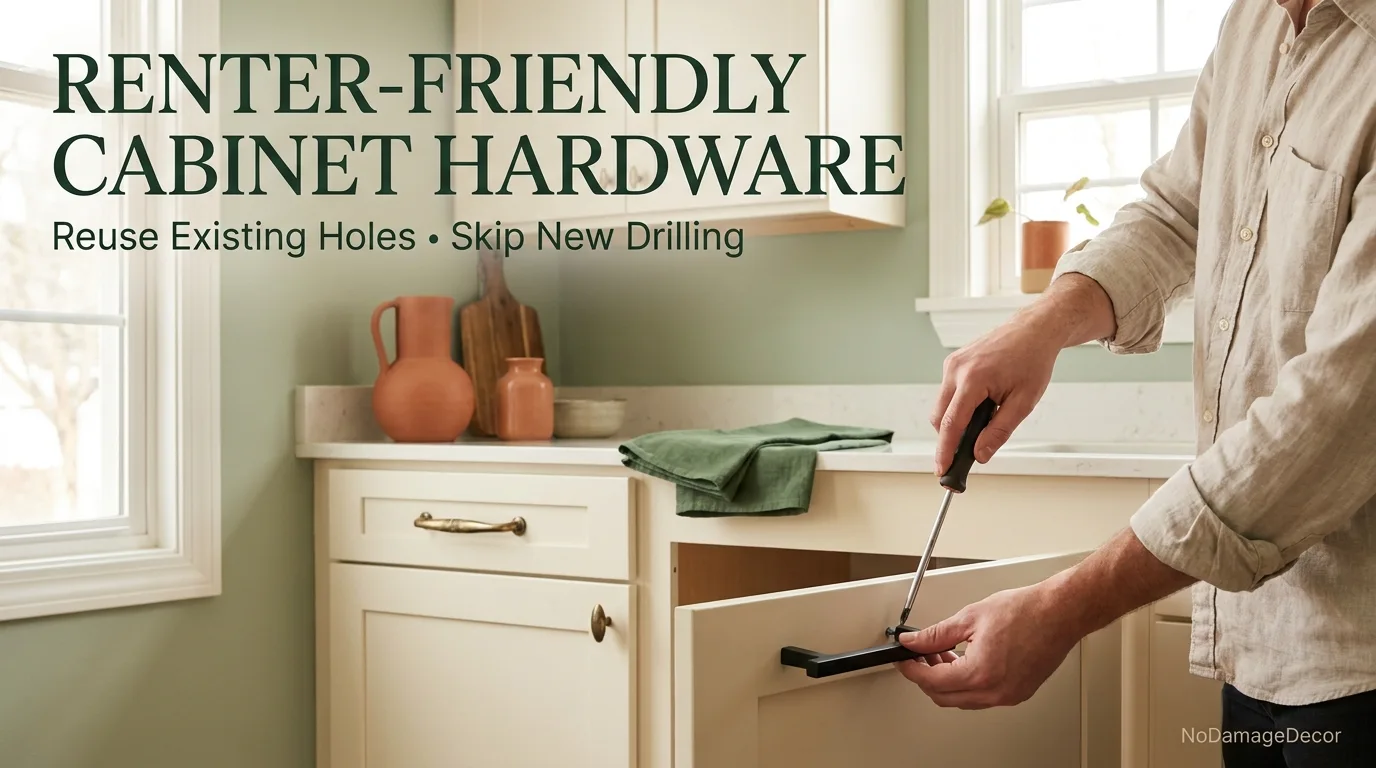
Renter friendly cabinet hardware starts with one rule: make the new knob or pull fit the holes the cabinet already has instead of turning a cosmetic update into permanent drilling.
At a Glance
Before You Change Cabinet Hardware in a Rental
A cabinet-hardware swap can be one of the more reversible kitchen updates because the existing holes already do the structural work. The risk appears when a replacement does not match those holes and someone decides to drill a second set, enlarge a hole, fill an old hole, or force a screw through a finish that belongs to the property.
Start by checking the lease. Some leases treat knobs and pulls as removable fixtures; others require written approval before any hardware is changed, even temporarily. If the lease is silent and the cabinets are expensive, custom, newly refinished, or visibly delicate, asking management in writing can still prevent a disagreement later.
Photograph one cabinet door and one drawer front before removal. Capture the original knob or pull, the screw heads inside the cabinet, and any existing wear marks. These photos help separate pre-existing marks from anything that happens during your hardware change.
Choose a hardware swap when…
The existing hardware removes normally, the replacement can use the same hole or holes, the cabinet finish is sound, and you can store the originals safely.
Use another decorating method when…
The hardware is glued, seized, integrated into the door, the cabinet finish is cracking around the screws, or changing it would require drilling, filling, sanding, or repainting.
Measure Existing Cabinet Hardware Before You Shop
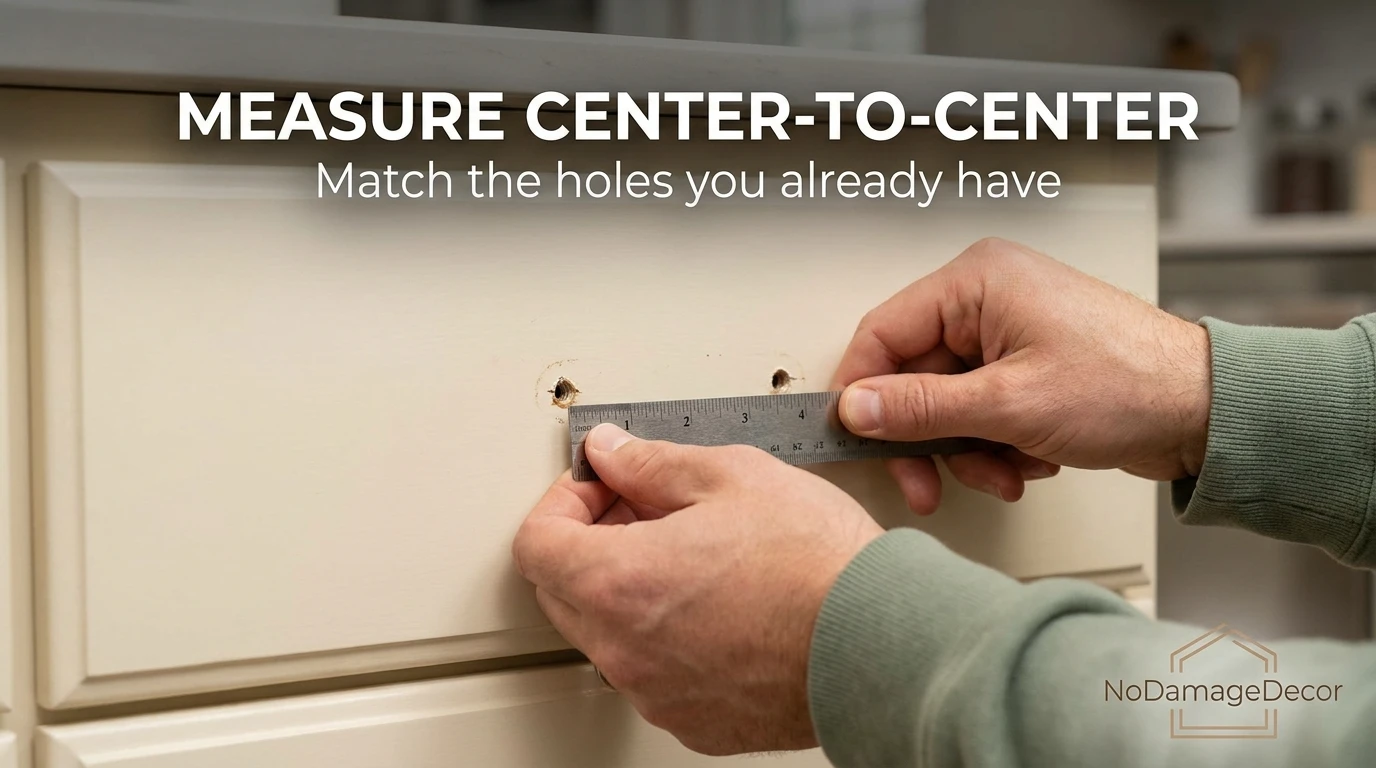
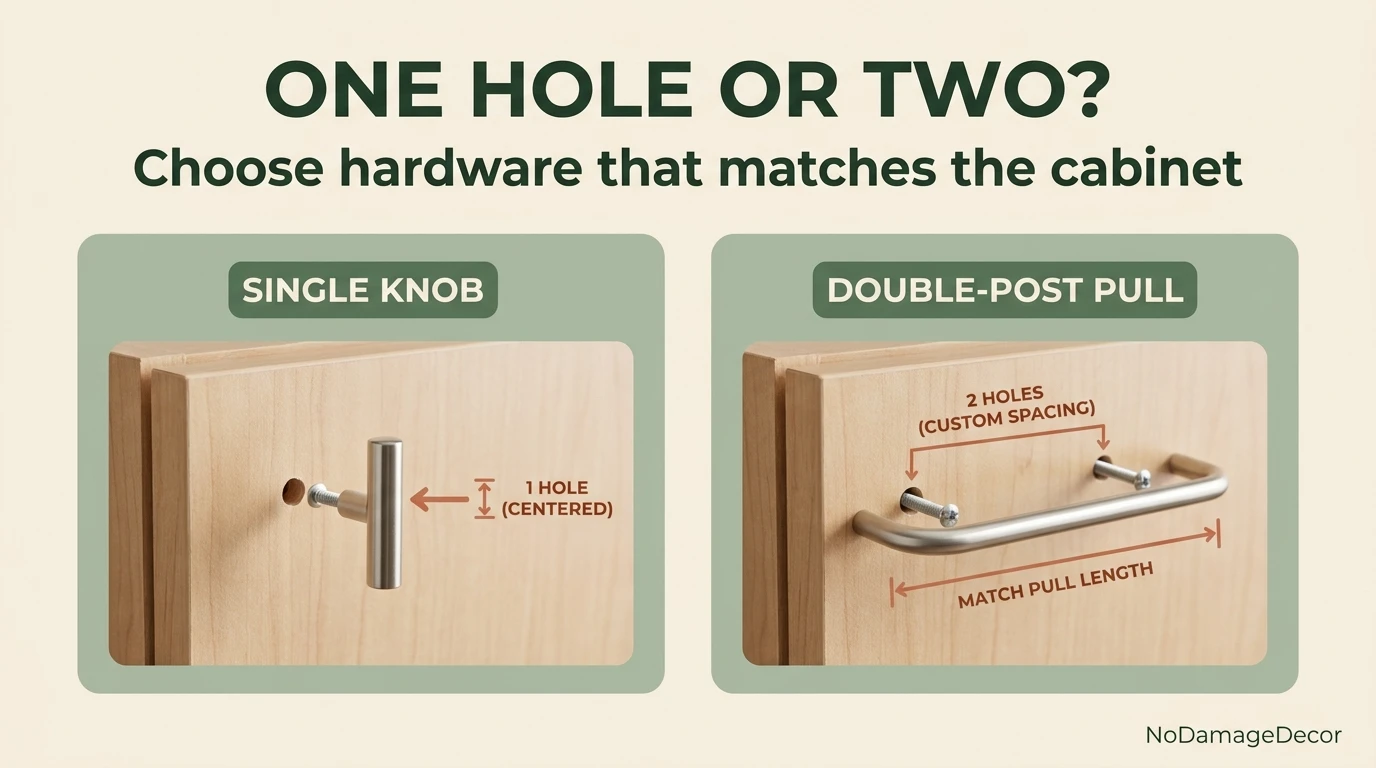
For a knob, the basic question is whether there is one hole. For a pull, the key measurement is center-to-center: the distance from the center of one mounting hole to the center of the other. Do not measure the overall length of the handle and assume that number is the screw spacing.
Remove one pull and measure the holes directly on the cabinet front. A rigid ruler works for common spacing, while a caliper can help when the measurement is unusual. Write down the spacing in both inches and millimeters if possible because hardware listings may use either system.
Also note the old pull’s footprint. If the original hardware left a slightly darker or cleaner outline in the finish, a very narrow replacement might expose that “shadow.” A replacement with similar or slightly larger mounting posts can hide old wear without creating new holes.
| Existing Hardware | Measure | Replacement Must Match | Renter Note |
|---|---|---|---|
| Single knob | One hole, door thickness, screw fit | Single rear-mount screw location | Usually the simplest temporary swap |
| Two-hole pull | Center-to-center hole distance | Exact spacing or verified adjustable range | Do not drill a new second hole just for style |
| Pull with backplate | Hole spacing plus footprint | Hole spacing and enough coverage | Old finish shadows may become visible |
| Odd / old spacing | Actual center-to-center distance | Adjustable pull or exact specialty size | Can avoid filling old holes |
Single-Hole Knobs Are Easier Than Converting to Pulls
If a rental cabinet currently has one knob hole, replacing it with another single-hole knob is usually straightforward. Converting that door to a two-screw pull would require creating a second hole unless the pull uses a single central mount.
The same logic works in reverse. If the cabinet already has a two-hole pull, switching to a single knob leaves an unused hole visible. Filling that hole may require putty, sanding, color matching, and finish repair, which defeats the point of a renter-conscious update.
Choose replacements that respect the cabinet’s current drilling pattern. If you want the look of a longer pull but the spacing does not match, an adjustable pull is more practical than forcing a new hole pattern.
Match the Hardware Footprint, Not Just the Screw Holes
Two pieces of hardware can use the same hole pattern and still leave a very different mark on the cabinet. The old pull may have wide mounting posts, a backplate, or a broad base that protected part of the finish from light, grease, and everyday cleaning. Once it comes off, that covered area can look slightly darker, cleaner, or glossier than the surrounding cabinet.
For a temporary rental update, look at the footprint of the replacement as well as its screw spacing. A replacement with mounting posts that are at least as wide as the old contact points can hide harmless finish shadows without requiring sanding, paint, filler, or a decorative plate glued to the door.
Choose a similar footprint when…
The old pull has left visible rings, compressed finish, or a cleaner outline around each mounting point. A similarly sized base can cover those existing marks while still reusing the original holes.
Pause when a backplate is involved
A large backplate may be hiding old holes, finish fading, or previous repairs. Remove one sample carefully before buying replacements so you know what the plate is actually covering.
Finish also affects how aggressively you should handle the hardware. Painted MDF, thermofoil, veneer, laminate, stained wood, and factory-coated cabinet doors can all react differently to pressure from metal posts and washers. If the finish is already cracked, lifting, soft, or chipped around the screw hole, changing the hardware may make that weakness more visible. In that situation, leaving the original hardware in place is often the more renter-conscious choice.
Check Screw Length and Thread Before Tightening
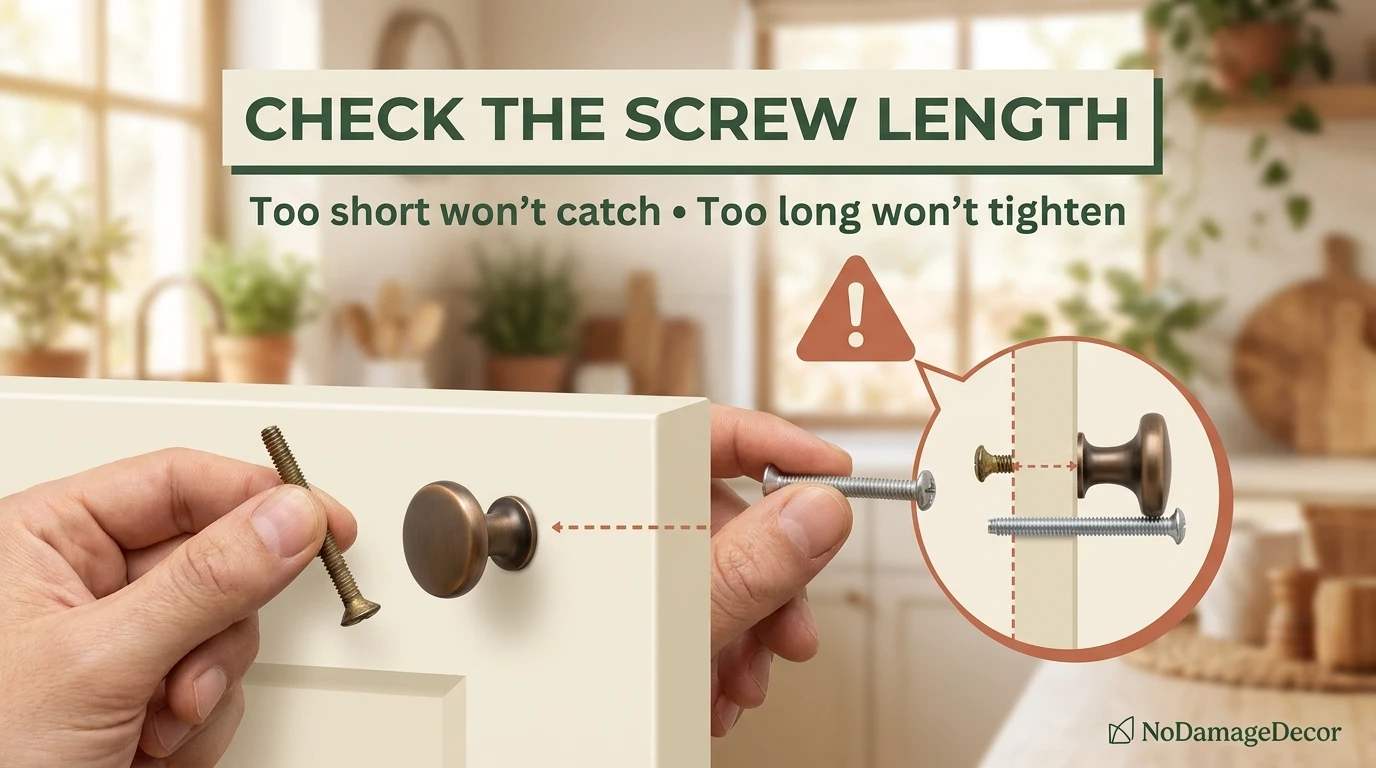
Matching the holes is only half the job. The screw also has to reach the replacement hardware without bottoming out or remaining too short to engage securely. Cabinet doors, drawer fronts, and decorative drawer boxes can have different thicknesses within the same kitchen.
Compare the old screw with the screw supplied with the new hardware. If the new screw is longer, do not assume it is better. A screw that bottoms out inside the knob or post before the hardware sits flush will leave the handle loose. A screw that is too short may only catch a few threads.
Use the screw length and thread type specified for the replacement hardware. If the included screw does not suit the cabinet thickness, use a compatible screw approved for that hardware rather than forcing the wrong one.
How to Change Rental Cabinet Hardware Without New Holes
Photograph the original setup
Take a quick photo of representative doors and drawers, including any existing chips or finish marks.
Remove one sample piece first
Inspect the hole pattern, screw, cabinet thickness, and finish beneath the hardware before removing the rest.
Measure the existing hole pattern
For pulls, measure center-to-center. For knobs, confirm the single hole and the screw length that currently works.
Test one replacement
The hardware should sit flat without drilling, widening, forcing, or twisting the cabinet front.
Start screws by hand
If the screw immediately resists or feels cross-threaded, stop instead of adding torque.
Tighten until secure
Stop when the knob or pull no longer rotates or wobbles. Overtightening can dent softer finishes.
Bag and label every original part
Keep original knobs, pulls, screws, washers, and backplates together for move-out.
Repeat only after the sample works
Once the first piece fits and operates normally, use it as the model for the rest.
For other reversible kitchen changes, see no-drill kitchen upgrades and peel and stick backsplash.
Verified Hardware Options That Reuse Existing Holes
These products cover two common renter scenarios: an adjustable two-hole pull and a straightforward single-hole knob.
As an Amazon Associate I earn from qualifying purchases.

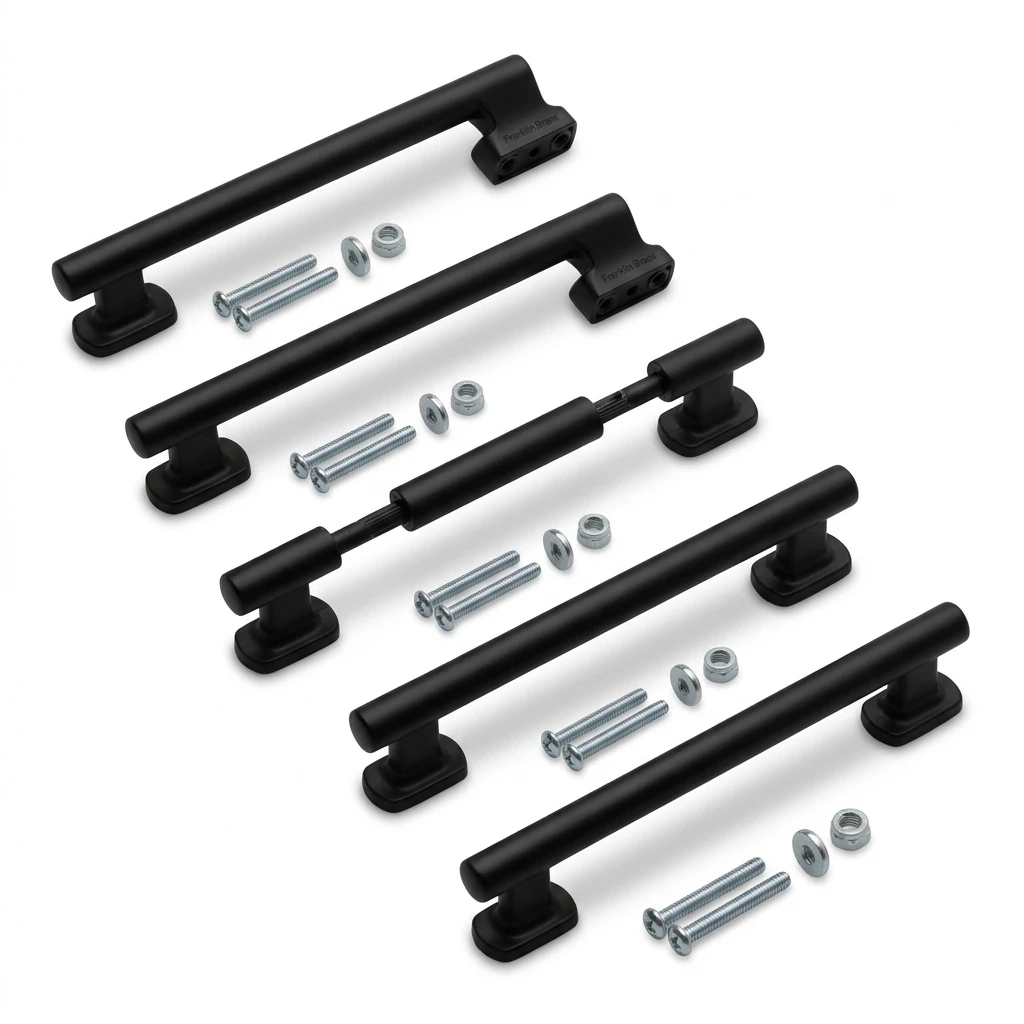
Franklin Brass Bar Adjusta-Pull, Matte Black, 5-Pack
Best for: Existing two-hole cabinet or drawer spacing inside the verified adjustable range.
Model P44364-FB-B is designed to reuse existing cabinet holes. Current documentation states that the center-to-center spacing adjusts from 1-3/8 inches to 4 inches, making it useful for older or non-standard hole patterns without filling and redrilling.
Franklin Brass Parow 1-1/8 in. Matte Black Square Cabinet Knobs, 10-Pack
Best for: Cabinet doors and drawers that already use a single centered knob hole.
Retailer and product records identify model P29542Z-FB-B as a rear-mount 1-1/8-inch square knob, and the 10-pack is documented with 1-inch 8-32 screws. It can reuse a single existing knob hole when the screw and cabinet thickness are compatible. Franklin Brass currently marks this product line discontinued on its manufacturer site, so verify that the Amazon listing still matches this exact model and pack before ordering.
How to Avoid Cabinet Damage During the Swap
Most damage happens from slipped tools, overtightening, spinning metal hardware against the finish, using screws that are too long, or widening holes that were slightly misaligned.
Protect the visible face
Hold the knob or pull steady from the front while tightening from inside so metal does not grind across the finish.
Use hand tools for final tightening
A manual screwdriver gives better feedback than a high-torque driver near delicate cabinet finishes.
Do not enlarge a hole
If the screw does not pass through the existing hole normally, confirm hardware compatibility rather than reaming the cabinet.
Watch for finish shadows
Original backplates and wide pulls may have protected part of the finish from light and wear. Choose a replacement with enough coverage if needed.
Use a soft cloth or folded towel on the counter below the door while you work so a dropped screwdriver or pull is less likely to chip a countertop or floor. Keep removed screws in a small cup instead of setting them on a stone or laminate counter where they can roll or scratch.
Drawer fronts deserve an extra check because some are thicker than cabinet doors or have a decorative front attached to a separate drawer box. A screw that worked on a cabinet door may be too short for the drawer or may bottom out before a thin door is tight. Treat each hardware type as its own fit test instead of assuming one screw works everywhere in the kitchen.
For broader deposit context, see can your landlord charge for nail holes and apartment decor mistakes that cost your deposit.
When You Should Leave the Original Hardware Alone
A same-hole hardware swap is reversible only when the existing cabinet is healthy enough to be handled normally. Stop the project if removing the sample piece reveals a loose insert, crumbling particleboard, enlarged screw hole, cracked finish, glued hardware, or a repair that appears to predate your tenancy.
Also skip the swap when a replacement requires drilling through a drawer box, enlarging an existing hole, cutting a screw, countersinking the back, sanding a backplate shadow, or repainting the cabinet to make the new hardware look right. Those steps move the project from a temporary decor change into cabinet modification.
Save the Original Hardware for Move-Out
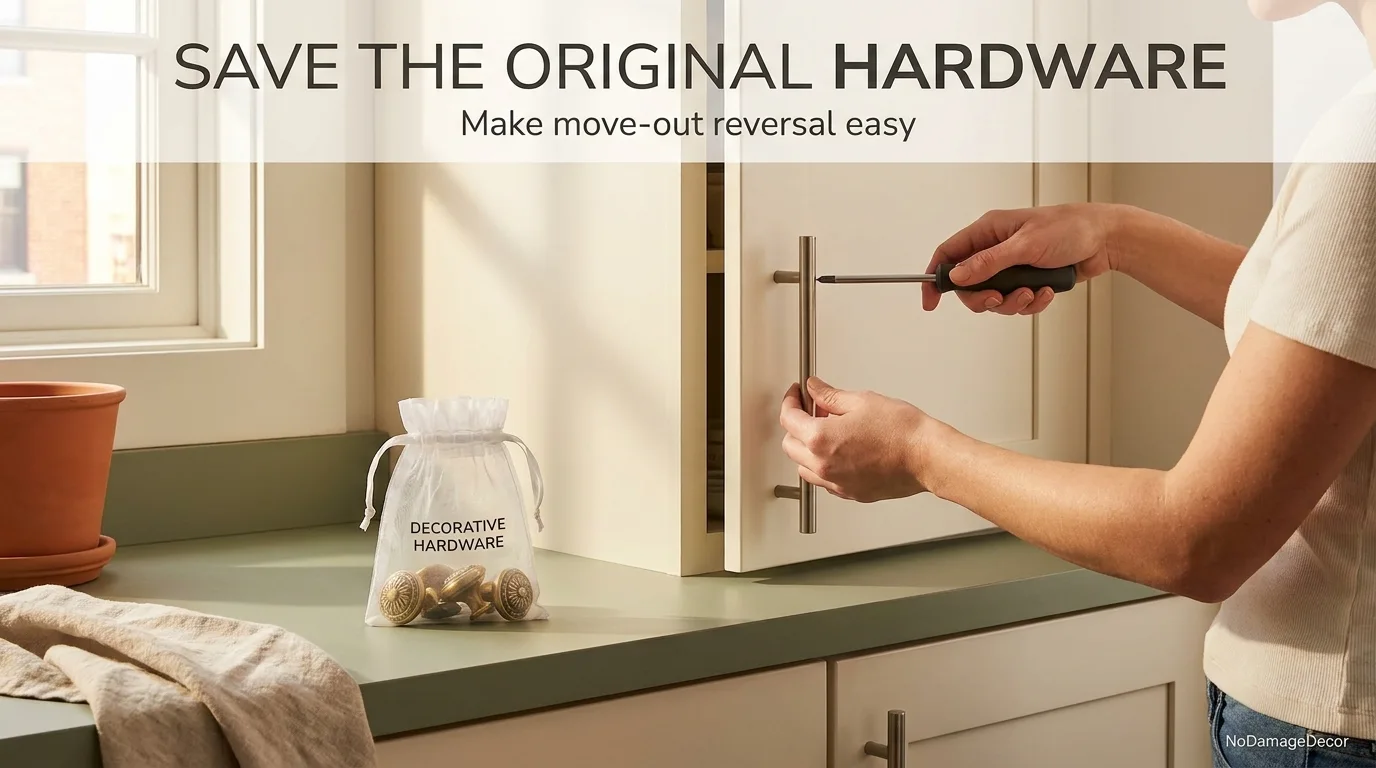
A reversible cabinet update stays reversible only if you can find the original parts later. Store the original hardware in one labeled bag or small box instead of mixing it with spare screws from other projects.
If doors and drawers use different screw lengths, label those separately. Keep unusual washers, spacers, decorative backplates, or double-threaded screws with the hardware they came from.
Before restoring the originals, remove one replacement as a test and reinstall the original gently into its original hole. If the hardware does not thread normally, stop instead of forcing it.
Keep dated move-in and move-out photos if cabinet condition may affect your security deposit. Rules vary by lease, property, city, and state, so written landlord communication is useful when fixture changes are not clearly addressed.
Sources & Renter-Safety Note
Adjustable-pull specifications were checked against Franklin Brass / Liberty Hardware documentation and current retailer records for model P44364-FB-B, including its 1-3/8-inch to 4-inch center-to-center range and use of existing cabinet holes. The Parow P29542Z-FB-B model and ASIN were cross-checked against current retailer/Amazon-indexed records; Franklin Brass currently marks the manufacturer product line discontinued, so confirm the exact listing before purchase. Hardware fit still depends on cabinet thickness, hole pattern, screw thread, and original finish. Lease rules vary, so review the lease and ask management in writing when fixture changes are restricted.
Liberty Hardware — replacing non-standard hardware with Adjusta-Pull
Home Depot — Franklin Brass P44364-FB-B current retailer product record
Frequently Asked Questions
Can renters change cabinet hardware without permission?
It depends on the lease and property rules. A same-hole swap is more reversible than drilling new holes, but some landlords still require approval for fixture changes.
How do I measure cabinet pull spacing?
Remove one pull and measure from the center of one screw hole to the center of the other. This is the center-to-center measurement.
Can I replace a cabinet knob with a pull without drilling?
Usually not if the pull needs two screws and the cabinet only has one existing hole. Another single-hole knob is the lower-risk choice.
What if my cabinet pull holes are an unusual size?
An adjustable pull can sometimes reuse non-standard spacing. Verify that your measurement falls inside the product’s current range.
Can I use the new screws that come with replacement hardware?
Only if the thread and length suit both the new hardware and your cabinet thickness.
Should I keep the landlord’s original cabinet hardware?
Yes. Store the original hardware, screws, washers, and backplates in a labeled bag or box for restoration.
What if the old hardware leaves a visible outline?
Choose a replacement with a similar footprint if possible. Do not sand or repaint landlord-owned cabinetry without permission.
Renter-Safety Verdict
Best renter strategy: reuse every existing cabinet hole and choose hardware that matches the current mounting pattern.
Best for one-hole cabinets: replace knob with knob using a compatible screw.
Best for unusual two-hole spacing: use a verified adjustable pull when the existing spacing falls within its stated range.
Avoid: drilling extra holes, enlarging holes, filling unused holes, gluing mismatched hardware in place, or overtightening.
Move-out protection: save and label all original hardware so the cabinets can be restored without improvisation.
Keep the Rest of the Kitchen No-Drill Too
Pair the hardware swap with other renter-conscious kitchen improvements that can be removed or reversed without permanent construction.
See No-Drill Kitchen Upgrades