
How to Decorate Without Losing Your Security Deposit
A practical, surface-aware guide to personalizing a rental while reducing avoidable wall, finish, and move-out restoration risk.
Quick Answer
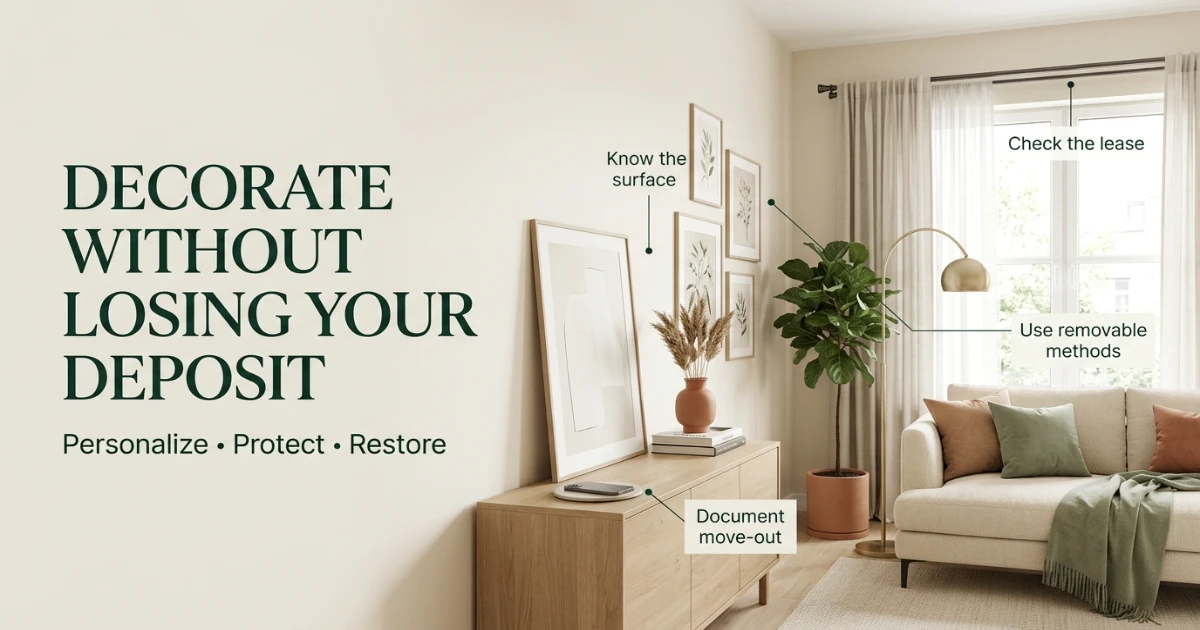
You can reduce decorating-related deposit risk by choosing methods that avoid permanent surface changes, documenting the original condition of walls and finishes, and following the exact instructions for any removable product. Review your lease first, preserve original move-in photos and inspection records, and favor freestanding, leaning, tension-based, or otherwise non-adhesive solutions when a wall surface is fragile or product compatibility is uncertain.
At a Glance
Nail holes, adhesive residue, and peeled paint from improper removal of wall decor.
Freestanding, leaning, tension-based, or existing-hardware decor that does not rely on wall adhesive.
Review your lease, photograph every surface, and check state and local tenant rules.
Original before-and-after files, inspection records, and written approvals make the wall condition easier to document if a deduction is disputed.
What Actually Puts Your Security Deposit at Risk
Decorating becomes a deposit issue when a method leaves behind a condition that must be repaired, cleaned, refinished, or repainted under the lease and the rules that apply where the rental is located. Because normal-wear standards and deduction rules vary, focus on preventing avoidable surface changes and keeping a clear record of the unit’s condition.
The most common deposit deductions related to decorating involve:
- Nail or screw holes in walls, doors, or trim beyond what a lease considers acceptable
- Adhesive residue left by stickers, tapes, or glue-based products that would not release cleanly
- Peeled paint or torn drywall paper caused by removing wall-mounted items without following instructions
- Permanent changes like paint, wallpaper paste, caulk, or applied finishes that were not approved
- Damage to fixtures, cabinet surfaces, or bathroom surfaces from products that were not surface-compatible
That said, rules vary significantly by state, city, lease, and property management company. What counts as normal wear and tear in one jurisdiction may count as tenant-caused damage in another. If you are unsure whether a specific change is allowed, apartment decor mistakes that cost your deposit is a useful place to start.
Lease First, Decor Second
Before you buy any renter-friendly product, review your lease for language about wall alterations, adhesive use, painting, or fixture changes. Some leases prohibit even removable wallpaper or adhesive strips. When the lease is unclear, ask your property manager in writing and save the response.
Document Before You Decorate
The strongest deposit protection you have is photographic evidence. If you can prove the original condition of every wall, floor, and surface before you made any changes, you are in a far better position to dispute unfair charges later.
Move-In Photo Checklist
- Photograph every wall in every room, including areas behind doors and furniture
- Capture close-ups of existing scratches, scuffs, nail holes, paint chips, or uneven paint
- Photograph floors, especially high-traffic areas, thresholds, and corners
- Document windows, sills, blinds, and curtain rods as they were on day one
- Photograph kitchen and bathroom surfaces, including backsplashes, cabinet faces, and countertops
- Keep the original, unedited image files and organize copies in a clearly dated folder
- Back up the original photos, inspection form, and relevant written landlord communication
Preserve the original photo files rather than relying only on screenshots or edited copies. Pair them with the move-in inspection form and written notices about pre-existing damage. That record can help show whether a scuff, hole, or finish issue existed before a decorating product was installed.
Surface-by-Surface Compatibility Check
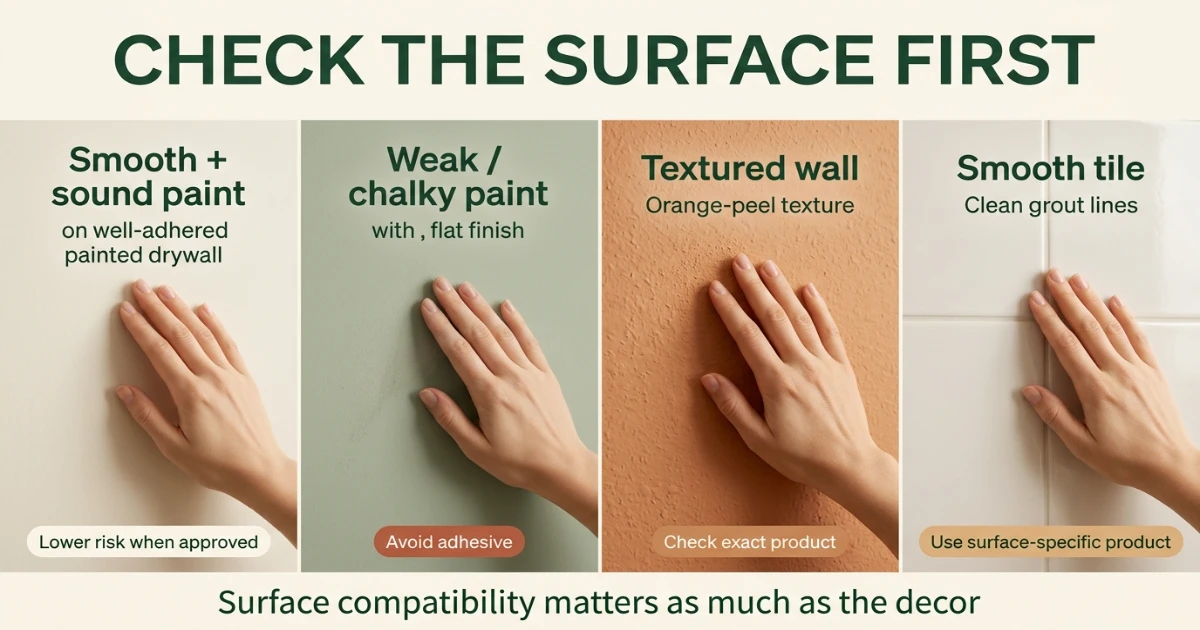
Not every wall is the same. The same adhesive strip that releases cleanly from a smooth, hard enamel paint may tear the surface of an older, chalky flat paint or a poorly adhered repaint. Before you commit to any decorative method, take a few minutes to check the condition and material of the surface you are working with.
| Surface Type | Adhesive Risk Level | What to Check | Safer Alternative |
|---|---|---|---|
| Modern latex paint, smooth, well-adhered | Low to moderate | Paint should not feel chalky or flaky | Adhesive strips within rated limits |
| Older paint or chalky flat paint | High | Paint may lift or peel when adhesive is removed | Leaning art, floor-based displays, tension rods |
| Textured or rough walls | High for standard removable picture strips | Current Command picture-hanging guidance excludes textured and rough walls | Use leaning, freestanding, tension-based, or another surface-approved method |
| Wallpaper or vinyl wall covering | High | Adhesive may tear surface or lift seams | Avoid adhesive; use tension rods or freestanding decor |
| Tile or smooth non-porous surfaces | Low to moderate | Clean surface thoroughly before application | Adhesive strips rated for tile or bathroom use |
| Wood, laminate, or veneer | Moderate | Finish may be damaged by adhesive removal | Test in an inconspicuous area first |
Always Test First
A hidden compatibility check can be useful only when the exact manufacturer guidance allows the surface in the first place. A successful test does not override an excluded surface such as wallpaper or a textured wall. Follow the product’s stated surface list, preparation method, wait time, and removal instructions.
For a deeper look at products that tend to work well across different rental wall types, see our best peel and stick wallpaper guide and our overview of no-damage wall decor ideas.
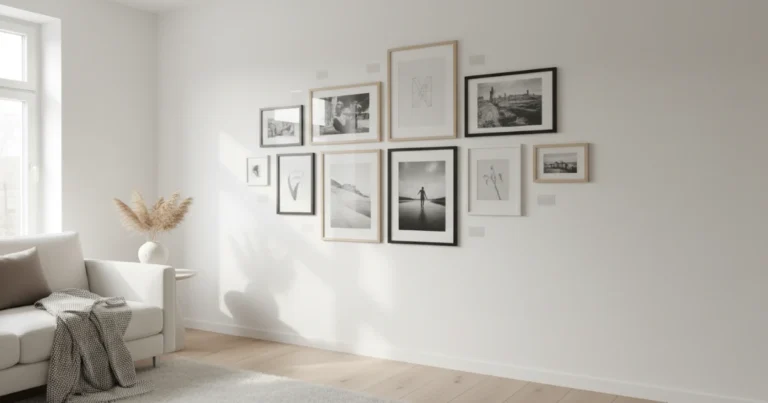
Wall Hanging Without Holes
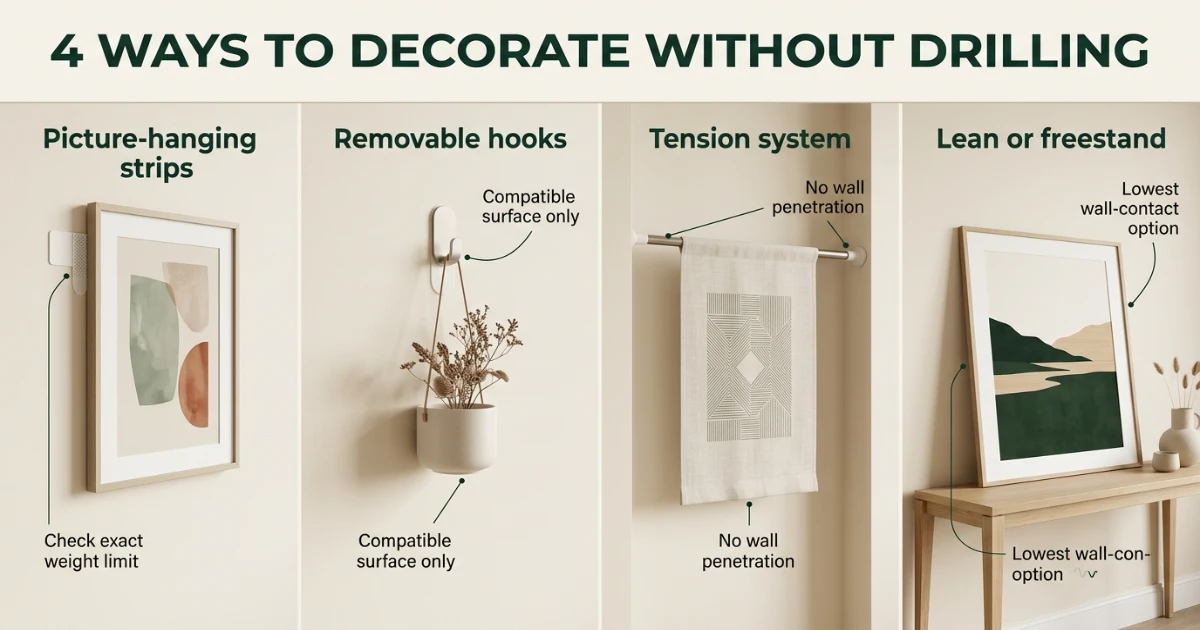
For most renters, wall art and framed photos are the first things they want to display. The good news is that you have several lower-risk options that do not require a single nail. The key is matching the method to the weight of the item and the condition of your wall.
| Method | Best For | Weight Consideration | Key Caution |
|---|---|---|---|
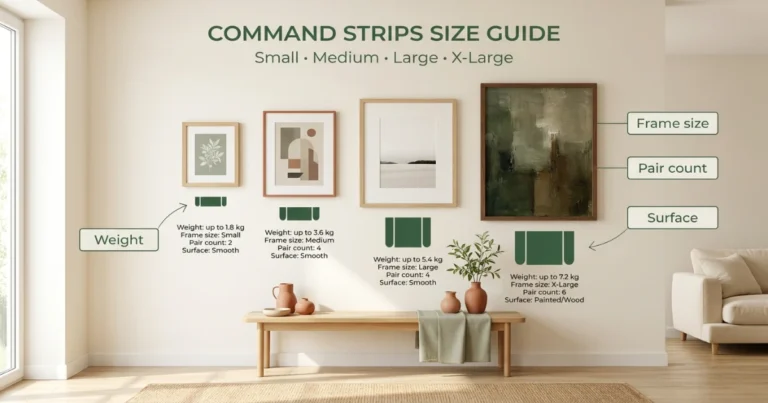
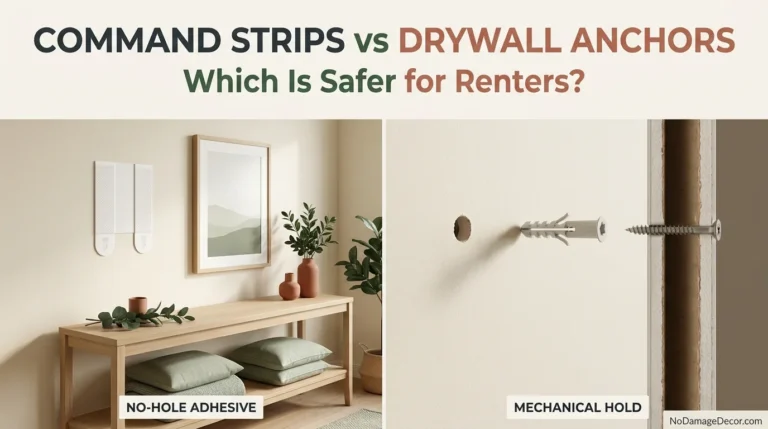
| Adhesive picture hanging strips | Framed photos, small canvases, lightweight art | Check the exact published pair count, total weight limit, and maximum frame size | Use only on compatible smooth surfaces; for Command Picture Hanging Strips, wait at least 7 days after painting, prepare as directed, and stretch the removal tab straight down |
| Removable adhesive hooks | Keys, small bags, lightweight wreaths, string lights | Check rated weight for the specific hook size | Follow the exact hook’s surface and safety warnings; current Command indoor-hook guidance excludes wallpaper and says not to hang over beds |
| Tension rods | Curtains, lightweight fabric wall hangings, room dividers | Depends on rod length and friction fit | Do not overload; ensure rod ends are padded to avoid pressure marks |
| Leaning art or floor mirrors | Large or heavy frames, oversized mirrors | No wall contact required | Secure with furniture straps if in high-traffic areas or earthquake zones |
| Magnetic hanging systems | Metal doors, refrigerators, some cabinets | Depends on magnet strength and surface | Check that the magnetic surface is non-scratch; avoid painted metal that can chip |
Adhesive Mounting Safety
Do not extend an adhesive product beyond its exact published use. Current Command Picture Hanging Strip guidance says not to hang valuable or irreplaceable items and not to hang over beds. If an item is unusually heavy, fragile, valuable, oversized, or injury-risk, choose a different mounting method permitted by your lease. For current picture-hanging limits, review our Command strips weight limit guide.
Removable Wallpaper and Backsplash
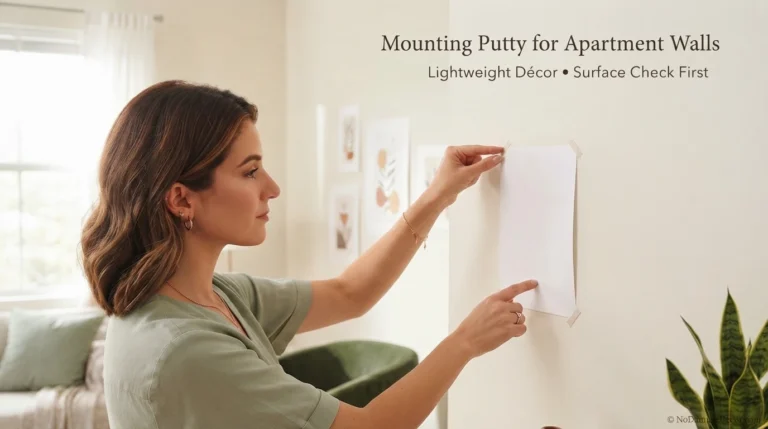
Peel-and-stick wallpaper and removable backsplash panels can transform a kitchen or accent wall without permanent change. However, the quality of the product matters enormously. High-quality removable wallpaper is designed to release cleanly from properly prepared, smooth, well-adhered paint. Lower-quality products may tear, leave residue, or pull paint when removed.
Choosing a Removable Wallpaper
Look for products labeled as removable or peel-and-stick, made with a fabric or vinyl substrate that has a gentle adhesive. Check whether the manufacturer specifies compatible surfaces and removal instructions. Avoid products marketed for permanent installation, even if they look removable in photos. For a curated comparison, visit our best peel and stick wallpaper guide and our peel and stick backsplash for renters article.
Before applying peel-and-stick wallpaper to any wall, clean the surface thoroughly, remove dust and grease, and allow it to dry completely. Follow the wallpaper manufacturer’s own test-area and cure-time instructions before full installation. When it is time to remove, peel slowly and at a low angle, following the manufacturer’s recommended technique rather than pulling sharply or at a 90-degree angle.
Bathroom and Kitchen Moisture
Moisture and heat can affect adhesive performance. In high-humidity areas like bathrooms and above stovetops, removable wallpaper may lose adhesion, curl at edges, or leave more residue upon removal. Check the manufacturer’s moisture tolerance before using peel-and-stick products in wet areas.
No-Drill Storage and Shelving
Storage can make or break a small apartment, but drilling into walls for shelves or hooks is one of the most common causes of deposit deductions. Fortunately, many storage needs can be met with renter-friendly alternatives that do not require permanent fasteners.
| Storage Need | Lower-Risk Solution | Choose This When | Avoid This When |
|---|---|---|---|
| Towels and bath storage | Over-the-door hooks, tension pole caddies, freestanding shelving | Bathroom door closes securely; floor space is available | Door frame is thin, hollow, or has glossy paint that can scratch |
| Kitchen utensil storage | Countertop caddies, magnetic knife strips on non-scratch surfaces, over-cabinet hooks | Counters have space; cabinet doors are solid wood or metal | Cabinet doors are laminate, thin, or have painted finishes that can chip |
| Books and display items | Floor-standing bookcases, leaning ladder shelves, freestanding étagères | You have floor space and items are not overly heavy | Floors are uneven or items exceed shelf load limits |
| Small display storage | Freestanding cubes, narrow bookcases, over-door organizers, or existing built-ins | You want extra storage without relying on an adhesive shelf system | Furniture is unstable, overloaded, or needs anchoring for safety |
For more no-drill storage ideas in specific rooms, see our guides on renter-friendly bathroom storage without drilling.
Curtains and Window Treatments
Window treatments are one of the easiest ways to make a rental feel layered and intentional. But drilling into window frames or drywall above windows to mount curtain rods can result in visible damage. The good news is that several no-drill curtain solutions work well for standard rental windows.
No-Drill Curtain Options
- Tension curtain rods — sized to fit inside the window frame, with rubber or padded ends to prevent pressure marks. Best for lightweight curtains. Check the rod’s rated length range and choose one that fits snugly without excessive force.
- Over-frame curtain rods — clamp or hang over the existing window frame without drilling. These work when the frame is deep enough and structurally sound.
- Adhesive curtain rod hooks — suitable only for very lightweight valances or sheer panels, and only on clean, smooth, well-adhered paint. Avoid for blackout curtains or heavier fabrics.
- Existing hardware — if your rental already has blinds, curtain rods, or a track, use them before adding anything new. Clip-on curtain rings can attach to many existing rod styles.
When using tension rods, inspect the contact points regularly. Over time, a rod that is too tight can leave circular pressure marks or indentations on painted window frames. Padded or rubber-tipped ends help reduce this risk.
Lighting Without Rewiring
Good lighting can dramatically change how a rental feels, but replacing hardwired fixtures is rarely allowed without written landlord permission. Instead, renters can layer light using plug-in, battery-operated, or freestanding options that require no electrical work.
- Floor lamps and table lamps are the safest lighting upgrade—they require no installation and leave no trace
- Battery-operated puck lights or LED strip lights can be used under cabinets, in closets, or above shelves using the appropriate adhesive for the surface
- Plug-in pendant lights with cord kits can create visual height without hardwiring, but the cord must be routed safely and the hook or mount must be surface-appropriate
- Smart bulbs that plug into existing sockets can change color temperature and brightness without touching the fixture
For more comprehensive lighting ideas, see our no-damage wall decor ideas.
Adhesive Lighting Caution
Never use adhesive strips to mount lighting above beds, cribs, or seating areas unless the manufacturer explicitly supports that use. LED strip lights that require peeling away from the surface can leave residue on painted walls or remove paint if the paint is weak. Test any adhesive on an inconspicuous area first.
Common Deposit-Costing Mistakes
Many deposit disputes happen not because a renter chose the wrong product, but because they used the right product incorrectly. These are the most frequent errors that lead to wall and surface damage—and how to avoid them.
| Mistake | Why It Causes Damage | How to Avoid It |
|---|---|---|
| Pulling adhesive strips outward from the wall | This can tear paint or drywall paper | Stretch the strip downward, flat against the wall, following manufacturer instructions |
| Skipping surface cleaning | Dust, grease, or oils prevent proper adhesion and can cause uneven bonding | Use the exact manufacturer’s preparation method; for Command Picture Hanging Strips, current guidance specifies rubbing alcohol on compatible surfaces |
| Exceeding weight ratings | Adhesive can fail, causing the item to fall and potentially damage walls, floors, or belongings | Check the exact product’s total limit, required configuration, and size limits; choose a different method if the item falls outside them |
| Applying adhesive to chalky or flaking paint | Adhesive may bond to the paint layer, which then separates from the wall during removal | Test first; if paint feels powdery or flakes when touched, avoid adhesives and use alternative methods |
| Removing peel-and-stick wallpaper too quickly | Fast removal at a high angle can pull paint or leave adhesive residue | Peel slowly, at a low angle, and follow the manufacturer’s removal instructions exactly |
| Not documenting move-in condition | Disputes arise when pre-existing damage is blamed on the tenant | Preserve original move-in and move-out photos, inspection records, and written notices |
For a broader look at patterns that cost renters money, see our article on apartment decor mistakes that cost your deposit.
Move-Out Preparation Checklist
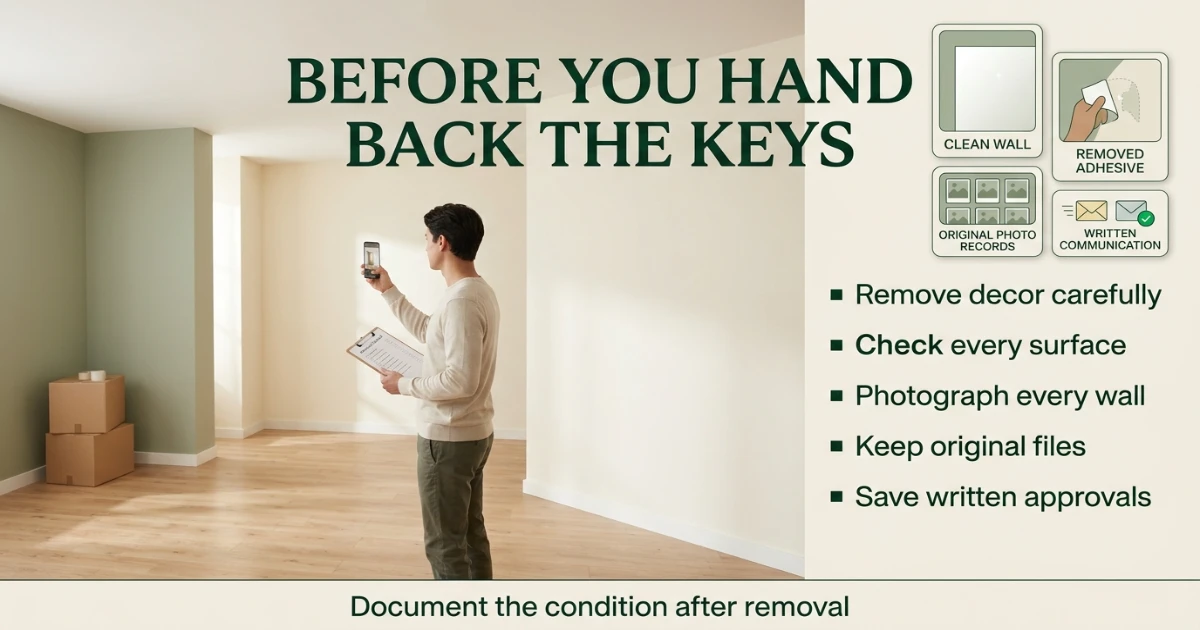
Your move-out process is just as important as your move-in process. With careful removal and thorough documentation, you can significantly reduce the chance of a surprise deposit deduction.
Move-Out Decoration Removal Checklist
- Remove all adhesive strips using the manufacturer’s recommended technique—stretch downward, not outward
- Remove peel-and-stick wallpaper and backsplash slowly, at a low angle, following package instructions
- Clean any remaining adhesive residue with a product that is safe for the specific surface
- Check for pressure marks, paint changes, or surface differences where decor was mounted
- Touch up minor scuffs only if your lease permits and you can match the paint exactly—otherwise document and disclose
- Photograph every wall, floor, and surface again, using the same angles as your move-in photos
- Keep the original move-in and move-out records through the deposit-return process and the applicable period for any claim or dispute
- Request a move-out walkthrough with your landlord or property manager if available in your area
- Keep written communication about any pre-existing conditions or approved changes
If You Find Damage
Do not try to hide or repair significant damage without checking your lease and local rules. In many cases, a simple written disclosure with photos may be better than an amateur repair that worsens the problem. Document what you found, communicate with your landlord in writing, and check whether your state or city has specific rules about security deposit deductions and normal wear.
Renter-Safe Products Worth Considering
When selected carefully, a few well-chosen adhesive products can make a big difference in how you personalize your rental without drilling. The products below are widely used by renters, but always verify the current weight rating, approved surfaces, and installation instructions on the manufacturer’s page before use.
As an Amazon Associate I earn from qualifying purchases.
Command 10 lb Medium Picture Hanging Strips — 16 Pairs
Current Command guidance lists four Medium pairs (8 strips) for frames up to 10 lb and up to 18 × 24 inches on compatible smooth surfaces.
Verified current configuration: 4 Medium pairs = up to 10 lb; maximum frame size 18 × 24 in. The 16-pair Amazon pack is ASIN B073XS3CHV.
Caution: Do not use on wallpaper, textured or rough walls, over beds, or for valuable or irreplaceable items. Wait at least 7 days after painting and follow the current package instructions.
Check Price on AmazonCommand 15 lb Large Picture Hanging Strips — 14 Pairs
Current Command guidance lists four Large pairs (8 strips) for frames up to 15 lb and up to 24 × 36 inches on compatible smooth surfaces.
Verified current configuration: 4 Large pairs = up to 15 lb; maximum frame size 24 × 36 in. The 14-pair Amazon pack is ASIN B073XR4X72.
Caution: Do not use on wallpaper, textured or rough walls, over beds, or for valuable or irreplaceable items. Do not exceed the current published limits.
Check Price on AmazonWhat to Look For Before Buying Peel-and-Stick Wallpaper
If you are considering peel-and-stick wallpaper or backsplash for a rental, choose products that specifically state they are removable, peel-and-stick, or renter-friendly. Avoid products labeled as permanent or traditional paste-based wallpaper. Check the manufacturer’s compatibility notes for painted drywall, the expected removal technique, and whether the product is rated for moisture-prone areas like kitchens and bathrooms. When in doubt, test a small piece first. Our best removable wallpaper for renters guide offers a more detailed comparison.
Sources & Renter-Safety Note
This guide provides general renter-focused decorating information, not legal advice. Security-deposit rules, normal-wear standards, and landlord-tenant obligations vary by jurisdiction, lease, and housing program. For removable products, current manufacturer instructions for the exact item control.
The Bottom Line
You can absolutely decorate a rental without losing your security deposit, but the key word is without—not risk-free. The safest decorating choices are those that leave no permanent trace when removed according to manufacturer instructions, applied only to clean, compatible, well-adhered surfaces, and used within their stated weight and use limits. Document every surface before and after you decorate. Test every adhesive in an inconspicuous spot. And when a method feels uncertain, choose a floor-standing or leaning alternative instead. A temporary home can still feel personal, layered, and intentional—without the costly move-out surprises.
For more specific guidance on wall-safe hanging, see our complete guide to hanging art without nails.
Ready to Hang Art Without the Holes?
Now that you understand the deposit risks and surface considerations, learn exactly how to display your favorite pieces without drilling a single hole. Our step-by-step guide walks through methods, weight limits, and surface testing.
Read the No-Nail Hanging GuideFrequently Asked Questions
Can my landlord charge me for nail holes?
It depends on the lease and the rules that apply where the rental is located. Small picture-hanging holes may be treated differently from large holes, extensive damage, or failed repairs, but there is no single nationwide rule. Review your lease and local requirements, and document the wall condition clearly.
Are Command strips really safe for apartment walls?
Command strips and similar adhesive picture hanging strips can be lower-risk on clean, smooth, well-adhered modern paint. However, they are not universally safe. They can tear chalky or flaking paint, leave residue on certain finishes, and fail if used beyond their rated weight or on incompatible surfaces. The manufacturer’s instructions are not optional—they are the difference between a clean removal and a wall repair. Always test in an inconspicuous area first. Learn more in our Command strips weight limit guide.
How do I remove Command strips without damaging the wall?
The correct technique is to pull the tab downward, flat against the wall, stretching the adhesive until it releases—not pulling outward or toward you. Pulling outward can tear paint or drywall paper. Take your time, apply steady pressure, and follow the exact instructions on the package. If the tab breaks, use dental floss or a similar thin, non-marring tool to saw gently behind the strip. Our guide on removing Command strip residue safely covers this in detail.
Can I use peel-and-stick wallpaper in a rental?
Many renters successfully use high-quality removable, peel-and-stick wallpaper in rentals, but it is not universally risk-free. The product must be genuinely removable, the wall surface must be clean, smooth, and well-adhered, and you should test a small area first. Moisture and heat can affect adhesion in kitchens and bathrooms. Some leases prohibit wallpaper entirely, so check your lease before applying. For product comparisons, see our best peel and stick wallpaper guide.
What is the difference between normal wear and damage?
The distinction depends on the lease and applicable law. Ordinary wear generally refers to deterioration from normal use, while tenant-caused damage involves conditions beyond ordinary use or approved changes. Specific examples—such as nail holes, paint marks, or adhesive residue—can be treated differently by jurisdiction and property, so check the rules that apply to your rental.
Should I ask my landlord before decorating?
Check the lease first. Written approval is especially useful for painting, peel-and-stick wall coverings, fixture changes, or any method the lease does not clearly address. Save the response together with your move-in documentation.
What should I do if I already caused wall damage?
Do not panic, and do not attempt an amateur repair that could make things worse. Document the damage with clear photos. Review your lease for any repair provisions. In many cases, small holes can be patched with spackle and touch-up paint if you can match the color and finish exactly—but only if your lease permits. If the damage is significant or you are unsure, communicate with your landlord in writing. Some states have rules about how landlords must itemize deductions and provide receipts. Check your local tenant rights resources.

One Comment