Renter-Friendly Acoustic Panels Without Drilling
Soften echo and make calls, music, gaming, study sessions, and everyday conversation feel calmer without automatically turning your rental wall into a patch-and-paint project.
Quick Answer: The lowest-risk acoustic panels for renters are either freestanding panels that never touch the wall, or lightweight felt tiles supplied with a manufacturer-designed removable mounting system. Acoustic treatment can reduce reflections and room echo, but it does not turn an apartment into a soundproof room. Before using any adhesive on paint, confirm the wall is smooth, sound, clean and compatible with the exact mounting product, then test a hidden area first.
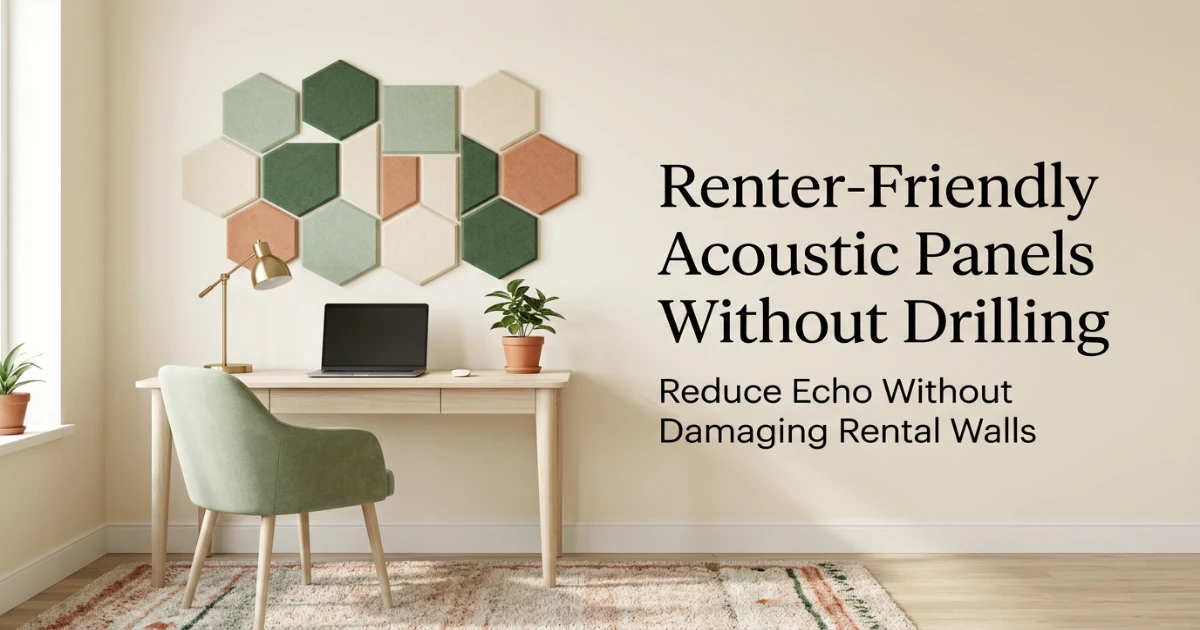
Four things renters should know first
Treat echo, not wall transmission
Soft panels absorb reflections inside the room. They are not a substitute for structural sound isolation between apartments.
Freestanding is safest for the finish
A floor-supported panel avoids adhesive, screws and direct contact with landlord-owned paint.
“Removable” still needs a wall check
Paint age, texture, humidity, weak coatings and long installation time can change removal results.
Placement matters more than filling every wall
Start around the hardest, barest surfaces near the area where speech or music sounds most reflective.
Acoustic panels for renters improve the room, not the wall assembly
Acoustic panels are useful when a rental feels sharp, hollow or tiring because sound keeps bouncing between drywall, windows, hard floors and other reflective surfaces. Absorptive materials reduce some of those reflections, which can make speech clearer and the room less “live.” That can be helpful for a home office, gaming desk, podcast corner, music practice area or sparsely furnished bedroom.
That is different from soundproofing. True sound isolation is about limiting sound that passes from one space to another. Professional acoustic guidance distinguishes the two because meaningful isolation usually involves the building assembly: mass, sealing, decoupling and other construction-based techniques. A renter can improve the sound inside a room with panels, rugs and curtains, but should not expect thin foam or felt tiles to stop a neighbor’s bass, hallway noise or a loud television from crossing a shared wall.
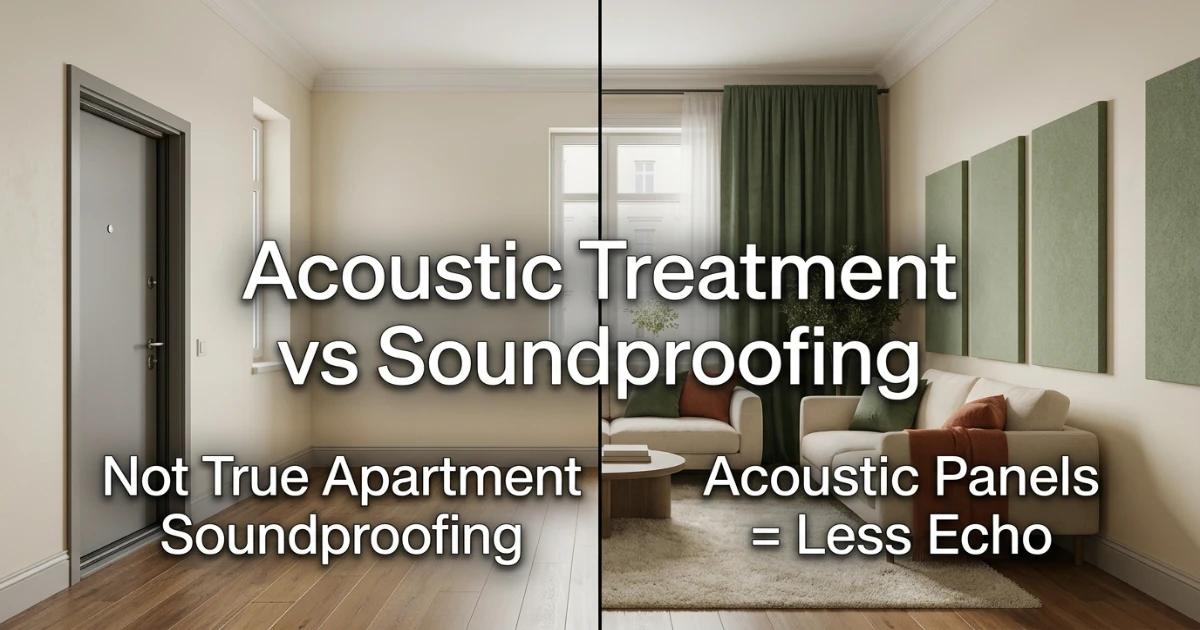
Choose acoustic treatment when: the problem is echo, harsh reflections, unclear video-call audio, a bright-sounding desk area, or a room with lots of exposed hard surfaces.
Use another approach when: the real problem is voices, traffic, footsteps or music traveling through the building. In that situation, door seals, soft furnishings and behavior changes may help at the margins, but structural sound isolation is a different project and may require landlord approval or professional work.
The best no-drill methods, ranked by renter risk
1. Freestanding acoustic panels
Lowest wall-finish risk. These use floor feet or a portable frame. Nothing is bonded to paint, so there is no adhesive-removal event at move-out. They make the most sense beside a desk, behind a chair, near a workstation or as a small room divider.
2. Manufacturer-supplied removable felt-tile tabs
Good renter fit on compatible walls. Felt Right, for example, includes removable adhesive tabs intended for non-permanent home, apartment and dorm installations. The company also warns that removal results can vary with paint and wall conditions, so a test area is still sensible.
3. A removable carrier board
Useful for foam. Instead of sticking dozens of foam squares directly to landlord paint, attach them to a lightweight board or panel you own. The board can stand behind a desk, rest on furniture, or use a separate mounting method that is actually rated for its finished weight and surface.
4. Removable hanging strips for a rigid lightweight panel
Only when the exact combination is compatible. Confirm panel weight, strip rating, strip count, wall surface and manufacturer instructions. Do not assume that a strip suitable for a picture frame is automatically suitable for soft foam, fabric or every acoustic panel backing.
Deposit-minded rule: “No drill” only means you are avoiding holes. A strong permanent glue can create more repair work than a small fastener. For renters, reversibility matters as much as the absence of screws.

Check the rental wall before using removable adhesive
Adhesive performance depends on the finish beneath it. A smooth, fully cured, well-bonded painted wall is a very different surface from chalky paint, fresh paint, orange-peel texture, wallpaper, brick or a wall that has already been patched several times.
| Rental surface | Renter-conscious approach | Main concern |
|---|---|---|
| Smooth, sound painted drywall | Potentially suitable for a manufacturer-approved removable system after a hidden-area test. | Weak paint bond, recent painting, grime or incorrect removal can still lift finish. |
| Textured painted wall | Prefer freestanding treatment or a method explicitly approved for that texture. | Reduced adhesive contact and unpredictable removal. |
| Wallpaper | Avoid common removable picture-hanging strips unless the manufacturer specifically approves the exact wallpaper use. | Adhesive can tear, stretch or delaminate the wallcovering. |
| Brick, rough masonry or heavily porous surface | Prefer freestanding panels unless the lease and a product-specific system support another method. | Common removable strips are not intended for rough or highly textured surfaces. |
| Fresh paint or visibly weak paint | Wait for the coating to cure according to the paint and mounting-product instructions, or choose freestanding treatment. | Adhesion can exceed the paint-to-wall bond. |
For Command Picture Hanging Strips specifically, 3M lists smooth surfaces such as painted walls, finished wood, tile, glass and metal among compatible surfaces, while warning against wallpaper, fabric, textured walls, brick and rough surfaces. 3M also tells users to wait seven days after painting before applying certain indoor picture-hanging products. Those instructions belong to the exact Command product, not to every adhesive system on the market.
Best acoustic panels for renters without drilling
These three options solve different renter problems. The first is a wall-tile system designed around removable tabs. The second avoids the wall entirely. The third is inexpensive foam that becomes more renter-conscious when you treat it as panel material rather than trusting permanent-feeling tape directly on paint.
Affiliate disclosure: As an Amazon Associate I earn from qualifying purchases.
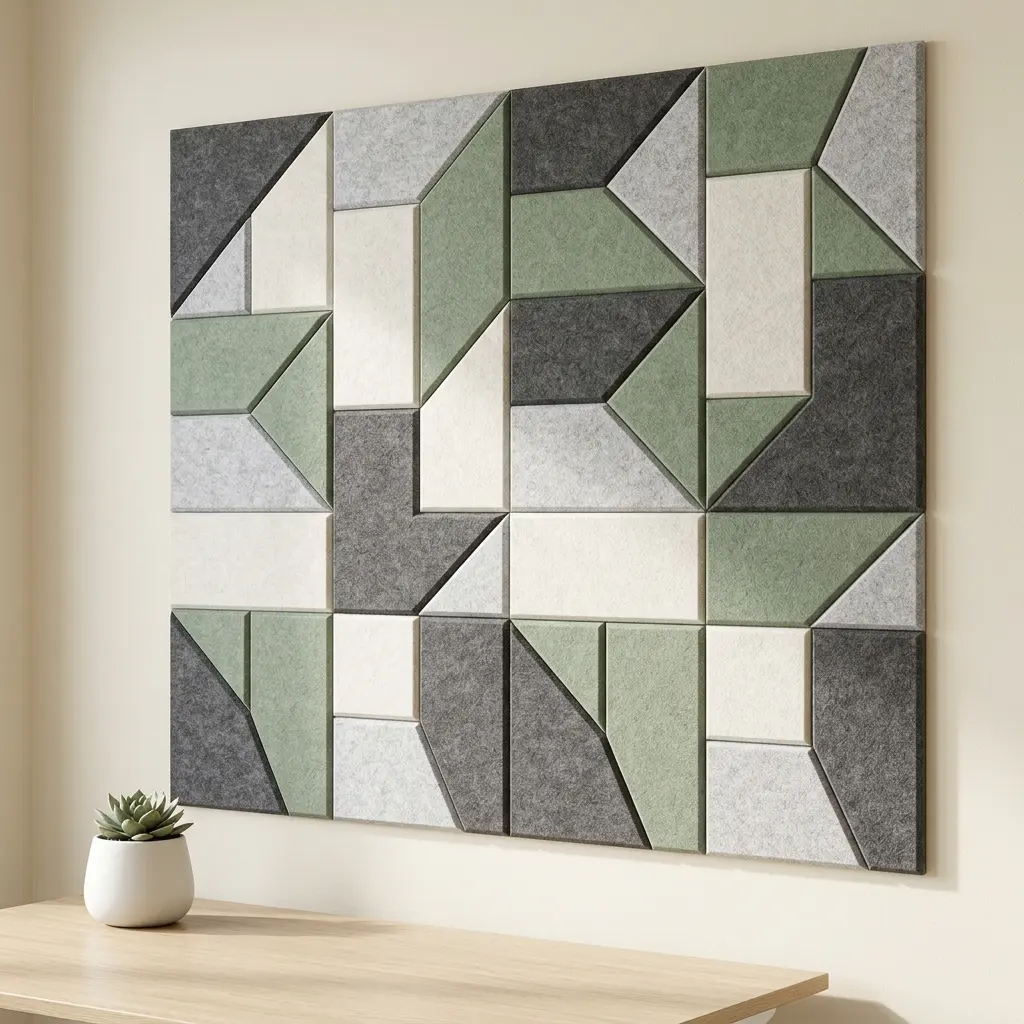
Felt Right’s official renter guidance says its standard removable tabs are intended for homes, rentals, apartments and dorms. The Soho Bamboo Amazon listing identifies PET felt, a 9 mm tile thickness and a 105-piece set. Felt Right’s own acoustic-tile guidance lists a 0.35 NRC for its standard 9 mm tiles.
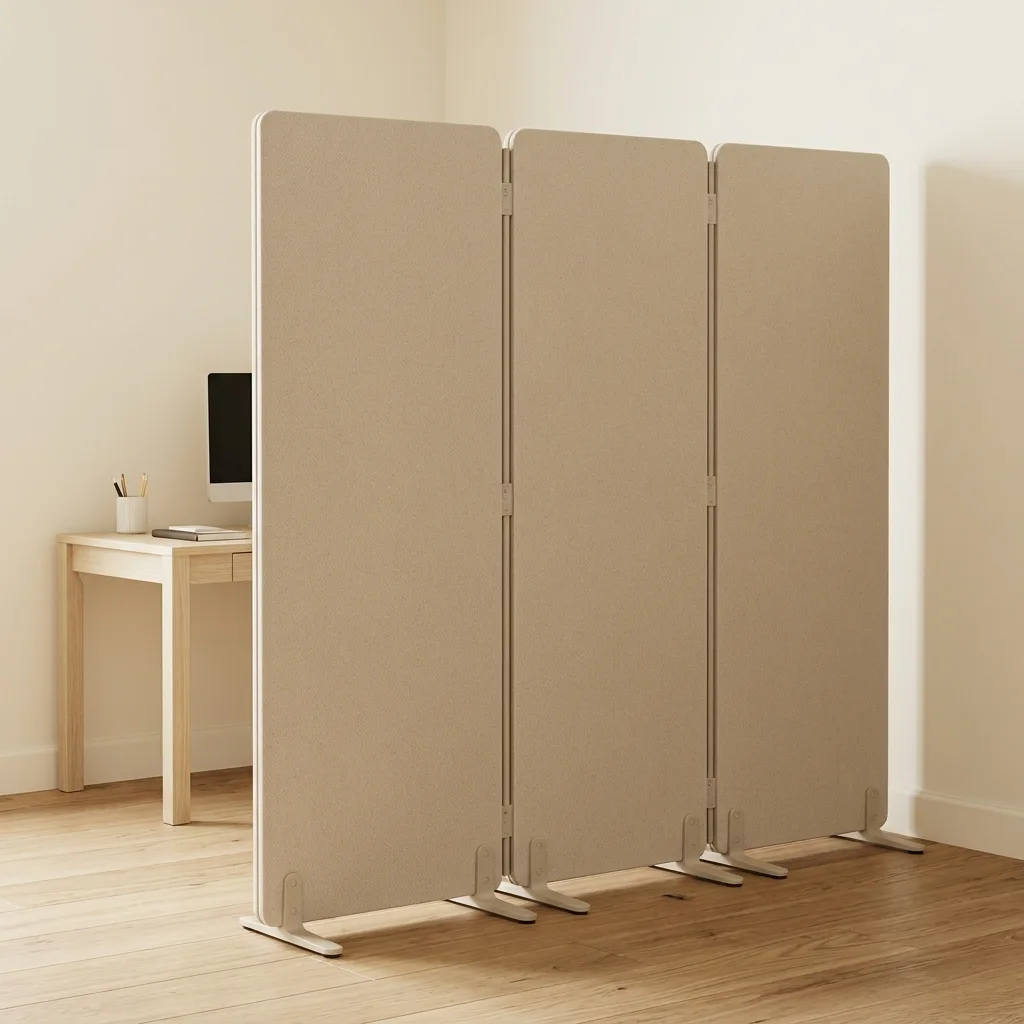
The exact Amazon listing is a three-panel, floor-standing partition. VIVO’s manufacturer page for the series describes flexible feet and zipper-connected panels, which means a renter can create a treatment/privacy zone without bonding anything to drywall.
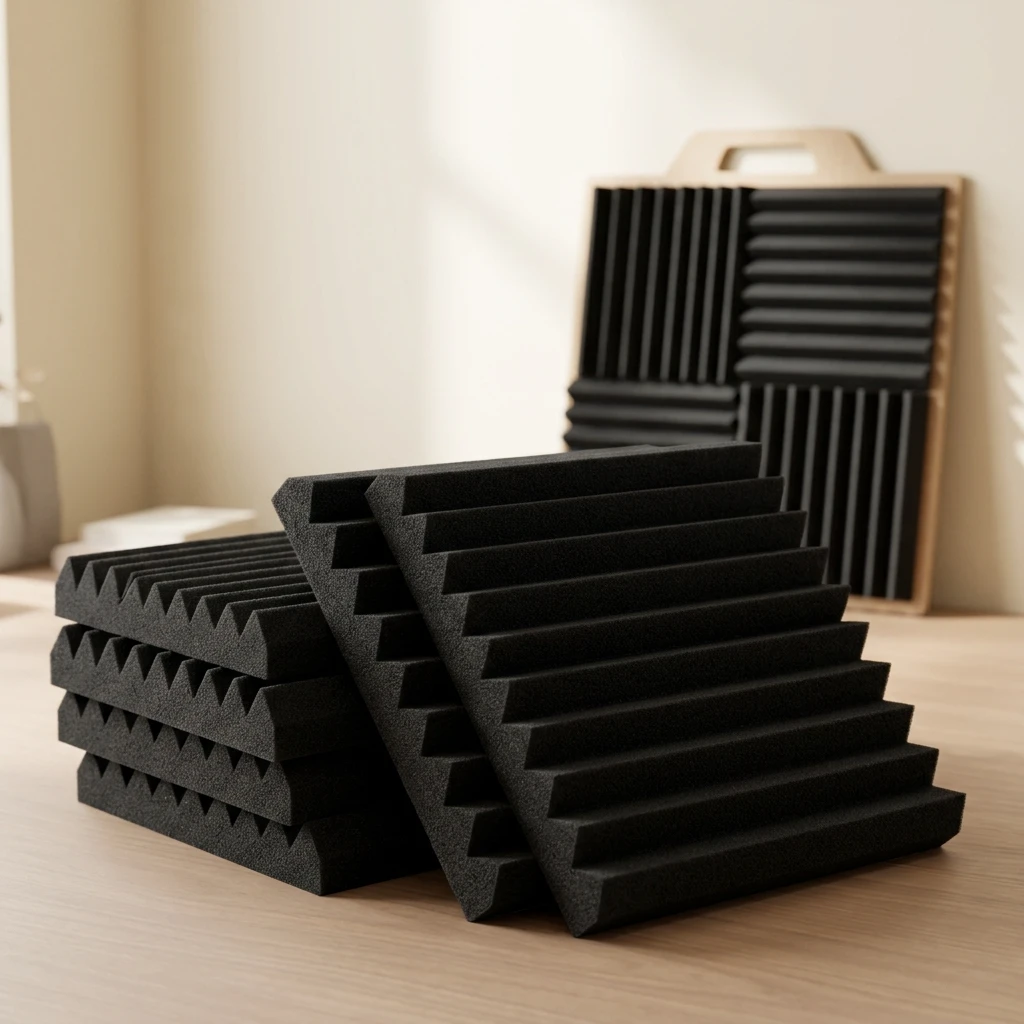
Amazon confirms this ASIN as the 52-pack 1-inch wedge-foam set, and Focusound’s official catalog lists its matching 52-pack 1-inch sound-absorbing foam. For renters, the useful part is the foam itself; you do not have to copy the direct-to-wall adhesive setup.
Which renter-friendly acoustic setup fits your room?
| Option | Wall contact | Best for | Renter limitation |
|---|---|---|---|
| Felt Right Soho Bamboo | Removable tabs on compatible wall | Decorative home office, bedroom or study wall where appearance matters | Removal still depends on paint and surface condition |
| VIVO freestanding partition | None | Home-office zone, desk-side reflection control and visual separation | Uses floor space and looks more utilitarian |
| Focusound foam on carrier board | Depends on how the carrier board is supported | Budget-conscious renter who wants to control the mounting method separately | Direct use of included tape on rental paint is not the renter-first choice |

Where acoustic treatment makes the most sense in an apartment
You rarely need to cover every wall. Start with the place where the problem is most obvious. If video calls sound hollow at your desk, treatment near the desk and on a nearby bare reflective wall may be more useful than scattering tiny foam pieces throughout the apartment. If a bedroom feels echoey because it has vinyl flooring, bare walls and minimal furniture, combining a modest panel area with curtains, a rug and soft bedding may do more than using panels alone.
Home office
Prioritize the area around your microphone, desk and the large bare wall closest to your speaking position. A freestanding panel can be especially practical here because it can move with the desk.
Bedroom
Favor a broad, secure wall treatment away from the bed over small adhesive foam squares directly overhead. Soft curtains, rugs and bedding already contribute useful absorption.
Gaming or music corner
Treat the immediate listening or speaking zone first. If bass transmission to neighbors is the problem, thin wall panels are unlikely to solve it; reduce source level and consider layout changes.
How to install acoustic panels without drilling into rental walls
1. Decide whether the wall needs to be involved at all
If a freestanding panel, desk divider or carrier board solves the problem, that is the cleanest route for the paint. Wall mounting should be a choice, not the default.
2. Weigh the complete mounted item
Do not estimate based on a single tile if you are joining multiple pieces into a larger board. Any removable hanging system must be selected for the total finished assembly and the exact approved surface.
3. Inspect and clean the surface exactly as instructed
Look for peeling paint, dust, texture, repaired patches and moisture. Use the cleaning method specified by the mounting-product manufacturer. For example, 3M’s picture-hanging instructions call for rubbing alcohol rather than ordinary household cleaner on compatible surfaces.
4. Test one small removable tab in a hidden area
A closet-side wall or low corner can reveal weak paint before you commit to a large geometric installation. Leave the test in place long enough to be meaningful, then remove it using the exact prescribed technique.
5. Lay out the pattern before exposing adhesive
Arrange tiles on the floor, measure the total footprint and lightly establish alignment. Repeatedly peeling and resticking adhesive can weaken the bond and increase the chance of an untidy removal later.
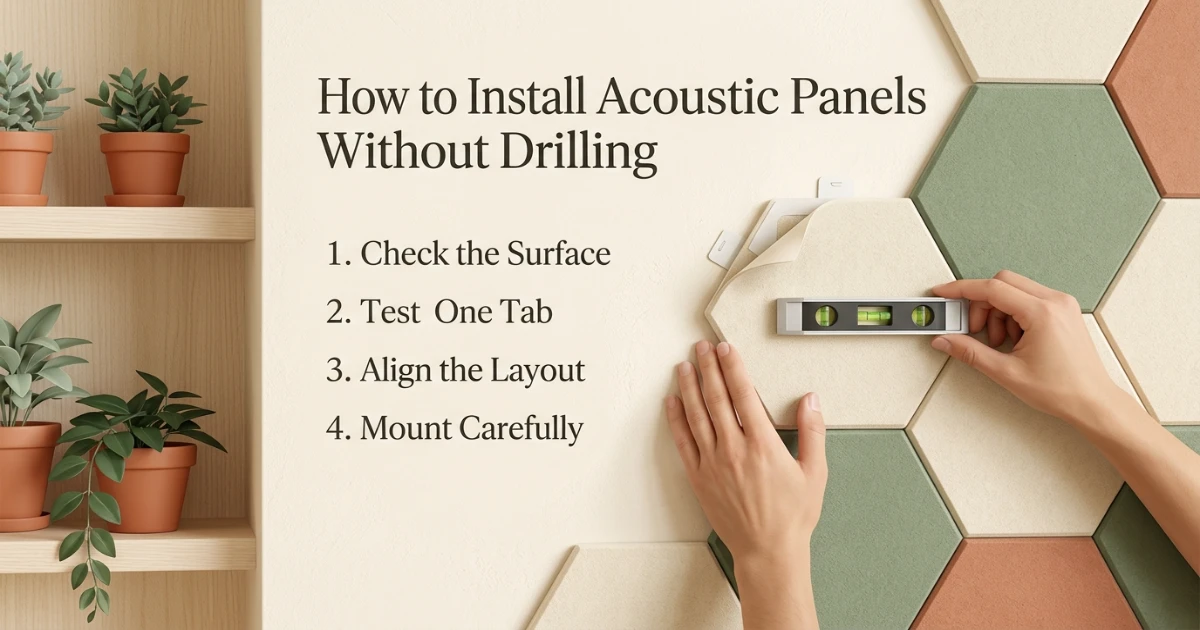
6. Follow the mounting system, not a social-media shortcut
Pressing time, strip count, orientation, cure or wait periods and removal direction can vary by product. Use the current instructions for the exact adhesive or tab system in your hand. Do not mix a panel manufacturer’s guidance with an unrelated adhesive’s marketing claims.
7. Keep adhesive-only installations away from injury-risk locations
Do not casually place a heavier panel above a bed, crib, valuable monitor or another area where a falling item could hurt someone or damage property. A lighter, lower wall arrangement or freestanding solution is the more renter-conscious choice.
Mistakes that turn a no-drill project into a wall-repair job
Sticking generic double-sided tape straight to paint
High-grab mounting tape may hold very well and still be a poor rental choice because the removal method was never designed around preserving painted drywall.
Using removable strips on texture or wallpaper
Surface contact can be inconsistent on texture, while wallpaper can tear or delaminate. Use a freestanding method unless the exact manufacturer explicitly supports the surface.
Confusing “lightweight” with “safe overhead”
Even a light panel can fall if the adhesive loses grip. Avoid adhesive-only mounting over beds, cribs and valuable equipment unless the exact product instructions clearly support that use.
Expecting thin foam to fix neighbor noise
That is a sound-isolation problem. Panels can make your own room less reflective, but spending heavily on decorative foam may disappoint if transmission through the building is the real complaint.
If you use removable strips elsewhere in the apartment, our Command strips weight limit guide explains why the full mounted weight and the exact strip configuration matter. For broader risk checks, review these apartment decor mistakes that cost your deposit before committing to strong adhesives.
Plan removal on the day you install the panels
A renter-friendly setup should have an exit strategy. Keep the mounting instructions, spare tabs and product name in one place. Take a quick photo of the wall before installation. If the wall already has chips, patches or scuffs, document those too so you are not relying on memory months later.
At removal time, do not yank a tile or carrier board away from the wall just because it feels loose. Separate the decor from the removable fastener as instructed, then release the adhesive in the manufacturer-specified direction. With stretch-release strips, that often means pulling the tab slowly along the wall rather than outward. Felt Right’s standard tabs use their own removal method, so follow the current Felt Right instructions for those tabs rather than assuming every removable adhesive behaves the same way.
If the paint starts lifting: stop. Do not keep pulling. Support the panel, reassess the adhesive and consult the current removal instructions. For 3M products, our guide to remove Command strips without damage walks through the stretch-release approach and common mistakes.
Lease language and move-out standards vary by property, city and state. If your lease restricts wall adhesives, asks for prior approval, or has unusual wall finishes, written permission from management is more useful than assuming a “renter-friendly” label overrides the lease.
Acoustic improvements that do not need panels on paint
Before covering a rental wall, use the soft materials you may already want for comfort. A substantial area rug can reduce hard-floor reflections. Full curtains add softness around a large glass surface. Upholstered seating, fabric headboards, filled bookshelves and soft bedding can make a sparse room less reflective. None of these turns the apartment into a soundproof booth, but together they may reduce the amount of wall treatment you need.
This is also where renter decor and acoustics can work together. Our guide to no-damage wall decor ideas can help you layer visual interest without making every improvement adhesive-dependent. If the room still feels temporary, these ideas to make your rental feel like home pair well with acoustic changes such as rugs, curtains and softer furniture.
Sources & Renter-Safety Note
Technical and product claims were checked against current manufacturer or primary product information. Product instructions can change, so confirm the current instructions for the exact item you purchase before mounting anything to landlord-owned surfaces.
- GIK Acoustics: acoustic treatment vs. soundproofing
- Felt Right: renter-friendly acoustic tile guidance and removable-tab disclaimer
- 3M Command: approved surfaces, product selection and removal guidance
- VIVO: freestanding PP-3-T072 series construction and setup
- Focusound: official acoustic foam product catalog
Frequently asked questions
Do acoustic panels actually soundproof an apartment?
No. Acoustic panels mainly absorb reflections inside a room and can reduce echo or reverberation. Soundproofing, or sound isolation, aims to stop sound from crossing walls, floors, ceilings, doors and other boundaries and usually involves construction-oriented methods.
What is the safest no-drill acoustic option for a renter?
A freestanding acoustic panel or partition creates the least direct risk to painted walls because it does not require adhesive or fasteners. Lightweight felt tiles with a manufacturer-designed removable mounting system can also be renter-conscious on compatible, sound paint, but removal is never universally guaranteed.
Can I use Command strips to hang acoustic panels?
Sometimes, but only if the exact panel construction, total weight, strip configuration and wall surface fit the current 3M instructions. Picture Hanging Strips are designed around suitable rigid items and compatible smooth surfaces; do not assume they will bond correctly to soft foam, fabric backing or textured walls.
Can removable adhesive damage rental paint?
Yes, it can. Paint condition, curing, surface preparation, texture, heat, sunlight, humidity, installation time and removal technique can all affect the outcome. Test an inconspicuous area and follow the exact mounting and removal instructions.
What should I use on textured walls?
Freestanding panels are the simplest lower-risk option because common removable picture-hanging strips are generally intended for smooth compatible surfaces, not rough or textured walls. If you want wall mounting, use only a system whose manufacturer explicitly approves your exact texture and panel weight.
Are peel-and-stick acoustic foam squares renter-friendly?
Not automatically. A strong double-sided adhesive can bond aggressively to paint. A more renter-conscious approach is to attach inexpensive foam to a lightweight carrier board you own, then support or mount that board using a separate reversible method suited to its finished weight.
The best setup is the one you can remove predictably
For the lowest wall-finish risk, choose a freestanding acoustic partition and leave the rental paint untouched. If you want a more decorative wall treatment, lightweight felt tiles supplied with removable tabs are a better renter fit than generic construction adhesive or high-grab mounting tape, provided the wall is smooth, sound and compatible.
Use acoustic panels to solve echo and room-reflection problems, not as a promise of apartment soundproofing. Check your lease, test a hidden area, keep the instructions, avoid adhesive-only mounting in injury-risk locations, and plan the removal method before installation day.
Keep the rest of your walls just as reversible
Acoustic treatment works best when it is one part of a renter-conscious room: soft furnishings, smart placement and wall decor that can leave with you instead of becoming a move-out repair.
Explore No-Damage Wall Decor Ideas